If you’re signing your first lease and own a car, is paying for apartment parking worth it? It’s one of the easiest fees to underestimate, because it sits in the gray zone between “amenity” and “necessity.” The listing shows a tempting monthly rent, and then the parking add-on — often $75 to $200 a month as of 2026 — quietly adds $900 to $2,400 to your yearly housing cost. For a first-time renter juggling rent, utilities, insurance, and move-in fees, that number deserves its own math before you sign.
This guide is written specifically for car-owning first-time renters weighing paid garage or lot parking against free street parking. Instead of generic pros-and-cons lists, you’ll get a 12-month break-even worksheet that totals the visible and hidden costs on both sides, plus negotiation tips most first-timers never think to ask about.
Paid apartment parking is usually worth it for first-time renters who commute by car daily, park in dense neighborhoods with scarce street parking, or work late-night shifts. At $75–$200/month as of 2026, a paid spot typically pays for itself if free street parking would cost you meaningful time, tickets, or damage risk over a 12-month lease. If you drive rarely and street parking near your building is plentiful and safe, keeping the spot is the smarter save.
Summary

Paying for apartment parking comes in several forms — garage spots, assigned lot spaces, and reserved surface spots — each with its own typical monthly price range as of 2026. “Free” street parking looks cheaper on paper, but it carries costs that don’t show up in your lease: parking tickets, towing, damage from crowded curbs, time spent circling for a spot, and the stress of late-night arrivals. This article walks through both sides honestly.
Below you’ll find each type of paid parking explained with typical cost ranges, the hidden costs of street parking that first-timers miss, insurance and safety angles to ask about, a fill-in-the-blank 12-month break-even worksheet, clear guidance on when a paid spot pays off and when it doesn’t, and lease fine-print tips — including how to ask about negotiating the fee down.
1. What Paid Parking Covers

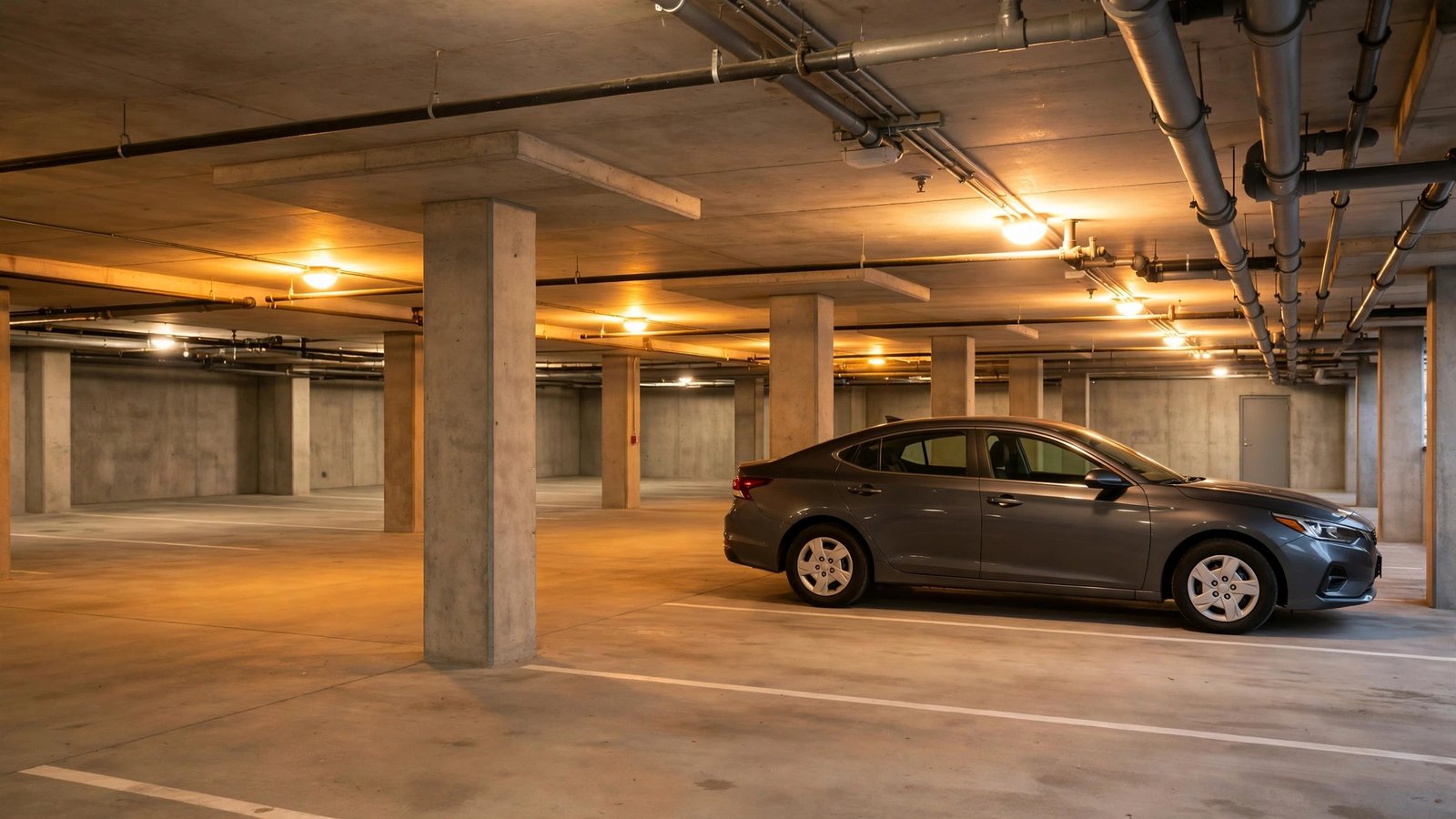
Paid parking at apartment buildings isn’t one single product. A garage spot — a space in an enclosed or underground structure — usually commands the highest fee because it offers weather protection and controlled access. An assigned lot space is a numbered or marked spot in an open lot reserved for you. A reserved surface spot is the same idea, sometimes closer to the entrance or covered.
As of 2026, typical ranges run roughly $75–$125 a month for an assigned surface or lot spot in mid-size cities, and $125–$200+ a month for a garage spot in dense urban areas. Prices vary sharply by city: in walkable downtowns with scarce parking, fees can run higher, while in car-dependent suburbs a “paid” lot spot may not exist at all. Ask the leasing office exactly what type of spot the fee covers, whether one fee covers one car, and what guest parking costs — these details differ by building.
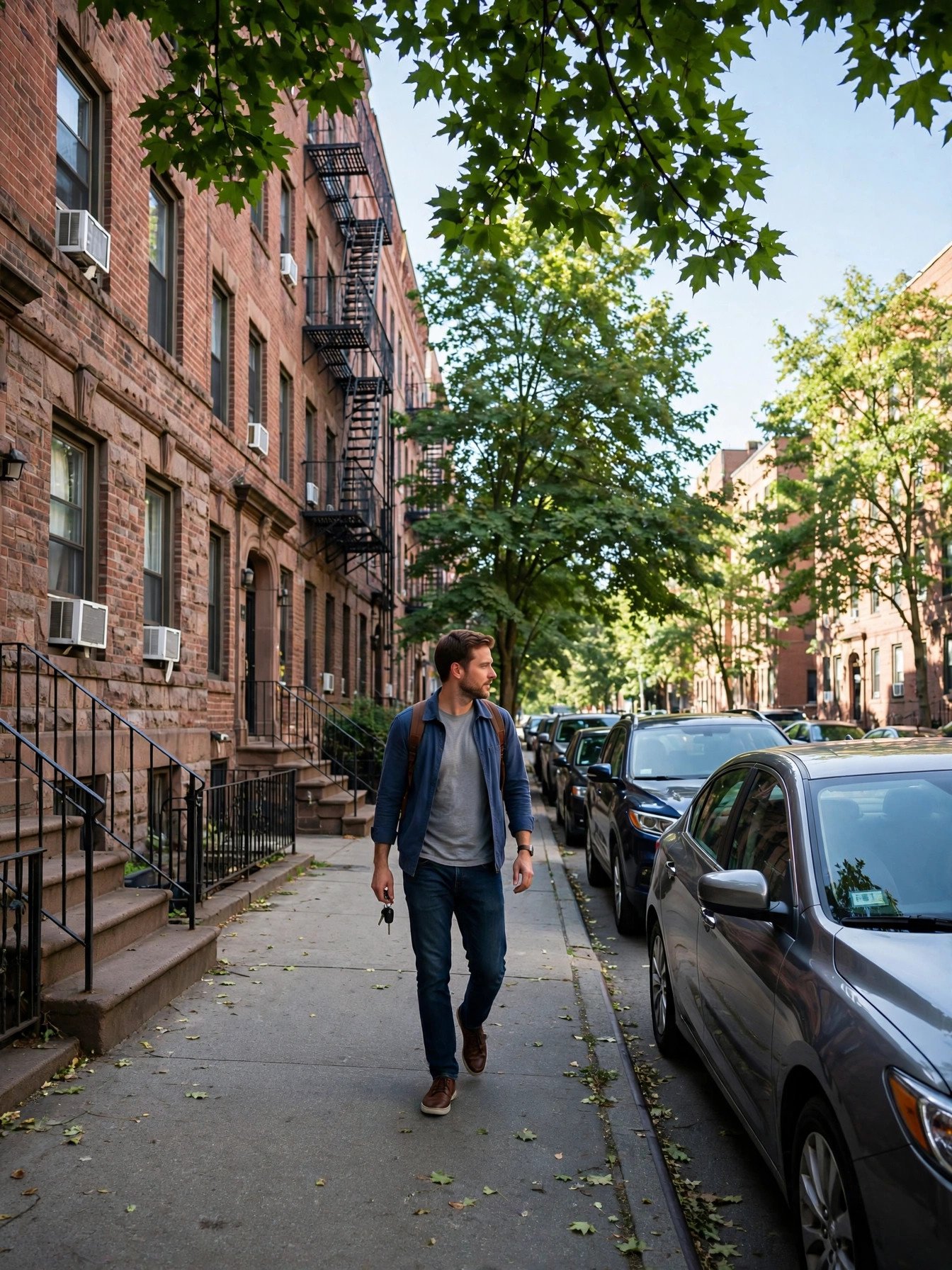
Street parking costs nothing on your lease, but it has a price tag all the same. The most obvious is tickets and towing: street-sweeping days, permit zones, snow-emergency routes, and metered blocks all carry fines that vary by city, and a single tow can cost what a month of paid parking would have. If you forget one restriction once or twice a year, that alone can erase the savings.
Less obvious but just as real: time. Circling for a spot after a long shift eats evenings and fuel. Damage is another: bumpers and side mirrors take hits on tight city curbs, and door dings accumulate. There’s also the safety angle — walking several blocks from a far-away spot late at night, or returning to find a break-in, is a cost of a different kind. None of these appear in a rent comparison, which is exactly why first-timers underestimate them.
3. Insurance and Safety Angles

Here’s a detail many first-time renters never consider: where your car sleeps at night can matter to your car insurance. Vehicles parked in a secured garage overnight generally present lower theft and vandalism risk than vehicles on the street, and insurers typically ask where your car is parked. That doesn’t guarantee a discount, but it’s worth asking your insurer whether a garaged vehicle changes your comprehensive coverage price — the answer sometimes narrows the gap between a paid spot and free parking.
Safety also means you, not just your car. A garage with controlled access and lighting changes the feel of arriving home at midnight after a late shift. If you’re touring apartments, walk the parking area at night if possible. Good lighting, a fob or keypad entrance, and visibility from the building are the features that matter — a cheap lot spot with none of these may not be worth paying for at all.
4. Your 12-Month Break-Even Worksheet

This is the core of the decision. Fill in each line with your own numbers; the example figures below are illustrations only, not promises about what your city charges.
Paid parking side (annual):
- Monthly parking fee × 12 — example: $125 × 12 = $1,500
- One-time extras (deposit, transponder, or fob fee, if any) — example: $75
Street parking side (annual):
- Expected tickets per year × average fine — example: 2 × your city’s fine
- Possible tow or boot (prorated — ask locals how common it is) — example: one tow
- Extra fuel from circling (minutes per day × your commute) — estimate honestly
- Damage and repairs attributable to street parking — example: one bumper scuff
- Any insurance difference your insurer quotes you for street vs. garage — ask directly
- Your time, in dollars: circling hours per month × what an hour of your evening is worth to you
The decision rule: add each column. If the street-parking column comes within roughly 20–30% of the paid column, the paid spot usually wins — because the street column is always an underestimate. Ticket frequency, tow risk, and damage are the lines first-timers most often leave blank; fill them honestly.
5. When Paid Parking Pays Off
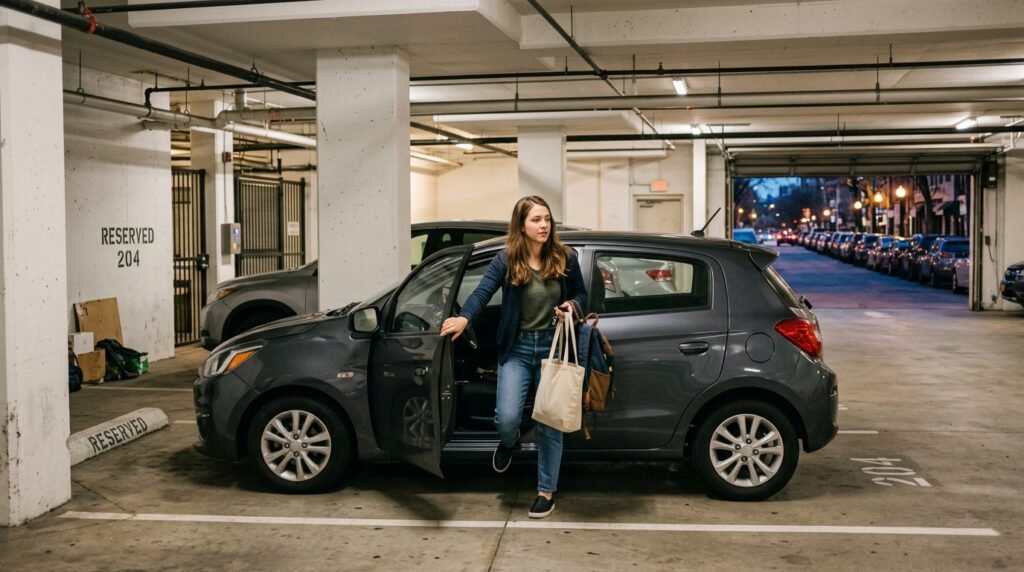
For certain first-time renters, paid parking isn’t a luxury — it’s the correct financial call. It typically pays off when you drive to work daily, because the circling-time cost compounds five days a week. It pays off in dense neighborhoods where street parking genuinely disappears after 6 p.m. — tour the block at night before deciding, not at noon. It pays off on late or irregular shifts, when safety and convenience carry real weight.
It also pays off when your car is expensive to repair or would be costly to replace, since one avoidable body repair can exceed months of parking fees. And in cities with strict parking enforcement or aggressive towing zones, the fee functions almost like insurance. If three or more of these describe your situation, the spot is worth the line item in your budget.
6. When Free Parking Wins
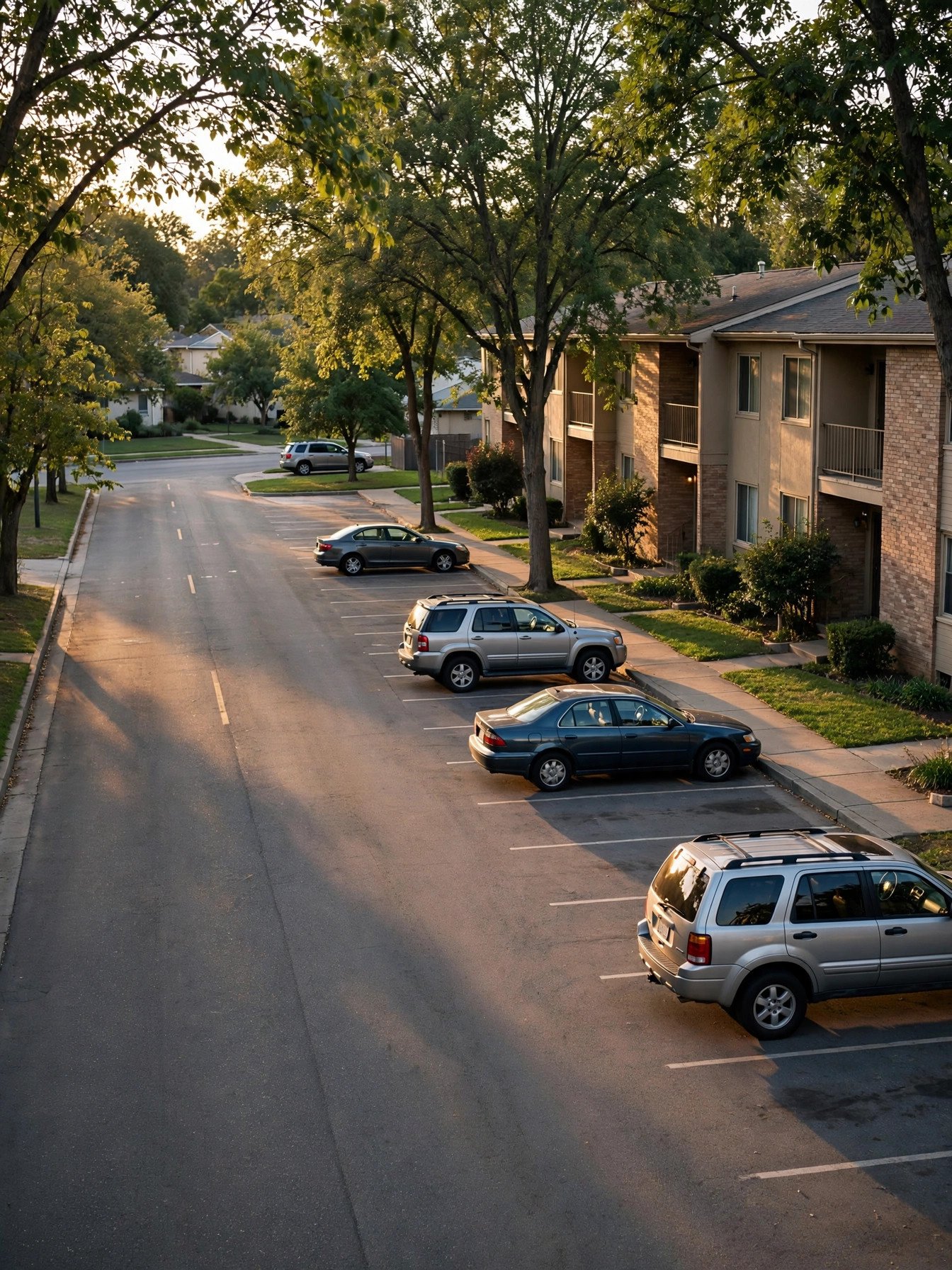
Street parking wins in the opposite conditions — and first-time renters in these situations should keep the money. If your apartment is in a residential area with abundant, unrestricted curb space, and you can see open spots on a weeknight evening, paying for an empty lot spot adds nothing. If you drive rarely — remote work, transit commute, weekend-only errands — the per-use cost of a paid spot becomes hard to justify.
It also wins when the building’s paid options are weak: an unlit open lot at $100 a month offers little over the curb. And frankly, if your budget is stretched so thin that $100 a month threatens your rent, skipping the spot is the right call — many renters park on the street safely for years. The math in section 4 is there to make this a decision, not a reflex.
7. Lease Fine Print and Negotiation Tips

Before signing, read the parking clauses as carefully as the rent ones. Confirm whether the parking fee is a separate monthly add-on or baked into rent — it matters for rent-increase math and for what happens if you give up the spot later. Ask about towing rules, guest parking, waitlists for better spots, and what happens if your car is damaged in the lot (the building’s liability is typically limited, and you should know that upfront).
As a first-timer, you can also ask questions most people don’t. If you’re deciding between two units at the same building, ask whether a parking spot can be bundled or discounted for a 12-month lease. If you don’t need a spot yet but might, ask whether spots can be added mid-lease — some buildings let you, some don’t, and knowing this removes the pressure to decide at signing. Get every parking promise in writing: the spot number, the fee, and the terms, in the lease or an addendum.
For more on reading the rest of your lease carefully, see our guide on things to know before signing your first US lease. If you’re curious about tandem setups, where one car parks behind another, read our tandem parking guide. And for the full picture of what else might show up on your monthly bill, browse the Budgeting & Renting Costs category.
FAQ
How much is apartment parking per month?
As of 2026, typical ranges run about $75–$125 a month for an assigned surface or lot spot in mid-size cities, and $125–$200 or more a month for a garage spot in dense urban areas. Luxury or downtown buildings can charge more, while some suburban buildings include surface spots at no charge. Always ask what type of spot the fee covers.
Is apartment garage parking worth it over a surface spot?
A garage spot is worth the higher fee when weather protection, controlled access, and late-night safety matter to you — daily commuters, late-shift workers, and renters in harsh-winter or high-theft areas benefit most. If the garage is dark, unsecured, and far from your unit, it may not beat a well-lit surface spot.
Is assigned parking at an apartment worth the fee?
Assigned parking is worth it when you arrive home at predictable times and want a guaranteed spot close to your door instead of hunting for one. It’s less valuable if you keep irregular hours (your spot may sit empty while others hunt) or if the building’s lot is rarely full anyway.
What’s the difference between paid parking and street parking for apartments?
Paid parking means a space reserved for you on the building’s property, billed monthly. Street parking means public curb space — free on your lease but subject to city rules, tickets, towing, time spent searching, and damage risk. The worksheet in section 4 totals both sides so you can compare them as annual costs.
Can I get out of an apartment parking fee mid-lease?
It depends on your lease. Some buildings let you drop the add-on with notice; others bundle it into the rent or require the full lease term. Ask before signing, and get the answer in writing in the lease or an addendum.
Does free parking with an apartment have downsides?
Yes — “free” parking usually means unreserved lot spots or street parking, which can fill up, expose your car to weather and minor damage, and add a late-night walk from wherever you found space. Weigh these against the fee with the break-even worksheet above.
Should a first-time renter negotiate apartment parking fees?
Yes — or at least ask. Request bundling discounts for a 12-month lease, ask about waitlists for cheaper spots, and confirm whether spots can be added mid-lease so you’re not pressured to commit at signing. The worst outcome is a polite no.
Conclusion

So is paying for apartment parking worth it? For the car-owning first-time renter, the honest answer is: it depends on your block, your commute, and your hours — which is exactly why the 12-month worksheet matters more than anyone’s opinion. Total both columns with your real numbers, and if the street-parking side comes within 20–30% of the paid side, buy the spot. If this math helped clarify the decision, save or share it with another first-time renter doing the same comparison.

Maren started MyFirstLease after a rough first lease taught him everything the internet didn’t. He covers the logistical side of renting — move-in checklists, utilities, and the unglamorous first-week stuff nobody explains — and oversees everything published on the site.