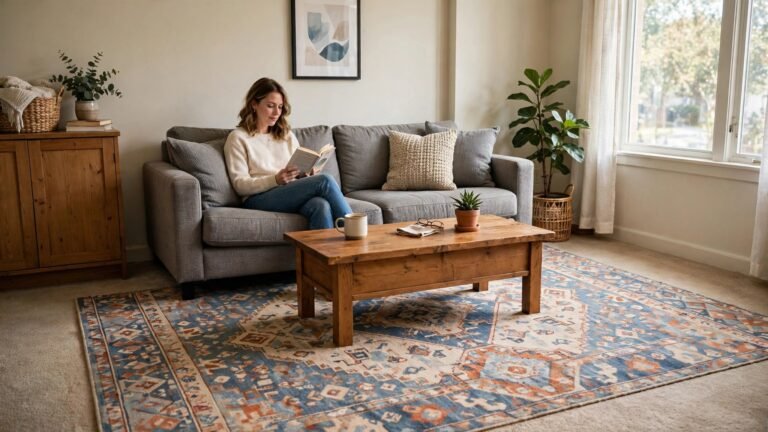
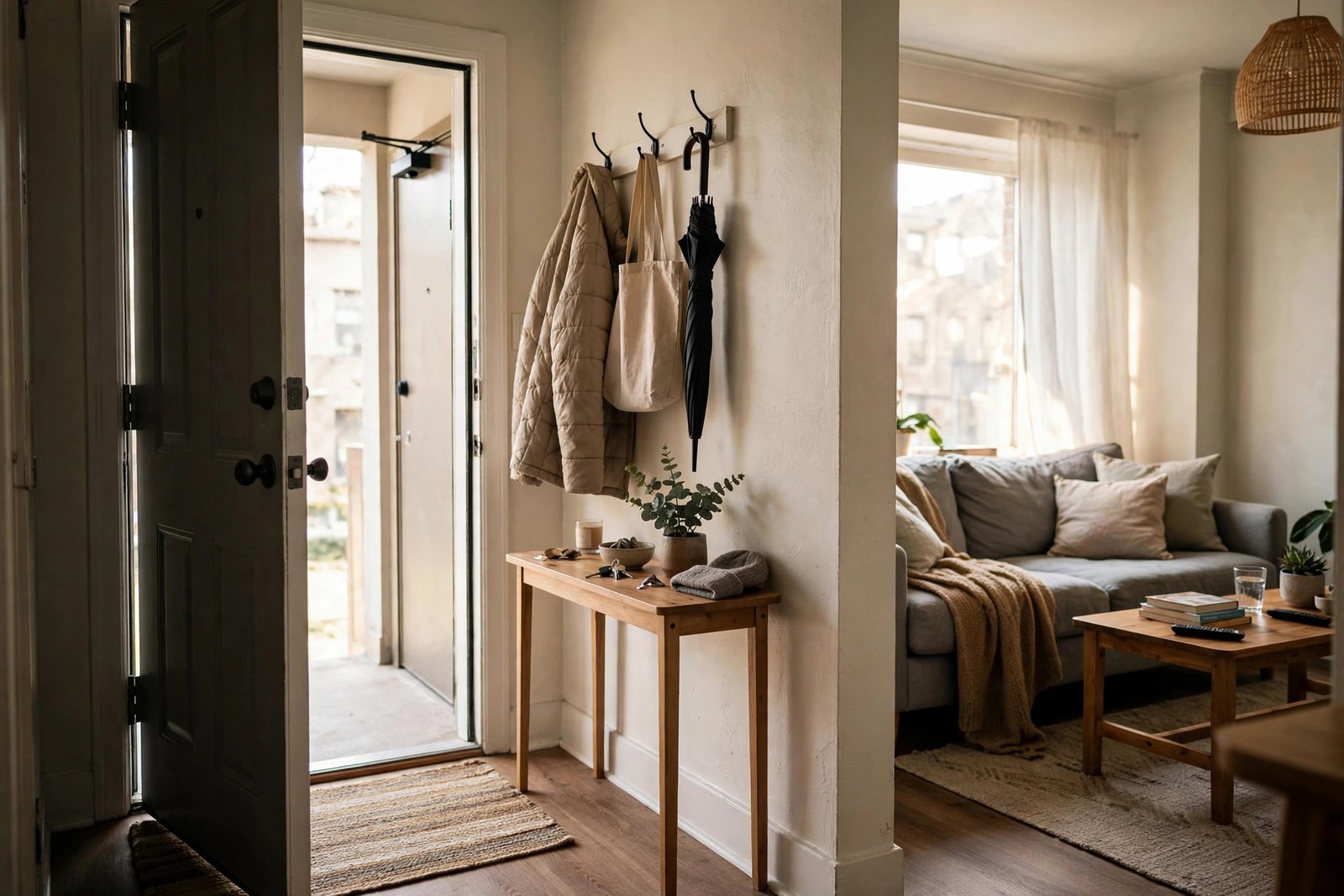
If your front door opens straight into your living room, small apartment entryway ideas for renters can turn those first few feet into a working drop zone instead of a pile of shoes, bags, and mail. This guide is for a first-time renter in a studio or small one-bedroom with no foyer, no coat closet by the door, and a lease that rules out drilling into walls.
Every idea here is freestanding, adhesive, over-the-door, or tension-based, sized for a tight footprint, and reversible at move-out. You will get a simple way to define the zone first, then storage, light, and privacy fixes you can add one at a time, in the order that solves the biggest daily problem first.
Direct answer: Create an entryway where none exists by marking a small zone by the door with a rug, adding vertical no-drill storage for keys, coats, and shoes, and using a slim divider or curtain for separation. Keep everything within about 3 by 4 feet, freestanding or removable, and clear of the door swing.
Summary

A missing foyer is a layout problem, not a reason to live with clutter by the door. This article walks through 12 ideas in a practical order: define the footprint, hang things without drilling, choose furniture that earns its inches, contain shoes and bags, fix the light, and add privacy so the entry does not feel like part of the sofa.
You will also get a measure-first planner that turns those ideas into a single 3-by-4-foot plan. For more small-space setups like this, browse our decorating and small space living guides, which cover the rest of a studio or small one-bedroom in the same renter-safe way.
1. Claim a Corner First

Idea 1 — Lay a washable runner or small rug
A flat-weave rug, roughly 2 by 3 feet to 2 by 5 feet depending on your door swing, is the fastest boundary you can make. It tells your eye — and your guests — where outside ends and home begins, catches dirt before it reaches the living area, and needs no fasteners. Choose low pile so the door clears it, and add a thin non-slip pad underneath if your lease allows it and the floor tends to shift rugs.
Idea 2 — Stop the zone with one vertical edge
Place a tall plant, a floor lamp, or the end of a low bookcase at the far edge of the rug. That single vertical line finishes the boundary the rug started, without a wall or partition. This is the core move behind most entryway ideas for apartments with no foyer: floor plus edge, read together, feels like a separate place even in one open room.
Before you buy anything, open the door fully and mark its swing on the floor with painter’s tape. Anything inside that arc will get hit, block the door, or make coming home with groceries harder than it needs to be.
2. Hang It, Don’t Drill It

Idea 3 — Use an over-the-door hook rail
The back of the front door — or a nearby closet door — can hold coats, a tote, and a cap without a single hole. Choose a rail with padded or flat hooks that fits your door thickness, and check that the door still closes and latches cleanly with the rail in place. Hang the heaviest item closest to the hinge side to reduce strain.
Idea 4 — Add removable adhesive hooks for the small stuff
Keys, a lanyard, a dog leash, and a reusable shopping bag are the items that otherwise land on the sofa. A short row of removable adhesive hooks or a removable peg strip at shoulder height gives each one a home. These small entryway ideas no drill renters rely on only work if you follow the product’s weight rating and surface instructions, clean the wall as directed before mounting, and remove the strips exactly as directed at move-out — that care is what reduces the risk to paint and to your deposit. When in doubt, hang the lightest items here and keep heavy coats on the door rail.
Test one hook first for a few days before committing a whole row. Paint and finishes vary, and a small test is cheaper than a repair.
3. Pick Slim Landing Furniture

Idea 5 — Choose a narrow console or shoe-cabinet depth table
Look for a piece about 10 to 12 inches deep rather than standard living-room depth. That shallower footprint gives you a landing surface for mail and a wallet while still leaving a clear walking path. If the wall by your door is too short for a table, a single freestanding shelf unit turned to the wall can do the same job.
Idea 6 — Put a tray and a closed box on top
Open surfaces collect clutter; a tray corrals it. Use one shallow tray for keys and sunglasses and one small lidded box or basket for mail waiting to be sorted. That pairing is tiny apartment entryway storage at its simplest: everything that enters has either a visible spot or a contained spot, and neither takes extra floor space.
Keep the surface mostly clear on purpose. If the landing spot is already full, incoming mail has nowhere to go except the couch — which is the pile this section is meant to prevent.
4. Contain Shoes and Bags
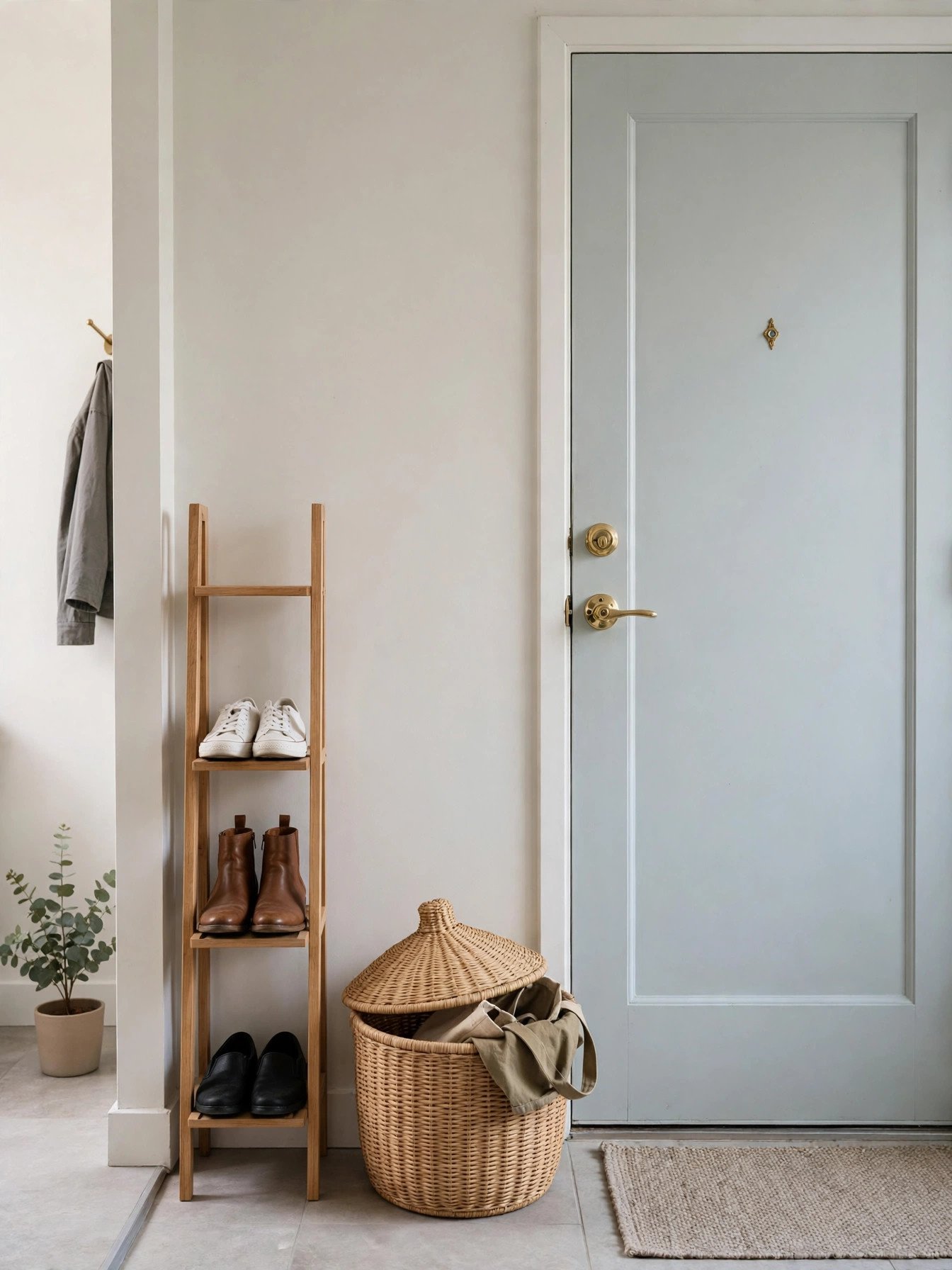
Idea 7 — Go vertical with shoe storage
A slim vertical shoe rack, a narrow freestanding shoe cabinet, or clear over-the-door shoe pockets keep pairs off the floor without eating the walking path. Limit the entry to the pairs you wear most — two or three for most people — and store the rest in a closet or under the bed. That limit, not the rack itself, is what keeps the zone from creeping.
Idea 8 — Give bags one basket or one hook zone
A single lidded basket on the floor beside the console, or the lowest hooks on your door rail, should be the only home for a work bag, gym bag, or tote. When bags have one address, they stop migrating to chairs and the sofa. This is also where a small mat or tray under wet shoes and umbrellas protects the floor in winter and rainy weeks.
If shoe clutter is a whole-apartment problem rather than just an entry problem, our guide to where to put shoes in a small apartment covers the other spots worth using. Here, keep only the daily pairs.
5. Add Mirror and Light
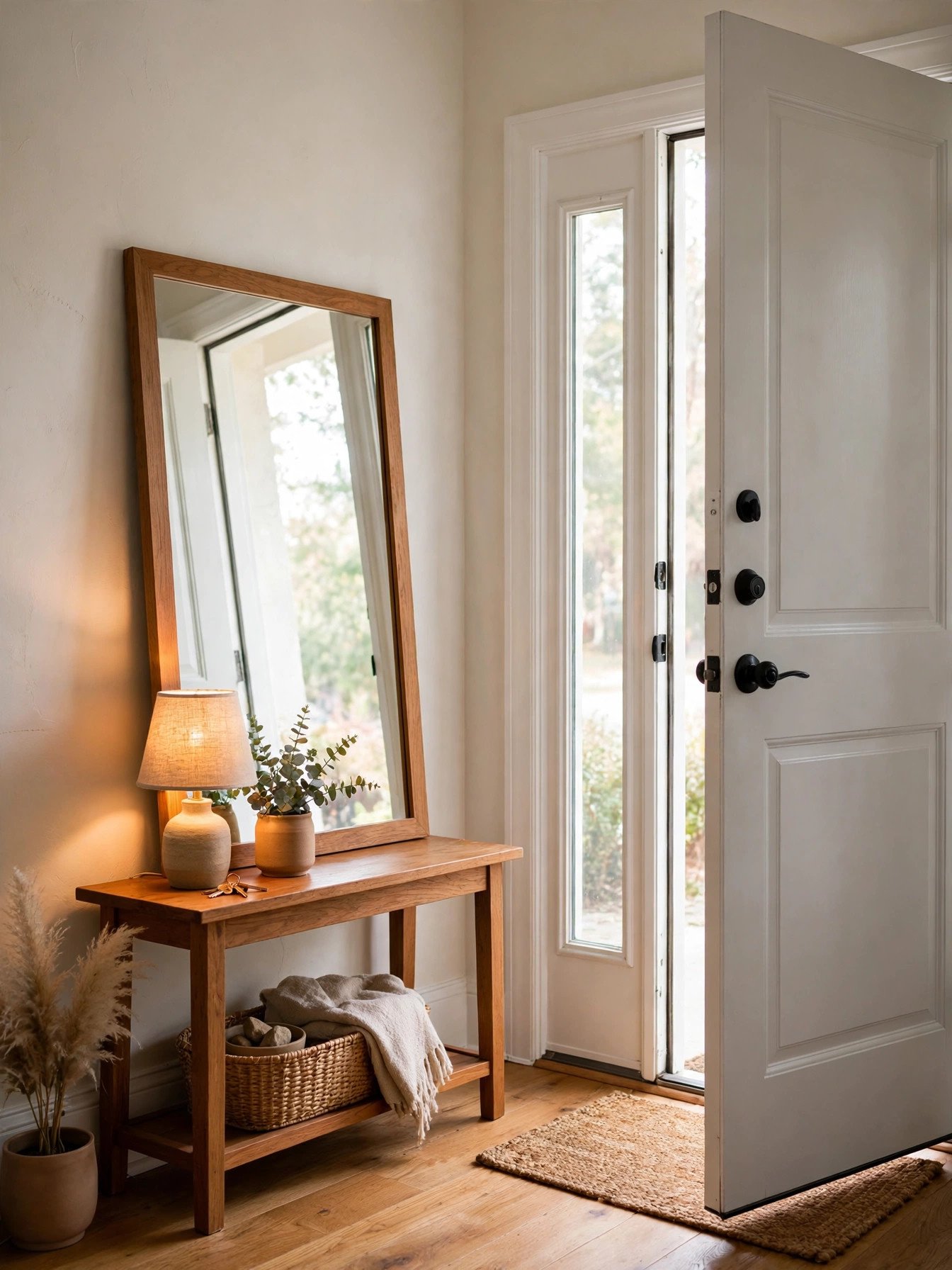
Idea 9 — Lean or hang a mirror without new holes
A mirror by the door is useful for a last check on the way out and bounces living-room light into what is often the darkest corner of a small apartment. A leaning mirror on a stable, out-of-traffic spot, or a lightweight mirror hung from an existing hook or over-door hanger rated for its weight, avoids new holes. Keep it clear of the door swing, and never lean a heavy mirror where it can be knocked by the door or by passing bags.
Idea 10 — Layer in a small plug-in or battery light
Many studio entries have no nearby ceiling light that actually reaches the door. A small plug-in lamp on the console, a motion-sensor battery light inside the shoe cabinet area, or a warm bulb in the floor lamp at your zone’s edge makes coming home at night feel finished rather than improvised. Choose warm, even light over a harsh single bulb, and keep cords run along the wall, not across the walking path, to reduce tripping risk.
Together, mirror plus light do the visual work a foyer wall would do: they signal “this is a distinct spot” every time you walk in.
6. Create Privacy and Separation
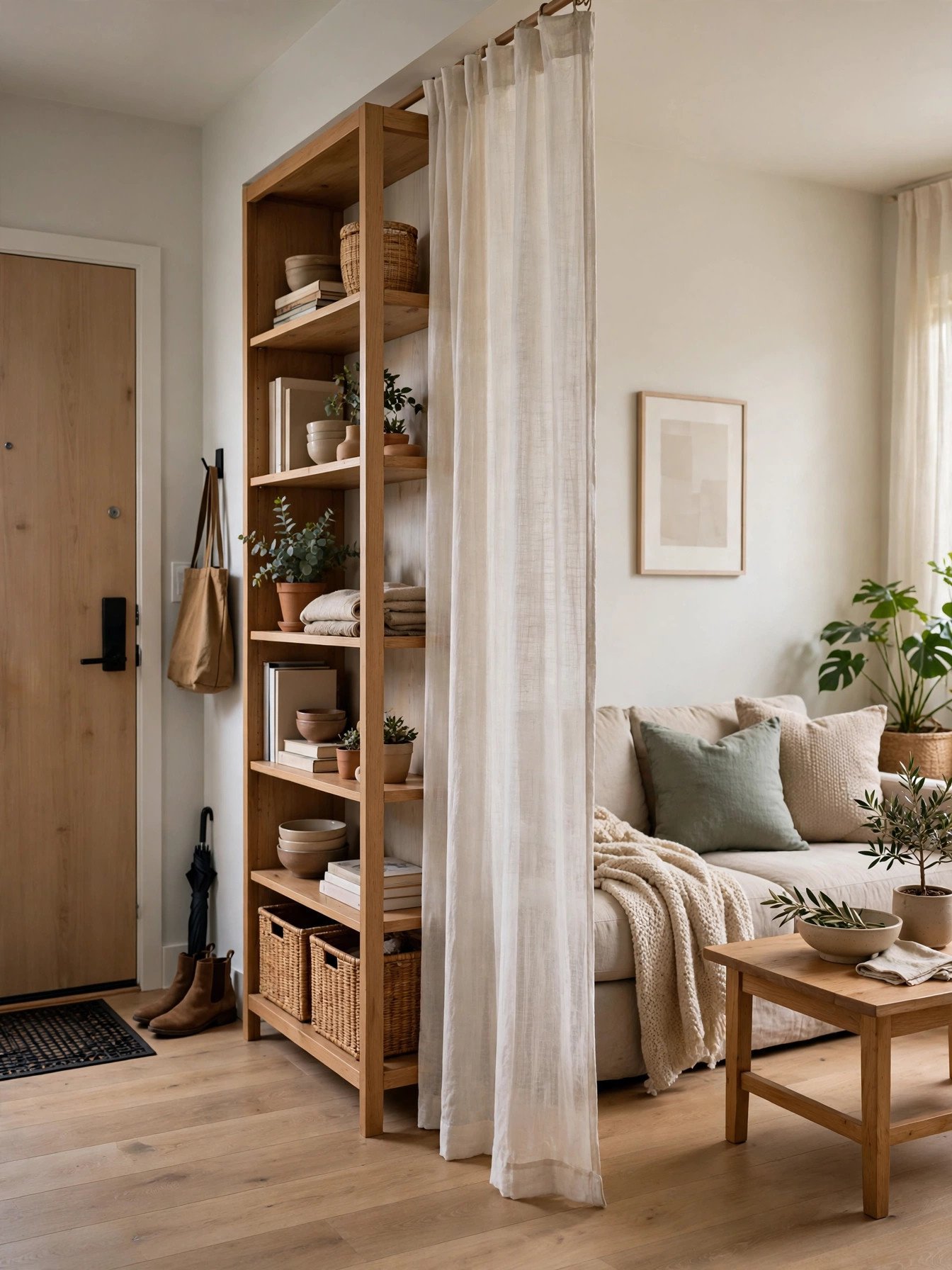
Idea 11 — Screen the sofa sightline
When the door opens, visitors — and delivery drivers — can often see straight to your bed or sofa. An open-backed bookcase placed at the edge of your entry zone, a folding screen, or a tension-rod curtain panel can break that sightline without blocking light the way a solid divider would. Leave a clear path at least wide enough to carry groceries and move furniture through; a screen you have to squeeze past daily will not last.
Idea 12 — Use a curtain for the softest divide
A tension rod in a doorway-width gap, or a freestanding garment rack with a curtain or fabric panel, gives you a flexible divide you can open fully when you need the space back. It is one of the most adaptable no foyer entryway solutions for a studio because it separates entry from sleeping area visually while adding almost no weight or footprint.
For fuller layout options beyond the doorway, see our guide to how to divide a studio apartment for privacy. This article stays focused on the entry sightline, which is usually the only separation a small one-bedroom needs.
7. Use the Planner, Then Edit

Ideas only help if they fit your actual door, swing, and wall length — so measure before you buy. The planner below is the practical asset for this piece: fill in your measurements, assign one item per row, and stop when the plan is full. If a new item cannot fit a row, something else leaves. That one-in, one-out rule is the whole system behind lasting apartment entryway organization.
The 3-by-4-Foot Entryway Planner
| Zone | Use it for | Item to choose | Max footprint guide |
|---|---|---|---|
| Floor by the door | Define the entry, catch dirt | Washable low-pile rug or runner | About 2 x 3 ft to 2 x 5 ft, clear of door swing |
| Back of the door | Coats, tote, cap | Over-the-door hook rail | No floor footprint; check door still latches |
| Wall beside the door | Keys, leash, small items | Removable adhesive hooks (follow weight rating) | Shoulder-height row, lightest items only |
| Narrow wall run | Landing surface, mail | Slim console about 10–12 in deep + tray + lidded box | Leave a clear walking path past it |
| One vertical corner | Shoes and bags | Slim shoe rack or cabinet + one bag basket | Daily pairs only — 2 to 3 pairs at the entry |
| Edge of the zone | Boundary, light, privacy | Floor lamp, plant, bookcase, screen, or curtain | Must not narrow the path or block the door swing |
Work through small apartment entryway ideas for renters in this order — floor, door, wall, surface, shoes, edge — and photograph the finished zone. That photo is useful twice: it helps you notice what creeps back within a week, and it records the wall and floor condition near your door, which supports the same careful documentation habit that protects a deposit at move-out.
FAQ
What are the best entryway ideas for apartments with no foyer?
Start with a rug to define the zone, an over-the-door hook rail for coats, and a slim landing surface with a tray for keys and mail. Those three moves solve the daily problems — dirt, hanging storage, and clutter — before you spend on decor or dividers.
How can renters add entryway storage without drilling?
Use freestanding pieces (a slim console, a vertical shoe rack, a basket), over-the-door rails and pockets, tension rods, and removable adhesive hooks used within their weight ratings and removal instructions. If a product needs screws to be stable, it is not a no-drill solution — choose the freestanding version instead.
Where do you put a coat if there is no entry closet?
On an over-the-door hook rail, on a freestanding coat stand in the entry corner if your footprint allows it, or on the lowest, strongest hook in your entry zone. Keep it to the coat you are actively wearing this week; off-season coats belong in a closet, under-bed storage, or a wardrobe if you have one.
How do you make a studio entry feel separate from the living room?
Define the floor with a rug, add one vertical edge such as a lamp, plant, or bookcase end, and break the direct sightline from the door to the sofa or bed with an open bookcase, screen, or curtain. Floor, edge, and sightline together create separation without a wall.
What size rug works for a tiny entryway?
A low-pile rug around 2 by 3 feet suits most single doors; a 2-by-5-foot runner works when you have a short wall run beside the door. The deciding test is the door swing: the door must open fully over the rug without catching, and you need a clear path past it.
Will adhesive hooks damage my walls?
They are designed to be removable, but results depend on the paint, the surface, the weight hung, and whether the mounting and removal instructions are followed exactly. Test one hook first, hang only light items, and check your lease — some leases restrict adhesive products, and the lease controls if there is a conflict.
How many shoes should stay at the entry?
Two to three daily pairs is a workable limit for most studio and small one-bedroom entries. It keeps the rack small, the floor clear, and the zone from expanding. Store extra and off-season pairs elsewhere.
Conclusion

A door that opens into your living room does not have to mean shoes on the rug and mail on the sofa. Define a small zone, hang storage without drilling, keep furniture slim, and break the sightline, and those first few feet start working like a real foyer. Start with the rug, the door rail, and the tray, live with them for a week, then add only what the planner shows you still need. Used that way, small apartment entryway ideas for renters stay cheap, reversible, and easy to undo at move-out. If this helped, save it for your next small-space fix.

Maren started MyFirstLease after a rough first lease taught him everything the internet didn’t. He covers the logistical side of renting — move-in checklists, utilities, and the unglamorous first-week stuff nobody explains — and oversees everything published on the site.