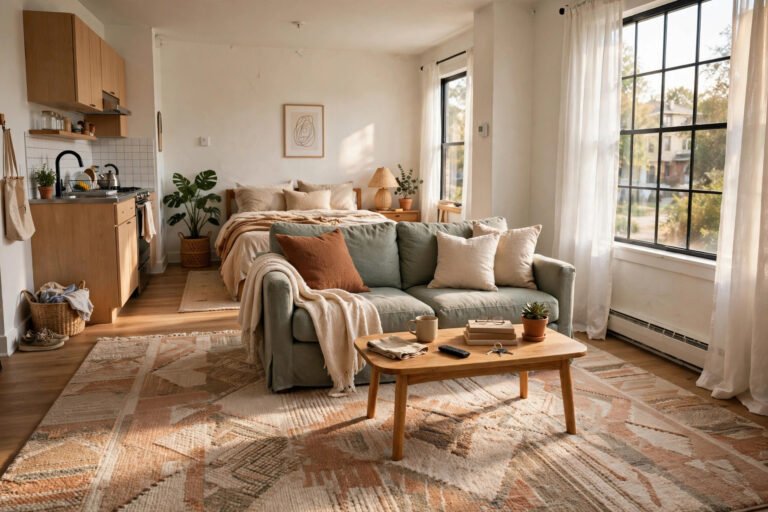

Moving into an empty apartment with a thin wallet is a specific kind of panic. If you want to furnish your first apartment on a budget, the mistake most people make is trying to buy everything in one weekend — which is how a $1,500 budget turns into $3,000 of credit card debt and a living room full of things you didn’t need yet.
This plan is for first-time renters starting from zero furniture: recent grads, single parents, anyone whose moving truck contains mostly boxes of clothes and hope. Instead of one giant shopping trip, you buy in five phases over 90 days, spending money only when each purchase earns its place. Total target: under $1,500, with every dollar mapped before you spend it.
In short: To furnish your first apartment on a budget, buy in phases over 90 days: a first-night survival kit (under $100), sleep and kitchen basics in weeks 1–2 (~$400), seating and storage in weeks 3–4 (~$400), a work setup in month 2 (~$300), and decor in month 3 (~$200). Prioritize what you touch daily; buy secondhand where safety allows.
Summary

Most furnishing guides hand you a single 60-item checklist and a cheerful “good luck.” That format fails first-time renters, because it treats a mattress and a throw pillow as equally urgent. They’re not. This article replaces the mega-checklist with a phased buying plan: five stages, each with a spending cap, each building on the last, so your apartment becomes livable in week one and comfortable by month three.
You’ll also get a realistic $1,500 budget breakdown with approximate prices (as of 2026), a thrift-store strategy that separates the safe secondhand buys from the ones to buy new, and the common mistakes that blow budgets in the first month. Everything is sequenced around one rule: buy what your daily life needs first, and let the apartment tell you what it needs next.
1. First-Night Survival Kit

Before the furniture conversation starts, there’s the first-night problem: you’ll sleep in the apartment before any of it arrives. Pack a dedicated box or bag — separate from everything else — with an air mattress or sleeping pad, bedding, a pillow, basic toiletries, toilet paper, a phone charger, a change of clothes, medications, a few cleaning wipes, and snacks. This kit costs under $100 if you buy the air mattress new (roughly $40–$70 as of 2026) and pull the rest from what you already own.
The common mistake is burying these items in general moving boxes. Label one box “OPEN FIRST” in large letters and load it last so it comes off the truck first. Your future self, arriving exhausted at 9 p.m., will thank you.
2. Weeks 1–2: Sleep and Eat

Sleep quality and the ability to feed yourself are the entire foundation — everything else can wait. Your week-one purchases: a mattress, a bed frame (or platform), bedding, and kitchen basics.
For the mattress, a bed-in-a-box in the $250–$400 range is the budget sweet spot as of 2026; anything much cheaper tends to sag within a year, which is a false economy. A simple metal platform frame ($80–$150) skips the box spring entirely. Kitchen basics means a pot, a pan, a baking sheet, a knife, a cutting board, a spatula, plates, bowls, cups, and utensils — a starter set or thrifted pieces, roughly $60–$100 total. Add a shower curtain, rod, and rings (standard sizes are 72×72 inches — measure first), bath towels, and basic cleaning supplies.
Phase budget: about $450. If money is extremely tight, the mattress is the one item worth stretching for; a bad mattress affects everything else in your life, while a missing coffee table affects nothing.
3. Weeks 3–4: Sit and Store

By week three you know the apartment’s rhythms — where you naturally sit, where clutter accumulates. Now buy seating and storage, in that order. One comfortable place to sit (a secondhand sofa or a new loveseat, roughly $150–$350) changes daily life more than any decor item. Then storage: a dresser or a set of stackable bins for clothes, and shelving or a bookcase if your closets are shallow.
This is the phase where people overspend on matching sets. Don’t. Buy the single best seating piece you can afford and live with mismatched everything else for a month. Measure doorways and stairwells before buying anything large — secondhand sofas are cheap partly because someone else couldn’t get them up the stairs either.
Phase budget: about $400.
4. Month 2: Work and Relax

If you work or study from home, month two is when the dining chair you’ve been using as an office chair starts billing you in back pain. A basic desk ($80–$150 new, often under $50 used) and an actual desk chair ($100–$200 — this is the second item worth buying decent, after the mattress) come now. Add a floor lamp or desk lamp if your overhead lighting is the standard rental-grade harsh white; warm lighting is the cheapest atmosphere upgrade that exists (bulbs run a few dollars each).
Also month two: window coverings for the bedroom if you don’t have them. Sleep matters more than aesthetics, and blackout curtains or even temporary paper shades ($5–$10 per window) pay for themselves in rest.
Phase budget: about $300.
5. Month 3: The Finishing Layer

Only now — with sleep, food, seating, storage, and work handled — does decor earn budget. The rule for month three: nothing purely decorative until every functional gap is closed. Then: wall art or prints, throw pillows, a rug for the main living area (this single item makes a bare apartment feel finished), plants, and small organizational upgrades like drawer dividers or a shoe rack.
Shop this phase almost entirely secondhand and on clearance. Decor is where retail markup is highest and where thrift stores are deepest. Set a hard cap — $200 — and treat it as a creative constraint, not a deprivation. For room-by-room ideas on a budget, see our renter-friendly decorating guide.
Phase budget: about $200.
6. The $1,500 Breakdown

Here’s the full plan in one view, with approximate costs as of 2026. Prices vary by city and store; treat these as planning numbers, not quotes.
| Phase | What you’re buying | Approx. cost | Where to look |
|---|---|---|---|
| First night | Air mattress, bedding, toiletries, basics box | Under $100 | What you own + one store trip |
| Weeks 1–2 | Mattress, platform frame, kitchen starter set, bath setup, cleaning supplies | ~$450 | Mattress new; kitchen thrifted or starter set |
| Weeks 3–4 | Sofa/loveseat, dresser or bins, shelving | ~$400 | Secondhand first, then budget retail |
| Month 2 | Desk, desk chair, lamps, bedroom window coverings | ~$300 | Used desk; chair new or quality used |
| Month 3 | Rug, wall art, pillows, plants, small organizers | ~$200 | Thrift, clearance, marketplace |
| Total | ~$1,450 |
Two items are worth buying new even on a tight budget: the mattress (hygiene and longevity) and, if you sit for work, the desk chair (your back). Almost everything else is safe secondhand — which brings us to the strategy.
7. Thrift-Store Strategy

Secondhand is how a $1,500 budget actually works, but not everything should be bought used. Safe secondhand buys: solid-wood furniture (dressers, tables, bookshelves — check for sturdiness and smooth drawer operation), lamps (rewire or just check the cord), kitchenware you can sanitize (pots, dishes, utensils — run through a dishwasher on hot), and decor. Our zero-budget decorating guide has more free and thrifted ideas.
Buy new: mattresses and pillows (hygiene), anything upholstered you can’t fully inspect (bedbugs hide in seams — check tufting and piping carefully if you buy a used sofa, or skip it), and safety items like smoke detectors or fire extinguishers.
Timing matters at thrift stores: weekday mornings typically have the best selection, and furniture moves fast — if a solid-wood dresser is $60 and you need it, don’t wait for the weekend. For online marketplaces, search with misspellings (“dresser” vs “chester drawers”) and filter by “free” for curb-alert finds; always bring help and a vehicle for anything large.
Frequently Asked Questions
What furniture should I buy first for a new apartment?
A mattress and bedding first, then kitchen basics and bath essentials. Seating, storage, and a work setup follow in that order. Decor comes last — only after every functional need is covered.
How much does it cost to furnish a first apartment?
Done in phases with a mix of new and secondhand, roughly $1,400–$1,500 covers the essentials over 90 days (approximate, as of 2026). Buying everything new at once from mid-range retailers can easily run three to five times that.
Is it better to buy furniture all at once or over time?
Over time. Phasing purchases lets you learn how you actually use the space, avoids buying things you don’t need, and spreads the cost so you’re not financing furniture on credit.
What should I never buy used for an apartment?
Mattresses and pillows, for hygiene reasons. Be cautious with upholstered furniture — inspect seams and tufting for bedbugs, or buy new. Everything solid (wood furniture, lamps, dishes) is generally safe secondhand after cleaning.
How can I furnish an apartment with no money at all?
Start with free sources: curb alerts, “buy nothing” groups, and family hand-me-downs cover seating, tables, and kitchenware surprisingly well. Spend your first dollars on a mattress and cleaning supplies — the two things free sources can’t reliably provide.
Do I need a bed frame, or can the mattress go on the floor?
A mattress on the floor works short-term, but it traps moisture underneath and voids some mattress warranties. A basic metal platform frame ($80–$150) solves both and needs no box spring.
What size rug do I need for a living room?
For most apartment living rooms, a 5×8-foot rug anchors a sofa and coffee table arrangement; in a studio, 4×6 often fits better. When in doubt, measure your seating area and choose the size that lets the front legs of the sofa sit on the rug.
Conclusion
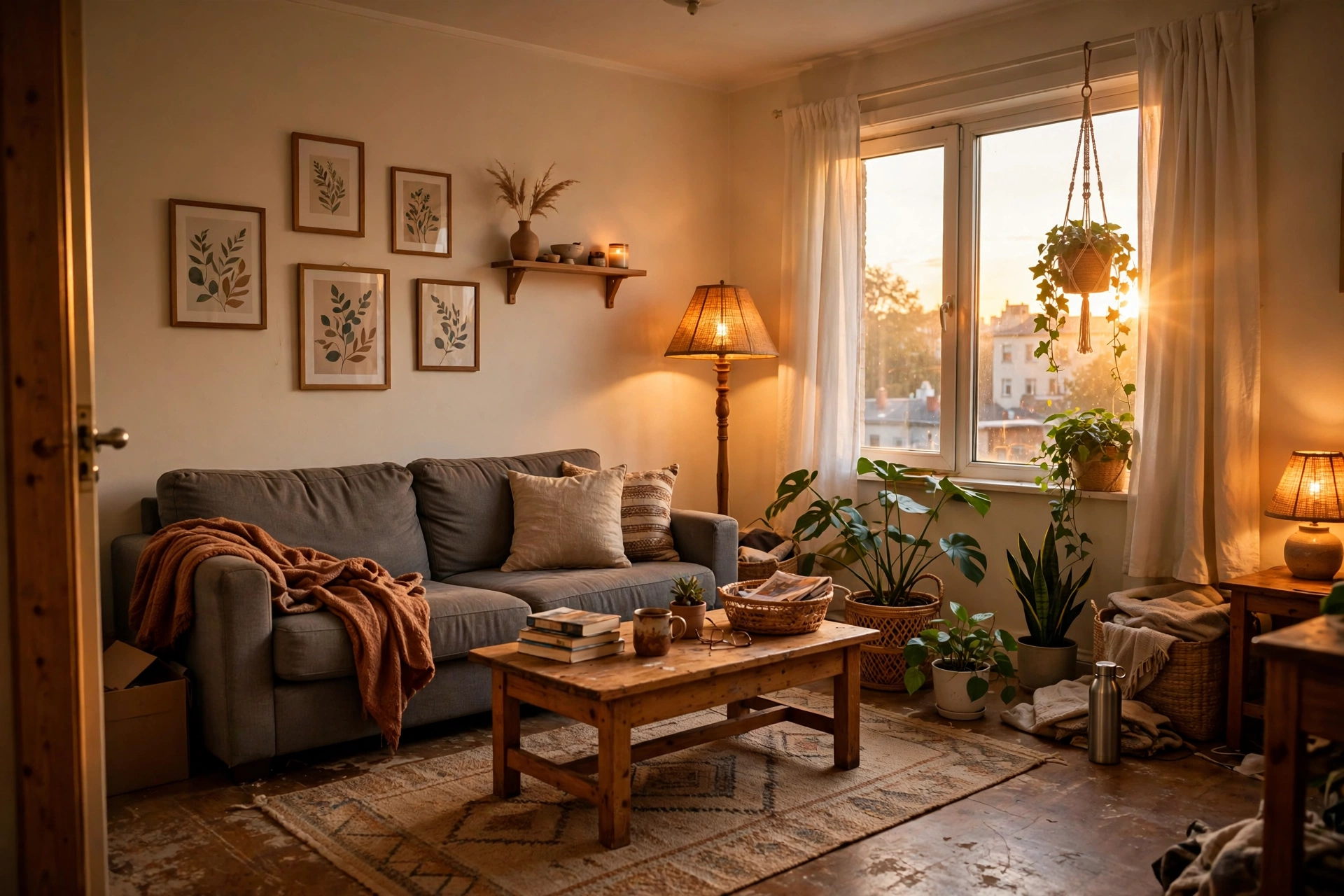
Furnishing a first apartment on a budget isn’t about finding secret deals — it’s about sequence. Sleep and food first, seating and storage second, work setup third, decor last. The 90-day plan above keeps total spending under $1,500 by making each purchase earn its place and leaning on secondhand where it’s safe. Start tonight with the survival kit, buy the mattress in week one, and let the apartment tell you what it needs next. If this saved you from a panicked furniture splurge, share it with the next person signing their first lease.

Maren started MyFirstLease after a rough first lease taught him everything the internet didn’t. He covers the logistical side of renting — move-in checklists, utilities, and the unglamorous first-week stuff nobody explains — and oversees everything published on the site.