

If your first Christmas together comes with stockings without a mantel apartment to hang them on, you are not out of options. Many rentals have no fireplace at all, and the classic mantel photo hides a practical problem: a filled stocking is heavier than it looks, and a hook that holds an empty stocking in early December may not hold it on Christmas morning.
This guide is written for a first-time renter couple celebrating your first Christmas together in a rental with no fireplace. Every spot below is ranked by how sturdily it holds a filled stocking, uses no nails or drilling, and comes down without risking your deposit — including the tempting spots you should skip entirely.
Direct answer: Hang stockings from a freestanding stocking stand or ladder, a sturdy banister, a solid shelf edge, or adhesive hooks rated well above a filled stocking’s weight, and test each one with weight before filling it. Avoid curtain rods, lightweight picture hooks, suction cups on textured walls, and anything above electronics, candles, or a heater.
Executive Summary
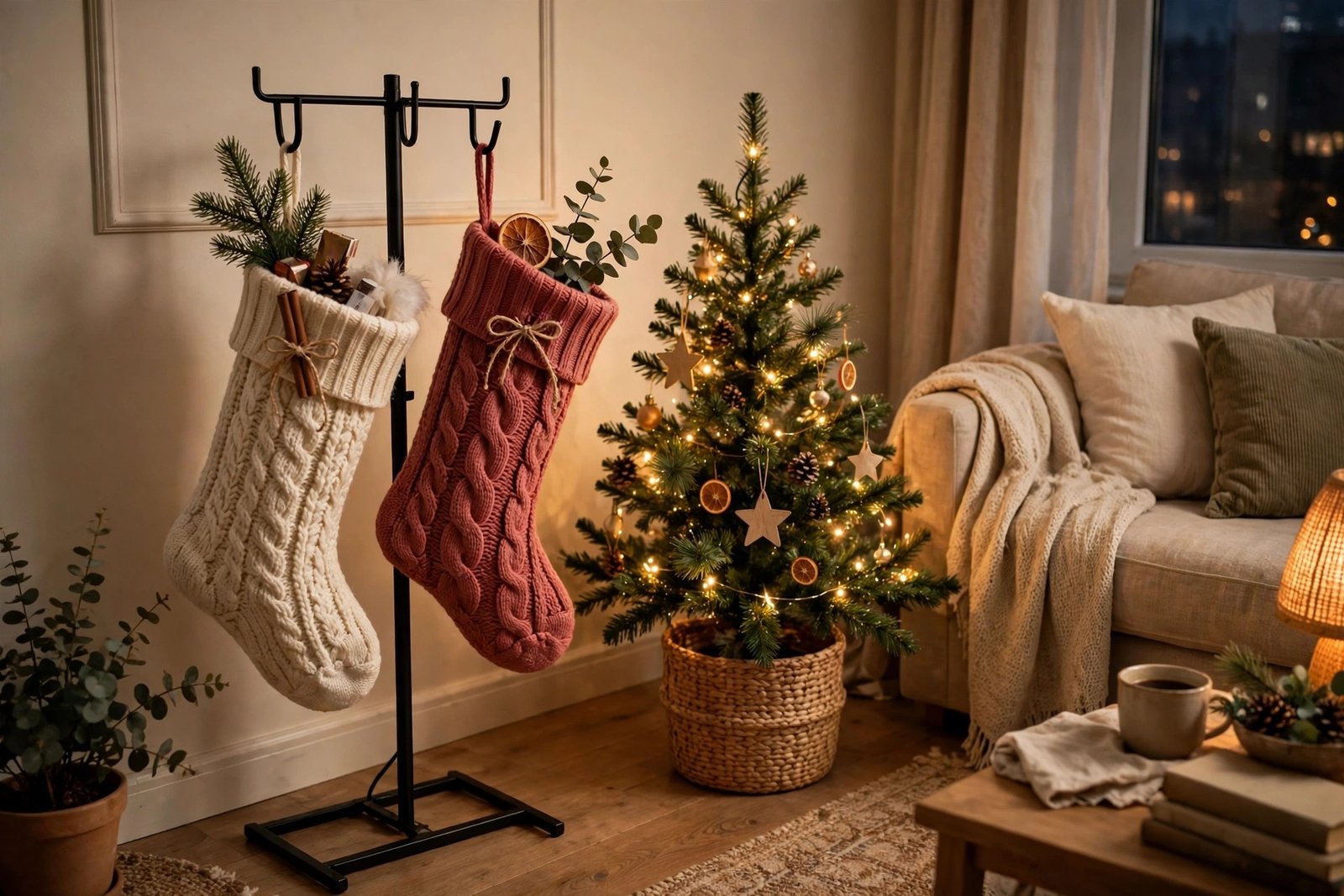
A filled stocking pulls downward and outward at the same time, which is why so many mantel substitutes fail: the hook holds, but the stocking slides off, or the whole display tips forward. The sections below rank your options from sturdiest to riskiest, starting with freestanding stands and ladders that need no wall contact at all, then banisters, shelves, and hooks, and finishing with the spots to avoid and a takedown routine that leaves no marks.
You will also find a simple weight test to run before you fill anything, guidance on checking your lease’s decorating clause, and a setup order that keeps the display balanced rather than overloaded on one side. The goal is a display that still looks intentional on Christmas morning and disappears cleanly in January.
1. The Sturdiness Ranking
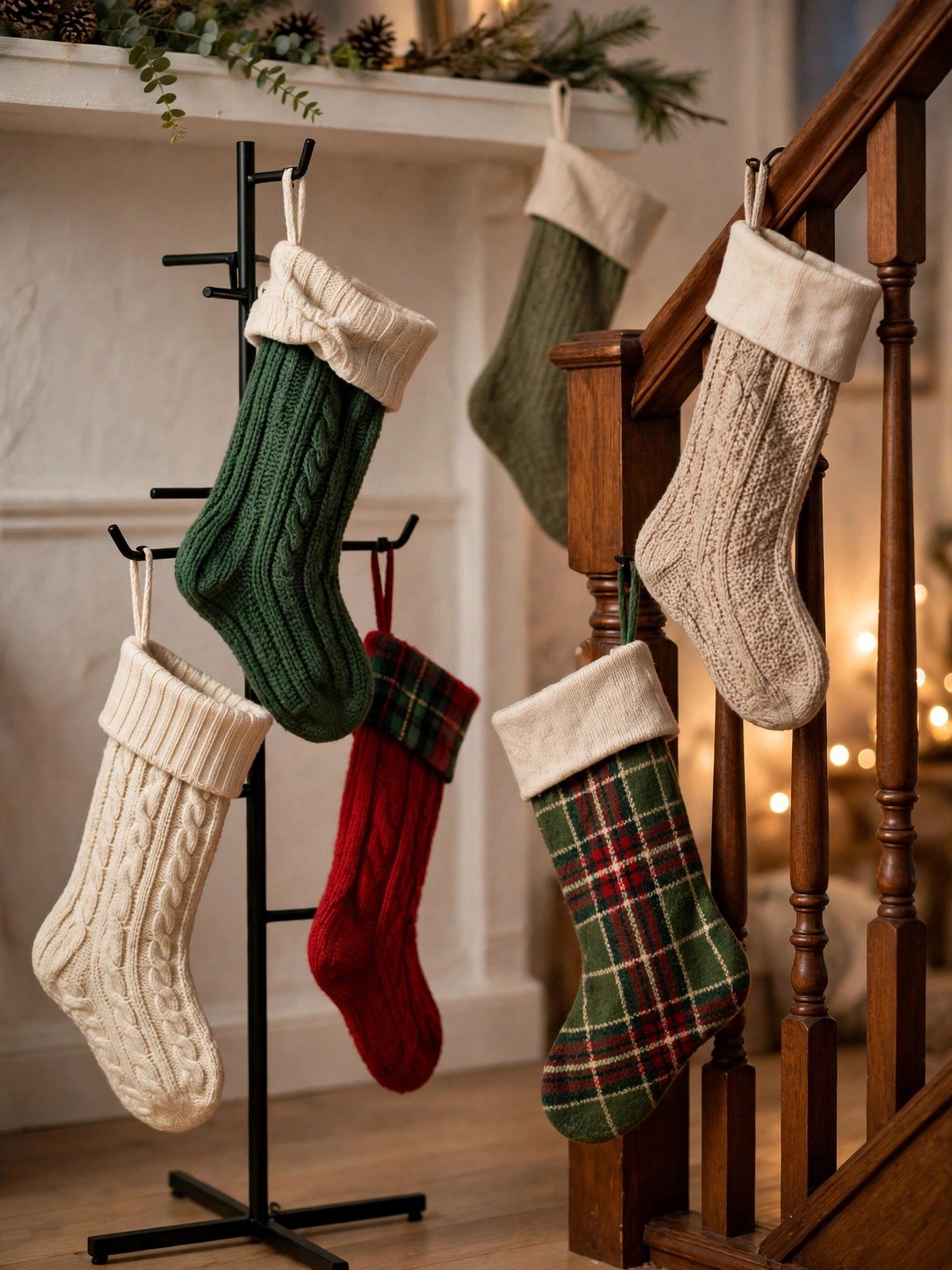
Start with the strongest option your space allows, and work down the list only if you need more stockings than the top options can hold. Freestanding stands and ladders sit at the top because they carry weight to the floor rather than asking a wall, hook, or rod to do all the work. A solid banister comes next, followed by a sturdy shelf edge, then adhesive hooks on a smooth, suitable surface. Curtain rods, tension rods, and lightweight decorative hooks sit at the bottom for stockings, even though they work fine for lighter garlands and ornaments.
| Spot | Sturdiness | Watch out for |
|---|---|---|
| Freestanding stand or ladder | Highest | Tipping if overloaded on one side; keep it against a wall |
| Banister or railing | High | Stockings sliding along the rail; loose or wobbly rails |
| Solid shelf or bookcase edge | High | Stockings pulling books or decor off the shelf |
| Adhesive hook, smooth surface | Medium to high | Weight rating, surface type, and curing time |
| Tension rod | Low to medium | Rod slipping under a filled stocking’s weight |
| Curtain rod | Low | Bending, sagging, and curtains pulling down |
Weight matters more than appearance here. Before you commit to a spot, hang the empty stocking, add the sort of items you plan to put in it — or an equivalent weight, such as a bag of rice of similar heft — and leave it for a day. If anything slips, sags, or leans, that spot has failed the test while the fix is still easy. Check the manufacturer’s rating on any hook, stand, or rod, and stay well under it; a rating is a maximum, not a target.
2. Freestanding Ladders and Stands
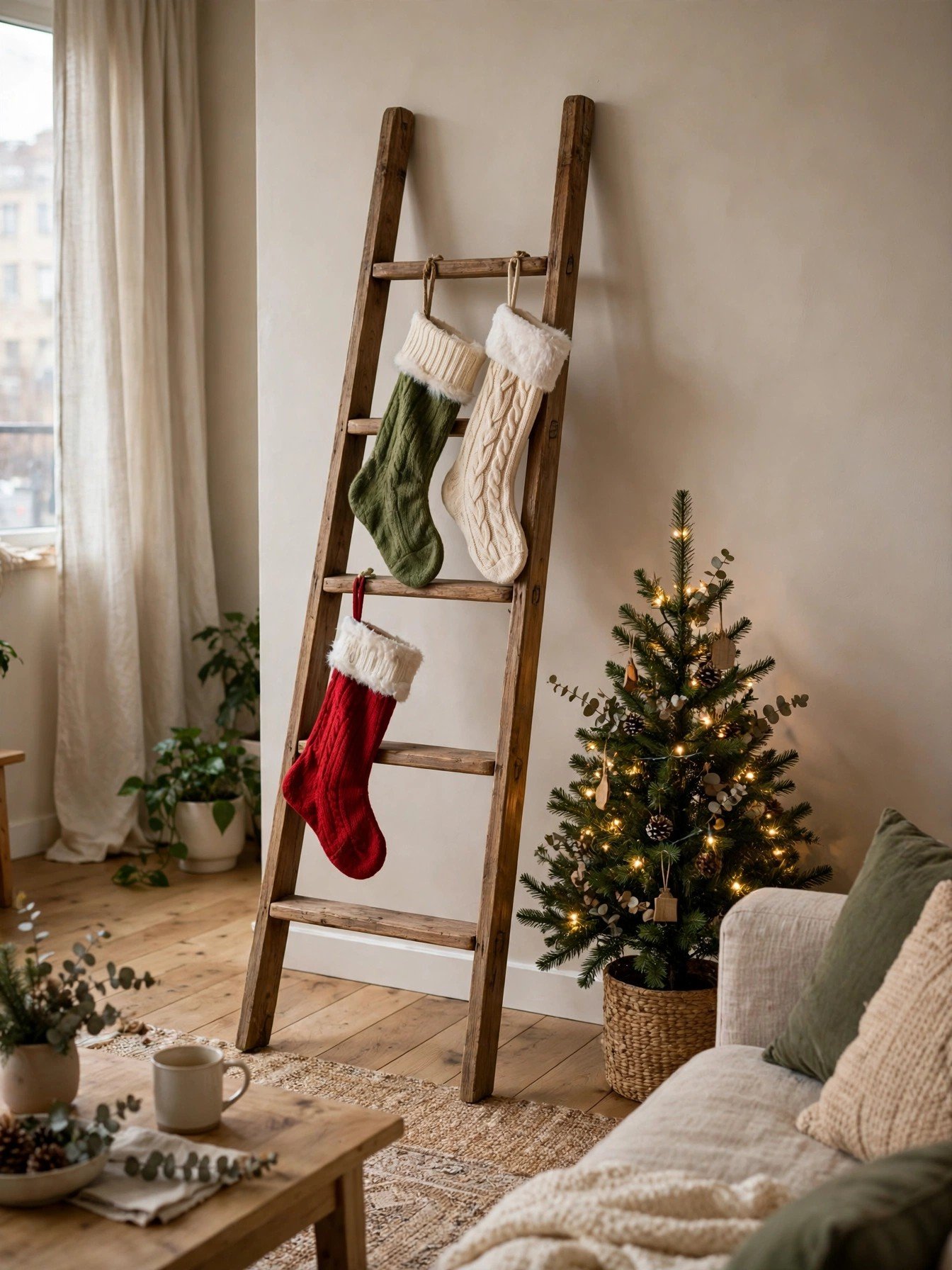
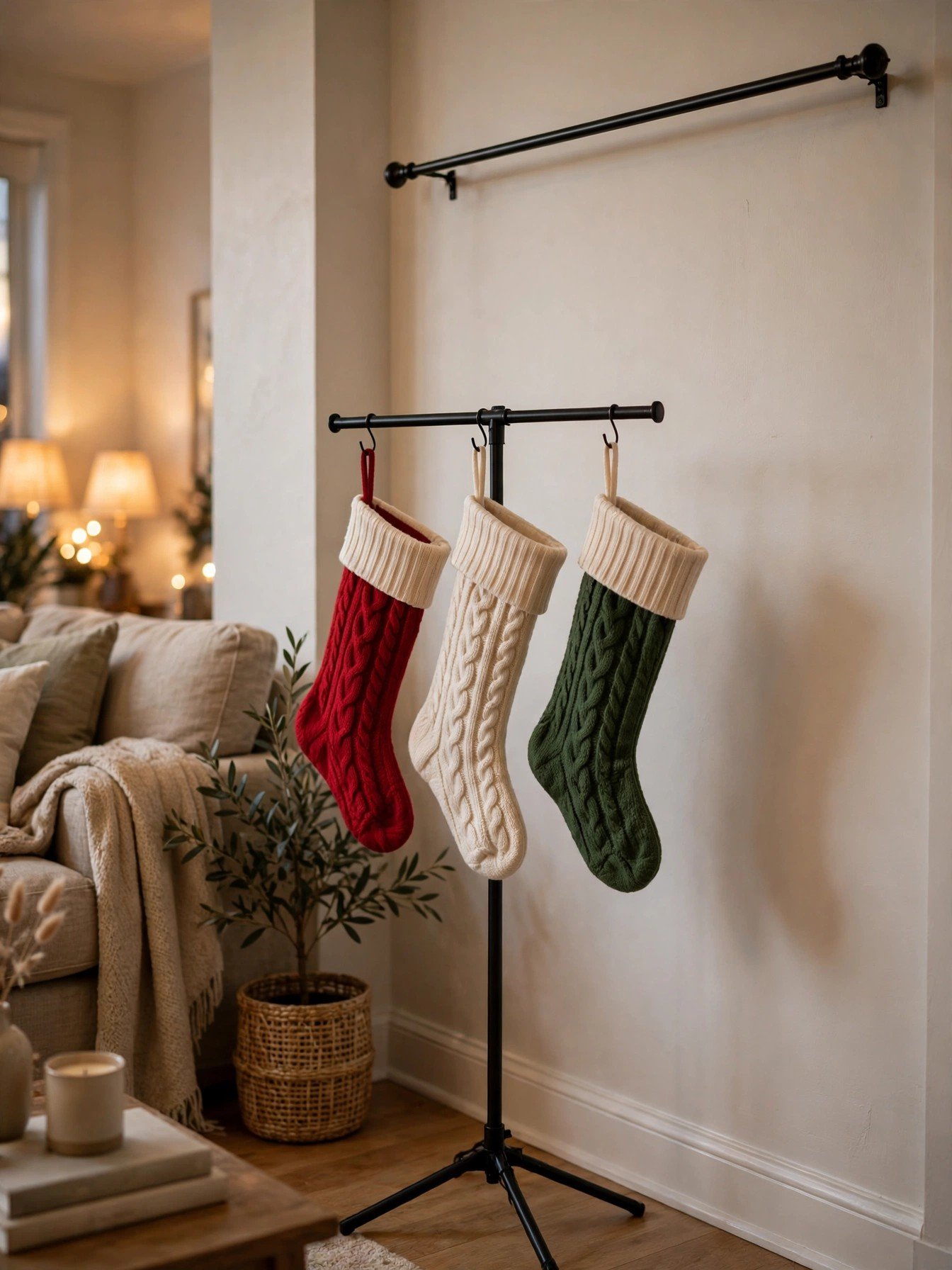
A stocking stand or a leaning ladder that stands on the floor is the closest thing to a mantel substitute, and it asks nothing of your walls. Weighted-base stocking holders, sold individually or as a row on a single base, are designed for exactly this job and suit a couple’s two stockings without any installation. A decorative ladder leaned against a wall gives the same effect for more stockings and doubles as a display for a garland or a few ornaments.
Place any freestanding piece flat against a wall, on a level floor, and out of the main walkway so nobody brushes past it. Spread the weight evenly rather than loading every stocking on one end, and keep the heaviest items low in each stocking so the display does not become top-heavy. If a ladder wobbles on your floor, move it rather than propping it with folded cardboard that can slip.
The main trade-off is floor space, which is real in a small apartment. A slim stand tucked beside the tree, a console, or a bookshelf usually earns its footprint, while a wide ladder in a narrow living room can become an obstacle by Christmas week. Measure the spot before you buy, and leave room for the stockings themselves to hang without blocking a door, a heater vent, or an exit route.
3. Banisters and Railings
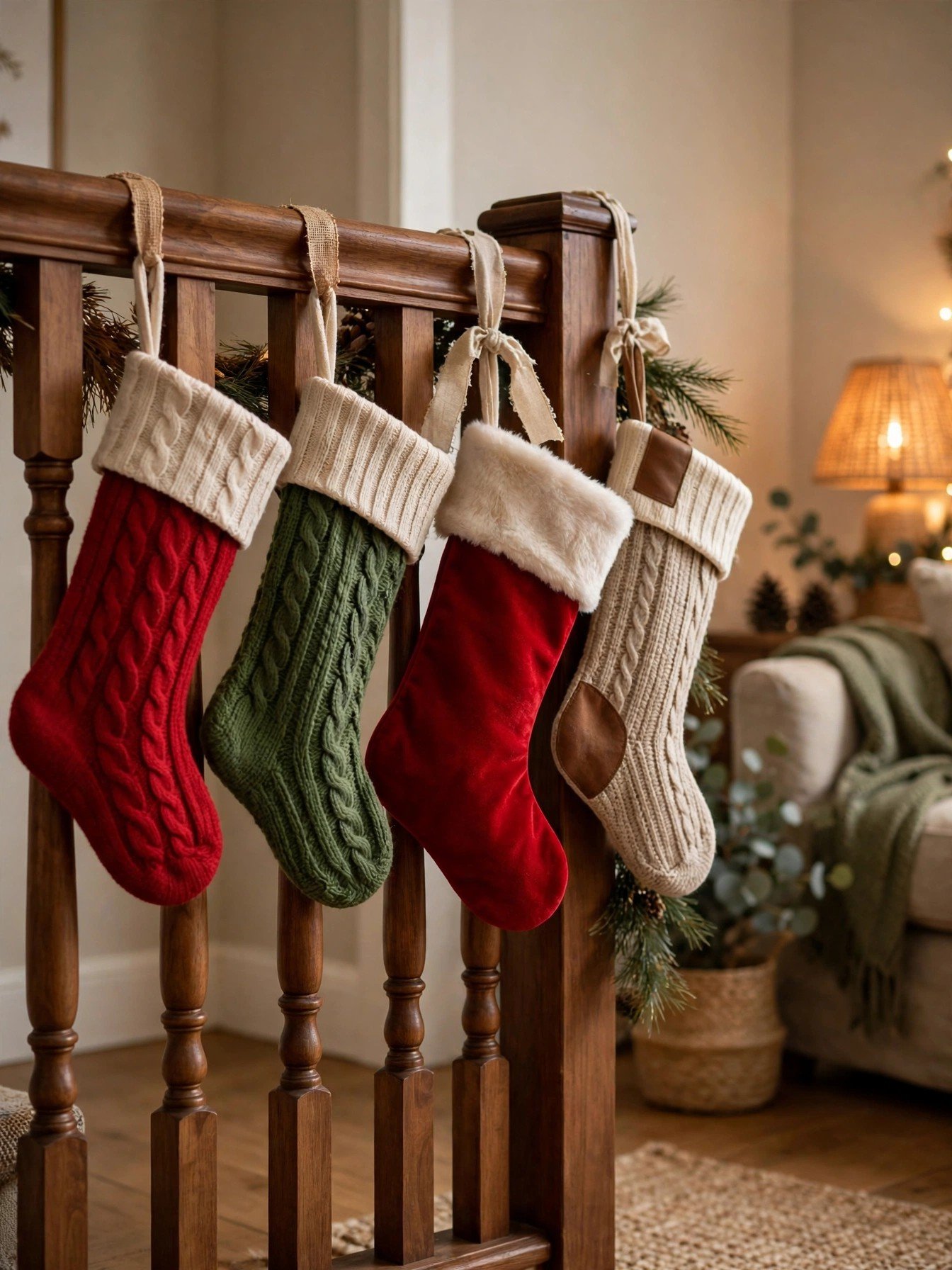
For apartments with an interior staircase, the banister is often the sturdiest ready-made option in the home. A solid wooden banister carries weight along its length, and stockings hung from it look intentional rather than improvised. Loop each stocking over the rail with a ribbon, a stocking holder that clips over the rail, or an S-hook, and space them so they do not bunch together and slide into a pile at the lowest point.
Grip is the detail that makes or breaks this spot. A smooth, round rail lets stockings slide, especially once they are filled, so use a holder or loop that grips rather than a plain hook balanced on top. Keep stockings away from the top of the stairs, where a falling stocking — or a person reaching for one — creates a trip risk, and never hang anything from a loose, wobbly, or visibly damaged rail. If the rail moves when you pull on it firmly, it is not a hanging spot.
Check the underside of the rail and the newel post before you hang anything, and avoid scratching the finish with bare metal hooks. A ribbon loop or a fabric-covered holder protects the wood and is easier to adjust than a rigid hook. As with every option in this guide, test with weight first and check after a day: a stocking that has crept a few inches along the rail needs a better grip before it is filled.
4. Shelves and Bookcases

A solid shelf edge or the top of a bookcase gives you a firm anchor without touching the wall, and it works well when you already have a bookshelf or a console in the living room. Clip-on or clamp-style stocking holders grip the shelf edge, or you can drape a ribbon over the shelf and weight it behind with books. The shelf itself carries the load, so this option holds up better than most adhesive solutions — provided the shelf is genuinely solid and not a lightweight floating shelf held by two small brackets.
Clear the shelf first. Stockings hung from a shelf edge swing slightly when touched, and anything light standing near the edge can be knocked off. Move ornaments, candles, and framed photos back from the edge, and never hang a stocking from a shelf that holds electronics, a candle, or anything that could fall or be pulled down with it. A filled stocking tugging a shelf’s contents onto the floor is exactly the kind of accident this ranking is meant to prevent.
Bookcases have a second advantage: they give the display a backdrop. A garland draped along the shelf above the stockings, a couple of candles kept well away from fabric, or a small framed photo beside them can make a bookshelf display feel like a deliberate focal point rather than a workaround. Keep flammable items away from candles and fairy lights, and never leave candles burning unattended near stockings or garlands.
5. Adhesive Hooks That Hold
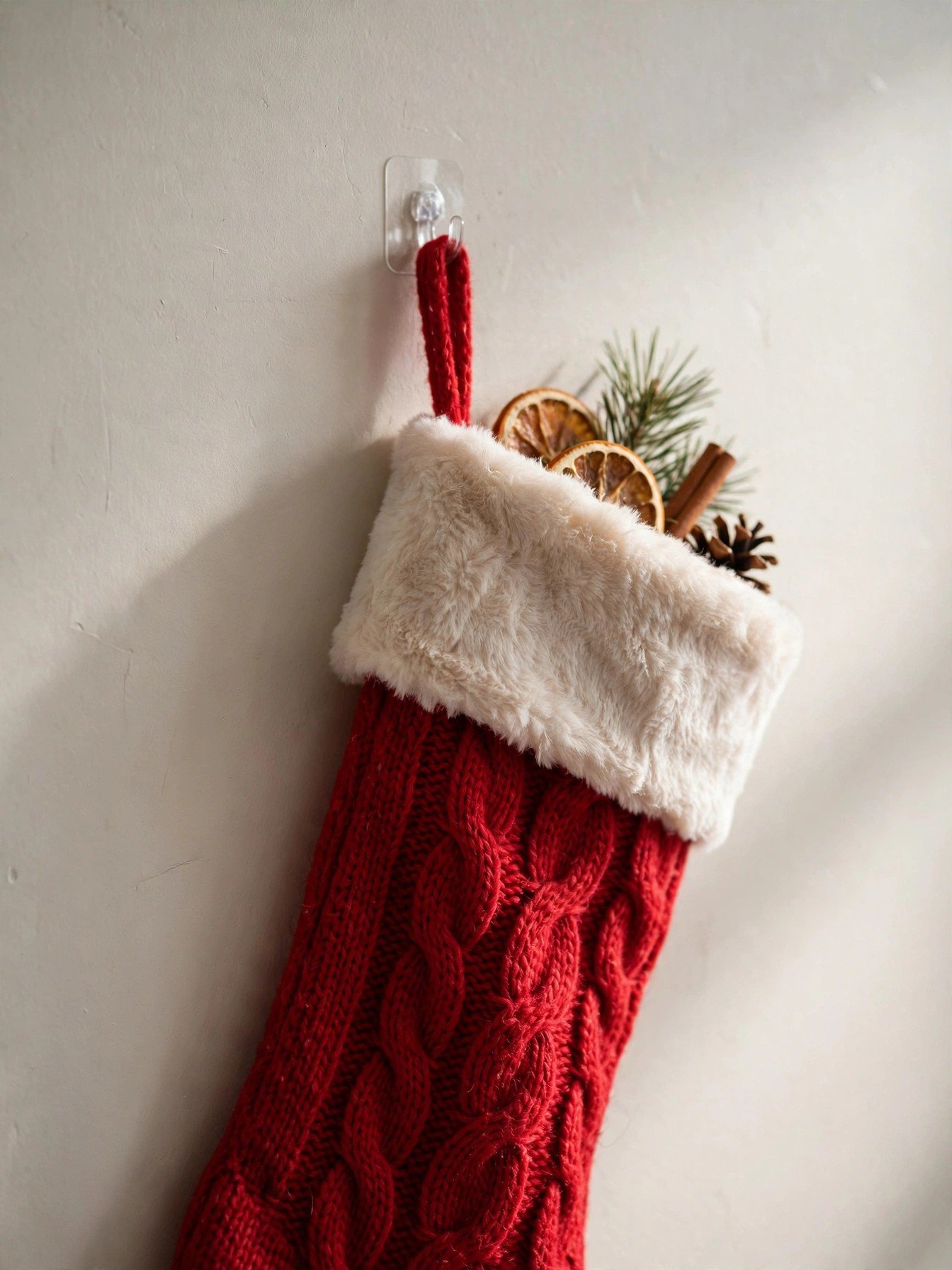
Adhesive hooks are the most popular renter solution for stockings, and also the most likely to fail, because a stocking filled with small gifts is heavier than most people estimate. Choose hooks rated for well above the weight of a filled stocking, not merely above the weight of an empty one, and use one hook per stocking rather than sharing a hook between two. Smooth, clean, painted walls and smooth wood trim are the best surfaces; textured walls, wallpaper, and brick are poor surfaces for adhesives and often fail without warning.
Preparation decides the result. Clean the spot with a damp cloth and let it dry fully, press the hook firmly for the time stated on the packaging, and wait the full curing time — often an hour or more — before hanging anything. Test with an equivalent weight for a day before filling the stocking for real, and test one hook in a hidden spot first if you are unsure how your paint will react. Before hanging anything at all, re-read the decorating or alterations clause in your lease: some leases restrict adhesive products even when they are marketed as removable, and a written question to your landlord is worth the effort if you are unsure.
When January comes, remove adhesives exactly as the packaging directs, usually a slow, straight pull on the tab rather than a yank. If a hook resists, warm it gently with a hair dryer on a low setting and try again instead of forcing it. Photograph the wall before you decorate and after takedown, so any change is easy to document for move-out.
6. Curtain and Tension Rods

Curtain rods and tension rods look like ready-made stocking rails, and they are the option to approach with the most caution. A curtain rod is designed to carry light fabric, not the concentrated, swinging weight of a filled stocking, and it can bend, sag, or pull its brackets out of the wall. A tension rod relies on friction alone, so a filled stocking can slide it out of place or bring it down entirely. Neither is a first choice for stockings in a rental.
If a rod is your only option, reduce the risk rather than ignoring it. Use the lightest stockings and the smallest gifts, keep the total weight well within what the rod already carries without sagging, and hang stockings near the brackets or the rod’s ends, where support is greatest, rather than in the middle where it flexes most. A tension rod fitted inside a window frame or a doorway can work for very light stockings, but test it with equivalent weight for a day and check it daily through the season.
A better use for rods is everything around the stockings. Hang a light garland, a few ornaments, or fairy lights from a curtain or tension rod, and put the stockings themselves on a stand, a banister, or a shelf. That split keeps the festive look without asking a rod to do a job it was not built for.
7. Doors and Furniture Edges
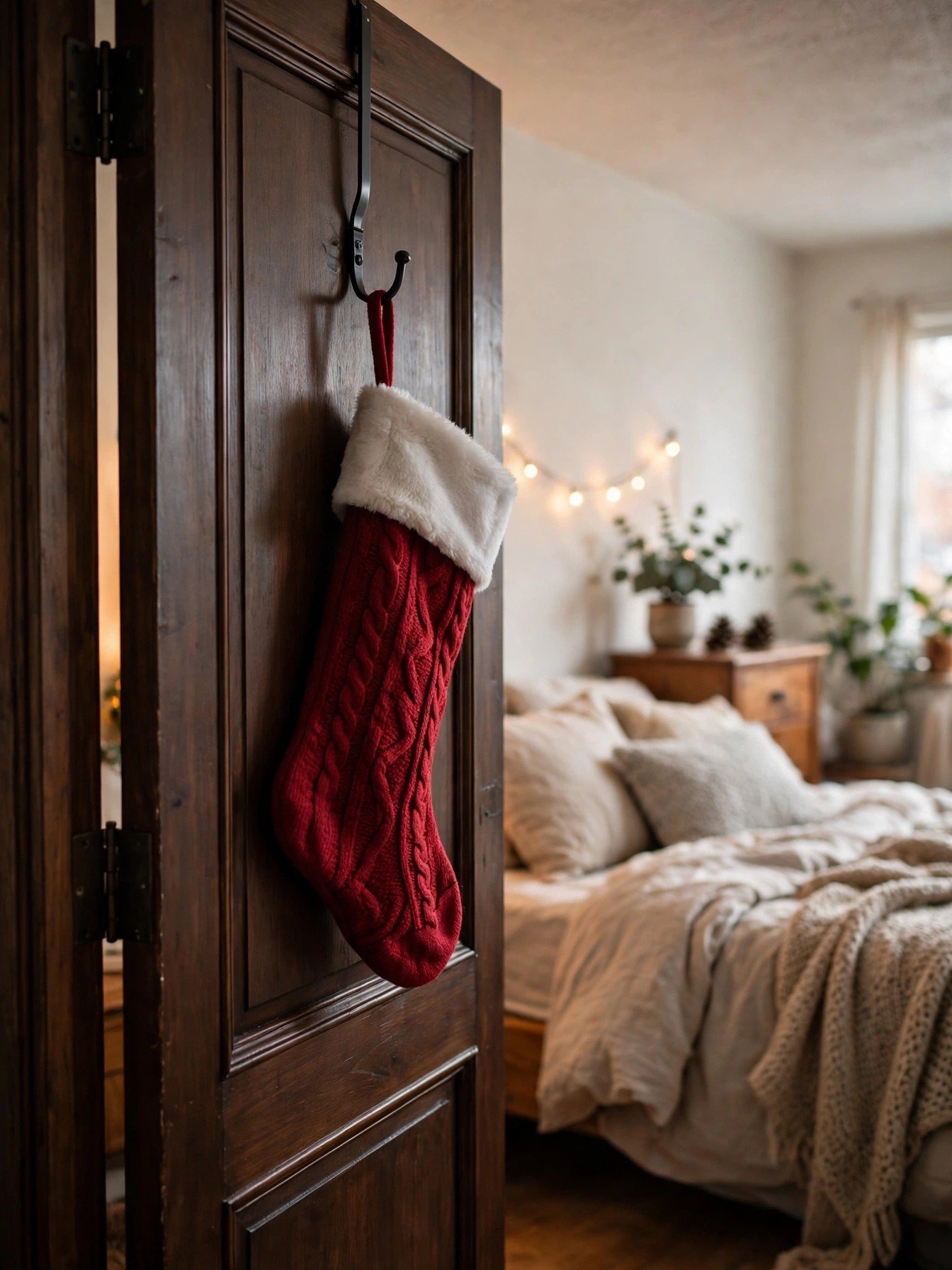
Door frames, wardrobe doors, and sturdy furniture edges offer a few last, no-damage options when the better spots are taken. An over-the-door hook on the inside face of a door holds a stocking without holes, and a sturdy console, dresser, or sideboard edge can take a clip-on holder. These work best for a single stocking or two, kept light, rather than a full row of filled stockings on one door.
Doors move, which is the catch. A stocking on a door that swings often will swing with it, and anything hung on a frequently used door — the bathroom door, the front door — will be knocked, caught, and eventually pulled off. Choose a door that stays mostly closed through December, such as a bedroom or closet door, and check that the hook does not scratch the door’s finish or stop it closing properly. If the door sticks or the hook marks the paint, find another spot.
Furniture edges need the same care as shelves: the piece must be heavy and stable enough that a tugging stocking cannot tip it, and nothing fragile should sit near the edge above or beside the stocking. A stocking hung from a lightweight side table or a wobbly nightstand is a tipping risk, not a display. When in doubt, the weight test settles it — if the furniture moves when you pull the stocking firmly, the spot fails.
8. What Not to Hang From
Some spots fail so reliably that they are worth naming plainly, so you can rule them out before you waste an evening on them. Picture-hanging hooks and small nails left by a previous tenant are rated for flat, light frames, not for a stocking that swings and pulls outward; they can pull out of drywall and leave a hole you will be charged for. Suction cups on textured walls, mirrors with thin frames, and lightweight floating shelves fall into the same category: they may hold for a day and fail on Christmas morning.
Never hang stockings above or near open flames, candles, heaters, radiators, or stove areas, and never from a television, a monitor, or anything electrical that could be pulled down. A stocking draped over a lampshade, a curtain tie-back, or a shower rod is a fire or falling risk dressed up as a decoration, and a stocking hung from a ceiling hook puts weight overhead where a failure lands on someone below. The same goes for sprinkler heads, smoke detectors, and any safety fixture: never hang anything from them, and keep decorations clear of them.
If a spot needs you to talk yourself into it — “it will probably hold,” “it is only for a few weeks” — treat that as the answer. Move the stocking to a stand, a banister, or a shelf that passed the weight test, and save the risky spot for a light garland or an ornament that weighs almost nothing.
9. Takedown Without Damage
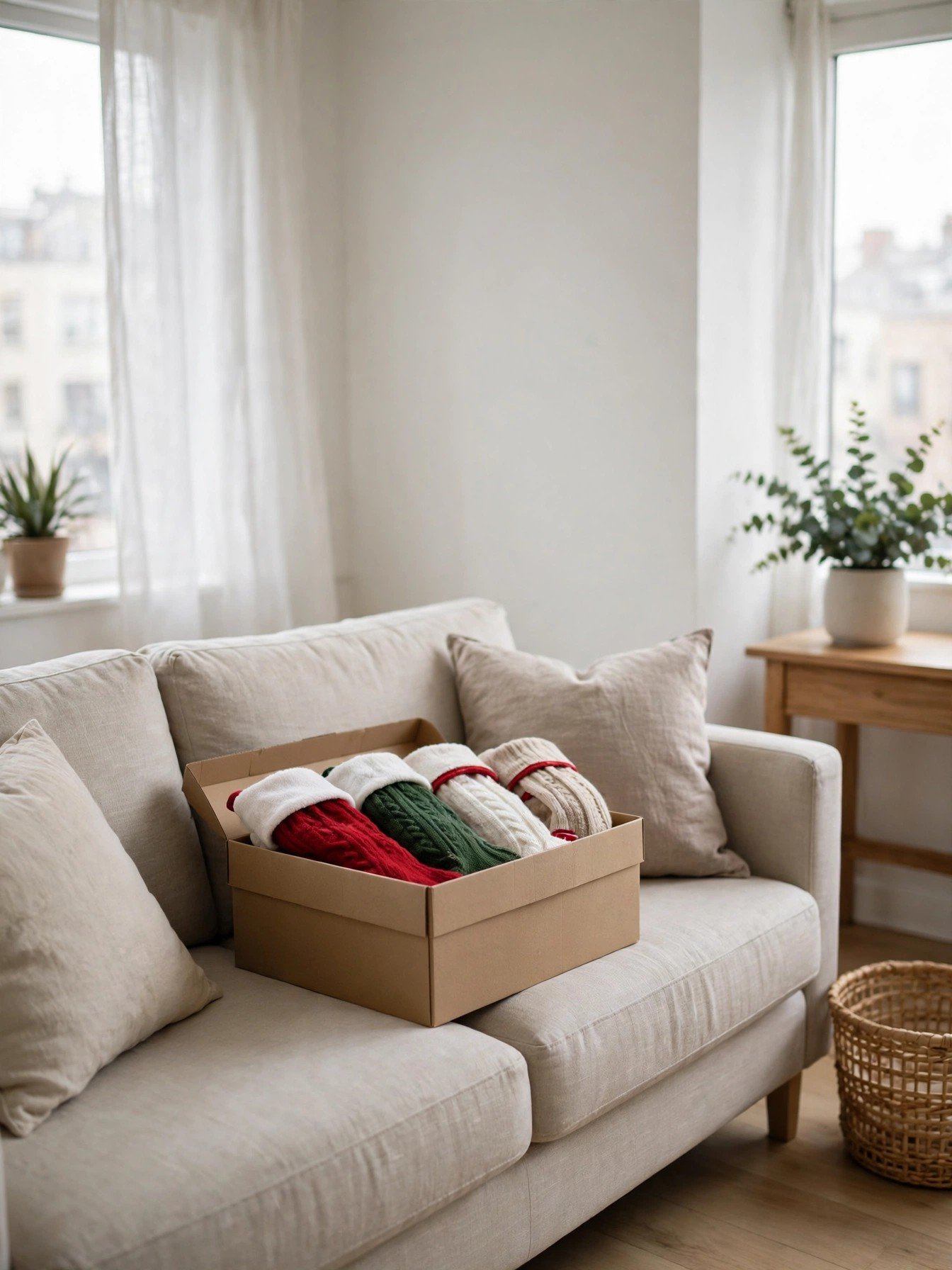
The deposit-safe part of hanging stockings happens in January, not December. Empty the stockings first, then remove them, then take down hooks, holders, and garlands in the reverse order you put them up, following each product’s removal instructions. Check every wall, trim piece, and rail in daylight after removal, and compare with the before photos you took in December so any mark is spotted while it is still easy to address.
A deposit-safe takedown checklist
- Remove adhesive hooks slowly, following the tab direction on the packaging.
- Wipe away dust or light marks with a damp cloth; do not scrub painted surfaces aggressively.
- Inspect banisters, shelf edges, and door frames for scratches from hooks or holders.
- Return furniture and shelves to their usual arrangement, and put everyday items back.
- Pack stockings and holders together in one labelled box, so next December starts organised.
- Photograph walls, trim, and rails after takedown for your move-out record.
Store the holders with the stockings rather than scattered across a closet, and note which spot each holder belonged to — a clip that fit a thick shelf may not fit a thin one next year. If you are moving before next Christmas, that one box travels cleanly, and the display that took an evening to perfect takes an hour to recreate in a new place.
FAQ
Where can I hang stockings if I have no fireplace or mantel?
A freestanding stocking stand or ladder is the sturdiest mantel substitute, followed by a solid banister, a sturdy shelf edge, or adhesive hooks rated well above a filled stocking’s weight. Test each spot with equivalent weight for a day before filling the stockings for real.
Do adhesive hooks hold filled Christmas stockings?
They can, if the hook is rated well above the filled stocking’s weight, the surface is smooth and clean, and you wait the full curing time before hanging anything. Use one hook per stocking, test with weight first, and avoid textured walls, wallpaper, and brick, where adhesives often fail.
Can I hang stockings from a curtain rod in a rental?
It is not recommended. Curtain rods are built for light fabric, not the concentrated weight of a filled stocking, and they can bend, sag, or pull their brackets out of the wall. Use a rod for a light garland instead, and put the stockings on a stand, banister, or shelf.
What is a stocking ladder, and is it renter-friendly?
A stocking ladder is a freestanding decorative ladder that leans against a wall, with stockings hung from its rungs. It is renter-friendly because it needs no holes, hooks, or adhesives — it stands on the floor — but it needs floor space, a level spot against a wall, and evenly spread weight so it does not tip.
Can I hang stockings on a banister in an apartment?
Yes, if the banister is solid and does not move when pulled firmly. Use a ribbon loop or a holder that grips the rail so stockings do not slide, keep them away from the top of the stairs, and never hang from a loose, wobbly, or damaged rail.
What should I never hang stockings from?
Avoid picture hooks and old nails, suction cups on textured walls, lightweight floating shelves, curtain rods, lampshades, televisions, heaters, candles, sprinkler heads, and smoke detectors. If a spot feels like it will “probably hold,” move the stocking to a spot that passed a weight test instead.
How do I take stockings down without losing my deposit?
Empty the stockings first, remove adhesives slowly following the packaging directions, inspect walls, trim, and rails in daylight, and photograph everything after takedown. Compare with before photos from December, and store holders with the stockings in one labelled box.
Stockings Up, Deposit Safe

A first Christmas together deserves a display that looks deliberate, not improvised. The strongest options need no wall damage at all: a freestanding stand or ladder, a solid banister, or a sturdy shelf, with adhesive hooks as a careful backup on the right surface. Test every spot with weight before you fill a single stocking, and skip the rods and picture hooks that fail most often. Even stockings without a mantel apartment setup can feel like a tradition in the making, and when January comes, the whole display should come down without a mark — leaving only the memory of the first Christmas you decorated together.

Maren started MyFirstLease after a rough first lease taught him everything the internet didn’t. He covers the logistical side of renting — move-in checklists, utilities, and the unglamorous first-week stuff nobody explains — and oversees everything published on the site.