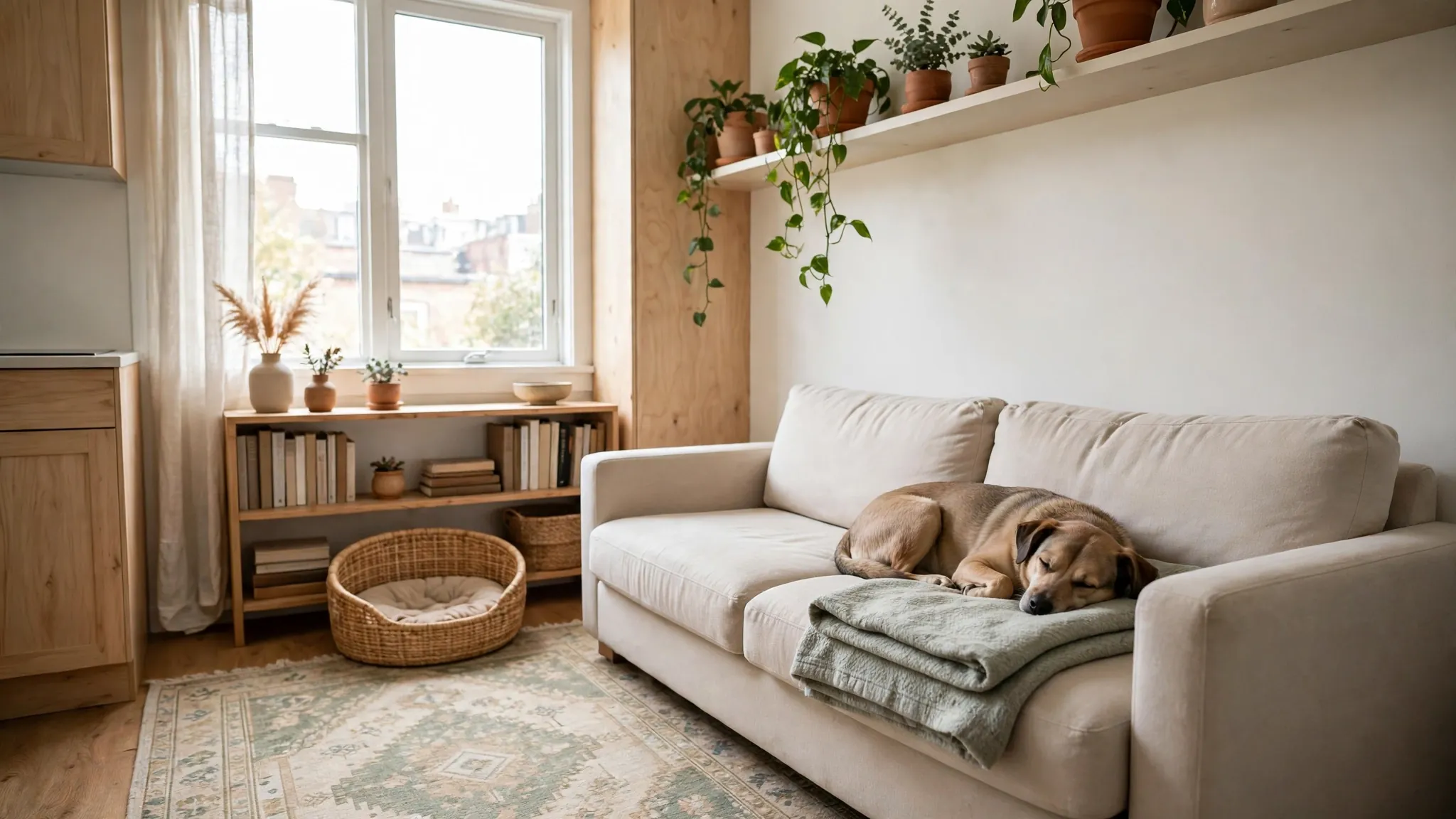
Learning how to decorate a studio apartment for renters with pets means solving two problems at once: making one small room look like a home you actually enjoy, and making it survive daily life with a dog or a cat. In a studio, there is no spare room to hide the litter box, the crate, or the muddy-paw aftermath — every pet item is part of the decor, whether you planned it that way or not.
This guide is written for first-time renters sharing a studio with a dog or a cat, on a first-apartment budget, with a deposit to protect. It covers the lease rules to check before you buy anything, how to zone one room for two species, washable fabrics and floor cover-ups that look good, and a move-out plan that starts on day one.
Direct answer: Decorate a pet-friendly studio by zoning the room first — a sleep corner, a feeding spot, and a play area — then choosing washable rugs, slipcovers, and throws throughout, giving your pet a designated zone that looks like decor, and keeping everything removable so the apartment can be returned in its original condition.
Executive Summary
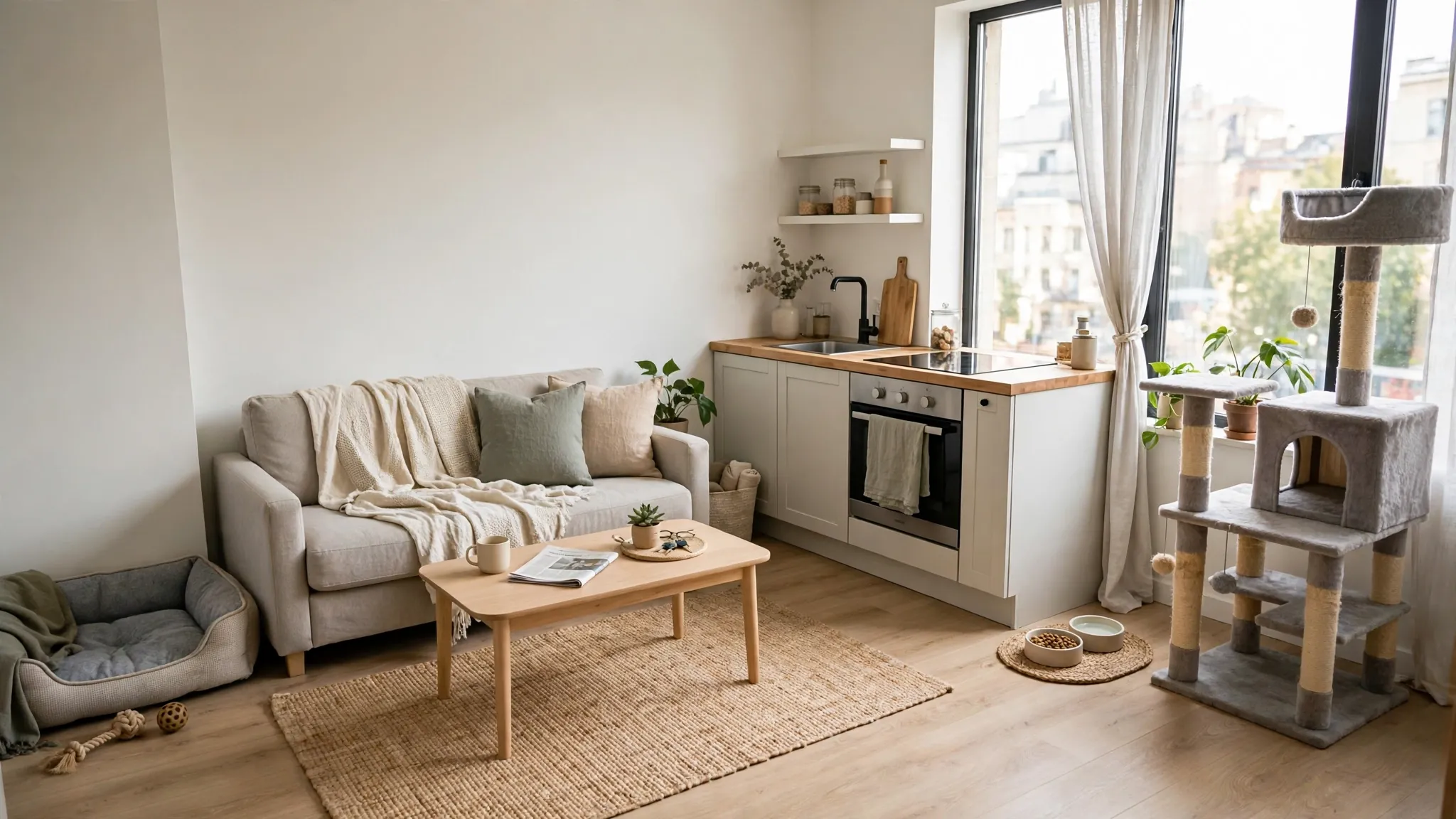
A studio with a pet works best when the pet’s things are planned as part of the room instead of squeezed in afterward. A bed that matches your palette, a feeding station on a washable mat, and a toy basket that looks like any other storage basket will make the apartment feel intentional rather than improvised — and each of those choices also protects the floors and furniture underneath.
The rest of this guide walks through the process in order: the pet clause in your lease, zoning the room, pet-proof floors and fabrics, a sofa setup that can handle claws and fur, a pet zone that reads as decor, vertical space for cats, the small pet-proofing details that prevent damage, keeping the air fresh in one small room, and a move-out plan that protects your deposit. Browse the full Decorating & Small Space Living collection for more renter-friendly ideas in the same spirit.
1. Read Your Pet Clause First

Before buying a single washable throw, read the pet section of your lease and any pet addendum you signed. Many first-time renters assume “pet-friendly” means “pets can do anything,” but most leases set limits: a weight limit for dogs, a maximum number of pets, breed or species restrictions, and a rule that pet damage is billed separately from normal wear and tear. Knowing those limits now shapes every decor decision that follows — there is no point building a climbing wall for a cat your lease does not allow.
Ask your landlord, in writing, about anything unclear: whether a pet deposit is refundable, whether monthly pet rent applies on top of it, and what counts as pet damage versus normal wear. Keep the answers with your lease paperwork. If you have not yet moved in, photograph every scratch, stain, and scuff during your move-in walkthrough so pre-existing damage is never blamed on your pet later.
Related reading: our breakdown of pet deposit vs. pet rent explains what each charge covers and what to ask before signing.
2. Zone the Studio for Two
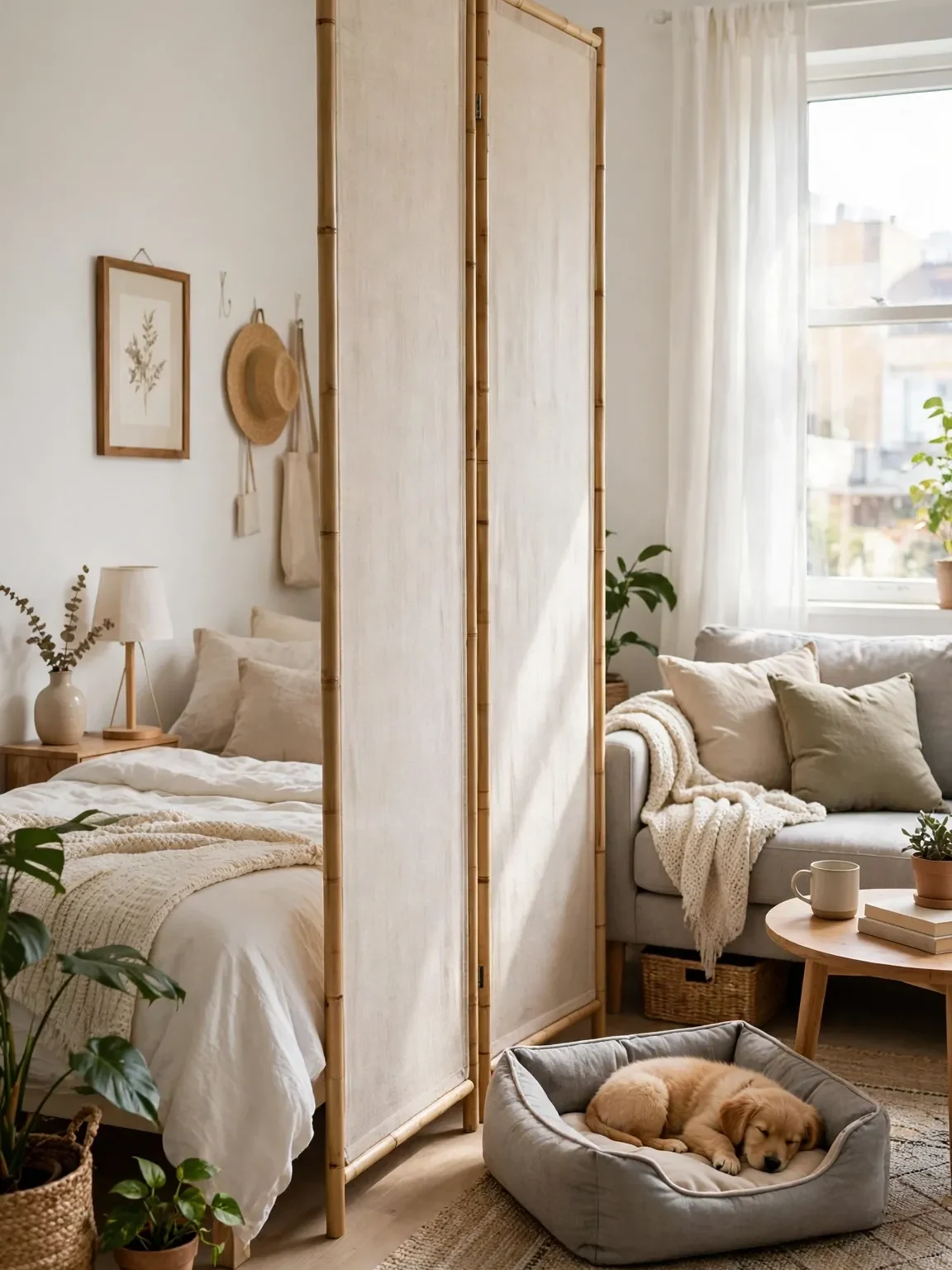
A studio is one room, but it does not have to function as one room. Dividing it into loose zones — sleep, eat, play, rest — gives your pet predictable places to be and keeps pet gear from spreading across every surface. Dogs tend to settle best with clear walking paths and a bed they can see you from; cats tend to settle best with a quiet perch and a route up high. The same square footage feels bigger once each activity has a home.
Use furniture and rugs to draw the zones rather than buying new dividers. A rug under the sofa marks the living zone; a bed tucked beside the sofa marks the sleep zone; the kitchen corner holds the feeding station. A freestanding folding screen or a tall bookshelf turned sideways can separate a sleeping alcove without a single screw — and both come with you when you move. Avoid blocking the path from the front door to the kitchen, since that is the route your dog will use most, muddy paws and all.
3. Cover Floors the Pet-Proof Way
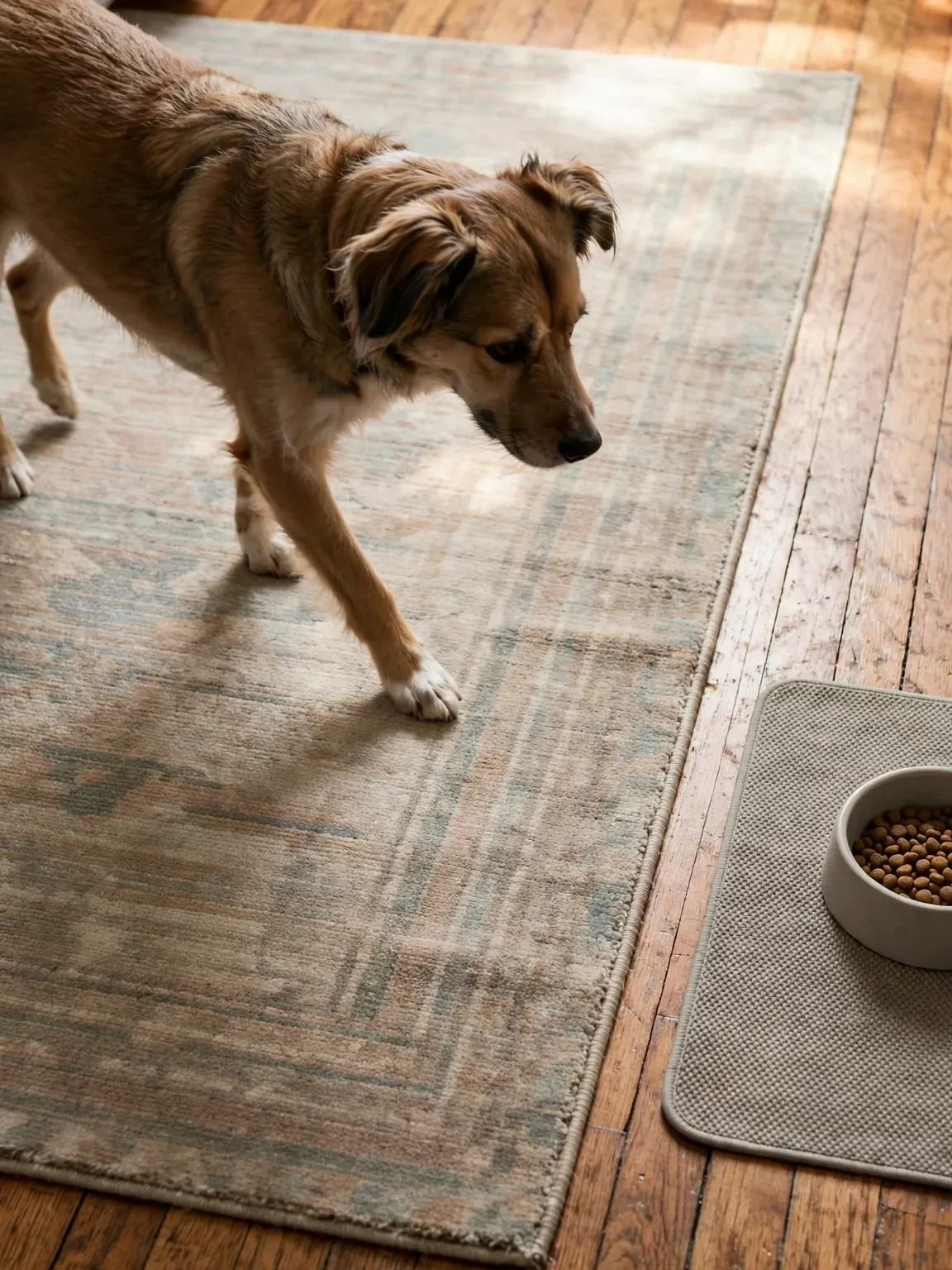
Rental floors take the worst of pet life: claws, accidents, spilled water bowls, and muddy paws. Since you cannot refinish or replace the flooring, cover it. A low-pile washable rug is the workhorse here — it stays flat under paws, goes straight into the washing machine after an accident, and costs far less to replace than a carpet-cleaning bill or a flooring deduction. A non-slip rug pad underneath keeps it from bunching into a tripping hazard when a dog launches off it.
Size the rug to the zone it serves rather than the whole room, and layer a smaller washable mat under the food and water bowls and another by the front door as a paw-wipe station. If your lease allows removable peel-and-stick floor tiles, they can protect the feeding corner or the entry, but check first — some leases ban anything adhesive on floors. Our guide to what size rug works in a studio apartment walks through the sizing rules zone by zone.
4. Choose Washable Fabrics Everywhere
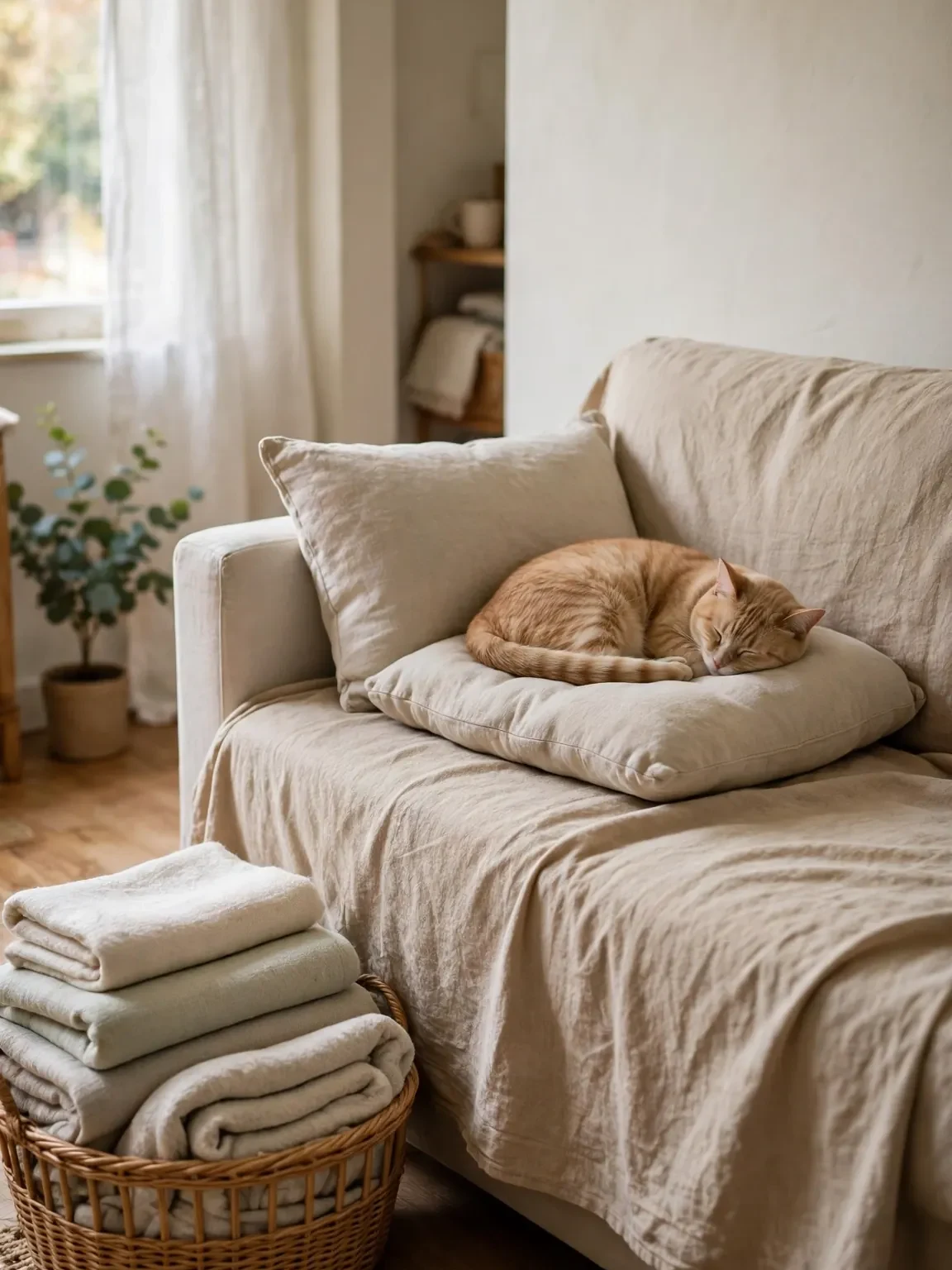
In a pet-friendly studio, every fabric is a washable fabric or it is a future stain. Slipcovers, cushion covers, throws, and curtains that can go in the washing machine turn an accident from a crisis into a laundry cycle. Look for tightly woven, low-pile fabrics — they resist snagging from claws and release fur more easily than loose weaves, velvet, or silk. Patterns and mid-tone colors hide fur and the odd paw print between washes better than solid white or solid black.
Apply the rule to the pieces you touch most: the sofa, the bed, and anything at pet height. A washable duvet cover protects the bedding your cat kneads every morning; washable curtain panels survive a cat that climbs them. Keep one spare set of covers and throws so the room never sits half-dressed while laundry runs — as of 2026, a basic machine-washable throw typically runs about $20–$40 and a slipcover about $40–$100, depending on size and fabric.
5. Make the Sofa Pet-Friendly
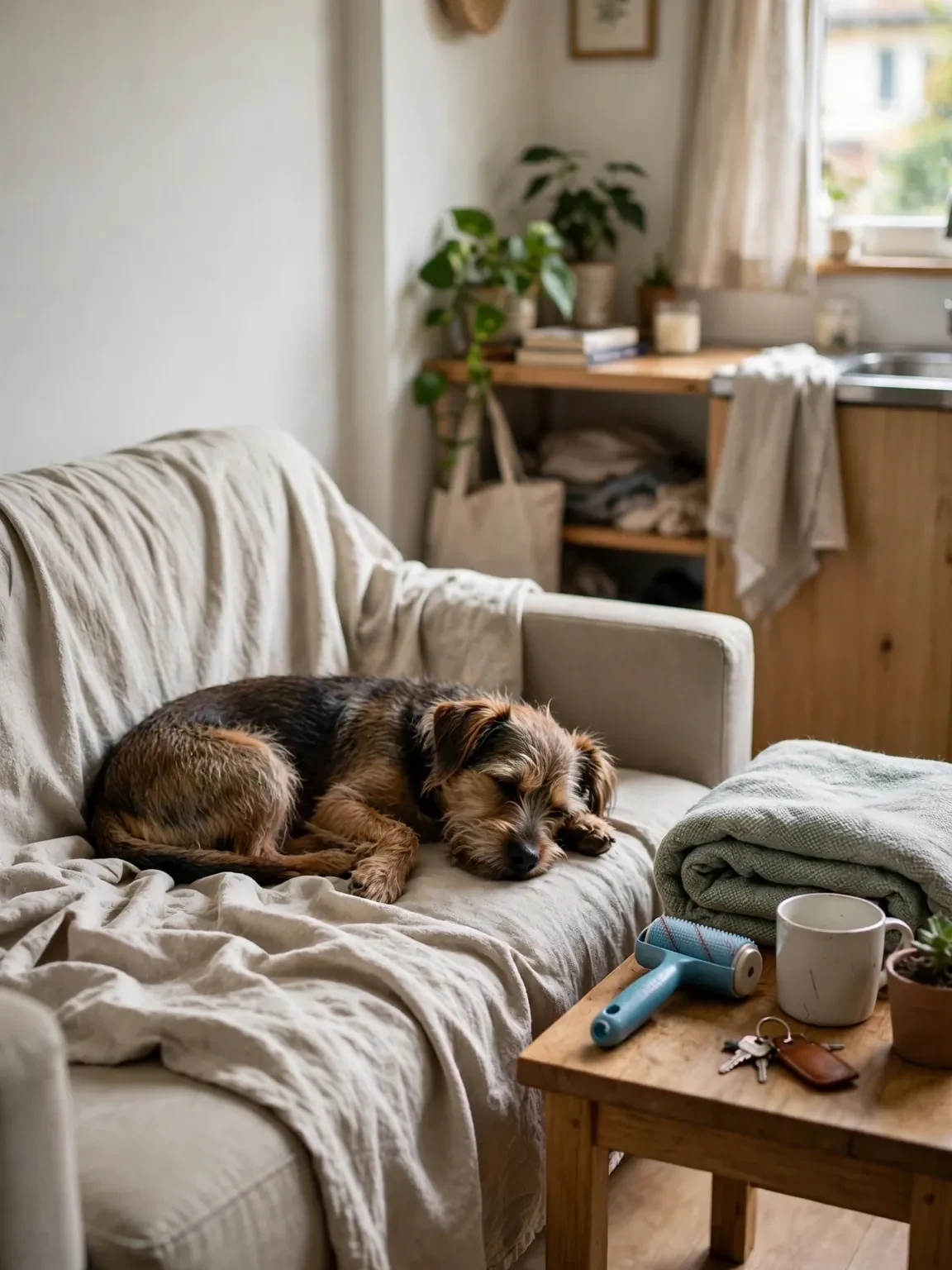
The sofa is where you relax, where your dog naps, and where your cat sharpens its claws — sometimes all at once. Give your pet one designated spot on it instead of fighting over the whole piece: a folded washable blanket on one cushion, always in the same place, teaches a dog where to settle and gives a cat a warm patch to claim. A throw that matches the room protects the cushion underneath and can be swapped out when guests come over.
A removable slipcover is the strongest protection a renter can buy, since the sofa itself stays untouched underneath. If your sofa is leather or faux leather, fur wipes off easily but claws can scratch the surface, so a throw on the seat is still worth it. For fabric sofas, a scratch guard on the armrests — the kind that drapes or tucks rather than sticking — can discourage a cat without adhesive that could damage the fabric or cost you at move-out. See our guide to styling a small-apartment sofa with throws and pillows for ways to make the protective layers look intentional.
6. Build a Pet Zone That Looks Like Decor
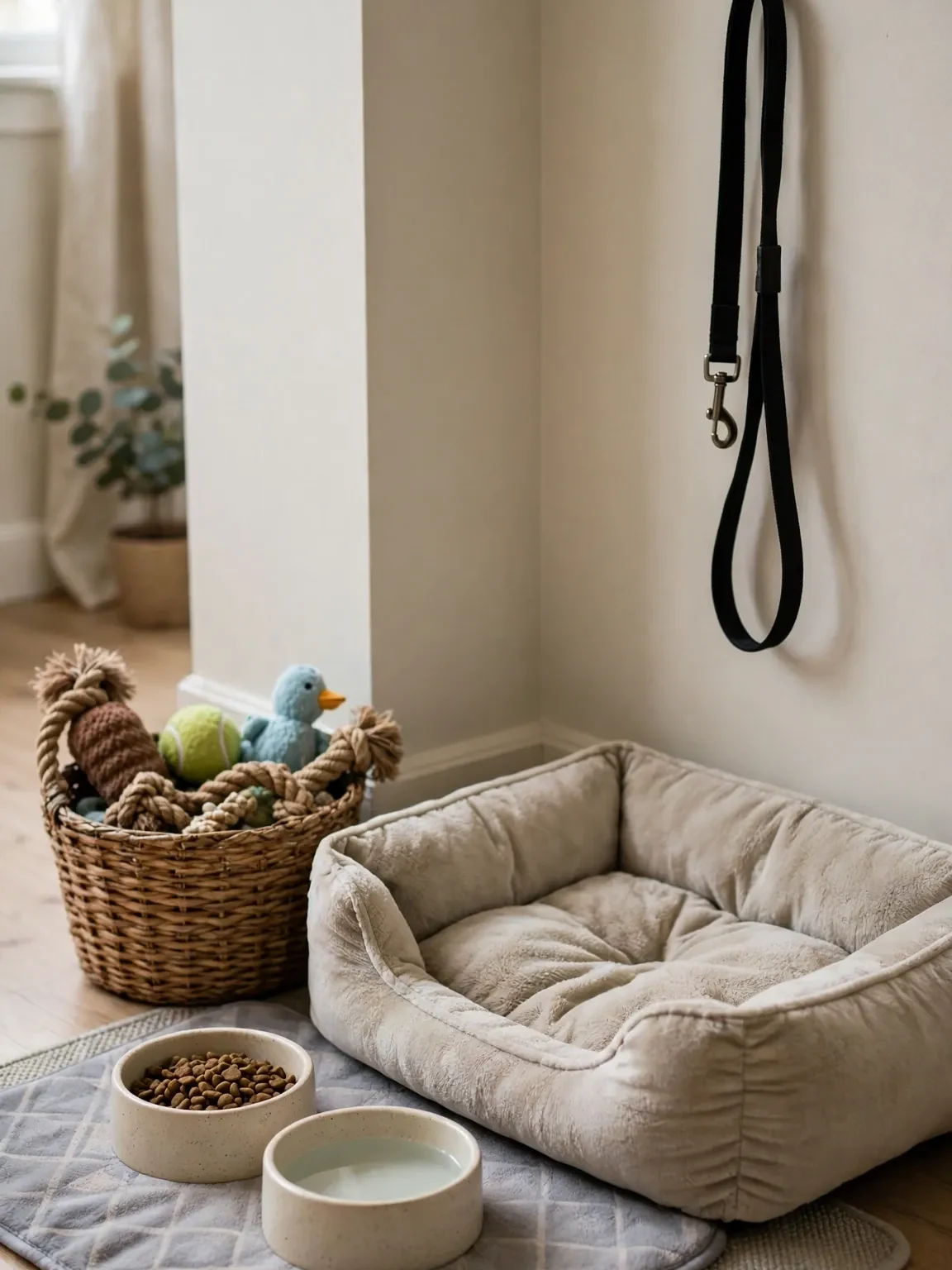
A pet zone is simply your pet’s essentials gathered in one intentional spot — and when the pieces match your decor, it reads as styling rather than clutter. Choose a quiet corner with a washable mat under the food and water bowls, a bed in a color that echoes your rug or throws, and a basket for toys that could pass for any other storage basket in the room. A leash hook by the door and a small sealed bin for food keep the daily routine contained to that one corner.
For cats, a litter box cabinet — a plain wooden side table with a discreet entry — hides the least attractive item in the apartment while giving the cat privacy. Keep it somewhere ventilated and easy to reach for daily cleaning, not sealed in a closet. Dogs do well with a crate that doubles as a side table: a washable blanket draped over the top and a tray on it turns a bulky necessity into a piece of furniture.
Pet-Zone Starter Worksheet
Use this as a shopping checklist and budget starting point. Prices are typical U.S. retail ranges as of 2026 and vary by size, brand, and store — treat them as planning figures, not quotes.
| Pet-zone item | What to look for | Typical range (as of 2026) |
|---|---|---|
| Washable pet bed | Removable, machine-washable cover | $25–$60 |
| Feeding mat | Waterproof, non-slip, easy to wipe | $10–$25 |
| Toy storage basket | Sturdy, matches your decor | $15–$35 |
| Washable rug or runner | Low-pile, machine-washable | $40–$120 |
| Litter box cabinet (cats) | Ventilated, easy to clean inside | $60–$150 |
| Crate cover or side-table top (dogs) | Washable, fits your crate size | $20–$50 |
7. Go Vertical for Cats
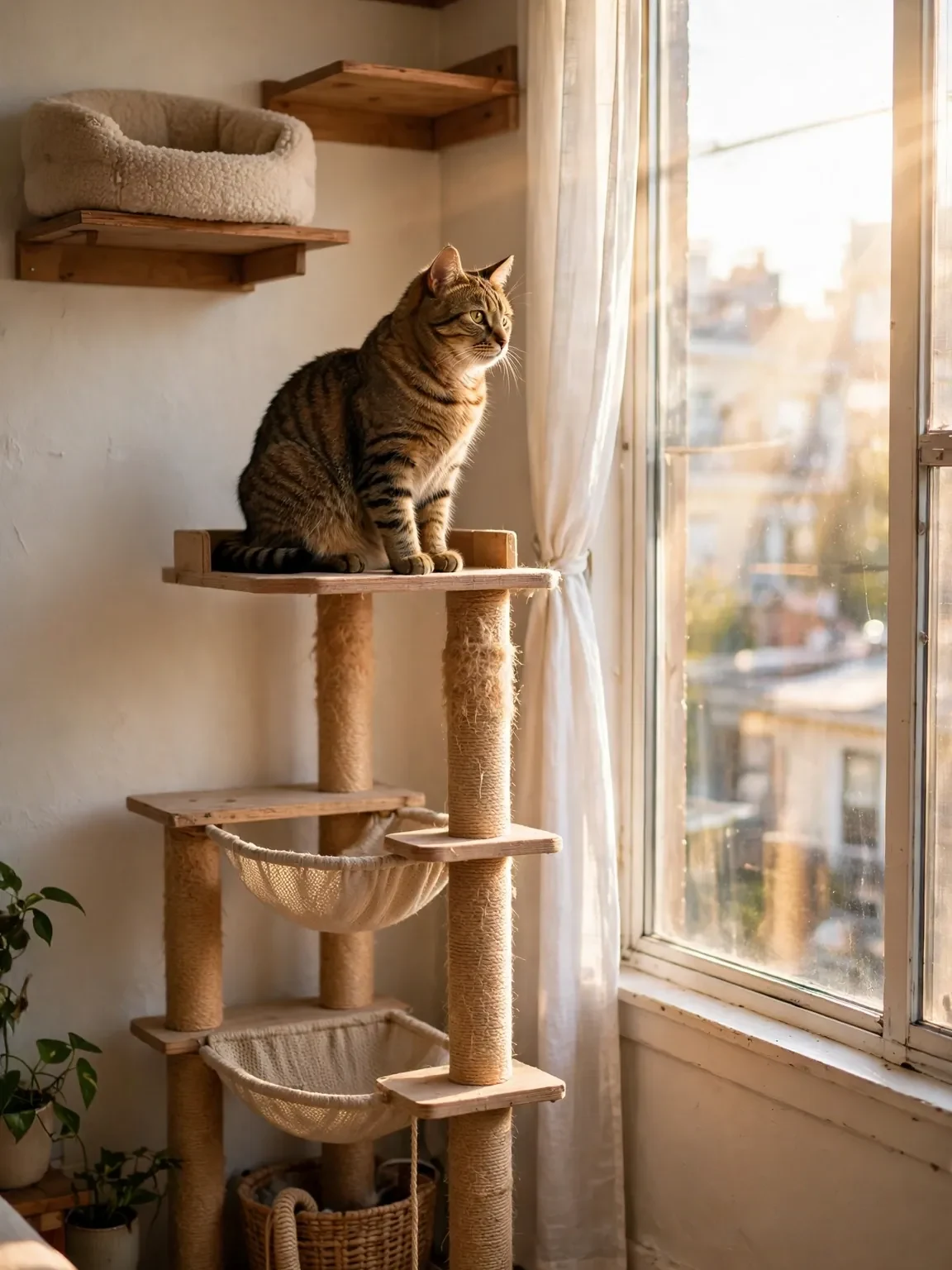
Cats think in three dimensions, and in a studio that is an advantage: vertical space is free square footage. A tall freestanding cat tree beside a window gives a cat a perch, a scratching post, and a napping spot without taking up more floor than a small side table. A suction-cup window perch or a bed on top of a sturdy bookshelf offers the same view for even less space.
Wall-mounted cat shelves are popular, but they usually require drilling, so check your lease before installing anything that puts holes in the wall. Many renters get the same result with freestanding towers, tension-pole cat trees that brace between floor and ceiling, and furniture-top beds. Whatever you choose, anchor tall freestanding pieces so an enthusiastic leap cannot tip them, and leave a safe route down that does not require a long jump onto a hard floor.
8. Pet-Proof the Details
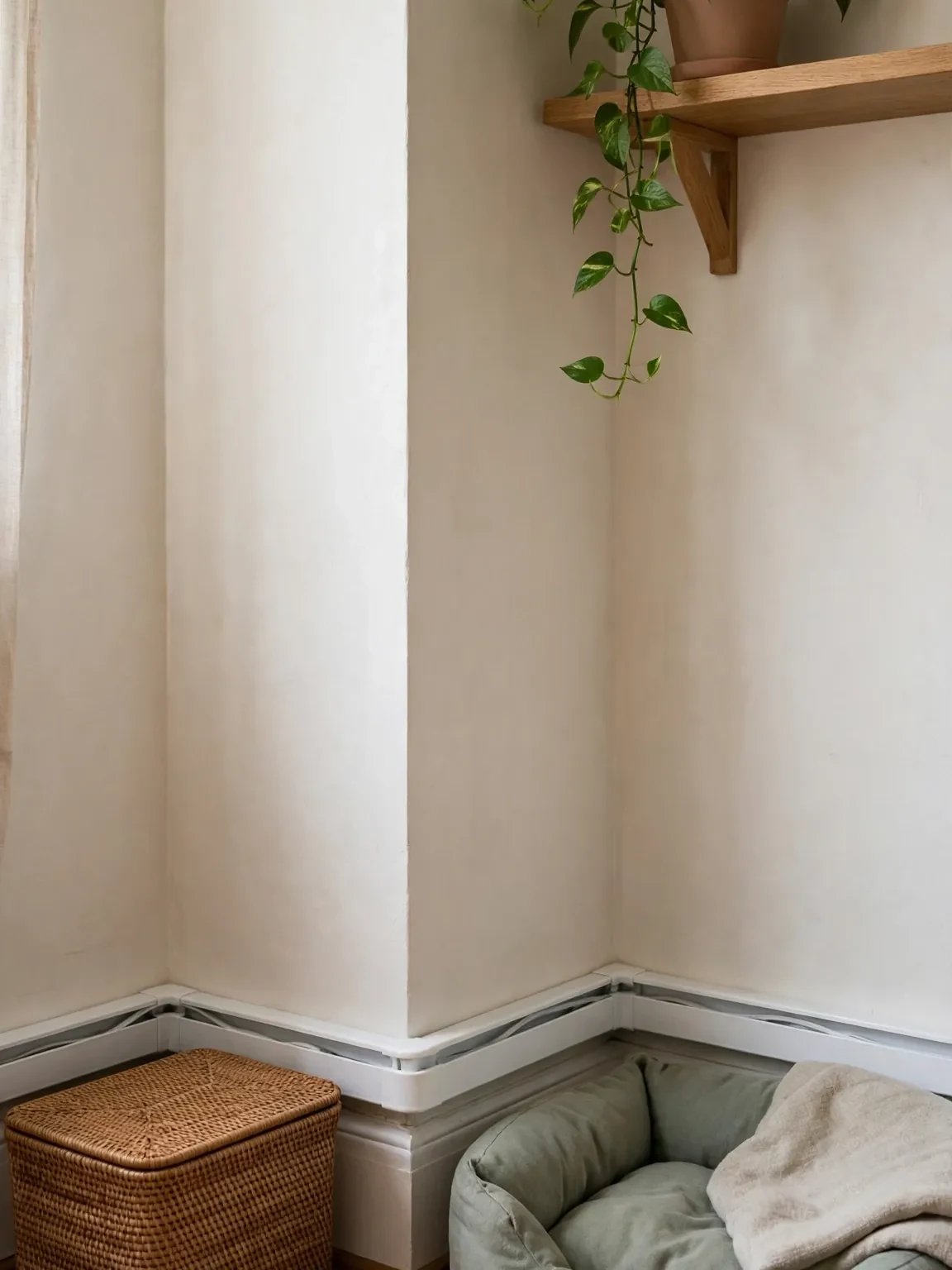
The damage that costs renters their deposit is rarely the big stuff — it is the chewed phone charger, the scratched door frame, the plant knocked off a shelf. Run cords through covers along the baseboard or behind furniture so a chewing puppy or a curious cat cannot reach them, and keep chargers off the floor when not in use. Store cleaning products in a closed cabinet rather than under an open sink, and read the label before using any spray or diffuser around pets — some common household products and scented oils can irritate animals, so ventilate well and check the product guidance for pet households.
Keep plants out of reach or choose varieties generally considered safer around pets, and check a reliable plant-toxicity reference before bringing a new one home, since many popular houseplants can be harmful if chewed. If you like candlelight, use battery-operated LED candles only — no lit real flames in a small rental with a pet that can knock things over, and no wax or smoke to clean off surfaces. A removable scratch guard on a favorite door frame and a door draft stopper your dog cannot shred will also save you repair conversations later.
9. Keep the Air Fresh
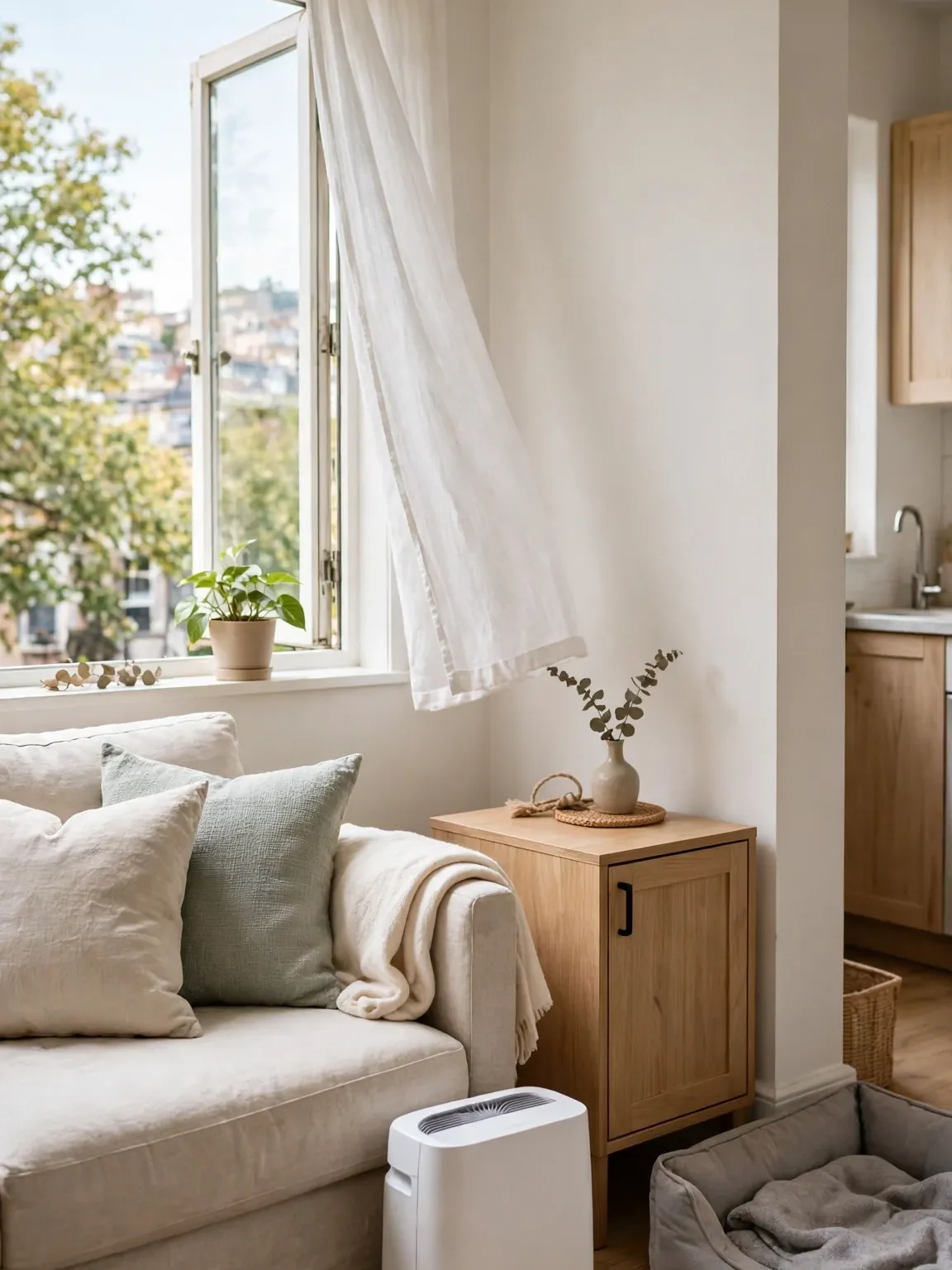
One small room concentrates every smell: wet dog, litter box, food bowls, and yesterday’s cooking. Ventilation is your first tool — open a window daily when weather allows and run the kitchen fan while cooking. A washable routine is the second: launder throws, cushion covers, and pet bedding weekly, wipe the feeding area daily, and scoop the litter box at least once a day so odors never build up.
A small air purifier near the pet’s main resting spot can help with fur and household dust, and a box of baking soda in the room or sprinkled on a rug before vacuuming can reduce lingering smells. Skip plug-in air fresheners and heavily scented sprays in a pet household unless the product is specifically labeled as suitable around pets — masking a smell is a weaker fix than removing its source, and strong fragrances can bother sensitive animals.
10. Plan for Move-Out From Day One
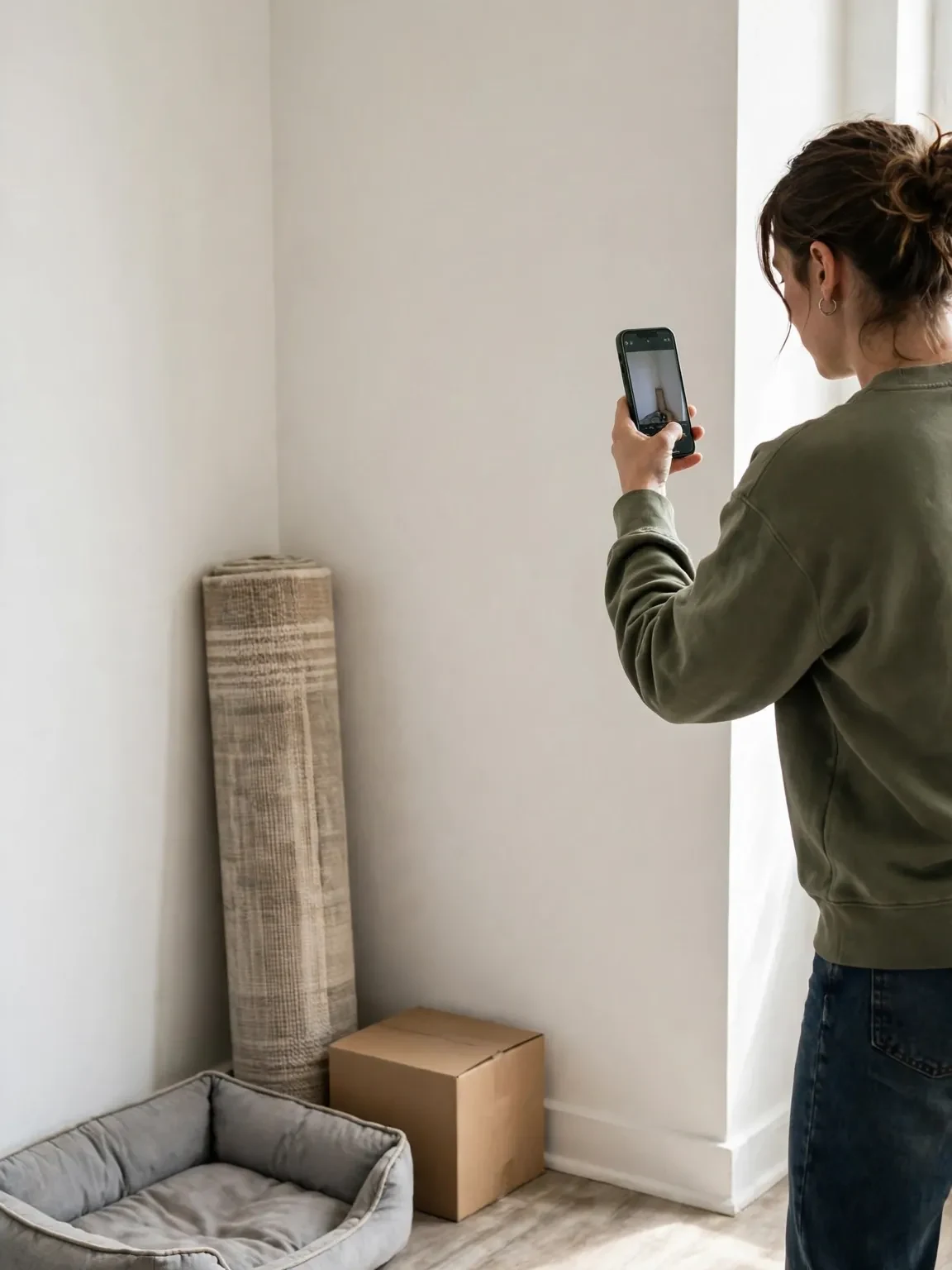
Deposit protection is a habit, not a last-week scramble. Photograph the apartment on move-in day — floors, walls, door frames, window sills — and keep those photos until your deposit is back. Address small damage early: a scratched door frame is cheaper to fix while it is small, and a stain cleaned the same day rarely becomes permanent. Keep receipts for washable covers and rugs; they show a pattern of care if a deduction is ever disputed.
In the final weeks, wash every cover, throw, and curtain, deep-clean the floors and the feeding area, and patch any small marks using only methods your lease allows — no spackle or paint without written permission. Do a final walkthrough with your phone camera, room by room, so you have a dated record of the condition you left behind. Normal wear from everyday living is generally treated differently from pet damage, but the line varies by lease and by state, so your move-in photos and cleaning records are the best evidence you have.
Frequently Asked Questions
Can I decorate a studio apartment with a dog without losing my deposit?
Yes, if every choice is removable and washable. Use washable rugs and slipcovers, freestanding furniture instead of anything drilled or glued, and cord covers instead of exposed cables. Photograph the apartment at move-in and clean pet areas weekly so damage never accumulates into a deduction.
What floor covering holds up best with pets in a rental?
A low-pile, machine-washable rug with a non-slip pad underneath is the most renter-friendly option: it protects the floor, handles accidents, and can be replaced cheaply. Add a washable mat under food and water bowls and a runner by the front door for muddy paws.
How do I keep a cat happy in a studio apartment?
Give the cat vertical territory and a window view: a tall freestanding cat tree, a suction-cup window perch, or a bed on a sturdy shelf. Add a quiet hiding spot, a scratching post near where the cat sleeps, and a litter box in a ventilated, low-traffic corner — not next to the food bowls.
What fabrics hold up best with pets?
Tightly woven, low-pile, machine-washable fabrics hold up best: slipcovers, washable throws, and removable cushion covers. They resist claw snags and release fur in the wash. Avoid loose weaves, velvet, and silk in the spots your pet uses most.
Where should I put a litter box in a studio?
Choose a ventilated, low-traffic corner that is easy for you to reach for daily cleaning — a bathroom corner or a spot beside a side table works well, and a litter box cabinet can disguise it as furniture. Keep it away from food and water bowls and from your sleeping area if you can.
Do I have to pay both a pet deposit and pet rent?
Sometimes. A pet deposit is usually a one-time, often refundable charge against damage, while pet rent is a monthly fee that is not refunded. Both depend on your lease and local rules, so ask for each charge in writing before signing. Our pet deposit vs. pet rent guide explains the difference in detail.
How do I keep pet smells out of a small apartment?
Ventilate daily, launder pet bedding and throws weekly, scoop the litter box daily, and wipe the feeding area after meals. A small air purifier can help with fur and dust, but removing the source of a smell beats masking it with scented products — especially in a home shared with a pet.
Conclusion
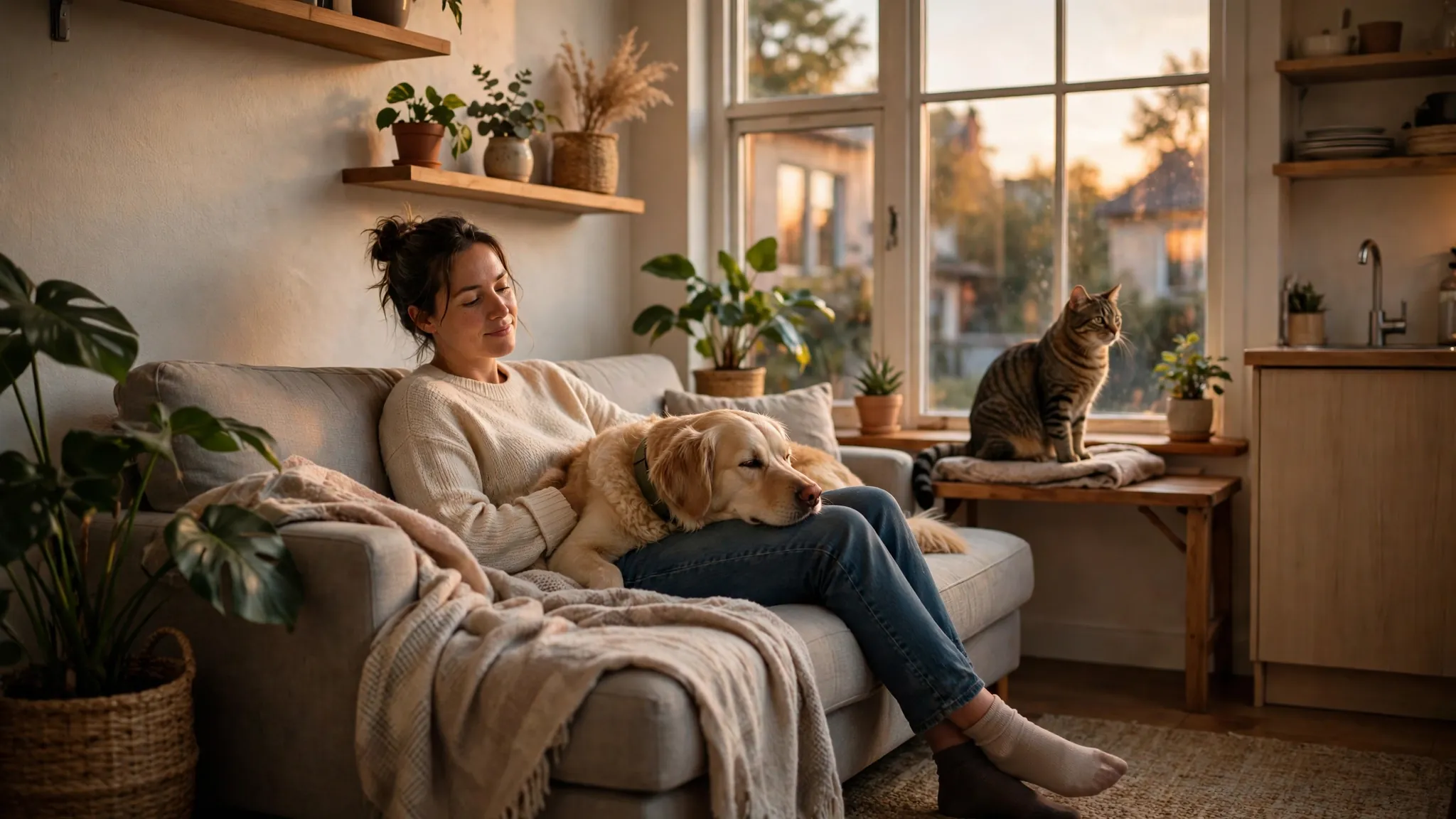
A pet-friendly studio is not a compromise between a nice home and a happy animal — it is a room planned around both. Learning how to decorate a studio apartment for renters with pets comes down to zoning one room for two, choosing washable fabrics and floor coverings, and keeping every change removable so your deposit stays safe. Start with the lease, build the pet zone, and let the washable layers do the hard work. If this guide helped you plan your studio, save it for your next shopping trip or share it with another first-time renter settling in with a pet.

Maren started MyFirstLease after a rough first lease taught him everything the internet didn’t. He covers the logistical side of renting — move-in checklists, utilities, and the unglamorous first-week stuff nobody explains — and oversees everything published on the site.