

The best indoor plants for apartments with no sunlight are ones that evolved for shade, not sun — and they do exist. If you’re a first-time renter in a north-facing or basement apartment where direct sunlight never reaches the floor, this guide is written for you: nine genuinely low-light plants, each with a care-difficulty rating, a brief pet-safety note, and realistic buying advice for tight renter budgets.
Most plant lists online quietly assume you have a bright windowsill. Dark apartments are different. Your plants get room light, hallway light, or a narrow north-facing window at best. Every pick below was chosen for those exact conditions, with the honest care notes a total beginner needs — including what kills each plant fastest.
Direct answer: The best indoor plants for apartments with no sunlight are snake plant, ZZ plant, golden pothos, cast iron plant, heartleaf philodendron, Chinese evergreen, peace lily, parlor palm, and lucky bamboo. All survive on indirect or room light — no sun needed — and most forgive missed waterings. Start with a snake plant or pothos if you’ve never owned a plant.
Summary

This is a roundup of nine plants that tolerate the dim conditions common in first apartments: basement and garden-level units, north-facing rooms, and interior hallways that never see direct sun. Each plant gets a care-difficulty rating so a first-timer can start with the most forgiving picks first.
You’ll also find a care-difficulty comparison table covering all nine plants at a glance, brief pet-safety notes on each pick (short on purpose — pet-safe houseplant guides are a separate niche), and a budget section on where to buy plants cheap when your furnishing money is stretched thin. If you can keep one plant alive for a month, this is your guide.
1. The No-Sunlight Reality Check

Every plant on this list still needs some light — “low light” does not mean zero light. These plants evolved on shaded forest floors, so they can make do with room light, a dim hallway, or a north-facing window. A truly pitch-black closet with no ambient light at all will defeat even the toughest pick.
Do the shadow test before you buy. Hold your hand about a foot above the spot you’re considering: a sharp shadow means bright indirect light, a soft blurry shadow means low light, and no shadow at all means the spot is too dark for anything but a plant under an artificial light. Most of the plants below do fine with a soft shadow; none of them want direct sunbeams.
The number-one killer of low-light plants is not darkness — it’s overwatering. These plants grow slowly in dim conditions, so they drink slowly. Watering on a schedule you found online, without checking the soil first, is the fastest route to root rot. The rule for almost everything below: stick a finger an inch or two into the soil; if it’s damp, wait. For a beginner, underwatering is almost always safer than overwatering.
Two more habits that cost nothing: rotate the pot a quarter turn every week or two so growth stays even, and wipe dust off leaves with a damp cloth occasionally, since dusty leaves catch less of the little light there is. If your unit is genuinely windowless in the room you want greenery in, a simple LED grow bulb in a lamp you already own can bridge the gap — used for roughly the hours the plant would have had daylight.
2. Snake Plant
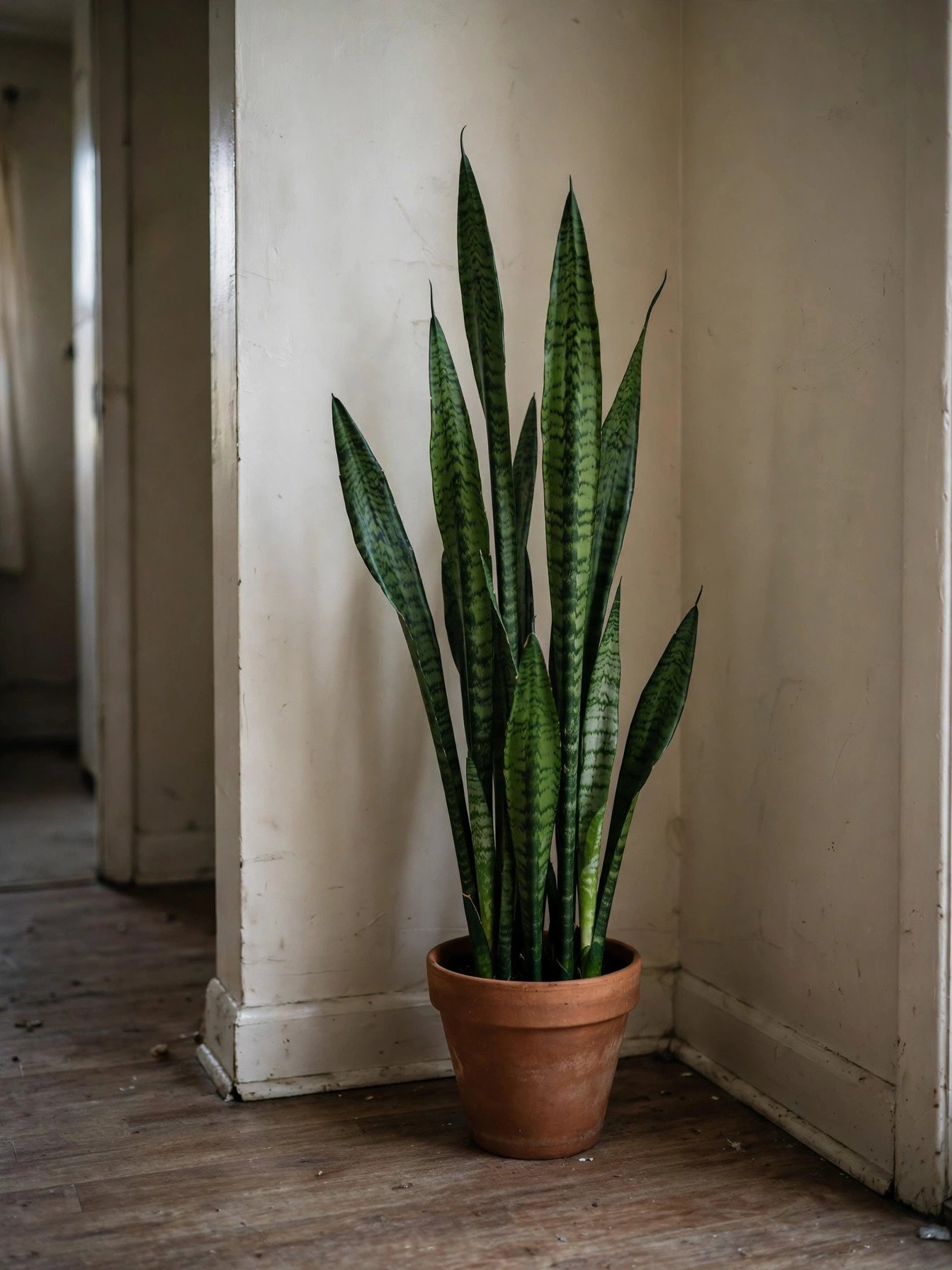
The default first plant for dark apartments, and for good reason. Snake plants (Dracaena trifasciata, still widely sold under the old name Sansevieria) tolerate a huge range of light, need water only every few weeks, and their upright, sword-like leaves make a small corner look deliberately styled. They grow slowly, which is a feature in a small rental: they won’t outgrow a corner anytime soon.
Let the soil dry out completely between waterings, then water thoroughly and let the pot drain. Never leave it sitting in a saucer of water. The quickest way to kill one is constant damp soil, which rots the roots and turns the leaf bases soft. They handle ordinary apartment temperatures fine and don’t need misting.
Care difficulty: beginner — the most forgiving pick on this list.
Pet note: Reported as toxic to cats and dogs if chewed. Keep it out of reach or pick a different option if you have curious pets — check your vet or the ASPCA plant database for the latest guidance.
3. ZZ Plant

If the snake plant is forgiving, the ZZ plant (Zamioculcas zamiifolia) is nearly as forgiving with a sleeker look. Its thick, glossy leaflets grow on arching stems from water-storing rhizomes underground, so it shrugs off weeks of neglect. It handles office-style fluorescent light and dim corners without complaint, and its slow growth means it stays apartment-sized for years.
Care mirrors the snake plant: wait until the soil is dry all the way through, water deeply, drain fully, and leave it alone. ZZ plants are especially sensitive to wet feet, so a pot with drainage holes is non-negotiable. Wipe the glossy leaves now and then to keep them catching light.
Care difficulty: beginner.
Pet note: Reported as toxic to cats and dogs. Same guidance as above — keep away from pets.
4. Golden Pothos

Pothos (Epipremnum aureum) is the trailing plant you see cascading off shelves in a million apartment photos, and it earned that reputation. It tolerates low light, grows fast enough that a beginner sees progress, and survives missed waterings with a droop you can recover from. It also gives you free plants: snip a stem just below a leaf node and put the cutting in water, and roots form in a week or two.
In dim rooms the variegated leaves may revert toward solid green — that’s the plant adapting to lower light, not a sign of failure. Water when the top inch or two of soil is dry, and don’t let it sit in standing water. It works in a hanging basket, on top of a bookshelf, or in a jar of water alone for a while.
Care difficulty: beginner.
Pet note: Reported as toxic to cats and dogs if ingested. Hanging it out of reach helps with pets, but it doesn’t make it safe for chewers.
5. Cast Iron Plant

The cast iron plant (Aspidistra elatior) got its name because it survived dim Victorian parlors — the 1800s version of a basement apartment. It handles deeper shade than almost anything else on this list, tolerates temperature swings near drafty doors, and asks for very little. Its broad, dark-green leaves read as bold and intentional even in a gloomy corner.
Water it only when the soil has dried out, and give it a pot with drainage. It’s a slow grower, so don’t expect new leaves often; steady, unchanged leaves are the sign of a happy cast iron plant. It also tolerates neglect from the other direction — brief droughts rarely faze it.
Care difficulty: beginner.
Pet note: Generally reported as one of the safer picks for pet households, but confirm with your vet before buying if you have animals.
6. Heartleaf Philodendron

Heartleaf philodendron (Philodendron hederaceum) is pothos’s close cousin with smaller, heart-shaped leaves and a similar easygoing temperament. It’s a natural for shelves and the tops of bookcases in dim rooms, trailing down as it grows. Pinch or snip the tips of long vines occasionally and the plant branches out fuller instead of getting leggy — that single habit is most of the skill involved.
Water when the top of the soil feels dry, and skip the fertilizer-heavy routines you see online; these plants do fine on neglect. Yellowing leaves usually mean too much water, not too little — check the soil before reaching for the watering can.
Care difficulty: beginner.
Pet note: Reported as toxic to cats and dogs. Keep trailing vines out of pet reach.
7. Chinese Evergreen
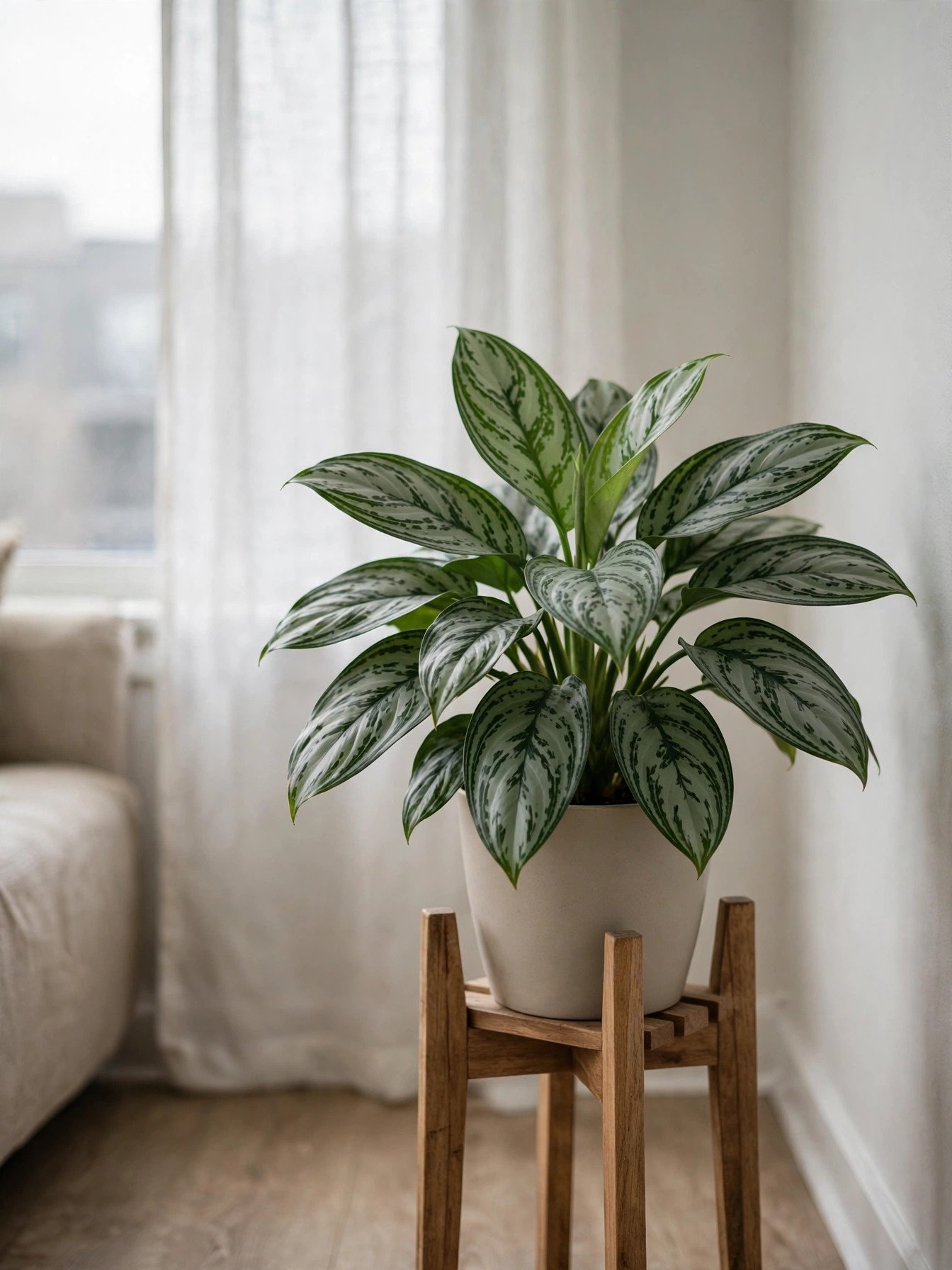
Chinese evergreens (Aglaonema) solve a specific dark-apartment problem: dim rooms can look flat and murky, and their patterned, sometimes silvery-variegated leaves add visual brightness without needing light themselves. They’re slow growers, forgiving of irregular watering, and tolerate the dry air of heated winter apartments better than many tropicals.
Let the top couple of inches dry between waterings. They dislike cold drafts, so keep them away from the door you leave propped open in winter. The patterned varieties hold their markings in low light better than the fully green ones, so pick a variegated type if you want the brightness effect.
Care difficulty: easy.
Pet note: Reported as toxic to cats and dogs. Same caution as the other tropicals on this list.
8. Peace Lily

The peace lily (Spathiphyllum) is the only plant here that blooms in low light — white, sail-like flowers appear even in dim rooms, which makes it the pick when you want a plant that looks decorative rather than just green. It’s also unusually communicative: when it’s thirsty, the whole plant droops dramatically, then perks back up within hours of watering. That visible signal makes it one of the best teachers for a beginner.
The trade-off is that it likes slightly more consistent moisture than the snake plant or ZZ plant — check the soil weekly rather than monthly. It prefers indirect light only; direct sun scorches the leaves. Keep it away from heating vents, which dry it out fast.
Care difficulty: easy to moderate — the watering schedule is the one extra demand.
Pet note: Reported as toxic to cats and dogs. The drooping trick is charming; it’s still not pet-safe.
9. Parlor Palm
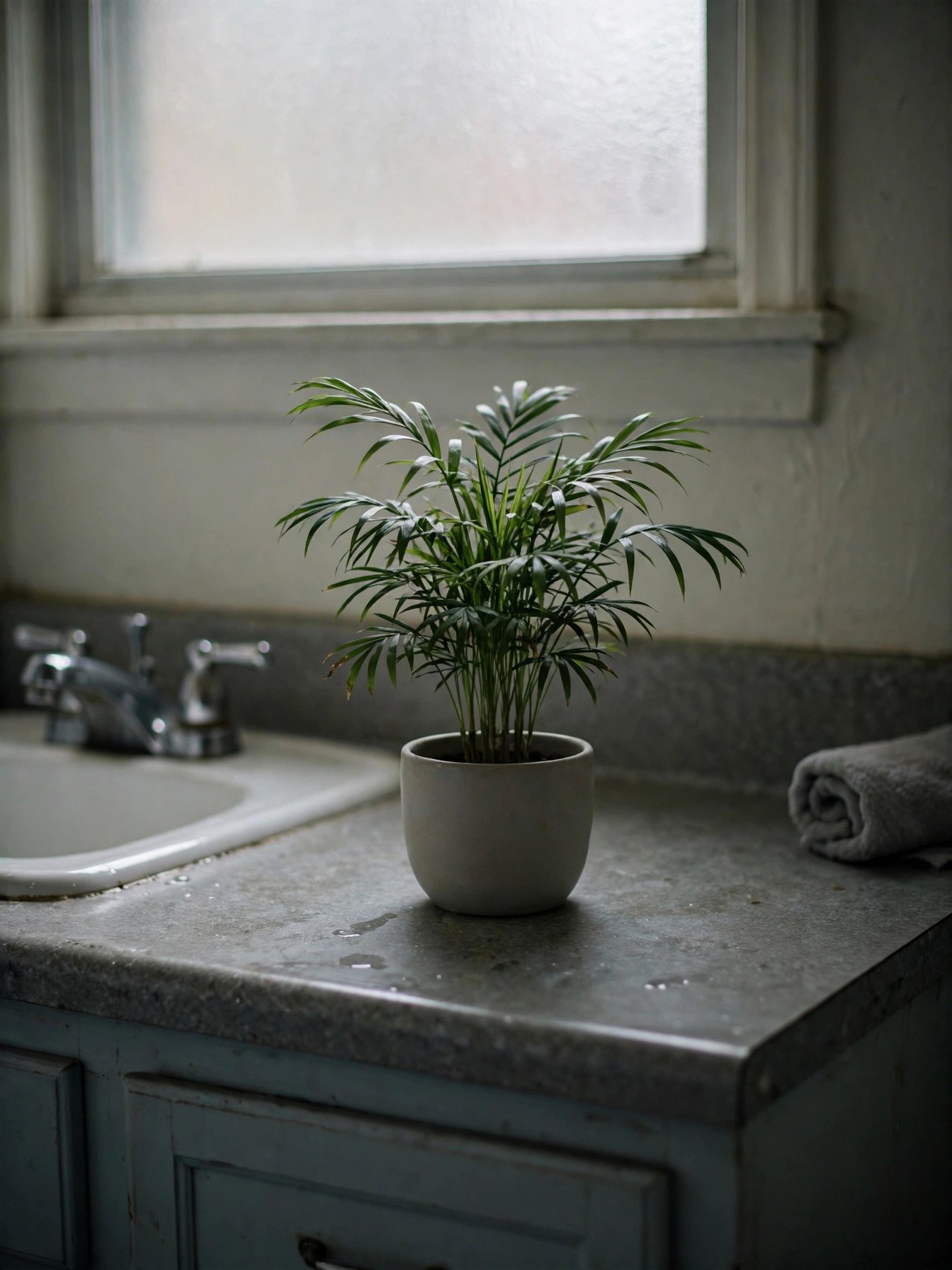
Parlor palms (Chamaedorea elegans) bring a completely different shape to the list: a compact, feathery palm that stays small indoors and suits bathroom corners and dim shelves. It’s slow-growing and tolerates low light and higher humidity — a bathroom with a frosted window is a classic good spot.
Water when the top inch of soil dries, and never put it in direct sun, which burns the fronds. Brown leaf tips usually point to dry air or inconsistent watering rather than light problems; trimming the brown edges with clean scissors is cosmetic and fine.
Care difficulty: easy.
Pet note: Generally listed as non-toxic to cats and dogs — one of the better picks here for pet households, though confirm with your vet.
10. Lucky Bamboo

Lucky bamboo (Dracaena sanderiana) isn’t actually bamboo — it’s a dracaena that grows happily in plain water, no soil required. That makes it the cheapest, simplest experiment for a total beginner: a stalk or two in a jar of water on a bathroom shelf or desk, topped up as it evaporates. It tolerates low light well and asks for essentially no maintenance beyond water changes.
Use plain tap water left out overnight if your tap runs heavily chlorinated, or just change the water when it looks cloudy — roughly weekly is a common rhythm. Keep the roots submerged and the stalks out of direct sun.
Care difficulty: beginner — the lowest-maintenance entry point on this list.
Pet note: Reported as toxic to cats and dogs despite the innocent look. Keep the jar where pets can’t reach.
11. Care-Difficulty Comparison

The practical asset: all nine plants at a glance. Ratings assume the dim conditions of a typical dark apartment, not a sunny windowsill.
| Plant | Light tolerance | Watering rhythm | Growth speed | Care difficulty | Pet note |
|---|---|---|---|---|---|
| Snake plant | Excellent | Let dry fully; every few weeks | Slow | Beginner | Toxic to cats/dogs |
| ZZ plant | Excellent | Let dry fully; infrequent | Slow | Beginner | Toxic to cats/dogs |
| Golden pothos | Very good | Top inch dry | Fast | Beginner | Toxic to cats/dogs |
| Cast iron plant | Excellent | Let dry between waterings | Slow | Beginner | Generally safer — confirm with vet |
| Heartleaf philodendron | Very good | Top inch dry | Moderate | Beginner | Toxic to cats/dogs |
| Chinese evergreen | Excellent | Top 2 inches dry | Slow | Easy | Toxic to cats/dogs |
| Peace lily | Good | Check weekly; likes consistency | Moderate | Easy–moderate | Toxic to cats/dogs |
| Parlor palm | Very good | Top inch dry; no direct sun | Slow | Easy | Generally non-toxic — confirm with vet |
| Lucky bamboo | Very good | Grows in water; change weekly | Slow | Beginner | Toxic to cats/dogs |
One pattern worth noticing: the easiest plants are the ones you water least. If you’re the type who forgets, lean toward the top half of this table. If you want the feedback loop of a plant that visibly responds to care, the peace lily and pothos are the most rewarding. Pet-safety notes above are brief by design — if you share your apartment with animals, check the ASPCA plant database or ask your vet before buying, since individual sensitivities vary.
12. Where to Buy Cheap

You don’t need a fancy nursery to start. Grocery stores routinely sell small snake plants, pothos, and lucky bamboo for a few dollars each — example price, varies by store and season — and they’re often healthier than expected because of the turnover. Big-box stores with garden sections and IKEA carry starter sizes at similar prices, and local nurseries usually have a discount rack of slightly scuffed plants that recover fine in a dark apartment.
Three renter-specific buying habits help: start with one or two plants, not nine, so you learn your apartment’s actual light before spending more; buy small, since low-light plants grow slowly and a 4-inch pot costs a fraction of a mature one; and ask around — pothos and philodendron cuttings root in water, so one friend’s plant becomes several of yours for free. Treat every price you see as an example: plant prices vary by store, season, and region, and the editor should spot-check before publishing.
If the corner you’re greening up is a dark entryway, a snake plant in a simple pot does more visual work than most decor — our renter-friendly entryway ideas show how far one well-placed plant goes. And plants count as budget decorating: see Decorating Your Apartment on a Budget for more low-cost ways to make a first rental feel finished.
Frequently Asked Questions
Do indoor plants really need sunlight at all?
No plant thrives with literally zero light, but the plants on this list don’t need direct sunlight. Indirect room light, ambient daylight from a north-facing window, or even bright office-style lighting is enough for them to survive and grow slowly.
What counts as “low light” for a houseplant?
Use the shadow test: hold your hand a foot above the spot. A soft, blurry shadow is low light — fine for every plant here. A sharp shadow is bright indirect light. No shadow at all means the spot is too dark and needs an artificial light.
Which low-light plant is best for a total beginner?
A snake plant or golden pothos. Both tolerate missed waterings, adapt to dim corners, and show obvious signs when something is wrong. Lucky bamboo in water is an even simpler zero-commitment experiment.
Can I keep a plant in a windowless bathroom?
Yes, if the bathroom gets regular ambient light when the door is open or has a frosted window. Lucky bamboo, parlor palms, and cast iron plants handle humid, dim bathrooms well. In a truly windowless bathroom, add a simple LED grow bulb or rotate the plant to a brighter room weekly.
Are these plants safe around cats and dogs?
Most of the plants on this list are reported as toxic to cats and dogs if chewed — only the cast iron plant and parlor palm are generally listed as the safer options. If you have pets, confirm your pick with your vet or the ASPCA plant database before buying, and keep toxic plants out of reach.
Where can I buy houseplants cheap as a renter?
Grocery stores, IKEA, and big-box garden sections sell small starter plants for a few dollars each (example price). Local nurseries often have discount racks, and pothos or philodendron cuttings root in water for free — ask a plant-owning friend.
Will a grow light help if my apartment is truly dark?
Yes — a simple full-spectrum LED bulb in a lamp you already own, left on for roughly the hours of natural daylight, can keep any plant on this list healthy in a windowless room. It’s the cheapest fix for a space with no usable natural light.
Conclusion
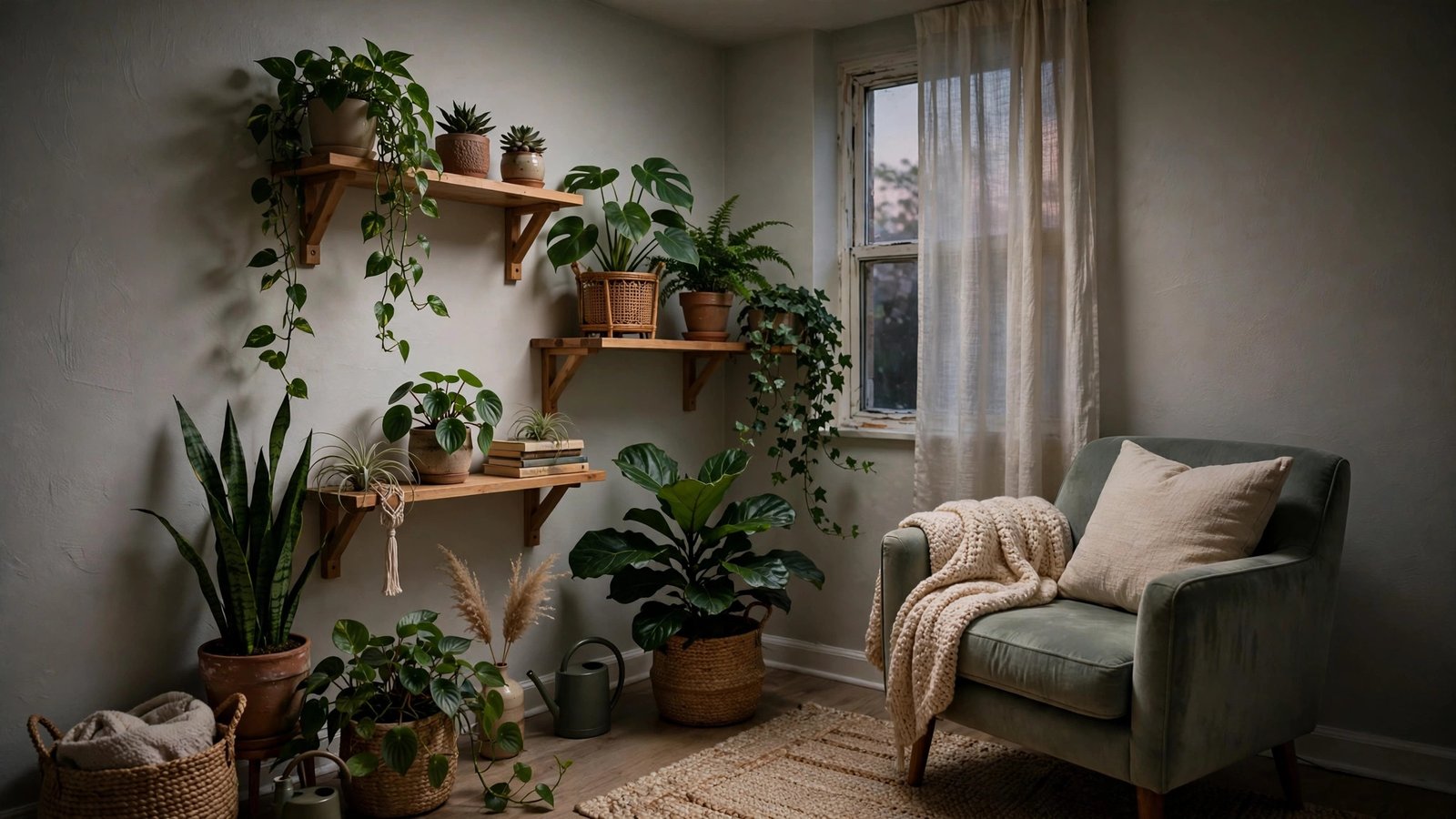
The best indoor plants for apartments with no sunlight reward one habit above all: resisting the urge to overwater. Start with a snake plant or pothos, do the shadow test on the spot you’re considering, and let the soil dry between waterings — that’s genuinely most of the skill involved. Dark apartments, north-facing rooms, and basement units can all host greenery; you just pick plants built for shade and buy small so mistakes are cheap.
If this guide helped you pick your first plant, save it for your next plant run — and share it with a fellow renter staring at a dark corner. For more small-space decorating ideas, browse our Decorating & Small Space Living collection.

Maren started MyFirstLease after a rough first lease taught him everything the internet didn’t. He covers the logistical side of renting — move-in checklists, utilities, and the unglamorous first-week stuff nobody explains — and oversees everything published on the site.