Small apartment closet makeover ideas for renters start with a simple truth: a cramped, builder-grade closet does not need a renovation to work better. It needs fewer clothes competing for the same rod, a second hanging level where dead air sits now, and storage that stands on the floor instead of being screwed into the wall. This guide is written for a first-time renter in a studio or one-bedroom whose closet is a narrow reach-in with one rod, one shelf, and a floor that fills up fast.
Every idea here is renter-friendly and move-ready. Nothing requires drilling, painting, or cutting a shelf, and most pieces can be taken down in an afternoon when your lease ends. Prices are given as typical ranges as of 2026, so you can plan a makeover that fits a first-apartment budget as well as a slightly larger one. For more small-space projects on the same budget, see the Decorating & Small Space Living pillar page.
A no-drill closet makeover starts by editing what you own, then doubling the hanging rod with a tension rod or a hook-on extender, adding a freestanding shelf or cube unit for folded clothes, and using the door and the top shelf for shoes and accessories. Keep every piece removable, check the weight limits, and leave the closet easy to return to its original condition.
Executive Summary
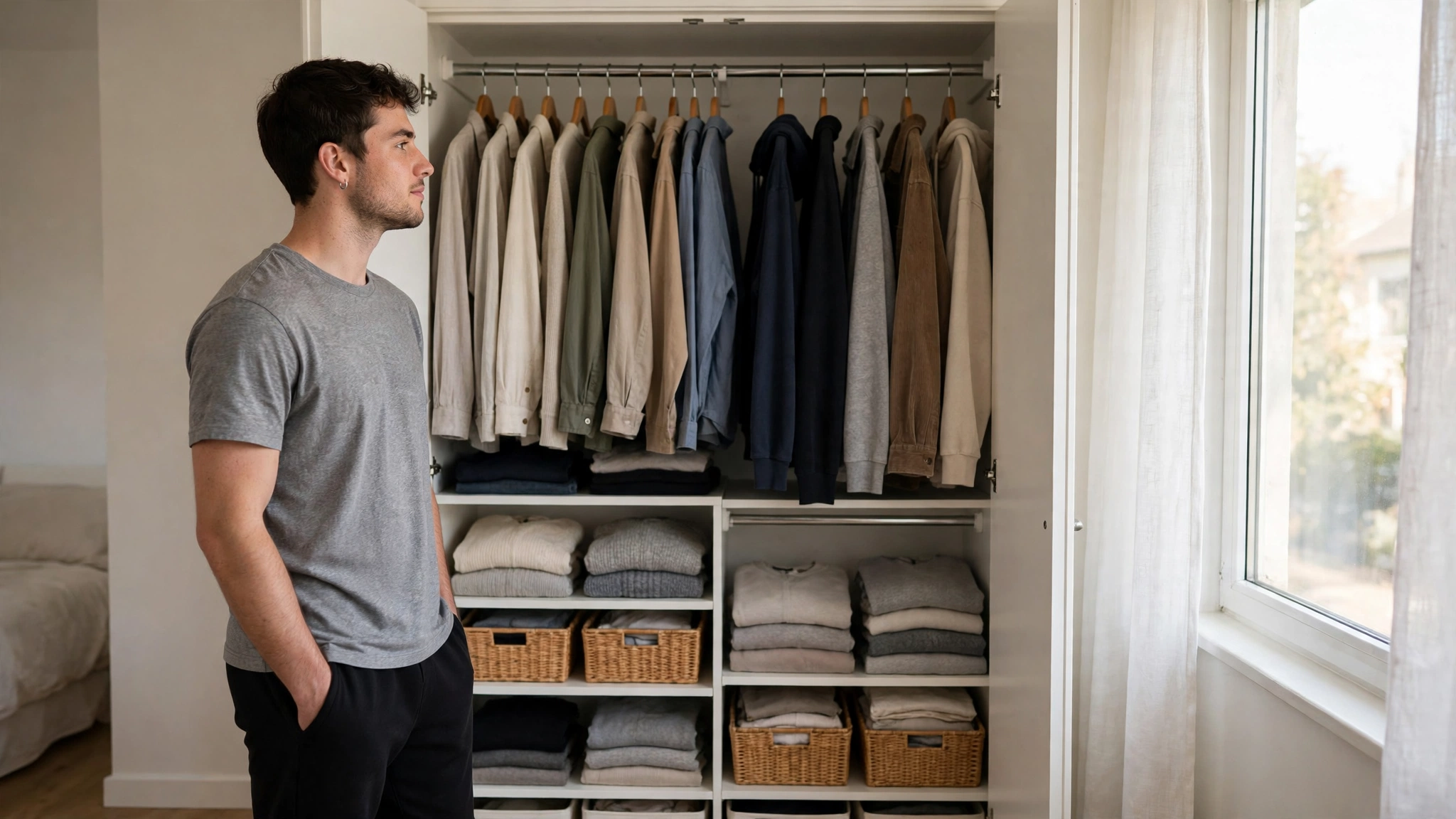
This article walks through seven practical ideas for turning a small rental closet into storage that actually works. It starts with editing and measuring — the free step that makes every later purchase fit — and then covers doubling the hanging space, adding freestanding shelves and cubes, putting the door to work, and taming the top shelf and the floor where shoes and seasonal clothes pile up.
Later sections cover lighting a dark closet and making it look finished without paint, and a short weekly routine that keeps the closet from sliding back into a pile. A budget worksheet and a FAQ at the end help you plan the whole project before you spend anything, with lease and deposit risks flagged along the way.
1. Edit and Measure First

No organizer makes a closet bigger, so the first step is always fewer things in it. Take everything out, sort it into three piles — keep in this closet, store elsewhere, and let go — and be honest about the middle pile. Clothes you have not worn in a year, shoes that hurt, and duplicate items you keep “just in case” are the reason the rod is crowded and the shelf is a landslide. Bag the let-go pile the same day, before it drifts back onto a hanger.
Measure before you buy anything. A tape measure tells you what a product photo cannot: the inside width from wall to wall, the depth from the rod to the back wall, the height from the rod to the floor, and the height from the top shelf to the ceiling. Write the four numbers on your phone. Most reach-in closets are about 24 inches deep, which means a storage bin deeper than that will stick out past the door frame, and a shoe rack wider than the opening will not fit at all. A common mistake is buying a freestanding unit first and discovering it is two inches too wide for the opening.
While the closet is empty, photograph the walls, the rod, the shelf, and the floor. Those move-in-condition photos protect your deposit if a landlord later questions a scuff or a mark, and they give you a “before” picture to compare with the finished closet. Wipe the shelf and the floor, check whether the rod is secure in its sockets, and note anything already damaged — a loose rod bracket or a stained shelf — in writing to your landlord, so it is not blamed on you at move-out.
2. Double the Hanging Space

The biggest waste in a small rental closet is the empty air under short clothes. Shirts, folded trousers, skirts, and jackets usually need only about 36 to 40 inches of hanging drop, while the space from a standard rod to the floor is often 60 inches or more. That gap is a whole second row of hanging space waiting to happen, and it is the cheapest capacity you will add.
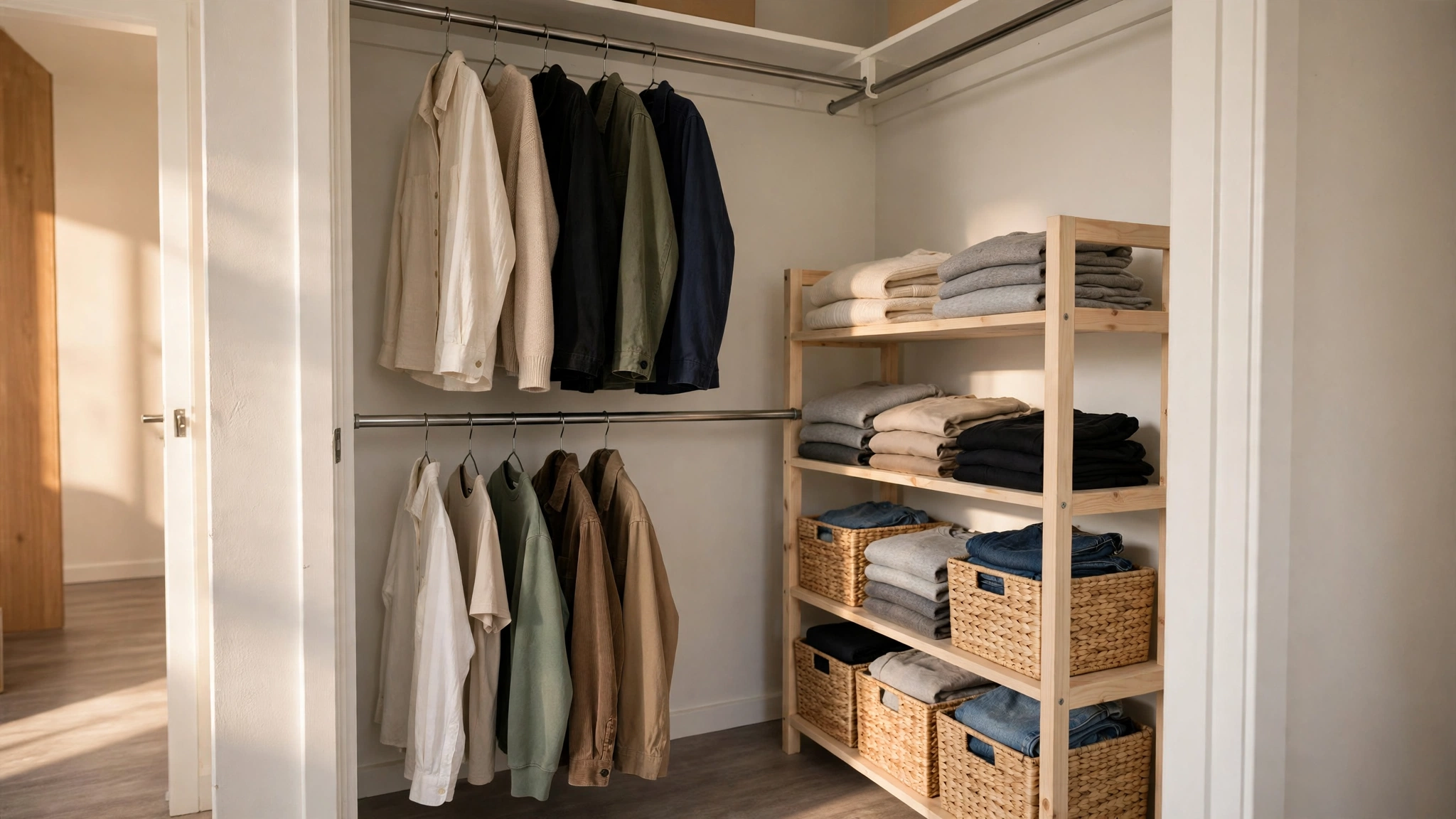
A hanging rod extender hooks over your existing rod and creates a lower rod beneath it, with no tools and no holes. Put shorter items on both levels and keep long dresses or coats in a section with no extender, so they hang freely. A tension rod wedged between the two side walls at the same height does the same job, and it works well in closets where the existing rod is crowded. Either way, check the product’s stated weight limit and the condition of your original rod first: the extender transfers its load onto the rod and its brackets, so an already loose or bent rod should be reported to the landlord before you load it. Typical costs as of 2026: a hook-on rod extender runs about $15 to $30, and a sturdy tension rod about $12 to $25.
Slim, matching hangers are the other half of this fix. Chunky plastic and wooden hangers eat rod space and let slippery tops slide to the floor; slim, non-slip hangers take up noticeably less room per garment and keep the rod looking calm. A pack of 50 typically costs $15 to $30 as of 2026, and it is the best first purchase if you can only buy one thing this month. Sort by category and then by length — short items together on the doubled section, long items together where they can hang full-length — so you can see what you own without digging.
Use cascading hooks sparingly. They let several hangers hang vertically from one spot, which helps for a matching outfit or a set of tank tops, but a whole rod of them hides clothes behind clothes and makes mornings slower. A few, used for one category, beat a closet full of them.
3. Add Freestanding Shelves

Folded clothes need a shelf to sit on, and most rental closets give you exactly one — the high shelf above the rod, where stacks topple the moment you pull a sweater from the middle. A freestanding shelf unit or a stack of cube organizers on the closet floor gives folded clothes a real home, and because it touches only the floor, it is the lowest-risk storage you can add in a rental.
A narrow freestanding shelf, a small cube unit, or a stackable plastic drawer tower all work, and the right one depends on your closet’s width. Measure the floor space beside or below the hanging clothes first: a unit about 12 to 16 inches wide fits most reach-ins without blocking the door, while a wider unit belongs only in a walk-in or a closet with a clear floor section. Keep heavy items low — jeans and sweaters on the bottom cubes, lighter items up top — so the unit stays stable, and leave a few inches of clearance so the door closes without catching. Typical prices as of 2026: a small cube unit runs about $35 to $80, a narrow freestanding shelf about $40 to $90, and a stackable drawer tower about $30 to $60.
Shelf dividers and hanging shelf organizers fill the gaps a freestanding unit cannot reach. Clip-on dividers slide over the existing top shelf and keep stacks of folded sweaters or jeans from leaning into each other; a fabric hanging organizer hooks over the rod and adds cubbies for folded items, underwear, or accessories. The hanging organizer uses rod space, so it works best after the edit in section 1 has freed some room. Shelf dividers typically cost $10 to $25 for a set as of 2026, and a fabric hanging organizer about $10 to $30.
Do not drill in a floating shelf to solve this. Floating shelves look tidy in photos, but they usually require wall anchors, and many leases charge for wall repair at move-out. A freestanding unit gives you the same shelves with none of that risk, and you can take it to your next apartment. If a unit feels wobbly, lower the heavy items, push it flat against the back wall, and do not overload the top — a shelf that tips forward in a small closet is a real hazard, especially if a child or a pet can reach it.
4. Put the Door to Work

The back of the closet door is free storage that most renters never use. An over-the-door organizer hangs from hooks over the top edge of the door — no screws, no adhesive — and turns that flat surface into pockets for shoes, scarves, belts, hats, or cleaning supplies. Clear pockets let you see everything at a glance; fabric pockets look tidier from the bedroom. Either way, check the door first: the organizer should sit flat, the door should still close fully, and the hooks should not scrape the door frame or the paint. A thin towel or a strip of felt behind the hooks prevents scuffs, which are one of the most common small deposit deductions. Typical cost as of 2026: $15 to $35.
Over-the-door hooks are the simpler version of the same idea. Two or three sturdy hooks hold tomorrow’s outfit, a robe, a bag, or a belt, and they come off in seconds at move-out. Use them for light items only — a heavy bag on a door hook will pull the door out of alignment over time and can damage the hinges. If the door is a sliding or bifold door rather than a hinged one, an over-the-door organizer will not fit; use the back wall instead, with a narrow hanging organizer on the rod or a slim freestanding rack just inside the opening.
The door is also the place for a full-length mirror, if your closet has no other spot for one. A mirror that hangs over the door, rather than being screwed to it, lets you check an outfit without taking up bedroom wall space, and it bounces light into a dark closet. Check the combined weight of the mirror and the organizer if you use both, and keep the bottom of the mirror clear of the floor so the door swings freely.
5. Tame the Top Shelf and Floor

The top shelf and the floor are where a closet makeover either holds or falls apart. The top shelf is the hardest place to reach, so it should hold the things you need least often: seasonal clothes, spare bedding, or a suitcase. Matching bins with lids, labelled on the front edge you can actually see, turn that shelf into storage you can pull down without a landslide. Choose bins that fit the shelf’s depth and leave a finger’s width on each side, so they slide out without catching. Typical costs as of 2026: a sturdy lidded bin runs about $8 to $20 each, and a set of matching bins about $25 to $50.
The floor needs the same discipline. Shoes piled loose on the floor are the fastest way to make a tidy closet look chaotic again, and they get scuffed by the door. A low, two-tier shoe rack, a stackable shoe shelf, or a row of shoe bins keeps pairs together and off the floor, and it leaves a clear strip for a small laundry basket or a storage ottoman if your closet is wide enough. Measure the floor height under the hanging clothes before you buy: a rack that is too tall will collide with the hem of your shortest hanging items. Typical prices as of 2026: a two-tier shoe rack runs about $20 to $45, and a stackable shoe shelf about $15 to $30.
Seasonal rotation is what keeps both zones working. When the weather turns, swap the bins: winter coats and heavy sweaters go up top in summer, light clothes go up top in winter, and the clothes for the current season stay at eye and hand level. Do the swap in one sitting, twice a year, rather than letting out-of-season clothes slowly crowd the rod. A vacuum storage bag can shrink bulky winter items for the top shelf, but check the care label first — some fabrics and filled jackets should not be compressed for months at a time.
6. Light It and Finish It
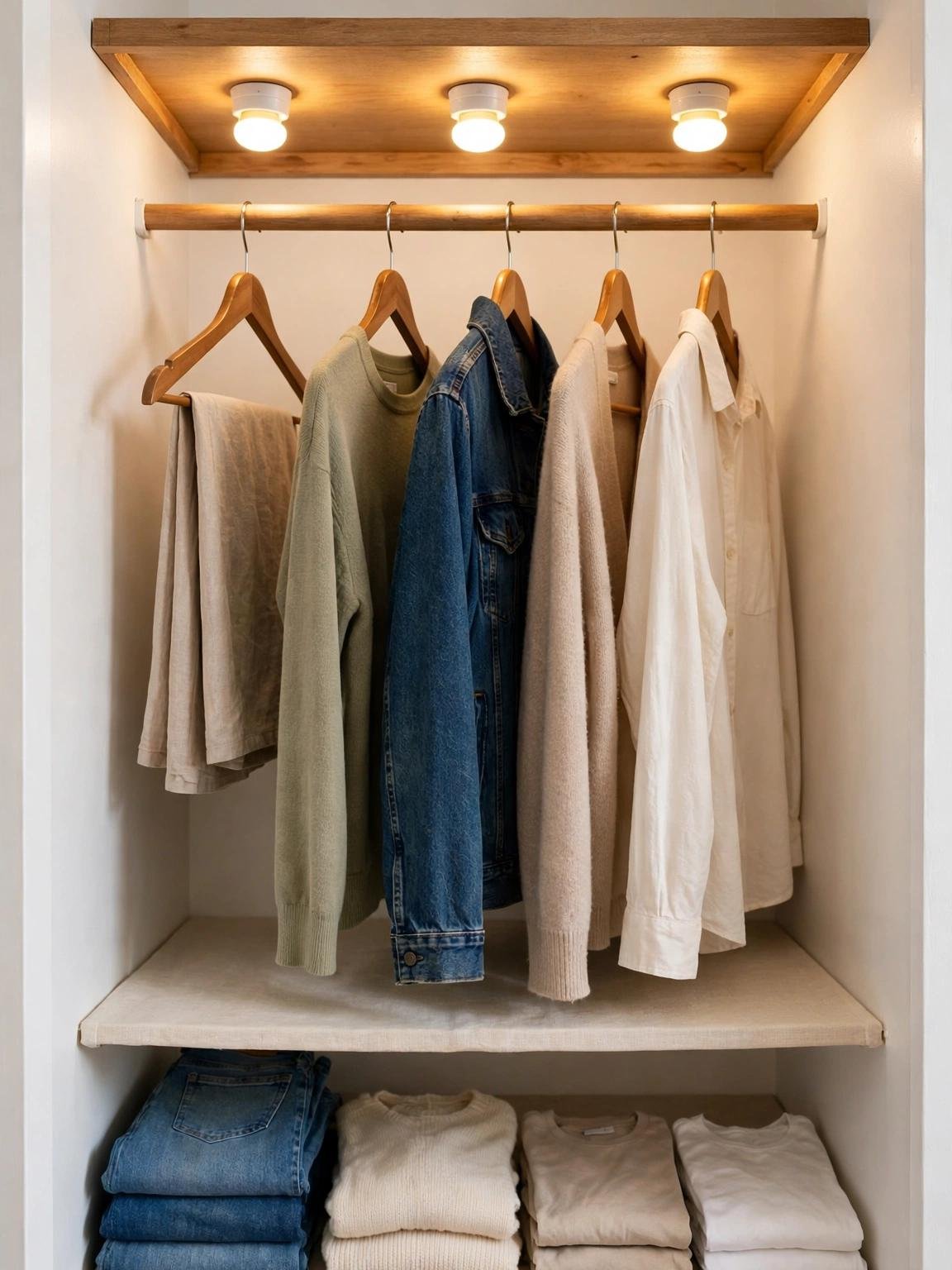
Most rental closets are dark, and a dark closet is a closet you cannot use properly — you cannot tell navy from black, and you reach for the same three outfits because they are the ones you can see. Battery-powered motion-sensor puck lights or a rechargeable LED strip solve that without an electrician or a hole in the wall. Stick-on lights with removable adhesive, or lights that attach with magnets to a small metal plate, go on the ceiling or the underside of the top shelf near the front third, so your body does not block the light when you stand in front of the closet. Warm white, usually labelled 2700K to 3000K, makes clothing colours look true; cool daylight bulbs make a small closet feel like a storage room. Typical costs as of 2026: a set of battery puck lights runs about $12 to $25, and a rechargeable LED strip about $15 to $30.
Finishing touches are what make the closet feel like a makeover instead of a storage project, and they do not need paint. A removable shelf liner in a light colour brightens a stained or scratched shelf and wipes clean; matching bins and hangers in one calm colour make the whole closet look intentional even when the clothes inside are varied. If the closet has no door, or the door is a curtain, a tension rod with a simple fabric curtain in a colour that matches the bedroom hides the contents and softens the room — and the rod and curtain come down without a trace.
Be careful with adhesive products here. Some leases ban adhesive hooks and strips outright, and even removable adhesive can pull paint off some wall finishes, especially in older apartments or on freshly painted walls. Test one hook or liner in a hidden spot first, follow the removal instructions exactly, and prefer freestanding or tension-mounted options whenever a sticking option is the only alternative. If you love the look of a patterned closet, the site’s guide to a closet with wallpaper ideas shows renter-friendly ways to add pattern — read it with your lease in hand, and choose the removable version.
7. Keep It Tidy Every Week

A makeover that lasts is a routine, not a one-time purge. The closet will drift back toward a pile unless a small weekly habit catches it early, and the habit that works for a first-time renter is a short one: five minutes, once a week, with a clear job. Put it on the same day you do laundry, so the two jobs share a trip to the closet.
Each week, do three things. First, return anything that has migrated out of the closet — the jacket on the chair, the shoes by the front door — to its assigned spot. Second, pull out one item you did not wear that week and decide whether it belongs in the closet, in storage, or in the let-go bag. Third, check the floor and the top shelf: if a bin is overflowing or a stack is leaning, fix it now, while it is a one-minute job, instead of waiting until it is a Saturday project. A small basket or bag kept on the closet floor for donations makes the second step easy — when it is full, it leaves the apartment.
The one-in, one-out rule keeps the routine honest. When a new item comes home, one old item leaves the closet the same day, into the donation bag or into storage. That rule is what protects the second hanging row and the freestanding shelves you just added: without it, new clothes quietly fill the space the edit created, and within a few months the closet is crowded again for the same reason it was crowded before. A closet that stays tidy is not a closet with more organizers — it is a closet with the same number of things in it as the space was built to hold.
Closet Makeover Budget Worksheet
Before you buy anything, sketch the setup on paper with the prices below as a guide, all as of 2026. A starter makeover can come together for roughly $60 to $120: slim hangers ($15 to $30), a tension rod or hook-on extender ($12 to $30), an over-the-door organizer ($15 to $35), and two or three bins ($16 to $40). A fuller makeover typically runs $150 to $300: the starter pieces plus a freestanding shelf or cube unit ($35 to $90), a two-tier shoe rack ($20 to $45), shelf dividers ($10 to $25), and battery lights ($12 to $25).
Start with the edit and the hangers, add the second hanging level next, and add freestanding shelves and lights only after the rod is working. Buying in that order keeps the closet usable from day one and stops a shopping list from turning into clutter before the closet is even tidy. If money is tight, check local resale listings first — hangers, bins, shoe racks, and cube units are common secondhand, often for half the new price. For a whole-apartment version of the same budget-first approach, see decorate an apartment on a budget.
Frequently Asked Questions
How can I organize a small closet without drilling holes?
Use a tension rod or a hook-on rod extender for a second hanging level, a freestanding shelf or cube unit for folded clothes, an over-the-door organizer for shoes and accessories, and bins on the top shelf. Every piece comes out without tools, and nothing touches the wall with a screw.
What is the cheapest way to make over a small rental closet?
Start with the free step — editing out clothes you do not wear — then buy slim hangers and a tension rod or hook-on extender. Those two purchases, roughly $30 to $55 combined as of 2026, usually free up more space per dollar than any other single change. Add bins and a shoe rack only after the rod is working.
Can I add shelves to a rental closet without damaging the walls?
Yes, if the shelves are freestanding. A narrow shelf unit, a cube organizer, or a stackable drawer tower stands on the closet floor and needs no wall fixing. Avoid floating shelves, which usually require drilling, and check your lease before using any adhesive-mounted shelf, since some leases ban adhesives outright.
How do I double the hanging space in a tiny closet?
Add a second rod about 38 to 42 inches below the existing rod, using a hook-on extender or a tension rod, and hang short items — shirts, skirts, folded trousers — on both levels. Keep long dresses and coats in a section with no second rod so they hang full-length, and check the weight limit before loading the lower rod.
How do I keep shoes from taking over a small closet floor?
Give shoes a defined zone: a low two-tier rack, a stackable shelf, or a row of bins, measured to fit under the shortest hanging clothes. Keep only the pairs you wear regularly in the closet and store out-of-season shoes in labelled bins on the top shelf.
What lighting works in a closet with no light fixture?
Battery-powered motion-sensor puck lights or a rechargeable LED strip, mounted with removable adhesive or magnets near the front of the ceiling or under the top shelf. Choose warm white (2700K to 3000K) so clothing colours look true, and avoid candles — open flames are a fire risk in a small closet, and many leases ban them outright.
How do I keep a small closet tidy after the makeover?
Spend five minutes once a week, ideally on laundry day, returning stray items, pulling out one unworn piece, and straightening any leaning stack. Follow a one-in, one-out rule: when a new item comes home, one old item leaves the closet the same day.
Conclusion
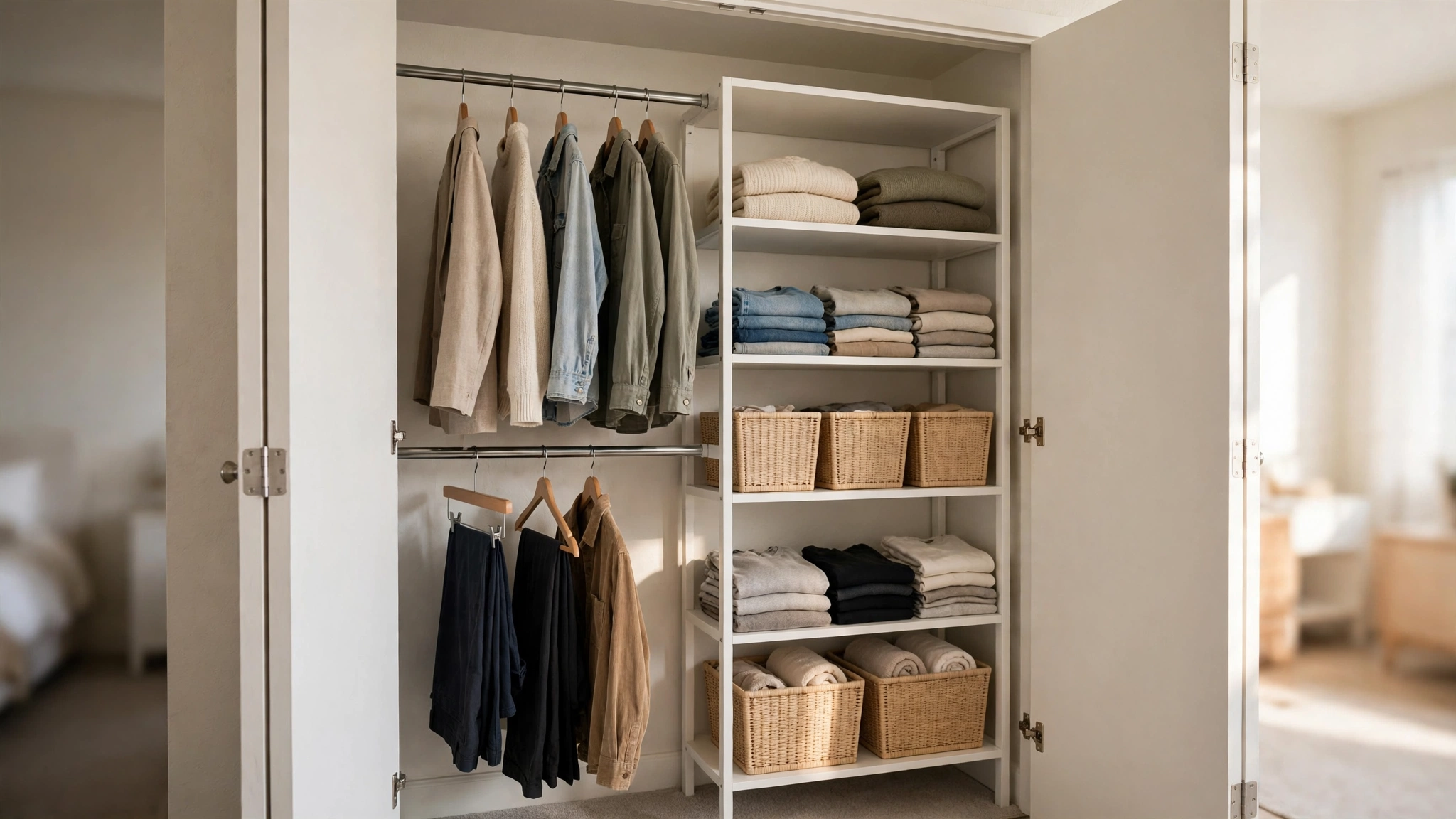
A small rental closet does not need a renovation — it needs an edit, a second hanging level, and storage that stands on the floor instead of being screwed into the wall. Start with the hangers and the rod, add freestanding shelves and a door organizer only where they solve a real problem, and keep the weekly five-minute routine that protects the space you just created. Small apartment closet makeover ideas for renters work best when every piece is removable, the budget fits a first apartment, and the closet still looks like the one in your lease photos at move-out. Save this guide and share it with a fellow renter whose closet door barely closes.

Maren started MyFirstLease after a rough first lease taught him everything the internet didn’t. He covers the logistical side of renting — move-in checklists, utilities, and the unglamorous first-week stuff nobody explains — and oversees everything published on the site.