1. Introduction
Closets were once treated as pure utility zones—hidden behind closed doors, painted standard builder-grade white, and filled strictly with hangers and shoe racks. Today, interior designers and homeowners alike are rethinking these intimate corners. The closet has officially become the ultimate playground for testing bold design choices.
Because closets are enclosed, low-visibility spaces, they offer a uniquely low-stakes opportunity to embrace maximalism. Patterns, saturated hues, and intricate motifs that might feel overwhelming across an expansive open-concept living room feel intentional and cozy inside a closet.
By adding wallpaper, you can instantly transition a plain drywall storage box into a custom, high-impact “jewel box.” Whether you own a sprawling walk-in wardrobe, a compact reach-in closet, or a warm wooden wardrobe, a thoughtful wallpaper application introduces visual depth, personal style, and a high-end boutique aesthetic every single time you get dressed.
2. Why a Closet with Wallpaper Is the Ultimate Design Upgrade
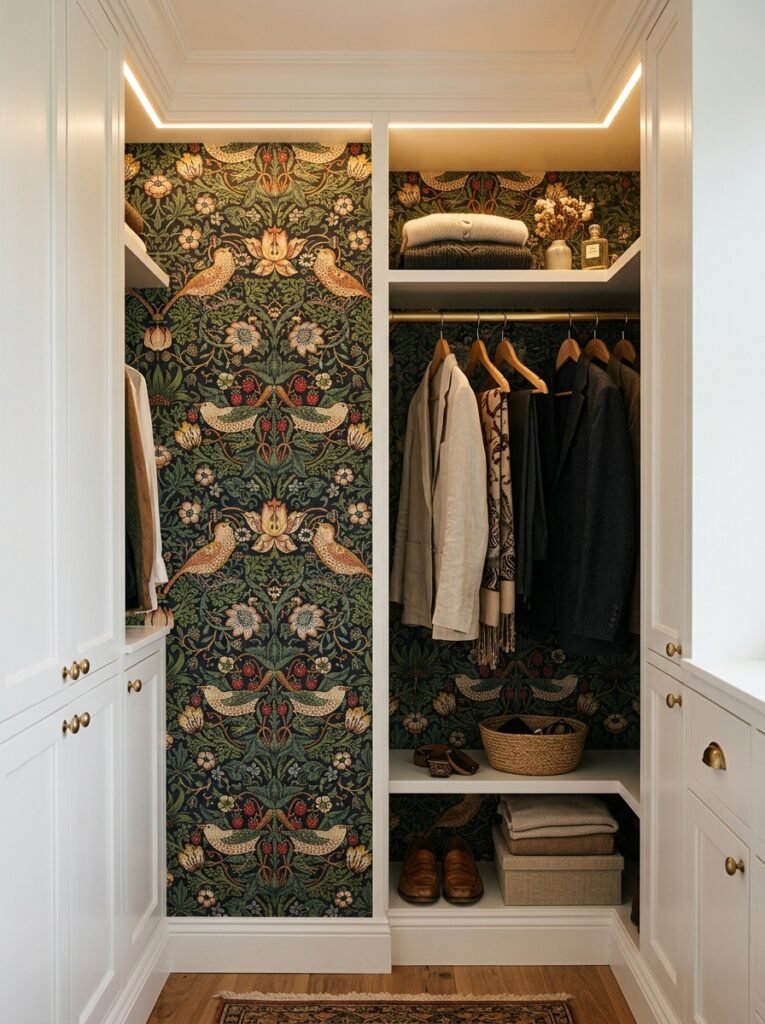
Designing a closet with wallpaper offers an unbeatable ratio of visual return to financial investment. Here is why this interior design trend continues to dominate modern home makeovers:
- High Impact, Low Risk: Enclosed storage spaces let you experiment with dramatic florals, moody geometric prints, or whimsical animal motifs without disturbing the cohesive neutral palette of your main bedroom.
- Transforming Small Spaces: Flat drywall in a narrow space can feel visually flat and claustrophobic. Vibrant wallpaper patterns break up plane lines, tricking the eye into perceiving greater visual depth behind clothing racks and built-in units.
- Elevating Built-Ins: Plain white laminate, stock wire racking, or simple timber shelves gain instant custom cabinetmaker flair when lined with patterned backdrop walls.
3. Peel-and-Stick vs. Traditional Wallpaper for Closets
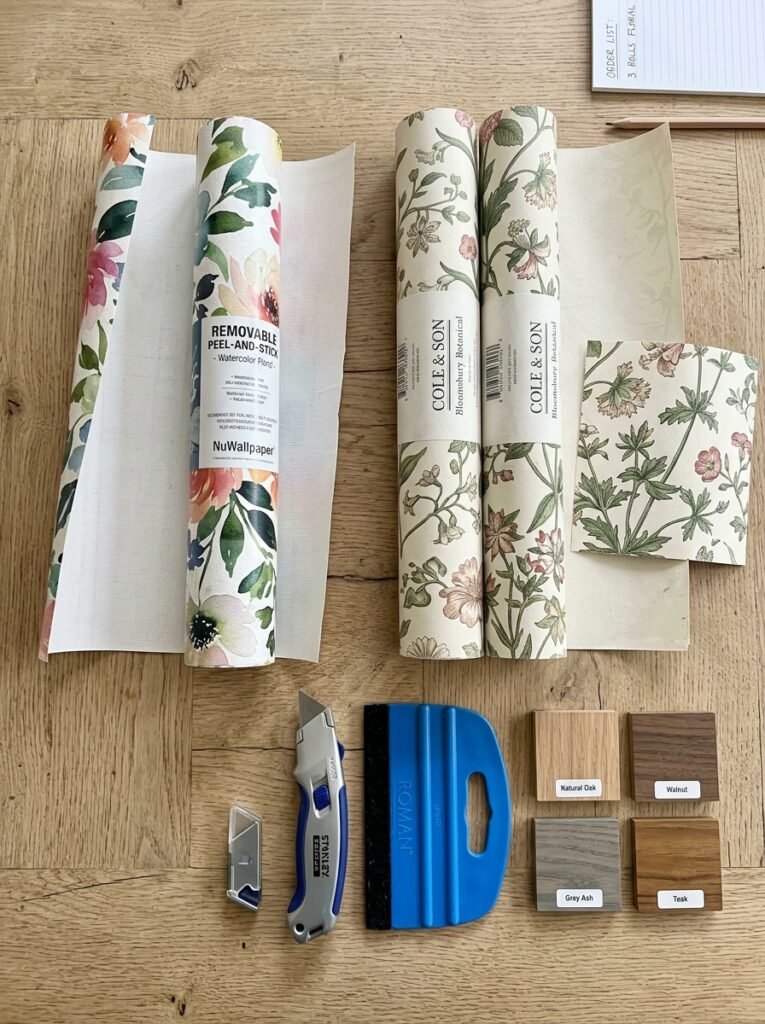
When embarking on a closet makeover, choosing between removable wallpaper and permanent pasted paper comes down to your living situation, budget, and desired longevity. If you are renting or love changing your decor frequently, opting for a closet wallpaper peel and stick vinyl is the ideal choice. If you are creating a forever home with rich tactile depth, traditional paste-the-wall papers are worth the commitment.
| Feature | Peel-and-Stick (Self-Adhesive Vinyl) | Traditional (Pasted / Unpasted Paper) |
| Best For | Renters, quick DIYs, budget refreshes | Long-term homeowners, textured luxury finish |
| Average Cost | $20 – $50 per standard roll | $40 – $150+ per standard roll |
| Durability | Scuff-resistant, wipeable vinyl surface | Highly durable; non-woven backing resists tears |
| Installation | Easy peel-and-press; repositionable | Requires pasting wall, booking paper, precise seam matching |
| Removal | Strips off cleanly without residue or drywall damage | Requires steaming, scoring tools, or adhesive remover |
4. 11 Inspiring Closet Wallpaper Ideas & Layouts
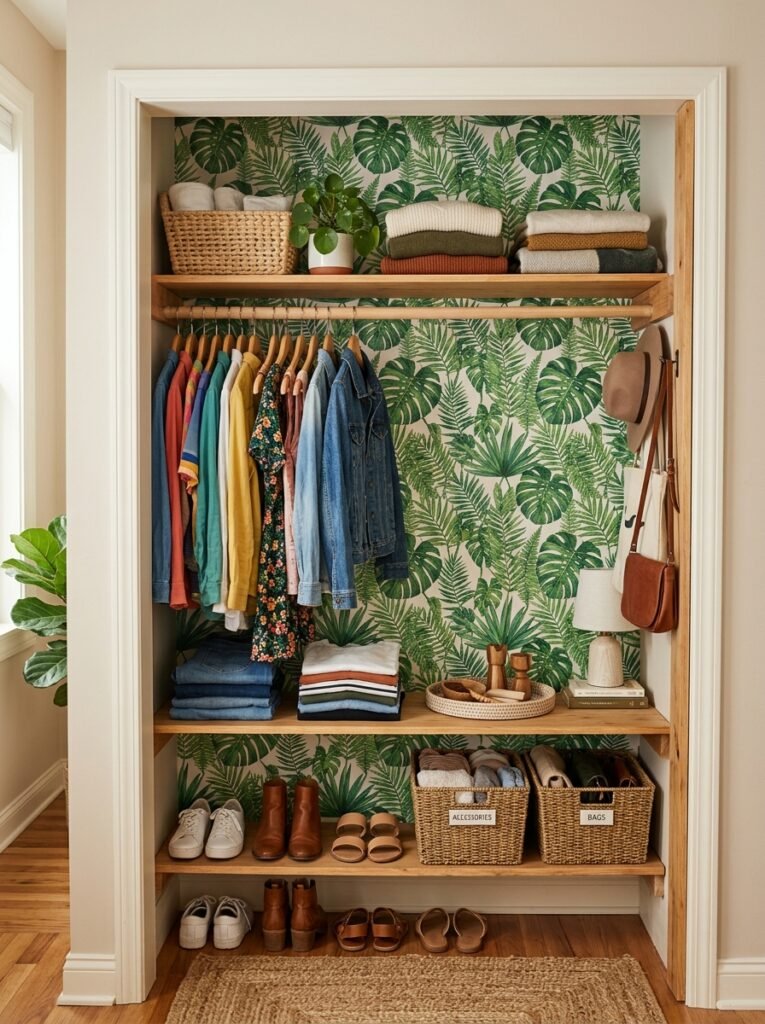
Idea 1: The All-Over Wrap (Walls + Ceiling)
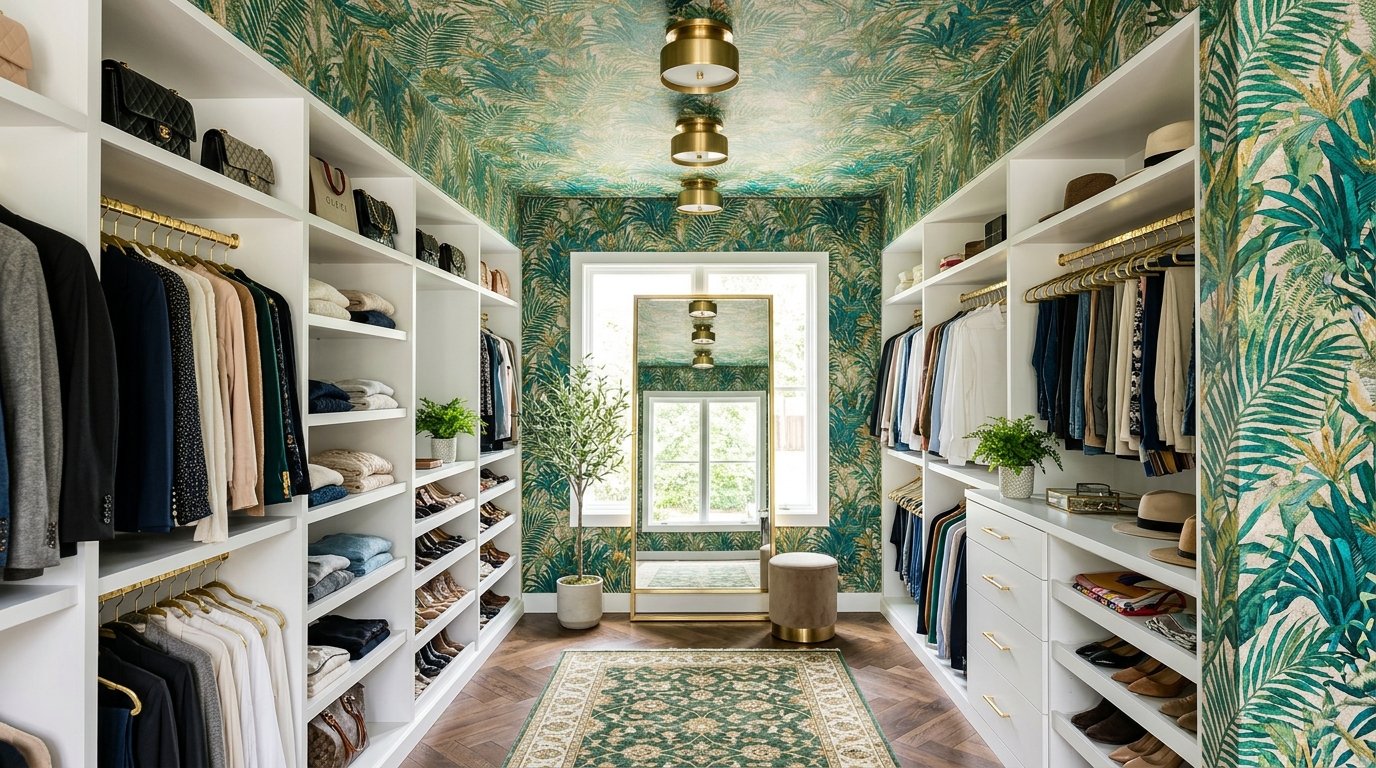
To turn a walk in closet with wallpaper into a truly immersive sanctuary, run the pattern across every vertical wall and continue it straight onto the ceiling. Wrapping the ceiling creates a canopy effect that softens ceiling angles and gives the room a cozy, high-end dressing room ambiance.
Idea 2: Botanical & Floral Whimsy
Vintage botanical motifs—such as classic William Morris foliage, William Morris Strawberry Thief, or oversized leafy green murals—bring organic life into windowless spaces. The sweeping curves of floral stems contrast beautifully against the rigid horizontal lines of clothing racks and shelving.
Idea 3: The Accent Back Wall
If you are hesitant to wrap the entire space, apply wallpaper exclusively to the back wall behind your main hanging garments and open white shelving. This creates a framed art backdrop that makes your wardrobe pops like a luxury retail display.
Idea 4: Moody & Dark Maximalism
Deep navy, dark emerald green, or charcoal backgrounds decorated with metallic or floral accents introduce instant drama. Paired with warm brass hardware and LED cabinet strip lights, dark wallpaper creates an exclusive, speakeasy-style dressing experience.
Idea 5: Neutral & Subtle Textures
If maximalist prints are not your style, lean into “quiet luxury.” Textured grasscloth, subtle linen-look vinyl, or soft tone-on-tone micro-geometric prints bring tactile warmth and subtle dimension without visual clutter.
Idea 6: Small Reach-In Pop
Transforming a small closet with wallpaper is one of the most satisfying weekend DIY projects. Even a basic 4-foot reach-in closet tucked behind double doors becomes a joyful, unexpected pop of color every time you open it in the morning.
Idea 7: Wooden Closet Contrast
Pairing a wooden closet with wallpaper requires balancing wood undertones with print colors. Rich mahogany, walnut, or oak finishes look striking against warm earthy terracottas, muted sage greens, or cream botanical motifs that highlight the wood’s natural grain.
Idea 8: The Vanity Nook Moment
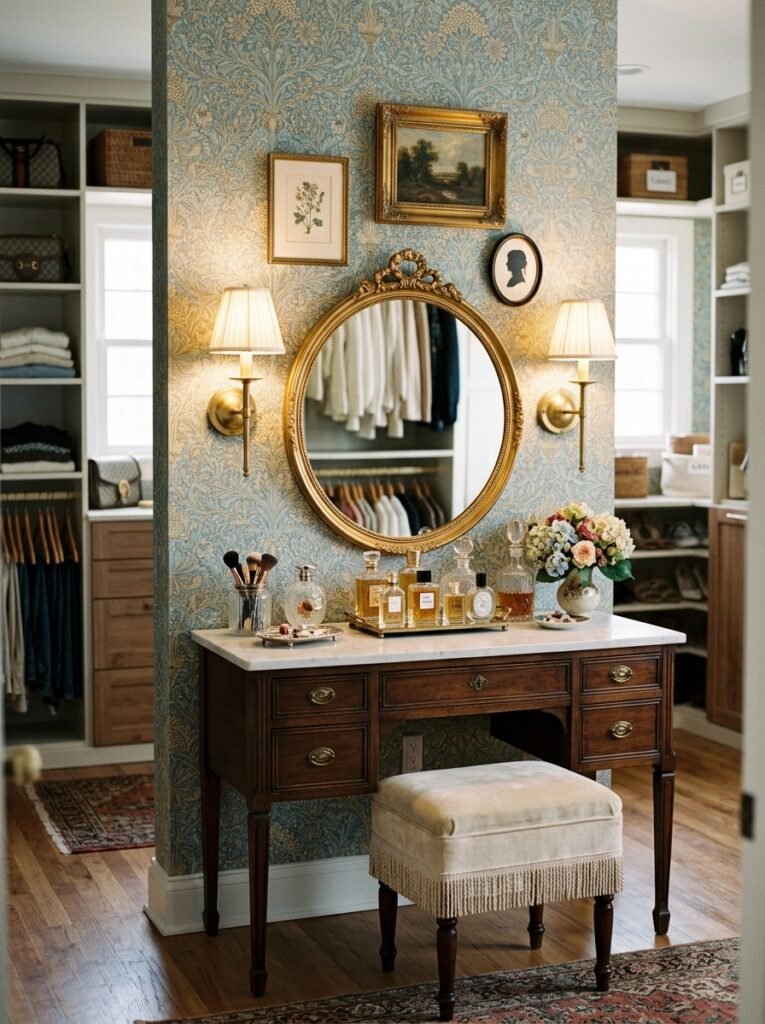
If your walk-in closet includes a dedicated dressing table or vanity station, use wallpaper to define the zone. Framing a vanity mirror, countertop, and surrounding brass sconces with a distinct print visually separates the grooming space from wardrobe storage.
Idea 9: Ceiling-Only Statement
When vertical wall space is heavily obstructed by double-hung racks and shoe cubbies, focus overhead. Keeping walls a clean neutral while pasting a bold mural or starburst print on the ceiling draws the eye upward and maximizes low ceiling heights.
Idea 10: Geometric & Stripes
Clean vertical pinstripes, classic ticking stripes, or elongated geometric patterns draw the eye upward, making compact or low-ceiling closet layouts feel taller and airier.
Idea 11: Kid-Friendly & Whimsical Prints
For children’s wardrobes or nursery closets, incorporate playful prints like whimsical animal illustrations, soft pastel stars, or vintage storybook landscapes to make tidy habits and getting dressed fun.
5. How to Cover Closet Doors with Wallpaper
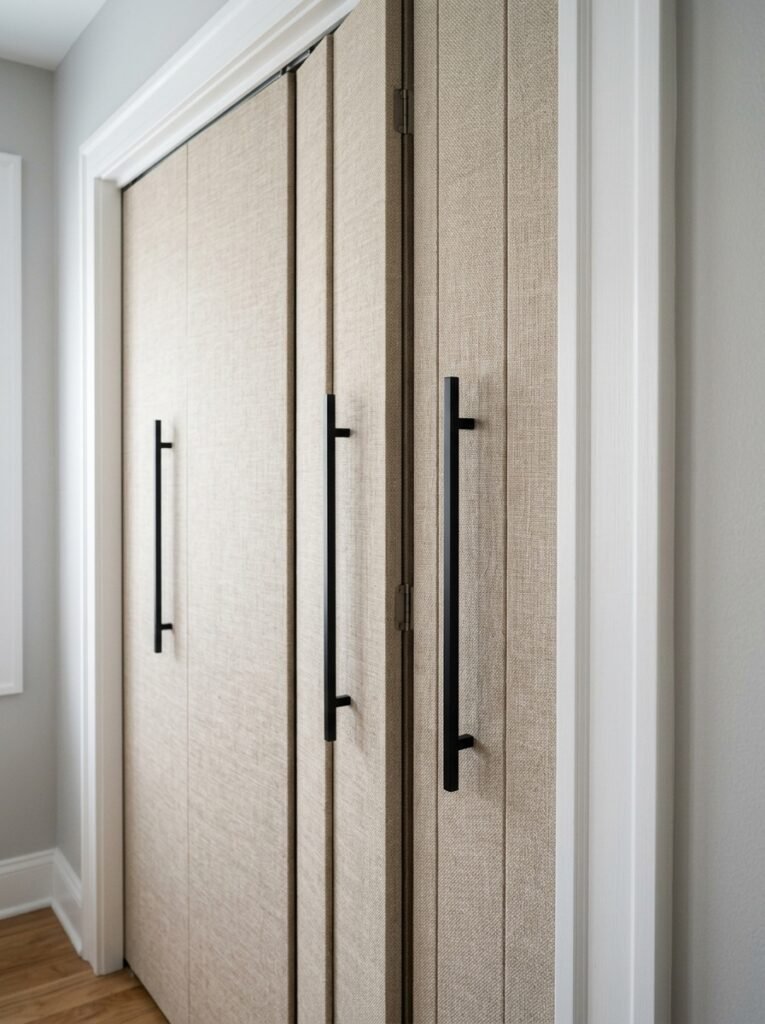
If you want to upgrade your bedroom’s look without altering interior shelving, consider wallpaper closet doors. Wrapping doors is a cost-effective way to camouflage builder-grade doors or add texture to plain surfaces.
Wallpapering Flat Wood Doors
- Clean the door thorough with a degreasing cleaner (like TSP) to remove oils and dust.
- Lightly sand glossy painted doors to help the adhesive grip.
- Measure and cut your wallpaper strip with 1–2 inches of overhang on all sides.
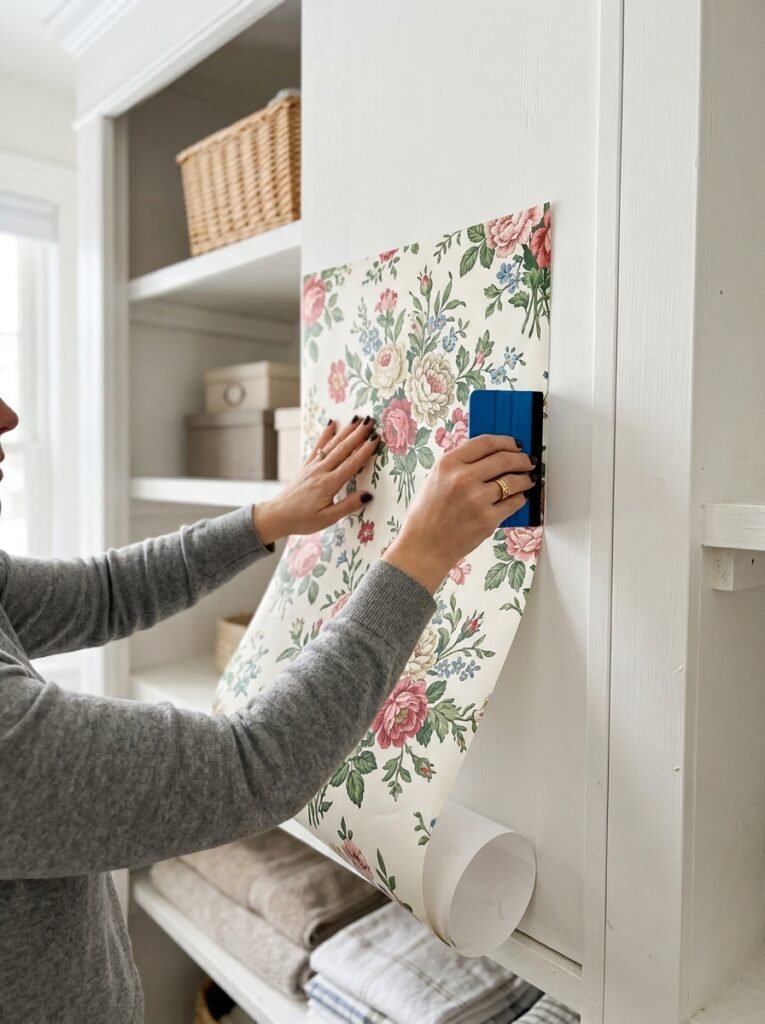
- Align the top edge, smooth downward using a vinyl smoothing tool, and trim flush along the door edges with a fresh utility knife blade.
Covering Mirrored Closet Doors
Covering mirrored closet doors with wallpaper is an easy way to hide outdated gold-framed sliding mirrors:
- Clean the glass thoroughly using isopropyl alcohol to ensure zero residue remains.
- Apply a high-tack peel-and-stick vinyl wallpaper directly onto the glass surface. The smooth mirror finish provides an ideal surface for self-adhesive paper.
- Use a squeegee to push out any air pockets toward the frame edges.
Panel & Bi-Fold Door Techniques
For bi-fold doors or recessed panel doors, avoid wrapping across hinges or folding joints. Instead, measure each individual recessed panel and paste wallpaper strips neatly inside the molded frames for a tailored, architectural effect.
6. Step-by-Step Guide: How to Wallpaper a Closet
Don’t wrestle with your laptop or phone inside a cramped closet! Print our 1-Page Closet Installation Guide to keep right by your side. It includes a complete tool inventory, wall-prep sequence, and pattern-matching cheat sheet so you get a flawless boutique finish without missing a step.
Phase 1: Measuring & Prepping the Space
- Remove all clothing, hanging rods, adjustable shelf pegs, and outlet covers.
- Fill old nail holes with spackle, sand smooth, and wipe down walls with a damp microfiber cloth to remove dust.
- If using traditional paper or applying over fresh paint, ensure paint has cured for at least 30 days or apply a dedicated wallpaper primer.
Phase 2: Cutting & Pattern Matching
- Measure the wall height from ceiling to baseboard.
- Cut your first strip, adding 2 inches of margin at both top and bottom for final trimming.
- Unroll the second strip alongside the first to match the pattern repeat before making your next cut.
Phase 3: Application & Smoothing
- Establish a straight vertical plumb line on the wall using a level and pencil.
- For peel-and-stick: Peel back 6–10 inches of backing paper at the top, align along your plumb line, and press to the wall.
- Using a plastic smoothing tool, work from the center outward in diagonal strokes to force air bubbles to the edges. Slowly peel down the backing paper as you work downward.
Phase 4: Trimming & Hardware Outlets
- Use a metal straightedge ruler and a sharp utility blade to trim excess paper flush against ceiling lines, baseboards, and corner seams.
- For electrical outlets and light sconces, smooth paper directly over the junction box, make a diagonal cross-cut over the center with your blade, and trim away the excess before reinstalling cover plates.
7. Frequently Asked Questions
Will wallpaper ruin my clothes or snag delicate fabrics?
High-quality smooth vinyl and non-woven papers will not snag fine knits, cashmere, or silks. However, heavily textured natural grasscloth or unsealed metallic foil papers can be abrasive; avoid using rough grasscloth on lower walls where delicate clothing directly rubs against surfaces.
How much wallpaper do I need for a small closet?
A standard reach-in closet (approx. 6–8 feet wide by 8 feet tall) typically requires 1 to 2 standard rolls (covering roughly 28 to 56 sq. ft.). Always calculate the square footage of your walls and add a 15% safety margin to account for pattern matching and trim waste.
Is peel-and-stick wallpaper safe for wooden closets and painted shelves?
Yes, as long as the wood finish or paint is fully cured. Peel-and-stick adhesives form a secure bond with smooth painted drywall, sealed wood, and laminate built-ins without stripping the finish upon removal.
What lighting works best in a wallpapered closet?
Wallpaper patterns look best under warm, even lighting (2700K–3000K color temperature). Combine overhead ambient lighting with dedicated warm sconces, flush mounts, or under-shelf LED strip lighting to illuminate dark corners and showcase wallpaper details without casting harsh shadows.
8. Conclusion & Call to Action
Transforming your closet with wallpaper proves that functional storage spaces do not have to be boring. By turning a simple closet into a personalized, pattern-rich haven, you start every day in a space that feels curated, organized, and uniquely yours.
Which style speaks to your home aesthetic? Would you go for a bold green botanical print, a moody vintage motif, or a subtle neutral grasscloth for your closet makeover? Let us know in the comments below!

Maren started MyFirstLease after a rough first lease taught him everything the internet didn’t. He covers the logistical side of renting — move-in checklists, utilities, and the unglamorous first-week stuff nobody explains — and oversees everything published on the site.