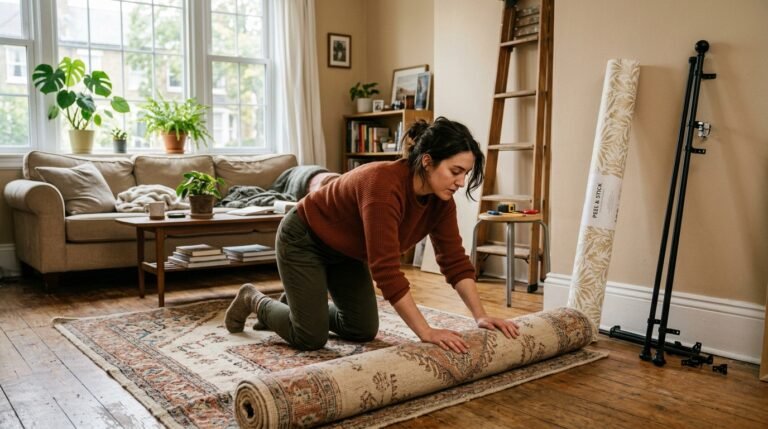
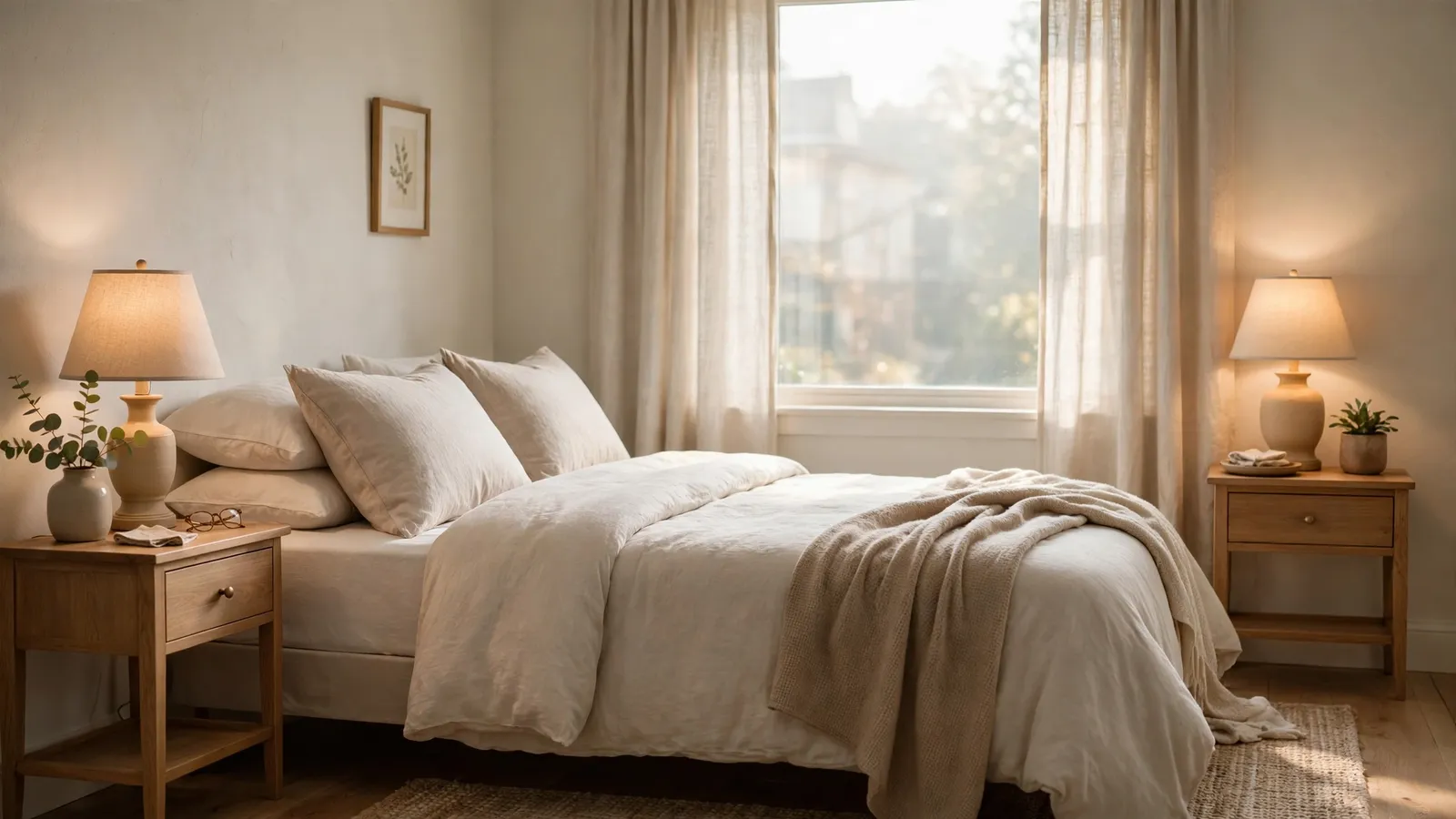
These small apartment bedroom decor ideas for couples renters are written for first-time renters sharing one small bedroom with a partner — solving two problems at once: fitting two people’s sleep, storage, and stuff into a room built for one person’s worth of furniture, and blending two tastes without the room ending up looking like nobody’s. Every idea below is reversible, needs no drilling or painting unless your lease allows it, and is designed so both people get a say and a side.
The trick is not to split every decision down the middle. It is to agree on a shared base first, then give each person clear places to make the room their own. That way the room feels like a shared home, not a compromise nobody likes, and nothing you do puts your deposit at risk.
The short answer: Start with a neutral base you both accept, give each partner their own nightstand side and storage share, choose a bed size the room can actually hold, and add personality with removable textiles and lighting. Keep everything renter-safe — adhesive hooks, freestanding furniture, and no paint or holes without written landlord permission.
Executive Summary
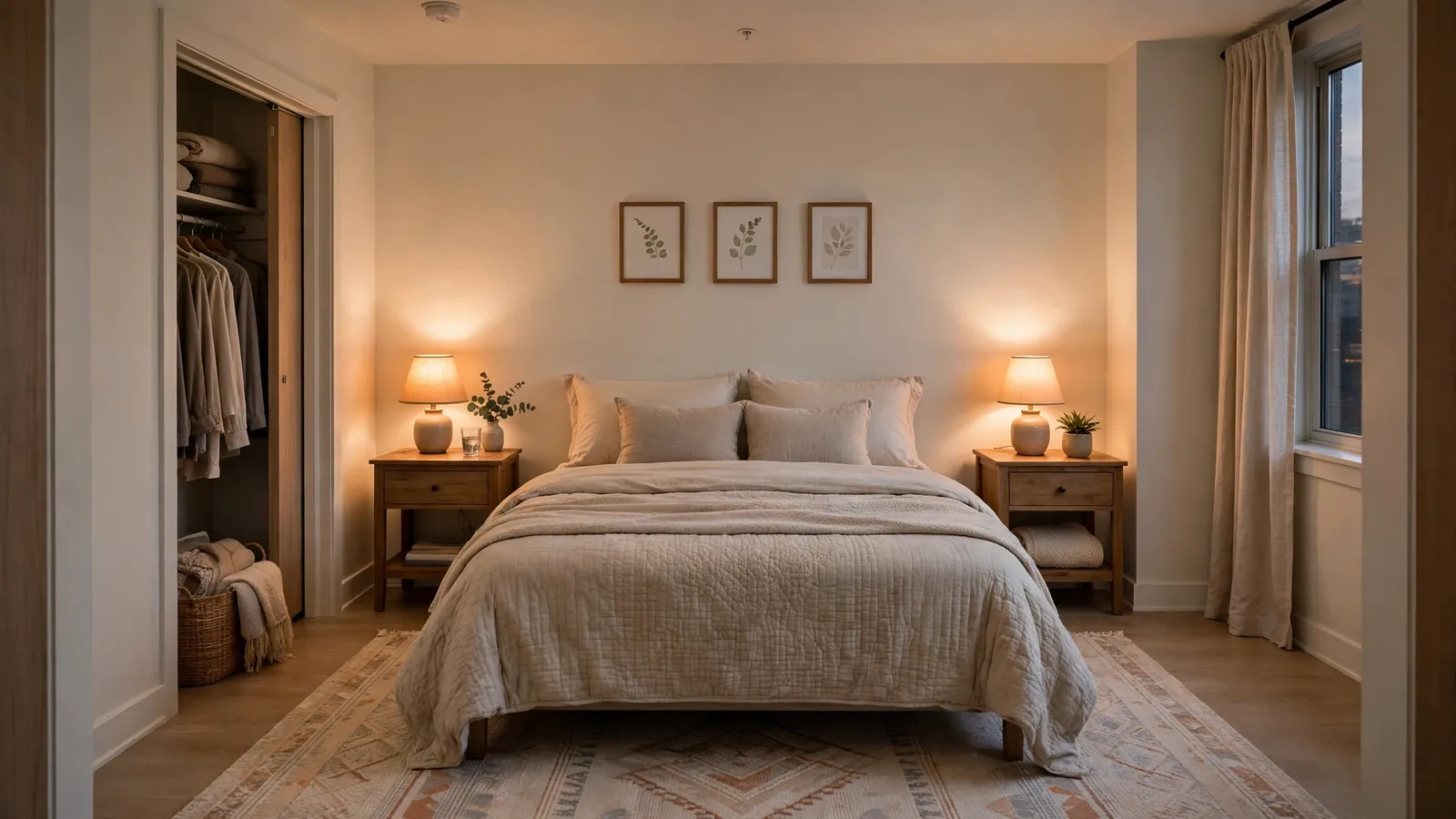
This guide walks through seven ideas in the order that makes the decisions easiest: agree on the shared look first, set up two equal sides of the bed, pick the right bed size, split storage fairly, layer lighting for two different schedules, add color without touching the walls, and keep the floor clear so the room stays usable. Each section includes the renter-specific catch — what your lease usually forbids, what adhesive products can damage, and what to check before you buy.
You will also find a short worksheet for dividing the room’s storage and surfaces, a budget range for each idea (as of 2026), and answers to the questions couples ask most, from whether a queen bed fits a 10-by-10 room to how to decorate when one partner likes color and the other likes calm neutrals. For more reversible decorating ideas across the whole apartment, browse the Decorating & Small Space Living section.
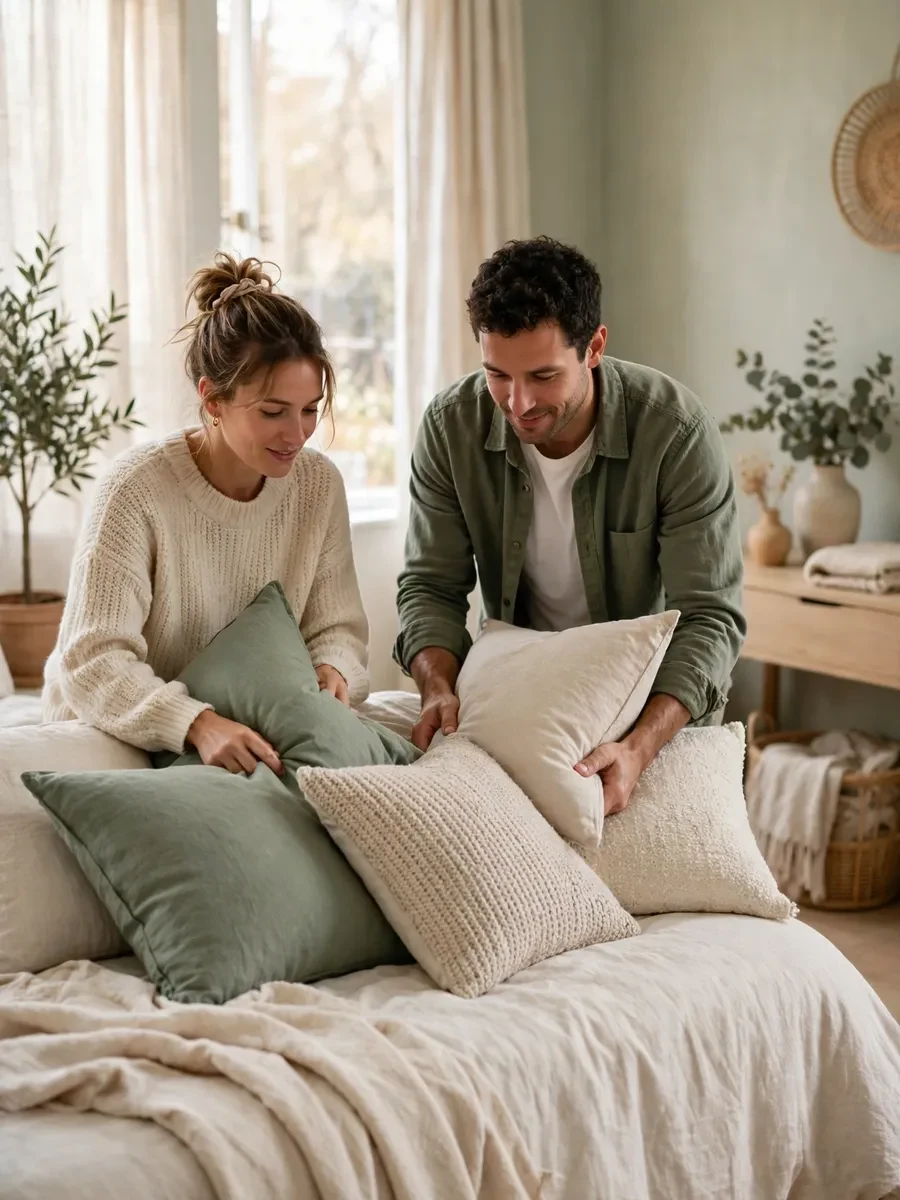
A shared base is the handful of big, hard-to-change choices — wall color (or the bedding and rug that stand in for it), the bed frame style, and the overall light level — that both partners live with every day. Decide these together before either person buys anything decorative, because a neutral base is what lets two different tastes share one small room without clashing. Pick bedding, a rug, and curtains in one calm palette — warm white, soft gray, sage, or warm beige — and treat that as the room’s common ground.
The most common mistake couples make is compromising every single item until the room reflects neither person. A better approach is the split-decision rule: agree on the base together, then let each partner own specific choices outright. One person picks the throw pillows, the other picks the wall art. One chooses the bedside lamps, the other chooses the rug. Each choice stays inside the shared palette, so the room still holds together, and each person can point to something that is genuinely theirs.
Use this quick worksheet before you shop, and write the answers down so a later purchase does not quietly undo them:
| Decision | Shared base (agree together) | Partner A’s pick | Partner B’s pick |
|---|---|---|---|
| Bedding and rug palette | One calm color family | Throw pillows | Wall art |
| Light level | Warm, dimmable light | Bedside lamp style | Curtain fabric |
| Storage rule | One in, one out for shared surfaces | Own nightstand drawer | Own closet half |
Budget note: a neutral bedding set and a washable rug are usually the two biggest spends here, roughly $60–$150 combined for budget options as of 2026. Buy the base first, live with it for a week, and only then add the personal pieces — it is much cheaper than returning a statement item that fights the rest of the room.
2. Give Each Partner Their Own Side
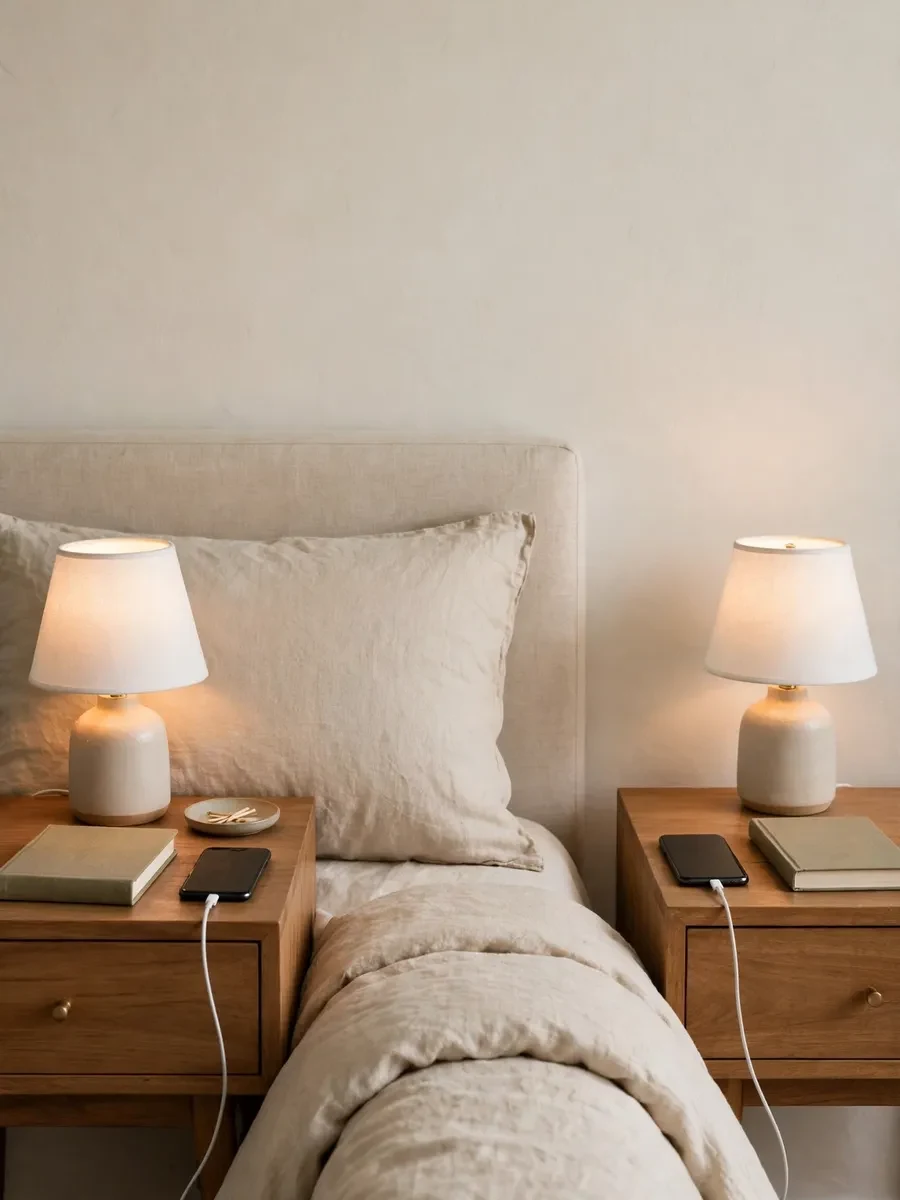
Symmetry is the fastest way to make a shared bedroom feel fair. When each person has a matching nightstand, a reading light, and a charging spot on their own side, the room stops feeling like one person’s bedroom that the other person moved into. Matching nightstands do not have to be expensive or identical in every detail — two small floating shelves, two stackable crates, or two thrifted tables in the same height range all work, as long as each side offers about the same amount of surface and storage.
If floor space is too tight for two nightstands, use the wall instead. A narrow floating shelf or a small wall-mounted ledge on each side, hung with removable adhesive strips rated for the shelf’s weight, gives each person a spot for a phone, a glass of water, and a book without taking up floor space. Check the strip’s weight rating and your lease’s rules on adhesive products first: some leases ban adhesive hooks outright, and even removable strips can pull paint on walls that were painted recently or poorly. Test one strip in a hidden spot and photograph the wall at move-in so you have a record.
Keep the two sides visually equal even when the contents differ. One partner’s stack of novels and the other’s alarm clock and headphones can sit on matching surfaces without matching each other. What matters is that neither side looks like an afterthought, because the side that looks neglected is the side whose owner starts feeling like a guest.
3. Size the Bed for Two People
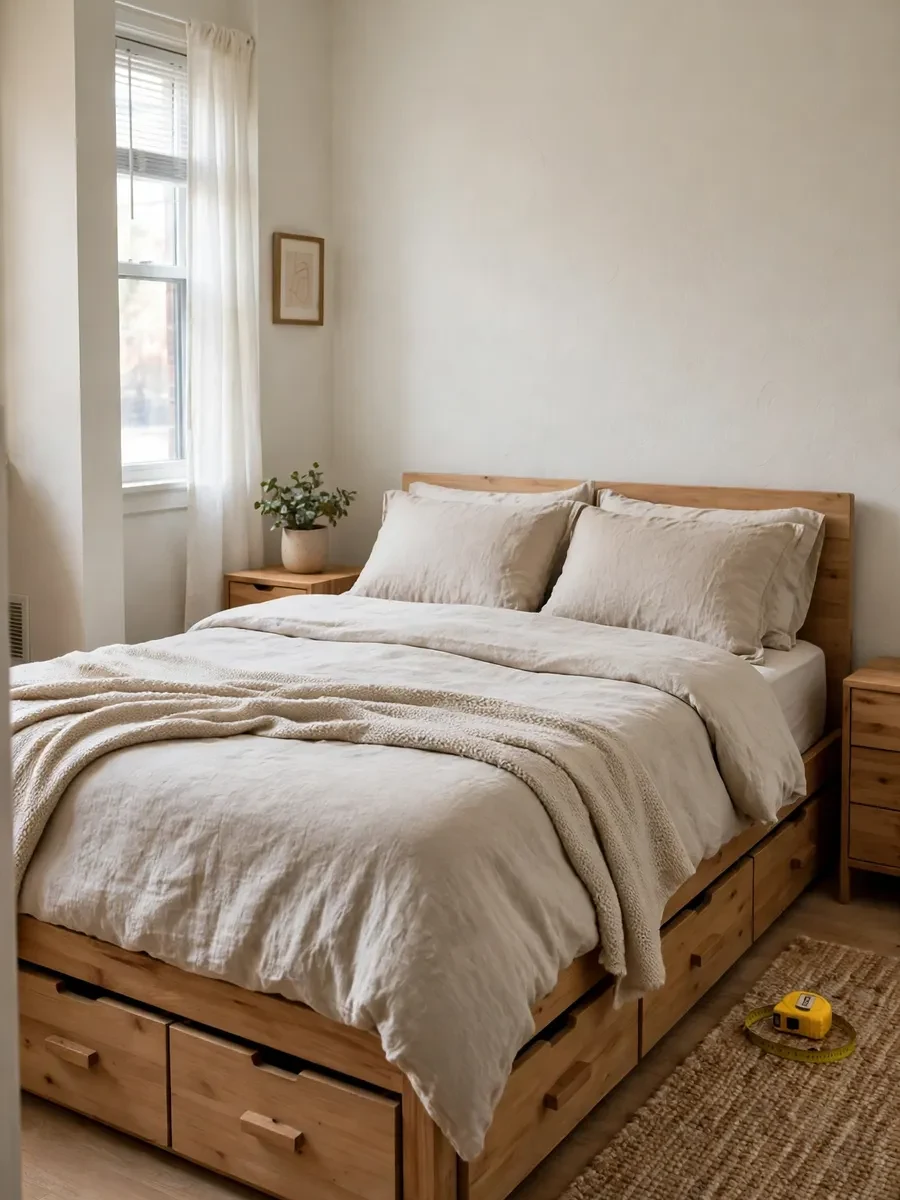
The bed is the biggest object in the room, so its size decides everything else. A standard US queen measures about 60 by 80 inches, and a full measures about 54 by 75 inches. For two adults, a queen is the comfortable minimum for most couples — a full leaves each person roughly 27 inches of width, about the width of a crib mattress per person — but a queen only works if it leaves room to use the bedroom. Measure before you buy: you want at least 24 inches of clear walkway on each long side of the bed, or one clear side plus a clear path at the foot if the room truly will not allow two.
If a queen leaves less than that, a full bed plus a good mattress is a better trade than a queen you have to climb over. Pushing the bed into a corner frees floor space, but it means one partner climbs over the other every night, which gets old fast and makes changing the sheets a two-person wrestling match. A better compromise in a tight room is a low-profile frame with storage drawers underneath: it keeps the bed’s footprint the same while giving both partners a drawer each for off-season clothes or extra bedding.
Check the frame’s weight and floor protection before it arrives. A heavy frame on hard floors can dent or scratch the finish, so felt pads under every leg are cheap deposit insurance. And if you are buying secondhand, inspect the frame and mattress for bed bugs before either one crosses the threshold — a used frame is one of the most common ways they enter a first apartment.
4. Split Storage Down the Middle
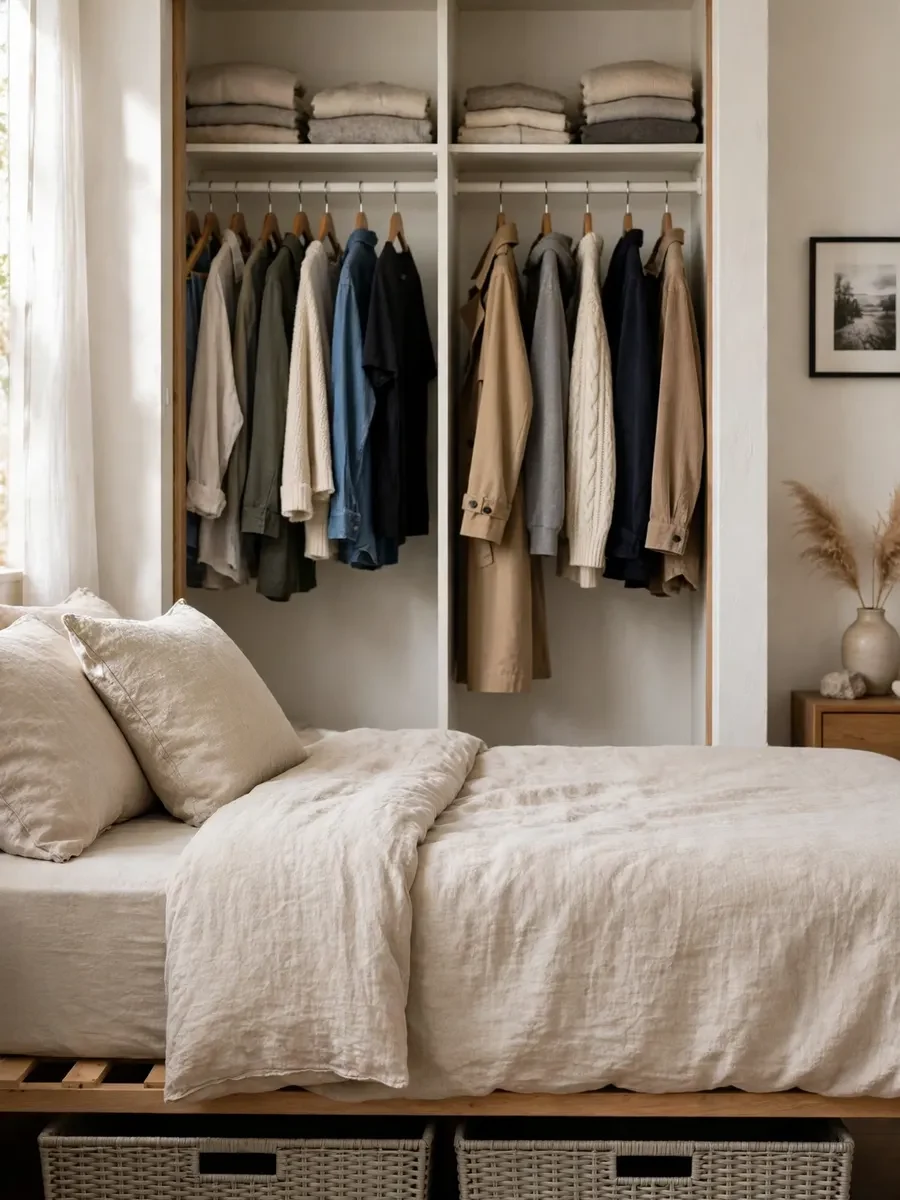
Storage arguments in a shared bedroom are rarely about the amount of space. They are about fairness: one person’s clothes quietly taking over the closet while the other lives out of a laundry pile. Split the closet first, literally down the middle, with each partner getting half the hanging rod, half the shelf space, and the same number of hangers. If the closet has a single rod, a freestanding double-hang rod or a hanging closet organizer that clips on — no screws, no drilling — creates a second level for one side without changing the closet itself.
Under-bed storage is the second closet most couples forget they have. Two matching flat bins, one per person and labeled on the end you can see, hold off-season clothes, extra sheets, or shoes without a fight over whose bin is whose. A storage ottoman or bench at the foot of the bed can hold shared items — spare blankets, the iron, the laundry bag — so neither nightstand becomes a dumping ground.
For a closet that needs a fuller overhaul, the ideas in Small Apartment Closet Makeover Ideas for Renters (No Drilling) work in a shared bedroom too, and every one of them is reversible. Before adding any organizer, check your lease for rules about closet modifications and adhesive products, and keep the original closet rod and shelving intact so the room can be returned to its move-in condition. Budget roughly $30–$80 as of 2026 for a pair of under-bed bins and a hanging organizer — far less than a new dresser, and it uses space you already pay rent on.
5. Layer Lighting for Two Schedules
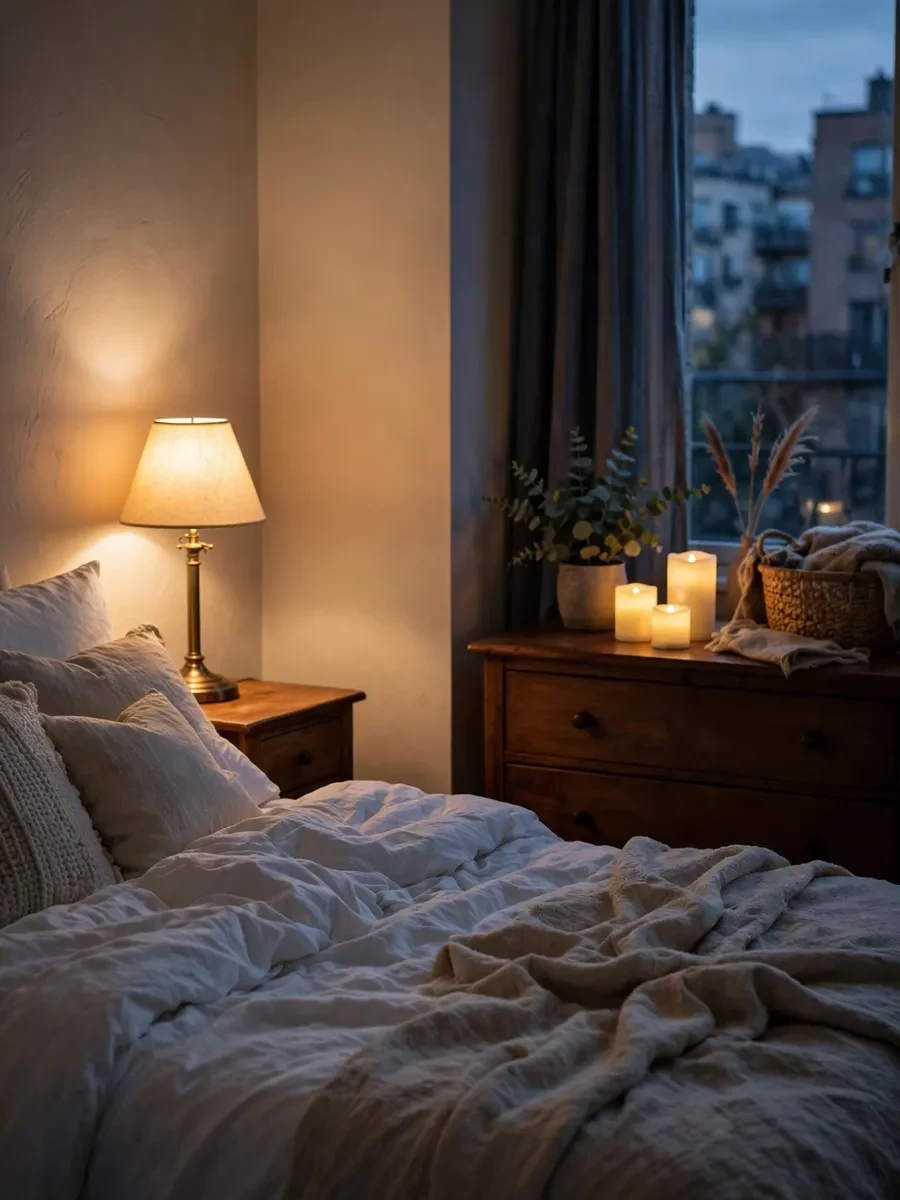
Couples rarely keep the same hours. One person reads until midnight while the other needs darkness by ten, or one gets up at five while the other sleeps in. A single overhead light cannot serve both schedules, so layer the light instead: a soft ambient source for the room, and a separate, controllable light on each side of the bed. Clip-on or small bedside lamps with warm bulbs (2700K is a common warm-white choice) let the reader see their page without flooding the sleeper’s side with light.
Battery-operated LED candles are the renter-safe way to add a warm glow without an open flame — never use real candles with a flame in a bedroom, and check your lease, since many leases and buildings ban open flames outright. LED candles with a remote control cost a few dollars each as of 2026, sit safely on a dresser or shelf, and switch off from bed. String lights hung with removable clips can add the same warmth, but keep them off bedding and curtains, and never run them behind the headboard where heat can build up.
Dimmers matter more than brightness here. A plug-in dimmer on a floor lamp, or a lamp with a built-in low setting, lets the early riser get dressed without waking their partner. If the room’s only light is a harsh ceiling fixture, a floor lamp in the corner opposite the bed is usually a better spend than a second bedside lamp — it softens the whole room for both people at once.
6. Add Color Without Painting
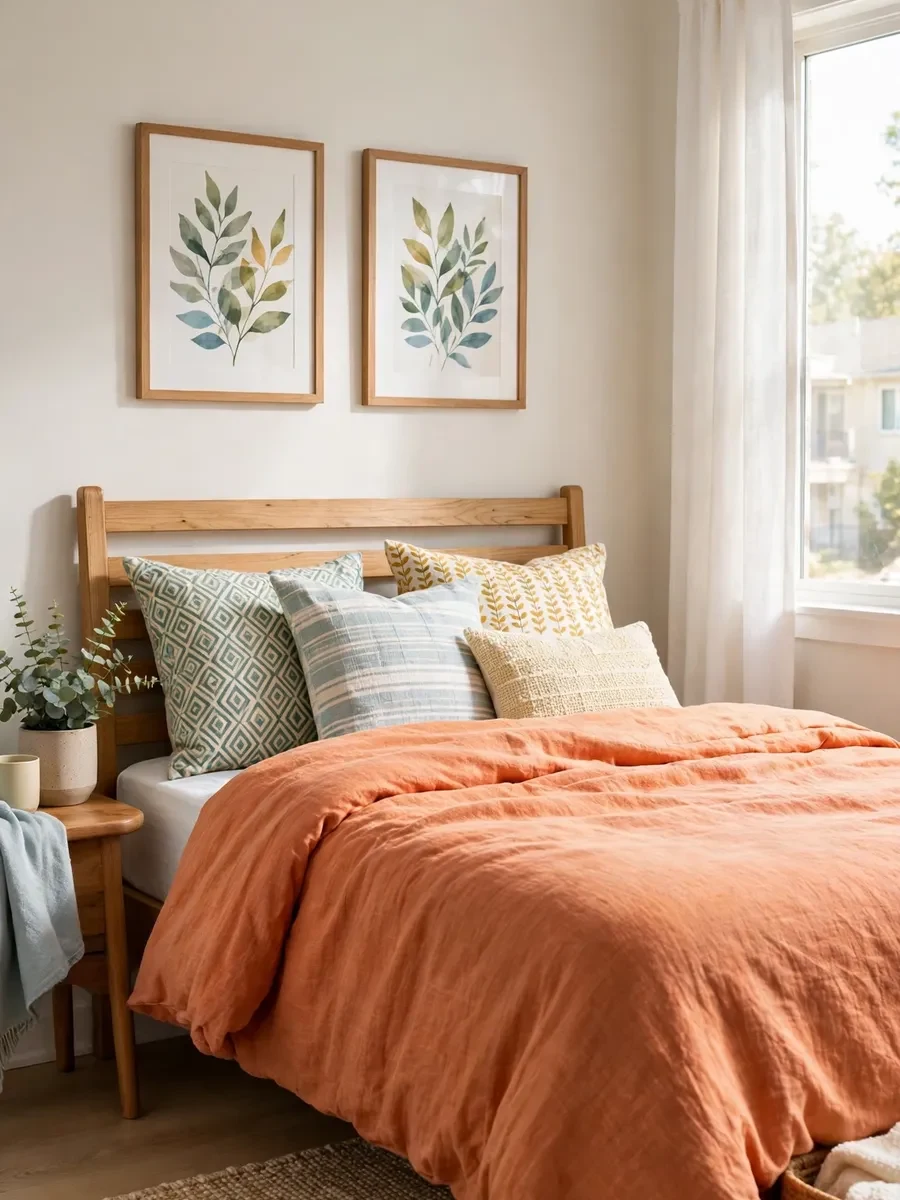
When one partner wants color and the other wants calm, paint is the wrong battlefield — most leases forbid it without written permission, and repainting at move-out costs time and money. Textiles do the same job with no deposit risk. A colored duvet cover, two pillowcases in a bolder shade, or a patterned throw at the foot of the bed brings in the color one partner wants while the neutral base keeps the room calm for the other. Because a duvet cover swaps in minutes, the color can change with the season or with a change of heart.
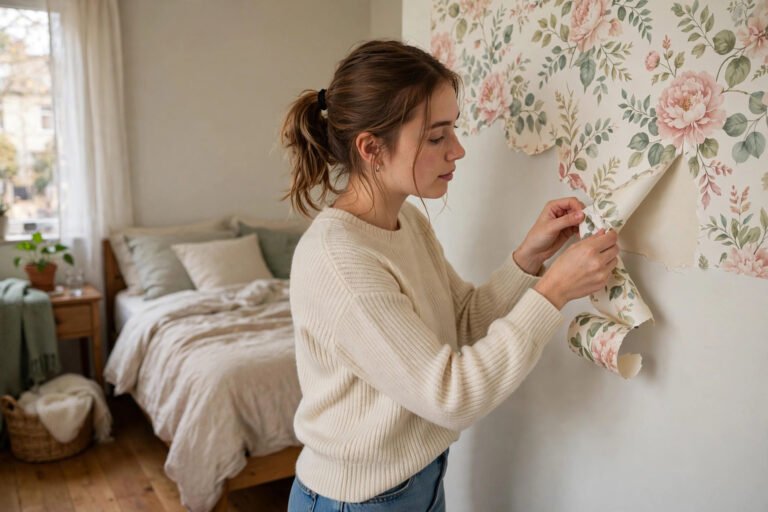
Peel-and-stick wallpaper on a single accent wall or on the back of a bookshelf is the next step up, but treat it as a test, not a commitment. Apply it to one small, hidden section first and leave it for a week: on textured walls, freshly painted walls, or walls in humid rooms, it can peel early or pull paint when removed. Photograph the wall before you apply it, keep the backing paper, and check your lease — some leases ban adhesive wall coverings even when they are marketed as removable.
Art is the easiest shared win of all. A framed print each partner chooses, hung at the same height on opposite walls or side by side above the headboard, gives the room two voices without an argument. Hang frames with removable picture-hanging strips rated for the frame’s weight, and weigh the frame first — a strip rated for 3 pounds will not hold a 5-pound frame, and a fallen frame can dent a wall or a floor. Keep the receipt and the packaging for the strips; if one fails, the weight rating is the first thing a landlord will ask about.
7. Keep the Floor Clear
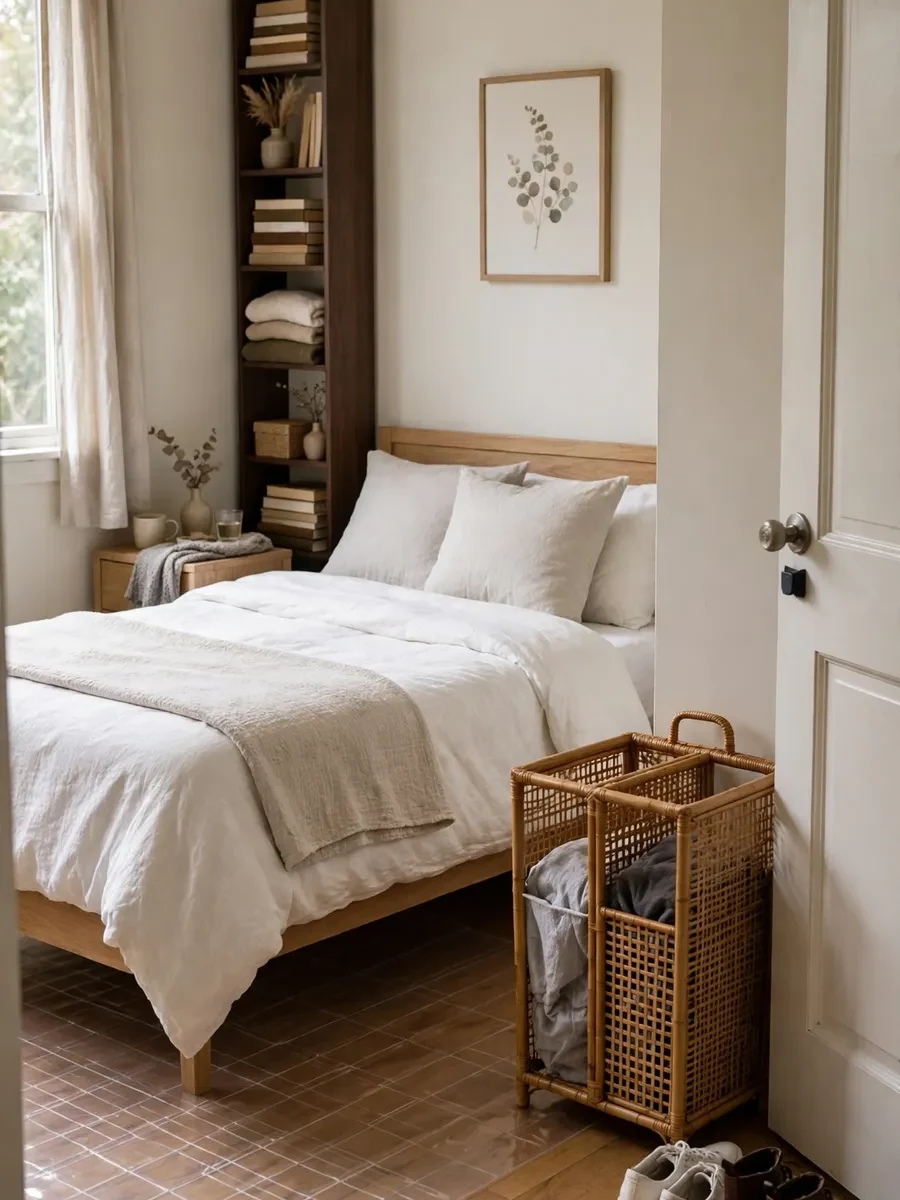
A small shared bedroom feels twice as small when the floor disappears under laundry, shoes, and bags. The fix is not more storage furniture — it is a rule about what lives on the floor. Nothing lives on the floor except the bed, the rug, and one pair of shoes per person by the door. Everything else gets a home: a lidded hamper each, or one divided hamper with two compartments; a small tray on each nightstand for the daily pocket-and-keys pile; and a hook rail by the door hung with removable adhesive hooks for tomorrow’s outfit.
Vertical space is your friend here, as long as it stays renter-safe. A tall, narrow bookshelf or a leaning ladder shelf in a corner holds books, plants, and personal items without spreading across the floor, and it gives each partner a shelf or two of their own. Anchor any tall furniture to the wall only if your lease allows it and only with the hardware the manufacturer supplies — a freestanding shelf that tips is a safety risk, and a lease that forbids wall anchors means choosing a shorter, wider piece instead. Keep the top shelf light and the heaviest items at the bottom.
Do a weekly five-minute reset together, same day each week, and treat it as a shared chore rather than one person’s job. Put on a timer, return everything to its home, and stop when the timer ends. A small room does not need a deep clean every week; it needs the floor back. Couples who share the reset rarely argue about clutter, because the mess never gets big enough to blame on anyone.
FAQ
Yes, if the layout gives both people equal access and the floor stays clear. A queen bed with a clear walkway on each side, matching nightstands, and a split closet usually matter more than the room’s square footage. The crowded feeling usually comes from one person’s belongings spreading into shared space, not from the bed itself.
What size bed should a couple get for a small apartment bedroom?
A queen (about 60 by 80 inches) is the comfortable choice for most couples, if the room leaves at least 24 inches of walkway on each side. If it does not, a full (about 54 by 75 inches) with a good mattress is a better trade than a queen that blocks the door or the closet. Measure the room with tape before ordering.
How do couples split a small bedroom closet fairly?
Split the hanging rod and shelf space down the middle, give each partner the same number of hangers, and add a hanging organizer or a freestanding double-hang rod so both sides get a second level. Under-bed bins — one labeled bin per person — take the overflow without a fight.
How can couples decorate a rental bedroom when they have different tastes?
Agree on a neutral shared base together, then let each partner own specific choices inside that base — one picks the pillows, the other picks the art. Each person also gets their own side of the bed and their own shelf or nightstand to style. The room reads as shared because the base is shared, not because every item was compromised.
Can we paint one wall in a rental bedroom?
Only with written permission from your landlord, and only if you are prepared to repaint it to the original color before move-out. Most leases forbid painting outright. In most rentals, peel-and-stick wallpaper, textiles, and art give you the color without the deposit risk — test any adhesive product in a hidden spot first.
Give each side of the bed its own warm, dimmable light, such as a clip-on reading lamp, and keep the room’s main light soft and low. Battery-operated LED candles add warmth without an open flame. Avoid a single bright overhead light, which serves neither the reader nor the sleeper.
What is the cheapest way to decorate a couples bedroom in a rental?
Start with what changes the room most for the least money: fresh bedding in your shared palette, a washable rug, and two matching bedside lights, which together often run $100–$250 as of 2026. Thrifted nightstands, framed prints you already own, and a weekly floor reset cost little and make the room feel finished.
Conclusion
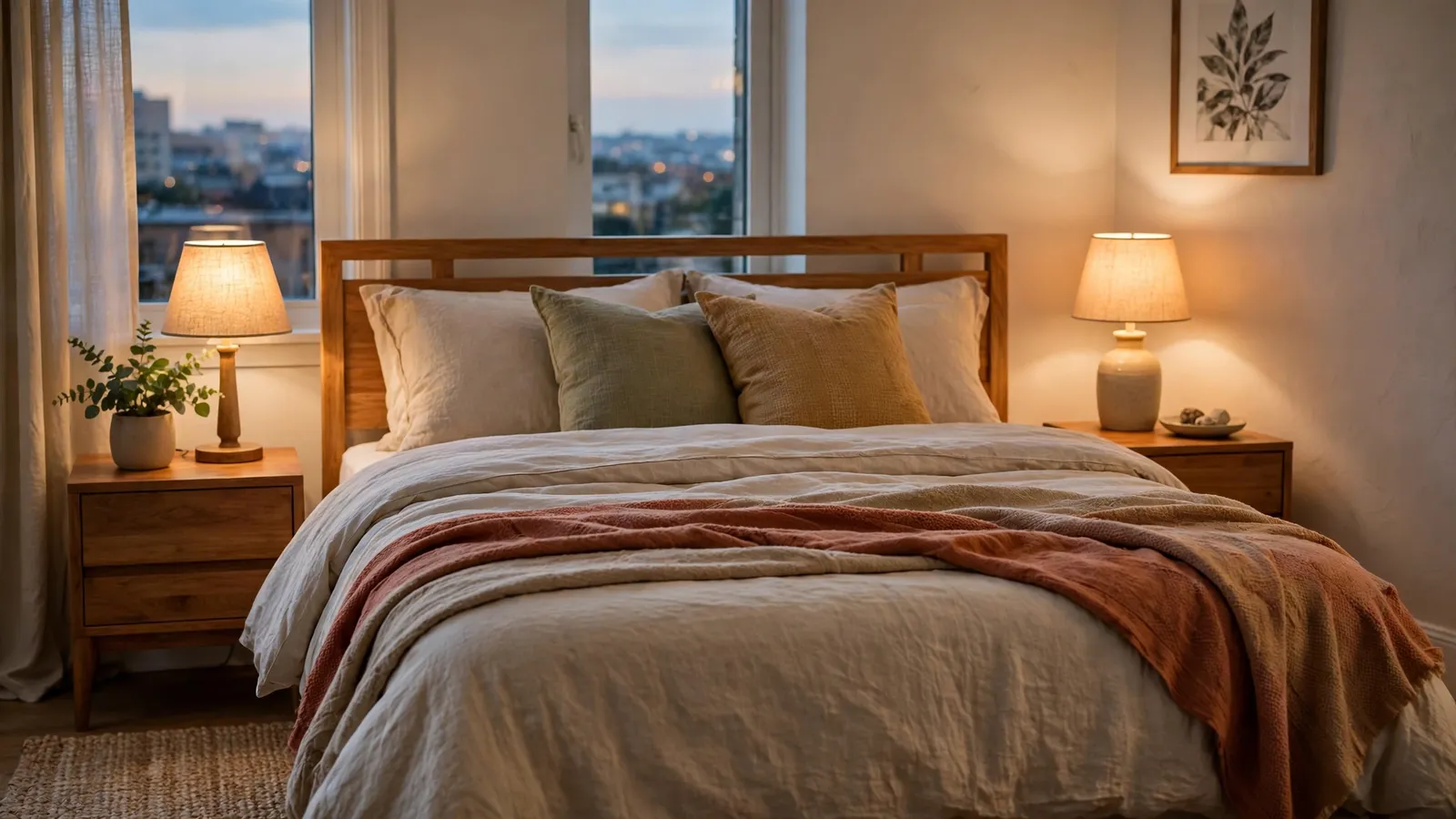
A small shared bedroom works when it is designed for two people on purpose, not when one person’s room simply absorbs a second person. Agree on a neutral base together, give each partner their own side and their own share of the storage, pick a bed the room can actually hold, and let color and light come from textiles and lamps rather than paint and holes. These small apartment bedroom decor ideas for couples renters all share one rule: if it cannot be undone before move-out, it does not go in the room. Start with the base and the bed, and split the closet this weekend.

Maren started MyFirstLease after a rough first lease taught him everything the internet didn’t. He covers the logistical side of renting — move-in checklists, utilities, and the unglamorous first-week stuff nobody explains — and oversees everything published on the site.