Decorating your first apartment for Christmas on a tight budget is completely doable — apartment Christmas decor under $50 just takes a plan instead of a shopping spree. This guide is written for first-time renters decorating their own place for the first time, in a space they don’t own and can’t drill into, with a bank account that has other priorities.
Instead of another open-ended list of cheap ideas, you’ll get a complete $50 allocation plan: exactly how much to spend in each category, what to buy first, what to skip, and how to fill the gaps for free. Every suggestion here is renter-safe — no holes in the walls, no damage to worry about at move-out, and nothing that only works in a big house.
Direct answer: Yes — you can decorate a small apartment for Christmas for $50 or less by spending about $10 on a tree or alternative, $8 each on lights and ornaments, and the rest on garland, stockings, and a table centerpiece, then filling gaps with free homemade touches and damage-free hanging methods.
Executive Summary
A $50 Christmas budget works when you treat it like a spending plan, not a wish list. The biggest mistake first-time decorators make is spending half the budget on the first pretty thing they see, then running out of money before the apartment actually feels decorated. This article fixes that by giving every dollar a job before you shop.
You’ll start with the allocation table, then work through each category in priority order: the tree, lights, ornaments, dollar-store finds, free and homemade touches, small-space layout, and smart shopping habits that keep you under budget. Along the way, every tip is filtered for rental life — command-style hooks instead of nails, small-scale pieces instead of oversized ones, and decor that packs flat for storage in a closet or under a bed.
1. The $50 Spending Plan

Start with the numbers, not the store. Before you buy anything, split your $50 across the categories below so no single impulse purchase can wreck the whole plan. If one category comes in under budget, move the leftover into your buffer rather than spending it on extras you didn’t plan for.
| Category | Budget |
|---|---|
| Tree or tree alternative | $10 |
| String lights | $8 |
| Ornaments | $8 |
| Garland or wreath | $6 |
| Stockings | $5 |
| Table centerpiece | $5 |
| Wrapping and finishing touches | $3 |
| Buffer for tax or a small splurge | $5 |
| Total | $50 |
A buffer matters more than it looks. Sales tax, a pack of hooks, or one item that costs a dollar more than expected can quietly push a $50 plan to $60. Keeping $5 unassigned protects the plan. If you finish shopping with buffer left over, that’s a win — save it, don’t spend it just because it’s there.
One more rule before you shop: buy in priority order, top of the table down. The tree and lights do most of the visual work in a small room. Stockings and centerpieces are finishing touches, and they should never eat the tree’s budget.
2. Tree on a Budget

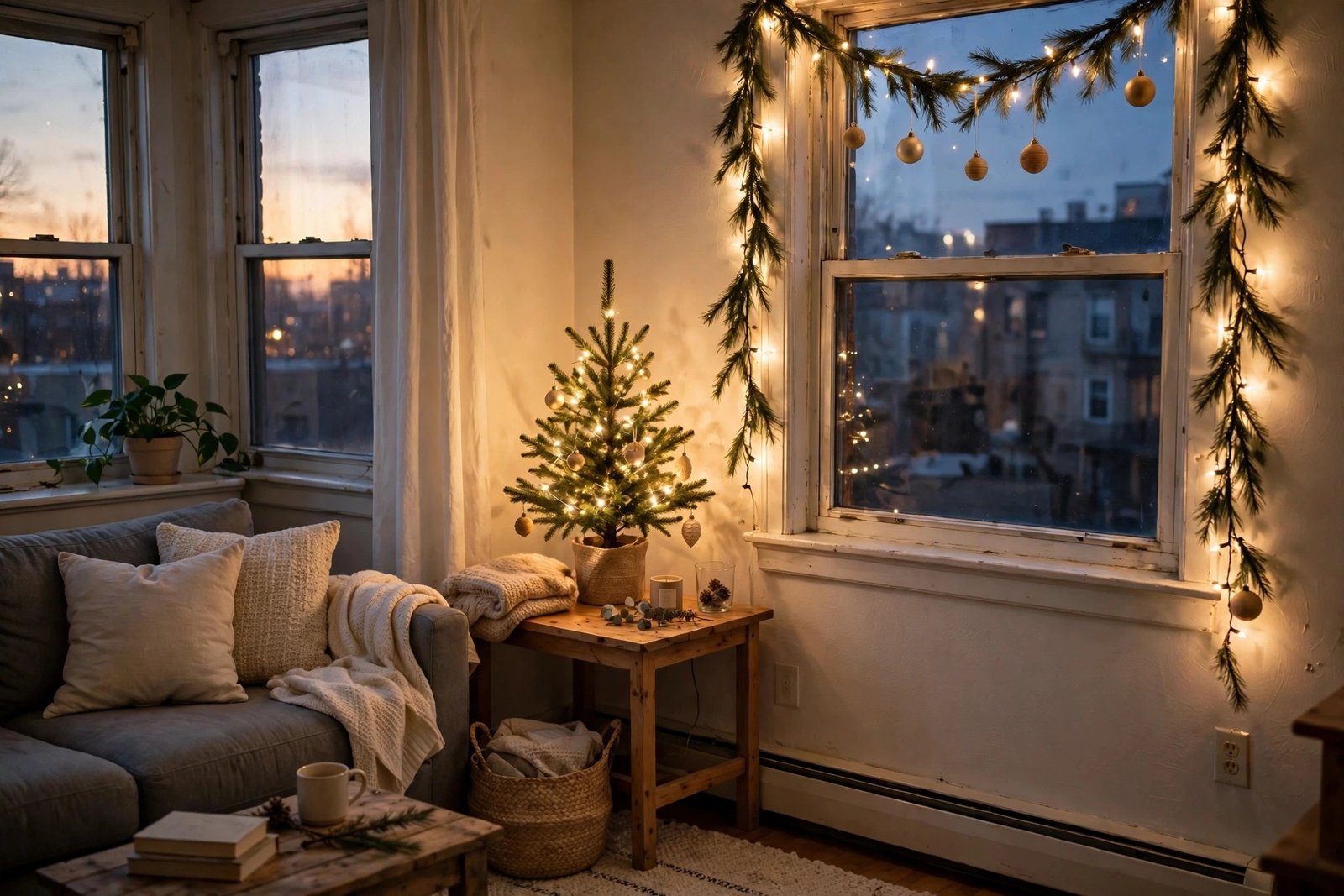
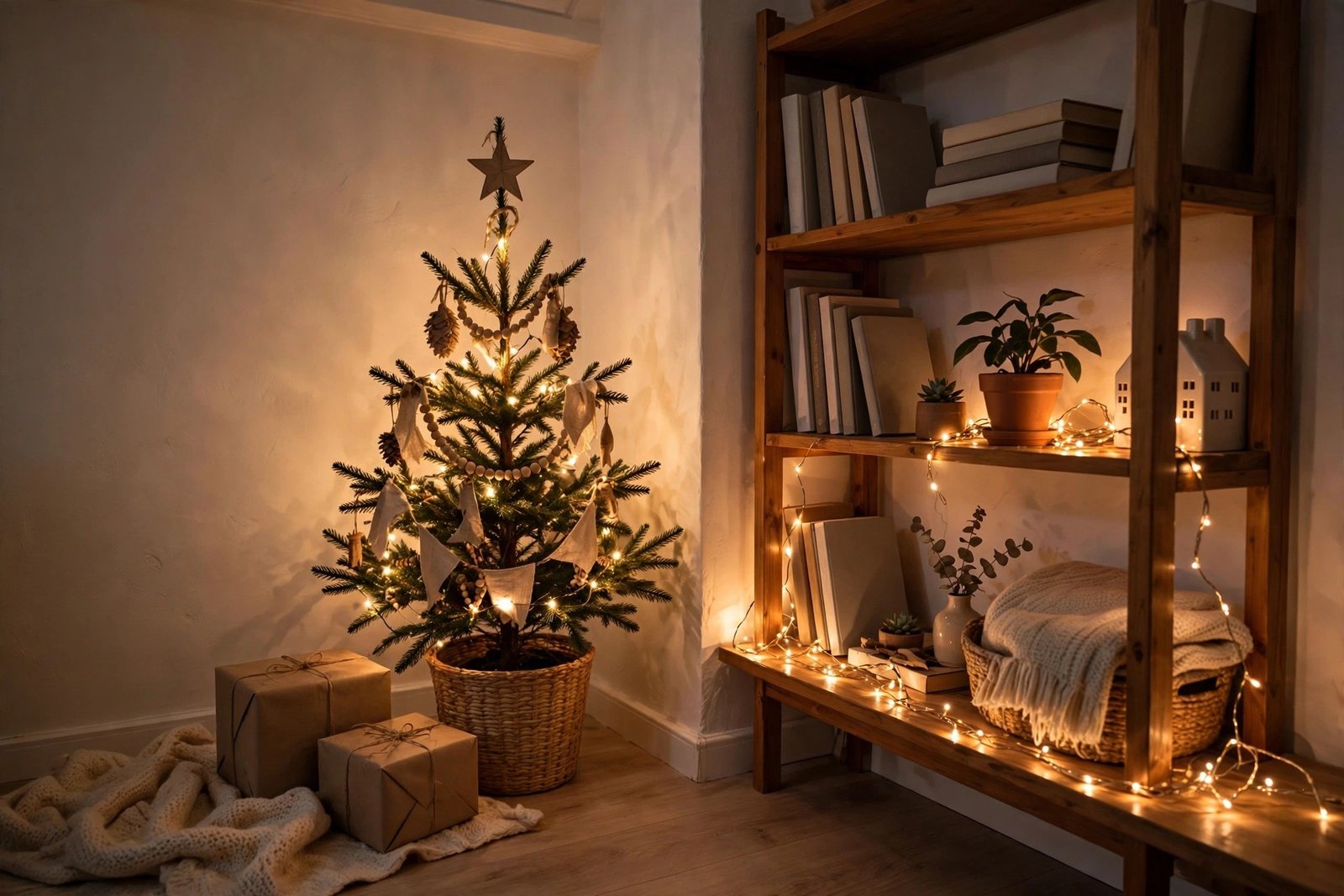
A full-size artificial tree can eat an entire $50 budget on its own, so the smartest move for a first apartment is to go smaller or skip the traditional tree altogether. A tabletop tree, usually 2 to 3 feet tall, fits on a side table, a kitchen counter, or a sturdy shelf, and it costs a fraction of a full-size tree while still holding lights and ornaments.
Another option that costs almost nothing is a wall tree: arrange a string of lights or a garland in a triangle shape on the wall with removable hooks, then hang a few ornaments from it. It takes up zero floor space, which matters in a studio or a shared apartment, and it comes down without a mark.
If you do want a floor tree, look for a slim or pencil-style tree rather than a wide one — it fits tight corners and narrow living rooms without blocking walkways. Whichever route you choose, check one practical detail before buying: where will it live in January? A tabletop tree or wall arrangement stores in a single box or bag, while a full-size tree needs closet space you may not have.
3. Lights Without Damage

Lights are the single highest-impact purchase in this plan. A warm, glowing room reads as “decorated” even before ornaments go up, and a string or two of lights costs far less than most other decor categories.
The renter rule is simple: nothing that pierces the wall. Removable adhesive hooks and clips hold light strings along window frames, shelves, and mantels, and they peel off at move-out without taking paint with them. Test one hook in a hidden spot first — some paints and textures hold adhesive less well — and always check the weight rating on the package against what you’re hanging.
Practical tips that save money and hassle: count your outlets before you buy, so you don’t end up needing an extension cord you didn’t budget for; choose one light color (warm white is the safest all-rounder) rather than mixing strands that clash; and put lights on a simple timer or plug strip so you’re not climbing behind furniture every night. Battery-operated strands work well for spots far from an outlet, like a bookshelf or a window, but factor in the cost of batteries.
4. Dollar-Store Finds Worth Buying

Dollar stores and discount aisles are where a $50 Christmas plan becomes realistic, but not everything there is a good buy. Spend your dollars on items where cheap looks fine once it’s up: plain ball ornaments in one or two colors, simple garland, stockings, ribbon, and gift wrap. A bowl of matching ornaments or a garland draped over a doorway looks intentional regardless of what each piece cost.
Skip the items that tend to look cheap and break fast: flimsy figurines, anything with glitter that sheds everywhere, and battery-powered gadgets that may not survive the season. One broken or shedding item creates more mess than cheer in a small apartment.
A useful shopping habit: pick a two-color palette before you go in — for example, gold and deep green, or silver and red — and buy only pieces that fit it. A limited palette is what makes a mix of inexpensive pieces look coordinated instead of random. If you already own a few ornaments from family or previous years, build your palette around those instead of starting from scratch.
5. Free and Homemade Touches

This is where a budget plan outperforms a bigger budget. Some of the most effective apartment Christmas decor costs nothing at all, and homemade touches are what make a first apartment feel personal rather than store-bought.
Dried orange slices, paper snowflakes, popcorn or cranberry garlands, and hand-cut paper stars are all classic, low-cost projects that use supplies most people already have — paper, scissors, string, and an oven for the oranges. Pinecones gathered outdoors (where gathering is permitted) and a few evergreen clippings can fill a bowl or a jar as a free centerpiece. Just keep anything flammable well away from candles and hot lights, and check whether your building has rules about live greenery in common areas.
Another free move: rearrange before you decorate. Clearing one surface for the tree, moving a plant to make room for a centerpiece, or swapping everyday throws for a red or green one you already own changes how the whole room reads. And don’t overlook wrapping — brown kraft paper with string, or newspaper with a ribbon, looks deliberate and costs far less than fancy gift wrap.
6. Small-Space Layout Tricks

Small apartments don’t need less decorating — they need smarter placement. In a small room, one well-decorated focal point beats decorations scattered thinly across every surface. Pick one anchor — usually the tree or the main window — and concentrate your lights, ornaments, and garland there.
Use vertical space that would otherwise go empty: the top of a bookshelf, a window frame, a doorway, or a kitchen shelf. A garland along the top of a doorway frames the room without taking any floor or counter space. Windows are especially valuable in small apartments because lights in a window are visible from inside and outside, doing double duty.
Watch the clutter line. In a studio or one-bedroom, every surface is also a working surface — the table you eat at, the counter you cook on, the desk you work at. Keep those functional surfaces mostly clear, and let the decor live on display surfaces instead. If a decoration means you can’t use a surface you need daily, it belongs somewhere else.
7. Shop Smart, Stay Under $50

The plan only works if the shopping trip does. Write your list from the allocation table before you leave, and shop that list — not the displays at the front of the store, which are designed to add unplanned items to your cart.
A few habits that protect the budget: shop after the first big holiday sales rather than before, when discount and dollar stores mark seasonal stock down; buy multi-packs of ornaments instead of single statement pieces; and check what you already own before buying duplicates. Many first-time renters already have string lights, a throw blanket in a holiday color, or candles from a previous year hiding in a moving box.
Finally, keep the receipt and the packaging until the season is over. If a strand of lights fails or a piece breaks in the first week, an exchange is free — a replacement purchase is not. And when January comes, pack everything in one labeled box or bag, in the order you’ll want it next year: lights on top, ornaments wrapped, hooks in a small bag. Next year’s budget gets easier when this year’s decor survives storage.
FAQ
Can you really decorate an apartment for Christmas for under $50?
Yes, if you plan the spending before you shop. A tabletop tree or wall tree, one or two light strands, and a limited color palette of inexpensive ornaments cover the visual basics. The free touches — paper decorations, rearranged furniture, and natural elements — fill the rest without spending anything.
What should I buy first if I can only afford a few things?
Lights first, then a tree or tree alternative, then ornaments. Lights alone change how a room feels at night, and they’re the hardest thing to improvise for free. Stockings, centerpieces, and extra garland are finishing touches that can wait or be skipped entirely.
How do I hang Christmas lights in a rental without damaging the walls?
Use removable adhesive hooks and clips rated for the weight you’re hanging, and test one in a hidden spot first. Avoid nails, screws, and tape that can peel paint. Remove hooks slowly at the end of the season following the package directions, and keep the packaging in case a hook fails and you need a replacement.
Are dollar-store Christmas decorations worth it?
For ornaments, garland, ribbon, stockings, and wrapping supplies, yes — these look fine once displayed, especially in a limited color palette. Skip fragile figurines, heavy glitter items, and cheap electronics that may not last the season. Buy multi-packs rather than single pieces to stretch the budget further.
What is the cheapest Christmas tree option for a small apartment?
A tabletop tree is usually the cheapest option that still looks like a tree, and it needs almost no storage space. A wall tree made from lights or garland costs even less and takes up no floor space at all. Both are better choices for a small rental than a full-size artificial tree, which can cost more than the whole $50 budget.
How do I store Christmas decorations in a small apartment?
Pack everything into one labeled box or bag that fits in a closet, on top of a wardrobe, or under a bed. Wrap ornaments so they don’t chip, coil lights so they don’t tangle, and keep hooks and small pieces in a separate bag inside the box. A tabletop tree or wall arrangement stores far more easily than a full-size tree.
Conclusion
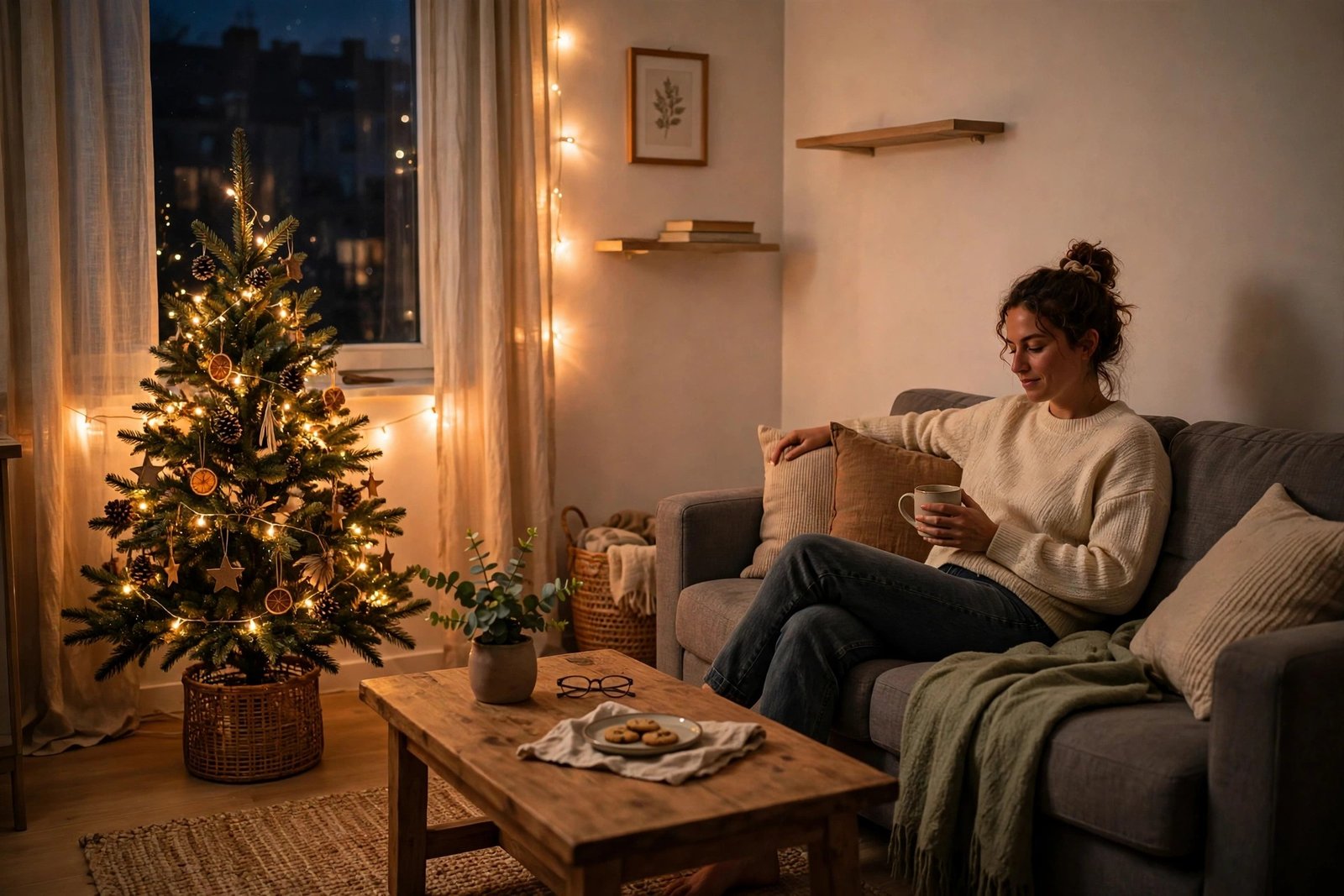
Apartment Christmas decor under $50 comes down to one decision: plan the money before you spend it. Give the tree and lights the biggest shares, let a two-color palette make inexpensive pieces look intentional, and fill the gaps with free homemade touches instead of extra purchases. In a small rental, a single glowing focal point and a few well-placed pieces will do more than a room full of random decor — and every piece you buy should be something you can hang without damage and store in one box. Start with the allocation table, shop the list, and your first apartment Christmas can look like a celebration without costing like one.

Maren started MyFirstLease after a rough first lease taught him everything the internet didn’t. He covers the logistical side of renting — move-in checklists, utilities, and the unglamorous first-week stuff nobody explains — and oversees everything published on the site.