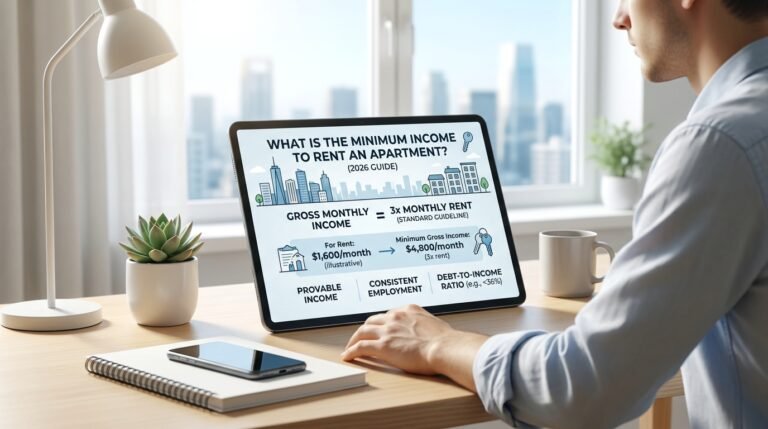

Moving out on your own for the first time is a major professional and personal milestone, but first apartment financial mistakes can quickly turn a dream living space into a stressful daily burden. This guide is specifically designed for young professionals transitioning into independent living who want to protect their income and build a secure financial foundation.
By identifying the financial traps baked into modern property leases, you can sign your contract with confidence. Real financial preparation requires looking past the monthly base rent to understand the complete cost of operating a single-income household.
Executive Summary

Renting alone for the first time means you absorb 100 percent of the financial risk and daily living costs without a roommate’s safety net. Many new renters focus entirely on the base rental price advertised online, entirely missing the structural lease costs that inflate their monthly housing baseline by hundreds of dollars.
This guide breaks down the four most critical financial red flags you must watch for when touring properties and reviewing lease agreements. From calculating your true net-income affordability to identifying predatory fee structures and utility billing systems, these concrete steps ensure your solo rental budget accurately reflects reality.
1. Miscalculating True Affordability

The most common trap for new renters is calculating their young professional apartment budget using their gross salary instead of their net take-home pay. Standard financial advice often cites the “30 percent rule,” which suggests you can afford to spend 30 percent of your gross income on housing. Property managers also use this gross income metric to approve applications. However, this metric completely ignores taxes, health insurance premiums, and retirement contributions.
If you earn a $60,000 salary, 30 percent of your gross income is $1,500 a month. But after standard deductions, your actual monthly take-home pay might only be $3,600. Spending $1,500 of that net income leaves you with just $2,100 to cover utilities, groceries, student loans, car payments, and savings. When drafting your solo renter financial tips and goals, always calculate affordability based entirely on the cash that actually hits your checking account.
Use the interactive budget planner below to map out your true monthly cash flow. Adjust the sliders to see how hidden costs and utilities impact your bottom line before you commit to a lease.
Young Professional Solo Rental Budget
Interactive Monthly Cash Flow & Expense Planner
Income
Housing & Lease Fees
Solo Utilities
Daily Living & Transportation

Base rent is rarely the actual amount you pay each month to the property manager. Corporate apartment complexes frequently unbundle services to make their base rent appear lower in online search results. When touring properties, failing to ask for a comprehensive list of mandatory recurring fees is one of the most critical apartment lease red flags.
These hidden costs of renting are non-negotiable additions to your monthly portal balance. Common "junk fees" include valet trash service (usually $25 to $35), package locker subscriptions, pest control, common area maintenance (CAM) fees, and mandatory technology packages for building-wide Wi-Fi.
Additionally, if you drive, parking fees can drastically alter a budget. A surface lot space might be free, but covered or garage parking often ranges from $50 to $150 per month. If a building advertises rent at $1,400 but mandates $150 in various service fees and $75 for parking, your true base rent is actually $1,625. Always request a blank copy of the lease and the community rulebook to verify the exact fee structure before paying a non-refundable application fee.
3. Underestimating Utility Burdens

When living with roommates, the cost of high-speed internet and electricity is divided multiple ways. Living alone means you carry 100 percent of these overhead costs. Furthermore, many young professionals lack an established utility payment history. If you have no credit history with local providers, utility companies may require security deposits ranging from $100 to $300 just to activate your electricity or water.
Another major first time renter red flags issue involves how buildings calculate water and sewer bills. Ask the leasing agent if the building is individually metered or if they use a Ratio Utility Billing System (RUBS). Under a RUBS setup, the entire building's water bill is divided among the tenants based on square footage or the number of occupants. If you are a solo renter in a spacious one-bedroom unit, a RUBS system based on square footage means you may end up subsidizing the water usage of families living in similar-sized units.
4. Draining Emergency Reserves
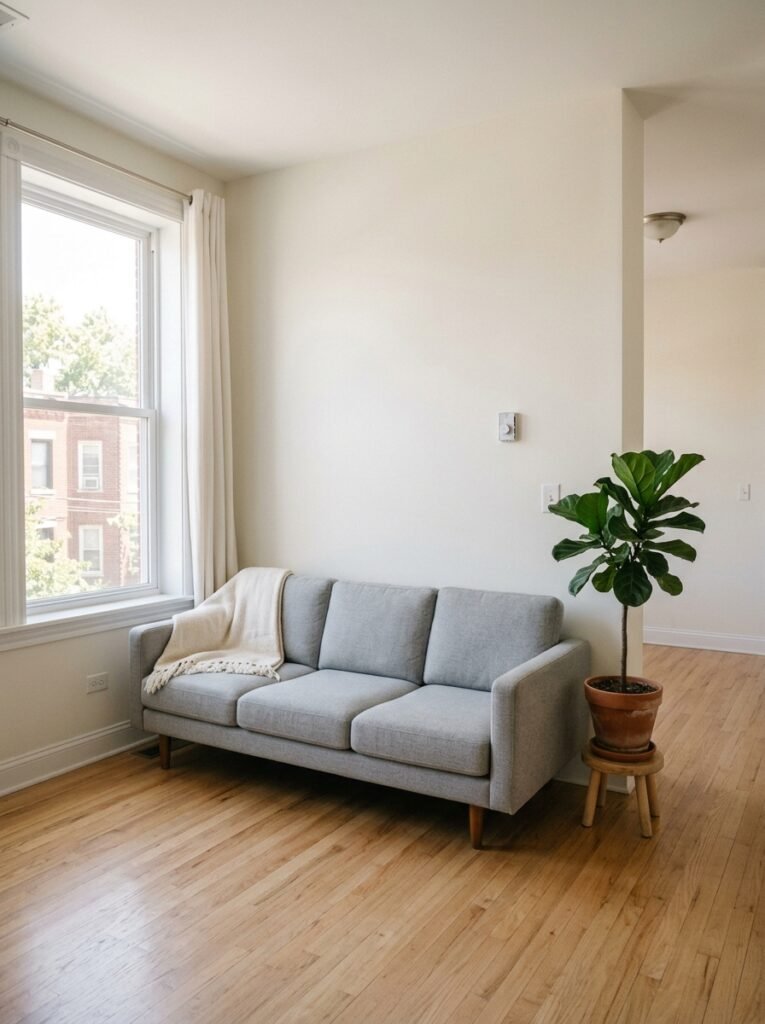
The excitement of securing your own place often leads to a dangerous financial mindset: wanting the apartment fully decorated and furnished on day one. Security deposits, application fees, and moving trucks already consume a massive portion of your cash reserves. Turning to credit cards or high-interest point-of-sale loans to buy brand-new furniture immediately is among the most damaging rental budget mistakes to avoid.
Living in a sparsely furnished space for the first two months is financially safer than draining your emergency fund or taking on debt. Prioritize absolute essentials like a mattress, basic cookware, and a place to sit. For everything else, utilize budget home decor strategies and seek out secondhand pieces. When you are ready to invest in better items, focus on smart interior design hacks that save money rather than buying entire matching showroom sets.
5. First Apartment Checklist
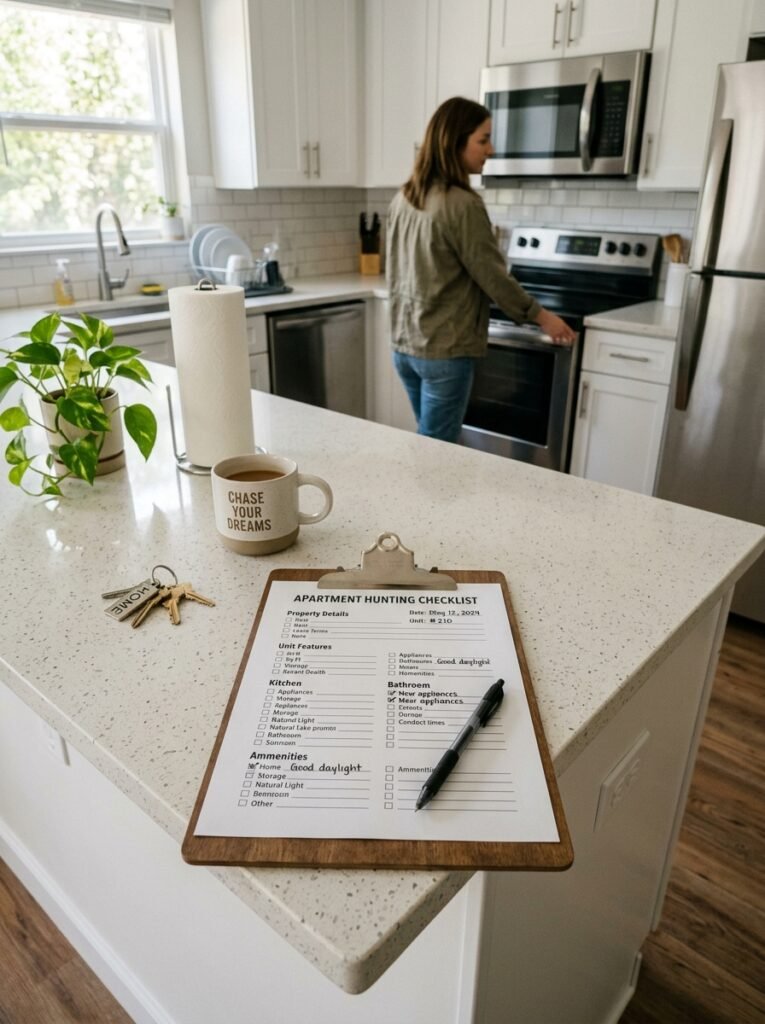
Proper financial planning for first apartment hunting requires tracking specific metrics before and during your property tours. Treat your apartment search as a financial audit rather than just an aesthetic decision. Use this what to look for when renting an apartment checklist to evaluate properties logically:
- Request the full fee schedule: Ask for every mandatory monthly charge beyond the base rent.
- Verify the lease-break policy: Life changes quickly in your twenties. Check the penalty for breaking the lease early; a standard penalty is two months' rent, but some predatory leases demand payment for the remainder of the entire term.
- Check the parking situation: Confirm whether parking is assigned, if there are additional fees, and what the daily rules are for guest parking.
- Investigate utility billing: Confirm whether water and gas are individually metered or divided by a building-wide formula.
- Understand joint liability: If you do end up bringing in a roommate later, realize that standard leases hold both tenants 100 percent liable for the total rent if the other person stops paying.
Following a strict apartment hunting checklist prevents you from being swayed by luxury amenities—like rooftop pools or fancy gyms—that you may rarely use but will definitely pay for in your monthly rent.
6. Frequently Asked Questions
What are red flags for renters? Major red flags when renting an apartment include leasing agents who rush you to sign before reading the contract, properties with visible deferred maintenance (like water stains or broken exterior security gates), and leases containing vague language about who is responsible for specific appliance repairs. An inability to see the exact unit you will be renting—rather than a staged model—is also a significant warning sign.
What are some important things to consider before moving into your first apartment? Beyond the rent, evaluate the total cost of living in that specific location. Consider how the commute will impact your gas or transit budget. A cheaper apartment that adds an hour of driving each day may ultimately cost you more in fuel, vehicle maintenance, and lost time than a slightly more expensive unit closer to your workplace.
What is the biggest disadvantage of renting compared to buying a house? The primary financial disadvantage is that your monthly payments do not build equity. When you rent, you are purchasing a service (housing) rather than acquiring an asset. Additionally, renters are subject to annual rent increases based on market rates, whereas a fixed-rate mortgage keeps principal and interest payments static for decades.
What questions should I ask when renting? Always ask: What is the exact penalty for breaking the lease early? Are utilities individually metered? How are emergency maintenance requests handled after hours? What is the policy and cost for overnight guests or future pets? Clarifying these rules upfront prevents expensive misunderstandings later.
How to get approved as a first time renter? Landlords want assurance that you will pay on time and respect the property. To strengthen your application, provide overwhelming proof of steady income (such as three months of recent pay stubs or a formal offer letter from your employer). Showing a healthy savings account balance can also reassure landlords that you have a buffer against sudden job loss.
How to rent an apartment for the first time with no credit? If you lack a credit score, you generally have three paths: secure a qualified co-signer (guarantor) who assumes financial liability, offer to pay a larger upfront security deposit (if local laws permit), or focus your search entirely on independent, private landlords who rely on manual income verification and character references rather than automated credit-check software.
Are there first time renter programs available? While general first-time buyer programs are common for purchasing homes, first time renter programs are usually limited to specific income-restricted housing authorities or local municipal grants aimed at preventing homelessness. For market-rate renters, checking with your employer's HR department for relocation assistance or corporate housing discounts is usually the most viable option. If you are searching for first time renters apartments near me, look for buildings offering "look and lease" specials, which frequently waive upfront application and administrative fees.
Conclusion

Navigating the rental market as a young professional requires looking closely at the math beneath the marketing. By calculating your true net income, identifying hidden fees, and keeping your emergency savings intact, you can avoid the most damaging first apartment financial mistakes. Renting your first place should bring a sense of independence and relief, not constant financial anxiety. Take the time to read every line of your lease, ask direct questions about utility structures, and stick strictly to a budget based on reality. If you found this breakdown helpful for your upcoming move, save this page as a reference for your apartment tours or share it with a friend preparing to sign their first lease.

Maren started MyFirstLease after a rough first lease taught him everything the internet didn’t. He covers the logistical side of renting — move-in checklists, utilities, and the unglamorous first-week stuff nobody explains — and oversees everything published on the site.