
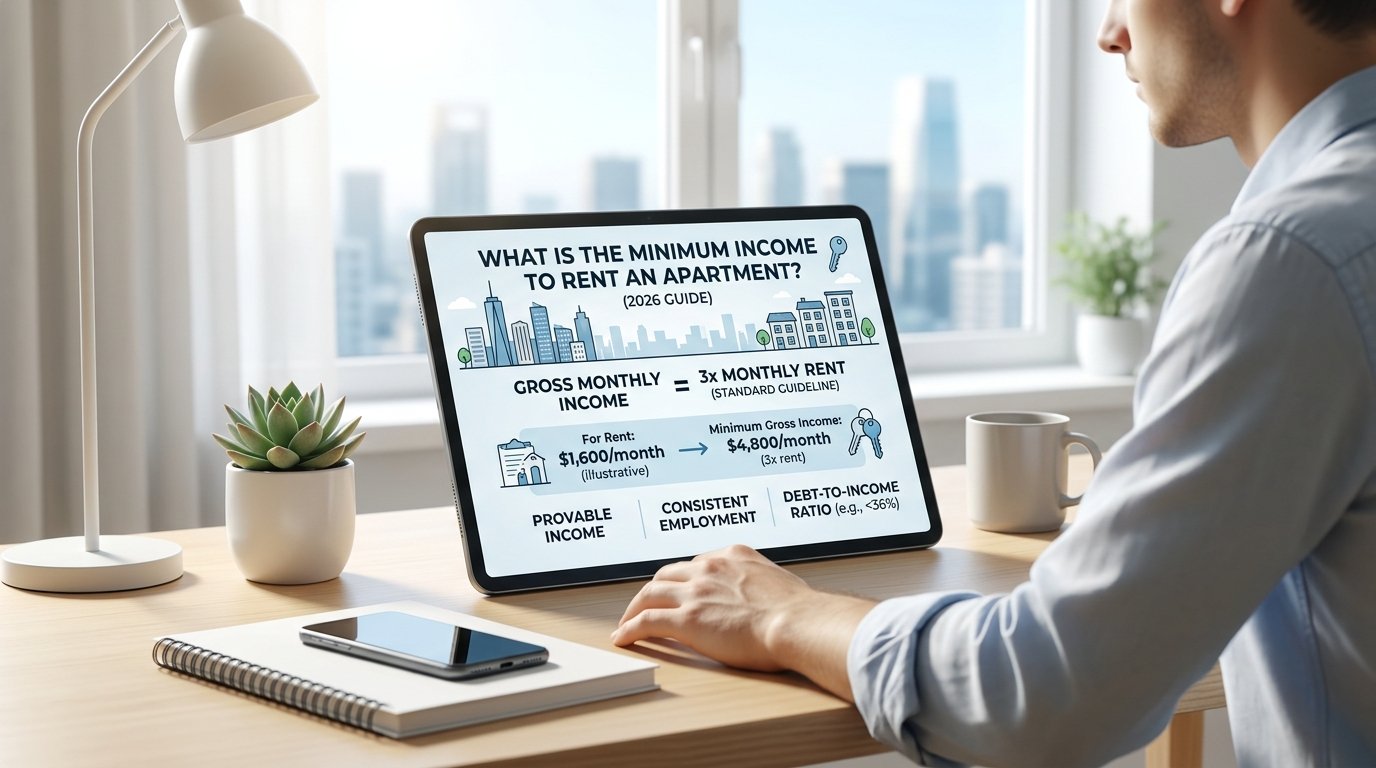
Before you fall in love with an apartment, there’s one number that decides everything: your income. Most landlords won’t even glance at your application if you don’t hit their minimum income requirement, and yet almost nobody explains this clearly before you start touring units. The short answer is that most landlords want to see you earning 2.5 to 3 times the monthly rent in gross income — but that number shifts depending on your city, your landlord, and whether you have a co-signer. Below, we’ll break down exactly how landlords calculate this, show you real examples at different rent price points, and cover what to do if your income falls short.
How Do Landlords Calculate Minimum Income Requirements?

Landlords use what’s called an income-to-rent ratio — a simple formula that estimates whether you can comfortably afford rent without falling behind. The most common standard is the “3x rent rule,” meaning your gross monthly income should be at least three times the monthly rent.
Some landlords use a slightly more lenient 2.5x rule, especially in high-cost cities where a strict 3x standard would exclude most local renters. A smaller number of landlords, particularly private owners, may accept 2x rent if your credit score and rental history are strong.
The 3x Rent Rule Explained
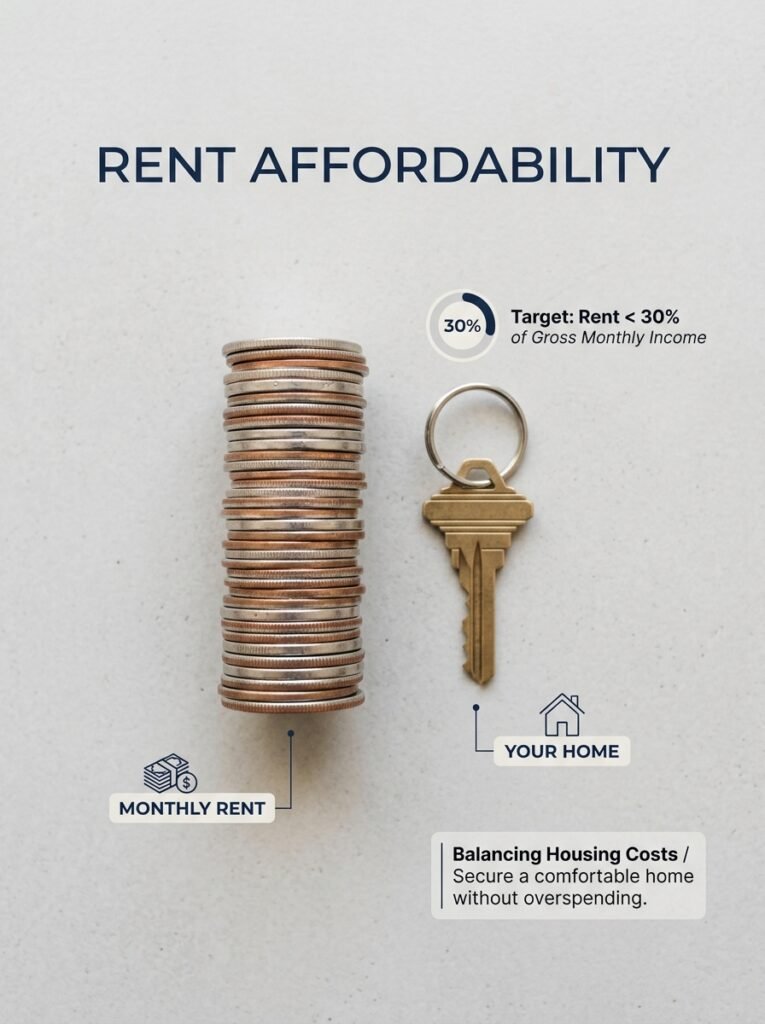
The Basic Formula
The math is straightforward:
Monthly Rent × 3 = Minimum Required Gross Monthly Income
So if an apartment costs $1,500/month, you’d generally need to show at least $4,500 in gross monthly income to qualify.
Real Examples at Different Rent Levels
| Monthly Rent | Minimum Monthly Income (3x) | Minimum Annual Income |
|---|---|---|
| $1,000 | $3,000 | $36,000 |
| $1,500 | $4,500 | $54,000 |
| $2,000 | $6,000 | $72,000 |
| $2,500 | $7,500 | $90,000 |
| $3,000 | $9,000 | $108,000 |
Keep in mind this is gross income — the amount before taxes are taken out — not your take-home pay.
Does the Minimum Income Requirement Change by City?

Yes, significantly. In high cost-of-living cities like New York, San Francisco, or Los Angeles, some landlords still apply a strict 3x rule even though local rents are much higher relative to typical salaries. This is part of why finding an apartment in these markets is harder for first-time renters — the income bar is high, but so is the rent it’s measured against.
In more affordable metro areas, you’ll more commonly see landlords apply the softer 2.5x standard, since local rents are lower relative to average wages. It’s worth asking directly what ratio a specific landlord or property management company uses before you apply, since this isn’t always posted publicly.
What Counts as Income When Applying?
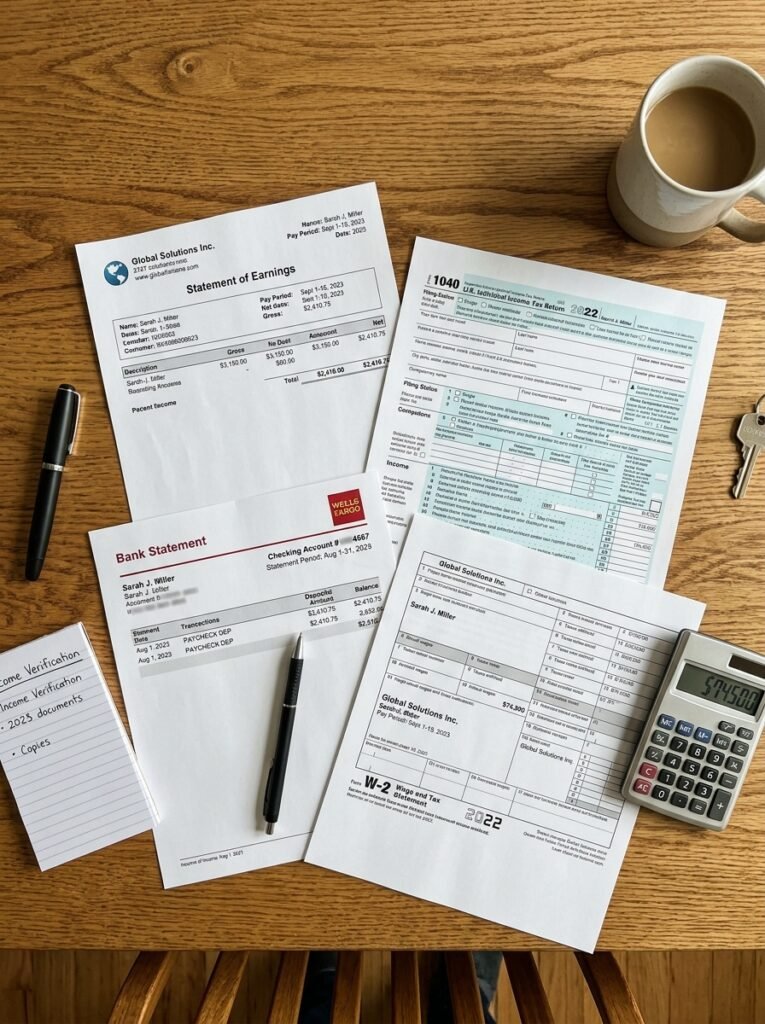
Landlords typically accept several income sources when calculating whether you meet the minimum:
- W-2 salary or hourly wages — verified through pay stubs
- Self-employment income — verified through tax returns or bank statements
- Freelance or 1099 income — usually requires 2+ months of consistent deposits
- Alimony or child support — if it’s court-ordered and documented
- Social Security or disability income — with official benefit statements
- Combined household income — if you’re applying with a roommate or partner, most landlords will combine both incomes toward the total requirement
What If You Don’t Meet the Minimum Income Requirement?

Falling short of the income minimum doesn’t automatically disqualify you. Landlords commonly accept these alternatives:
- Add a co-signer or guarantor — someone who agrees to cover rent if you can’t, and who meets the income requirement themselves (often required to earn 4x–5x the rent since they’re covering the risk)
- Pay several months of rent upfront — some landlords will accept 3–6 months paid in advance in place of meeting the income ratio
- Offer a larger security deposit — this reduces the landlord’s risk and can offset a lower income
- Show substantial savings — bank statements showing 6+ months of rent saved can sometimes substitute for income verification
- Get a letter from your employer — particularly useful if you just started a new job and don’t have pay stubs yet showing the new, higher salary
How to Calculate Your Own Rent Budget Based on Income

If you’re working backward — meaning you know your income and want to figure out what rent you can afford — flip the formula:
Monthly Gross Income ÷ 3 = Maximum Affordable Rent
For example, if you earn $4,000/month gross, dividing by 3 gives you a maximum rent budget of about $1,333/month. This is also a useful gut-check even in cities where the official landlord requirement is more relaxed, since it keeps your budget realistic beyond just qualifying for the lease.
FAQs
Is the 3x rent rule a legal requirement?
No, it’s an industry standard, not a law — individual landlords can set their own income requirements, though most follow something close to this ratio.
Does the income requirement include my roommate’s income?
Usually yes, if you’re applying together on the same lease, most landlords will combine both incomes to meet the total minimum.
Can I qualify with just a job offer letter instead of pay stubs?
Often yes, especially if you’re relocating for a new job — a signed offer letter stating your salary is typically accepted as proof of upcoming income.
What if my income varies month to month, like with freelance work?
Landlords typically look at an average over the past 2–3 months, so consistent bank deposits can help demonstrate reliable income even without a fixed salary.
Do landlords count bonuses or overtime pay toward the income requirement?
Sometimes, but it depends on the landlord — consistent, documented bonuses are more likely to count than occasional overtime.
Is a 2x rent ratio ever accepted?
Yes, some private landlords or smaller property owners will accept a 2x ratio if you have excellent credit and strong rental references.
Conclusion
Most landlords use some version of the 2.5x–3x rent rule to determine whether you qualify financially for an apartment, and knowing this number ahead of time lets you shop for apartments you’ll actually get approved for — instead of wasting application fees on units out of reach. If your income falls short, a co-signer, upfront payment, or larger deposit can often bridge the gap.

Maren started MyFirstLease after a rough first lease taught him everything the internet didn’t. He covers the logistical side of renting — move-in checklists, utilities, and the unglamorous first-week stuff nobody explains — and oversees everything published on the site.