
If you’re a first-time studio renter furnishing on a budget and wondering what size rug for studio apartment living actually works, start with the zone you use most, not the full floor plan. A rug that’s too small makes furniture look scattered, while one that’s too large can swallow walkways, block doors, and waste money you need for other basics.
This guide gives you zone-by-zone sizes for sleeping, sitting, dining, and working areas, the placement rules behind those numbers, a simple way to measure with tape before ordering, and budget-friendly ways to get coverage without buying the largest rug in the store.
Direct answer: For most studios, choose a 5×7-foot rug for a small sitting zone, an 8×10-foot rug when the sofa and bed share one open area, and a runner or 3×5-foot rug for entry, kitchen, or beside-bed spots. Anchor furniture on it, and leave visible floor around the edges.
Summary

A studio asks one room to do the work of three or four, and a rug is the cheapest way to draw the lines between them. This article sizes the rug to the furniture group it anchors — sofa and coffee table, bed, small dining set, desk — rather than to the room as a whole, which is the mistake that leads to most returns and most too-small purchases.
You’ll find the placement rules that make a rug look intentional, a zone-by-zone table you can shop from directly, a tape-outline method for testing a size before money changes hands, and a buying order for a tight budget. Browse our decorating and small space living guides for the rest of your studio setup once the floor is sorted.
1. Start With Zones, Not the Whole Room

A single open rectangle feels larger and calmer when the eye can read separate places inside it: somewhere to sit, somewhere to sleep, somewhere to eat or work. Rugs do that dividing without walls, screens, or landlord permission, which is why studio apartment rug placement starts with zones rather than dimensions.
Sketch the room simply, on paper or in a phone note. Mark where the bed, sofa, and table will actually sit — not where they might sit someday — plus door swings, the kitchenette edge, and any radiator or floor vent. Each furniture group that sits together is one zone, and each zone gets sized on its own.
Most first studios need one main rug, for the sitting or sleeping zone, and at most one or two small pieces later. Trying to carpet the whole room with one oversized rug usually costs more, fights the door, and erases the zone effect that makes a studio feel organized in the first place.
2. The Sizing Rules That Matter
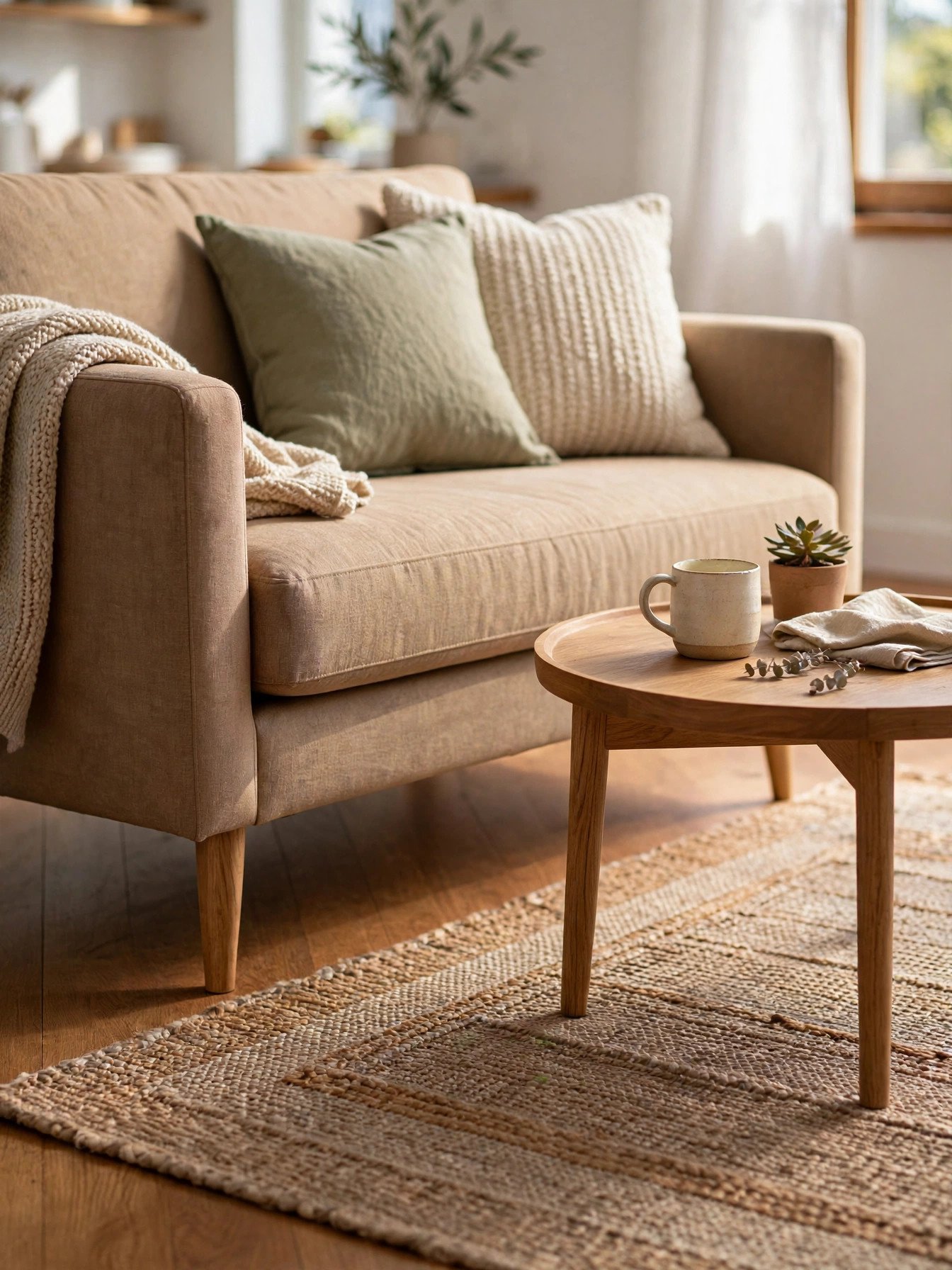
A handful of placement rules explain nearly every size recommendation that follows, and they matter more than any single dimension.
Anchor the furniture. At least the front legs of a sofa and any armchairs should sit on the rug — this is the front-legs rule. A rug that floats entirely in front of the sofa, touching nothing, reads as a bath mat placed by accident. If the budget allows all four legs on, that’s fine too, but front legs on is the minimum that looks deliberate.
Leave a floor border. Leave roughly 8 to 18 inches of bare floor between the rug edge and the walls or the next zone. That border is what makes the rug read as a defined area instead of a failed attempt at wall-to-wall carpet.
Extend past the furniture. A rug should run at least a few inches wider than the sofa on each side, and dining chairs should stay on the rug when pulled out. Edges that end exactly at furniture legs look pinched and cause constant catching.
Mind the walkway. Keep the main path from door to kitchen to bathroom clear or fully covered — a half-covered walkway with a rug edge across it is a tripping and curling problem.
This is why asking what size rug for studio apartment living needs has no one-number answer: the right size is the largest standard size that anchors your main furniture group, keeps a floor border, and clears your walkways and doors.
3. Sizes By Studio Zone
Shop zone by zone using the table below. Sizes are standard rug sizes in feet. The first-choice column fits most studios; the alternative column keeps the same placement rules working when money or floor space is tight. This table is the article’s practical asset — a downloadable-candidate for the editor.
| Zone | First choice | Smaller-budget alternative | Placement note |
|---|---|---|---|
| Sitting / living | 8×10 | 5×7 | Front legs of sofa and chairs on the rug; rug wider than the sofa on both sides |
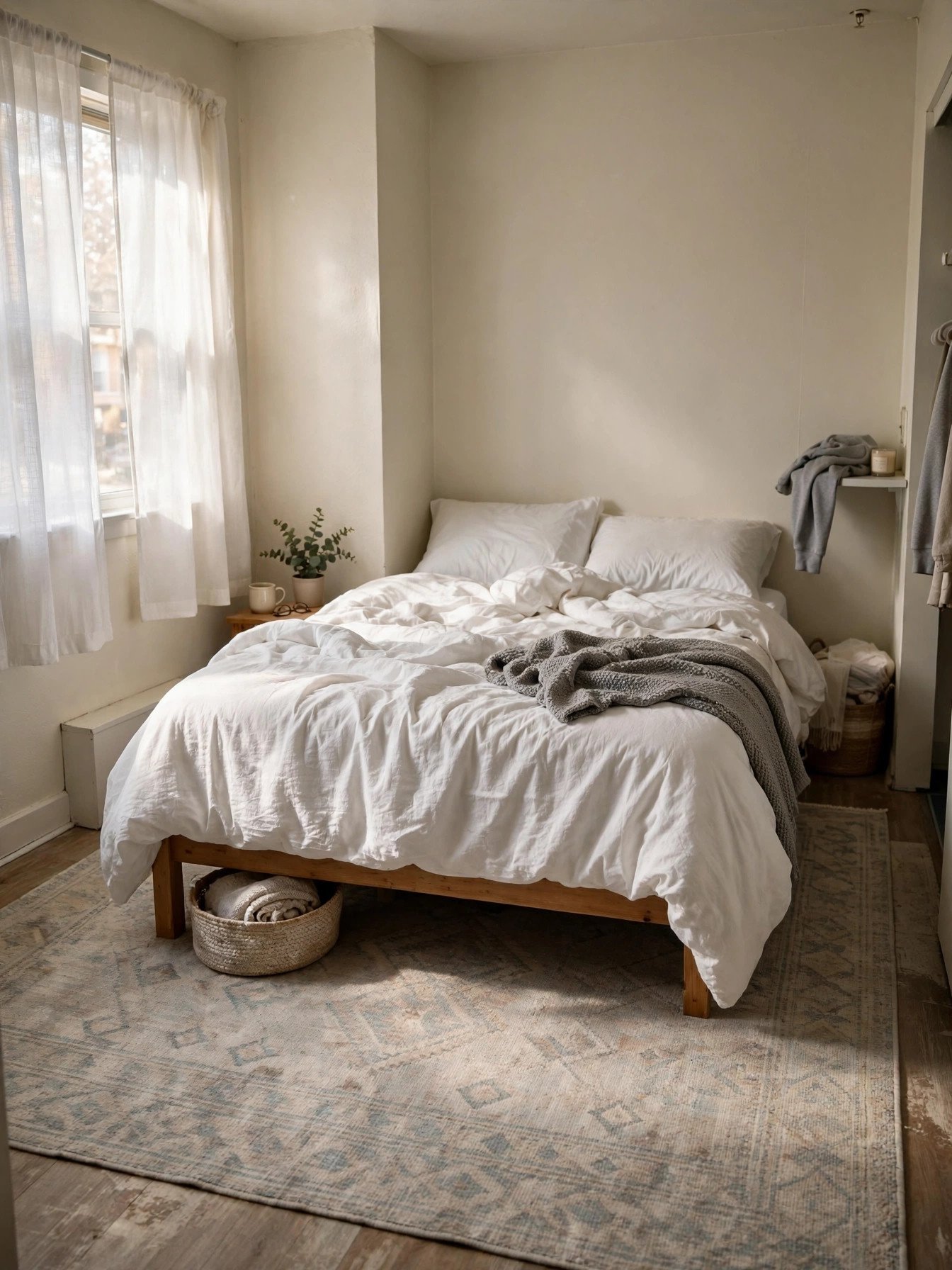
| Sleeping | 5×7 or 8×10 | Two runners, about 2×3 to 2×6 each side | Rug under the lower two-thirds of the bed, extending out at the foot and sides — this answers how big a rug should be under a bed in a studio |
| Dining (2–4 seats) | 5×7, or a round rug about 6 feet across | 4×6 for a small two-seat table | Rug extends about 24 inches beyond the table on all sides so pulled-out chairs stay on it |
| Entry / kitchen | Runner, about 2×6 or 2×8 | 3×5 mat-style rug | Low pile, clear of the door swing, along the kitchen run or inside the entry |
| Desk / work corner | 5×7 low-pile | 4×6 low-pile | Chair casters need a flat, low-pile surface; deep pile fights rolling chairs |
Two patterns are worth noticing. First, 5×7 is the workhorse: it anchors a small sitting area, sits correctly under a bed, and fits under a compact dining set — which is why it appears in almost every row. Second, 8×10 earns its higher price only when one open area holds both the sofa group and the bed, letting a single rug unify the space. That 5×7 vs 8×10 choice is really a question about how many zones share your main floor area.
If your studio is unusually long and narrow, favor the runner-plus-5×7 combination over forcing one large rug into a shape the room doesn’t have.
4. Measure Before You Buy

Guessing is how a first rug becomes a return label and a second delivery fee. A ten-minute tape test prevents it.
- Arrange the furniture where it will live, or mark its footprint with painter’s tape if it hasn’t arrived yet.
- Tape the outline of the rug size you’re considering on the floor, corners first, using the table in section 3.
- Live with the outline for a day if you can. Walk the door-to-kitchen path, open every door over it, pull out the dining chairs, and sit on the sofa with your feet down.
- Adjust the tape before you adjust your order. If the outline crowds a walkway, size down or shift the zone — don’t hope it will feel different in fabric.
- Check the unglamorous details: floor vents, radiator clearance, door swing height, and whether a thick rug plus pad will block a low-clearance door.
Add a rug pad to the same order, especially on hard floors. A pad for apartment floors stops sliding and corner curl, softens the feel of an inexpensive flat rug, and reduces scuffing on the flooring underneath — worth confirming against your lease if it restricts adhesives or backing types, and choosing a non-slip pad rather than tape on finished floors.
5. One Large Rug Or Several Small Ones?
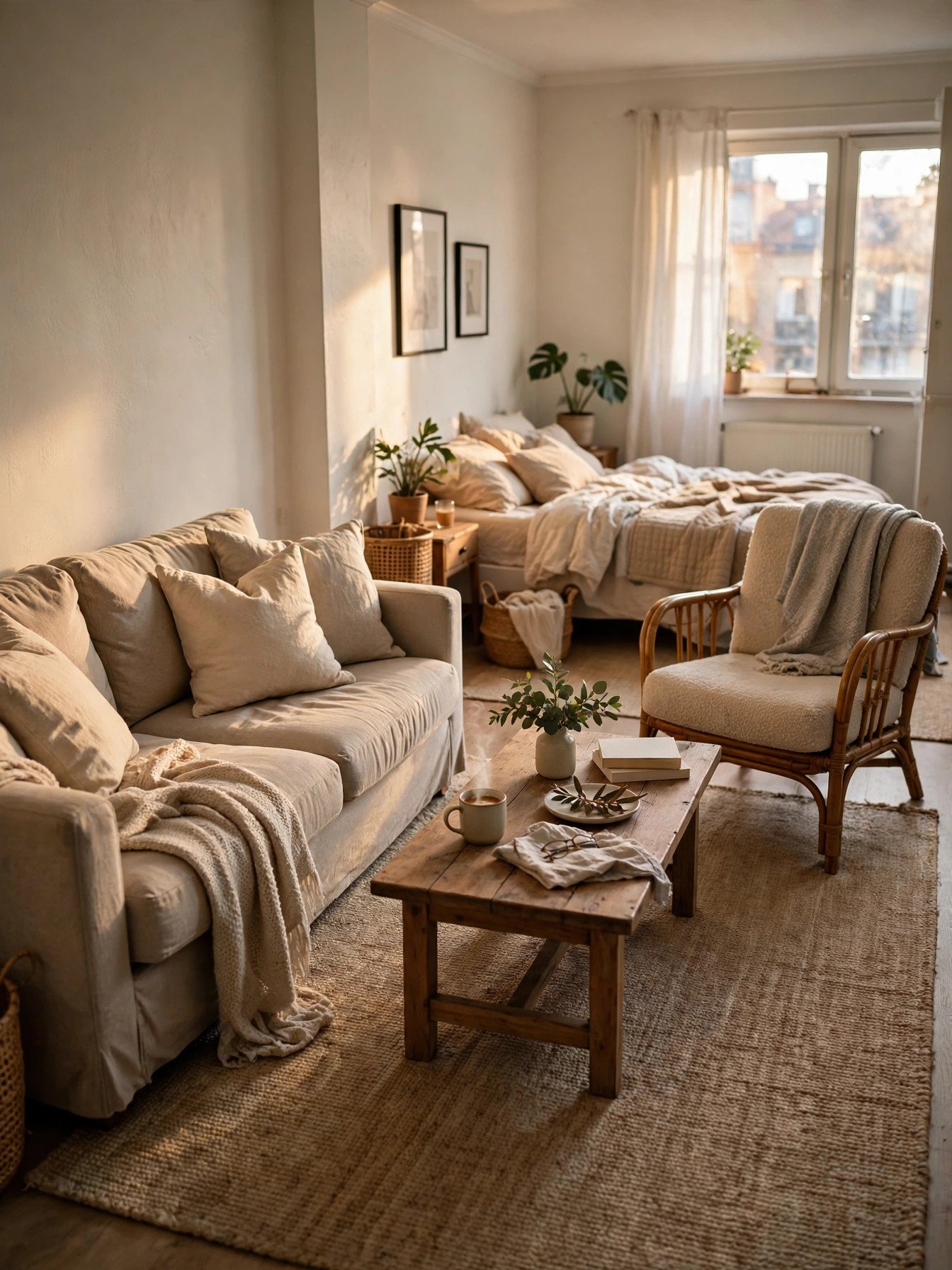
Both layouts can work; they solve different problems.
One large rug (usually 8×10) unifies an open studio, makes the main area feel bigger, and gives you one purchase to plan around. It works best when the sitting and sleeping zones sit side by side on the same stretch of floor. Its risks are cost, delivery into a small building, and a harder move-out carry someday.
Several smaller rugs (a 5×7 plus a runner, for example) let you buy in stages, define each zone separately, and replace one worn or stained piece without replacing everything. They work best in long, narrow, or L-shaped studios. Their risk is visual choppiness: keep colors in the same family and pile heights similar so the pieces read as one scheme rather than leftovers.
For a first purchase on a budget, the staged version usually wins — main zone first, additions later, once you’ve lived with the layout long enough to know it’s staying.
6. Budget Choices That Still Fit

Correct size in an inexpensive material looks better than a premium rug two sizes too small, every time. Spend on dimensions first, then on fiber.
- Buy the main zone first. One correctly sized 5×7 for the sitting or sleeping area changes the room more than three small rugs scattered around it.
- Choose low-pile or flatweave. These cost less than high-pile at the same size, sit safely under doors, clean more easily, and let dining and desk chairs move — a practical core of small studio rug ideas on a budget.
- Consider washable rugs for eating and entry zones. Being able to wash a spill out beats living with a stain in the room where you also sleep.
- Shop secondhand carefully. Used rugs can be a genuine saving, but inspect and clean thoroughly before bringing one into a small home, and walk away from anything with strong odors — in a studio, there is no other room to air it in.
- Don’t shrink the rug to afford the pad — or skip the pad to afford the rug. Budget both together; an unpadded rug that slides is a cost, not a saving.
When the floor is done, the same no-damage thinking applies to your walls — our renter-friendly peel-and-stick wallpaper guide covers that next layer without risking your deposit.
7. Common Sizing Mistakes

Most bad rug purchases in studios are sizing errors, not taste errors. Watch for these:
- The postage-stamp rug. A 3×5 rug floating in front of a full-size sofa makes both the rug and the room look smaller. If a larger size won’t fit the budget yet, wait and buy once.
- Wall-to-wall ambition. A rug that touches every wall and tucks under everything reads as carpet, costs the most, and is the hardest to keep clean and move.
- Ignoring the door. A rug plus pad that blocks or scrapes a door will annoy you daily and may damage the door’s bottom edge over time.
- Deep pile under chairs. Dining and desk chairs catch, wobble, and drag on thick pile. Keep working zones low-pile.
- Covering vents and radiators. Blocking airflow hurts heating and cooling in a one-room home, where there’s no second space to retreat to.
- No pad on hard floors. Sliding corners are a trip risk and can scuff the flooring you’re responsible for returning in good condition.
FAQ
Is a 5×7 or 8×10 rug better for a studio?
For most single-zone sitting areas, 5×7 is the best rug size for a studio apartment on a budget — it anchors a sofa’s front legs and a coffee table without crowding the room. Choose 8×10 when the sofa and bed share one open floor area and one rug needs to unify both.
Should a rug go under the sofa or just in front of it?
Under it — at least the front legs. A rug that stops in front of the sofa, touching no furniture, floats visually and slides more. Front legs on, back legs off the rug is the standard compromise that works in small rooms.
How big should a rug be under a bed in a studio?
Place a 5×7 rug under the lower two-thirds of the bed so it extends out at the foot and both sides, giving your feet a soft landing. In a very tight studio, a runner on the side you get out of achieves most of the same effect for less.
Can a rug be too big for a studio?
Yes. If it covers walkways completely, blocks a door, covers floor vents, or leaves no visible floor border anywhere, it’s too big — or it’s trying to do a carpet’s job. Size down one standard size and let the border come back.
Do I need a rug pad in a rental apartment?
On hard floors, yes, in most cases. A pad prevents sliding and curling, protects the flooring beneath from backing abrasion, and makes a thin, inexpensive rug feel better underfoot. Check your lease for any rules about floor coverings or adhesives, and use a non-slip pad rather than adhesive tape on finished floors.
Should I buy one rug or two for a studio?
Start with one, for the zone you use most, and live with it before buying a second. Many studios end up happiest with a main rug plus one runner for the entry or kitchen — bought in that order, as the budget allows.
Are round rugs a good idea in a studio?
They can be, especially under a small round dining table or in a corner reading spot, where the shape softens a room full of rectangles. Just apply the same rule: the rug should extend well beyond the table or chair it anchors, with chairs staying on it when pulled out.
Conclusion
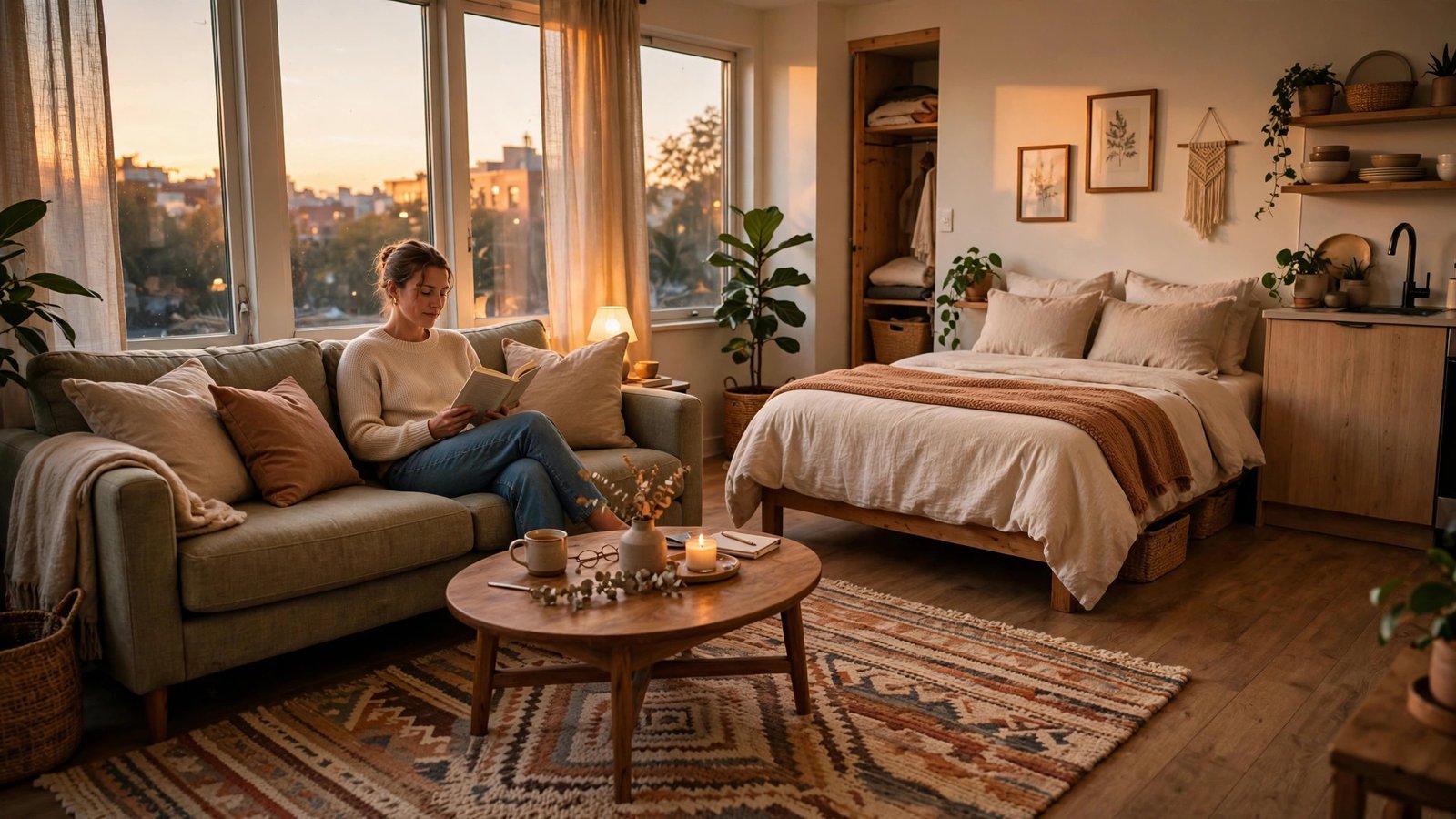
Choosing what size rug for studio apartment living comes down to zones, not guesswork: size the rug to the furniture it anchors, leave breathing room at the edges, and measure the taped outline before you pay. Start with the sitting or sleeping zone you use most, pick the largest standard size that fits that zone and your budget, and add smaller runners later if you need them. A well-sized first rug makes one room feel like several calm places. If this helped you measure before buying, save it or share it with another new studio renter.

Maren started MyFirstLease after a rough first lease taught him everything the internet didn’t. He covers the logistical side of renting — move-in checklists, utilities, and the unglamorous first-week stuff nobody explains — and oversees everything published on the site.