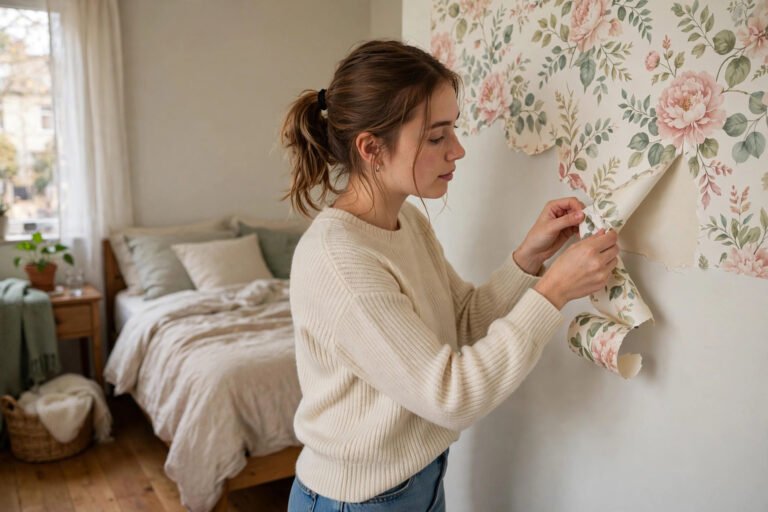
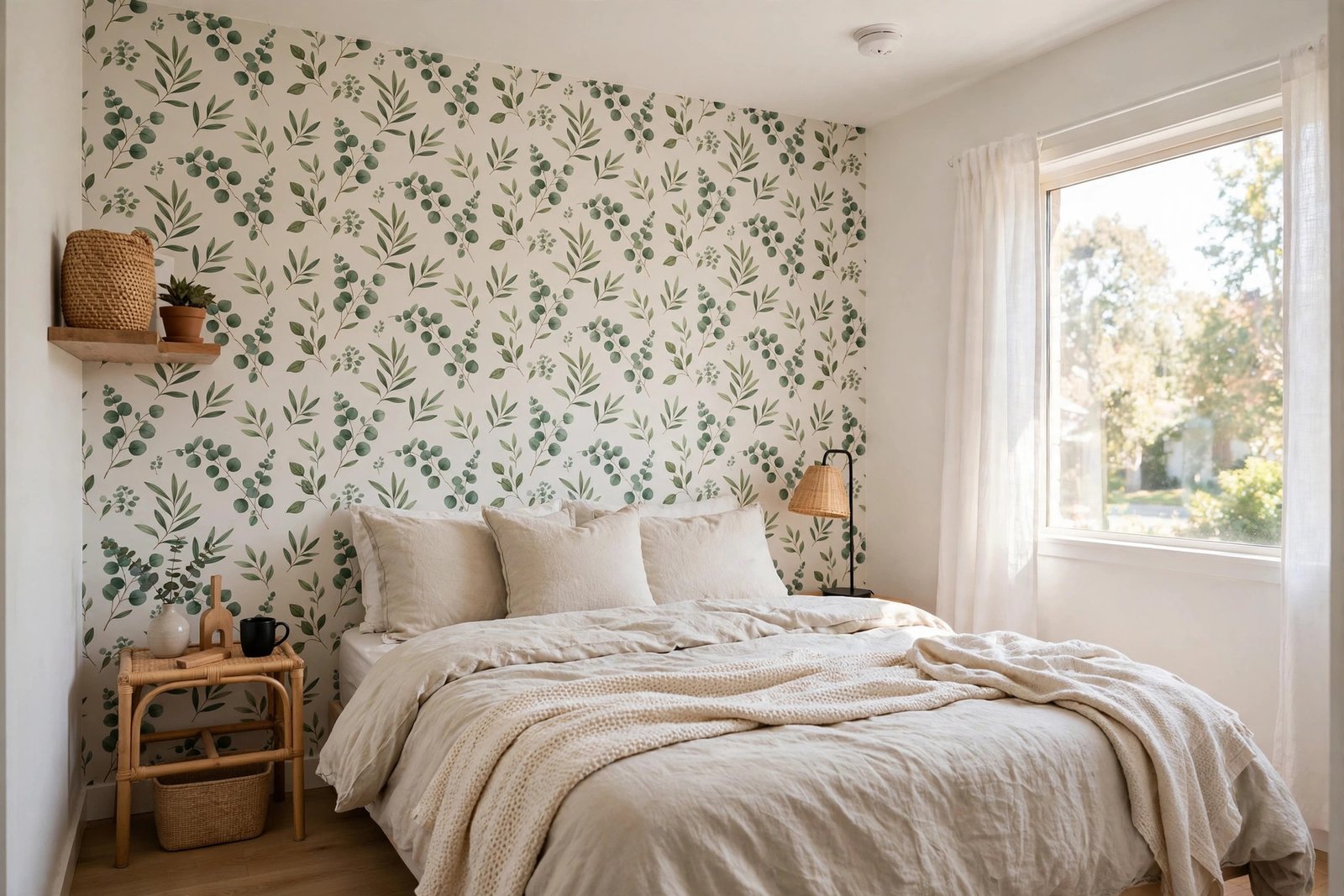
Looking for renter friendly wallpaper for apartments that adds personality to a blank beige box without threatening your security deposit? Peel-and-stick wallpaper — sometimes sold as temporary or removable wallpaper — is made for exactly this situation: you smooth it onto the wall, enjoy it for the length of your lease, and peel it back off when you move out, without the paste, steamer, or wall repair that traditional wallpaper demands.
This guide is written for budget-conscious first-time renters — grad students, young couples, anyone whose furniture budget went to the mattress and who needs their walls to do the decorating work. You’ll learn how temporary wallpaper actually works, how to check your lease before you buy, where to put it for the biggest impact on a small budget, how to judge quality without getting burned by cheap rolls, and how to install it cleanly the first time. Removal gets a brief overview at the end with a link to our full move-out guide.
Direct answer: Yes — peel-and-stick wallpaper works well in rental apartments when you confirm your lease allows it, pick a removable adhesive rated for painted drywall, install on a clean flat wall, and plan removal before move-out. It adds color and pattern for the length of your lease, then peels away without the paint damage regular wallpaper causes.
Summary
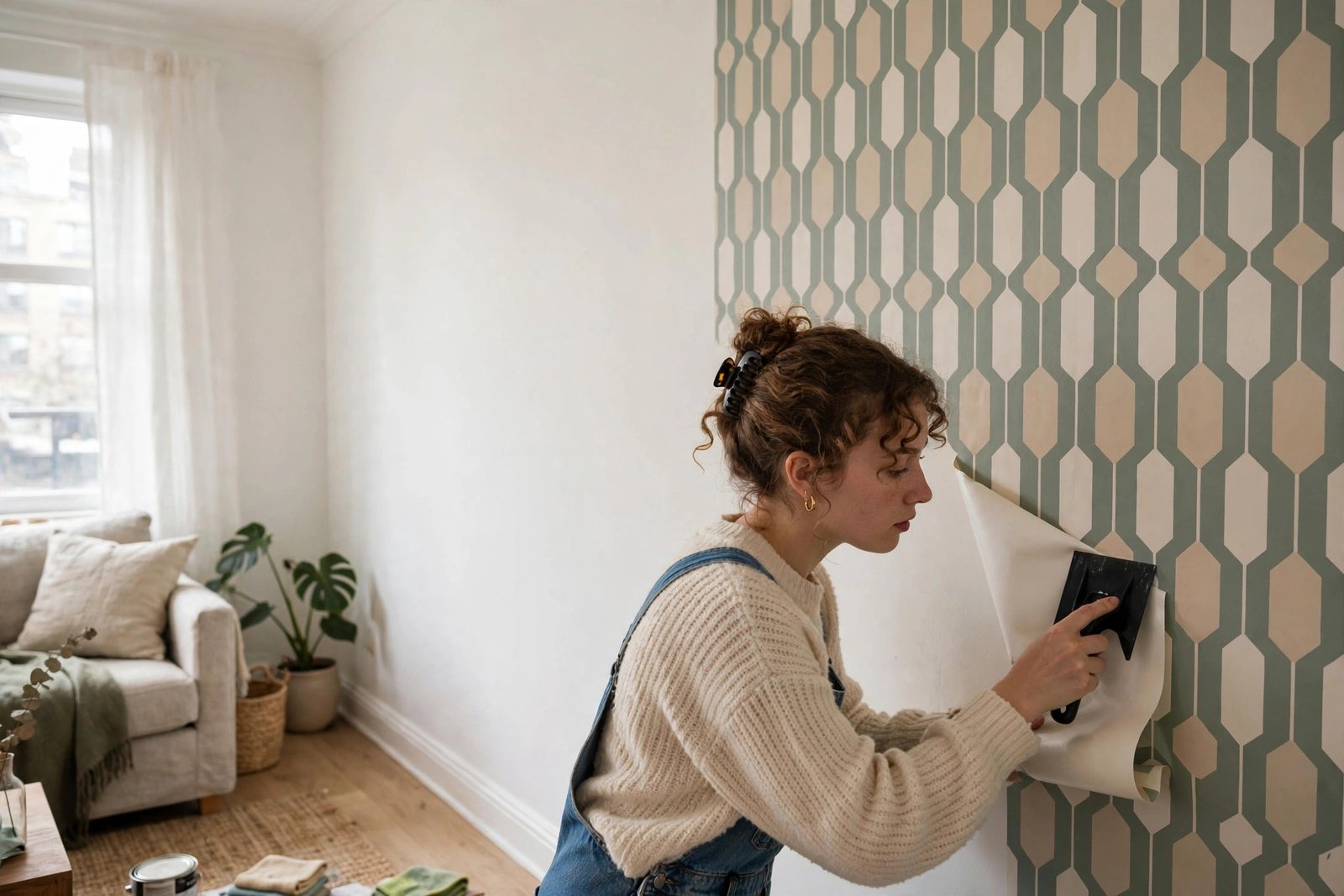
Peel-and-stick wallpaper is one of the few decorating moves that is genuinely reversible: no paste, no steam, no spackle. The key decisions for a first-time renter are getting landlord clearance in writing, choosing the right adhesive and finish for your wall surface, and limiting yourself to one or two accent areas so the cost stays manageable and the room doesn’t feel cramped.
This article walks through those decisions in order — what the material is, the permission checklist to run before buying, where placement pays off most in a rental, how to pick patterns for small or bland rooms, how to evaluate quality without trusting brand rankings, a clean installation walkthrough, and a brief look at removal with a link to the dedicated guide.
1. How Temporary Wallpaper Works
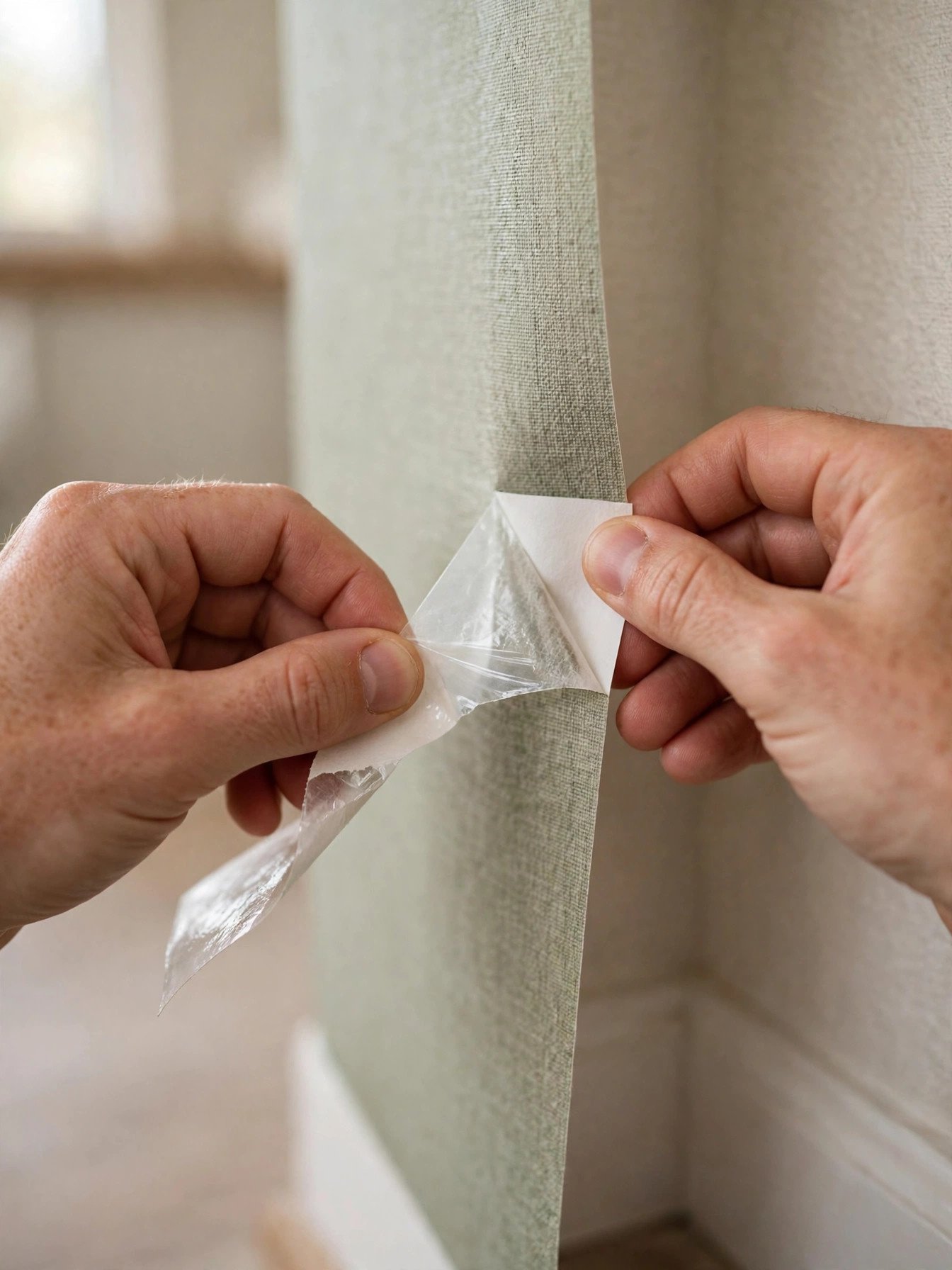
Peel-and-stick wallpaper is a self-adhesive wall covering: the back of each roll or panel has a low-tack adhesive, protected by a paper liner you peel away as you smooth the panel onto the wall. Nothing else holds it up — no paste, no water activation, no sizing. When it’s time to go, you pull a corner and peel the panel off in slow, even sheets.
Three material types dominate what you’ll find:
| Type | How it behaves | Best for |
|---|---|---|
| Vinyl (self-adhesive) | Thicker, often textured, forgiving to handle; many are washable | Bathrooms and kitchens, high-traffic areas |
| Fabric (woven or non-woven) | Matte finish, repositionable many times; heavier, so it needs good adhesion | Bedrooms, living rooms; the most forgiving for beginners |
| Paper-backed peel-and-stick | Thin, affordable, tears more easily during installation | Low-traffic accent areas on a tight budget |
As of 2026, expect to budget roughly $1–$4 per square foot, with fabric-backed options often landing at the higher end of that range. That makes a single accent wall (about 60–80 square feet) a genuinely small-project cost — often less than a single piece of furniture — which is why this is one of the most budget-friendly ways to change a room’s look without touching the lease’s alteration rules.
A note on language: “removable” describes how the product is supposed to behave on sound, properly painted drywall. It is not a guarantee — paint that is old, cheap, or already flaking can come up with any adhesive product. That’s why the permission checklist below exists.
2. Check Your Lease Before You Buy

Many standard leases say “no alterations” or “no modifications” without defining whether temporary wallpaper counts. Because deposit deductions are decided by your specific lease and landlord, sorting this out before you order rolls is the cheapest insurance you’ll ever buy. Run through this checklist first:
Landlord permission checklist
- Read the alteration clause in your lease. Look for words like “alter,” “modify,” “adhere,” or “affix” — wallpaper can fall under any of them even if it’s removable.
- Note your wall surface. Standard painted drywall is the best-case surface for removal. Fresh paint (less than 30 days old), flat/matte paint, textured walls, or unpainted drywall all raise the risk of paint or texture coming off.
- Ask in writing. Email your landlord or property manager: name the product type (“removable peel-and-stick wallpaper, no paste”), the room and wall you plan to cover, and confirm it’s acceptable. Save the reply.
- Test in a hidden spot. Before committing to a full wall, stick a small sample behind a door or inside a closet and remove it after 48 hours. If paint lifts, you’ll know before real money is on the wall.
- Photograph the walls first. Date-stamped photos of every wall you’re covering, plus close-ups of any existing scuffs, protect you at move-out if there’s a dispute about prior condition.
- Check for time limits. Some removable products bond more strongly the longer they stay up; ask the seller how long the “safe removal window” is and compare it with your lease length. Anything left past that window is harder to take down cleanly.
3. Where to Put It in a Rental
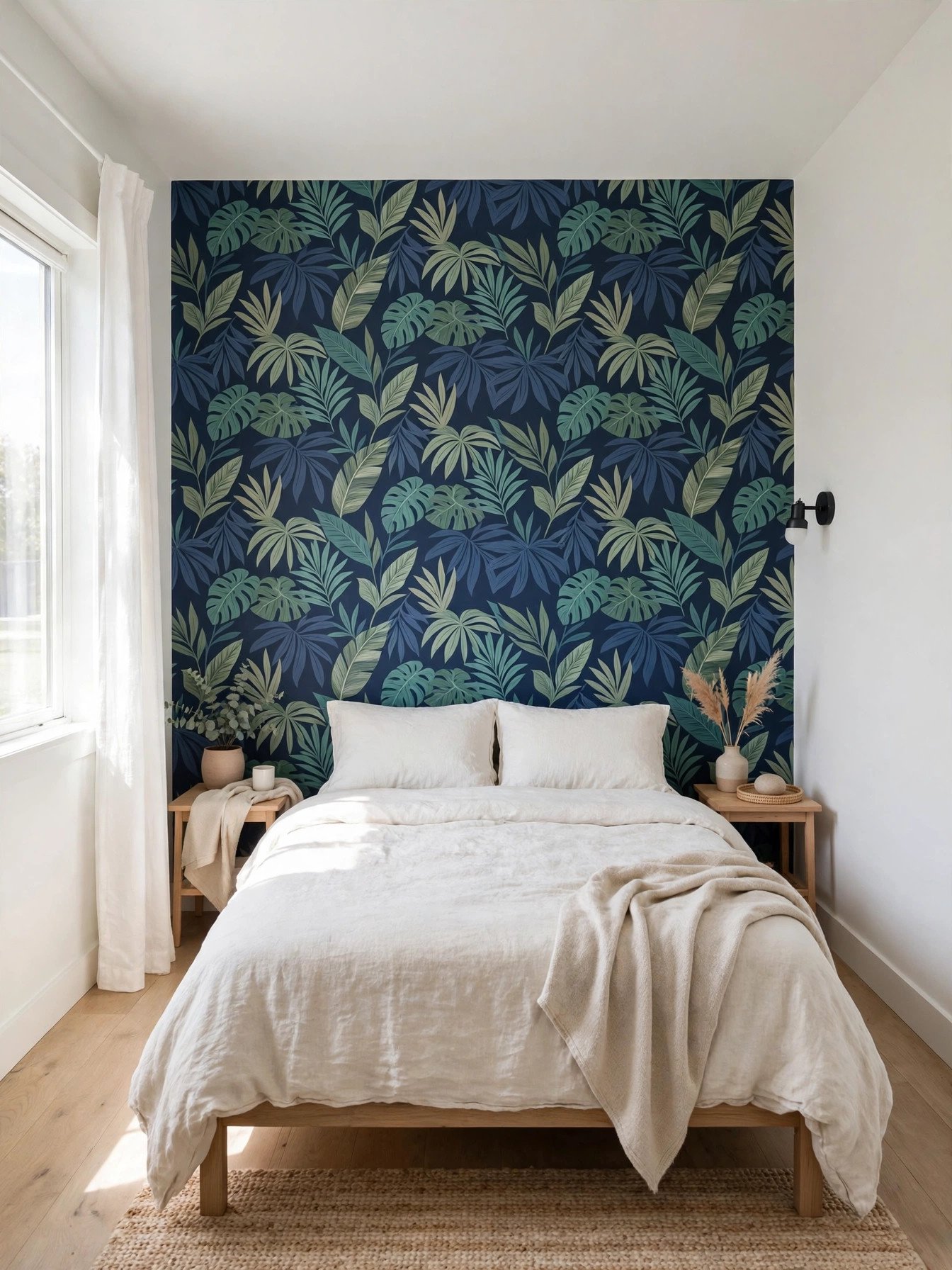
Placement is where small budgets win or lose. One accent wall usually delivers more visual payoff than papering a whole room, and it costs a fraction as much. Good candidates for a peel and stick wallpaper accent wall:
- Behind the bed. The wall your headboard sits against is the natural focal point; pattern here reads as “designed” even when the rest of the room is minimal.
- Behind the sofa or TV wall. A single patterned wall behind the largest furniture piece anchors the living room without overwhelming it.
- A small entryway or hallway. Short walls need fewer rolls, so they’re the cheapest way to test a bold pattern — and they’re the first thing guests see.
- Inside a rental kitchen’s open shelving zone or a breakfast nook. (Stick to areas that don’t get direct steam or splashes; even washable vinyl has limits.)
- A home-office or study corner. Grad students and remote workers spend hours facing one wall — a calm pattern there changes the feel of the whole workday.
Skip these spots: walls with heavy texture (adhesive can’t grip evenly), walls with radiators or direct heat, shower-adjacent bathroom walls, and anywhere your lease explicitly bans coverings. When in doubt, an accent wall you can see from the doorway gives you the most impact per dollar.
4. Picking a Pattern for Bland Rooms
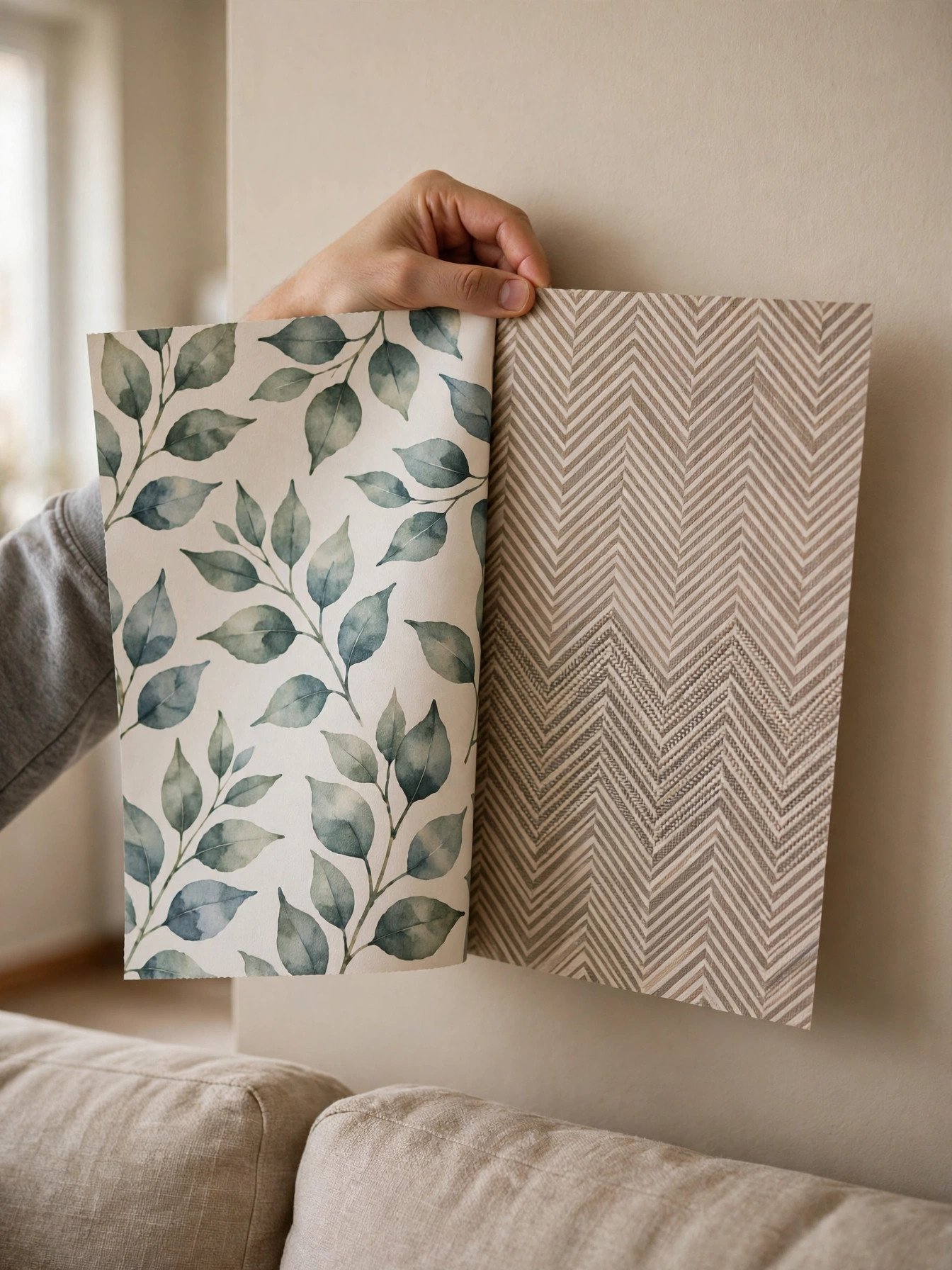
Blank rental apartments tend to be beige, white, or “landlord gray,” which means your pattern choice carries the whole personality of the room. A few principles that work well for budget-conscious first-timers:
Scale the pattern to the room. Large-scale patterns (big florals, wide geometrics) make a small bedroom feel designed rather than busy — they read as one statement instead of visual noise. Small, dense patterns can make a compact room feel smaller. If you’re covering one accent wall in a studio or small bedroom, medium-to-large motifs are usually the safer bet.
Match the undertone of the room. Rentals come with fixed finishes you can’t change — flooring, trim, countertops. Pull one existing undertone (the warmth of the wood floor, the cool gray of the counter) and choose a pattern that contains it. This is what makes a patterned wall look intentional instead of like a sticker collection.
Sample before you commit. Most sellers offer sample swatches for a few dollars. Tape two or three up on the wall and live with them for a few days — patterns look different in morning light versus lamplight, and different against your actual furniture than on a screen. This is the cheapest possible insurance against pattern regret, and it’s far cheaper than re-ordering.
Mind the repeat. Pattern repeat is the distance before the design starts over; a large repeat means more waste when you line up panels. For your first project, a small-to-medium repeat keeps the math easy and the leftover waste low — which matters when you’re buying on a budget.
5. What to Look for When Buying
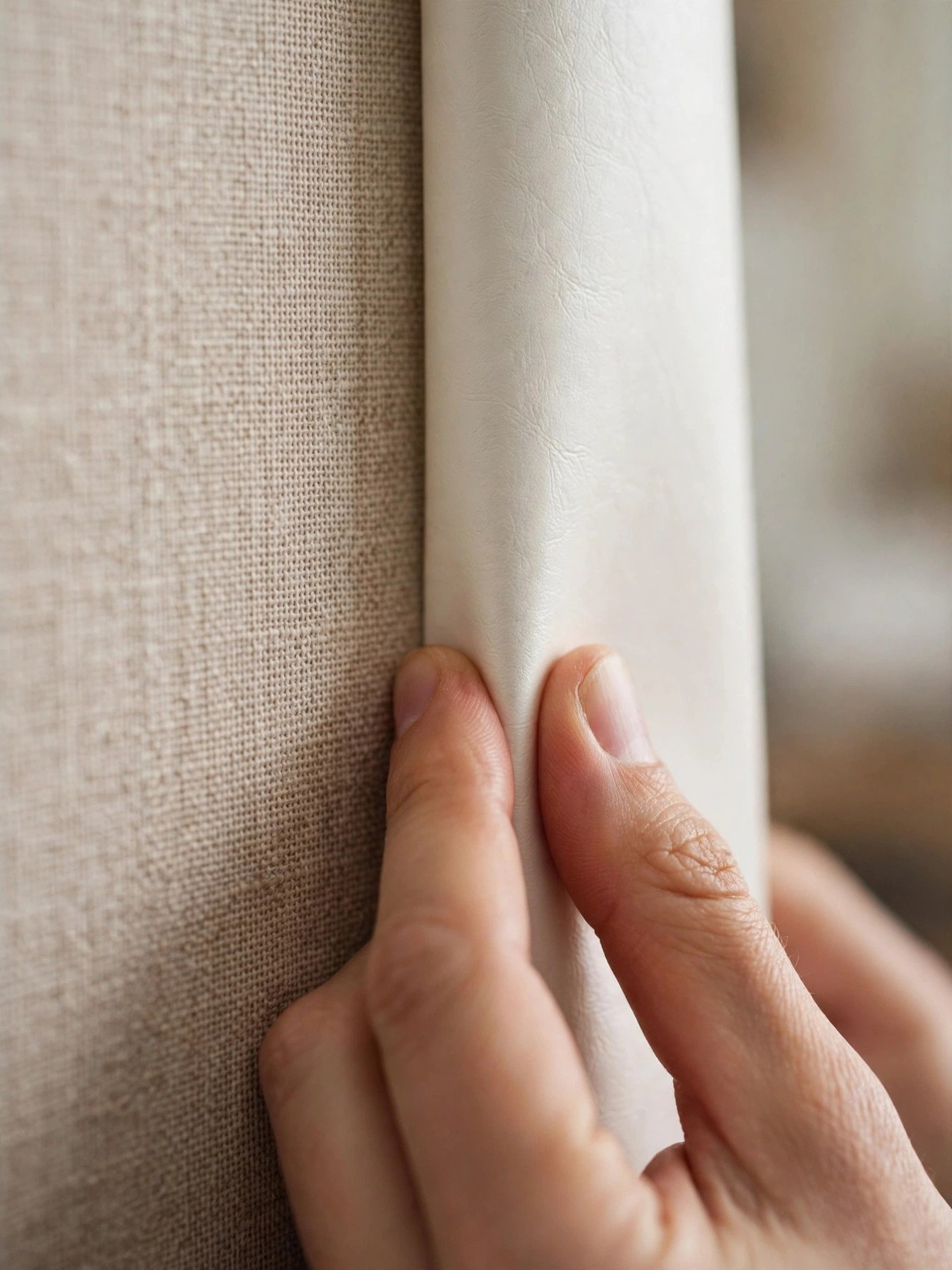
You don’t need a ranked list of brands to buy well. What matters is matching the product’s specs to your wall and your lease length. Evaluate any peel-and-stick wallpaper against these five points instead:
- Adhesive type. Look for language like “repositionable,” “removable,” or “low-tack.” Avoid products described as “permanent adhesive” or “extra-strong hold” — that’s the opposite of what a renter wants.
- Stated removal window. Reputable sellers state how long the product can stay up and still peel off cleanly (often 1–3 years). Compare that number against your lease term. If your lease is longer than the removal window, plan a mid-lease refresh or a different wall.
- Wall compatibility. The product page should say what surfaces it works on — painted drywall is the standard claim. If your walls are textured, freshly painted, or have flat/matte paint, confirm compatibility or choose a different product.
- Repositionability during install. Fabric-backed products generally allow multiple repositionings; thin vinyl and paper-backed products tolerate fewer. If this is your first time installing, forgiving repositionability is worth paying a bit more for.
- Panel sizing and waste. Check the roll or panel width and the pattern repeat, then measure your wall and calculate what you actually need — plus one extra panel for mistakes. Buying the exact right amount is where budget renters save the most.
One practical budget tip: cover one accent wall rather than a whole room, buy samples first, and only then order full rolls. A single-wall project that uses three to four rolls is far easier to remove at move-out than a room wrapped in ten.
6. Installing It Cleanly the First Time
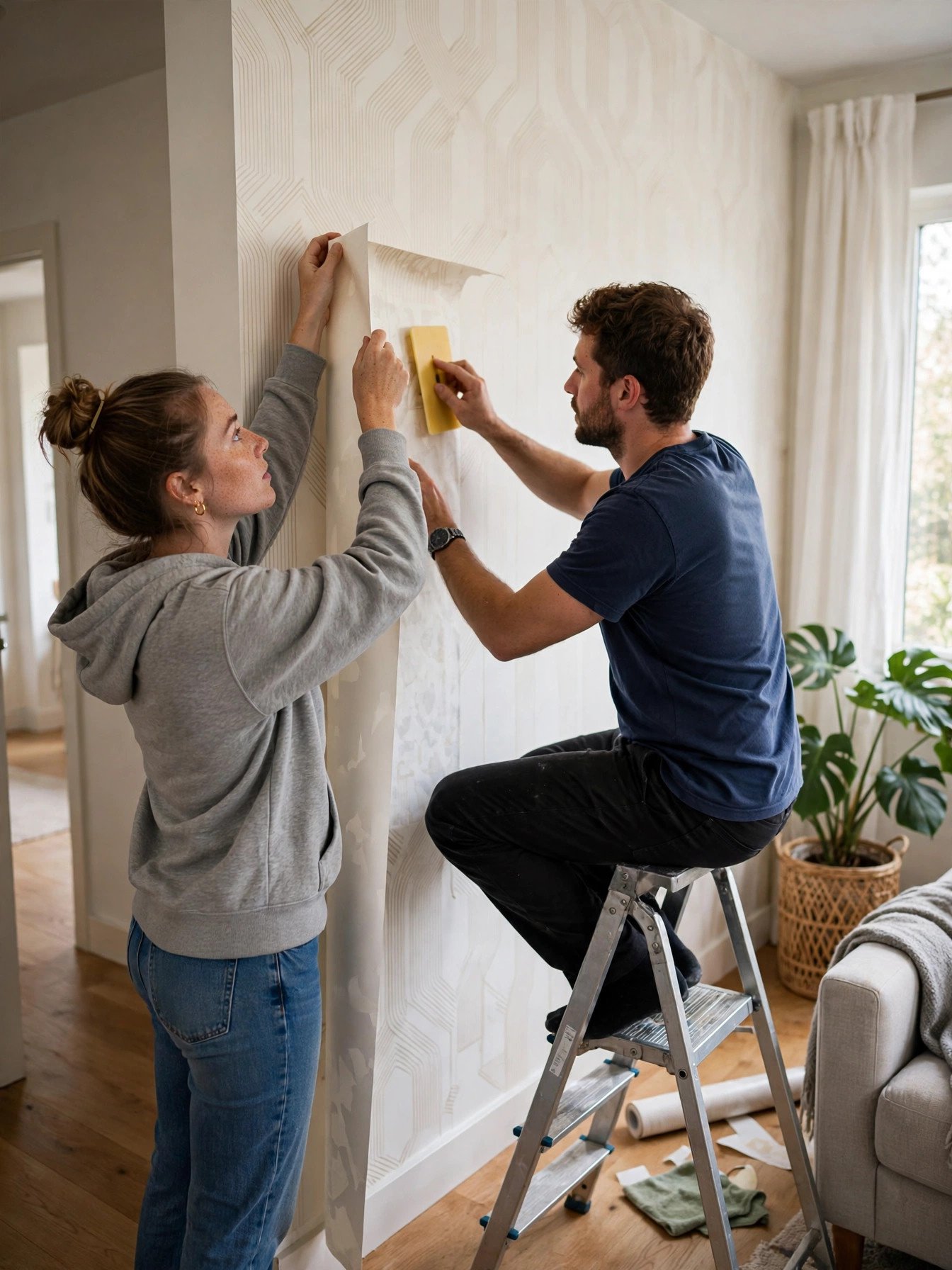
Installation is where most first-timers lose money — crooked panels, bubbles, and torn sheets are how a budget project turns into a second order. The process itself is straightforward:
- Prep the wall. Wipe it down with a damp cloth and let it dry completely. Dust and grime are the main reason panels peel prematurely. Fill nail holes if you want a smooth result, but spackle must be fully dry and painted over — raw spackle can bond too well.
- Find your plumb line. Use a level (or a free phone level app) to draw a light pencil line where your first panel’s edge will go. Walls and doorframes are rarely perfectly straight; starting from a true vertical line keeps the whole wall from drifting.
- Cut panels long. Cut each panel a few inches longer than the wall height. The excess gets trimmed at the ceiling and baseboard with a sharp utility knife — cutting exact-length panels is how you end up short.
- Peel and smooth top-down. Peel back the top few inches of liner, stick the top edge along your plumb line, then peel the liner down gradually while smoothing with a plastic smoother or a clean credit card, working from the center outward. Never peel the whole liner off at once.
- Overlap or butt seams per the instructions. Some patterns butt edge-to-edge; some need a slight overlap. Follow the product’s guidance — mismatched seams are the most visible beginner mistake.
- Trim carefully. A sharp blade and a straightedge at the ceiling and baseboard give you clean lines. Change the blade often; a dull blade tears thin material.
- Step back often. Check from across the room every couple of panels. Small misalignments compound, and catching them early is why repositionable products earn their keep.
Two people make the job dramatically easier — one holds the panel, one smooths. Plan for an afternoon, not an hour, for your first wall.
7. Taking It Down Without Drama
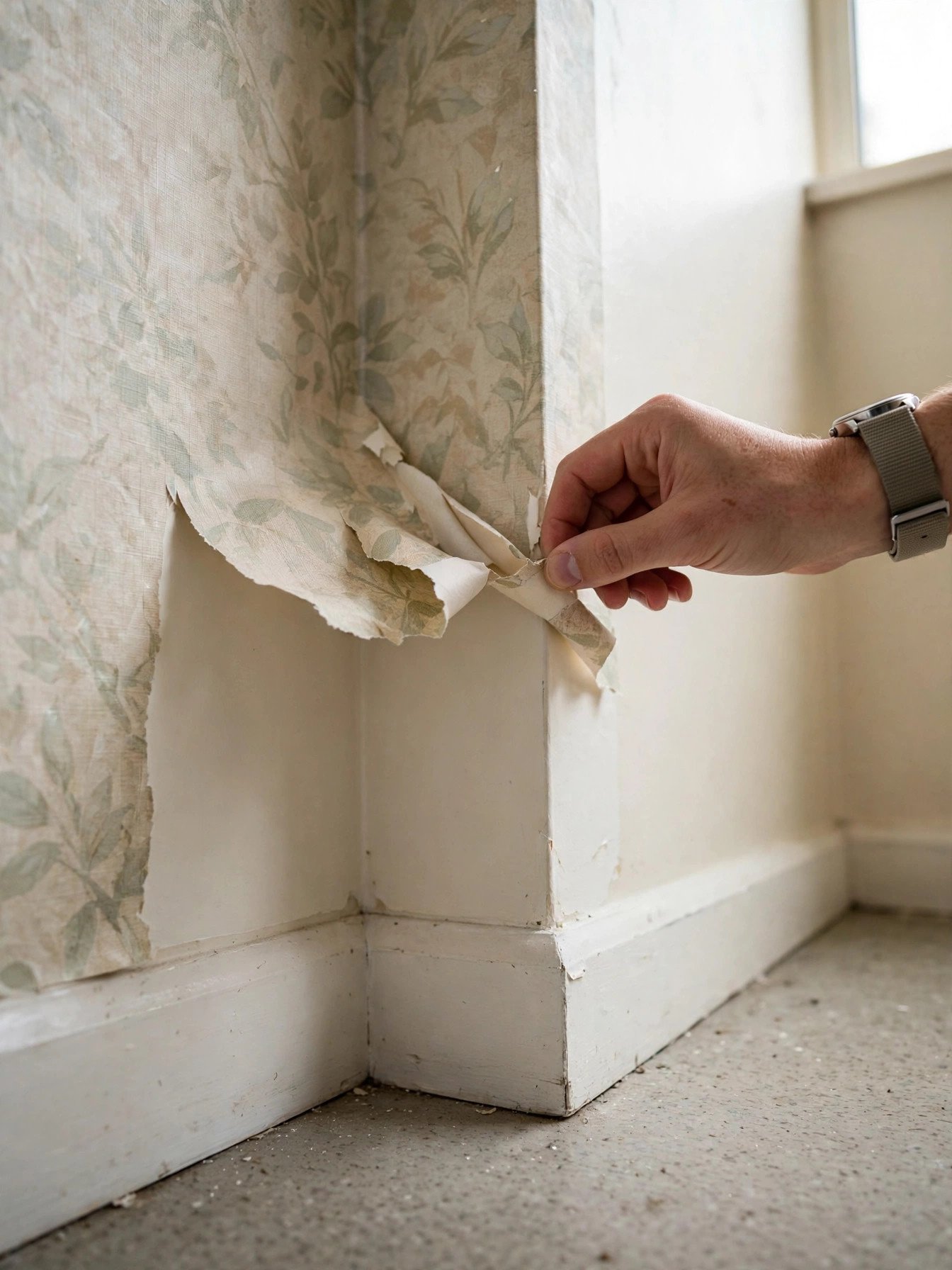
Removal deserves its own treatment because move-out timing, heat techniques, and adhesive residue are where deposits actually get lost. The short version: start at a bottom corner, peel slowly back at a low angle (close to the wall, not straight out), work in sections, and clean any light residue with a damp cloth rather than scraping.
If a panel resists, low heat from a hairdryer softens most removable adhesives — but test on one corner first and never force a panel that’s taking paint with it. For the complete process — what to do when adhesive stays behind, how to handle paint touch-ups, and the move-out photo documentation that protects your deposit — see our dedicated guide: How to Remove Peel-and-Stick Wallpaper Without Losing Your Deposit.
Frequently Asked Questions
Is peel-and-stick wallpaper really removable?
On sound, properly painted drywall — yes, that’s what the product is designed for. The adhesive is low-tack and the panels are meant to peel off in sheets. Risk rises on fresh paint (under 30 days), flat/matte finishes, textured walls, or paint that’s already flaking. Always test a sample in a hidden spot first.
Do I need my landlord’s permission to put up temporary wallpaper?
Usually, yes — or at least it’s wise to ask. Many leases ban “alterations” without defining the term, and removable wallpaper can count. A short email describing the product and the wall, with a saved written reply, is the simplest way to protect your deposit.
Will peel-and-stick wallpaper damage rental paint?
It shouldn’t on healthy painted drywall, but no adhesive product is zero-risk. Old or cheap paint, unprimed drywall, and long installation times past the product’s stated removal window are the main causes of paint coming up. Stay within the removal window and test first.
How much wallpaper do I need for one accent wall?
Measure the wall’s width and height in feet, multiply for square footage, and divide by the coverage per roll or panel listed by the seller. Then add one extra panel for pattern matching and mistakes. A typical single bedroom accent wall runs about 60–80 square feet.
Can I use peel-and-stick wallpaper in a bathroom or kitchen?
In low-moisture zones, yes — choose a washable vinyl type rated for humidity, and avoid walls that get direct steam or splashes. Full shower surrounds and the wall directly behind a stovetop are not suitable spots for any peel-and-stick product.
What if my rental walls are textured?
Light orange-peel texture can work with thicker fabric-backed products, but heavy texture prevents the adhesive from gripping evenly and usually leads to peeling edges. If your walls are heavily textured, wallpaper is a poor choice — consider other renter-friendly decor instead.
Can I reuse peel-and-stick wallpaper in my next apartment?
Sometimes. Fabric-backed products reposition and re-stick the best; thin vinyl and paper-backed types often lose adhesion or tear during removal. If you plan to reuse, peel carefully at move-out, stick panels adhesive-to-adhesive on their liner paper, and store them flat.
Conclusion
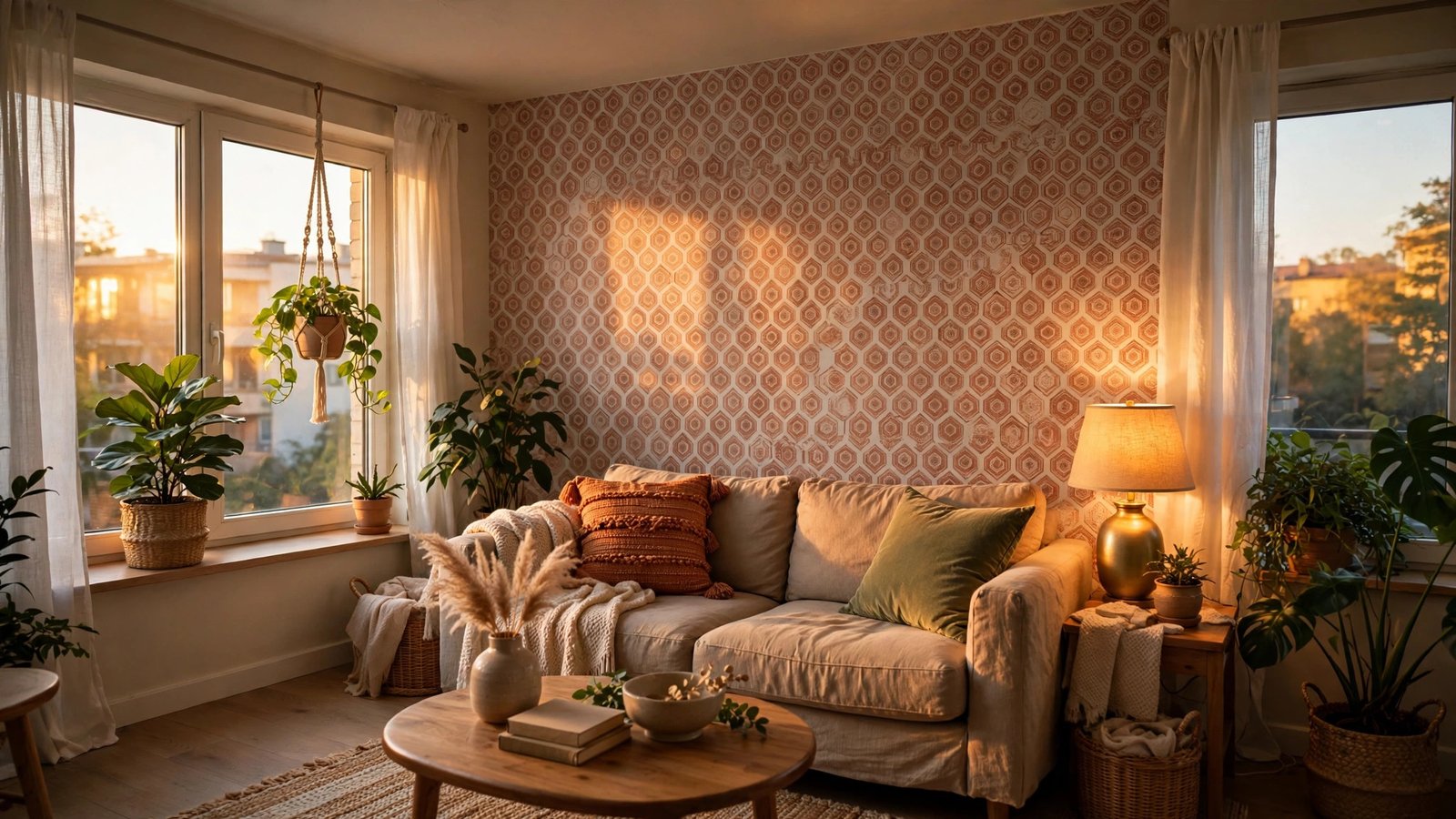
Renter friendly wallpaper for apartments earns its reputation honestly: it’s one of the few decorating changes that is genuinely reversible when you buy the right product, check your lease first, and install it with care. For a first-time renter on a budget, one accent wall — behind the bed, the sofa, or in the entryway — delivers the most personality per dollar, and a written OK from your landlord plus a hidden-spot test keeps the deposit safe. When the lease ends, plan your removal using our full move-out guide. If this helped you picture your walls differently, save it for move-in weekend — and send it to the friend still staring at beige.

Maren started MyFirstLease after a rough first lease taught him everything the internet didn’t. He covers the logistical side of renting — move-in checklists, utilities, and the unglamorous first-week stuff nobody explains — and oversees everything published on the site.