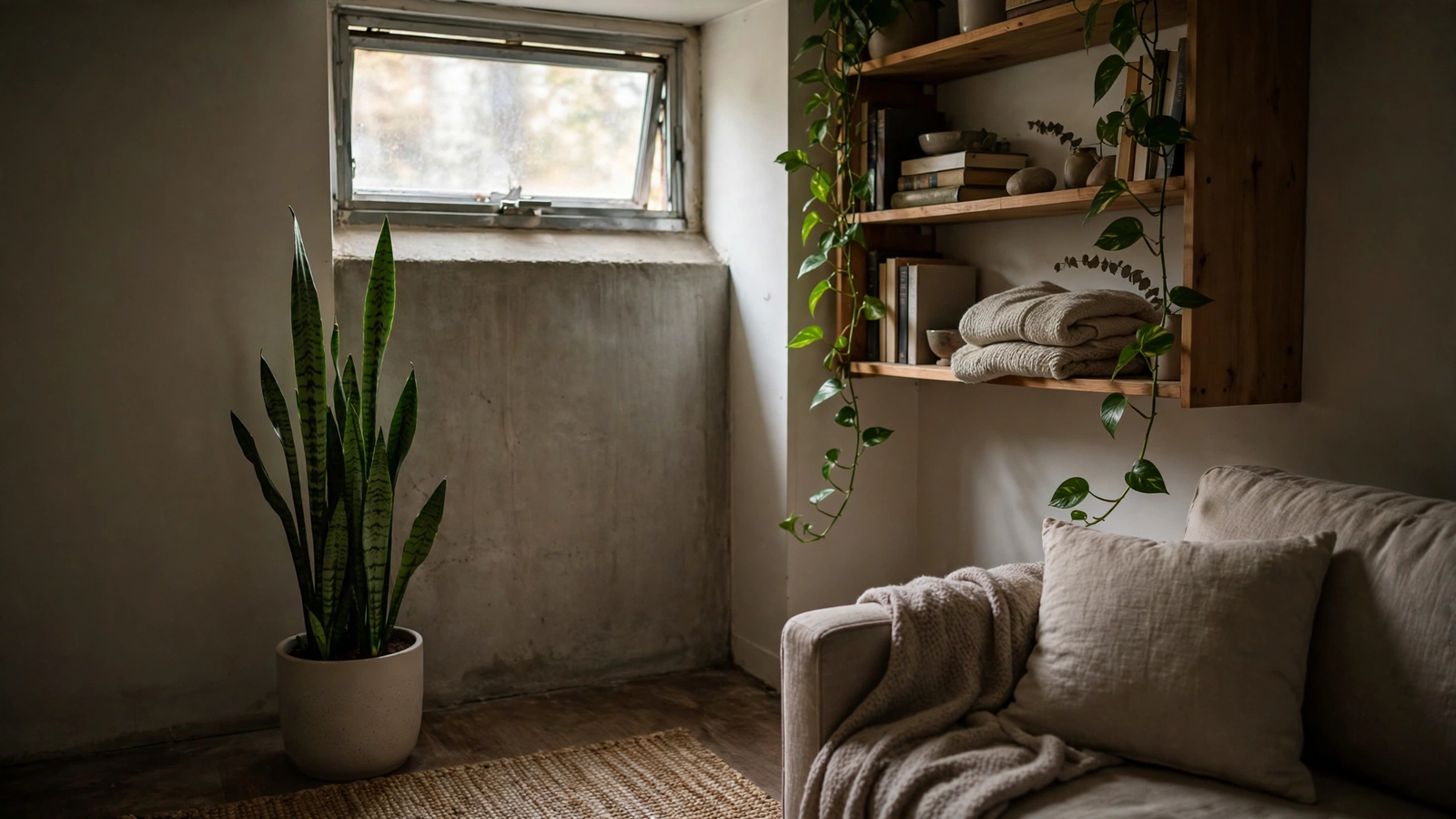
If you’re looking for the best indoor plants for apartments with no sunlight, your first place probably has windows that don’t do much — a basement unit, a ground-floor apartment facing a parking lot, or a north-facing room that never catches direct sun. You want greenery, but not a shelf of dead plants and wasted money a month from now.
This guide is written for first-time renters in exactly that situation: nine genuinely shade-tolerant houseplants, each with an honest difficulty rating, a pet-safety note, and where renters usually find it cheapest. A tight first-apartment budget leaves no room for trial-and-error plant shopping, so every pick below is chosen to survive your actual light conditions — not a greenhouse.
Quick answer: Nine houseplants handle dark apartments well: snake plant, ZZ plant, pothos, heartleaf philodendron, cast iron plant, Chinese evergreen, peace lily, spider plant, and dracaena. They survive on ambient room light with no direct sun and need watering every one to three weeks. Several are listed as non-toxic to pets — confirm each one on the ASPCA’s plant database before buying.
Summary

Below you’ll find nine plants that survive rooms with no direct sunlight — genuinely shade-tolerant picks, not “bright indirect light” plants wearing a low-light costume. Each entry rates difficulty for total beginners, gives a watering rhythm, flags pet safety with honest hedging, and names the cheapest places renters usually find it.
You’ll also get one correction the thin listicles skip: “no sunlight” doesn’t mean zero light. These plants still need ambient room light (or a fluorescent bulb’s worth of brightness) to photosynthesize. A dim living room works; a sealed, windowless closet will defeat even a snake plant. A quick-comparison table after the plant list doubles as a screenshot-friendly shopping cheat sheet.
1. Snake Plant

Difficulty: Very easy — the classic first houseplant for a reason.
The toughest plant on this list. Snake plants tolerate the dimmest corners — windowless bathrooms, interior hallways lit only by ceiling fixtures — and grow slowly enough that they won’t outgrow a small apartment.
Water every 2–3 weeks, only when the soil is completely dry. In low light, soil stays damp much longer, so overwatering — not darkness — is what kills most snake plants. Use a pot with a drainage hole and empty the saucer after watering.
Pet note: Listed as toxic to cats and dogs on the ASPCA’s plant database — confirm there before buying, and keep it on a high shelf if you share the apartment with pets.
Where renters find it cheap: Small starter pots turn up regularly at big-box garden centers, grocery stores, and IKEA’s plant section. A single plant lasts for years and produces offshoots (“pups”) you can separate into free extra plants.
2. ZZ Plant

Difficulty: Very easy — thrives on neglect.
Glossy, upright leaves that look far more expensive than they are — nice when your decorating budget is near zero. The ZZ plant stores water in thick underground rhizomes, so it shrugs off both low light and forgotten waterings. Water every 2–3 weeks, letting the soil dry fully between drinks. It’s a slow grower, so repotting is a rare event.
Pet note: Listed as toxic to cats and dogs on the ASPCA’s plant database — confirm there before buying.
Where renters find it cheap: Big-box garden centers frequently sell small, affordable starter plants; it looks like a designer pick for a fraction of the cost.
3. Pothos & Heartleaf Philodendron

Difficulty: Easy — the trailing-vine workhorses.
Pothos and heartleaf philodendron are near-twins in care: trailing vines with heart-shaped leaves that look great cascading from a bookshelf or hanging in a dark entryway. Water when the top inch of soil feels dry. In very low light, pothos leaves may turn solid green (the plant makes extra chlorophyll to catch what light exists) — that’s normal, not a problem.
The budget superpower here is propagation: snip a stem below a leaf node, drop it in water, and it roots. One plant becomes many — free greenery for other rooms or roommates. Trailing vines are also a classic way to soften a bare entryway; see our small apartment entryway ideas for renters for more no-drill ways to warm up that space.
Pet note: Both are listed as toxic to cats and dogs on the ASPCA’s plant database — confirm there before buying. Trailing vines tempt batting paws, so hang them high.
Where renters find it cheap: Among the cheapest houseplants sold anywhere; free cuttings from friends or neighborhood plant swaps bring the cost to zero.
4. Cast Iron Plant

Difficulty: Very easy — the deep-shade specialist.
True to its name. The cast iron plant tolerates dark hallways, drafty spots near old windows, and temperature swings that stress fussier plants, with wide, dark-green leaves that look intentional rather than scraggly. Slow grower; water every 1–2 weeks and otherwise leave it alone.
Pet note: Generally listed as non-toxic — but confirm on the ASPCA’s plant database before buying, since listings change.
Where renters find it cheap: Harder to find than the others; check local nurseries and the shade-plant section of garden centers rather than grocery stores.
5. Chinese Evergreen

Difficulty: Easy — color for rooms that have none.
Patterned, sometimes silvery or reddish leaves that visually brighten a dark room — useful when the room itself can’t. Slow-growing and forgiving of inconsistent care; water every 1–2 weeks. It appreciates humidity, making it a solid bathroom pick.
Pet note: Listed as toxic to cats and dogs on the ASPCA’s plant database — confirm there before buying.
Where renters find it cheap: Big-box garden centers stock small pots regularly; the patterned varieties look like premium plants at starter-plant prices.
6. Peace Lily

Difficulty: Moderate — the only bloomer on this list.
One of the few houseplants that flowers in low light, producing white blooms even away from windows. It also communicates: the leaves droop dramatically when thirsty — a visible cue beginners appreciate — then perk up after watering. Water when the top inch of soil feels dry.
Pet note: Listed as toxic to cats and dogs on the ASPCA’s plant database — confirm there before buying. Drooping foliage can tempt curious pets, so place it thoughtfully.
Where renters find it cheap: Grocery-store floral sections often carry small peace lilies alongside the cut flowers.
7. Spider Plant
Difficulty: Easy — the free-plant machine.
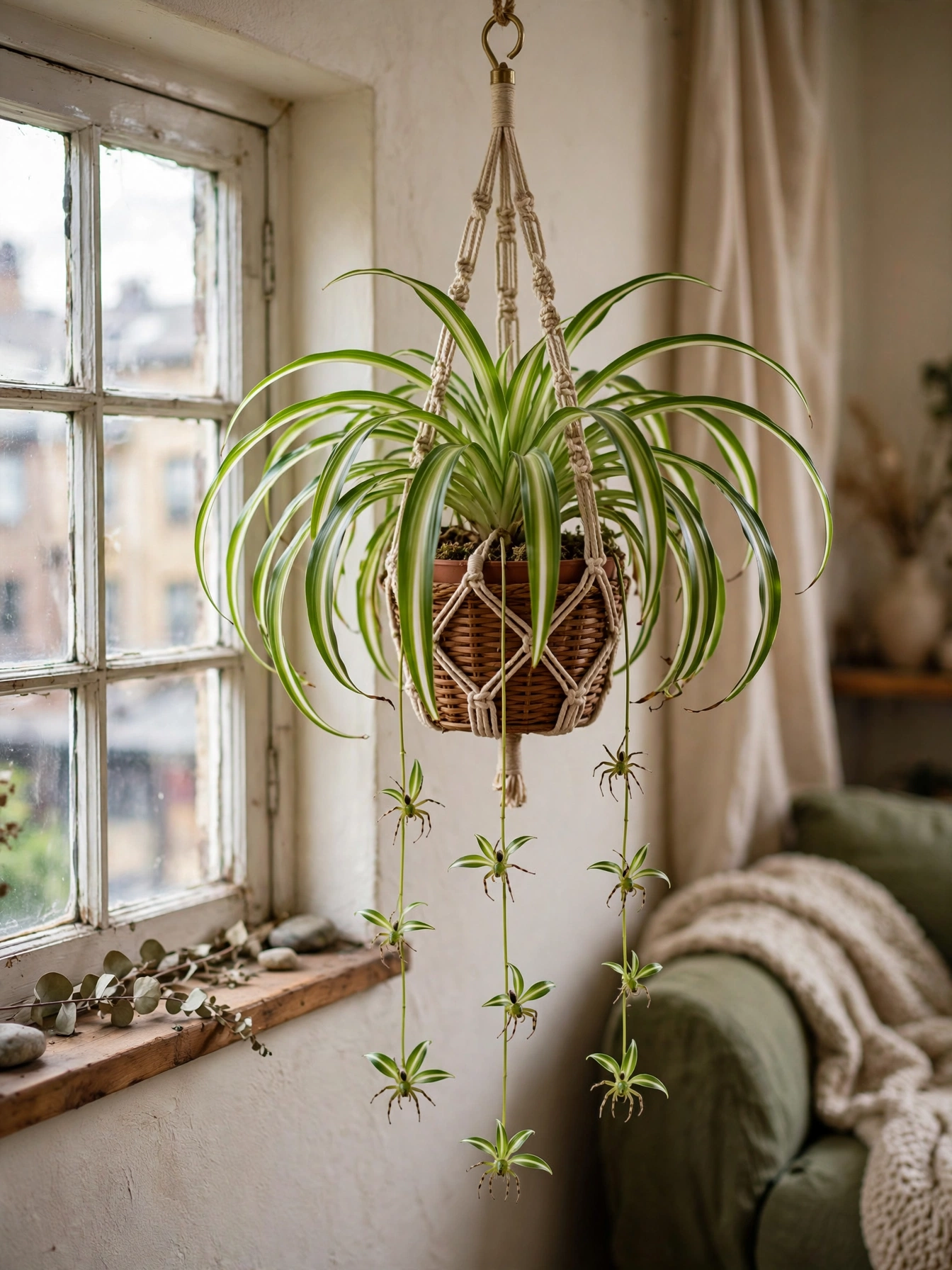
A fast grower that produces dangling baby “spiderettes” you can snip and pot — free plants indefinitely, which is hard to beat on a first-apartment budget. Honest caveat: it wants more light than everything else on this list, so give it your brightest spot, nearest the window. In deep shade it survives but grows pale and leggy.
Pet note: Generally listed as non-toxic — confirm on the ASPCA’s plant database before buying. Note that cats famously love chewing the leaves, so expect some nibbling.
Where renters find it cheap: Among the cheapest plants sold; frequently given away by other plant owners who have more babies than pots.
8. Dracaena

Difficulty: Easy — height for dark corners.
Tree-like and upright — the pick for adding height to a dark corner where a small pot would disappear. Slow grower; water every 1–2 weeks. Some growers report brown leaf tips with heavily fluoridated tap water; letting water sit out overnight is a commonly suggested workaround.
Pet note: Listed as toxic to cats and dogs on the ASPCA’s plant database — confirm there before buying.
Where renters find it cheap: Big-box garden centers; often sold as small cane cuttings that look fuller within a season or two.
[EDITOR’S PICK — which plant would you personally recommend for a dark first apartment, and why? Leave blank if you don’t have a genuine opinion here. Editor: fill in or delete before publishing.]
Quick-comparison table (screenshot this for plant shopping)
| Plant | Difficulty | Watering | Pet note* | Renter perk |
|---|---|---|---|---|
| Snake plant | Very easy | Every 2–3 weeks | Listed toxic — confirm ASPCA | Nearly indestructible |
| ZZ plant | Very easy | Every 2–3 weeks | Listed toxic — confirm ASPCA | Looks expensive, costs little |
| Pothos & philodendron | Easy | Top inch dry | Listed toxic — confirm ASPCA | Free plants from cuttings |
| Cast iron plant | Very easy | Every 1–2 weeks | Listed non-toxic — confirm ASPCA | Deep-shade specialist |
| Chinese evergreen | Easy | Every 1–2 weeks | Listed toxic — confirm ASPCA | Colorful leaves brighten rooms |
| Peace lily | Moderate | Top inch dry | Listed toxic — confirm ASPCA | Blooms in low light |
| Spider plant | Easy | Top inch dry | Listed non-toxic — confirm ASPCA | Free baby plants |
| Dracaena | Easy | Every 1–2 weeks | Listed toxic — confirm ASPCA | Height for dark corners |
*Pet-safety listings change — always confirm on the ASPCA’s plant database before buying.
Frequently Asked Questions
Can a plant really survive with no sunlight at all?
Not literally zero light — “no sunlight” in plant terms means no direct sun. These nine tolerate very low light, but they still photosynthesize, so they need ambient room light or fluorescent-level brightness. A dim living room works; a sealed, windowless closet doesn’t. For a truly windowless room, a basic full-spectrum bulb on a timer closes the gap.
What’s the easiest low-light plant if I’ve killed every plant I’ve owned?
Start with a snake plant or ZZ plant. Both tolerate dim corners and survive weeks without water, so the two most common beginner mistakes — too little light and forgotten watering — won’t kill them. Overwatering is the real risk: when in doubt, wait another week.
Which low-light plants are safe around cats and dogs?
Of the nine here, the cast iron plant and spider plant are generally listed as non-toxic — but listings change, so confirm each plant on the ASPCA’s plant database before buying. The other seven are listed as toxic to cats and dogs. No list can guarantee pet safety; when in doubt, hang plants out of reach or skip them.
Do I need a grow light for a dark apartment?
Not for these nine, as long as the room gets some ambient daylight or standard room lighting for most of the day. If your only “window” is a basement hopper near the ceiling, a basic full-spectrum bulb in a desk lamp on a timer is a cheap fix — no specialty setup required.
How do I avoid overwatering in low light?
Soil dries much slower without sun, so cut your watering instinct in half. Stick a finger an inch into the soil — water only if it feels dry. Always use pots with drainage holes, empty saucers after watering, and water less often in winter when growth slows.
Where’s the cheapest place to buy houseplants as a renter?
Big-box garden centers, grocery-store floral sections, and IKEA’s plant section for starter pots; local nursery clearance racks for discounts; and free cuttings from friends or neighborhood plant swaps for pothos and spider plants. Propagating one pothos can furnish a whole apartment for nothing — pair that strategy with our guide to decorating your apartment on a budget.
Will these survive a basement apartment with one small window?
Yes — that’s exactly the scenario this list is built for. Put the plants as close to the light source as your layout allows, rotate pots every couple of weeks so all sides get exposure, and favor the toughest picks (snake plant, ZZ, cast iron) for the darkest corners.
Conclusion

The best indoor plants for apartments with no sunlight aren’t exotic or expensive — they’re the forgiving, slow-growing workhorses above. Pick one or two to start, confirm pet safety on the ASPCA’s database if you have animals, and buy small: a starter pot in a dim corner beats an expensive plant in the wrong light every time. If this saved you from a dead-plant money pit, save it for your next plant run or share it with a fellow dark-apartment dweller. For more renter-friendly decorating ideas, browse our Decorating & Small Space Living section.

Maren started MyFirstLease after a rough first lease taught him everything the internet didn’t. He covers the logistical side of renting — move-in checklists, utilities, and the unglamorous first-week stuff nobody explains — and oversees everything published on the site.