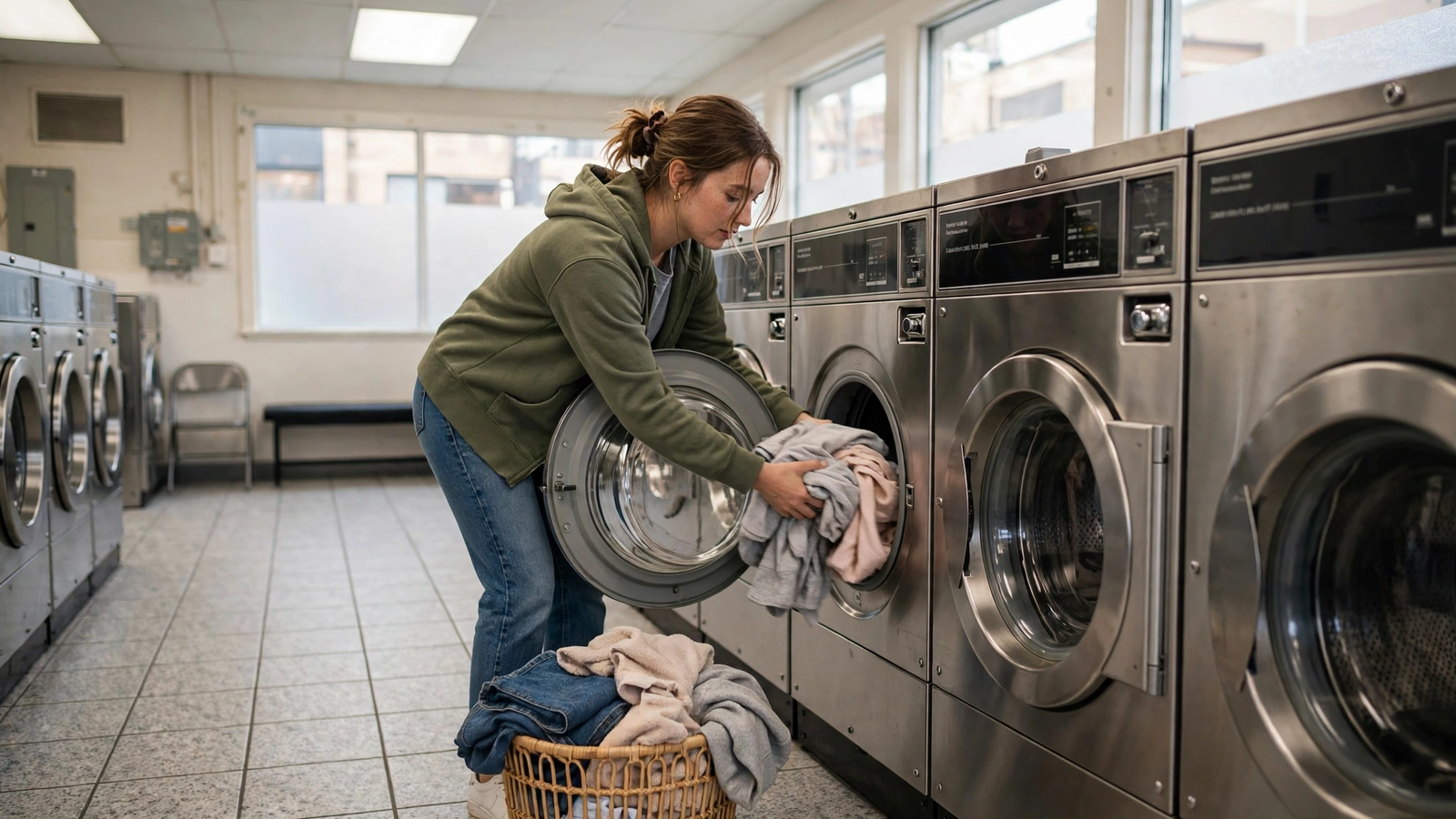
Moving into your first apartment is exciting — until you realize these first apartment laundry tips for renters with no washer/dryer in the unit were never part of the plan. Older buildings often skip in-unit laundry entirely, and when you’re already stretched thin on rent, a surprise weekly laundry bill can sting.
This guide is written specifically for first-time renters on a tight budget. It does the real cost math on every option — the laundromat, wash-and-fold services, portable washers, and hand washing — so you can pick the cheapest method that actually fits your life, plus the drying tricks that keep a small apartment from smelling like a damp basement.
Direct answer: With no washer or dryer in your apartment, the cheapest option is usually a DIY laundromat trip ($3–$7 per load) once or twice a week, combined with hand washing delicates and air-drying on a folding rack. A portable washer can break even within a year if your lease allows one; wash-and-fold services cost the most but save hours. Drying indoors works fine if you ventilate the room and space clothes out on a rack.
Summary
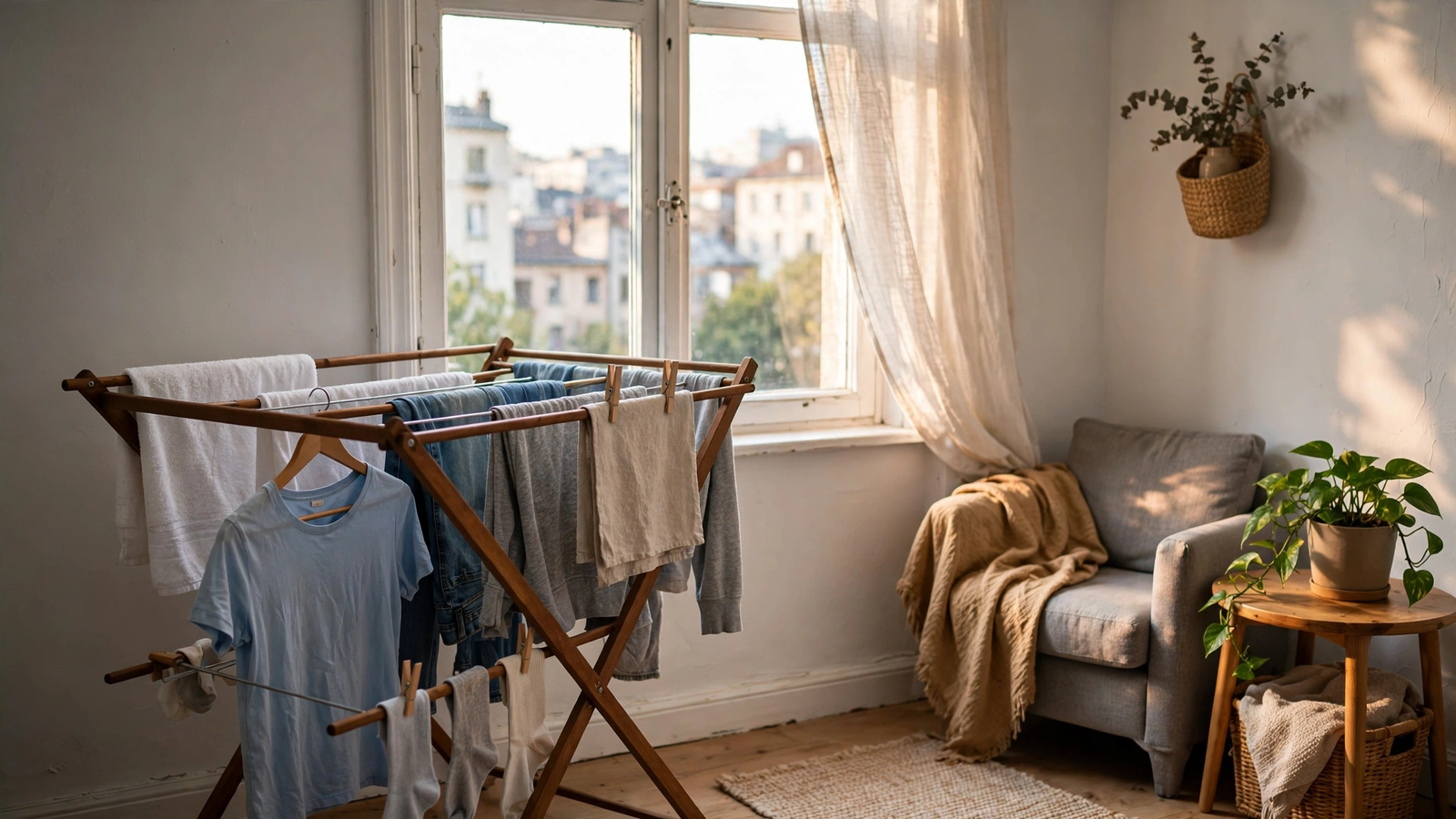
Doing laundry without machines in your apartment comes down to four choices, and the right one depends on your budget, your schedule, and what your lease allows. This guide starts with the numbers: a side-by-side cost comparison of the laundromat, wash-and-fold, a portable washer, and hand washing, including a worksheet you can fill in with your local prices.
From there it covers the practical side — running a laundromat trip like a pro, when wash-and-fold is worth the premium, how to check whether a portable washer violates your lease, a simple hand-washing method that doesn’t flood your bathroom, and how to dry clothes indoors without the musty smell. It wraps up with a compact gear list that fits in a closet and honest tips for stretching the time between wash days.
1. Start With the Cost Math

The biggest mistake first-time renters make is picking a laundry method by vibes instead of numbers. A laundromat “feels” cheap until you run the monthly total; a portable washer “feels” expensive until you divide by its lifespan. Sit down with these four options and your actual local prices before you commit.
Typical weekly cost, one person, two loads:
| Option | Per-load cost | Weekly (2 loads) | Monthly |
|---|---|---|---|
| DIY laundromat | $3–$7 wash + dry | $6–$14 | $24–$56 |
| Wash-and-fold drop-off | ~$1.50–$3.00 per lb, ~15 lb/week | $22–$45 | $90–$180 |
| Portable washer + rack | ~$0.50–$1 in water/detergent per load | $1–$2 | $4–$8 (+ $150–$350 upfront) |
| Hand washing | detergent + water only | ~$1 | ~$4 |
The takeaway for a tight budget: hand washing costs almost nothing but eats hours; the laundromat is the realistic middle ground; a portable washer is the cheapest per load by far once you clear the upfront cost. Wash-and-fold is a time saver, not a money saver — use it strategically (see section 4), not by default.
Laundry Cost Comparison Worksheet
- My nearest laundromat: $____ per wash + $____ per dry = $____ per load
- Loads I do per week: ____
- Weekly laundromat total: $____ × ____ = $____ / month: $____ × 4.33 = $____
- Nearest wash-and-fold: $____ per lb × ____ lb/week = $____ / month: $____
- Portable washer cost: $____ ÷ 24 months = $____ / month effective
- My cheapest option: ____________
2. Check Your Lease First

Before you buy any equipment, read your lease’s fine print about appliances and water hookups. Many leases — especially in older buildings — prohibit portable washers, ban hose hookups to sinks, or forbid anything that increases water usage. A violation can mean a formal lease warning or, in strict buildings, a fine taken out of your deposit.
This is the step generic laundry guides skip, and it’s the one that costs renters real money. Specifically look for clauses about “portable appliances,” “waterbeds or aquariums” (yes, really — these clauses often cover water risk broadly), and “alterations to plumbing.” If anything is ambiguous, email your landlord before you buy and keep the written reply. A two-sentence email now beats a deposit dispute later.
Hand washing in a sink or tub and air-drying on a rack are almost never restricted, since they use no equipment and no hookups. But anything that connects to your faucet — including the popular twin-tub portable washers — counts as a hookup in many leases. If your building has shared laundry rules, those may also specify which machines you can use and when.
3. Run the Laundromat Like a Pro

For most first-time renters without in-unit machines, the laundromat is the workhorse option: cheapest per load after hand washing, no equipment to buy, no lease questions. A few habits separate a smooth $6 trip from a miserable $14 one.
Go off-peak. Weekday mornings and early afternoons are quiet; Sunday afternoons are the worst everywhere. Fewer people means your pick of machines, and some laundromats run cheaper rates on weekday mornings — check the price board before you commit to a routine.
Prep at home, not at the machines. Sort into lights, darks, and delicates before you leave; pre-treat stains in your own kitchen; empty every pocket at home. Every minute you spend at the laundromat is a minute your laundry sits unattended, so arrive ready to load.
Bring your own detergent in a small bottle. The vending machines charge a steep markup for single-use boxes, and one bottle from a discount store covers weeks of loads. Toss in a few mesh delicates bags — socks disappear in shared machines at an astonishing rate.
Use the machines’ size to your advantage. A triple-load washer costs less per garment than two small ones, so if you have enough laundry, consolidate. Set a phone timer for the cycle end; clothes left sitting get swiped out by impatient neighbors, and damp laundry left in a washer starts smelling musty fast.
4. Use Wash and Fold Strategically

Wash-and-fold is simple: you drop off a bag, they weigh it, you pick it up clean and folded, usually the next day. It typically runs about $1.50–$3.00 per pound, which puts a week’s worth of clothes for one person in the $22–$45 range — two to four times a DIY laundromat trip. That’s the honest math: you’re buying back your time, not saving money.
It’s worth it in specific situations. A brutal work week, finals, a sick week, or your first month in the apartment while you’re still unpacking — these are the moments when paying for an evening back makes sense. Some renters use it as a scheduled splurge once or twice a month and handle the rest themselves.
Two rules keep it from going wrong. First, never send anything delicate, expensive, or sentimental that you’d be upset to lose — items do occasionally go missing or get damaged, and a budget service’s liability won’t cover your favorite jacket. Second, ask them to skip fabric softener or scented detergent if you have sensitive skin, since many shops use heavily scented products by default. Bring your own bag with your name on it, and count your pieces before you drop off so you can check the return.
5. Weigh a Portable Washer
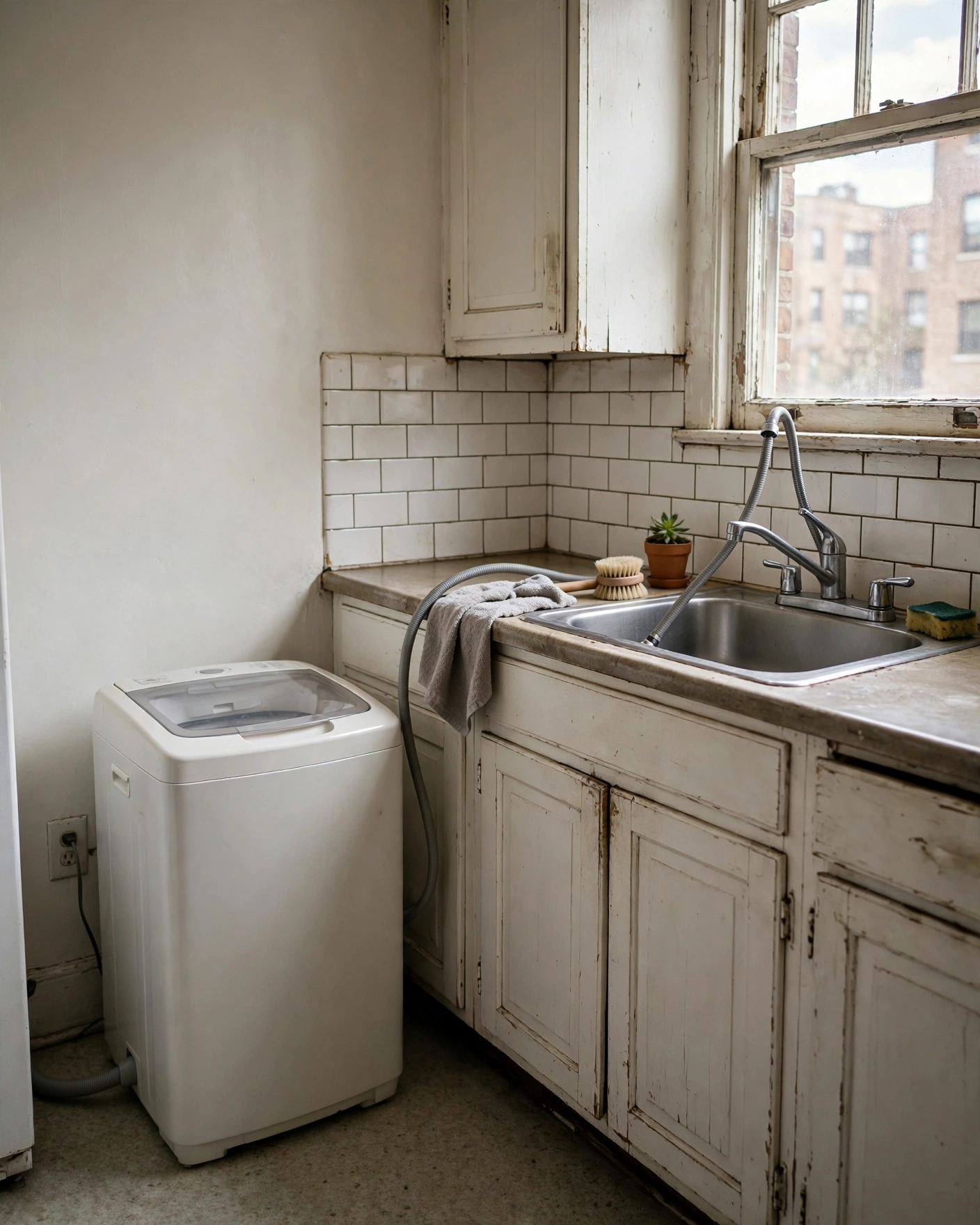
A portable washer is the budget sleeper pick: after the upfront cost (typically $150–$350 for a compact electric or twin-tub model), each load costs under a dollar in water and detergent. If your lease allows it, one can pay for itself within a year compared to laundromat runs.
There are two common types. Compact electric washers hook a hose to your kitchen or bathroom faucet and drain into the sink; they handle a small-to-medium load and spin reasonably well. Twin-tub models are cheaper and simpler — a wash tub plus a separate spin tub — but require you to move clothes between tubs and drain manually. Both are louder than a full-size machine, so check noise expectations if you have thin walls and close neighbors.
Before buying, confirm three things: your lease allows it (section 2), you have a faucet with standard threading the hose can connect to (many bathroom faucets don’t fit), and you have somewhere for the machine to live — they need roughly the footprint of a large trash can plus hose clearance. Factor in that you’ll still need a drying solution (section 7); a portable washer only replaces the washing half.
Run the break-even: a $200 machine that saves you $10 a week in laundromat trips pays for itself in 20 weeks. If you’ll live there at least a year, the math is usually strongly in your favor.
6. Hand Wash Small Loads

Hand washing sounds medieval until you try it — then it becomes the secret weapon for stretching laundromat trips further. It’s ideal for delicates, lightly worn items, and the “I need this shirt tomorrow” emergencies.
The simple method: fill a clean bathtub or large sink with cool-to-lukewarm water, add a small amount of regular detergent (about a teaspoon for a sink, a tablespoon for a tub — more soap just means more rinsing), and submerge a few items at a time. Agitate gently with your hands for a few minutes, let them soak 15–30 minutes, then drain and refill with clean water to rinse. Press — don’t wring — the water out, then roll each item in a clean dry towel and step on it to pull out excess moisture. That towel trick cuts indoor drying time dramatically.
Work in small batches; an overloaded tub doesn’t get clothes clean and takes forever to rinse. Delicates and anything with embellishments go in a mesh bag even in the sink. Jeans and heavy towels are the worst candidates — they’re the items worth saving for the laundromat, where a real spin cycle does the heavy lifting.
7. Dry Clothes Without a Dryer
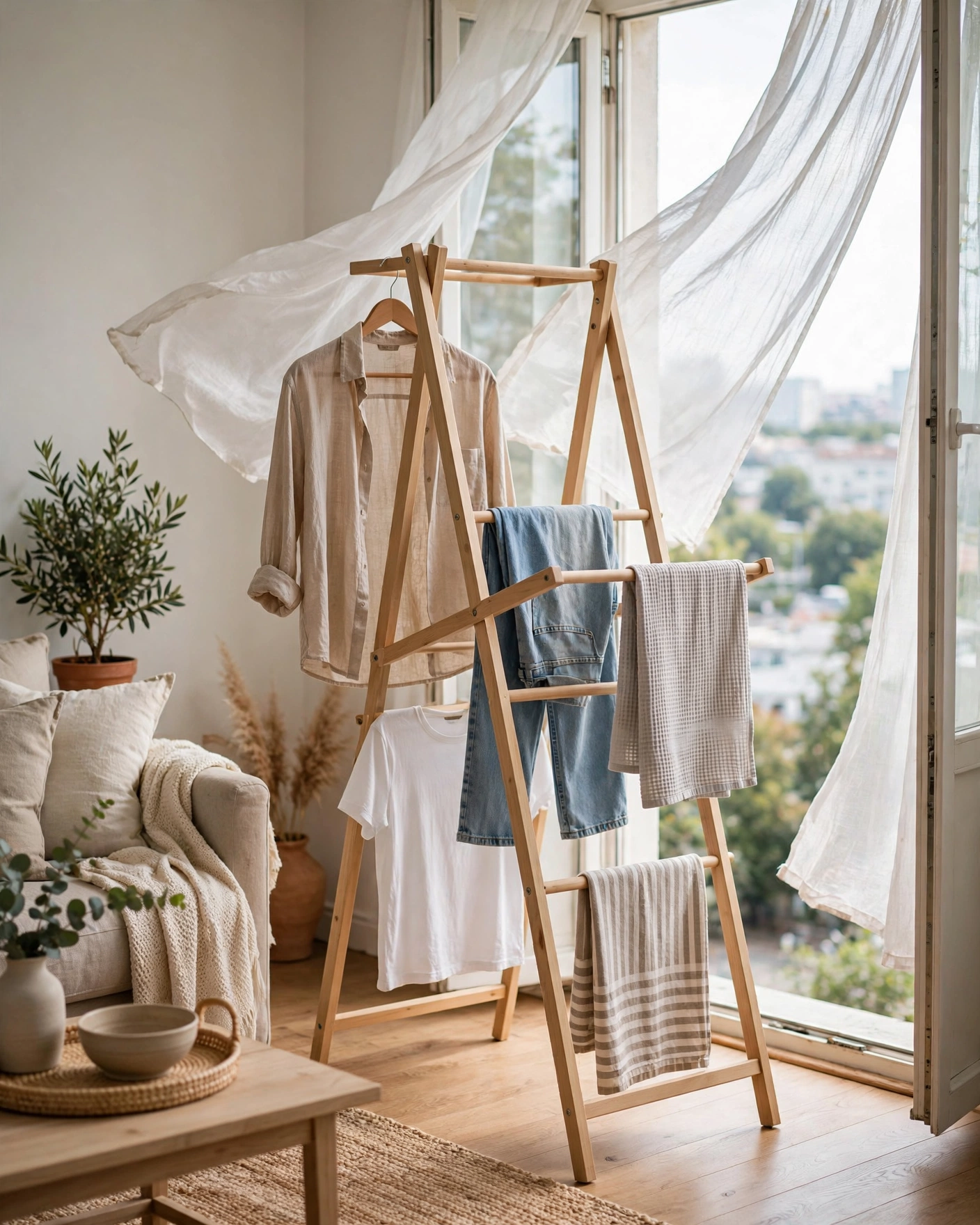
Whichever way you wash, you’ll be drying clothes in a small apartment — and it works fine with the right setup. The key principle: a well-spun load dries overnight; a dripping one takes days and invites mildew.
Get maximum water out first. At the laundromat, always run the full spin cycle — it’s the single biggest factor in drying time. For hand-washed items, the towel-roll trick from section 6 matters more than anything else you do afterward.
A folding A-frame drying rack is the core tool (typically $20–$40). Set it near a window, vent, or fan — airflow matters more than heat. Hang items with space between them; garments touching each other create moisture pockets and dry slower, not faster. Heavy items like jeans go over two bars to spread the load; socks and underwear hang from the ends where air moves freely.
Backup options when the rack is full: a sturdy tension rod across a shower or doorway, hangers on a closet rod with the door open, or a retractable wall-mounted line in the bathroom. Never drape wet clothes directly on upholstered furniture or radiators with covers — you’ll get musty fabric and, in the radiator case, a damp mess.
8. Keep Damp From Turning Moldy

This is the section most drying guides gloss over, and it’s the one that protects your apartment and your deposit. Drying a full load indoors releases a lot of moisture into the air, and in a small apartment that moisture has nowhere to go.
Ventilate while you dry. Open a window near the rack, even a crack, and run the bathroom or kitchen fan during and after drying sessions. If you have a small fan, point it at the rack — moving air does more for drying speed and moisture control than any other single thing.
Watch for warning signs: condensation on windows, a persistent musty smell, or damp spots on walls near the drying area. If you see any of these, cut back to smaller drying batches and increase ventilation. Many guides suggest keeping indoor humidity in the 30–50% range; a small humidity meter costs a few dollars at a hardware store and takes the guesswork out.
Drying in the bathroom with the exhaust fan running is often the best single-room setup — the fan is designed to move moist air out, and tile handles stray drips. Just don’t leave the door sealed with wet laundry inside and no fan; that’s how mildew starts.
9. Pack a Closet-Sized Kit

You don’t need a laundry room — you need one small corner where everything lives. A complete no-machine laundry kit fits in a closet or under a bed:
- Two hampers or bags — one for lights, one for darks, so sorting is done before laundry day. Collapsible ones store flat.
- Folding drying rack — the single most important purchase; folds to a few inches thick behind a door.
- Mesh delicates bags (3–5) — for the laundromat and hand washing alike.
- Small detergent bottle + stain remover pen — decant from bulk bottles to save space and money.
- Rolling laundry cart or backpack hamper — if you’re hauling to a laundromat, wheels beat shoulders.
- Tension rod or over-door hooks — backup drying space that costs almost nothing.
- Quarters or the laundromat’s app — check how your local machines take payment before your first trip; plenty of first-timers arrive with cards at a coin-only shop.
Buy the rack and bags first; everything else can wait until you know your routine. Total startup for the essentials runs about $30–$60 — less than two weeks of wash-and-fold.
10. Wash Less Often

The cheapest load is the one you never run. Nobody’s suggesting you wear dirty clothes — but a surprising amount of laundry comes from habit, not need. Jeans, sweaters, and jackets can go multiple wears between washes; only underwear, socks, workout gear, and visibly stained items need washing after every use.
Air clothes out between wears instead of tossing them in the hamper. Hang a worn-once shirt on a hook overnight — if it smells fine and looks fine the next day, it gets another wear. Spot-clean small stains immediately with a damp cloth and a dab of detergent rather than running a whole wash for one spot.
This isn’t just thrift; it’s the highest-leverage move in this entire guide. Cutting from three loads a week to two saves a laundromat regular $24–$56 a month — more than any detergent hack or off-peak trick. Fewer loads also means less indoor drying moisture, which circles back to section 8’s mold math.
Frequently Asked Questions
What’s the cheapest way to do laundry without a washer and dryer?
Hand washing is nearly free but very time-consuming. The realistic cheapest option is a DIY laundromat trip once or twice a week ($3–$7 per load), or a portable washer if your lease allows one — under $1 per load after the upfront cost. Combine either with air-drying to skip dryer fees entirely.
How much does wash and fold laundry service cost?
Typically around $1.50–$3.00 per pound, so one person’s weekly laundry (roughly 10–15 pounds) runs $22–$45. It’s two to four times the cost of doing it yourself at a laundromat — worth it as an occasional time saver, not as a weekly default on a tight budget.
How do I hand wash clothes in an apartment without making a mess?
Use the bathtub or a large sink, small batches, cool water, and only a teaspoon or two of detergent. Keep a towel on the floor as a drip catcher, and wring items into the tub — not over the floor. The towel-roll trick (roll the garment in a dry towel and press) gets most of the water out before it ever reaches your drying rack.
Are portable washers allowed in apartments?
It depends entirely on your lease. Many leases prohibit faucet hookups or portable appliances, especially in older buildings. Check for clauses about portable appliances, plumbing alterations, and water usage — and get written permission from your landlord before buying. Hand washing and air-drying are almost never restricted.
How do I dry clothes in a small apartment without a dryer?
Use a folding drying rack near a window or fan with space between garments, and get as much water out as possible first (full spin cycle at the laundromat, towel-roll press for hand-washed items). A tension rod in the shower works as overflow. Ventilate the room while drying to control moisture.
How can I save money at the laundromat?
Go on weekday mornings when it’s quieter, bring your own detergent in a small bottle instead of buying single-use boxes from the vending machine, pre-sort and pre-treat stains at home, consolidate into the largest machine that makes sense, and set a timer so your clothes don’t sit damp waiting for you.
Will air-drying laundry make my apartment smell musty?
Only if moisture builds up. Dry near ventilation — an open window, a running fan, or the bathroom exhaust fan — space garments so air reaches them, and don’t overload the rack. If windows fog up or a musty smell appears, dry smaller batches with more airflow.
Conclusion

Living without a washer and dryer in your first apartment is an adjustment, not a disaster. These first apartment laundry tips boil down to three moves: do the cost math before you commit to a method, respect your lease before you buy equipment, and ventilate every time you dry indoors. Most budget-strapped first-time renters land on weekly laundromat trips plus hand washing and a folding rack — cheap, lease-safe, and fully workable. If this guide saved you a surprise bill or a deposit dispute, save it for your next move and share it with the friend who’s apartment-hunting right now.

Maren started MyFirstLease after a rough first lease taught him everything the internet didn’t. He covers the logistical side of renting — move-in checklists, utilities, and the unglamorous first-week stuff nobody explains — and oversees everything published on the site.