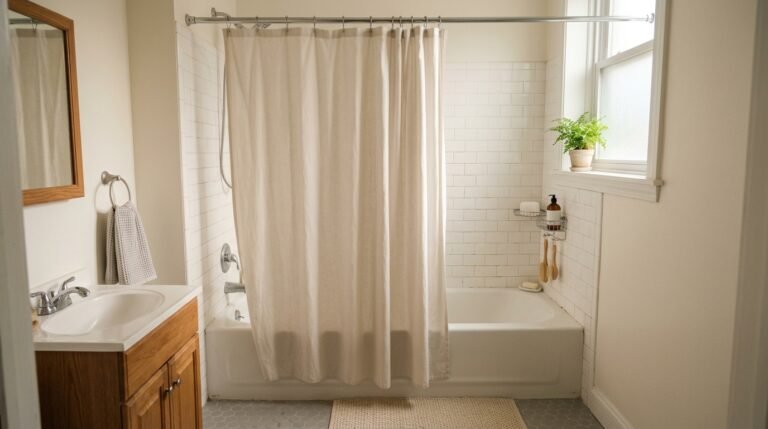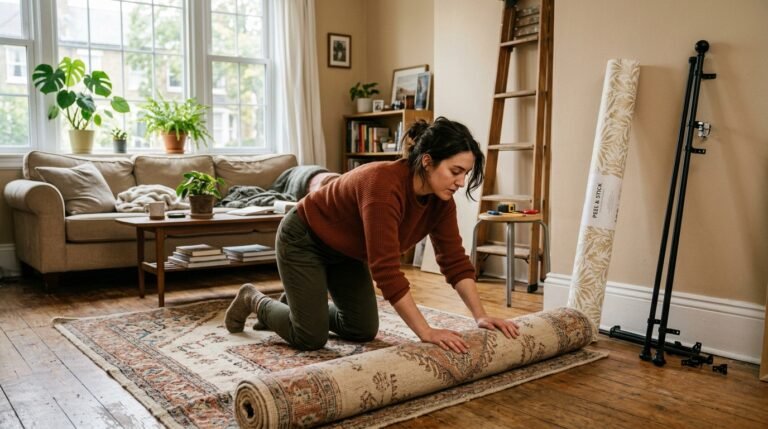

Living in a studio means your bed, couch, desk, and dinner table all share one room — and it can start to feel like your whole life is on display. These renter friendly room divider ideas for studio apartments solve that without a single drill hole: every option below is freestanding or no-drill, so it separates your space and leaves your security deposit untouched. Whether you want to hide your bed from the front door, carve out a home office corner, or just make your sleeping area feel like a real bedroom, there’s a removable option here for your budget and your square footage.
The Short Answer: The most renter-friendly room dividers for a studio are ceiling-track or tension-rod curtains, folding screens, open-back bookcases, and tall planters — all freestanding or no-drill, so they separate sleep and living zones without risking your deposit. Curtains give the most adjustable privacy, bookcases add storage, and screens rearrange in seconds. Pick based on how much privacy and light flow you need.
Summary

This guide rounds up 11 room divider options for studio renters, grouped into four families: fabric-based, freestanding screens and panels, furniture you already own or would buy anyway, and living (plant-based) dividers. Each one is evaluated through a renter’s lens — can it be removed at move-out with zero repairs, and what does it give you besides separation?
The heart of the article is a comparison table that puts all 11 side by side on privacy, light flow, floor footprint, relative cost, and removability, so you can choose in minutes instead of researching for a weekend. It closes with renter-specific safeguards (deposit protection, stability, lease checks) and a quick measuring routine so whatever you pick actually fits.
1. Curtain & Fabric Options
Fabric is the most flexible divider family: soft, cheap, and easy to open or close depending on the moment. These three options scale from nearly free to a small investment, and none of them require drilling.
Ceiling-track curtains. A ceiling-mounted track with floor-length curtains gives the closest thing to a real wall: full privacy, adjustable in seconds, and it disappears when you open it. The catch is that most tracks screw into the ceiling, which many leases forbid. If your lease allows small ceiling holes (some do, as long as you patch them), this is the highest-privacy option. Ask your landlord in writing first — email counts.
Tension-rod curtains. A spring-tension rod wedged between two facing walls is genuinely no-drill, but it only works where the span is short enough for the rod to hold — think a hallway-width opening or a nook between two walls, not a 15-foot open span. Pair the rod with light or medium-weight curtains; heavy blackout panels can slowly pull the rod down. Measure the exact span before buying, since rods max out at a fixed length.
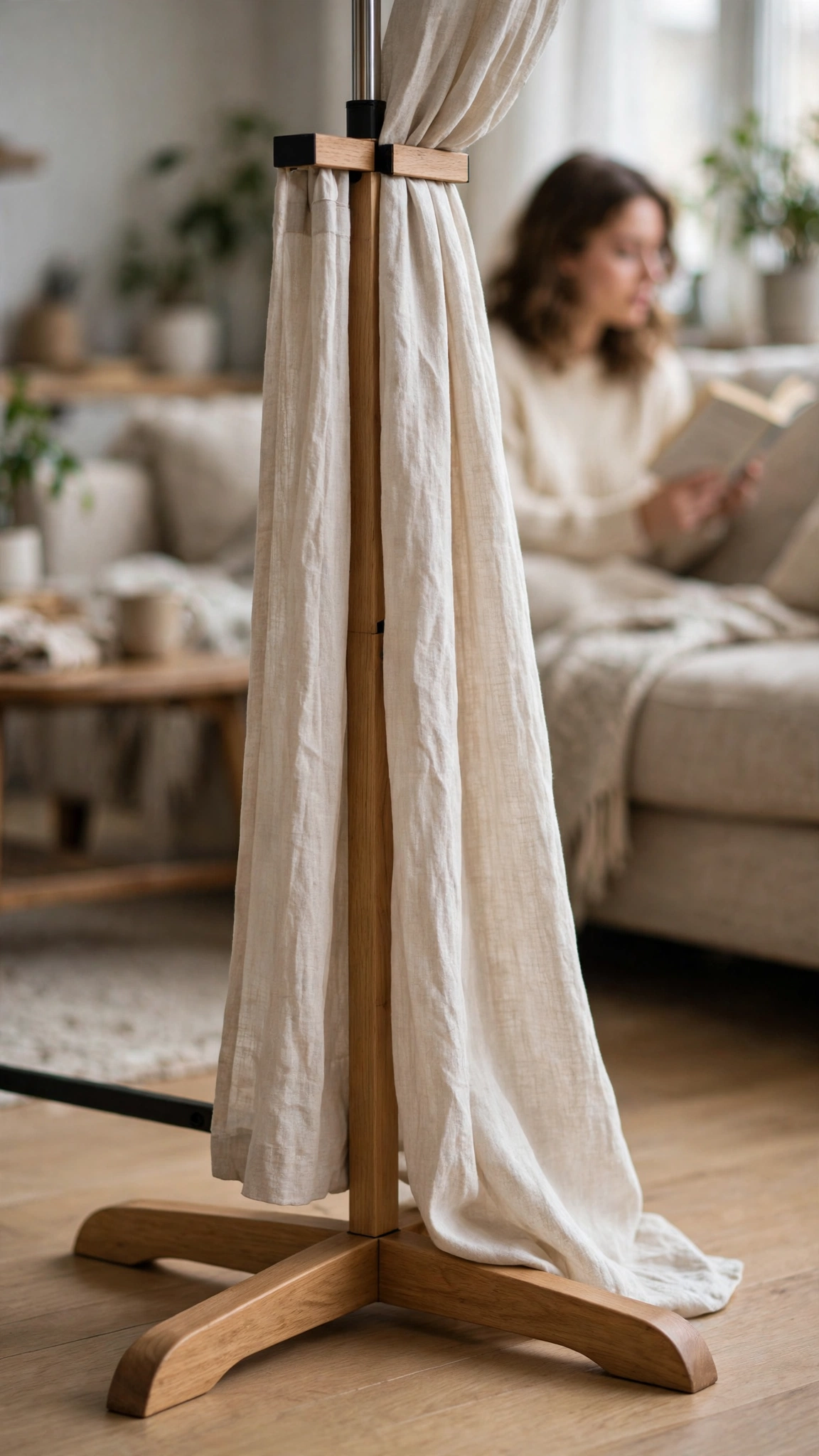
Freestanding curtain frames. These are garment-rack-style frames (two vertical poles on feet, sometimes on casters) that hold a curtain anywhere in the room — no walls or ceiling needed. They work in wide-open studios where tension rods can’t span, and you can roll them aside when you want the space open. Look for frames with wide, stable feet; a curtain catches air when windows are open, and a narrow base will tip.
2. Folding Screens & Panels

Screens are the classic studio divider for a reason: they set up in seconds, fold flat when you don’t need them, and leave absolutely no trace behind.
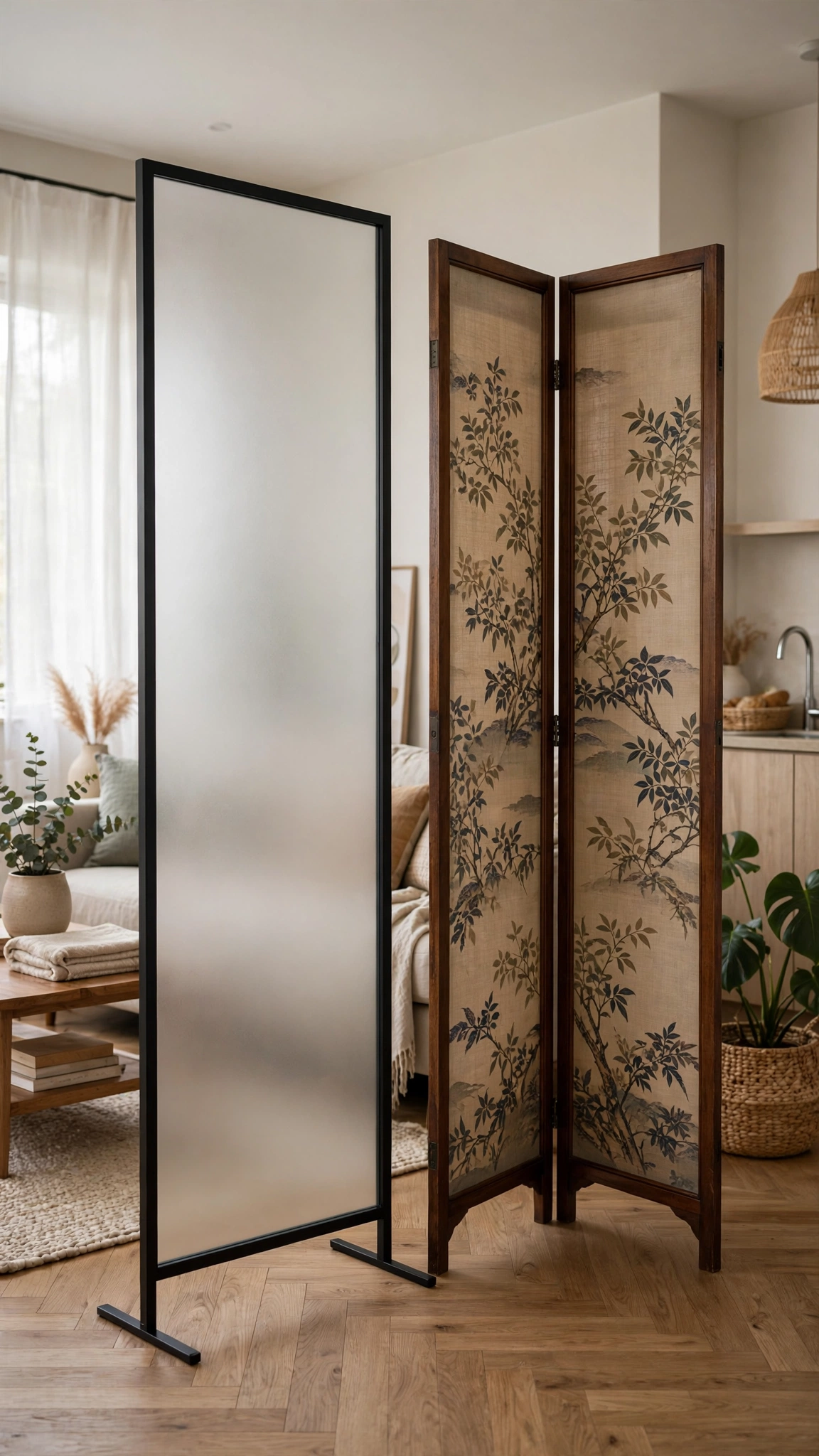
Classic folding screens. Hinged 3- or 4-panel screens come in wood, cane, fabric, and paper styles. Angle the panels in a slight zigzag rather than a straight line — the fold makes them self-supporting and far more stable than a single flat panel. Add felt pads to the feet to protect hardwood or vinyl floors.
Shoji-style light-filtering panels. Shoji screens (or shoji-style freestanding panels) filter daylight while hiding everything behind them — ideal for a sleeping zone near a window, where you want privacy without living in a cave. The translucent panels keep the studio feeling bright, which matters more than you’d expect when 400 square feet has to feel like a home.
Freestanding panel dividers. These are single wide panels — often frosted acrylic, fabric, or wood slats — mounted on weighted feet or A-frame bases. They read more modern than a folding screen and usually stand taller. Because they don’t fold, check the footprint before buying: the feet typically extend 12–18 inches on each side for stability, and that eats real floor space in a small studio.
3. Furniture as Dividers

If you’re buying furniture for your first apartment anyway, let it pull double duty. These options divide the room and give you storage or function — the best value per square foot in the roundup.
Open-back bookcase. The single most popular studio divider, and for good reason: it blocks the couch-to-bed sightline, holds books and decor on both sides, and lets light through from the top. Keep the back open (or remove the backing panel) so light passes and both sides look finished. Place heavier items on the bottom shelves for stability, and check the manufacturer’s guidance on anchoring tall units — if your lease forbids drilling, choose a shorter, wider unit that can’t reasonably tip instead of a tall narrow one.
Cube storage unit. A cube shelf (the 2×4 or 4×4 grid style) turned perpendicular to the wall works like a half-wall: solid enough to define zones, low enough that the room stays open above it. Use fabric bins on the lower cubes to hide clutter from both sides, and leave a few upper cubes open with books or plants so it doesn’t read as a solid block.
Low dresser or console. You probably already own one. Push a low dresser or console table perpendicular to the wall at the foot of the bed or behind the sofa, and it becomes an instant boundary that also holds a lamp, a catch-all tray, and your charger. At roughly counter height, it separates zones without blocking sightlines across the room — good when you want definition but not enclosure.
4. Plant & Living Dividers
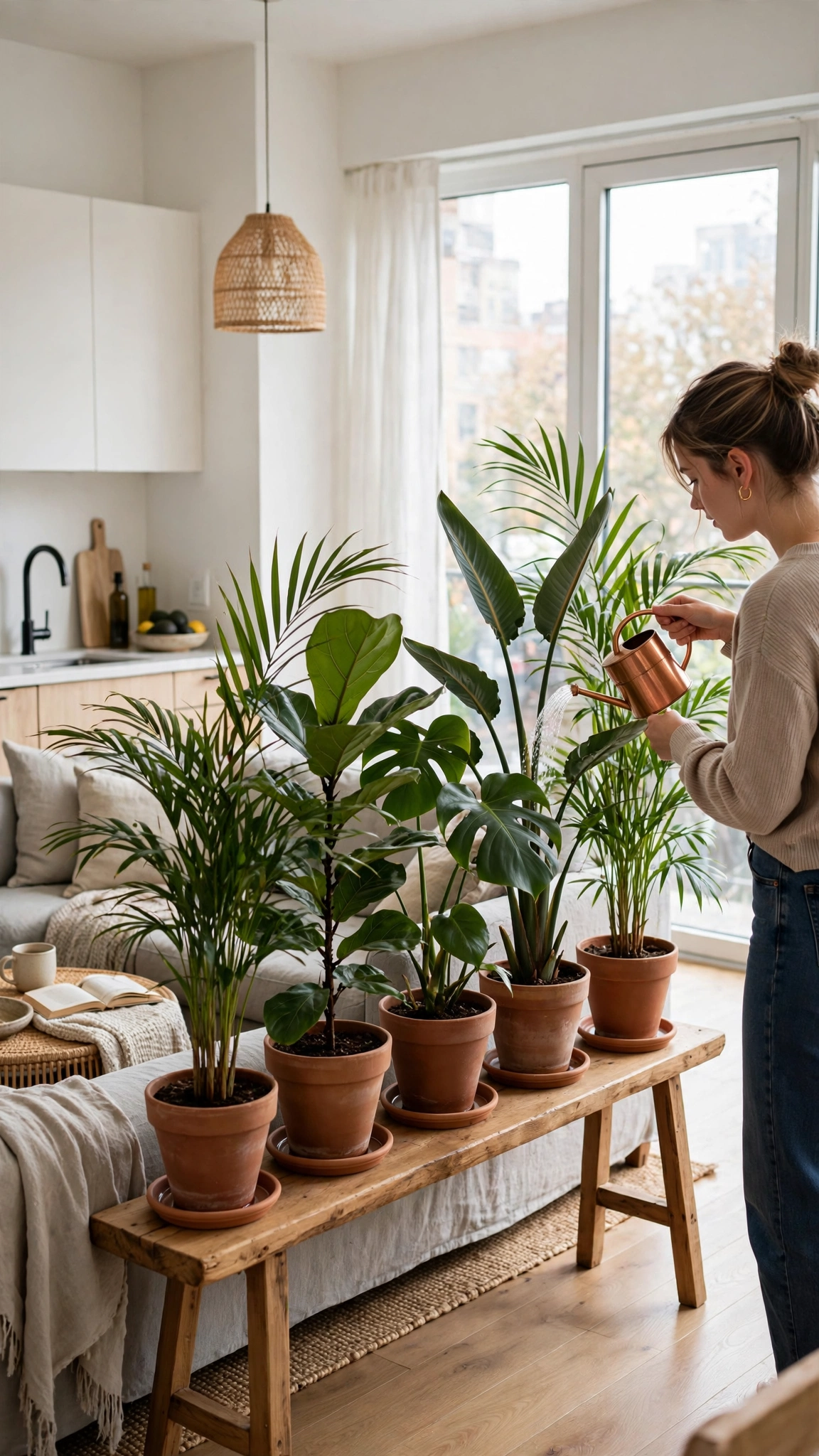
Greenery divides a room without a single hard edge. Living dividers won’t give you real privacy — they break sightlines and define zones while keeping everything bright and airy.
Tall planter bench. Line up a narrow bench or low shelf with several tall, full plants (snake plants, ZZ plants, and pothos are forgiving of beginner care and lower light) to create a living wall between zones. Use planters with drip trays or cache pots so watering day doesn’t damage the floor. A grow light on a timer helps if your studio’s natural light is limited — pick one with a warm-white tone so the corner doesn’t look clinical.
Hanging plants on a tension rod. Hang several plants at staggered heights from a tension rod (the same no-drill trick as the curtain rod, but with lighter loads) or from a freestanding garment rack. The staggered heights break up the sightline more effectively than a single row, and the whole thing comes down in minutes at move-out. Check that the rod or rack is rated for the combined weight — water makes pots heavier than they look.
[EDITOR’S PICK — {author name}: which option would you personally choose, and why? Leave blank if you don’t have a genuine opinion here.]
5. Comparing All 11 Options
Use this table to narrow the list in minutes. Cost tiers are relative ($ = budget-friendly, $$$ = a real investment); privacy and light are approximate and depend on the specific product and placement.
| # | Divider | Privacy | Light Flow | Floor Footprint | Relative Cost | Removability |
|---|---|---|---|---|---|---|
| 1 | Ceiling-track curtain | High | Low when closed | None (overhead) | $$ | Patch holes if drilled |
| 2 | Tension-rod curtain | Medium–High | Medium | None | $ | Fully removable |
| 3 | Freestanding curtain frame | Medium | Medium | Small (feet) | $$ | Fully removable |
| 4 | Folding screen | Medium | Medium | Small | $–$$ | Fully removable |
| 5 | Shoji-style panel | Medium | High | Medium | $$ | Fully removable |
| 6 | Freestanding panel divider | Medium–High | Low–Medium | Medium (feet) | $$–$$$ | Fully removable |
| 7 | Open-back bookcase | Medium | Medium–High | Medium–Large | $$–$$$ | Fully removable |
| 8 | Cube storage unit | Low–Medium | High | Medium | $$ | Fully removable |
| 9 | Low dresser/console | Low | High | Medium | $ (own it already) | Fully removable |
| 10 | Tall planter bench | Low | High | Medium | $$ | Fully removable |
| 11 | Hanging plants on rod | Low | High | None | $ | Fully removable |
The quickest decision rule: if you need privacy, start with options 1–6; if you need storage, look at 7–9; if you want openness with definition, 10–11. And if you’re torn between a curtain and a screen, the curtain wins on adjustable privacy, the screen wins on effort — it works the day it arrives with zero installation.
6. Renter Safeguards
Every divider in this roundup is removable, but “removable” still has fine print. A few checks before you commit:
- Read your lease’s alterations clause. Freestanding furniture and plants are almost never an issue, but anything attached to walls or ceilings — even tension rods, in strict buildings — can technically count as a modification. When in doubt, ask your landlord in writing and keep the reply.
- Photograph before you install. Take phone photos of the walls, ceiling, and floors where the divider will stand. If there’s ever a deposit dispute, dated photos are your evidence that the scuffs were already there.
- Stabilize tall pieces. A loaded bookcase in a studio is a tipping risk, especially on carpet. Place heavy items low, keep the unit away from where kids or pets play, and follow the manufacturer’s anchoring guidance — if anchoring requires drilling and your lease forbids it, pick a shorter, wider unit instead.
- Keep exits and vents clear. Dividers shouldn’t block your path to the front door, cover heating/cooling vents, or sit in front of the breaker panel. Curtains near radiators or stoves are a fire hazard — keep fabric well clear of heat sources.
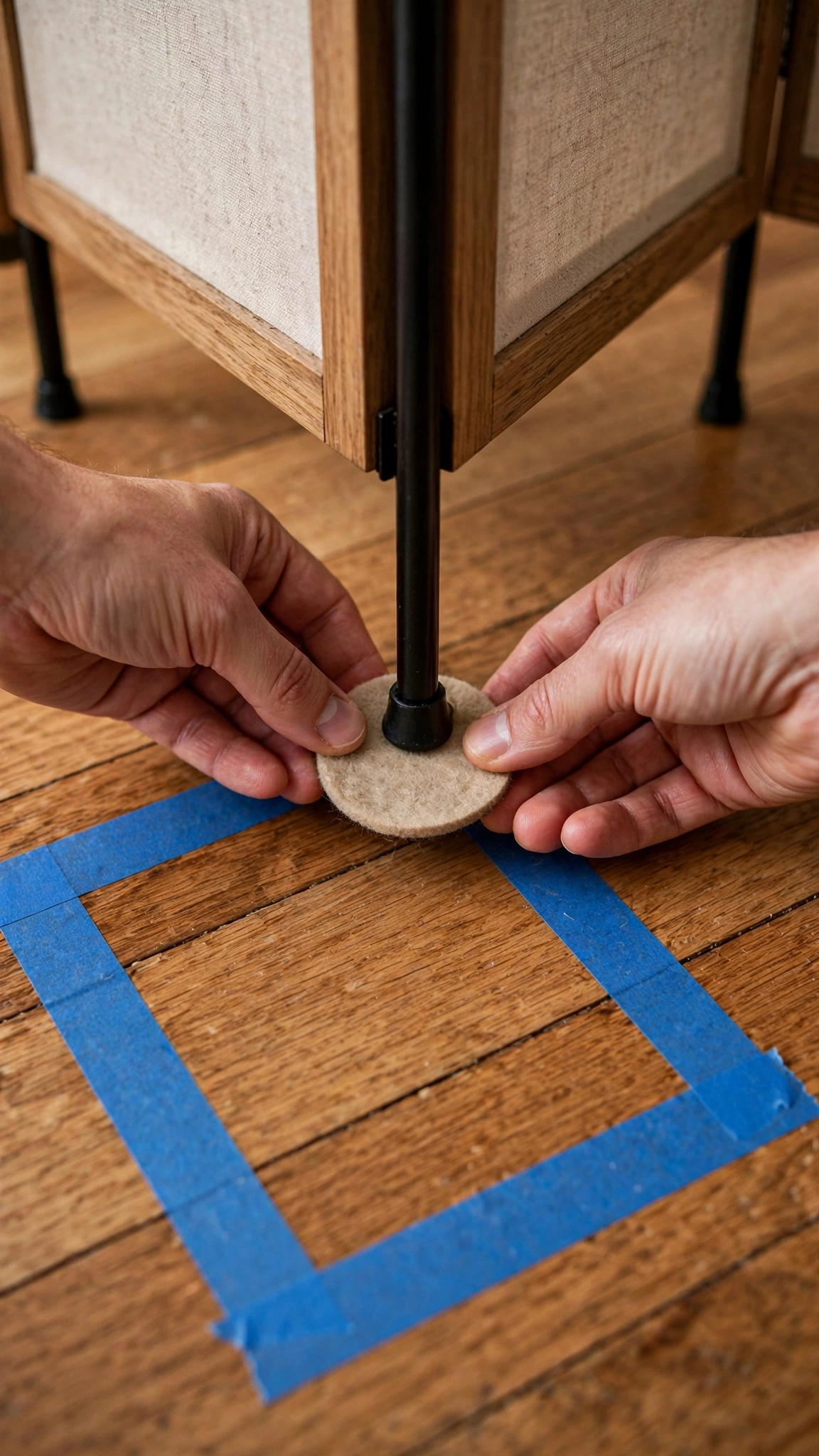
- Mind the floors. Felt pads under screen feet, drip trays under planters, and a rug or mat under any frame with feet will keep your move-out walkthrough uneventful. Pairing your divider with the right rug size also makes the new “zone” look intentional — see our guide on what size rug works for a studio apartment.
7. Measuring Before You Buy

Ten minutes with a tape measure prevents the most common divider regret: buying the right product in the wrong size. Work through this routine before you order anything.
- Measure the span you want to divide (wall to wall, or the open distance), plus the ceiling height. Write both down — you’ll need them for every option.
- Mark the footprint with painter’s tape on the floor, including the feet or base the divider needs for stability. Live with the tape outline for a day; walk around it the way you normally would.
- Check the walkway that remains. You need a comfortable path through the studio at all times — if the tape leaves you squeezing past the bed, the divider is too big for that spot.
- Check the light. Stand where your bed or desk will be and look toward the window. If a solid divider would steal all your daylight, switch to a light-filtering option (shoji panels, plants, open shelving) for that side.
- Photograph and confirm. Snap a photo of the taped outline and double-check it against the product dimensions — including depth, not just width — before you buy.
Frequently Asked Questions
Can I hang a divider curtain without drilling anything?
Yes, with limits. A tension rod works between two facing walls over a short span, and a freestanding curtain frame works anywhere in the room. True no-drill ceiling mounting is unreliable for full-length curtains — adhesive hooks aren’t rated for that weight — so for wide spans, a freestanding frame is the honest no-drill answer.
Will my landlord object to a room divider?
Freestanding dividers (screens, bookcases, plants, curtain frames) are furniture, not alterations, so they rarely raise an issue. Anything screwed into the ceiling or walls can trigger an alterations clause, so get written permission first. Keep the email — it’s your proof at move-out.
How do I keep a tall bookcase divider from tipping?
Place the heaviest items on the lowest shelves, close to a level surface, and don’t climb it. If the manufacturer’s guidance calls for wall anchoring and your lease forbids drilling, that’s your sign to choose a shorter, wider unit that is inherently stable instead.
Do room dividers block light and airflow?
Solid ones do, to some degree. If your studio gets limited daylight, favor light-filtering options — shoji panels, open-back shelving, plants — and keep dividers away from the window wall. Also avoid placing tall solid dividers directly in front of heating or cooling vents.
Can a divider help with noise from a roommate or the street?
Only a little. Heavy curtains and upholstered screens can soften echo inside the room, but no freestanding divider blocks meaningful sound transmission. If noise is the main problem, a divider plus a white-noise machine or earplugs is a more realistic combo than a divider alone.
What if my lease bans all alterations, even tension rods?
Stick to the fully freestanding options: folding screens, shoji panels, freestanding panel dividers, bookcases, cube units, and plants. None of them touch the walls, ceiling, or floor beyond their own feet, so they comply with even strict no-alteration clauses.
How tall should a studio room divider be?
Tall enough to break the sightline you care about — usually 5 to 6 feet covers a seated sightline from the couch, while full privacy near a bed wants 6 feet or more. Avoid going all the way to the ceiling unless you want the studio to feel boxed in; a gap at the top keeps air and light moving.
Can I use a rug as a room divider instead?
A rug defines a zone visually but doesn’t block sightlines or add privacy — it works best with a physical divider, not instead of one. An area rug under your bed zone plus a screen or curtain at its edge makes the separation read as intentional. Our guide to what size rug fits a studio apartment covers sizing, and small apartment entryway ideas for renters shows how the same zoning tricks work by the front door.
Conclusion

The best room divider for your studio is the one that gives you the separation you actually need — privacy, storage, or just visual calm — without costing you your deposit at move-out. Start from the comparison table, shortlist two or three options that fit your budget and your lease, and tape the footprint on the floor before you buy. A well-placed, renter friendly room divider can make a 400-square-foot studio feel like a one-bedroom. If this roundup helped you decide, save it for move-in day or share it with a fellow studio renter.

Maren started MyFirstLease after a rough first lease taught him everything the internet didn’t. He covers the logistical side of renting — move-in checklists, utilities, and the unglamorous first-week stuff nobody explains — and oversees everything published on the site.