
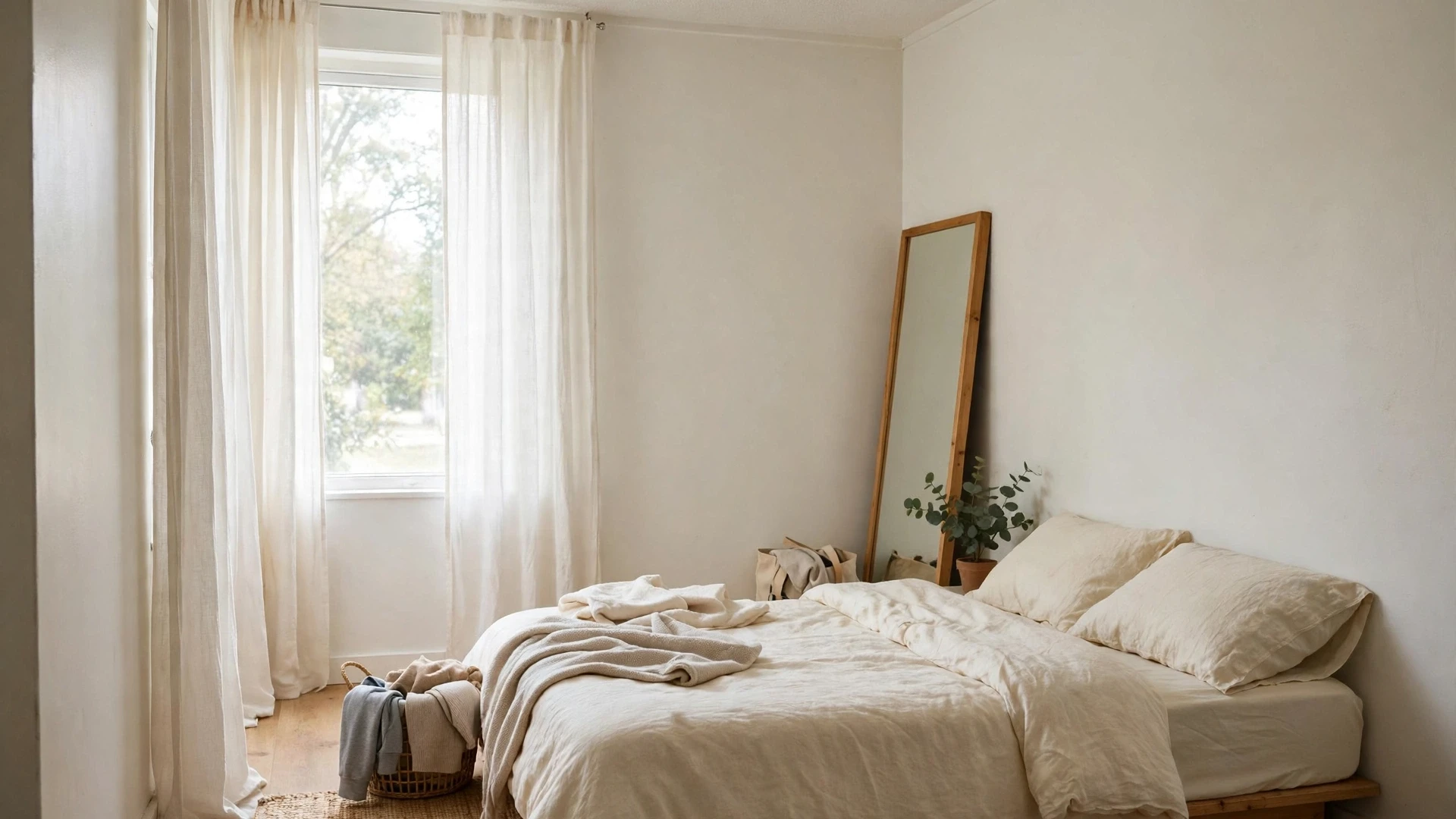
Apartment bedroom decor ideas for renters with low ceilings start from one honest fact: you cannot raise the ceiling, and in a rental you should not try. If you are a first-time renter in a basement bedroom or an older apartment where the ceiling sits at seven feet or below, the room can feel cramped before you put a single piece of furniture in it — and most of the advice online assumes you own the place and can repaint or remodel your way out.
This article takes the opposite approach. Every idea below works without touching the ceiling, without drilling into it, and without spending a deposit-threatening amount of money. The tricks are visual: light, proportion, vertical lines, and furniture that sits low so the room reads taller than it is. For more renter-friendly ideas in the same spirit, browse the Decorating & Small Space Living section.
Direct answer: A low-ceiling rental bedroom looks taller when you keep furniture low and leggy, hang curtains high and wide, use light colors on walls and bedding, add vertical lines with tall art or stripes, and choose flush or low-profile lighting — all without painting or drilling into the ceiling.
Executive Summary
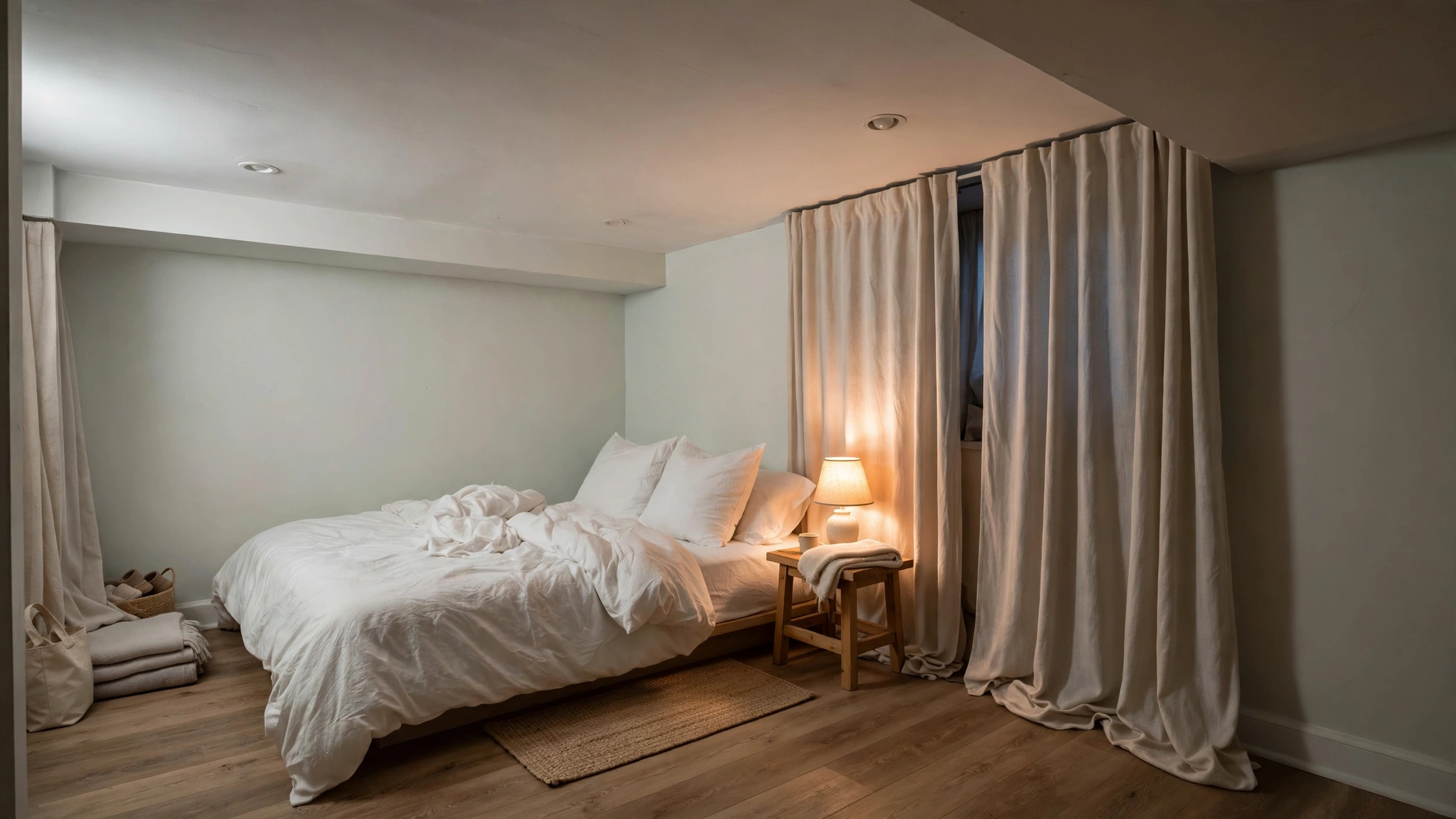
A basement or older-apartment bedroom with a low ceiling is a proportion problem, not a decorating failure. Tall furniture, dark bedding, and a dangling light fixture all shrink the room further, while low furniture, long curtains, and pale surfaces give the eye somewhere to travel upward.
This article walks through eight ideas in the order that matters most: light first, then furniture height, curtains, vertical lines, lighting, bedding, mirrors, and finally clearing the floor so nothing blocks the sightlines. Each section flags what needs written landlord permission, what to check before using adhesive, and what it costs as of 2026. A shopping checklist at the end pulls the whole plan into one trip.
1. Start With Light, Not Paint

Light is the cheapest height trick there is, and it costs nothing to try first. A low-ceiling bedroom feels lower when the walls are dark, because dark surfaces absorb the little light a basement or small window lets in and make the boundaries of the room close in. Pale walls, pale bedding, and pale curtains bounce what light exists around the room, and the ceiling stops reading as a lid.
If the walls are already a light color, leave them alone — you have already won the biggest battle. If they are dark or dingy, ask the landlord in writing whether you may repaint in a light, warm white. Never paint without written permission: repainting without it can cost part of your deposit, and some leases require the walls returned to the original color at move-out, which means buying paint twice. As of 2026, a gallon of basic interior paint runs roughly $30–$50, plus rollers and tape, so even a permitted repaint is a real budget decision.
Where paint is off the table, get the same effect from what you control. Swap dark bedding for white, cream, or pale sage. Choose a light-colored rug instead of a dark one. Keep the ceiling itself the lightest surface in the room — if it is already white, do not hang anything dark against it. The goal is a room that gets lighter as the eye travels up, which reads as height even when the ceiling has not moved.
2. Keep Furniture Low and Leggy

Tall furniture is the fastest way to make a low ceiling feel lower. A tall wardrobe or a high headboard eats the gap between the top of the furniture and the ceiling, and the eye measures the room by that gap. When the gap shrinks to a few inches, the room feels like a box.
Choose a low-profile bed frame instead — a platform bed or a frame that sits 10 to 14 inches off the floor keeps the mattress low and leaves a generous band of wall above it. A low headboard, or no headboard at all with a row of leaning cushions, does the same job. As of 2026, a basic low platform frame runs roughly $100–$250, and secondhand frames are common in this style because they are easy to move.
Legs matter as much as height. Furniture on slim, visible legs — a nightstand on tapered legs, a dresser raised a few inches off the floor — lets the eye see floor underneath, which makes the room feel larger. A solid block of furniture sitting flat on the floor reads as a wall. Measure before you buy: in a bedroom with a ceiling under eight feet, keep the tallest piece at least 18 inches below the ceiling, and check the delivery route too, since a tall wardrobe may not fit up a basement stairwell or around a tight landing.
3. Hang Curtains High and Wide

Curtains are the single most effective height trick in a low-ceiling bedroom, and they are fully renter-friendly when hung the right way. The mistake is hanging the rod at the top of the window frame, which frames the window at its actual, modest height. Hang the rod as close to the ceiling as your lease and wall allow — usually 4 to 6 inches below the ceiling — and let the panels fall all the way to the floor. The long vertical line makes the wall look taller, and the window looks bigger too.
Use a tension rod inside the window recess if drilling is banned, or a no-drill adhesive rod holder rated for the weight of your curtains — check the manufacturer’s weight rating and test the adhesive on a hidden patch first, since some wall finishes peel. As of 2026, a tension rod runs roughly $15–$30 and adhesive rod holders roughly $10–$20 a pair. If drilling is allowed, a standard rod with proper anchors is sturdier for heavy blackout curtains, but get that permission in writing first. For more no-drill window ideas, see our guide to renter-friendly window decor with no drilling.
Choose light, solid-colored panels that reach the floor, and extend the rod 4 to 6 inches past the window on each side so the panels stack on the wall rather than covering the glass. Sheer panels work well in a basement bedroom because they let in daylight while keeping privacy; pair them with a blackout roller blind behind them for sleeping. Avoid short café curtains here — they cut the wall in half horizontally and undo the effect.
4. Use Vertical Lines on the Walls
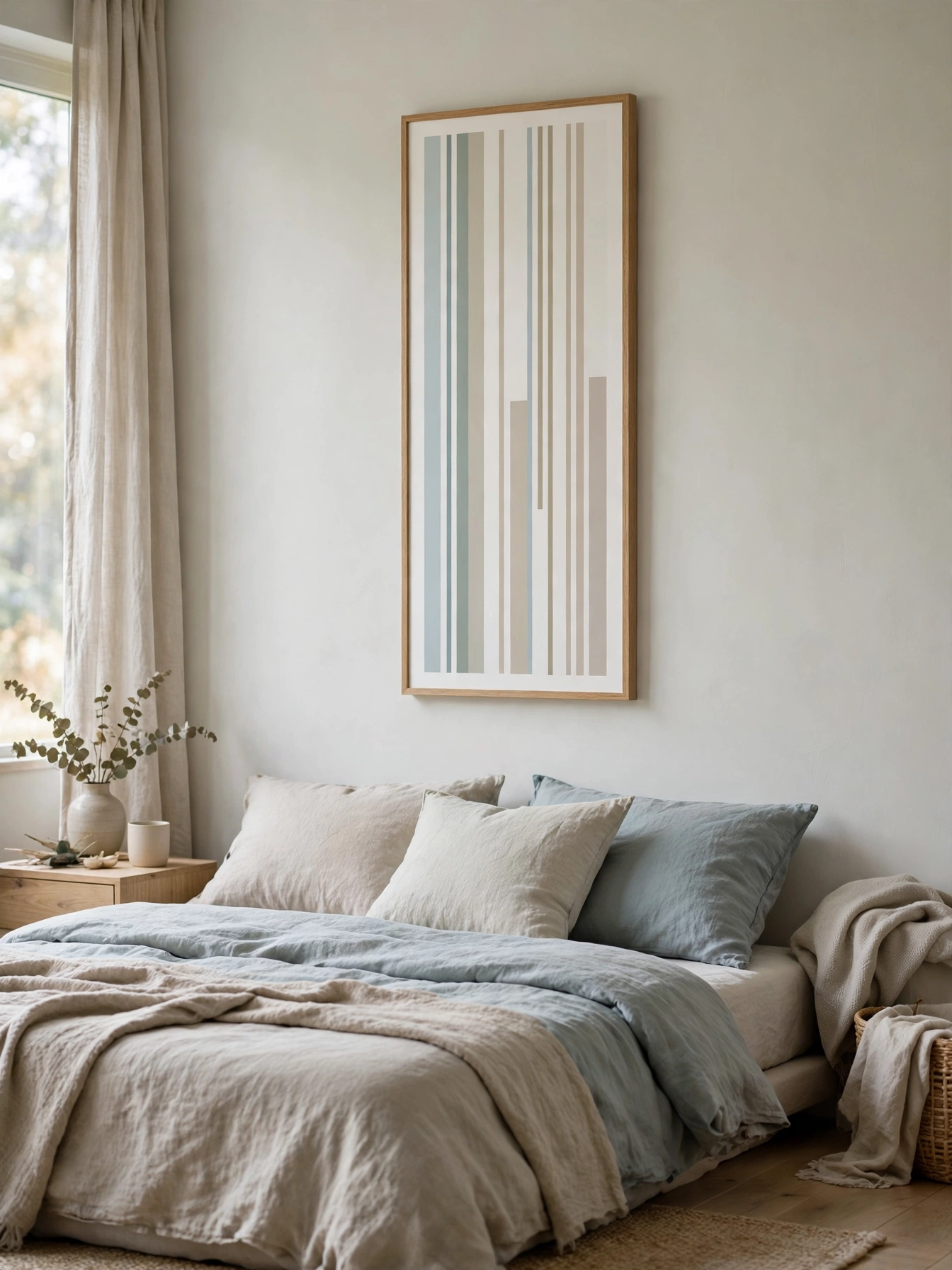
The eye follows lines, so give it vertical ones. A tall, narrow piece of art, a floor-length mirror leaned against the wall, or a striped textile hung vertically all pull the gaze upward and stretch the wall visually. One large vertical piece works better than a scattered cluster of small frames, which breaks the wall into pieces and makes it feel busy and short.
Hang art with the center at eye level, around 57 to 60 inches from the floor, and leave generous empty wall above it — that empty band is what reads as height. Use removable adhesive strips rated for the frame’s weight, and check your lease first: some leases ban adhesive hooks outright, and strips can pull paint off older or poorly primed walls, which is a deposit risk. As of 2026, a pack of picture-hanging strips runs roughly $5–$10. For anything heavy, lean it instead of hanging it: a tall mirror or framed print leaned against the wall needs no holes, no adhesive, and no permission.
Striped wallpaper is a classic low-ceiling trick, but most renters should skip it — even removable peel-and-stick wallpaper can damage older plaster or leave residue, and a full wall is a big deposit gamble. A striped throw, a tall bookshelf, or a vertical arrangement of three matching frames gives you the same upward pull with nothing stuck to the wall. Keep the palette calm: one strong vertical accent per wall is enough, and two competing ones cancel each other out.
5. Choose Lighting That Hugs the Ceiling
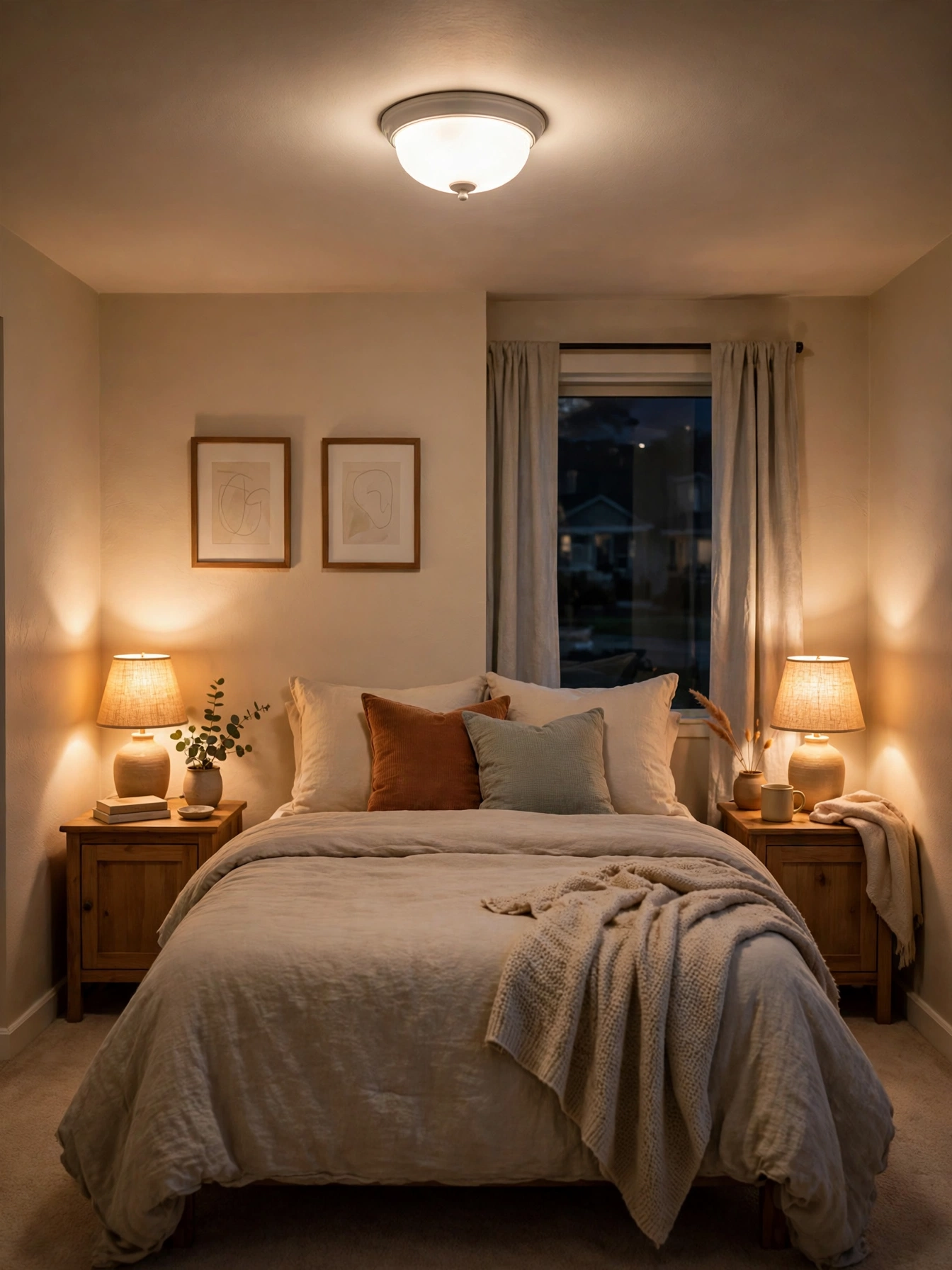
A dangling pendant or a low-hanging light fixture is the enemy of a low ceiling — it drops the visual ceiling by a foot and puts a shade at forehead height. In a rental bedroom, the fix is lighting that sits flat against the ceiling or lives on the furniture instead.
If the room has a ceiling fixture, ask the landlord before swapping it: changing a hardwired fixture usually counts as an electrical modification, and most leases forbid it without written permission. A safer renter move is a flush-mount cover or a low-profile shade that fits the existing fixture, or simply leaving the fixture alone and adding light at lower levels. As of 2026, a basic flush-mount shade runs roughly $25–$60.
Layer light from the sides instead. A pair of small table lamps on the nightstands, a floor lamp with a slim profile tucked in a corner, or battery-operated LED strip lights tucked behind the headboard or under a shelf all add brightness without touching the ceiling. Keep LED strips away from curtains and bedding, and use the adhesive backing only on smooth, painted surfaces after a patch test — on textured or older walls they can peel paint on removal. Warm-white bulbs (around 2700K) make a small bedroom feel calm rather than clinical, and a dimmer plug or smart bulb lets you lower the light at night without rewiring anything.
6. Pick Bedding That Lifts the Eye

Bedding covers the largest surface in the bedroom, so it sets the room’s tone. Dark, heavy bedding in a low-ceiling room reads as a big dark mass that pulls the ceiling down with it. Light bedding — white, cream, pale gray, or soft sage — does the opposite, and it costs nothing extra if you were buying bedding anyway.
Keep the bed visually low and uncluttered. A flat, tailored bed skirt or no skirt at all beats a ruffled one that adds bulk at the base. Fold the top of the duvet back to show a lighter sheet underneath, which adds a horizontal band of light without adding height. Limit the pillow stack to two sleeping pillows and one or two decorative ones; a mountain of pillows eats the wall above the bed and makes the headboard wall feel crowded.
Add one vertical accent at the bed wall instead of a tall headboard: a tall, narrow piece of art, a wall-mounted shelf at eye level holding a small plant, or a long textile hung vertically behind the bed. The shelf needs the same lease check as any wall fixing — adhesive shelves are only safe within their weight rating, and a shelf that falls in the night is a hazard, so keep what sits on it light. As of 2026, a set of pale cotton or linen-blend bedding runs roughly $40–$90, which makes this one of the cheapest changes in the article.
7. Mirror and Shine, Carefully
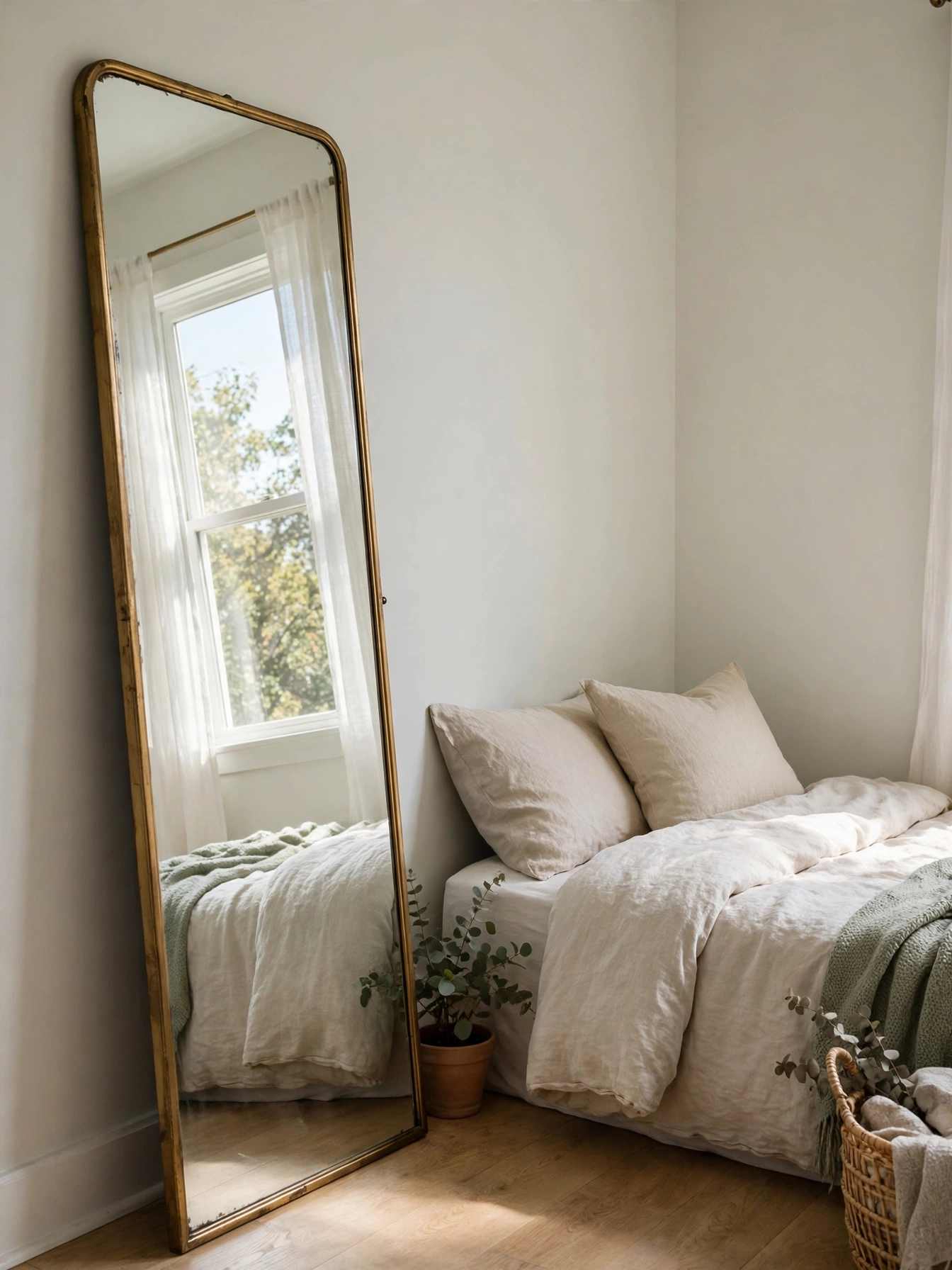
A mirror doubles the light in a room and gives the eye a second, deeper space to look into, which is why it is a classic small-room trick. In a low-ceiling bedroom, the right mirror is tall and narrow, leaned against the wall opposite the window so it catches daylight and throws it back across the room.
Lean the mirror rather than hanging it: a full-length mirror leaned at a slight angle is stable on a flat floor, needs no fixing, and can move with you. Check that it sits flat and cannot be knocked over by a pet or a child — a small adhesive pad or furniture gripper under the base helps, and keep it away from the path to the door. As of 2026, a basic full-length leaning mirror runs roughly $30–$80.
Use shine sparingly elsewhere. A metallic lamp base, a glass vase, or a satin cushion adds small points of reflected light that lift a room. Too much shine — mirrored furniture, glossy paint, a wall of reflective tiles — turns a bedroom into a glare box and looks worse, not taller. One mirror and two or three small reflective accents is the right scale. And keep the mirror’s reflection honest: aim it at the window or at a calm wall, not at a cluttered corner, because a mirror doubles whatever it faces.
8. Clear the Floor and the Sightlines

The last trick costs nothing and makes every other trick work harder: clear the floor. A low-ceiling bedroom feels cramped when the floor is covered — laundry piles, shoes by the door, boxes under the window — because every object on the floor is one more thing competing for the eye’s attention at the room’s lowest level.
Keep the path from the door to the bed and the window clear, and keep the floor visible around the bed’s legs. Under-bed storage is your friend here if the frame allows it: flat bins slide under a low platform bed and hide clutter without adding a tall piece of furniture. As of 2026, a set of flat under-bed bins runs roughly $20–$40. If the bed sits too low for bins, a single low storage bench at the foot of the bed holds the same things and doubles as a seat.
Look at the room from the doorway, which is how you actually see it every day. If the first thing you see is a pile, a tall shelf, or a dark mass, move it. The goal is a clear line from the door to the window, with the tallest things against the side walls and the lowest things in the middle of the room. A bedroom that reads as one open floor reads as a bigger room, even when the ceiling has not moved an inch.
Low-Ceiling Bedroom Shopping Checklist
A one-trip checklist for a first-time renter setting up a low-ceiling bedroom. Prices as of 2026; check your lease before buying anything that needs a fixing.
- Light bedding set (white, cream, or pale sage) — roughly $40–$90
- Tension rod or adhesive rod holders, rated for your curtains — roughly $15–$30
- Floor-length curtain panels in a light, solid color — roughly $25–$60 a pair
- Low platform bed frame, 10–14 inches off the floor — roughly $100–$250
- Full-length leaning mirror — roughly $30–$80
- Two small table lamps, warm white — roughly $20–$50 each
- Picture-hanging strips, rated for the frame weight — roughly $5–$10
- Flat under-bed storage bins — roughly $20–$40
- One tall, narrow art print or textile — roughly $20–$60
- Written landlord permission for: repainting, drilling a curtain rod, swapping a light fixture
- Deposit check: test every adhesive on a hidden patch before committing
FAQ
Can I make a low ceiling look higher without painting it?
Yes. Light bedding and curtains, low furniture, curtains hung near the ceiling, vertical art, and a leaning mirror all raise the room visually without a drop of paint. Paint helps, but it is the last resort here, not the first step, because it needs written landlord permission and a deposit risk.
What ceiling height counts as low in a bedroom?
Most bedrooms feel low below eight feet, and basement bedrooms often sit at seven feet or under. The tricks in this article work at any of those heights, but below seven feet, keep furniture especially low and skip anything that hangs down from the ceiling entirely.
Should I paint the ceiling white to make it look higher?
A white ceiling helps, but renters should not paint the ceiling without written permission — it is the hardest surface to return to its original condition, and a bad ceiling repaint is an easy deposit deduction. If the ceiling is already white, leave it alone and work on the walls, bedding, and lighting instead.
What kind of light fixture works best in a low-ceiling bedroom?
A flush-mount fixture that sits flat against the ceiling, or no ceiling fixture at all with light layered from table lamps and a slim floor lamp. Avoid pendants, chandeliers, and anything that hangs down more than a few inches. Never swap a hardwired fixture without written landlord permission.
Do dark colors ever work in a low-ceiling bedroom?
Dark colors can work as a small accent — a dark cushion, a dark frame, a dark throw — but a dark wall or dark bedding in a low-ceiling room usually makes it feel smaller. If you love dark tones, keep them low in the room and keep the upper walls, bedding, and ceiling pale.
How high should I hang curtains in a low-ceiling bedroom?
As close to the ceiling as your lease allows, usually 4 to 6 inches below it, with panels that reach the floor. Extend the rod past the window on each side so the panels stack on the wall. Use a tension rod or adhesive holders if drilling is banned, and check the weight rating first.
Is peel-and-stick wallpaper safe for a low-ceiling rental bedroom?
It can be, but test it first. Peel-and-stick wallpaper can pull paint off older or poorly primed walls and leave residue, which is a deposit risk. Try a small hidden patch for a week before committing to a wall, and skip it entirely on plaster walls in older apartments unless your landlord agrees in writing.
Conclusion
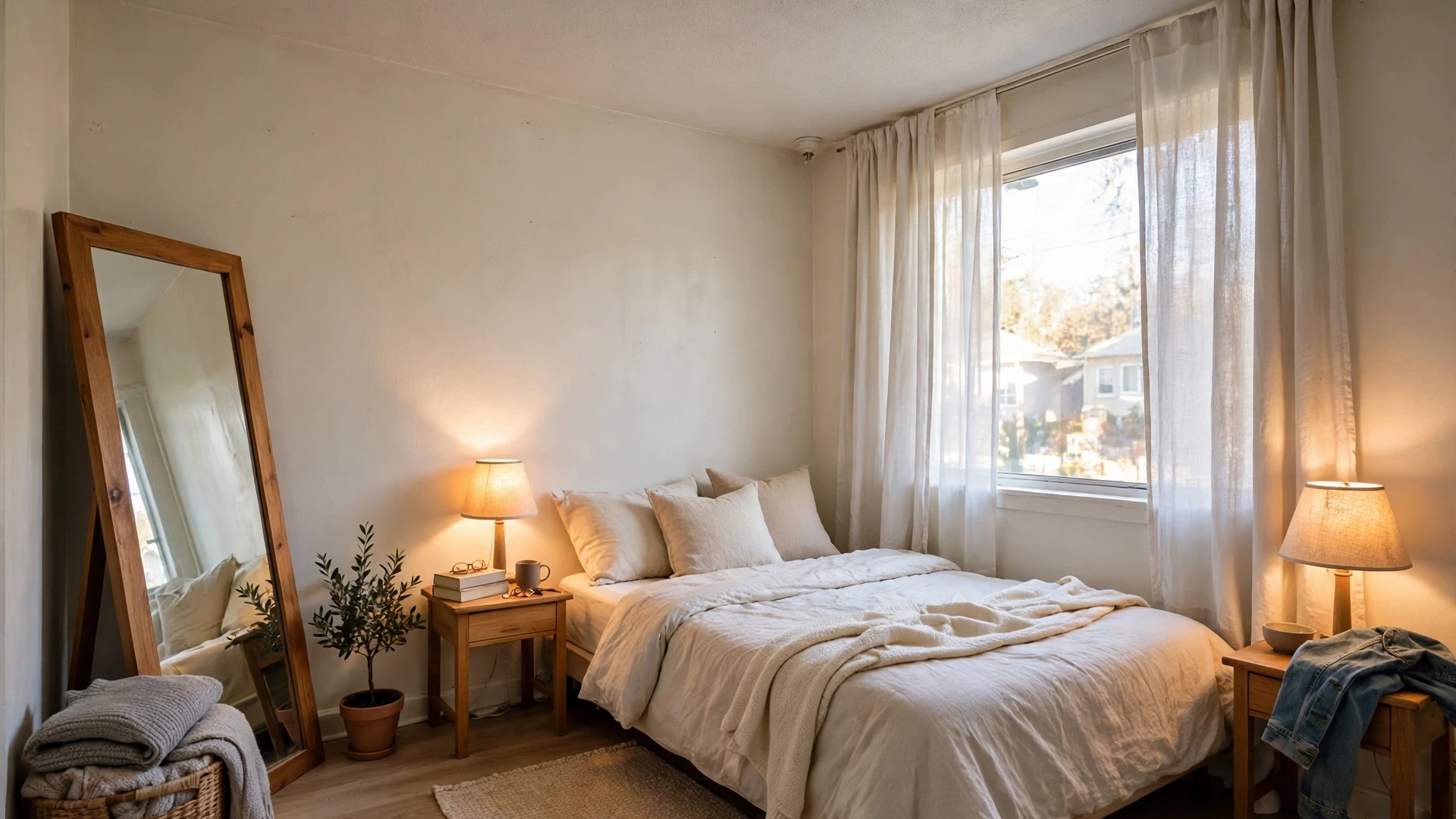
Apartment bedroom decor ideas for renters with low ceilings work best when they stay visual: light colors, low furniture, curtains hung high, vertical lines, and lighting that hugs the ceiling or lives on the furniture. None of it needs a renovation or a drill in the ceiling — just a lease check before anything gets fixed to a wall. Start with the bedding and the curtains, add the mirror, and let the room feel taller one change at a time. If this helped, save it for move-in day and share it with another renter facing the same low ceiling.

Maren started MyFirstLease after a rough first lease taught him everything the internet didn’t. He covers the logistical side of renting — move-in checklists, utilities, and the unglamorous first-week stuff nobody explains — and oversees everything published on the site.