

You found the apartment, the rent fits your paycheck, and you’re ready to sign. But the first apartment hidden fees to budget for go far beyond the monthly rent — one-time charges like application, admin, and move-in fees can add several hundred dollars to your first month, while recurring costs like parking, pet rent, and amenity fees quietly inflate every month after.
This guide is written for young adults signing their first solo lease on an entry-level salary, where every surprise fee comes straight out of a thin savings cushion. Below you’ll find all 17 fees grouped into 11 sections, with typical U.S. ranges as of 2026, plus a fill-in budget worksheet so you can price your real monthly cost before you commit.
Direct answer: The first apartment hidden fees to budget for include one-time charges — application, screening, admin, move-in, and broker fees — plus recurring costs like parking, pet rent, amenity and tech-package fees, utility pass-throughs, trash valet, laundry, and mandatory renter’s insurance. Together they can add several hundred dollars to move-in day and $50–$150+ to every month after, so request a complete fee schedule in writing before signing.
Quick Summary

Most first-time renters budget for rent, utilities, and groceries — then get blindsided on day one. The fees fall into two buckets: one-time costs you pay before or at move-in (application, admin, move-in, security deposit top-ups), and monthly add-ons that live on top of rent (parking, pet rent, amenity fees, tech packages, renter’s insurance). Knowing which bucket each fee sits in is what keeps your budget from unraveling.
Dollar figures below are typical U.S. ranges from publicly listed fee guides as of 2026, not quotes — markets vary widely, so treat each range as a planning estimate and verify the exact number against your lease. For a deeper dive on the monthly side of the ledger, see the Budgeting & Renting Costs pillar page, and if you’re tracking every monthly dollar, the companion guide on how much apartment utilities really cost pairs well with this one.
1. Application and Screening Fees

Fee #1 is the application fee, charged per adult applicant to process your paperwork, and it is almost never refundable — even if you’re denied. It typically runs $35–$75 per person as of 2026, and in competitive markets it can go higher. When two roommates each apply to three buildings, that’s six non-refundable fees before anyone signs anything.
Fee #2 is the credit and background screening fee, sometimes bundled into the application fee and sometimes billed separately at around $25–$50. If you’re early in your credit history, landlords may run extra verification — ask upfront whether screening is one combined charge or two separate ones.
Fee #3 is the administrative fee, a catch-all charge for lease prep, file handling, and unit-hold costs that typically lands between $100 and $300. This is the easiest fee to negotiate: ask what it covers, and ask whether it disappears if you sign within a week or during a move-in special. Never pay an admin fee without getting an itemized receipt — vague “processing” charges are the classic spot where junk fees hide.
Practical move: apply to fewer buildings, not more. Each application is a sunk cost, so tour first, shortlist second, and only pay fees on the one or two places you’d actually sign.
2. Move-In and Signing Charges

Fee #4 is the move-in fee, a non-refundable charge — typically $100–$500 — that covers unit turnover costs like re-keying locks, touch-up paint, and deep cleaning. Some buildings charge this instead of a larger security deposit; others charge it on top of one. Ask which, because the difference is hundreds of dollars.
Fee #5 is the broker fee, relevant if a real estate agent showed you the unit. In broker-driven markets it’s still common for the renter to pay, sometimes up to one full month’s rent — a fee you’ll never see again. Before touring with an agent, ask directly: “Who pays your fee?” If the answer is you, factor it into your move-in total or find listings that rent directly from the landlord or management company, where no broker fee exists.
Practical move: before you sign, ask for the total “cash to get the keys” number in writing — first month’s rent, deposit, move-in fee, broker fee, everything. If the leasing office can’t or won’t produce that number, that’s information in itself.
3. Parking and Storage Fees
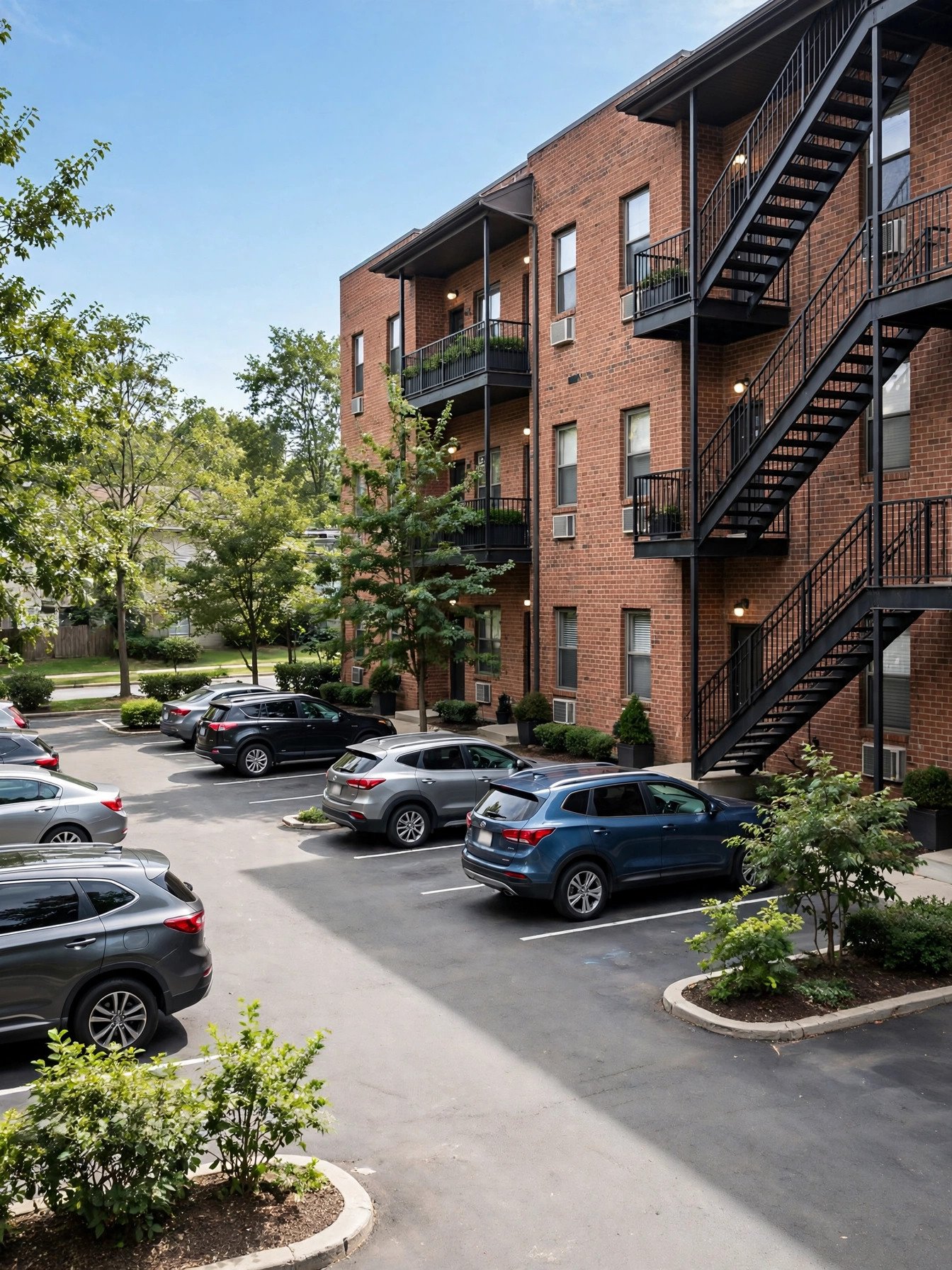
Fee #6 is parking, which is rarely free in managed complexes. An open lot spot might run $20–$50 a month; reserved, covered, or garage parking climbs from there. Some buildings charge per vehicle, so a two-car household pays double. If you street-park instead, price out the alternative honestly: permit costs, tickets, and the time cost of circling the block at midnight.
Fee #7 is storage. That 10×10 unit in the basement or the cage on the parking level is almost never included — and if your apartment is a studio or one-bedroom, you may need it. Ask the monthly rate, whether it’s climate-controlled, and whether the lease auto-renews the storage agreement. A cheaper workaround: measure the unit first and buy only furniture that fits, instead of paying monthly rent for furniture that doesn’t.
Practical move: treat parking and storage as part of the rent when comparing listings. A $1,100 apartment with $75 parking costs more than a $1,150 apartment with free parking.
4. Pet Deposit and Pet Rent

Fee #8 is the pet deposit, a one-time charge — typically $100–$500 per pet — meant to cover potential pet damage. Unlike a security deposit, pet deposits are often non-refundable, so read the clause: “deposit” on the fee schedule doesn’t automatically mean you get it back.
Fee #9 is pet rent, a monthly surcharge — typically $25–$100 per pet — that you pay for as long as the animal lives with you. This is where pet costs really compound: $50 a month is $600 a year, every year, on top of food, vet care, and everything else. Some buildings also cap the number of pets or restrict breeds and weights, which can force a last-minute rehoming scramble if you didn’t check before signing.
Practical move: if you’re thinking about adopting after moving in, check the pet policy first and price two years of pet rent into the decision. A “free” rescue cat at $50/month pet rent costs $1,200 over two years before a single vet bill.
5. Amenity and Community Fees

Fee #10 is the amenity fee, charged for access to the gym, pool, clubhouse, dog park, or coworking lounge — typically monthly, sometimes as an annual lump sum. The catch: at many large complexes this fee is mandatory whether you use the amenities or not. A building with a gorgeous rooftop pool you never visit is just a more expensive building.
Fee #11 is trash valet and common-area fees — doorstep trash pickup, hallway cleaning, landscaping, and other shared services billed monthly, often $25–$50. These usually can’t be opted out of, and they’re easy to miss because they show up as a line item on the rent statement rather than in the advertised rent.
Practical move: during the tour, ask “which fees are mandatory and which can I decline?” Then be honest about your habits — if you’ll never use the gym, a cheaper building without one beats a pricier building with one you subsidize.
6. Utility Connection Fees

Fee #12 covers utility connection and setup fees — the one-time charges from electric, gas, water, and internet providers to open an account or activate service at your address, typically $25–$100+ per service as of 2026. Four services means four setup charges landing in the same week as your deposit.
Two things trip up first-time renters here. First, deposits: if you have a thin or nonexistent utility-payment history, providers may require a security deposit before they turn anything on — budget for it. Second, timing: schedule activations a few days before move-in so you’re not paying for a hotel night or eating takeout in a dark apartment because the electrician’s first opening was Thursday.
Practical move: call each provider the week you sign the lease, not the week you move. Ask for every setup fee and deposit by name, and ask whether autopay or paperless billing waives any of them — it sometimes does.
7. Utility Pass-Through Billing
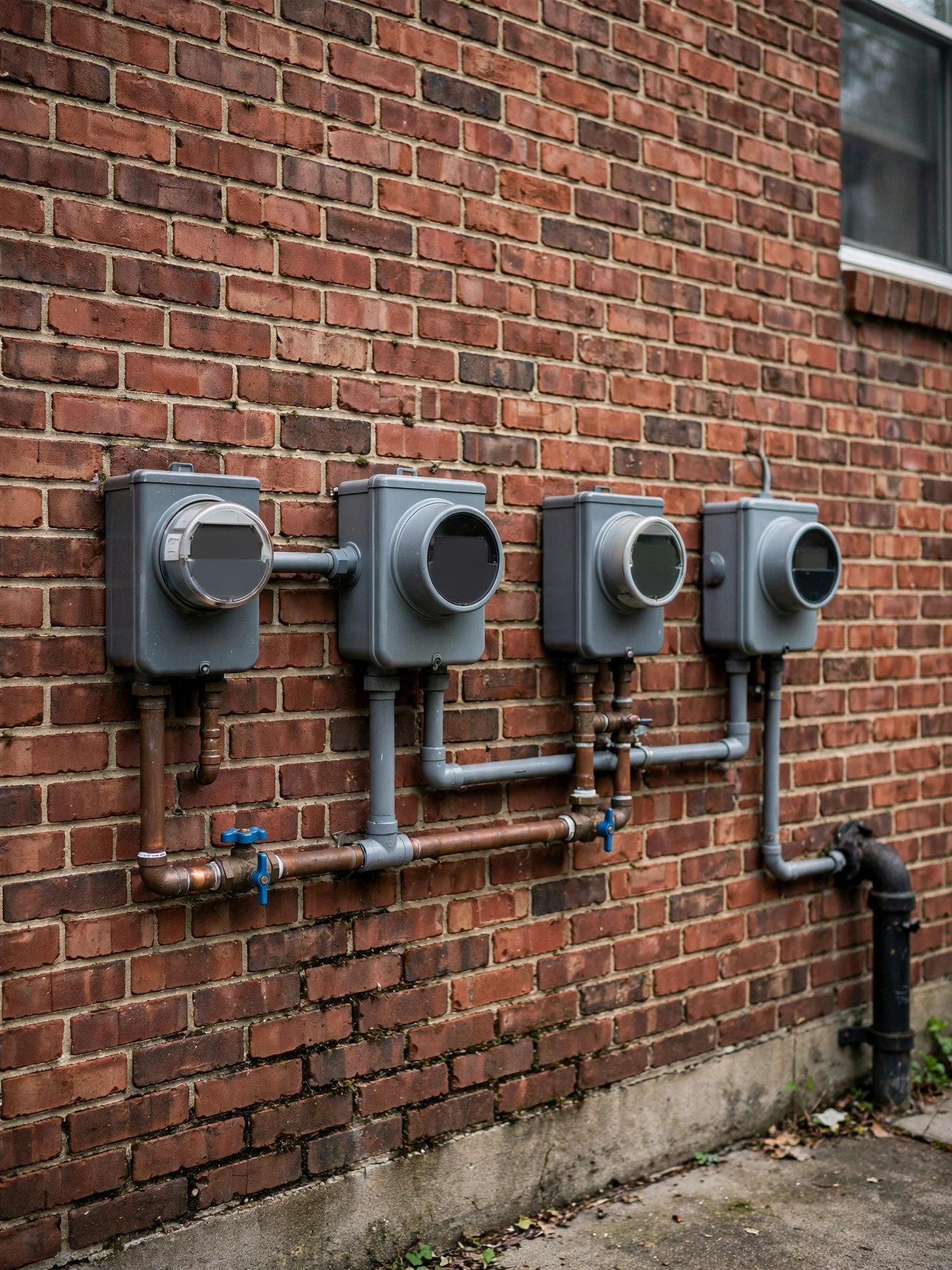
Fee #13 is utility pass-through billing — when the landlord receives one master utility bill for the building and passes your share to you, often through a third-party billing company. Common versions include RUBS (ratio utility billing system) for water, sewer, and trash, where your share is calculated by a formula based on unit size, occupancy, or fixture count rather than a meter on your door.
Why this counts as “hidden”: the advertised rent says “utilities not included,” but nothing tells you the pass-through formula until the first bill arrives — and third-party bills often add their own monthly service fee on top. Ask for a sample bill or the average monthly pass-through for your exact unit type before signing, and ask whether the billing company’s service fee is disclosed separately. For a full breakdown of what utilities typically run each month, the apartment utilities cost guide walks through every line item.
Practical move: if the building uses pass-through billing, add the sample-bill average — plus the billing company’s fee — to your monthly budget as a fixed cost. It behaves like rent: you can’t shop around for it.
8. Mandatory Tech Packages

Fee #14 is the technology package — bundled internet, smart thermostat, video intercom, keyless entry, or a building app, billed at roughly $20–$90 a month as of 2026. Newer complexes love these because they justify a higher effective rent while advertising a lower base rent.
The key question is whether you can opt out. If the smart lock and intercom are built into the unit, the fee is usually mandatory — you’re paying for the building’s tech whether you wanted it or not. If it’s an add-on internet package, you may be able to decline it and bring your own provider, which is often cheaper. Also check the speeds: a mandatory $60 “premium internet package” at speeds you’d never pay $60 for on the open market is just rent wearing a costume.
Practical move: ask “is the tech package optional, and what exactly is included?” Compare the package price against standalone internet plans in the area before you sign — the difference goes straight into your monthly budget math.
9. Renter’s Insurance Requirements

Fee #15 is renter’s insurance, which most managed buildings now require as a lease condition — typically $15–$30 a month as of 2026 for a basic policy. This isn’t the landlord being difficult: their insurance covers the building, not your laptop, bike, or couch. If a pipe bursts above you, your belongings are your problem without it.
Because it’s mandatory, landlords often set minimum coverage amounts (commonly $100,000 in liability) and may require being listed as an “interested party” on the policy so they’re notified if you cancel. Shop it yourself rather than taking the leasing office’s suggested provider — the same coverage often costs less elsewhere. And set a calendar reminder: letting the policy lapse mid-lease can technically put you in lease violation.
Practical move: get quotes before you sign, from at least two insurers, and confirm the policy meets the lease’s minimums. Then add the monthly premium to your fixed housing costs — it never goes away for the life of the lease.
10. Laundry and Move-Out Costs

Fee #16 is laundry. No in-unit washer/dryer means the shared laundry room or the laundromat — and at several dollars per wash-and-dry cycle, a week’s worth of laundry for one person easily becomes a real monthly line item. Price it: estimate your weekly loads, multiply by the per-cycle cost, and multiply by four. If the building’s machines are coin- or app-operated, that money leaves your budget every single week.
Fee #17 is the move-out and cleaning fee — charged at the end of the lease for “standard” cleaning, carpet treatment, or unit turnover, sometimes deducted from your deposit and sometimes billed separately. Read this clause before you sign, not when you’re moving out: some leases define “broom-clean” reasonably, others bill a flat cleaning fee no matter what condition you leave the place in. Knowing the rule on day one changes how you document the unit’s condition on move-in day.
Practical move: photograph everything on move-in day — every wall, appliance, and carpet corner — and email the photos to the leasing office so there’s a timestamp. It’s the cheapest insurance policy you’ll ever buy against a disputed move-out charge.
11. Your Pre-Lease Fee Worksheet

Before you sign anything, fill in this worksheet with the numbers from the actual fee schedule — not the listing, the lease. One-time fees go in the left column, monthly recurring fees in the right. Your true first-month cost is column one plus one month of column two; your true ongoing cost is rent plus column two.
| One-time fees (pay once) | Your cost | Monthly fees (pay every month) | Your cost |
|---|---|---|---|
| Application fee(s) | $____ | Parking | $____ |
| Credit/background screening | $____ | Storage unit | $____ |
| Administrative fee | $____ | Pet rent | $____ |
| Move-in fee | $____ | Amenity fee | $____ |
| Broker fee (if any) | $____ | Trash valet / common-area fee | $____ |
| Pet deposit | $____ | Utility pass-through (RUBS) | $____ |
| Utility connection fees | $____ | Third-party billing service fee | $____ |
| Utility deposits | $____ | Tech package | $____ |
| Renter’s insurance | $____ | ||
| Laundry estimate | $____ | ||
| One-time total | $____ | Monthly add-on total | $____ |
Your real numbers: First month cash needed = one-time total + first month’s rent + monthly add-on total. True monthly housing cost = rent + monthly add-on total. If that second number breaks your budget, the apartment is too expensive no matter what the listing says — which is exactly the trap the budget traps guide for rent-limited budgets helps you avoid.
Frequently Asked Questions
What are the most common hidden fees when renting an apartment?
The most common are application and admin fees, move-in fees, parking charges, pet deposits and monthly pet rent, amenity fees, utility connection and pass-through charges, mandatory tech packages, trash valet fees, and required renter’s insurance. Together they routinely add several hundred dollars to move-in day and $50–$150+ to each month’s true housing cost.
How much should I budget for move-in fees on my first apartment?
Plan for first month’s rent plus a security deposit (often one month’s rent), then add $300–$800+ in one-time fees — application, admin, and move-in charges — plus any broker fee, pet deposit, and utility setup costs. As of 2026, having three to four times one month’s rent saved before you start touring is a realistic cushion, not an exaggeration.
Are application fees refundable if I don’t get the apartment?
Almost never. Application and screening fees pay for the background and credit checks the landlord already ran, so they’re sunk costs whether you’re approved or denied. This is why you should tour first, shortlist carefully, and only pay application fees on places you’d actually sign.
What’s the difference between a pet deposit and pet rent?
A pet deposit is a one-time charge (typically $100–$500) meant to cover potential pet damage — and it’s often non-refundable despite the name. Pet rent is a monthly surcharge (typically $25–$100 per pet) you pay for the entire lease. Over a year-long lease, pet rent usually costs far more than the deposit.
Do I really have to pay for renter’s insurance, or is it optional?
If your lease requires it — and most managed buildings’ leases now do — it’s mandatory, not optional. Letting the policy lapse can put you in lease violation. The good news: basic policies typically run $15–$30 a month as of 2026, and shopping two or more insurers usually beats the leasing office’s suggested provider.
Can I negotiate hidden fees with my landlord?
Some of them, yes. Admin fees, move-in fees, and amenity charges are the most negotiable — especially if you sign quickly, move during a slow season, or the unit has sat vacant. Mandatory pass-throughs, tech packages built into the unit, and third-party billing fees are rarely negotiable. Always ask; the worst answer is no.
Are utility pass-through (RUBS) fees legal?
In most U.S. states, yes — landlords can generally allocate master-metered utility costs to tenants through formulas like RUBS, though rules vary by state and utility type. What’s worth scrutinizing isn’t the legality but the formula: ask how your share is calculated, whether the billing company’s service fee is disclosed, and what a typical monthly bill looks like for your unit type.
Conclusion

The rent on the listing is a starting price, not the price. When you budget for the first apartment hidden fees — the one-time charges at signing and the monthly add-ons that follow — you’re really answering one question: what does this apartment actually cost me, every month, for the whole lease? Fill in the worksheet with real numbers from the fee schedule, add them to the rent, and judge the apartment on that total. A slightly higher rent with no surprise fees almost always beats a bargain listing that nickels-and-dimes you for a year. Sign the lease with the full picture, and the budget you built on an entry-level salary will actually hold.

Maren started MyFirstLease after a rough first lease taught him everything the internet didn’t. He covers the logistical side of renting — move-in checklists, utilities, and the unglamorous first-week stuff nobody explains — and oversees everything published on the site.