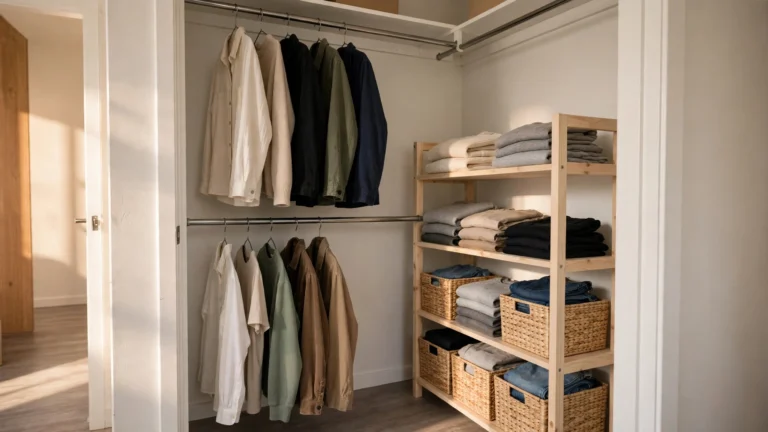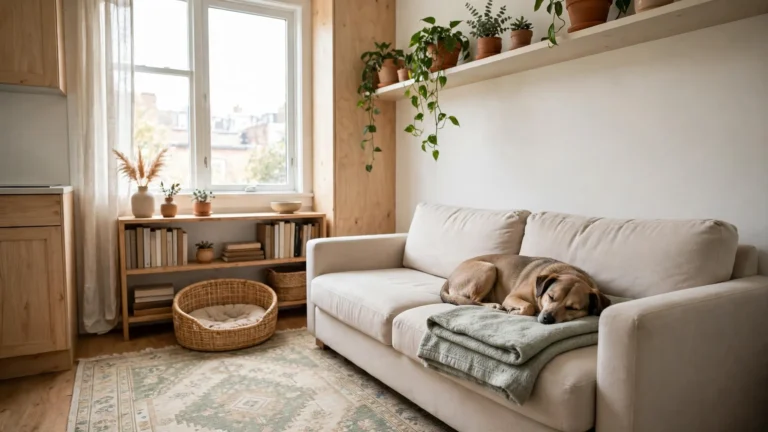
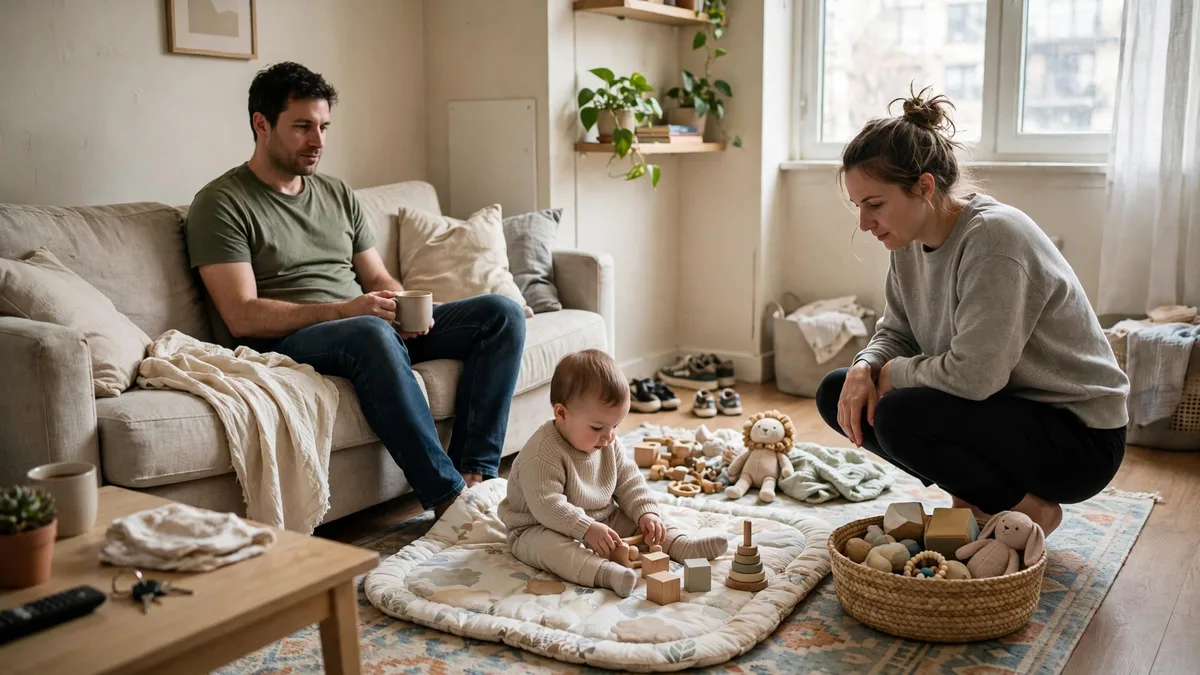
Learning how to decorate a small apartment living room for renters with a baby means solving two problems at once: the room still has to look like a living room adults enjoy, and it has to work as the place where a baby plays, naps, and explores — all without drilling a hole, painting a wall, or risking the deposit. That is a narrower job than decorating a nursery, and most guides skip it entirely.
This guide is written for a first-time renter parent whose baby shares the living room because there is no spare room to give them. It covers the layout first, then the furniture, storage, walls, and the safety checks that matter most in a rental — every idea below is removable, most of it costs little, and none of it asks the landlord for a renovation. For more reversible projects in the same spirit, browse the Decorating & Small Space Living guides.
Direct answer: To decorate a small apartment living room for renters with a baby, zone one corner as a defined baby area with a washable rug and low storage, choose soft-edged, stable furniture, hide cords and small objects, and decorate walls with removable adhesive or leaning pieces only. Keep heavy items off walls above the play area, and check your lease before anchoring any furniture.
Executive Summary
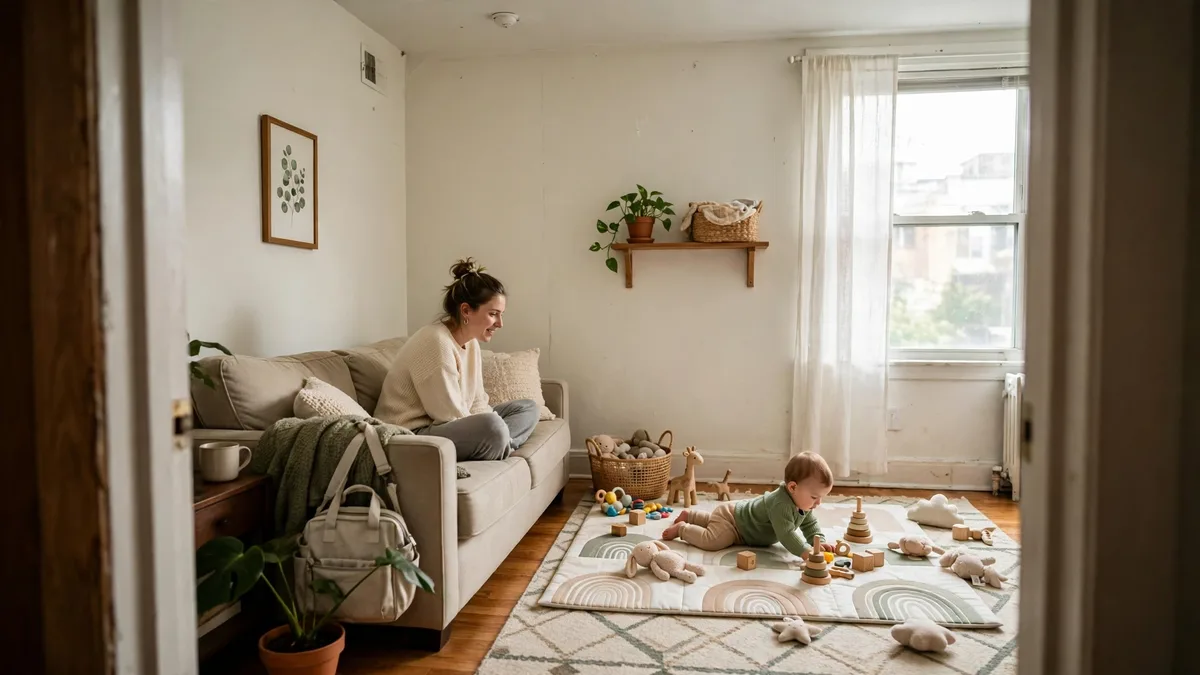
A small living room with a baby in it stops being one room and becomes two rooms sharing the same floor: an adult living area and a baby area that needs to be easy to watch, easy to clean, and easy to tidy in five minutes when guests arrive. The trick is making that split look intentional rather than accidental — a rug, a low shelf, and a consistent color palette do more than a room divider ever will in a space this size.
Below are seven steps, in the order that makes the most sense to do them: plan the layout, define the baby zone, sort the seating, fix the coffee table, add storage that hides the gear, decorate the walls without drilling, and finish with the cord and tip-over checks. Each section flags the renter constraint honestly — what needs written landlord permission, what can pull paint off, and where a cheaper shortcut tends to backfire — and the safety language stays hedged throughout, because no decor choice can guarantee a baby’s safety on its own.
1. Map the Room Before Buying Anything
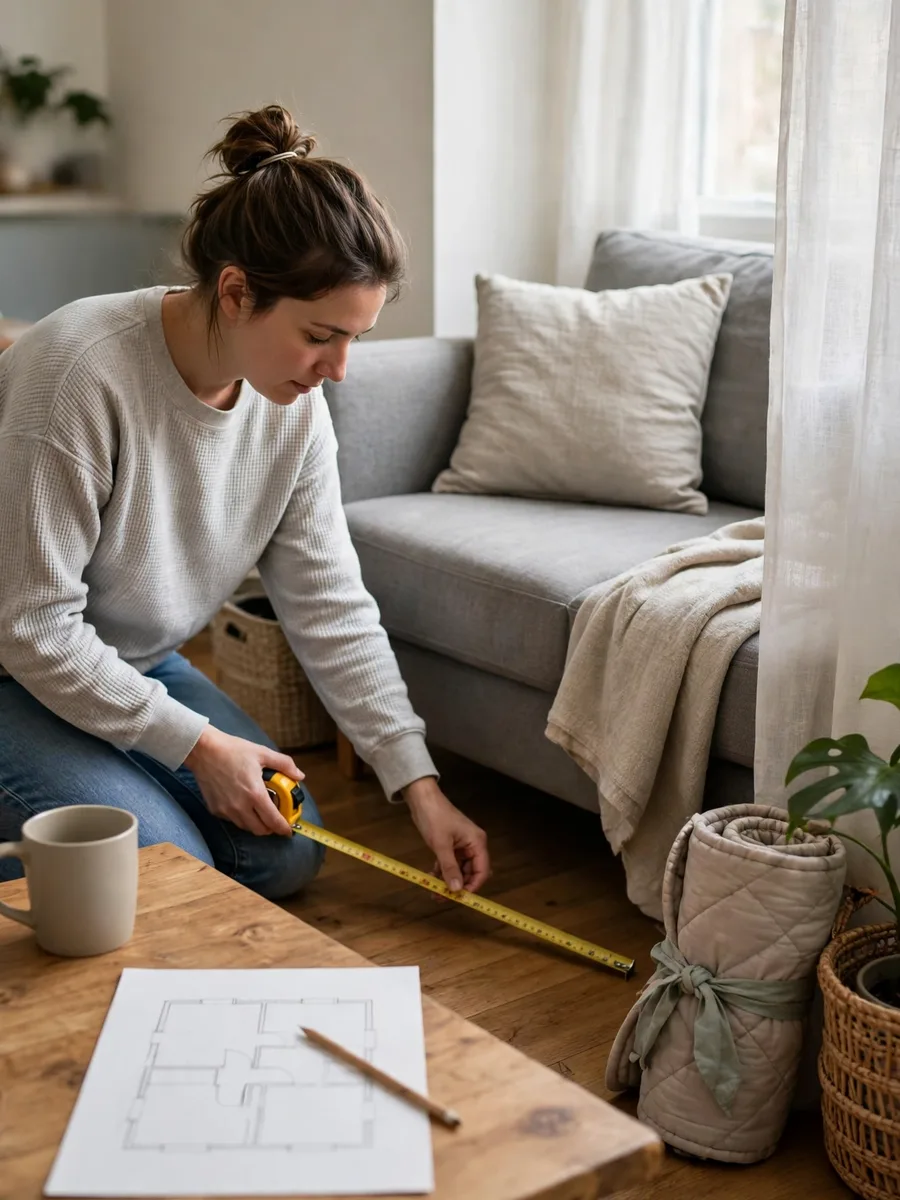
A small living room with a baby in it punishes impulse buying more than any other room in the apartment. A play gym, a bouncer, and a toy basket each look small on their own, and together they can swallow the only walking path to the kitchen. Sketch the room on paper first — even a rough rectangle with the door, windows, sofa, and TV marked — and decide where the baby area will live before spending anything.
The baby area usually works best in the corner with the best light and the clearest view from the sofa, so the baby can be watched without rearranging the room. Avoid the spot directly in front of a radiator or heater, and keep the play area away from the main walkway through the room; a baby who is learning to crawl should not be in the path between the front door and the kitchen. Leave at least one clear route through the room that is wide enough to carry a baby and a laundry basket at the same time.
A quick layout checklist helps before any purchase: measure the baby corner and write the numbers down; check where the outlets are, because that decides where lamps, the monitor, and the white-noise machine can go; note which wall gets the TV, since the baby area should not sit under it; and photograph the room empty so the before-and-after is obvious. This is also the moment to read the lease’s alterations clause — anything later in this guide that involves fixing furniture to a wall will need written permission, and it is easier to ask once, early, than to undo a purchase.
2. Define a Baby Zone With a Rug
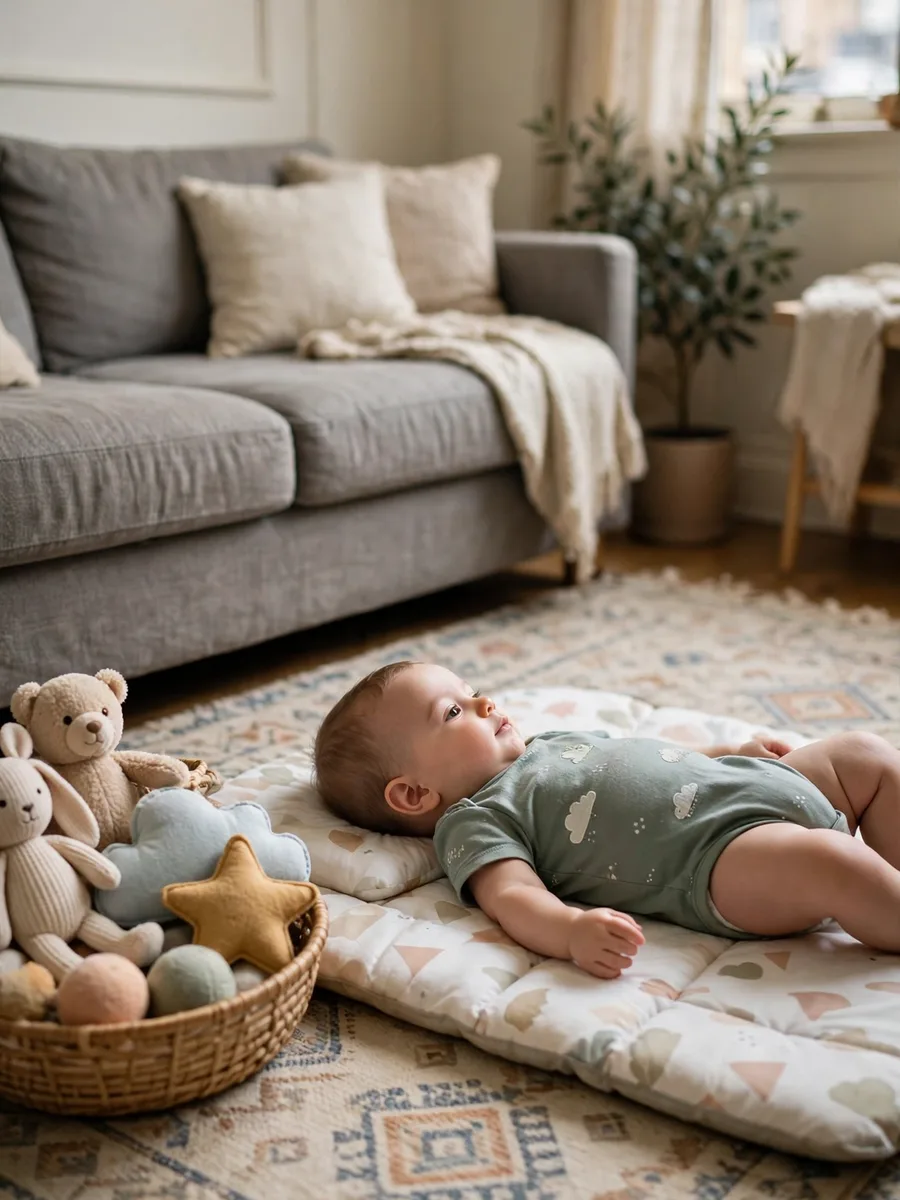
A baby zone that is defined by a rug reads as decor, while a baby zone defined by scattered gear reads as clutter. That is the whole idea behind this step: one washable rug, roughly 4 by 6 feet as of 2026 sizes commonly sold, marks the baby’s corner, cushions tummy time and first crawls, and gives every toy a place to belong. When the rug is rolled up or the toys are cleared, the corner goes back to being part of the living room.
Choose a low-pile, machine-washable rug in a pattern or color that repeats something already in the room — the sofa throw, a cushion, the curtains — so the baby corner looks like part of the design instead of an afterthought. Darker patterns hide the inevitable milk and food marks better than pale solids, and a rug pad underneath helps stop slipping on hard floors; check that the pad is the non-adhesive kind, since sticky pads can leave residue on rental floors. Expect a washable rug in this size to run roughly $40–$120 as of 2026.
Layer the zone lightly rather than filling it. A folded play mat or a thin foam mat on top of the rug adds cushioning for a younger baby and can be stored flat behind the sofa later. A low, open basket or a fabric cube holds the toys that are in rotation; the rest can live in a closet. Skip a baby gate across the living room itself unless the room opens onto stairs — a tension-mounted gate at a doorway is a different job, and a freestanding play yard is usually the simpler way to contain a crawler in an open-plan space. And keep the zone free of anything hung above it: no shelves, frames, or heavy decor over the spot where the baby plays or sleeps.
3. Pick Seating That Works Twice as Hard
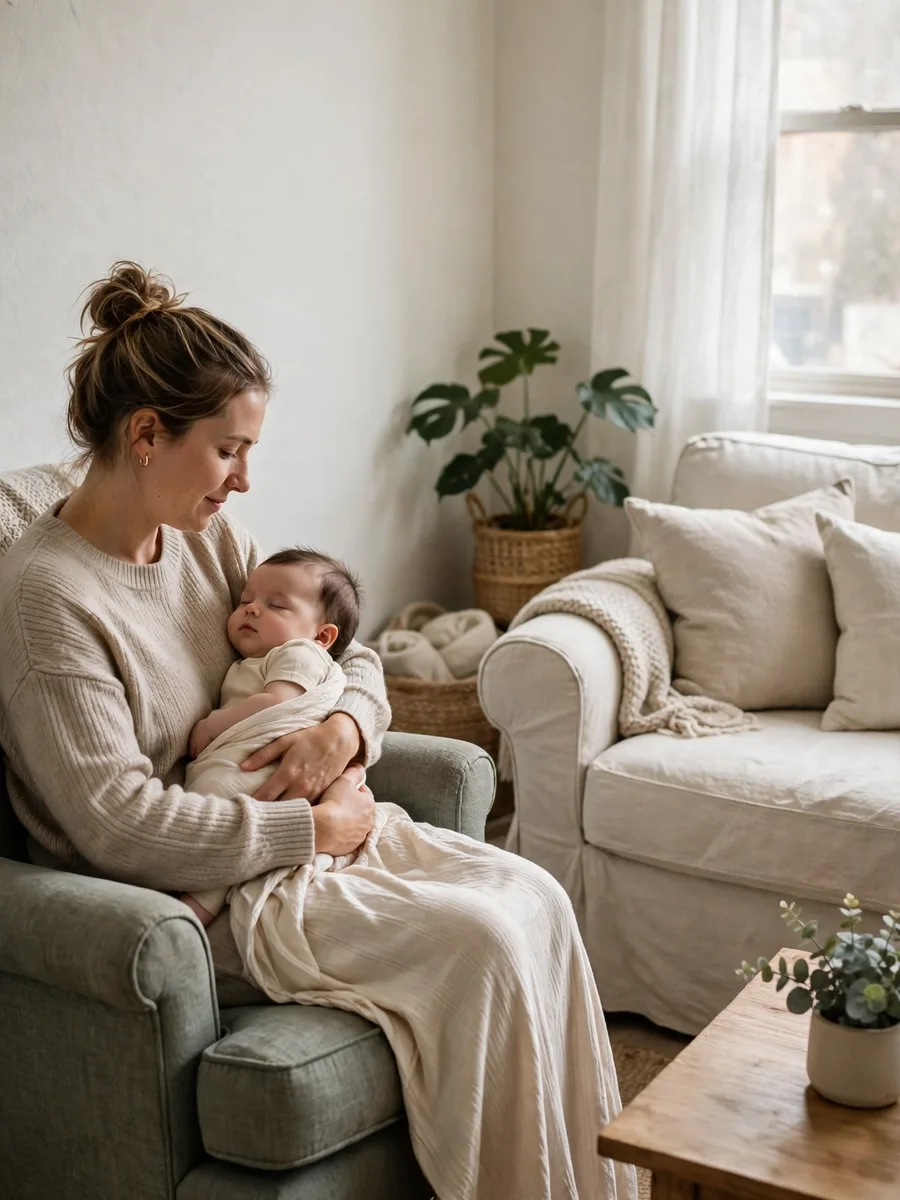
In a stylish living room with a baby in a small space, the sofa is the biggest object in the room, the most-used seat, and the first thing a pulling-up baby will grab. That makes it worth choosing — or adapting — with the baby in mind, rather than buying a separate nursery chair the room has no space for.
If the current sofa stays, make it work harder. A washable slipcover in a mid-tone, roughly $50–$150 as of 2026, protects the upholstery from spit-up and snacks and can be pulled off and laundered instead of spot-cleaned for an hour. Cushions in a durable, wipeable fabric earn their place; pale linen-look covers and loose fringe are the two finishes most likely to look tired within a month. For styling ideas that work with a slipcover and cushions, see how to style a small apartment sofa with throws and pillows.
Test stability before committing to any new seating. A lightweight chair that tips when a baby pulls up on its arm is a poor choice for this room, and the same applies to side tables: a heavy, low table with a wide base is steadier than a tall, narrow one. Keep the feeding spot near the baby zone rather than across the room, so the monitor, a burp cloth, and a water bottle are within reach without leaving the baby unattended on a raised surface. A baby should never be left alone on a sofa, chair, or any raised surface, even for a moment — that is a supervision habit, not a furniture feature.
4. Fix the Coffee Table — or Swap It
The coffee table is the most dangerous piece of furniture in a baby-friendly living room, and also the easiest to fix. It sits at exactly the height a crawling baby reaches, its corners are at head height for a new walker, and its surface collects the small objects — coins, remote batteries, hair ties — that a baby will find before anyone else does.
The cheapest fix is a set of soft corner guards, roughly $10–$20 as of 2026, stuck on with the adhesive the set provides. They reduce the sharpness of a corner rather than removing the risk entirely, and they work best on square-edged wood or metal tables; test one on a hidden spot first, since the adhesive can pull finish off a cheap table or leave residue. A thick table runner or a folded quilt draped over the table softens the top edge in the same spirit and is fully removable.
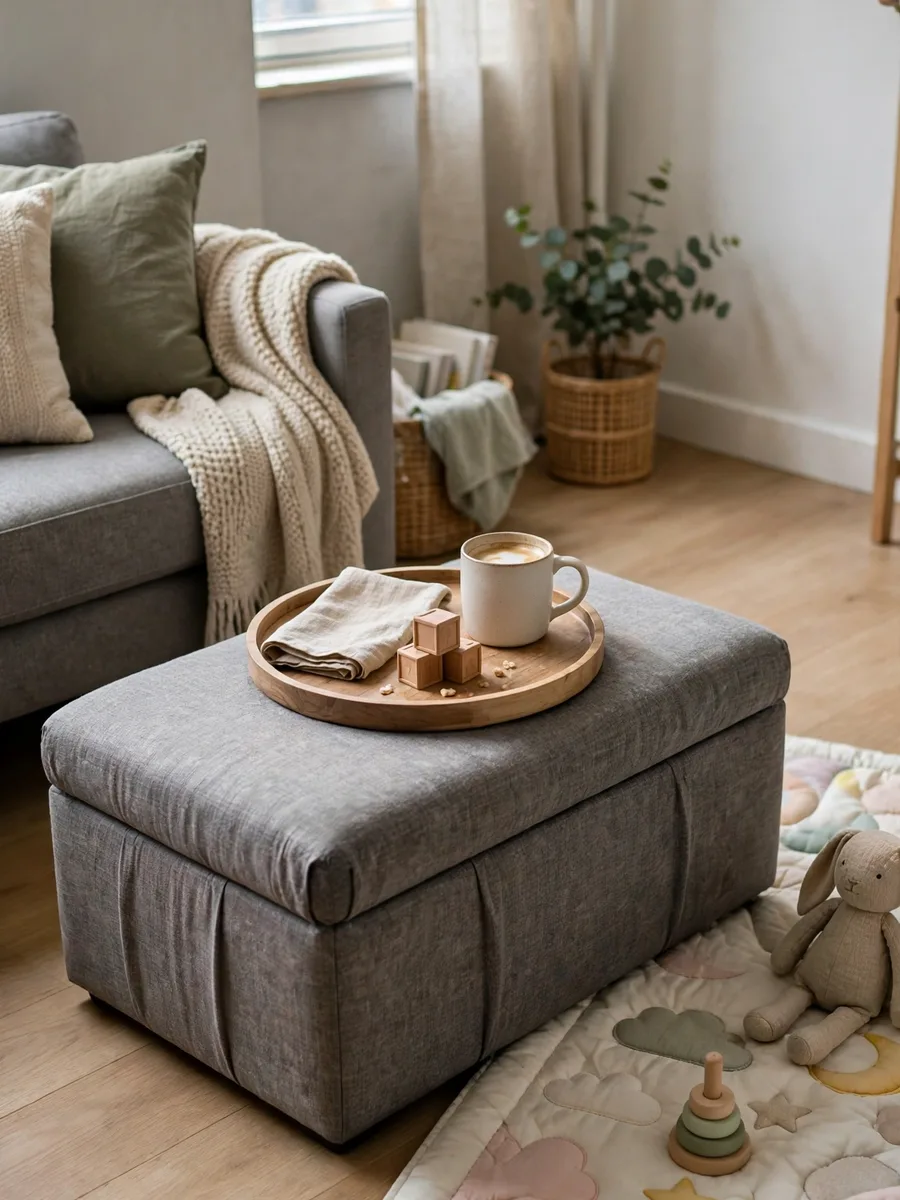
The better fix, if the budget allows, is to swap the table for something softer and lower: a large upholstered ottoman, a pouf, or a round, low coffee table with no sharp corners. An ottoman with a tray on top still holds a mug and a book, and it doubles as extra seating or a footrest. Expect a storage ottoman to run roughly $60–$150 as of 2026. Whatever sits in the middle of the room, keep its surface clear of small objects and hot drinks, and check the table’s stability — a wobbly table that a baby can pull toward them is worse than a sturdy one with guarded corners.
5. Hide the Gear in Plain Sight
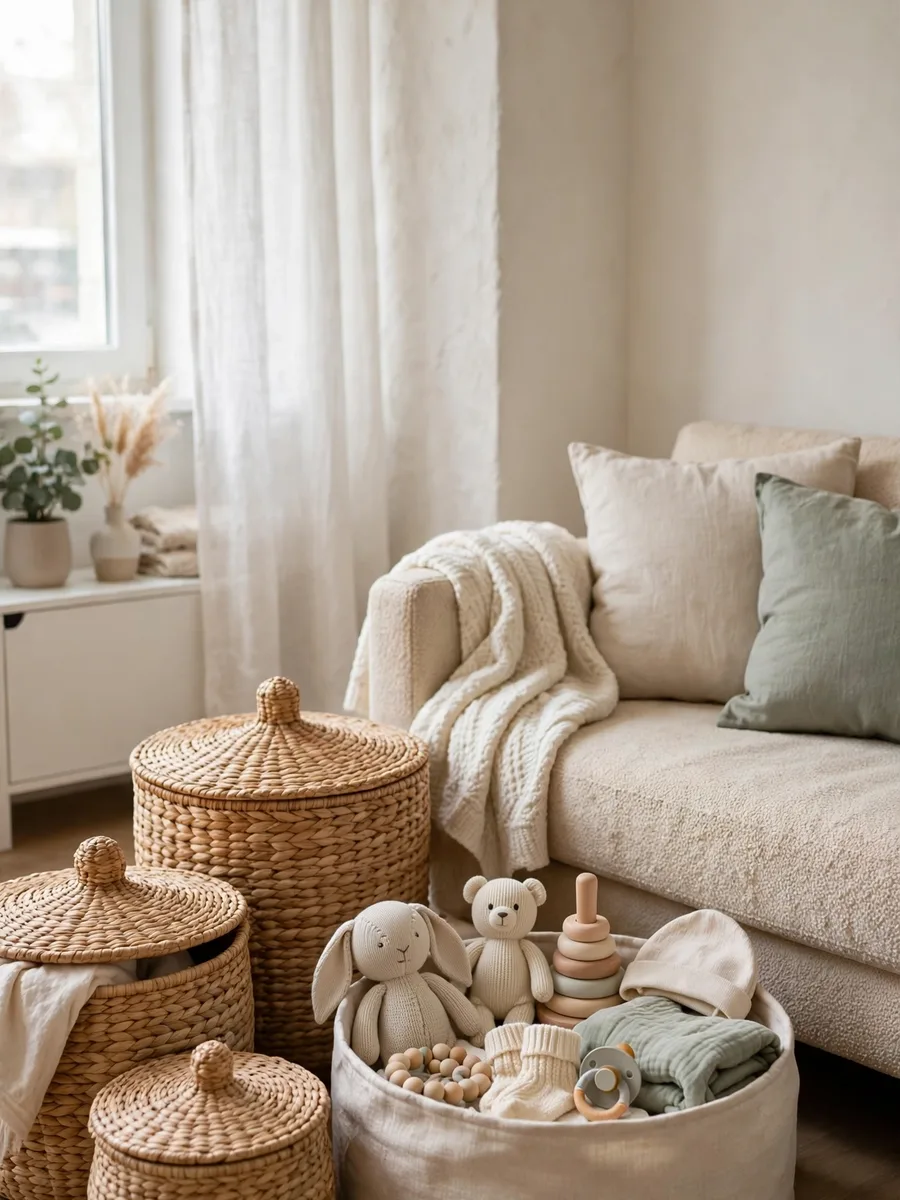
Baby gear multiplies fast, and in a small apartment the difference between a stylish room and a storage room is whether the gear has a home. The goal is not to hide the baby — it is to make the baby’s things look like they belong in a living room, so the room still feels like a room adults want to sit in.
A storage ottoman, a lidded basket, or a low cabinet with doors does the heavy lifting here. Toys go in one basket, diapers and wipes in another, and both slide under a console table or sit beside the sofa where they are reachable with one hand. Open shelving looks tidy in photos and chaotic in real life with a baby, so prefer closed storage for the baby supplies and save the open shelves for the few decorative objects that sit above the baby’s reach. A slim rolling cart, roughly $25–$60 as of 2026, can hold feeding and changing supplies and roll into a closet when guests arrive.
Rotate rather than display. Keep five or six toys out and the rest in a closet bin, swapping them every week or two; the room stays calmer, and the baby gets something “new” without a purchase. Label the bins only if that helps — in a one-room setup, the system that works is the one the tired parent at 2 a.m. can use without thinking. And keep the diaper bag packed and by the door, not unpacked across the sofa; that single habit clears more clutter than any piece of furniture.
6. Decorate Walls Without Drilling
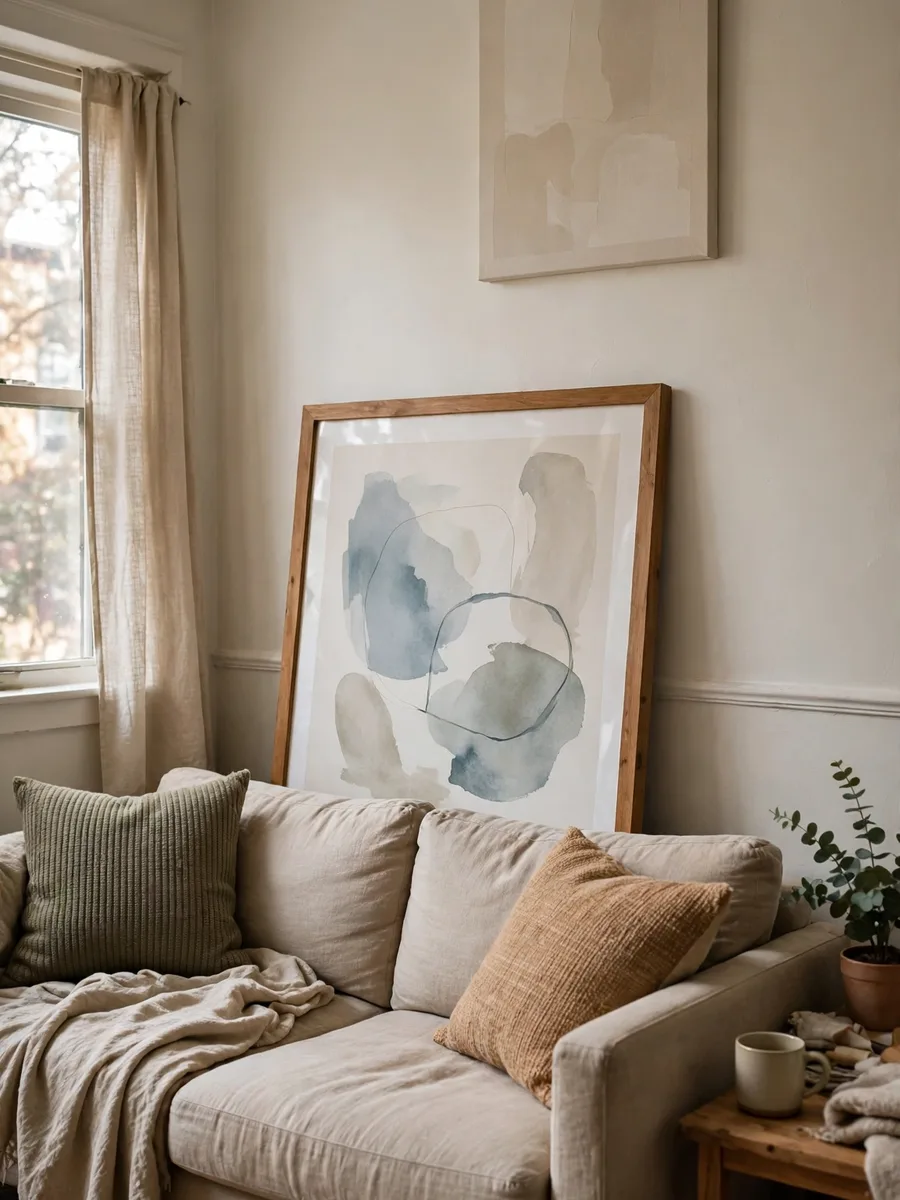
Decorating a living room with a baby and no drilling is mostly a matter of choosing the right kind of “up” — leaning, sticking, or hanging from something that already exists — and keeping everything light and low-risk. The wall behind the sofa is the room’s focal point, and it is also the wall a baby will eventually reach, so the two jobs have to be planned together.
Removable adhesive strips and hooks, rated for the actual weight of the item, are the standard renter tool here, and the rating matters: a frame that weighs three pounds needs strips rated well above that, with two strips rather than one, so a single failure does not drop the frame. Test one strip on a hidden spot for a few days first — adhesive can pull paint off rental walls, especially paint that has been layered many times — and never hang anything heavy above the baby’s play area or anywhere a baby sleeps. A framed print or a lightweight canvas at adult eye level, on the wall the baby cannot reach from the floor, is the safe version of wall art in this room.
Leaning pieces are the zero-adhesive alternative and often look better in a small room. A large framed print or a mirror leaned against the wall behind the sofa adds height without a single hole, as long as it is stable and cannot be pulled over — lean it at a slight angle, keep it out of the baby’s pulling-up zone, and consider a small anti-slip pad underneath. Washable, wipeable wall decals in a soft pattern can mark the baby corner and peel off at move-out, but the same test-spot rule applies. Skip string lights and garlands with cords in the baby’s reach, and keep blind cords tied up and out of reach, since dangling cords are a hazard for a baby who is learning to stand.
7. Tame Cords, Screens, and Tip-Over Risks
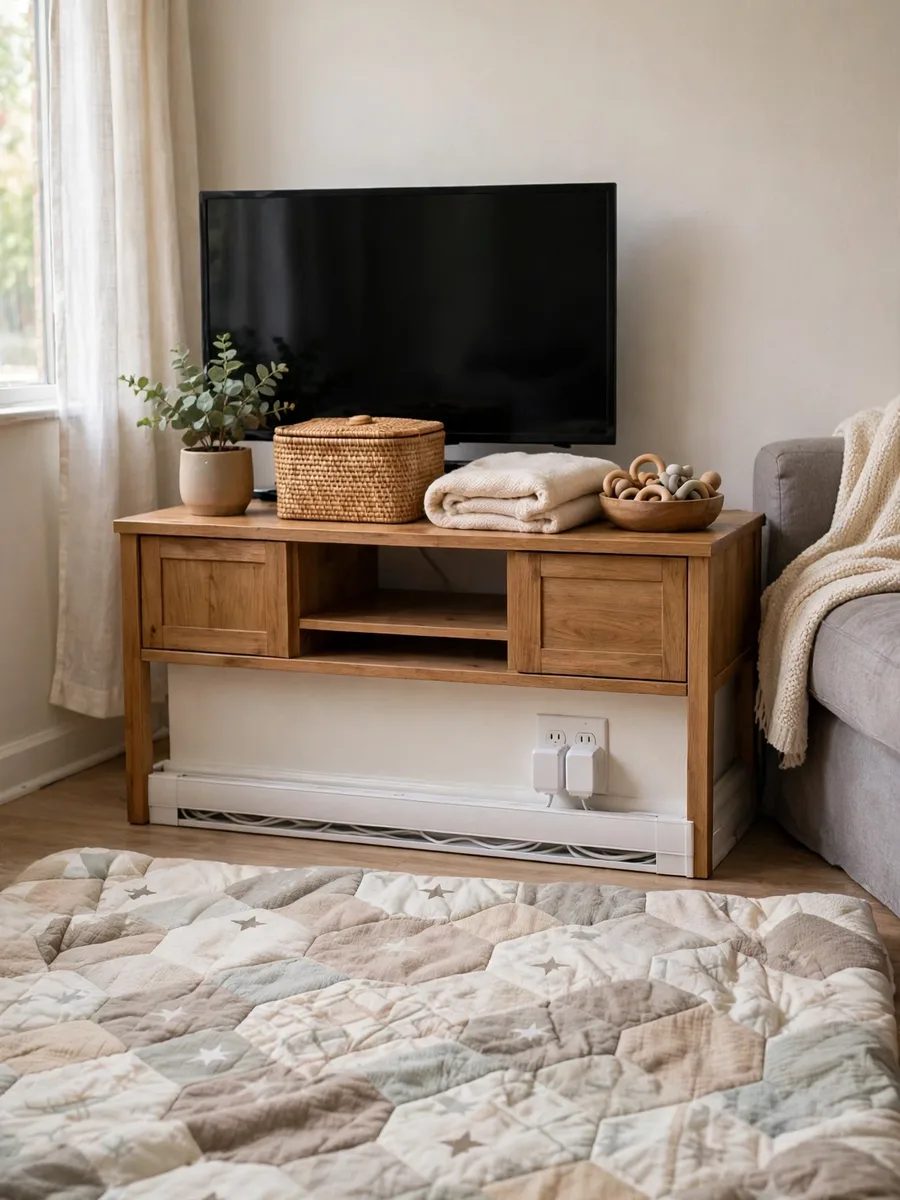
This is the least decorative step and the one that matters most. Baby proofing a rental living room without drilling is a set of small, unglamorous fixes — outlet covers, cord management, and furniture stability — and it is also the step where the lease shows up again, because the sturdiest fix for a tall bookcase usually involves a wall anchor.
Start with cords. Gather TV, lamp, charger, and monitor cables into a cord cover or a cable box, roughly $15–$30 as of 2026, and route them behind furniture where a baby cannot reach them. A TV that sits on a low stand should be pushed back from the edge, and its cords should not dangle where they can be pulled. For more on styling the screen wall itself, see these small apartment TV wall decor ideas for renters with no drilling, which cover the same wall without a single hole. Keep small batteries, coins, and remote controls in a lidded box or a high drawer — anything smaller than the baby’s fist is a choking risk and belongs out of reach.
Then look at tip-over risk. Tall bookcases, dressers, and TV stands are the pieces most likely to tip if a baby climbs or pulls on them. The standard advice is to anchor them to the wall, but in a rental that usually means screws — and screws usually need written landlord permission, so ask in writing and save the reply before drilling anything. Check the furniture manufacturer’s rating and instructions for any anti-tip device before buying one, since not every strap fits every piece of furniture. Freestanding alternatives that reduce the risk without a wall fixing include keeping heavy items on the lowest shelves, removing the top-heavy load, and choosing low, wide storage over tall, narrow pieces. Outlet covers on every accessible outlet and a check that no furniture sits under a window a baby could climb toward complete the pass — and re-check it every few months, because a baby who could not reach the shelf in March can almost certainly reach it by June.
Frequently Asked Questions
Where should the baby area go in a small living room?
Put it in the corner with the best light and the clearest view from the sofa, away from the main walkway and away from heaters or radiators. A washable rug marks the spot and keeps it looking intentional. Avoid placing the baby area under the TV or under any wall-mounted or leaning decor, and keep it out of the path between the front door and the kitchen.
How do I fit a baby area into a small living room?
Start by measuring the corner and choosing only the essentials for it: a rug or play mat, a low basket of toys, and a spot for feeding. Rotate toys instead of displaying them all, use furniture that stores things (an ottoman, a lidded basket), and keep one clear walking path through the room. Most babies need far less floor space than the gear catalogs suggest.
How do I baby-proof a rental living room without drilling?
Use outlet covers, cord covers or cable boxes, soft corner guards, and tension-mounted gates at doorways where they fit. Choose low, wide, stable furniture and keep heavy items on the lowest shelves. For tall furniture, anchoring is the sturdiest option, but it usually needs written landlord permission in a rental — check the manufacturer’s instructions and your lease, and ask in writing before drilling.
What decor is safe to use around a baby in a rental?
Lightweight, removable decor works best: washable rugs and slipcovers, soft baskets, removable adhesive art hung well above the baby’s reach, and leaning frames kept out of the pulling-up zone. Avoid heavy frames or mirrors above the play area, dangling cords, string lights within reach, and small decorative objects the baby can grab. No decor choice can guarantee safety on its own — supervision and keeping small objects out of reach matter more than any product.
Can I use a crib in the living room?
Yes, many renters do when there is no separate bedroom for the baby, but keep the sleep surface itself bare: a firm mattress with a fitted sheet, and no pillows, blankets, bumpers, or soft toys in the sleep area. Keep the crib away from windows, blind cords, and anything hung on the wall above it, and leave enough space around it for an adult to reach the baby easily at night.
Do I need my landlord’s permission to anchor furniture?
Usually yes, if anchoring means screws in the wall — most leases treat that as an alteration, even a small one. Ask in writing before drilling, save the reply, and check the furniture manufacturer’s instructions for the right anti-tip device. If permission is refused, reduce the risk instead: use low, wide furniture, keep heavy items low, and keep tall pieces out of the baby’s play area.
How do I keep the living room looking stylish with a baby?
Repeat one or two colors from the adult side of the room in the baby zone — the rug, the baskets, a cushion — so the baby corner looks designed rather than added. Hide supplies in closed storage, rotate toys, and keep the surfaces clear at the end of the day. A room that is tidy for ten minutes a day reads as stylish; a room with every toy on display reads as a toy store.
What should I buy first if my budget is tight?
Buy the washable rug and the corner guards first, then a storage basket and outlet covers. Those four cover the floor the baby plays on, the sharpest corners, the clutter, and the outlets. A slipcover and a storage ottoman can wait until the next month — the room works without them, but it is hard to relax in a room with an unguarded coffee table and a bare floor.
Conclusion
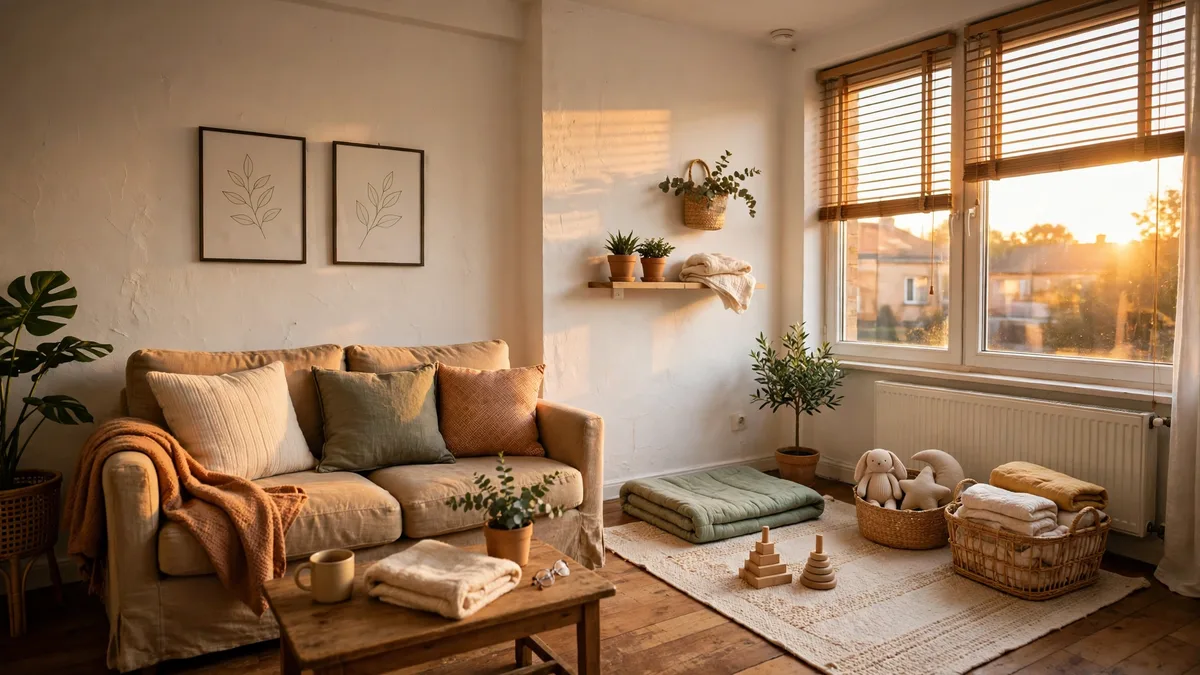
A small living room can be both a grown-up room and a baby’s room, and learning how to decorate a small apartment living room for renters with a baby is mostly a matter of zoning the space honestly: one defined corner for the baby, stable and soft-edged furniture everywhere else, storage that hides the gear, and walls decorated without a single hole. Start with the rug and the layout, then fix the coffee table and the cords — those four moves change the room more than any single purchase.
Keep the safety language in perspective as you go: no product or layout can guarantee a baby’s safety, so pair the decor with supervision, regular re-checks as the baby grows, and written landlord permission before anything gets screwed into a wall. Do that, and the room will look like yours — and the deposit will come back like you never changed a thing.

Maren started MyFirstLease after a rough first lease taught him everything the internet didn’t. He covers the logistical side of renting — move-in checklists, utilities, and the unglamorous first-week stuff nobody explains — and oversees everything published on the site.