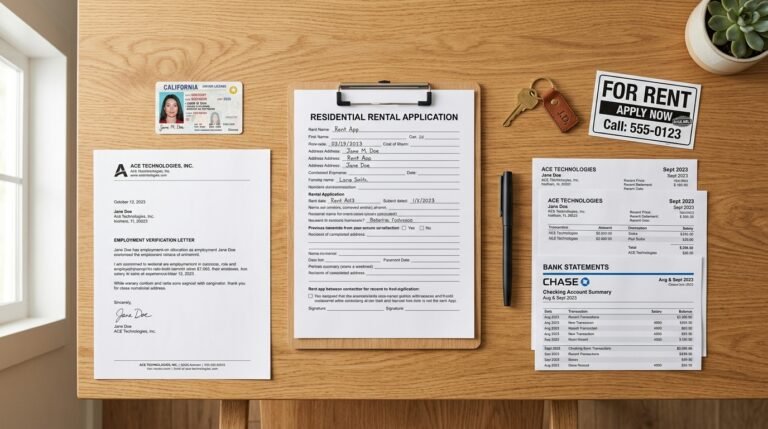
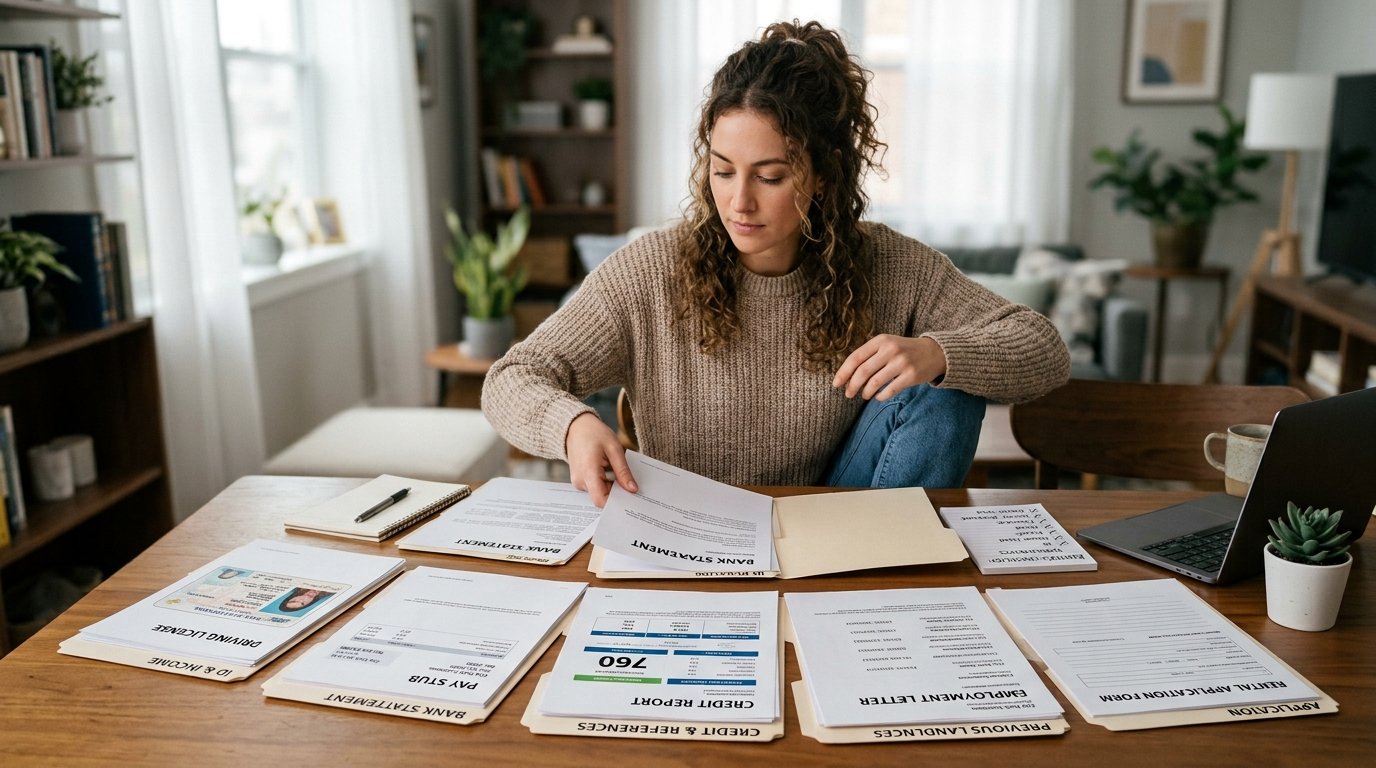
If you’re getting ready to apply for your first apartment, one question probably keeps popping into your head: what documents do landlords ask for, exactly? The truth is, most landlords request a fairly standard set of paperwork to confirm you’re who you say you are and that you can actually afford the rent. Once you know what’s coming, gathering everything ahead of time takes maybe an hour — and it can be the difference between getting approved fast or losing the apartment to someone who applied with a folder already in hand. Below, we’ll walk through every document landlords typically ask for, why they ask for it, and how to have it ready before you even start touring apartments.
Why Do Landlords Require So Much Paperwork?
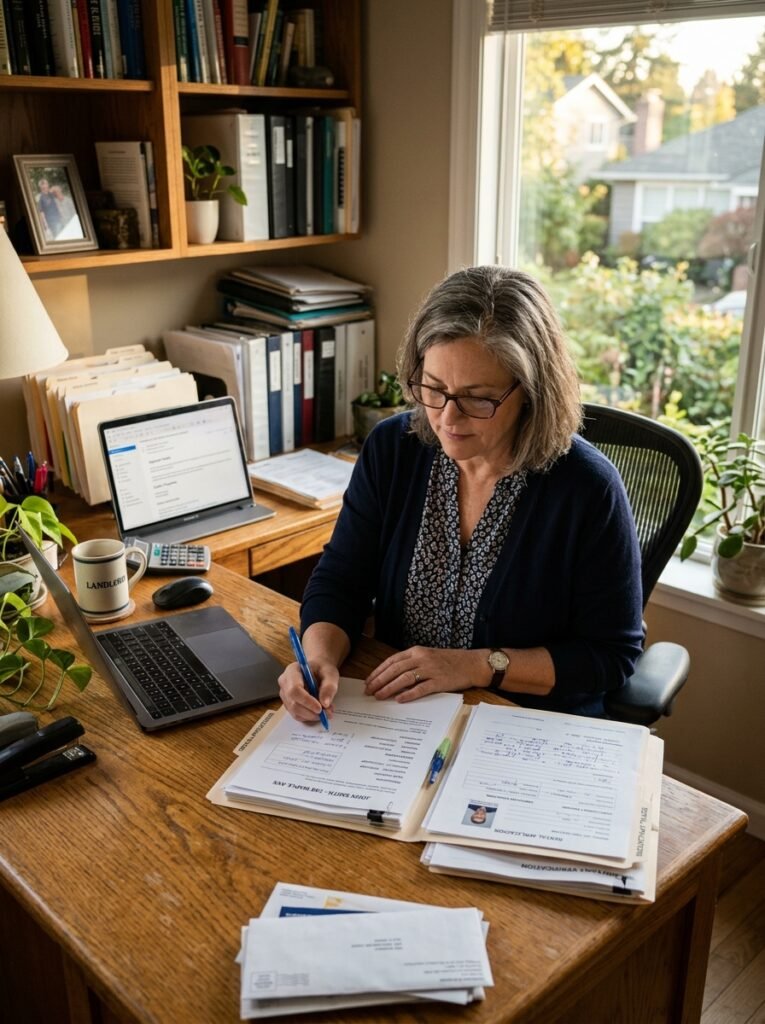
Landlords aren’t collecting documents to make your life difficult — they’re managing risk. A vacant unit costs them money every month, and a tenant who can’t pay rent or damages the property costs them even more. Requesting documentation lets a landlord verify three things: your identity, your ability to pay, and your track record as a tenant.
This is also why the process can feel repetitive if you’re applying to several places at once. Every landlord is running the same basic checks, just packaged slightly differently depending on the property management company or individual owner.
The Core Documents Landlords Almost Always Ask For
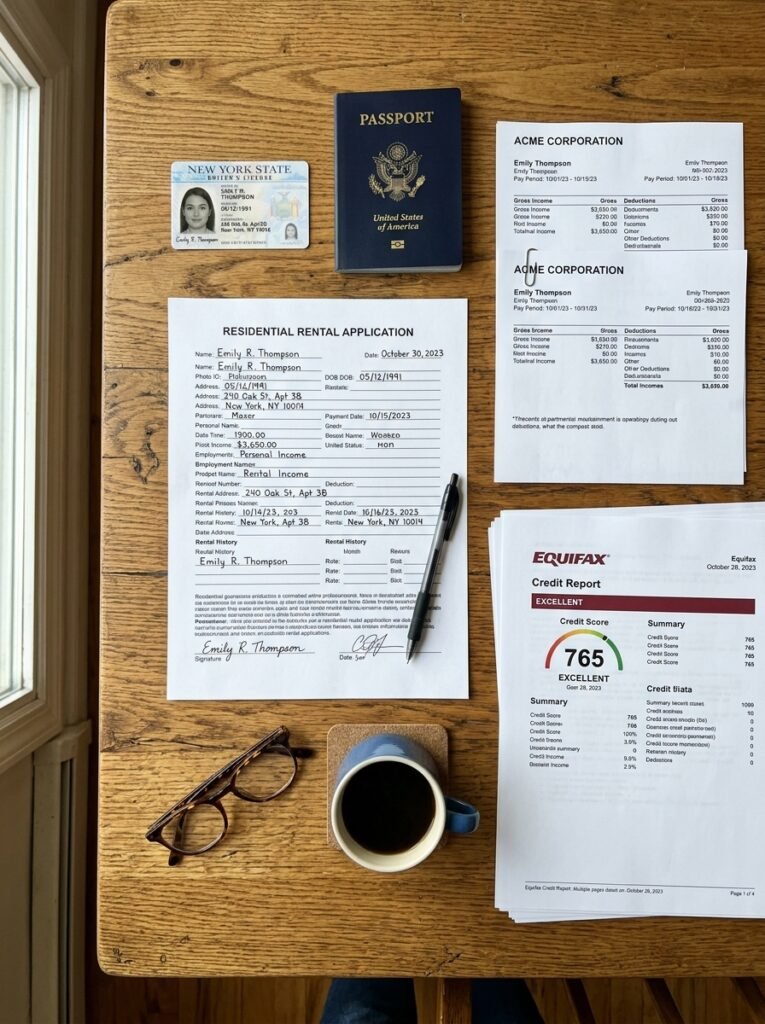
Government-Issued Photo ID
A driver’s license, state ID, or passport is the baseline requirement for nearly every rental application. It confirms your identity and age, and lets the landlord match your name to the other documents you submit. Make sure it isn’t expired — an expired ID is one of the most common reasons applications get delayed.
Proof of Income
Landlords typically want to see recent pay stubs (usually the last 2–3), a W-2, or an official offer letter if you’re starting a new job. Most use an income-to-rent ratio of about 3x the monthly rent as their benchmark. If rent is $1,500, they’ll generally want to see you earning around $4,500 a month before taxes.
Employment Verification
Some landlords go a step further and contact your employer directly, or ask for a signed employment verification letter. If you’re self-employed or freelance, tax returns, 1099 forms, or bank statements showing consistent deposits usually work as substitutes.
Credit Report
Many landlords pull your credit themselves as part of the application fee, but some ask you to provide a recent report. This shows your payment history and overall debt load. A score in the mid-600s or higher is usually considered solid, though requirements vary a lot by market and property type.
Rental History or References
Landlords like to hear from your previous landlord that you paid on time and didn’t trash the place. If this is your first apartment and you don’t have rental history, a reference from an employer, professor, or even a long-term landlord of a family member can help fill that gap.
Documents Landlords Sometimes Ask For (Situational)
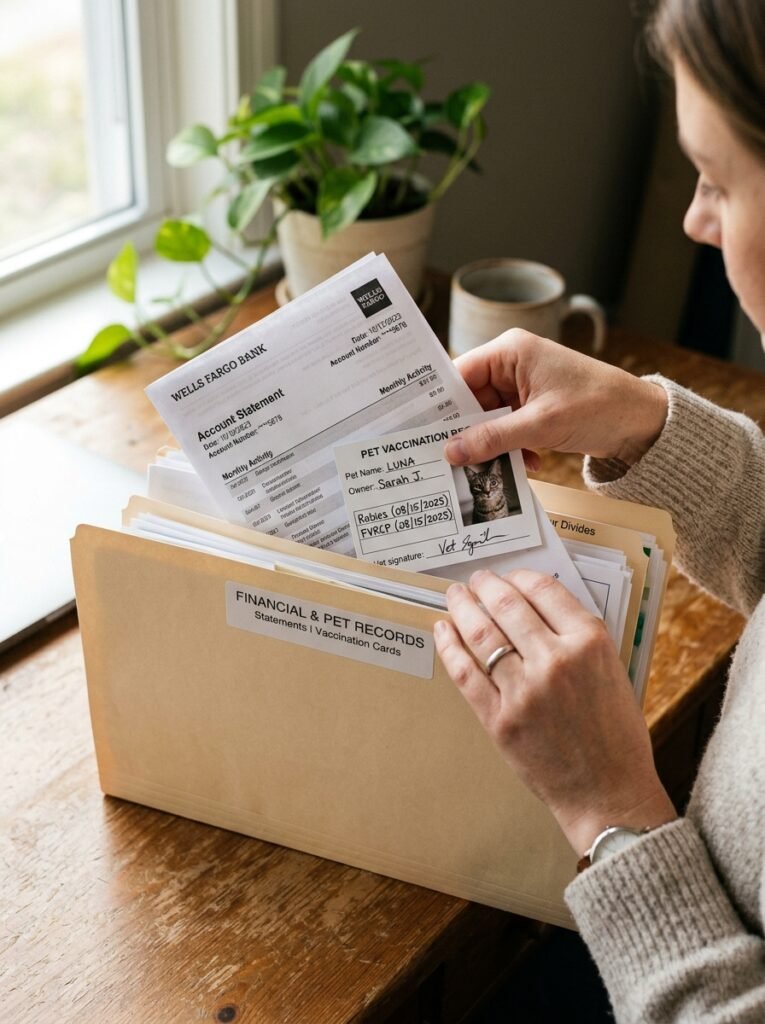
- Bank statements — especially if your income is irregular or you’re self-employed
- Co-signer documents — ID, proof of income, and credit info for your co-signer if you need one
- Proof of savings — sometimes requested if your income-to-rent ratio is borderline
- Pet documentation — vaccination records or a pet resume if you’re renting with an animal
- Social Security number or ITIN — for the background and credit check
Not every landlord will ask for all of these, but having them ready means you’re never caught off guard mid-application.
How to Organize Your Documents Before You Apply
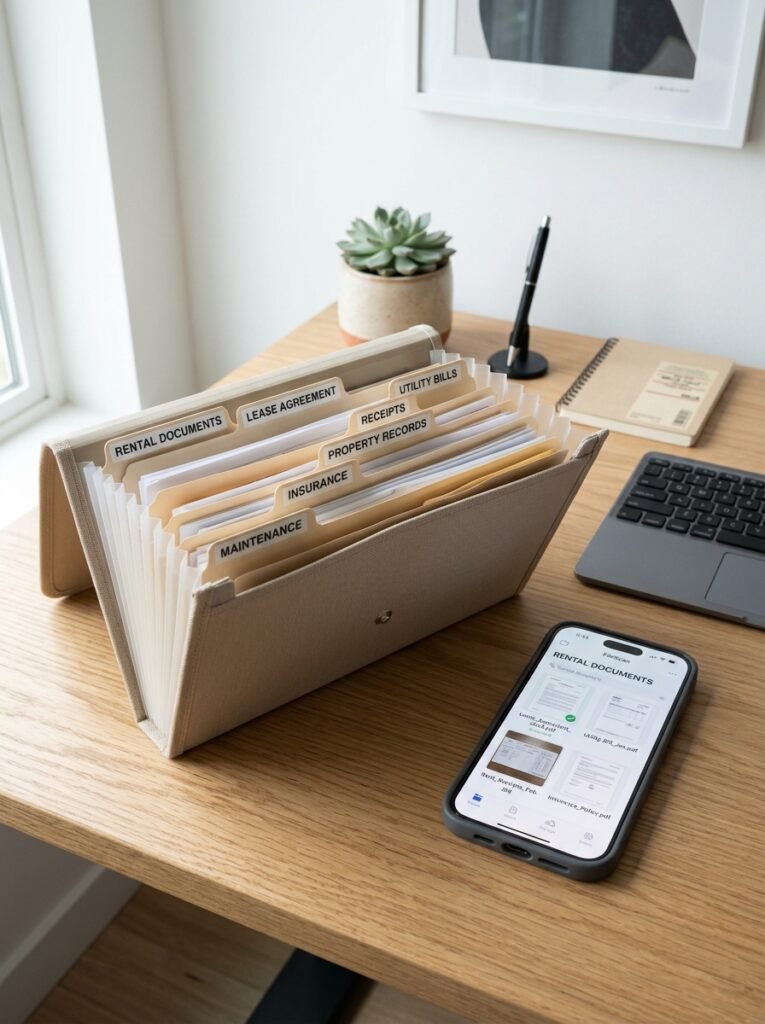
The easiest way to avoid delays is to build a “rental application folder” before you ever tour an apartment. Keep both physical and digital copies (a folder on your phone works fine) with everything named clearly — ID, most recent pay stub, reference contact info, and so on.
A few habits that make this easier:
- Scan documents clearly — blurry photos of pay stubs are a common cause of rejected applications
- Update pay stubs regularly, since most landlords want documents no older than 30–60 days
- Have your references’ phone numbers ready, not just their names
- Keep a digital copy of your ID saved somewhere secure but accessible
What Happens If You’re Missing a Document?

If you don’t have a traditional pay stub or established credit, you’re not necessarily out of luck. Landlords often accept alternatives:
- No credit history → a co-signer or a larger security deposit
- No employer → tax returns or bank statements showing income
- No rental history → personal or professional references instead
Being upfront about a gap and offering an alternative document usually goes over much better than submitting an incomplete application and hoping no one notices.
FAQs
Do all landlords check credit scores?
Most do, either by pulling the report themselves through the application fee or asking you to provide one, though small independent landlords sometimes skip this step.
Can I use a job offer letter instead of pay stubs?
Yes, if you’re starting a new job, a signed offer letter stating your salary and start date is usually accepted as proof of income.
What if I don’t have a co-signer available?
Some landlords will accept a larger security deposit or several months of rent paid upfront instead of a co-signer.
How old can my documents be when I submit them?
Most landlords want pay stubs, bank statements, and credit reports dated within the last 30 to 60 days.
Do landlords ask for tax returns?
Usually only if you’re self-employed or a freelancer without traditional pay stubs, as tax returns help verify consistent income.
Is a passport enough for photo ID, or do I need a driver’s license too?
A passport alone is typically sufficient, since landlords are just confirming your identity and age.
Conclusion
Knowing what documents landlords ask for before you start apartment hunting saves you time, stress, and possibly the apartment itself. At minimum, expect to provide a photo ID, proof of income, and some form of rental or credit history—and have backup documents ready in case your situation doesn’t fit the standard mold. For a deeper breakdown of the full application process, check out our guides on [rental application documents for first-time renters] and [what to put on a rental application if living with parents].

Maren started MyFirstLease after a rough first lease taught him everything the internet didn’t. He covers the logistical side of renting — move-in checklists, utilities, and the unglamorous first-week stuff nobody explains — and oversees everything published on the site.