
Starting a new job in a new city usually means finding your first apartment at the same time, and a good first apartment checklist can keep those two stressful projects from colliding. This guide walks through the practical decisions — budgeting, moving logistics, small-space living, and settling in — that make the first few months in a new place feel manageable instead of chaotic.
It’s written for anyone moving into their first apartment for a new job, whether that’s a studio in a big city like New York or a smaller one-bedroom somewhere quieter. Some of these tips are about money and paperwork; others are about turning an empty, unfamiliar unit into a peaceful home you actually want to come back to after work.
Executive Summary

This article covers the full arc of a first apartment move: setting a budget you can actually sustain on a new-job salary, choosing a neighborhood and lease you understand, building a moving checklist and packing plan, furnishing a small space without overspending, and setting up the everyday systems — cleaning, safety, routines — that make an apartment feel livable. Along the way there’s a sample new apartment checklist you can adapt into your own first apartment checklist PDF.
None of this requires expensive gear or design expertise. Most of it comes down to sequencing: doing things in the right order (lease review before signing, utilities before move-in day, essentials box before the moving truck leaves) so you’re not solving problems at 11 p.m. on your first night in a new city.
1. Set a Realistic Budget First

Before touring apartments, work out what you can actually afford on your new salary, not your old one. A common guideline is to keep rent at or below 30% of gross monthly income, though in expensive markets like New York many renters end up spending more and cutting back elsewhere. Build in the costs that aren’t rent: a security deposit (often equal to one month’s rent), a broker fee in some cities, application fees, and the first month’s utilities before you’ve had a full billing cycle to see what they actually cost.
It also helps to separate one-time moving costs from ongoing monthly costs. One-time costs include the deposit, moving truck or movers, and furniture. Ongoing costs include rent, utilities, renters insurance, and groceries. Mixing the two together is a common mistake that leaves people short on cash in month two, once the “exciting” purchases are done and the routine bills start arriving.
2. Choose the Right Neighborhood for Your Commute

A cheaper apartment far from your office can end up costing more in time and transit fare than a slightly pricier one closer in. Before signing anything, map out your actual commute at rush hour, not the estimated time a listing site shows. In a new city, it’s easy to underestimate how much a transfer between subway lines or a walk to a bus stop adds to a daily commute.
It’s also worth visiting a potential neighborhood at different times of day — once in daylight, once in the evening — since a block can feel very different after dark. If you’re relocating from a smaller town, “small apartment living” in a dense city often means trading square footage for walkability, which is a trade many first-time movers underestimate until they’ve lived it.
3. Read the Lease Before You Sign It

A lease is a legal document, and it’s worth reading in full even though it’s tempting to skim it under move-in pressure. Pay attention to the length of the lease, the renewal terms, what happens if you need to break it early, whether subletting is allowed, and which repairs are the landlord’s responsibility versus yours. Ask specifically about the pet policy, guest policy, and whether the unit has any pending building issues, since these often aren’t obvious from a walkthrough.
If anything in the lease is unclear, ask before signing rather than after. Landlords and property managers vary widely in how flexible they are, and getting clarification in writing (even a simple email) protects you if a disagreement comes up later.
4. Start Your Moving Checklist Early
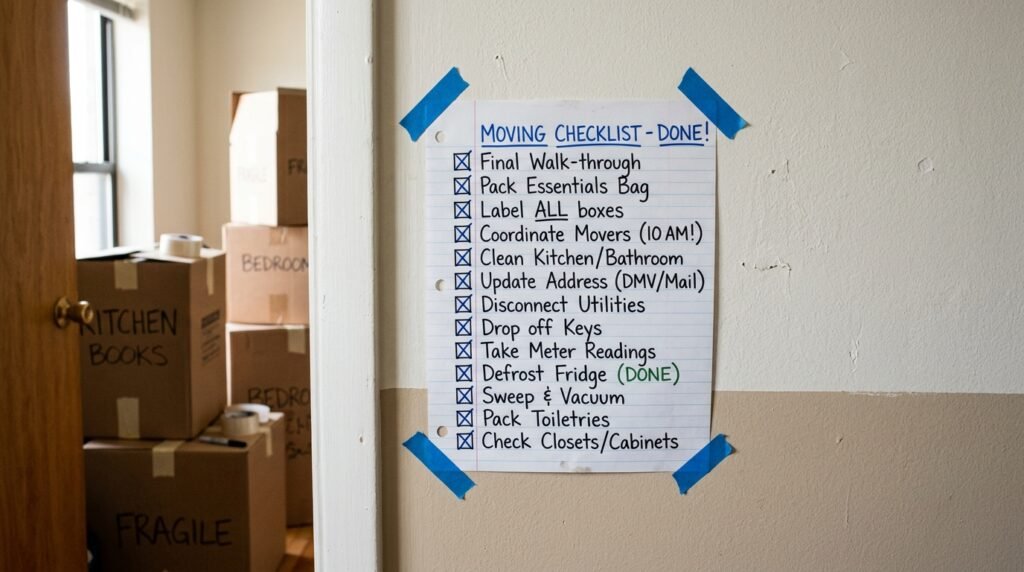
A moving checklist works best when it’s built four to six weeks out, not the weekend before. Breaking it into phases keeps the process from feeling overwhelming:
| Timeframe | What to handle |
|---|---|
| 4–6 weeks before | Book movers or reserve a truck, start decluttering, request time off work if needed |
| 2–3 weeks before | Change your address, transfer or set up utilities, notify your bank and subscriptions |
| 1 week before | Pack non-essentials, confirm moving day logistics, arrange building elevator/loading dock access if required |
| Moving day | Do a final walkthrough of the old place, pack the essentials box last, keep documents and valuables with you |
This kind of table is the backbone of most first apartment checklist PDFs you’ll find online, and it’s worth customizing to your own timeline rather than following it rigidly.
5. Pack a First-Night Essentials Box
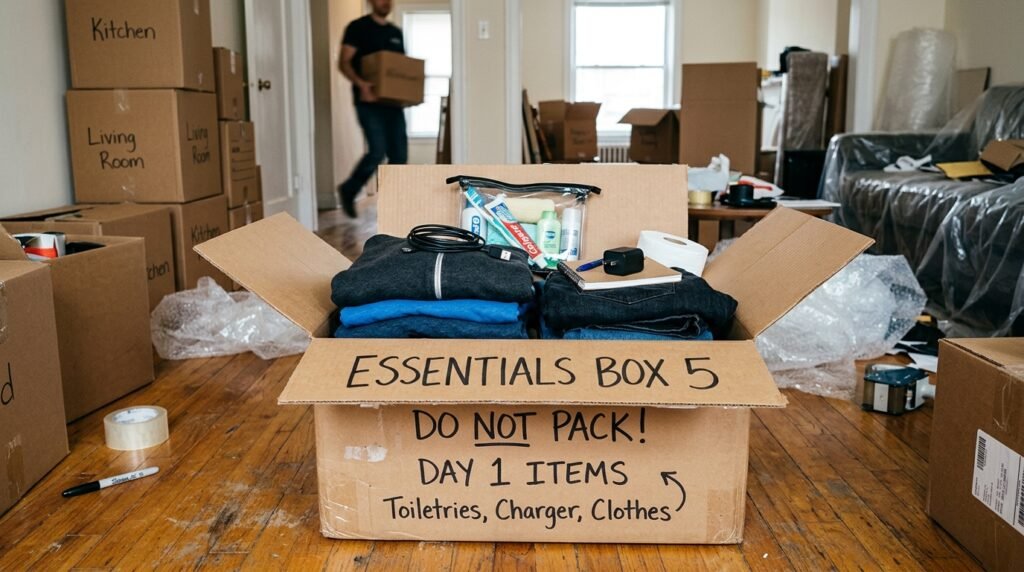
Whatever else gets packed away in boxes, keep one box or bag separate with everything you’ll need for the first 24 hours: toiletries, a phone charger, a change of clothes, basic tools (screwdriver, box cutter), toilet paper, and any medications. Label it clearly and load it last so it comes off the truck first.
This one habit prevents the common moving-day scenario where everything you need is buried in the back of a truck or under a pile of boxes, and it matters even more when you’re moving alone in a new city without friends nearby to help dig through things.
6. Furnish for the Space You Have, Not the Space You Want

Tiny apartment living usually means measuring before buying, not after. Before shopping for furniture, measure doorways, stairwells, and elevators, not just the room itself — a couch that fits the living room won’t help if it can’t get through the front door. Multi-purpose furniture (a storage ottoman, a bed with drawers underneath, a table that folds down) tends to earn its keep faster in a small apartment than single-purpose pieces.
For a Studio or One-Bedroom
In a studio, furniture placement does double duty as room division. A bookshelf or a low dresser positioned perpendicular to a wall can visually separate a sleeping area from a living area without needing an actual wall.
For a Larger First Apartment
If you’ve landed a two-bedroom or a place with more square footage, resist the urge to fill every room immediately. Living with a room half-furnished for a few months, while you figure out what you actually use the space for, usually beats buying furniture you regret.
7. Buy Kitchen Basics Before You Need Them

A functional first-apartment kitchen doesn’t require a full set of cookware on day one. A reasonable starting list includes: one good chef’s knife, a cutting board, a pot, a pan, a few basic utensils, plates, bowls, glasses, and a coffee maker or kettle if you use one. Everything else — specialty pans, appliances, matching dish sets — can be added over time as you learn how you actually cook and eat in the new place.
Buying too much kitchen gear upfront is a common first-apartment mistake, partly because it’s expensive and partly because a small kitchen fills up fast, leaving no counter or cabinet space for anything else.
8. Set Up Utilities Before Move-In Day

Electricity, gas, water, and internet all need to be set up in advance, and in many cities this can take several business days to process. Call or go online to set up service at least a week before your move-in date, and confirm the account will be active on the day you arrive rather than the day after. Showing up to an apartment with no power or internet on night one is avoidable with a little lead time.
If the building has a specific internet provider it works with, ask the leasing office — some buildings are pre-wired for one provider, which can save both time and an installation fee.
9. Get Renters Insurance
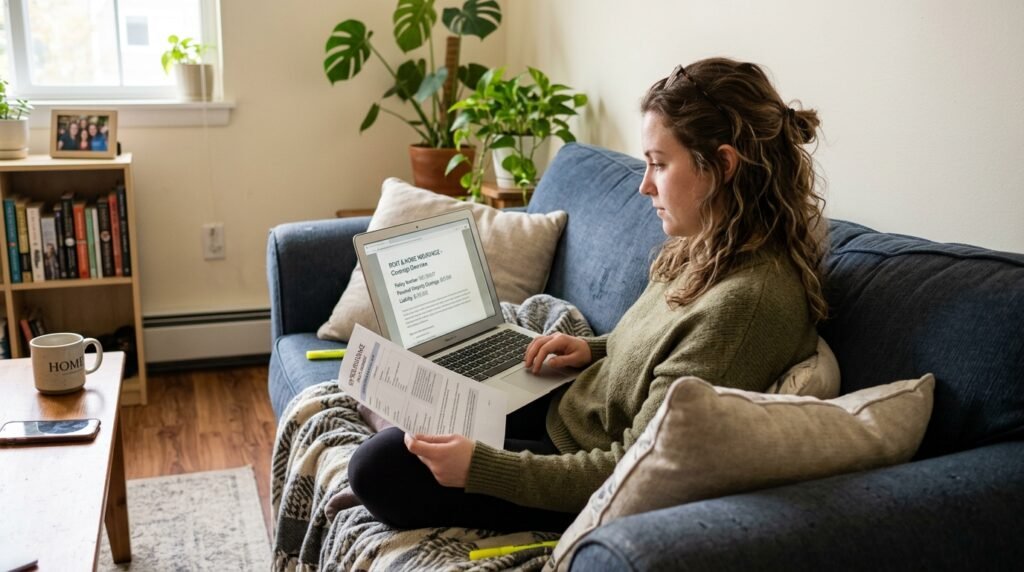
Renters insurance is often skipped by first-time renters because it feels optional, but it’s usually inexpensive relative to what it protects — your belongings in case of theft, fire, or water damage, plus liability coverage if someone is injured in your apartment. Many landlords now require proof of renters insurance as a lease condition, so it’s worth checking before move-in day rather than after you’ve already signed.
Coverage amounts and premiums vary by city, building type, and the value of what you own, so it’s worth getting a couple of quotes rather than assuming one insurer’s price is standard.
10. Build a Simple Cleaning Routine

An apartment cleaning checklist doesn’t need to be elaborate to work — it just needs to happen consistently. A simple weekly rhythm might look like: wipe kitchen counters and stovetop, clean the bathroom, vacuum or sweep, take out trash and recycling, and do laundry. Deeper tasks — cleaning the oven, washing windows, deep-cleaning the fridge — can go on a monthly or seasonal list instead of a weekly one.
Keeping this list somewhere visible (a note on the fridge, a recurring reminder on your phone) works better than trying to remember it, especially in the first few months when a new job is already taking up most of your mental bandwidth.
11. Design for a Peaceful Home, Not a Pinterest Apartment

It’s tempting to try to make a first apartment look finished right away, but a peaceful home tends to come from a few deliberate choices rather than a fully decorated room. Soft lighting instead of one harsh overhead bulb, a couple of plants if you’re willing to keep them alive, and keeping surfaces relatively clear all do more for how a small apartment feels than a lot of decor.
It’s also worth accepting that a first apartment will likely change over the first year as you figure out what you actually need. Buying everything at once, before you’ve lived in the space, often means replacing things later anyway.
12. Meet Your Neighbors and Building Staff
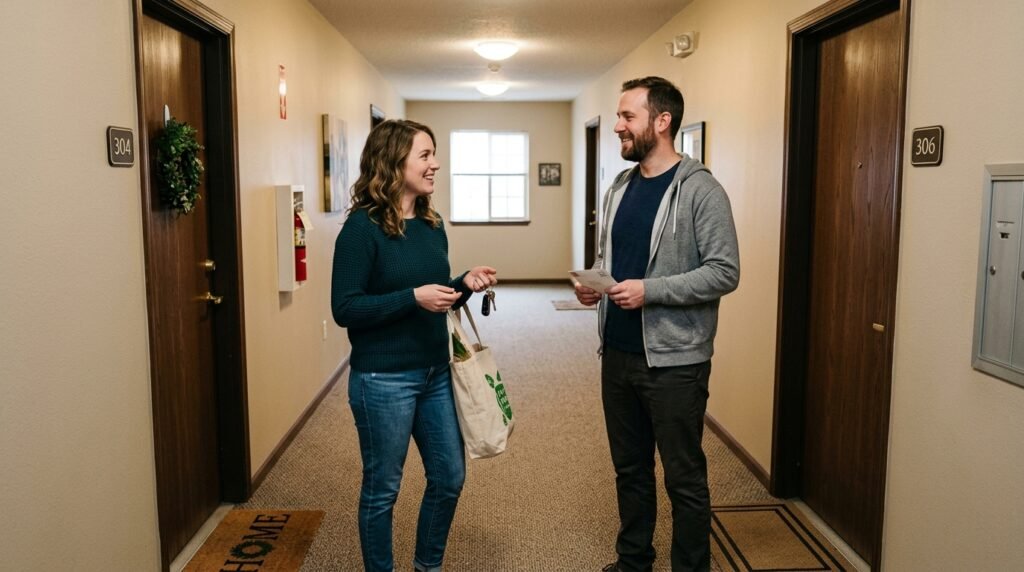
In a new city where you don’t know anyone yet, the people down the hall and the building superintendent or doorman are often your first local connections. A brief introduction — even just exchanging names in the hallway or with building staff — makes it easier to ask for a package to be held, get a recommendation for a nearby repair person, or simply have someone who’d notice if something seemed off.
This matters more in a new city than people expect, since a support network that would normally exist through family or old friends usually has to be rebuilt from scratch.
13. Plan Your Commute Before Your First Week of Work
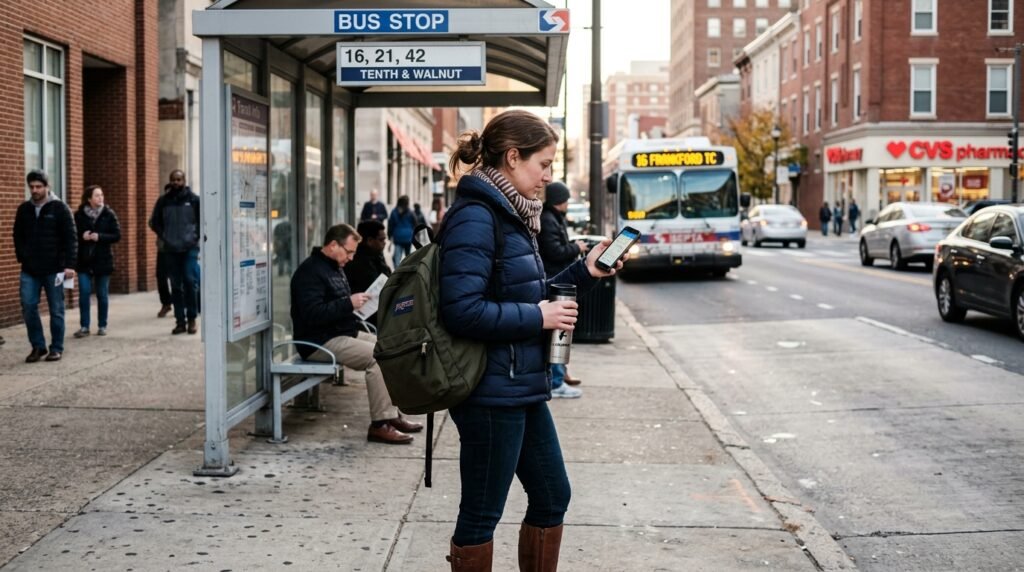
Do a practice run of your commute before your actual first day, ideally at the same time you’ll be traveling for work. This surfaces problems — a train that doesn’t run as often as expected, a walk that takes longer than a map app suggests — while there’s still room to adjust, rather than on the morning that matters most.
If your new job has flexible scheduling, it’s also worth checking whether shifting your commute time by even 15–20 minutes meaningfully changes how crowded or fast it is.
14. Keep an Emergency Cushion Separate From Rent Money
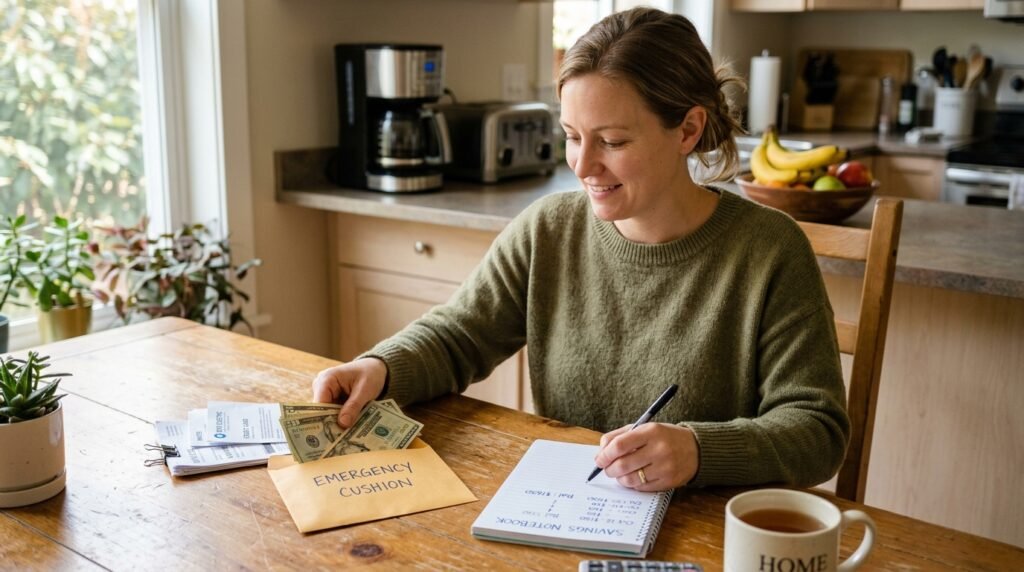
Moving to a new city for a new job often means covering a security deposit, moving costs, and the gap before your first paycheck clears, all at once. Where possible, keep a small cushion set aside that isn’t earmarked for rent or bills — enough to cover an unexpected repair, a missed shift, or a delayed paycheck. This is less about a specific dollar amount and more about not being one surprise expense away from real financial stress in your first few months.
15. Establish a Routine Early

A new job and a new apartment together mean almost everything in your daily life is unfamiliar at once. Setting a basic routine early — a regular wake time, a go-to grocery store, a default route home — gives your day some predictability while everything else is new. This tends to matter more for how settled a new city feels than the apartment’s decor or size does.
16. Know Your Tenant Rights

Tenant protections vary significantly by city and state, covering things like how much notice a landlord must give before entering, how a security deposit must be returned, and what counts as a habitability issue the landlord is required to fix. It’s worth looking up the specific rules for your city early on, rather than only when a dispute comes up. Many cities publish this information directly through their housing or tenant protection agency’s website.
[EDITOR’S PICK — fill in before publishing: which of these 17 tips would you personally say mattered most during your own first apartment move, and why? Leave blank if no one on the team has a genuine opinion here.]
17. Save Your Checklist for Next Time

Once you’ve been through the process, save your own version of this list — as a note, a spreadsheet, or a printed first apartment checklist PDF — for the next move. A checklist that’s been adjusted based on what actually happened during your move is more useful than a generic one, since it reflects the specific mistakes and shortcuts that applied to your situation.
Frequently Asked Questions
How much should I save before moving to a new city for a first job? There’s no single right answer, since it depends on the city’s cost of living and your starting salary, but a common approach is to have enough saved to cover several months of rent plus moving costs, in case there’s a gap before your first paycheck or an unexpected expense during the move.
What’s the difference between a moving checklist and a new apartment checklist? A moving checklist generally covers the logistics of getting from one place to another — packing, transferring services, notifying your address. A new apartment checklist is more about setting up the space itself once you’re there — furniture, kitchen basics, cleaning supplies, and safety items like smoke detectors.
Do I really need renters insurance for a first apartment? It’s not legally required everywhere, but many landlords require it as a lease condition, and it protects your belongings and covers liability at a cost that’s usually low relative to what it covers. It’s worth checking your specific lease and getting a quote before deciding to skip it.
How do I make a tiny apartment feel bigger? Common approaches include using furniture that serves more than one purpose, keeping surfaces clear rather than cluttered, using mirrors or lighter colors to open up a room visually, and being selective about what you bring into the space in the first place rather than filling it immediately.
What should be on a first apartment checklist PDF? A useful one typically covers four categories: moving logistics (movers, address change, utilities), furniture and kitchen basics, cleaning and safety supplies, and paperwork (lease, renters insurance, tenant rights for your city). Keeping these as separate sections makes the checklist easier to work through in order.
How far in advance should I start packing? Starting non-essential packing two to three weeks before moving day, and essentials the final week, tends to keep the process manageable. Packing everything at once close to the move date is a common source of last-minute stress.
Is it better to buy furniture before or after moving in? Measuring the space and doorways before buying is important regardless of timing, but many people find it easier to live with a mostly empty apartment for the first few weeks and buy furniture as they figure out how they actually use each room, rather than furnishing everything before move-in.
Conclusion

Moving into your first apartment while starting a new job in a new city is a lot to manage at once, but most of it comes down to sequencing: budgeting honestly, understanding your lease, setting up utilities and insurance before you need them, and furnishing gradually for the space you actually have. A first apartment checklist built around these steps — and adjusted as you learn what your specific move requires — tends to turn a stressful transition into a manageable one. If this was useful, it’s worth saving or sharing with anyone else about to make the same move.

Maren started MyFirstLease after a rough first lease taught him everything the internet didn’t. He covers the logistical side of renting — move-in checklists, utilities, and the unglamorous first-week stuff nobody explains — and oversees everything published on the site.