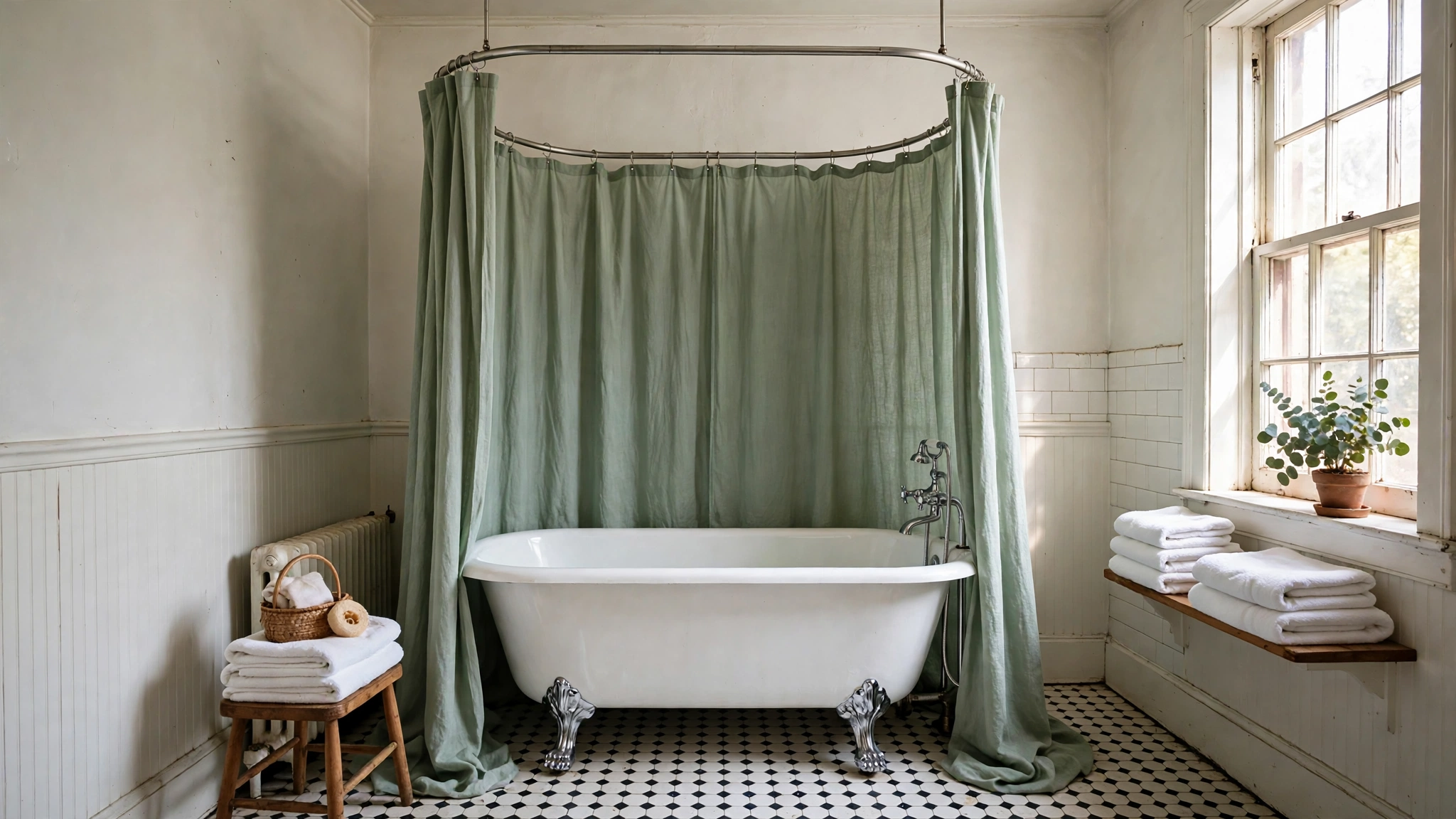
Learning how to decorate a small apartment bathroom for renters with a clawfoot tub starts with accepting one thing: the tub is the room. In a vintage walk-up, a freestanding clawfoot tub takes up most of the floor, sets the style, and cannot be moved, refinished, or replumbed by a tenant — so the decorating has to work around it, not against it.
This guide is written for a first-time renter in exactly that situation. Every idea below is reversible, needs no drilling, no adhesive on old tile or plaster, and no changes to the tub or its plumbing. You will end up with a bathroom that looks intentional, stays functional in a small footprint, and hands back clean at move-out.
Direct answer: To decorate a small rental bathroom with a clawfoot tub, fit an extra-long shower curtain on the tub’s existing hoop ring, layer washable textiles in one calm palette, add freestanding storage that never touches the walls, style the tub itself with a removable bath tray, and keep every change reversible — no drilling, sanding, or replumbing.
Executive Summary
A clawfoot tub is both the best feature and the biggest constraint in a small rental bathroom. It eats floor space, dictates where water goes, and comes with old fixtures a renter cannot replace. Most advice about clawfoot tubs assumes you own the place and can refinish the enamel or reroute the plumbing. Renters need the opposite approach: styling that sits on top of what is already there and comes off cleanly.
This guide walks through that approach in order. You will first assess the tub and the lease rules that govern it, then solve the shower curtain — the single biggest visual and practical decision — then add textiles, storage, tub styling, and vintage character, and finish with a cleaning routine that protects old enamel and your deposit. Prices are given as typical US ranges as of 2026 and are worth a quick check before you buy, since they vary by store and region.
1. Start With What You Cannot Change
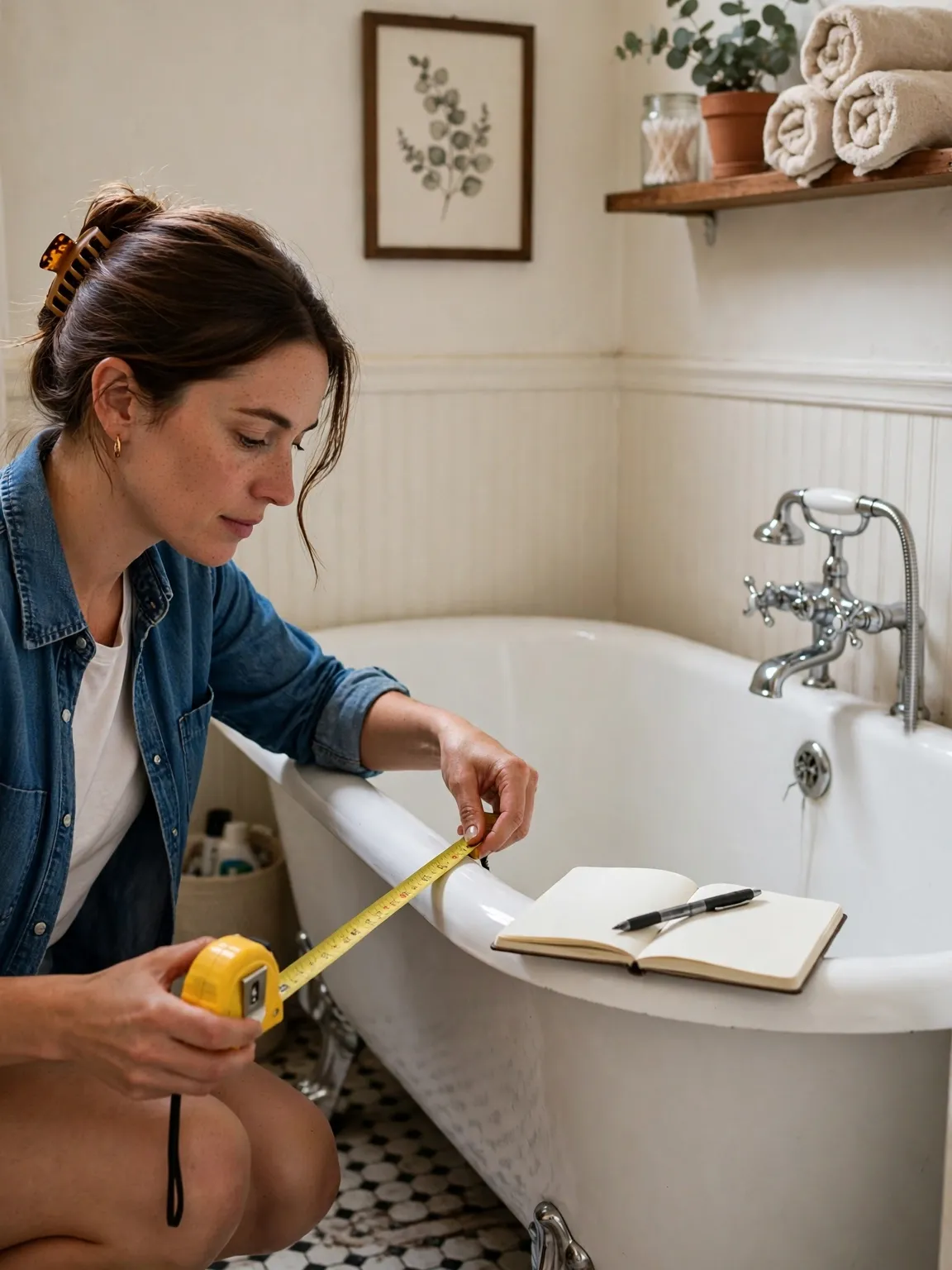
Before buying anything, spend twenty minutes looking closely at the tub and the room around it. Note the tub’s length and height, whether the feet are level, where the faucet and shower riser sit, and whether the tub has an existing oval hoop ring for a shower curtain. Measure the distance from the ring to the floor, the gap between the tub and the nearest wall, and the width of the door swing. These measurements decide the curtain length, the size of any bath tray, and whether a rolling cart will actually fit beside the tub.
Read the lease next, before you spend money. Many leases in older buildings forbid drilling into tile, painting fixtures, or using strong adhesives on plaster. If anything is unclear, ask the landlord in writing — a short email asking whether a tension rod, suction hooks, or a freestanding shelf is acceptable creates a record you can point to at move-out. Photograph the tub, the faucet, the floor, and the walls on move-in day so pre-existing chips, stains, and rust are documented.
One caution matters more than the rest. In buildings built before 1978, the paint on a tub’s exterior — and sometimes on old bathroom woodwork — may contain lead. Do not sand, scrape, strip, or try to repaint the tub yourself, and do not use abrasive pads on a chipped exterior. If paint is flaking or you are unsure about the tub’s finish, tell the landlord and let them decide how to handle it. This is a case where doing nothing to the tub itself is the right move.
2. Choose a Shower Curtain That Fits a Clawfoot Tub
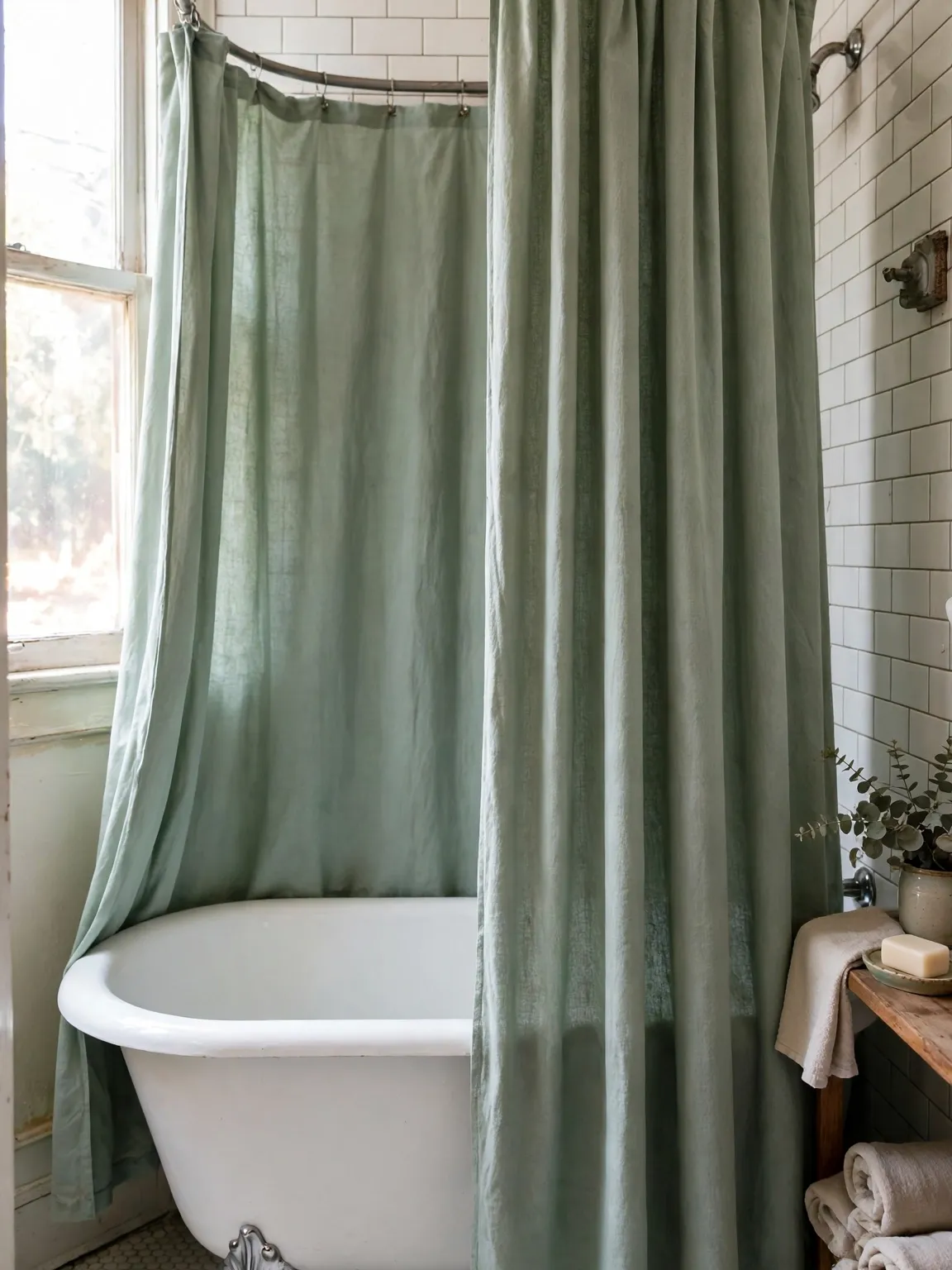
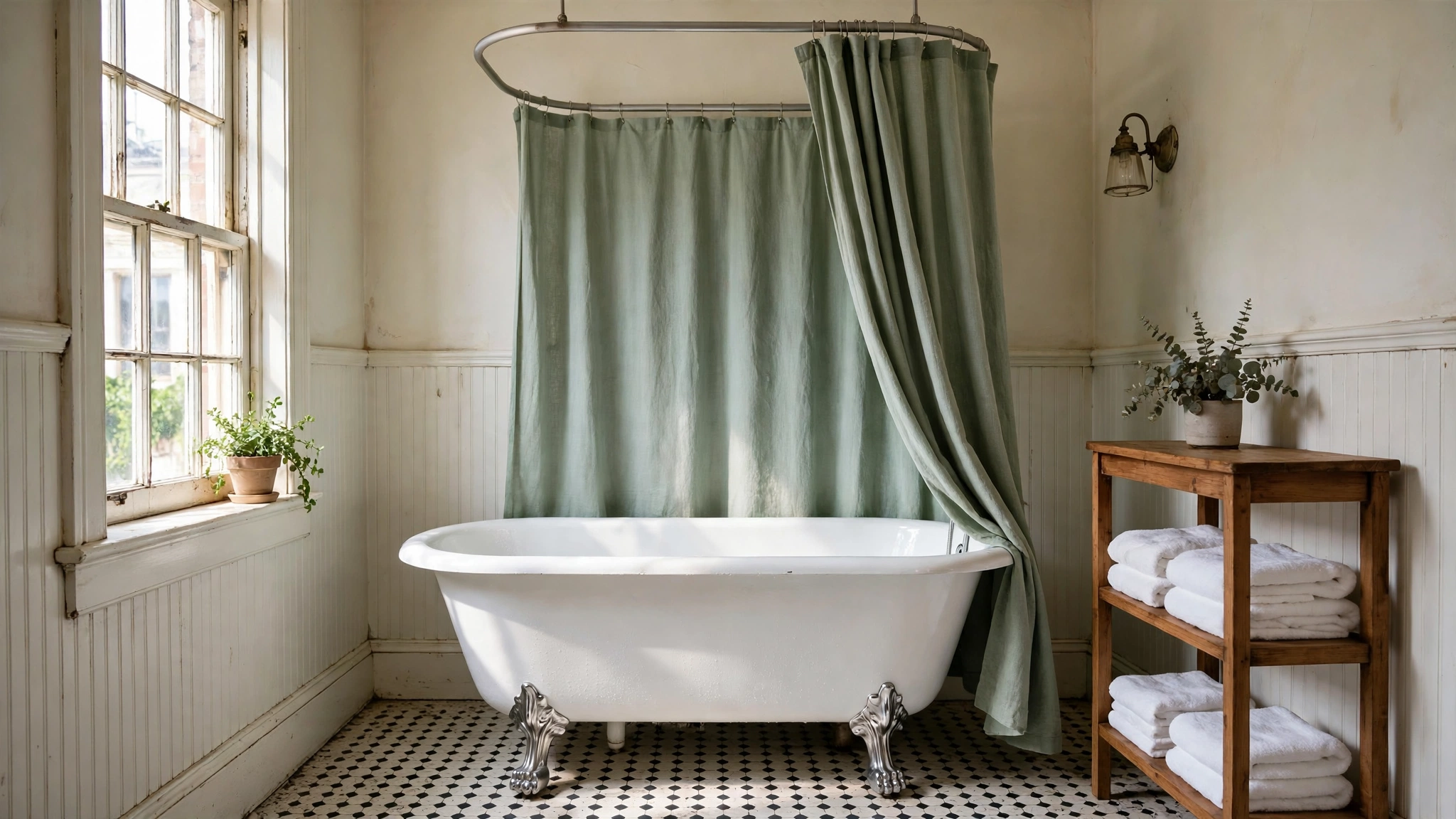
The shower curtain is the largest surface in the room after the tub itself, so it sets the whole look — and in a clawfoot tub it also has to keep water off the floor. A standard 72-inch curtain is usually too short for a tub on feet with a raised hoop ring. Measure from the ring to the floor and look for an extra-long curtain, typically 84 inches, or a standard curtain paired with a longer liner. The liner should hang inside the tub; the decorative curtain hangs outside it.
Match the curtain shape to the ring you already have. Most clawfoot tubs use an oval hoop ring that circles the whole tub, which means the curtain must wrap all the way around — plan on two curtain panels, or one extra-wide panel, plus a matching liner. If the tub has only a straight rod at one end, a single panel and liner are enough, but check that the curtain still covers the showerhead end fully. Use curtain rings that slide easily; plastic or nylon rings are quieter and less likely to scratch an old metal ring than bare metal hooks.
Fabric choice is a practical decision, not just a style one. A washable fabric curtain in a light, solid color or a small, simple pattern keeps a small room from feeling busy, and it can go through the washing machine when mildew appears. A clear or frosted liner lets light through and makes the tub area feel less boxed in. Keep a spare liner on hand — liners are inexpensive, and swapping a stained one takes minutes. As of 2026, a decent extra-long fabric curtain typically runs about $25–$50 and a liner about $8–$15.
| Curtain option | Best when | Watch out for |
|---|---|---|
| Extra-long fabric curtain (84 in) + liner | Hoop ring sits high; tub on tall feet | Needs two panels for a full oval ring |
| Standard curtain + longer liner | Budget is tight; ring sits lower | Decorative curtain may end above the tub rim |
| Clear or frosted liner only, with a fabric curtain outside | Small, dark bathroom | Liner shows water spots; wipe it down weekly |
| Weighted-hem curtain | Curtain billows during showers | Check the hem clears the tub rim |
3. Layer Soft, Washable Textiles
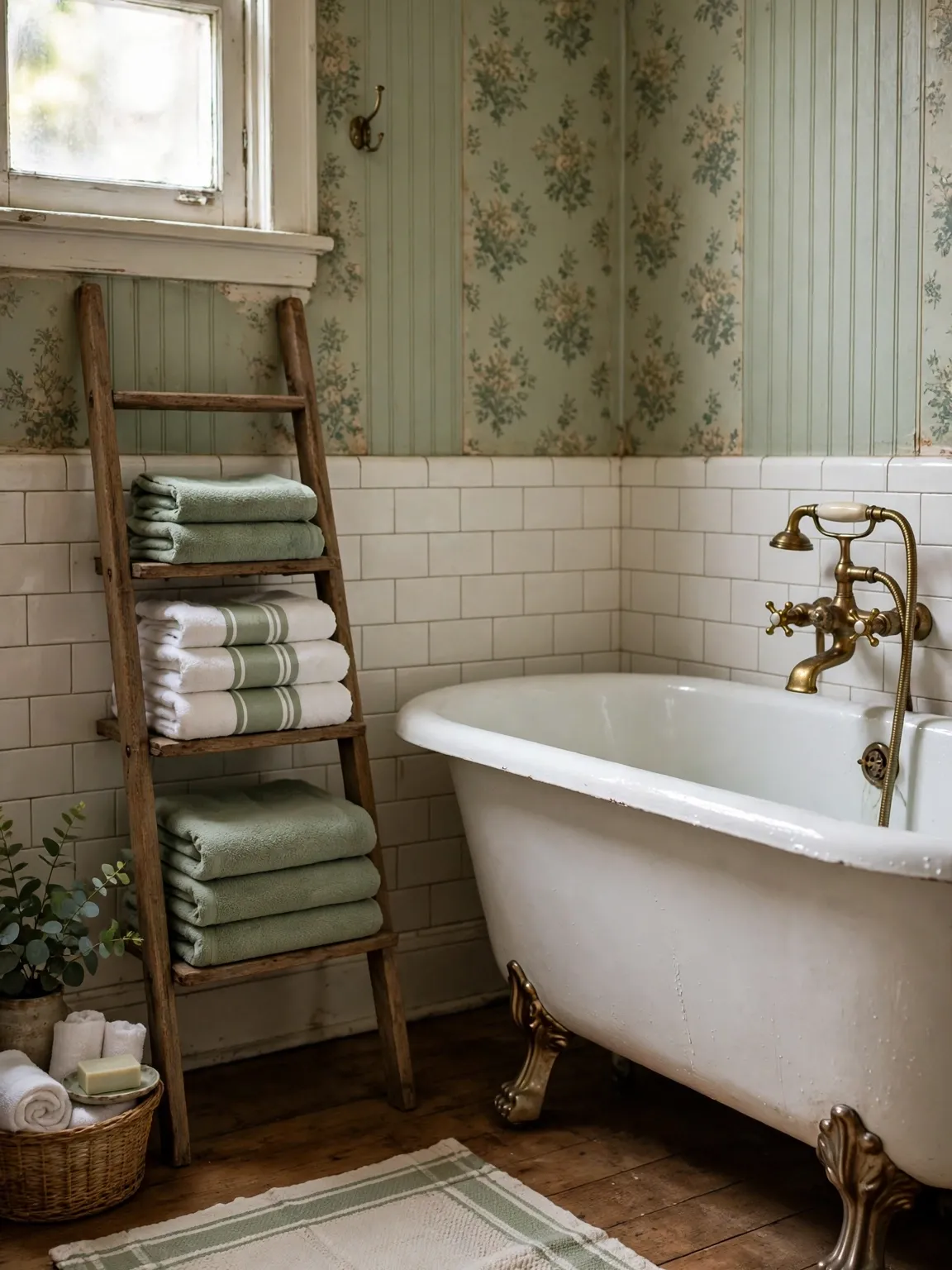
Once the curtain is sorted, textiles do the most decorating work for the least money — and everything here can be washed or removed. Pick one calm palette of two or three colors and repeat it across the shower curtain, towels, and bath mat so the small room reads as one deliberate scheme instead of a collection of unrelated items. Soft white with sage green, warm white with dusty blue, or cream with terracotta all sit well against white enamel and old chrome.
Choose a bath mat that handles water. A flat-weave cotton mat or a wooden slatted bath mat both dry faster than a thick plush rug, which matters when the floor gets splashed every shower. A wooden mat needs to be lifted and dried underneath once or twice a week; a cotton mat can go in the wash. Keep the mat small enough to leave a clear path from the door to the tub — in a tight bathroom, a mat that blocks the door swing is a daily annoyance.
Towels are decoration as well as utility in a room this small. Fold a set of matching hand towels over a freestanding towel ladder or a suction-hook rail, and keep the everyday towels on a hook near the tub where they are actually reached for. Washable is the rule for everything: if it cannot survive the washing machine, it does not belong in a bathroom that steams up daily.
4. Add Storage That Never Touches the Walls
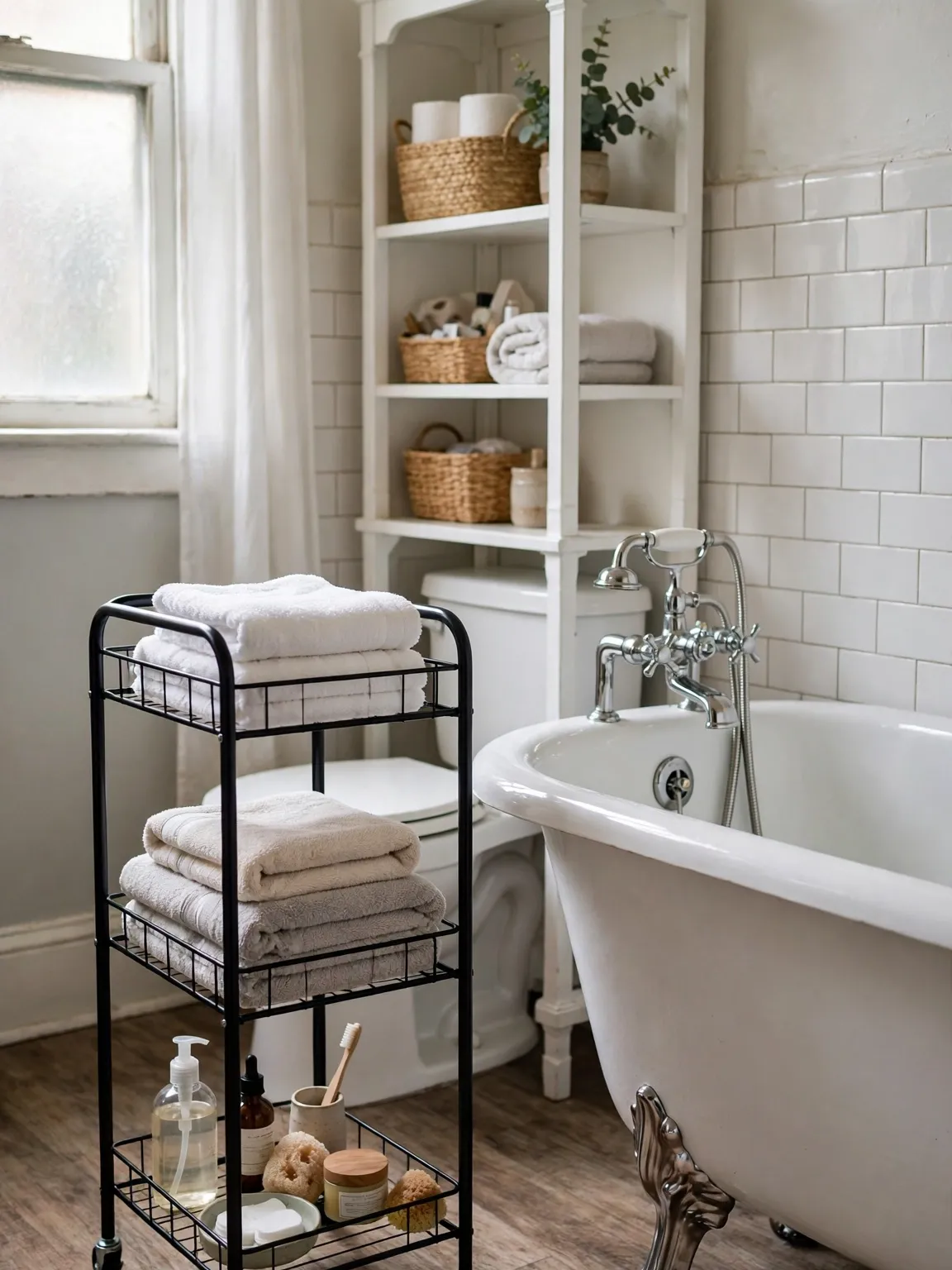
Storage is where small clawfoot bathrooms usually fail, because there is rarely a vanity and the walls often cannot take screws or heavy adhesive hooks. The fix is furniture and hardware that stands on its own. A narrow rolling cart — the kind sold as a kitchen or bathroom cart — slides into the gap beside the tub and holds shampoo, cleaning supplies, and extra toilet paper. Measure that gap first; carts come in widths from about 5 to 10 inches, and a cart that is even half an inch too wide is useless.
A freestanding over-toilet shelf unit adds a full shelf of storage without a single hole in the wall, as long as the footprint fits around the toilet tank and the unit is stable on the floor. Check the height against any shelf or window above the toilet before buying. For more ideas on bathroom storage that respects a lease, see the guide to renter-friendly bathroom upgrades that need no drilling.
Smaller items need smaller solutions. A caddy that hangs over the tub rim or clamps to the shower riser keeps soap and shampoo within reach without suction cups on old tile — suction cups often fail on textured or uneven vintage tile, and a caddy that falls into the tub at 6 a.m. is nobody’s idea of a good start. A small lidded basket on the floor beside the tub corrals bath toys, cleaning cloths, or extra towels, and it can be carried out of the room when you need the floor space.
5. Style the Tub Itself
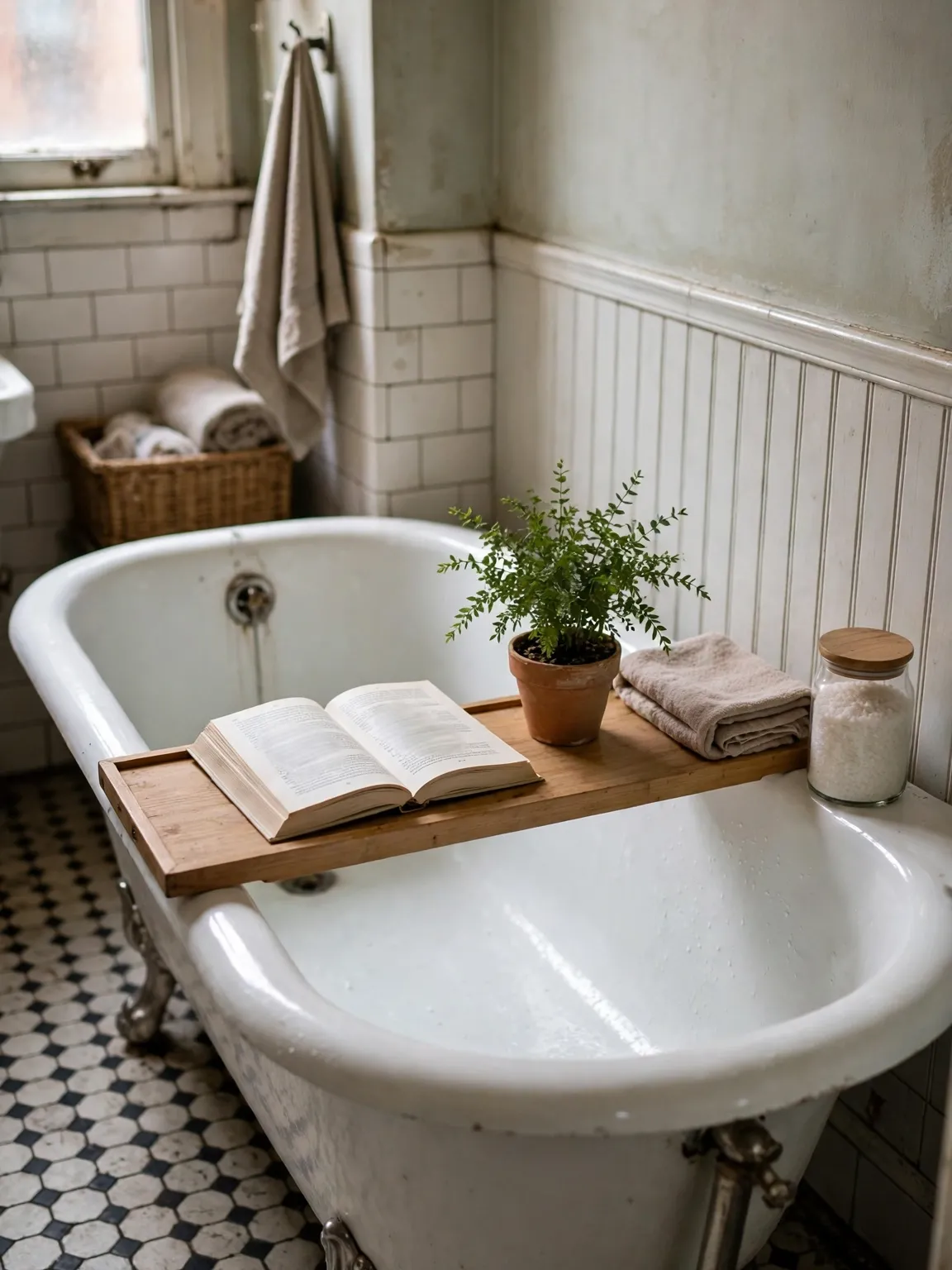
The tub is the centerpiece, so a little styling on it goes further than the same effort anywhere else. A wooden bath tray that spans the tub’s width is the most useful single piece: it holds a book, a phone, or a cup of tea during a bath and lifts off in seconds when the tub needs cleaning. Measure the tub’s width at its widest point and buy a tray that spans it with a small amount of overlap on each side — a tray that is too short will slip. Bamboo trays are a common choice because they handle moisture better than unfinished wood, typically around $20–$40 as of 2026.
Keep what sits on the tray simple and dry. A small potted plant that likes humidity, such as a pothos in a plastic pot set inside a ceramic cover, adds life without needing a hole in the wall. A folded washcloth and a bottle of bath salts in a closed jar are enough; the tray should never be so crowded that things slide into the water. If you like candlelight, use battery-operated LED candles only, and never place a lit real flame near a curtain or towel. Keep LED candles on a stable surface away from the tub’s edge, and store them dry between uses.
Under the tub, the feet are part of the look. If the feet are brass or painted and in good shape, leave them alone — polishing is usually unnecessary and harsh cleaners can damage an old finish. A small, flat tray or a folded towel under a dripping faucet is a stopgap, not a fix: a faucet that drips constantly is a maintenance issue to report to the landlord, since it wastes water and can stain the enamel.
6. Work With the Vintage Character
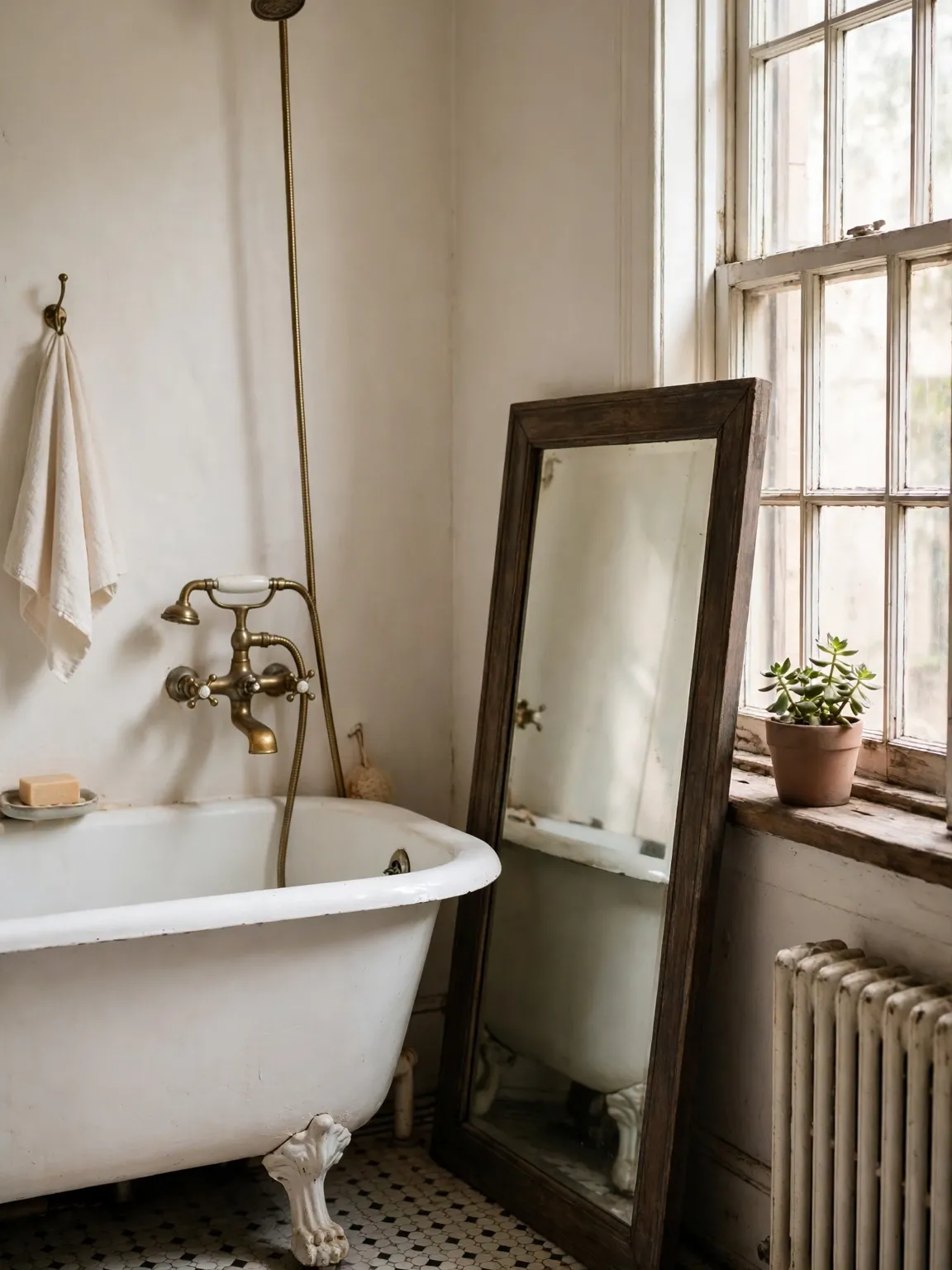
A clawfoot tub already gives the bathroom a vintage character, so the cheapest decorating move is to work with it instead of fighting it. A palette of warm white, soft black, and one muted accent — sage, dusty blue, or terracotta — echoes old enamel and chrome without turning the room into a theme. Avoid adding a second competing style, such as ultra-modern black fixtures or a bright geometric print, in the same small space; one clear direction reads calmer than two.
The mirror and the art are where renters can add personality without damage. If the existing mirror is small or spotted, lean a larger framed mirror against the wall on top of a dresser or shelf — never lean a heavy mirror on a tub rim or an uneven tile edge. For wall art, use picture-hanging strips rated for the frame’s weight on smooth painted walls only, and check the lease first; on old plaster or textured tile, a small easel on a shelf or a framed print propped on the windowsill is the safer choice. For more on making a small space feel larger, the tricks in how to make a small apartment look bigger on a budget apply directly here: light colors, a clear floor, and one mirror used well.
Lighting in an old bathroom is usually one ceiling fixture, and renters cannot rewire it. A battery-operated LED light strip under a shelf or a small plug-in night light near the floor can soften the room in the evening without touching the wiring. Never run cords across a wet floor, and never plug anything in within reach of the tub. Keep the window treatment simple — a washable roller shade or a short cafe curtain on a tension rod gives privacy without blocking the light that makes a small bathroom feel bigger.
7. Keep It Clean and Move-Out Ready
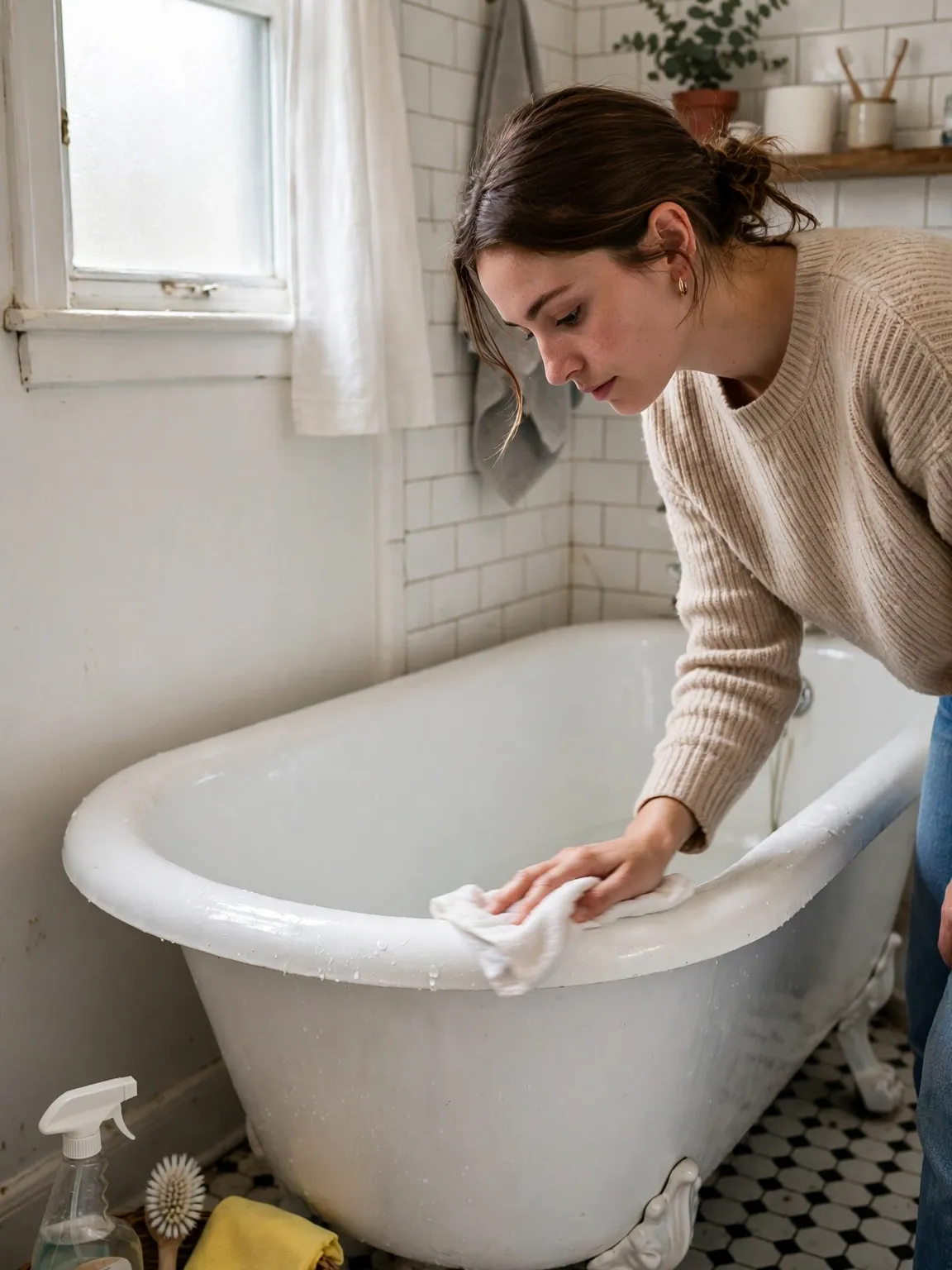
A decorated bathroom only stays pretty if it stays clean, and old enamel rewards gentle care. Rinse the tub after each bath and wipe the ring line weekly with a soft cloth and a non-abrasive bathroom cleaner. Avoid scouring powders, steel wool, and harsh bleach on old enamel and on the tub’s exterior paint — they can scratch the finish and, on a pre-1978 tub, disturb old paint. If rust appears around the drain or the feet, photograph it and tell the landlord rather than trying to sand or paint over it yourself.
Run the practical routine once a week. Wash the shower curtain liner or wipe it down, launder the bath mat, empty the rolling cart and wipe its shelves, and check the caulk or seal where the tub meets the floor for gaps or mold. A small squeegee kept in the tub makes the post-shower wipe-down a thirty-second job and keeps water spots off the curtain and the floor.
Your first-weekend plan — a renter’s clawfoot tub checklist:
- Measure the tub, ring height, and floor gaps; photograph everything
- Check the lease for drilling, adhesive, and painting rules; email the landlord with questions
- Order the extra-long curtain, liner, and rings
- Place the bath mat, rolling cart, and over-toilet unit — freestanding only
- Add the bath tray, towels, and one plant; keep LED candles battery-operated only
- Set a weekly wipe-down reminder and note the tub’s condition with dated photos
When move-out day comes, the whole scheme should reverse in an afternoon: curtain and liner down, cart rolled out, shelf unit lifted away, tray and textiles packed. Nothing in this guide leaves a hole, a paint patch, or a plumbing change behind, which is exactly the point. For the broader set of reversible ideas that protect a deposit across the whole apartment, see the Decorating & Small Space Living category page.
Frequently Asked Questions
Can renters decorate a bathroom with a clawfoot tub without damaging it?
Yes. Stick to reversible changes: an extra-long shower curtain on the existing ring, washable textiles, freestanding storage, and a removable bath tray. Do not drill into tile, sand or repaint the tub, or change any plumbing — and get anything uncertain approved by the landlord in writing first.
What size shower curtain fits a clawfoot tub?
Measure from the shower ring to the floor. Many clawfoot tubs need an extra-long curtain, typically 84 inches, because the ring sits higher than a standard rod. The liner should hang inside the tub and the decorative curtain outside it, and an oval hoop ring usually needs two panels or one extra-wide panel to wrap fully around.
How do I keep water from splashing on the floor with a clawfoot tub?
Use a liner that hangs inside the tub, weighted at the hem if needed, and a bath mat that can be washed or dried quickly. Keep the curtain closed fully around the tub during showers, and wipe up splashes right away — standing water on old wood floors is what causes damage.
What storage works in a small rental bathroom with a clawfoot tub?
Freestanding pieces: a narrow rolling cart beside the tub, an over-toilet shelf unit, a caddy that hangs over the tub rim, and lidded baskets on the floor. Avoid suction hooks on textured vintage tile, which often fail, and avoid drilling or heavy adhesive hooks unless the lease clearly allows them.
Can I put a bath tray on a clawfoot tub?
Yes, as long as the tray spans the tub’s width with a small overlap on each side. Measure the tub at its widest point before buying. Bamboo trays handle bathroom moisture well and lift off in seconds for cleaning.
Is it safe to use candles around a clawfoot tub?
Use battery-operated LED candles only, and keep them on a stable surface away from curtains and towels. Never use a lit real flame near a shower curtain, and never leave any candle burning unattended. Check the lease, since some buildings restrict open flames.
What should I do about flaking paint on an old clawfoot tub?
Do not sand, scrape, or repaint it yourself — in pre-1978 buildings, old paint may contain lead, and disturbing it can create a hazard. Photograph the area and tell the landlord so they can arrange proper handling.
Conclusion
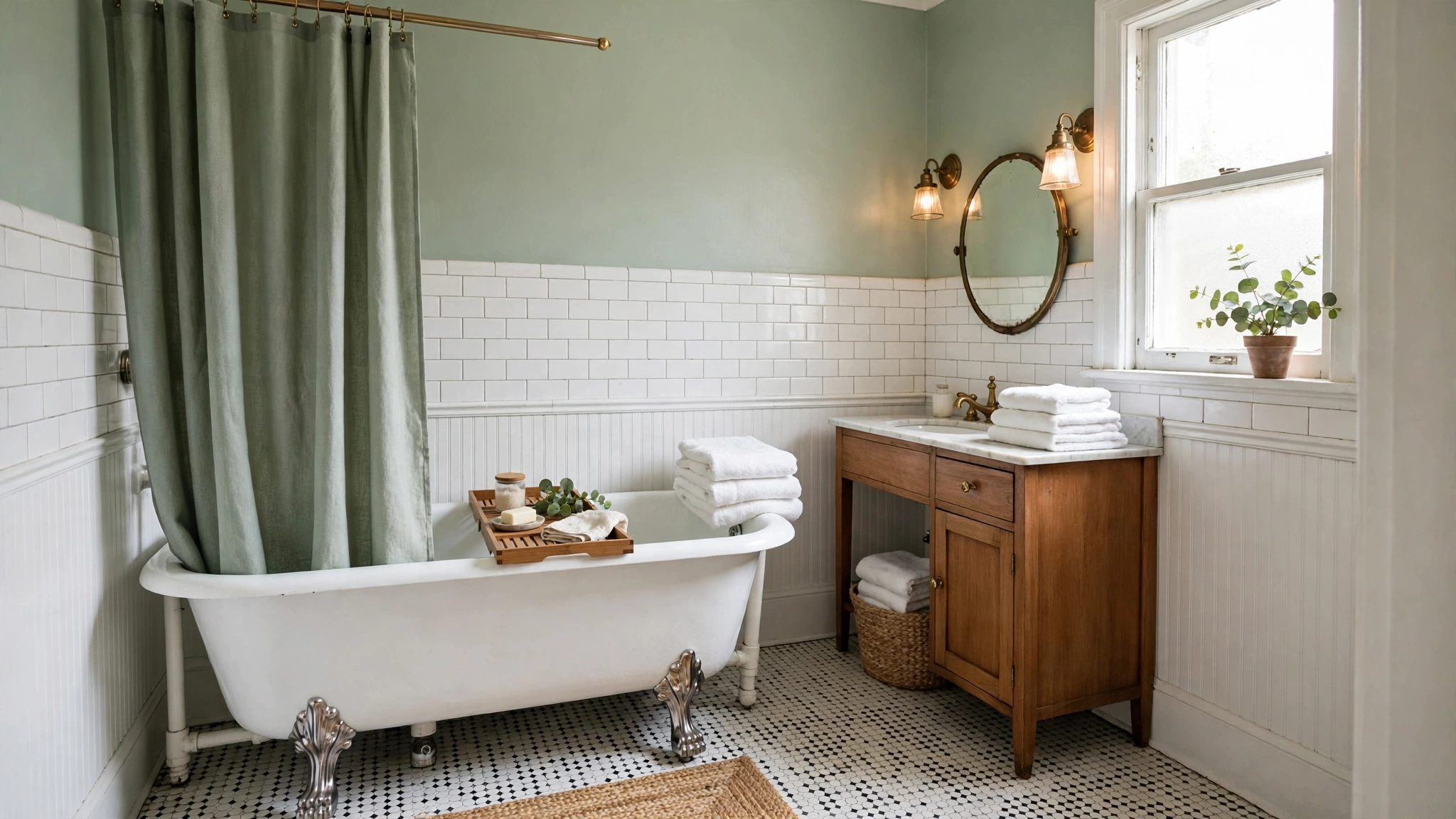
A clawfoot tub does not need a renovation to look good — it needs a curtain that fits, textiles that wash, storage that stands on its own, and a little styling that respects the tub’s age. Learning how to decorate a small apartment bathroom for renters with a clawfoot tub is mostly a matter of choosing reversible pieces and letting the tub itself do the visual work. Start with the measurements and the lease, add one piece at a time, and keep a weekly wipe-down routine so the room stays as pretty as the day you finished it. If this guide helped, save it for your next vintage apartment — the same approach works in any small bathroom with a tub worth showing off.

Maren started MyFirstLease after a rough first lease taught him everything the internet didn’t. He covers the logistical side of renting — move-in checklists, utilities, and the unglamorous first-week stuff nobody explains — and oversees everything published on the site.