
Figuring out how to rent an apartment with cash income no bank account is the first real hurdle for a lot of first-time renters — delivery drivers, restaurant staff, house cleaners, day laborers, and anyone else paid outside a traditional payroll system. Almost every rental application seems to assume pay stubs and bank statements, so when neither applies to you, it’s easy to feel screened out before you even start.
The good news is simpler than it looks: landlords care about one thing, which is reliable proof you can pay rent every month. Pay stubs are just the most common way to show that — not the only way. This guide walks through the alternatives that actually work for cash-paid earners renting their first place: verification letters, tax records, money orders, and the paper-trail habits that make a cash-paid applicant look as solid on paper as anyone else. For more on the paperwork side generally, see our Moving In & Apartment Basics hub.
Direct answer: To rent an apartment with cash income and no bank account, assemble a proof-of-income packet: an employer verification letter, your most recent tax return, any 1099 forms, and several months of payment receipts or deposit records. Pay rent with money orders or cashier’s checks, keep every receipt, and focus on landlords and smaller management companies that accept alternative documentation.
Summary

Most “proof of income” advice online assumes you have pay stubs and a checking account, which leaves cash-paid first-time renters with almost nothing usable. The ranking results for this exact problem are forum threads and off-topic pages — nobody has written the actual guide for US renters in this situation. That gap is what this article fills.
Below, you’ll find a step-by-step approach built for this specific situation: what landlords actually check during screening, how to build a proof-of-income packet without pay stubs or bank statements, how to pay rent reliably without a bank account, and how to protect yourself from the scams that target renters in exactly this position.
1. How Landlords Screen Applicants

Before you assemble anything, it helps to know what the screening process is actually measuring. A landlord or property manager runs three checks: identity verification, credit and background screening, and income verification — usually that your gross income is at least three times the monthly rent.
The income check is the only one your cash pay really affects. A property manager looking at a pay stub wants two facts: who employs you, and how much you earn on a regular schedule. Everything you build in the next sections exists to deliver those same two facts through different documents. You don’t need a bank statement to prove income; you need credible, consistent evidence of steady earnings, and more than one piece of it.
Independent landlords and smaller management companies tend to be more flexible about which documents they accept than large corporate complexes with rigid online portals. That doesn’t mean corporate buildings are off-limits — but if your documentation is nonstandard, your odds improve where a human being reads the application.
2. Build a Proof-of-Income Packet

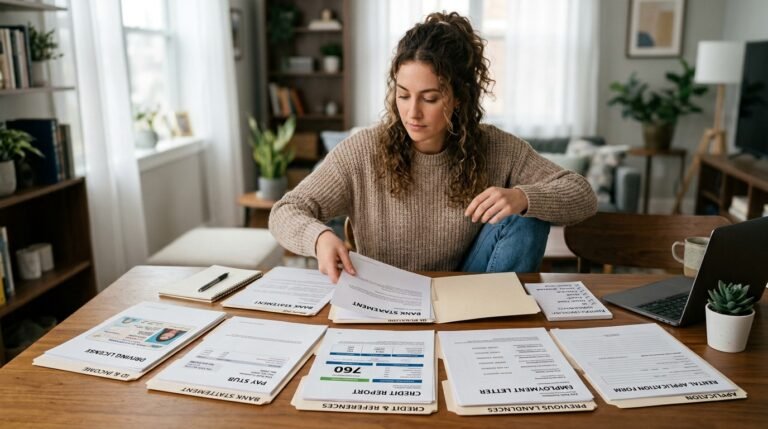
Since you can’t hand over a pay stub, hand over a packet — several documents that tell the same story. One document is easy to dismiss; four that agree with each other are hard to argue with. Put together a simple folder (physical or digital) containing everything from this checklist, and bring it to every showing:
- A signed employer verification letter (see section 3 for what it should say)
- Your most recent federal tax return, or at least the first two pages showing reported income
- Any 1099 forms you’ve received — common for gig and contract work
- Payment receipts or a written pay log: dated notes of what you were paid and when, ideally with your employer’s name on them
- A few months of records showing the money going somewhere trackable: money order stubs, prepaid card statements, or cashier’s check receipts earmarked for rent
- Photo ID and Social Security number or ITIN, matching the name on everything else (see our guide to documents needed for a rental application for the full list)
One caution, stated plainly: never invent, alter, or backdate any of these. Signing a false verification letter or submitting doctored documents is fraud, and it can get a lease voided and lead to eviction even after you move in. Everything here is about documenting real income through legitimate channels — that constraint is also what makes the packet convincing.
3. Get Paperwork From Your Employer

The single most persuasive document in your packet is a letter from the person or company paying you. Many cash-paid workers never ask for one because it feels awkward, but employers write these routinely, and most will do it if you ask directly and make it easy.
A useful verification letter is short and covers four facts: your name, your job title or duties, how long you’ve worked there, and your typical pay — amount and schedule (for example, “$650 per week, paid in cash every Friday”). It should be on company letterhead if the employer has one, signed and dated, with a phone number the landlord can call to confirm. Offer to draft it yourself and let your employer review and sign; that removes the friction that makes people put it off.
If you work for multiple clients — common for cleaners, handymen, and gig workers — collect a short letter or even a signed note from your two or three steadiest clients instead of one employer letter. The same four facts apply: who they are, what you do for them, and what they typically pay you.
If your income genuinely isn’t reported anywhere, that’s a problem worth fixing on its own terms: workers paid in cash are still legally required to report their income, and a filed tax return doubles as some of the strongest rental-application evidence there is. This isn’t tax advice — talk to a free tax-preparation clinic or the IRS’s official resources if you’re unsure — but know that getting your reporting straight helps your housing search too, as of 2026.
4. Paying Rent With No Bank Account

Getting approved is only half the battle; you also need a reliable way to get rent to the landlord on the first of every month. Cash changes hands badly over distance and leaves no trail, so the goal is a payment method that creates its own receipt.
Money orders are the workhorse option. You can buy them without a bank account at post offices, many grocery stores, and check-cashing stores, and each one comes with a detachable stub that serves as your proof of payment. As of 2026, most sellers cap money orders at around $1,000 each, so a higher rent may require buying two — budget for the small per-order fee and keep every stub. Photograph the filled-out money order before handing it over.
Cashier’s checks work similarly and carry no practical limit, but they’re issued by banks and credit unions, and policies vary on whether non-account-holders can buy one with cash. If a branch near you allows it, a cashier’s check is a clean way to pay a large security deposit in one instrument.
Prepaid debit cards can work for landlords with online payment portals, since the portal usually just needs a card number — but confirm this with the landlord before move-in, because some portals reject prepaid cards. Load the card a few days before rent is due so a load delay never makes you late.
Physical cash is the option of last resort. Some landlords refuse it outright, and if yours accepts it, insist on a written, signed receipt every single time — date, amount, unit, and both signatures. Without that receipt, a cash payment is your word against theirs, and that is a dispute you cannot win. Never mail cash, and never hand over a deposit for a unit you haven’t toured in person (more on that in section 7).
5. Build a Paper Trail Every Month

The packet in section 2 gets you approved; this habit keeps you protected for the whole tenancy. Landlords remember payment disputes, not payment histories — so your job is to make your history undeniable.
Every month, keep the same four things: the payment instrument’s stub or receipt (money order stub, cashier’s check copy), a photo of the completed payment before delivery, the landlord’s signed receipt or a screenshot of the portal confirmation, and a one-line entry in a simple log — date, amount, method. An envelope per month in a drawer works; a phone album works better because it’s backed up.
This discipline pays off in three concrete ways. First, if a landlord ever claims a payment was missed or short, you have dated proof within minutes. Second, when you apply for your next apartment, twelve months of on-time rent receipts are powerful evidence — arguably stronger than pay stubs, because they prove the exact behavior the next landlord cares about. Third, some rent-reporting services let you report on-time payments to credit bureaus, which can help build a credit file from scratch; if you go this route, verify the service reports to at least one major bureau before paying for it.
Start the log the month you move in, not the month there’s a problem. A paper trail built retroactively convinces no one.
6. Lower the Landlord’s Risk

A landlord weighing your application is really weighing risk. Nonstandard documentation raises their perceived risk, so anything legitimate that lowers it moves your application up the stack. None of these replace the packet — they reinforce it.
Offer a larger security deposit or an extra month upfront. Many landlords will trade documentation strictness for cash in hand. Check your state’s deposit cap first, though: as of 2026, a number of states limit deposits to one or two months’ rent, and offering more than the law allows can complicate the lease rather than help it.
Bring a co-signer or guarantor if someone in your life has the pay stubs and credit you lack. This is the single fastest way to clear a strict screening process, because the landlord’s risk effectively transfers to the co-signer. Make sure your co-signer understands they’re legally on the hook for the rent — this is a real commitment, not a formality.
Provide landlord references, even informal ones. If you’ve rented a room, sublet, or lived with family while contributing to household costs, a short written reference from that person — stating you paid your share on time for a given period — carries weight with independent landlords. Pair this with our companion piece on renting your first apartment with bad or no credit, which covers the credit side of a thin file.
Show the rent money set aside. A money order already purchased for the first month’s rent, or a prepaid card loaded with the deposit amount, signals something pay stubs can’t: the money is real, present, and earmarked. Bring it to the lease signing, not before — never hand over funds before you’ve toured the unit and seen a lease.
7. Watch Out for These Traps

Renters without standard documentation are disproportionately targeted by scams, because scammers know you’re more likely to accept unusual terms. A few rules keep you safe.
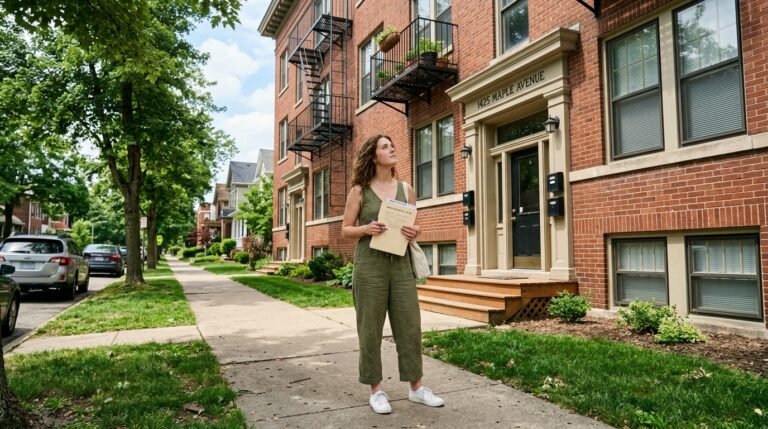
Never pay a deposit or application fee for a unit you haven’t toured in person. Listings that pressure you to wire money or buy gift cards to “hold” an apartment are scams — full stop. Legitimate landlords take applications after showings, not before.
Never sign anything you haven’t read, and never sign a lease with blank spaces. If the lease names a payment method (for example, “personal check only”) that you can’t use, negotiate that clause before signing — ask for money orders or cashier’s checks to be added in writing. Verbal promises about payment methods are worth nothing once there’s a dispute.
Be wary of anyone offering to “fix” your documentation problem for a fee — services that promise fake pay stubs or guaranteed approvals. Using falsified documents can void your lease and expose you to fraud claims; and the fee itself is usually just theft.
Finally, keep copies of everything you sign and everything you pay, in that monthly log from section 5. If a landlord-tenant dispute ever reaches small claims court, the side with dated paperwork wins far more often than the side with a good memory. Your paper trail is your leverage — build it from day one.
Frequently Asked Questions
Can I rent an apartment without pay stubs?
Yes. Landlords need proof of steady income, and pay stubs are just the most common form of it. An employer verification letter, your tax return, 1099 forms, and several months of payment receipts together make a credible substitute — especially with independent landlords and smaller management companies.
Can I pay my rent in actual cash?
Sometimes, but it’s the riskiest option. Many landlords and corporate complexes refuse cash payments. If your landlord accepts cash, get a signed, dated receipt for every payment showing the amount, unit, and both signatures. Without a receipt, you have no proof you paid.
Will a landlord accept money orders for the security deposit?
Most will, since a money order is guaranteed funds. As of 2026, many sellers cap money orders at around $1,000 each, so a large deposit may need two money orders. Confirm the exact deposit amount and acceptable payment methods in writing before you buy them.
Do I need to file taxes to rent an apartment?
No landlord requires a tax return by law, but a filed return is one of the strongest income documents you can provide. Workers paid in cash are still legally required to report their income, and getting your filing straight helps both your housing search and your finances. Free tax-preparation clinics can help if the process feels daunting.
Can I use Zelle, Venmo, or Cash App without a bank account?
Generally no — most of these services require a linked US bank account or debit card to send money, as of 2026. Some landlords accept payment through these apps, but you’d need the underlying account or card first. Money orders and cashier’s checks remain the reliable no-bank-account options.
What if my landlord only accepts personal checks?
Ask — in writing — whether they’ll accept a money order or cashier’s check instead; many landlords who say “check only” mean “no cash” and will accept guaranteed funds. Some banks and credit unions also sell cashier’s checks to non-account-holders for a small fee, which functions like a check without requiring an account.
Should I open a bank account before applying?
It’s helpful but not required. Even two or three months of regular deposits creates bank statements that strengthen future applications. If past banking problems are the obstacle, look into second-chance checking accounts or a basic savings account at a local credit union — but don’t let not having one stop you from applying now.
Conclusion

Renting an apartment with cash income and no bank account comes down to replacing what pay stubs and bank statements normally prove: steady earnings, reliably delivered. A verification letter plus tax records proves the earnings; money orders plus a receipt log proves the delivery. Put both halves together and you’re not asking a landlord to take a leap of faith — you’re showing them a documented track record. Start the packet before you start touring, keep the paper trail from month one, and the “no pay stubs” problem stops being a barrier. If this guide helped, save it or share it with someone getting paid in cash and hunting for their first place.

Maren started MyFirstLease after a rough first lease taught him everything the internet didn’t. He covers the logistical side of renting — move-in checklists, utilities, and the unglamorous first-week stuff nobody explains — and oversees everything published on the site.