
Renting your first apartment after a divorce marks both a major logistical milestone and an important financial transition. Securing a lease independently requires establishing a solo household, often while untangling shared debts, dividing physical assets, and adjusting from a joint budget to single-income living.
Whether you owned a family house for years or previously shared rental responsibilities, today’s leasing market involves specific screening criteria, legal documentation, and upfront expenses. Understanding tenant screening rules, lease structures, and moving logistics will help you navigate the rental process smoothly and secure a safe, comfortable home.
Executive Summary

Finding an apartment during or after marital dissolution requires careful preparation. Property managers rely strictly on verifiable documentation—such as individual credit reports, recent pay stubs, and background checks—rather than personal circumstances. Preparing these records in advance prevents administrative delays and improves your chances of approval.
Beyond the application process, setting up a new home involves pragmatic decisions regarding lease duration, utility setups, furnishing priorities, and budgeting. This guide covers the critical legal, financial, and logistical considerations needed to transition into independent apartment living with clarity and stability.
1. Credit Separation

Joint financial accounts remain active until formally closed or refinanced, meaning missed payments on shared cards or auto loans directly impact your credit report. When considering who loses the most money in a divorce, it often comes down to the spouse left responsible for unmonitored joint debt or lingering collections that depress credit scores. Review your credit reports from all three major bureaus (Equifax, Experian, and TransUnion) before submitting rental applications. If joint accounts remain open, request written documentation from creditors showing your account status, or speak with your attorney about expediting debt division to protect your credit profile.
2. Income Verification

Landlords generally enforce an income-to-rent ratio requiring gross monthly income to equal roughly 2.5 to 3 times the monthly rent. If you rely on alimony or child support to qualify, property managers typically require a signed marital settlement agreement, court order, or several months of documented bank deposits showing consistent payments. If support payments have just begun, ask the leasing office in advance what documentation they accept to verify non-wage income.
3. Application Paperwork
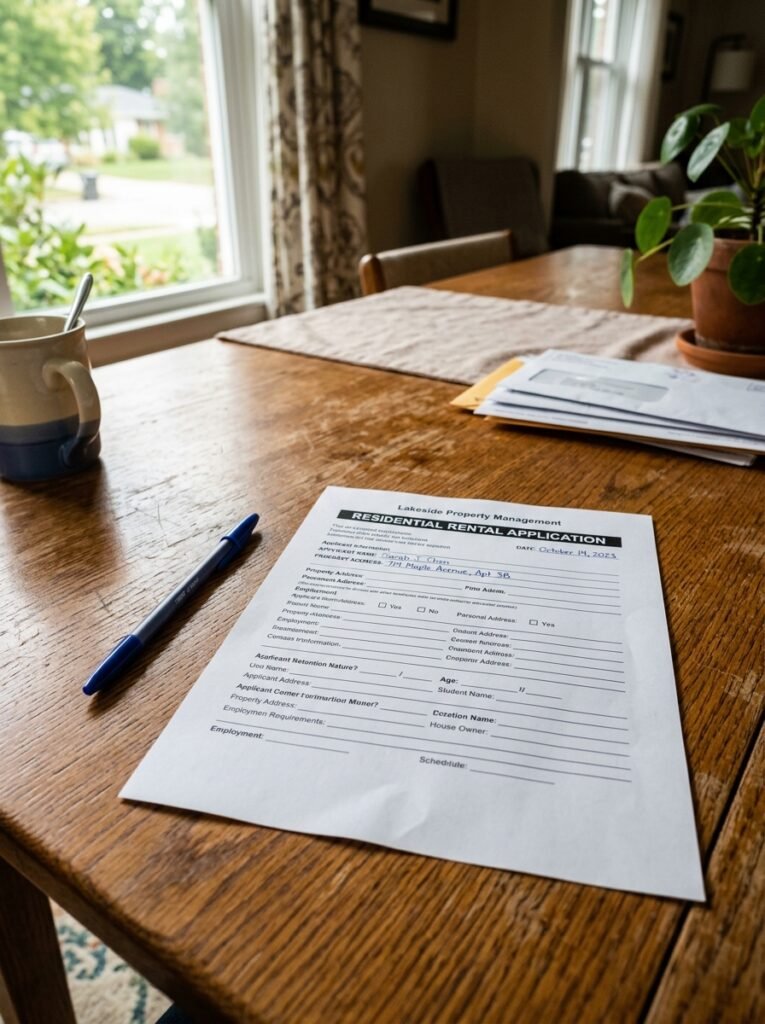
Property management companies evaluate applicants using objective financial documentation rather than verbal explanations. Gather your last two to three months of pay stubs, recent bank statements, government-issued photo identification, and tax returns before scheduling apartment tours. Having a digital folder ready to submit immediately after viewing a unit prevents you from losing a desirable apartment to another applicant.
4. Realistic Budgeting
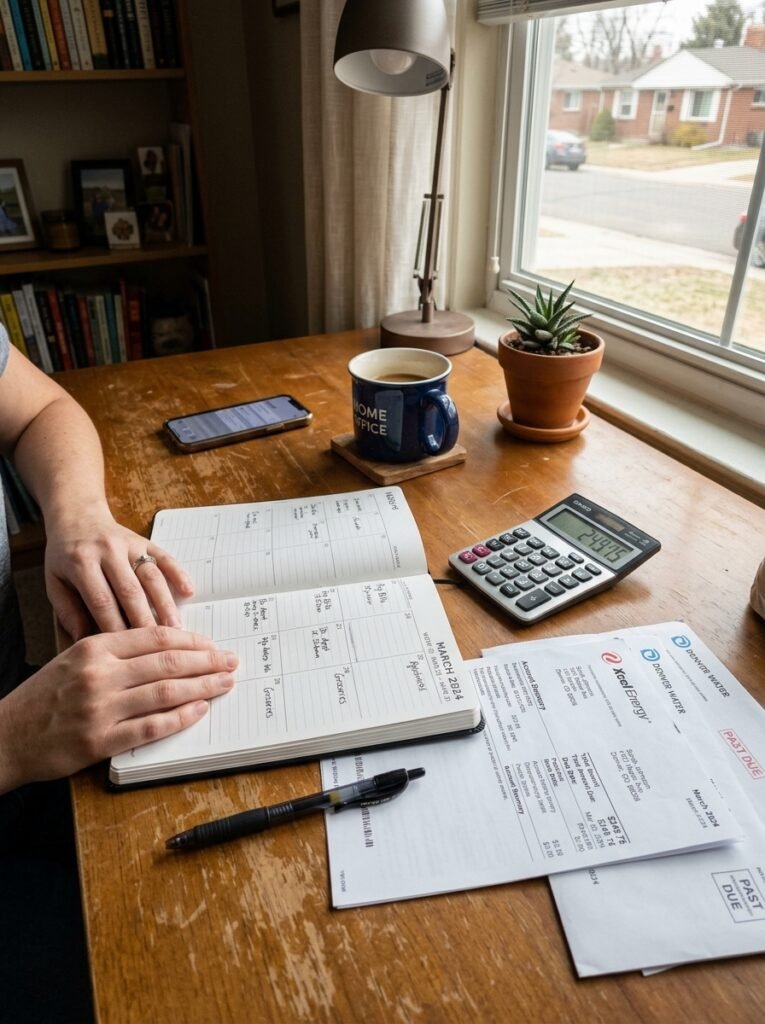
Base rent represents only a portion of monthly housing overhead. When evaluating what is the biggest mistake during a divorce, financial advisers routinely point to committing to an expensive living situation before long-term support, legal fees, and tax changes are fully finalized. Factor recurring expenses—including electricity, water, trash fees, internet, parking, and renters insurance—into your calculations. A realistic monthly spending plan ensures you remain financially resilient as an independent renter.
5. Short-Term Leases

A six-month agreement or month-to-month lease provides flexibility while divorce proceedings or asset sales wrap up. While shorter lease terms often carry a higher monthly premium than standard 12-month agreements, they protect you from substantial early termination penalties if your employment, custody arrangement, or financial situation shifts.
| Lease Type | Typical Commitment | Key Benefit | Potential Drawback |
| Month-to-Month | 30-day notice | Maximum flexibility to move quickly | Higher monthly rate; landlord can adjust rent |
| 6-Month Lease | Fixed 6 months | Stable pricing through initial transition | Re-evaluation required quickly |
| 12-Month Lease | Fixed 1 year | Lowest monthly base rate; predictable cost | Expensive early termination fees |
6. Security Deposits
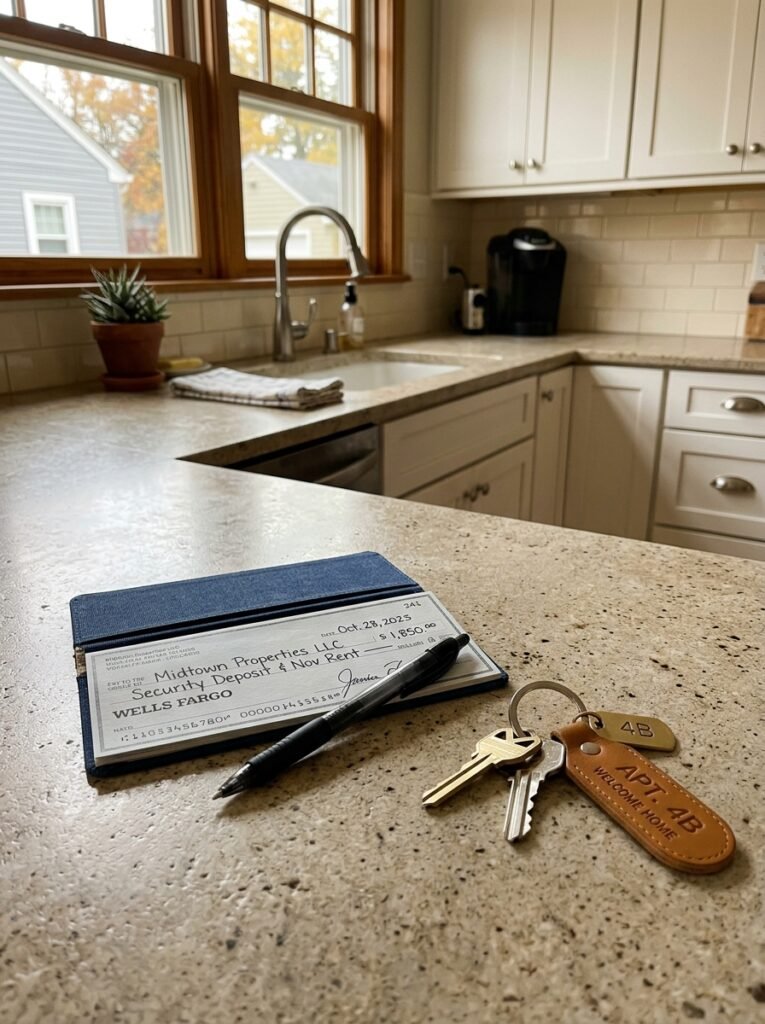
Moving into a rental requires upfront capital, typically consisting of the first month’s rent plus a security deposit equivalent to one or two months of rent. Some municipalities limit security deposit amounts by law, but private landlords may request higher deposits if your solo credit profile lacks recent independent rental history. Keep these funds liquid in a dedicated checking or savings account rather than tied up in pending marital asset splits.
7. Co-Signer Requirements

If your single-income ratio or credit score does not meet a property’s formal criteria, a co-signer or guarantor can bridge the gap. A guarantor signs the lease agreement and legally agrees to cover rent payments if you default. Alternatively, institutional guarantor services operate in many major metropolitan areas, charging a one-time fee to serve as your financial sponsor on the lease.
8. Name Changes

Reverting to a former legal surname requires updating identification documents in a specific sequence. Begin with the Social Security Administration, followed by the state motor vehicle agency, your banking institutions, and employer payroll. If your rental application bears a name that does not match your current pay stubs or bank statements, provide a certified copy of your divorce decree or name-change order to prevent screening delays.
9. Utility Account Setup

Starting fresh utility accounts requires contacting local providers for electricity, gas, municipal water, and broadband at least one week prior to moving in. If your name remains on utility accounts at a former shared residence, contact those companies to remove yourself from the billing profile so you are not held liable for future unpaid charges.
10. Floor Plan Needs

Evaluating how much space you genuinely need prevents paying rent on unused rooms. If you share custody of children, check local building occupancy guidelines regarding bedroom requirements, but balance those needs against your maintenance capacity. If you are downsizing from a larger family house, exploring minimalist living room ideas can help you plan an efficient, clutter-free layout.
11. Pet Custody Clauses

Lease agreements strictly enforce rules regarding pets, including non-refundable pet fees, monthly pet rent, and breed or weight restrictions. If pets are transitioning with you, confirm building policies before applying. Ensure any custody or visitation agreements regarding shared pets do not violate complex rules regarding unregistered animals visiting the property.
12. Essential Furnishings

Furnishing an entire apartment from scratch does not need to happen within the first weekend. Prioritize functional essentials first: a quality mattress, basic cookware, shower curtains, and functional lighting. Staging non-essential purchases over three to six months prevents credit card debt, and selecting affordable area rugs that look expensive helps soften bare floors without exceeding your setup budget.
13. Commute Calculations

Proximity to workplaces, schools, and agreed-upon custody exchange locations significantly impacts your daily quality of life. Test your potential commute during peak morning and evening traffic hours rather than relying on estimated times from map applications during off-peak hours. A slightly smaller unit closer to your primary transit corridor can save substantial time and fuel costs.
14. Move-In Inspections

Walking through the apartment before unpacking furniture is essential for protecting your security deposit. Document every scuff, cracked tile, leaking faucet, or damaged window screen with clear date-stamped photographs and written notes. Submit the signed move-in condition checklist to the landlord within the timeline specified in your lease—typically 48 to 72 hours after receiving the keys.
15. Renters Insurance Policies
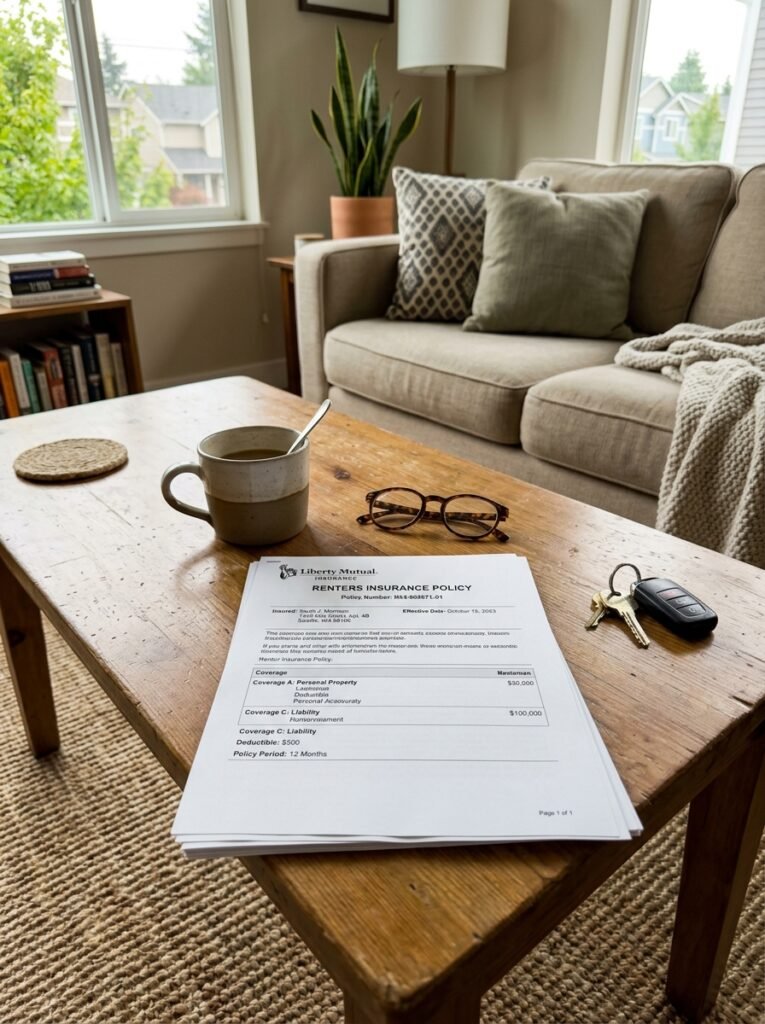
A personal renters insurance policy covers your personal belongings against fire, theft, and water damage, while offering liability protection if a visitor is injured inside your unit. Landlords almost universally require proof of minimum liability coverage (often $100,000) prior to handing over keys. These policies generally cost between $15 and $25 per month and take only minutes to establish online.
16. Solo Lease Agreements

Signing a lease agreement containing only your legal name ensures that no third party possesses legal occupancy or entry rights to your living space. People navigating fresh independence often ask how long does the average first relationship last after divorce, and counselors strongly caution against signing joint leases or moving in with a new partner during this transitional phase. Maintaining sole tenancy preserves your stability and autonomy.
17. Moving Logistics

Scheduling movers or reserving a rental truck requires coordinating specific move-in windows with the apartment management. Many mid-rise and high-rise apartment buildings require tenants to reserve freight elevators and loading docks well in advance. Inquire about specific move-in rules, elevator security deposits, and designated truck parking areas before the moving day arrives.
18. Emergency Fund Reserves

Living as a single tenant means unexpected medical bills, vehicle maintenance, or temporary work disruptions fall entirely on your shoulders. Prioritize maintaining an emergency reserve equivalent to three months of living expenses in an accessible savings account. Having this financial buffer ensures that temporary expenses do not jeopardize your rent payments.
19. Parking and Storage

Confirm what vehicle parking and external storage privileges accompany the rental unit. Many suburban complexes include one parking space with base rent, while urban apartment buildings frequently bill assigned parking, secondary permits, and basement storage lockers as separate line-item fees. Verify these costs before signing the lease agreement.
20. Establishing New Routines

Adapting to an unfamiliar living environment is an emotional adjustment alongside a logistical one. Among what are some tips for recovering from a divorce, mental health professionals emphasize establishing consistent personal routines, maintaining predictable daily schedules, and creating a comfortable, peaceful living environment that feels entirely your own.
21. Subletting Restrictions

Standard residential leases strictly regulate guest stays and outright prohibit unauthorized subleasing through short-term rental platforms. If you plan to travel extensively or host extended family, review the lease terms regarding guest limits. Most contracts state that any guest staying longer than 14 consecutive days must undergo formal background screening and be added to the lease.
22. Building Security
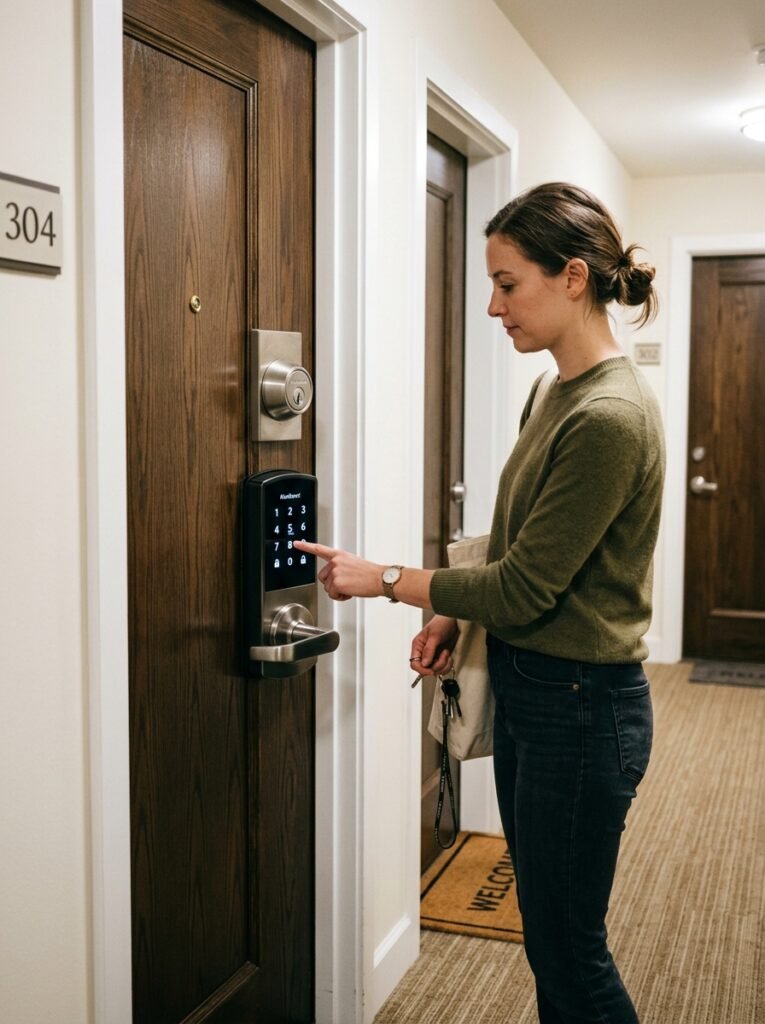
Feeling secure in your personal space is critical when adjusting to solo living. When touring properties, inspect exterior lighting along walkways and parking areas, check the functionality of building entry intercoms, and confirm that deadbolts and window latches work properly. Inquire whether building management changes door locks or electronic key fobs between tenant turnovers.
23. Move Timing
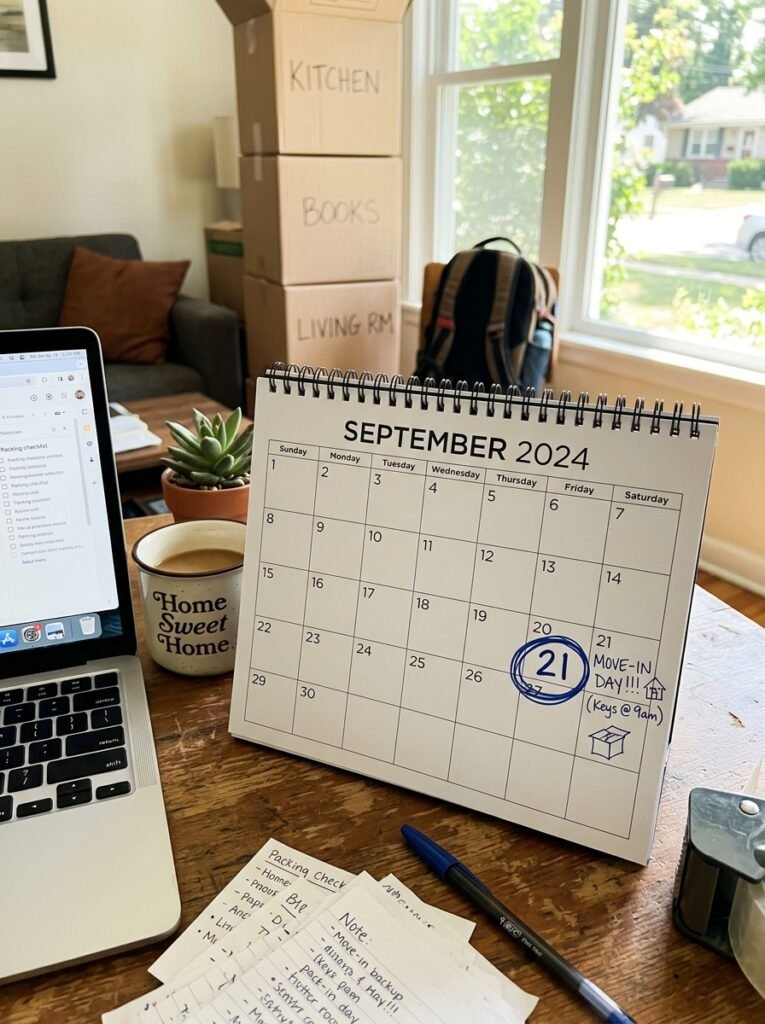
Aligning your move-in date with court schedules, divorce finalization deadlines, or child school breaks avoids paying double housing costs. If you must vacate a marital property by a strict date, build a buffer of several days into your apartment lease start date to account for moving delays, cleaning requirements, and utility transitions.
24. Intentional Decorating

Decorating your apartment allows you to establish an environment that reflects your individual aesthetic rather than compromises from a past relationship. Focusing on simple, affordable touches like budget home decor from Walmart lets you personalize your rooms gradually without placing unnecessary pressure on your initial moving budget.
25. Long-Term Housing Goals

Your first post-divorce rental does not have to be your permanent home. Treat this lease as an intentional, stable environment to reset your finances, understand your neighborhood preferences, and plan your next steps. Whether you eventually buy a house or relocate to a new area, a manageable rental provides the stability needed to build your future.
FAQ
Can I get an apartment if my divorce is not final?
Yes. Landlords base leasing decisions on current creditworthiness, verifiable income, and rental background, not marital status. However, you must demonstrate sufficient individual income or assets to cover the rent without relying on unfinalized settlement funds.
How do I prove alimony or child support as income to a landlord?
To use support payments as qualifying income, landlords generally require a court-ordered settlement agreement, divorce decree, or proof of recurring direct deposits over the prior three to six months.
What should I do if my ex-spouse damaged my credit score?
If joint accounts damaged your credit, obtain credit reports showing closed accounts, provide explanations of credit discrepancies to the property manager, and offer a larger security deposit or a qualified co-signer to secure approval.
Should I choose a 6-month or 12-month lease?
If your divorce settlement, asset distribution, or child custody schedule remains unresolved, a 6-month or month-to-month lease offers flexibility. If your finances and work location are settled, a 12-month lease locks in a predictable monthly rate.
Can an ex-spouse enter my new apartment?
No. If your ex-spouse is not listed as a tenant or authorized occupant on the lease, they have no legal right to enter the unit. You can instruct management that they are not permitted access to the building or keys.
Do I need a co-signer if I haven’t rented in many years?
If you have a strong personal credit score and verifiable income, a co-signer is rarely necessary. However, if you lack a recent rental history or have limited solo income, a guarantor can streamline approval.
Final Thoughts

Renting your first apartment after a divorce is a practical, empowering step toward establishing personal independence. By organizing your financial documentation, understanding landlord screening requirements, and selecting a lease that protects your budget, you can navigate the transition with confidence. Focus on establishing stability, managing upfront costs, and turning your new space into a secure, comfortable sanctuary. If you found this guide practical, save it to your bookmarks or share it with anyone preparing for a similar move.

Maren started MyFirstLease after a rough first lease taught him everything the internet didn’t. He covers the logistical side of renting — move-in checklists, utilities, and the unglamorous first-week stuff nobody explains — and oversees everything published on the site.