

If you’re figuring out how to hide ugly apartment carpet as a renter, you’re up against one of the most common first-apartment frustrations: the landlord’s stained, matted, or aggressively beige carpet that you are not allowed to rip out. This guide is written for decor-conscious first-time renters who need every fix to be non-permanent, lease-safe, and gentle on a tight budget.
Below are nine cover-up methods ranked by impact, followed by an honest rundown of what does not work over carpet, a room-by-room coverage planner, and budget tiers so you can fix the worst of it for under $50 — or go further if you have more to spend. Nothing here requires power tools, glue, or a permission slip from your landlord.
Direct answer: The best way to hide ugly rental carpet is to layer over it, not fight it: start with one large low-pile area rug per room, add washable runners over stained or high-traffic spots, and consider peel-and-stick carpet tiles for a near wall-to-wall refresh. Skip peel-and-stick vinyl tiles — their adhesive won’t grip carpet pile and they’ll shift within days.
Executive Summary

The core strategy is coverage, not camouflage. One big rug does more than five small ones scattered around; washable textiles beat anything adhesive on top of carpet; and anything that traps moisture or leaves residue behind is a direct threat to your security deposit. Every method below lifts away cleanly on moving day, which is the entire point.
Budget reality check: you can meaningfully improve a single room for under $50 with a deep clean plus a runner. The $50–$150 range buys one large area rug that can transform a living room. Above $150, you can layer multiple rooms. (All price ranges in this article are as of Oct 2026 — editor to verify.)
1. Deep-Clean It Before You Cover It

Covering dirty carpet just hides the problem under a prettier layer — and you’ll feel better about every dollar you spend on rugs if the carpet underneath isn’t adding its own odor to the mix. A rented carpet cleaner (often around $25–$35 per day at grocery or hardware stores, as of Oct 2026 — editor to verify) can dramatically revive matted, gray-looking carpet. For a lighter refresh, sprinkle baking soda generously, let it sit a few hours, then vacuum thoroughly; it helps with odors and lifts surface dirt.
This step is almost always lease-safe — cleaning is maintenance, not modification — but check your lease for any clause about professional cleaning requirements at move-out so you don’t pay twice. Photograph the carpet before and after: dated photos of pre-existing stains and wear are your best protection at inspection time.
The common mistake is over-wetting. Carpet in rentals often sits over old padding; soak it and it can take days to dry, which risks mildew. Make slow passes, extract as much water as you put down, and ventilate the room until it’s fully dry.
2. Anchor Each Room With One Big Rug

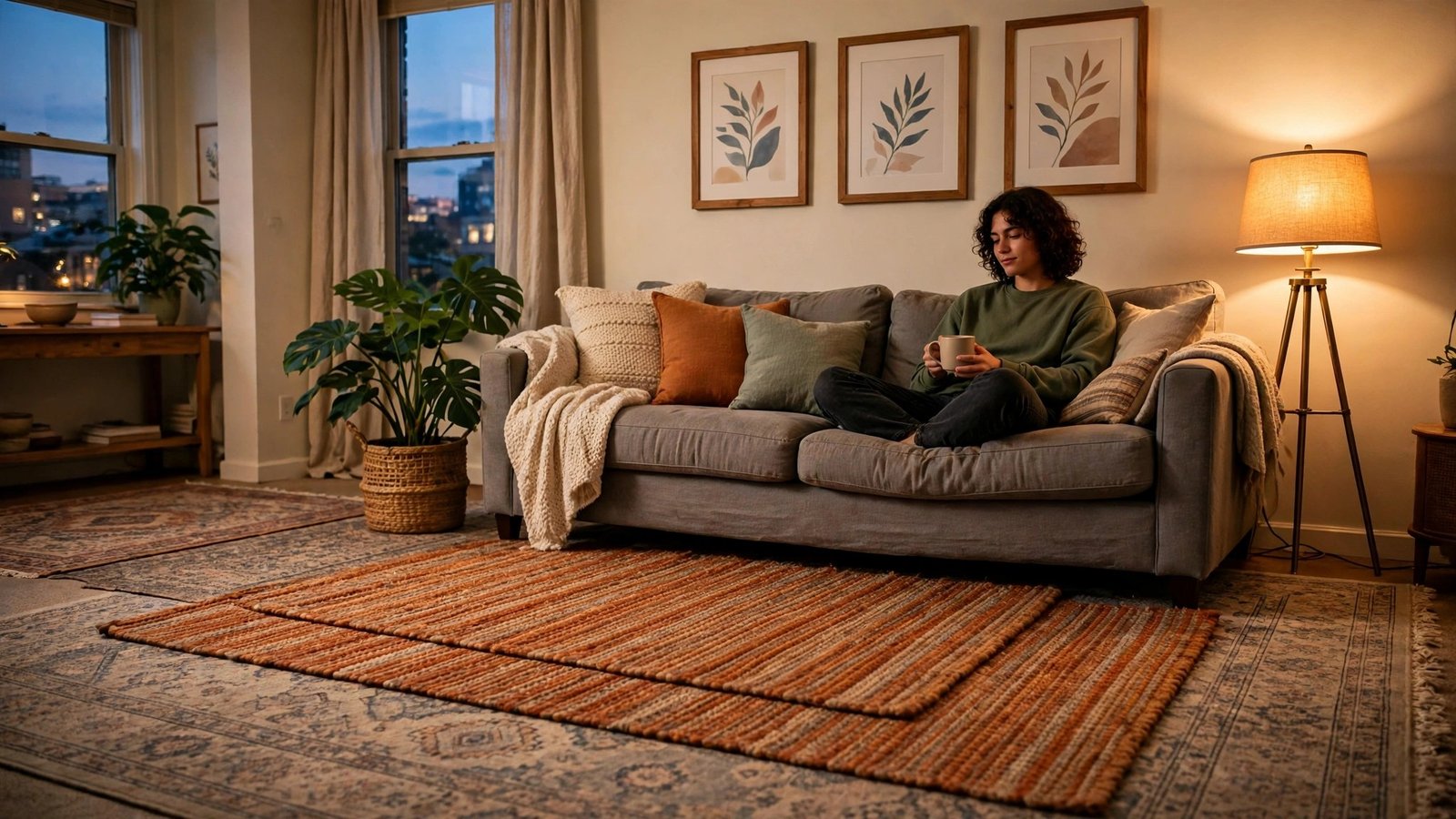
This is the single highest-impact move on this list. One large area rug — typically 8×10 feet in a living room or 5×7 in a bedroom — covers the majority of the visible floor and instantly gives the room a finished, intentional look. Several small rugs scattered around tend to look like you’re apologizing for the carpet; one big rug looks like a design choice.
Choose low-pile rugs for layering over carpet. They sit flatter, bunch less underfoot, and doors clear them more easily. Leave roughly 12–18 inches of the old carpet visible around the rug’s edges — that border of old carpet reads as a frame rather than a flaw, and it keeps the rug from looking like a failed wall-to-wall cover attempt. If you’re unsure about sizing for a small space, see our guide on what size rug works in a studio apartment.
3. Layer Smaller Rugs Over Carpet

Yes — you can put area rugs over apartment carpet, and renters do it constantly. The trick is managing the stack-up: rug on carpet can slide, bunch, and create a tripping lip at the edges if you skip the middle layer. Use a non-slip rug pad made for carpet-over-carpet setups (felt-and-rubber combination pads marketed for this purpose work well); it grips both surfaces and adds a bit of cushioning that makes the whole thing feel more deliberate underfoot.
Layering smaller rugs over a larger base rug is where the style payoff lives: a patterned 5×7 over a neutral 8×10 defines a reading nook or dining zone inside an open layout without any furniture moving. Keep the combined pile low — a thick shag stacked on plush rental carpet becomes a trip hazard and can block doors from swinging. Flat-weave and low-pile rugs are the renter’s friends here.
4. Target Stains With Washable Runners

Stains are a different problem from ugly-but-clean carpet, and they deserve a two-step approach: clean first, cover second. Blot (never rub) with a carpet cleaner, testing any product in a closet corner first to check for discoloration. Whatever doesn’t come out gets covered strategically rather than with a room-sized investment.
Washable runners are ideal for this — hallways, the stretch in front of the sofa, and the path from bed to door are where stains and traffic wear concentrate. Because they’re machine-washable, you can keep them looking fresh without another purchase, which matters when you’re covering a stain you’d rather not think about. Document pre-existing stains with dated photos at move-in; if a stain was there before you, the photo is what proves it at inspection.
5. Lay Peel-and-Stick Carpet Tiles

Carpet tiles — square carpet sections, often sold as peel-and-stick carpet squares — are one of the closest things renters get to replacing carpet without replacing carpet. Laid in a grid, they can cover an entire bedroom floor for a near wall-to-wall refresh, typically running about $1–$3 per square foot (as of Oct 2026 — editor to verify). They stay in place by weight and friction on most low-pile carpet, lift individually if one gets stained, and you can take them with you when you move.
The renter-critical detail: choose non-adhesive carpet tiles, or tiles whose adhesive is specifically rated as removable and residue-free — and test a single tile in a closet for a week before committing to a room. Adhesive-backed bargain tiles are where deposit trouble starts. This is also the method to consider if the carpet’s problem is texture (matted, rough) rather than color, since the tiles give you a genuinely new surface underfoot.
6. Soften Work and Play Zones With Foam Tiles

For renter friendly flooring over carpet in specific zones — a workout corner, a kid’s play area, a standing desk spot — interlocking EVA foam tiles are cheap, cushioned, and lift away with zero trace. They come in wood-look and neutral finishes now, so they don’t have to scream “playroom,” and a 6-pack covering about 24 square feet often costs less than a single area rug (as of Oct 2026 — editor to verify).
Two caveats keep this lease-safe. First, foam tiles only sit stable on low-pile carpet; on plush carpet they wobble and separate, which defeats the purpose. Second, this is a zone solution, not a whole-room one — a full room of foam reads as a gym, and the seams collect crumbs. Keep foam tiles away from heat sources like space heaters and radiators.
7. Let Furniture Do the Hiding
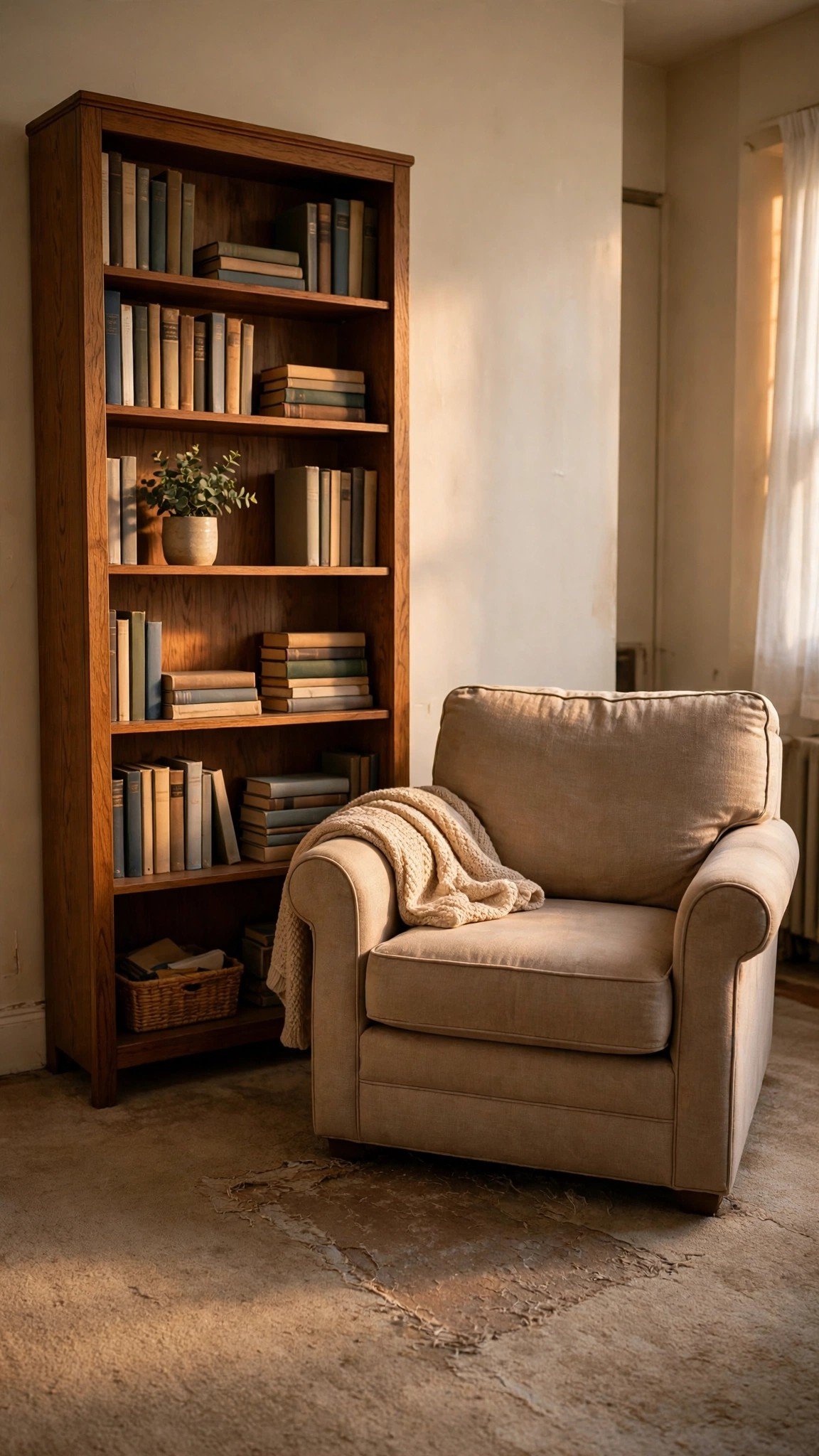
The cheapest cover-up is the furniture you already own. A bed covers a huge percentage of a bedroom’s carpet; a sofa, bookshelf, or dresser parked over the worst section of living-room carpet removes the problem from sight for exactly zero dollars. Floor-length skirts on tables and beds hide even more, and rolling storage ottomans can be repositioned to cover whatever section currently bothers you most.
Do this deliberately rather than by accident: stand in the doorway of each room (that’s the view guests and inspectors get) and note which carpet sections are actually visible. Those are the sections worth covering. One handling note — don’t drag heavy furniture across carpet to reposition it. Lift, or use furniture sliders; dragging snags fibers and can leave visible trails that weren’t there before.
8. Break Up the Expanse With Floor Cushions

When a room’s carpet is uniformly dated rather than specifically stained, the problem is visual monotony — a big beige expanse with nothing interrupting it. Floor cushions, poufs, and large floor pillows break that expanse into zones and add texture and color at eye level when you’re seated. They’re also genuinely useful in a first apartment: extra seating for guests without buying chairs.
Thrift stores and end-of-season sales are the budget play here; floor cushions are one of the easiest decor items to find secondhand in good shape. Look for washable or wipeable covers, since floor-level textiles collect dust faster than anything at sofa height. Cluster them rather than scattering singles — a group of two or three reads as intentional styling, while one lone pouf reads as clutter.
9. Pull Eyes Upward With Light and Decor

This is camouflage rather than coverage, and it works best paired with one of the methods above. Harsh overhead lighting is unflattering to old carpet — it highlights every stain and uneven patch. A warm floor lamp or two, plus table lamps at seating height, cast softer directional light that draws attention to the room’s vertical elements instead of the floor.
Wall art, mirrors, and tall plants do the same job from the decor side: they give the eye somewhere better to land. A large mirror leaned against the wall (secured with museum putty so it can’t tip) or a tall plant in the corner costs little and shifts the room’s visual center of gravity upward. None of this hides the carpet directly — it just makes it the least interesting thing in the room, which is often enough. For more low-cost ideas in this spirit, browse our budget decorating guide.
10. Know What Doesn’t Work Over Carpet

An honest list, because several popular suggestions fail specifically on carpet pile. Peel-and-stick vinyl floor tiles are the biggest one: their adhesive is designed for hard, smooth subfloors, not fibers. Over carpet they shift, curl at the edges, and gap within days — and you’ll be peeling failed tiles off carpet pile, which is worse than where you started. Interlocking vinyl planks have the same problem without a rigid underlayment, and adding plywood subfloors is not a renter-grade project.
Anything that traps moisture is a deposit risk: plastic sheeting or non-breathable mats laid under rugs can hold condensation against the carpet and padding, which risks mildew you’ll be charged for. Double-sided carpet tape on rental carpet can leave adhesive residue; use rug tape specifically labeled safe for carpet instead. And painting the carpet — yes, it’s a trend — gives uneven results on rental-grade carpet and is a near-certain lease violation. When in doubt, if it sticks, seals, or soaks, skip it.
11. Build Your Room-by-Room Coverage Planner

Practical asset — downloadable planner candidate: print this table, walk each room, and fill in your carpet’s actual problem before spending anything.
| Room | Likely carpet problem | Best first move | Why it works here |
|---|---|---|---|
| Living room | Large visible area, traffic wear | One big low-pile area rug (8×10) | Maximum coverage per dollar; anchors furniture layout |
| Bedroom | Stains near bed, matted paths | Washable rug + runner on the bed-to-door path | Bed already hides the middle; cover what shows |
| Hallway / entry | Narrow, heavy traffic, dirt | Washable runner, full length | Cheapest per square foot; handles dirt; easy to wash |
| Home office corner | Chair wear, flat matted patch | Foam tiles or a low-pile rug under the desk | Protects carpet from further chair damage |
| Kids’ corner | Spills, rough play | Interlocking foam tiles over low-pile carpet | Cushioned, washable, replaceable per tile |
Work the plan in this order: clean everything first (Method 1), then cover the room you spend the most waking hours in, then move down the list as budget allows. Photograph each room’s carpet before you start — those photos are your move-out documentation.
12. Match the Fix to Your Budget

Practical asset — downloadable candidate: a one-page budget planner for carpet cover-ups.
| Tier | Budget | What it buys | Best for |
|---|---|---|---|
| Refresh | Under $50 | Carpet cleaner rental + baking soda refresh; one washable runner; repositioned furniture | One stained hallway or a lightly worn bedroom |
| Transform | $50–$150 | One large low-pile area rug (8×10); non-slip rug pad; floor cushions secondhand | A living room that currently embarrasses you |
| Whole apartment | $150+ | Layered rugs across living + bedroom; carpet tiles for one full room; warm floor lamp | Dated carpet in every room, decor-conscious renter |
(All price ranges as of Oct 2026 — editor to verify.) Buy in this order regardless of tier: clean, then the single biggest rug you can afford, then zone solutions. A $120 rug bought after measuring beats a $200 pile of small rugs bought on impulse — measure each room before you shop, and check return policies in case a rug’s color fights your walls.
Frequently Asked Questions
Can you put area rugs over apartment carpet?
Yes — it’s one of the most common renter decorating moves. Use a low-pile rug and a non-slip rug pad made for carpet-over-carpet setups to prevent sliding and bunching. Avoid stacking thick, high-pile rugs, which can become a trip hazard and block doors.
Will covering the carpet bother my landlord?
Generally no — covering carpet protects it, which is what landlords want to see at inspection. Keep everything non-permanent, avoid adhesives not rated as removable, and photograph the carpet’s original condition at move-in so pre-existing wear can’t be blamed on you.
Do I need a rug pad between the rug and the carpet?
It’s strongly recommended. A pad stops the top rug from creeping and bunching, adds cushioning, and reduces wear on both textiles. Choose a felt-and-rubber pad marketed for use over carpet rather than the grippy mesh types designed for hard floors.
Can I use peel-and-stick vinyl floor tiles over carpet?
Not successfully. The adhesive needs a hard, smooth surface; on carpet pile the tiles shift, curl, and gap within days. If you want a tile look, use non-adhesive carpet tiles (Method 5) instead.
How do I hide carpet stains before my move-out inspection?
Clean first — blot, don’t rub, and test cleaners in a hidden spot. Cover what remains with a washable runner or rug rather than attempting aggressive stain removal that could bleach or damage the fibers further. And document: if the stain predates your lease, your dated move-in photos are the evidence that matters.
What’s the cheapest way to cover ugly carpet in one room?
Deep-clean it, then buy the single largest low-pile rug you can afford — secondhand rugs in good condition are a legitimate budget play. One big rug plus repositioned furniture can change a room for well under $50 (as of Oct 2026 — editor to verify).
Do carpet tiles leave residue on rental carpet?
Non-adhesive carpet tiles that stay in place by weight and friction shouldn’t leave any residue. The risk comes from adhesive-backed bargain tiles — always test a single tile in a closet for a week before covering a room, and peel it up to check.
Should I just ask my landlord to replace the carpet?
It’s worth asking, especially if the carpet is damaged, matted flat, or predates your tenancy by many years — the worst they can say is no. Get any agreement in writing before you act on it. But don’t plan around a yes; most landlords replace carpet on their own turnover schedule, which is exactly why the cover-up methods above exist.
Conclusion
When you’re working out how to hide ugly apartment carpet as a renter, the order of operations matters more than the budget: deep-clean first, anchor each room with one large low-pile rug, target remaining stains with washable runners, and skip anything adhesive that isn’t proven removable. Honest about what fails — vinyl peel-and-stick tiles, moisture-trapping mats — this approach keeps every fix lease-safe and your deposit intact. If this saved you from staring at beige carpet for another year, save it for your next apartment hunt or share it with a fellow renter dealing with the same landlord-grade flooring.

Maren started MyFirstLease after a rough first lease taught him everything the internet didn’t. He covers the logistical side of renting — move-in checklists, utilities, and the unglamorous first-week stuff nobody explains — and oversees everything published on the site.