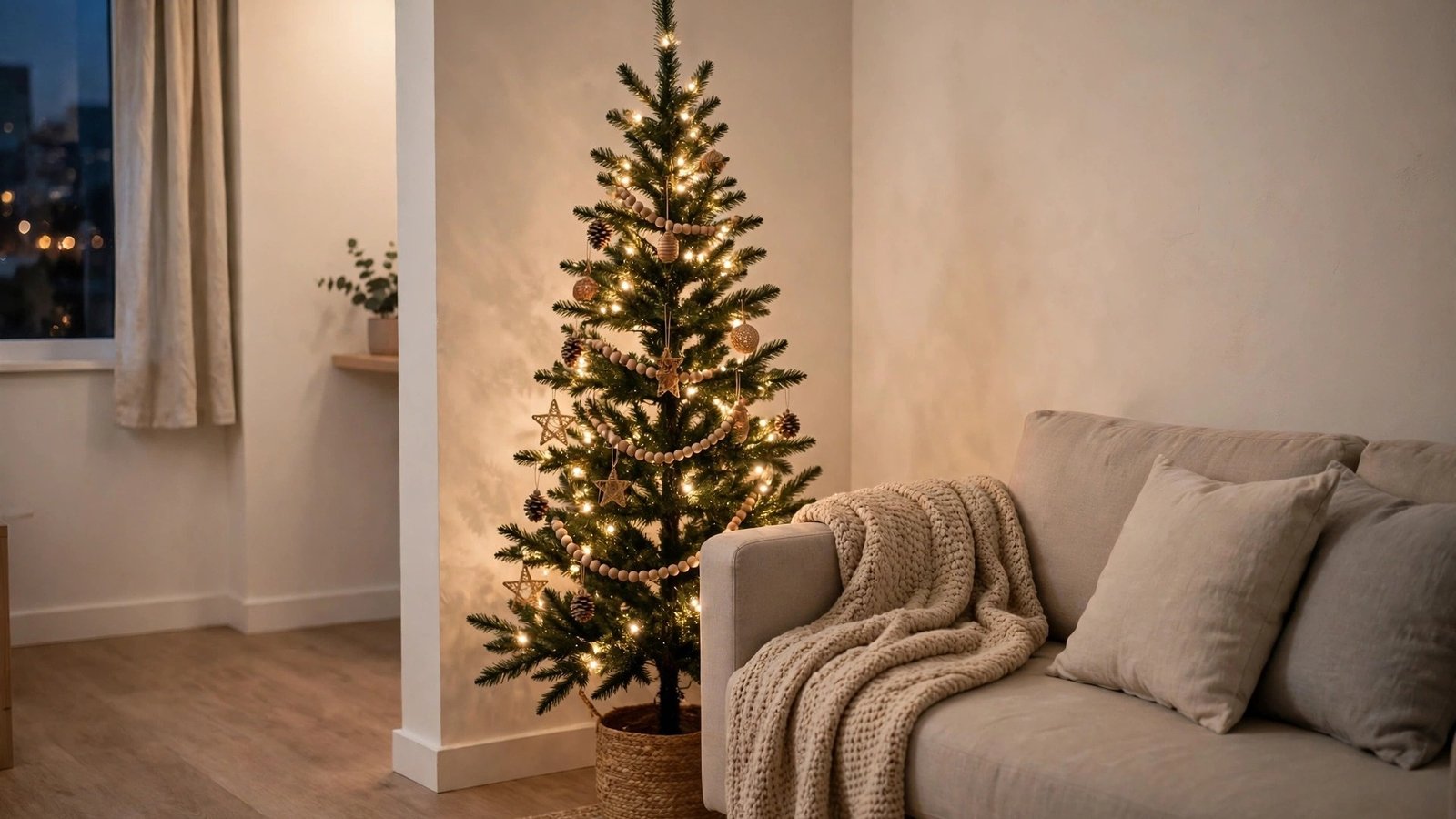
A Christmas corner apartment setup is the simplest way for a single first-time renter in a studio to enjoy the holidays without turning a small home into a storage problem. Instead of decorating every wall, shelf, and surface, you choose one corner, give it a clear focal point, and let the rest of the apartment stay calm and usable.
This guide is written for that renter: someone with limited floor space, a lease to protect, and no wish to spend a whole weekend — or a whole budget — on a decorating project. The system below has three parts: an anchor, layers, and light. Get those three right in one corner, and the whole studio reads as festive.
Direct answer: Pick one visible corner, anchor it with a small tree or a single large arrangement, build it in three layers (tall, middle, and low), and light it with warm-white string lights or a small lamp. Keep everything else in the apartment neutral, use renter-safe hanging methods only, and leave walkways, heaters, and exits clear.
Executive Summary
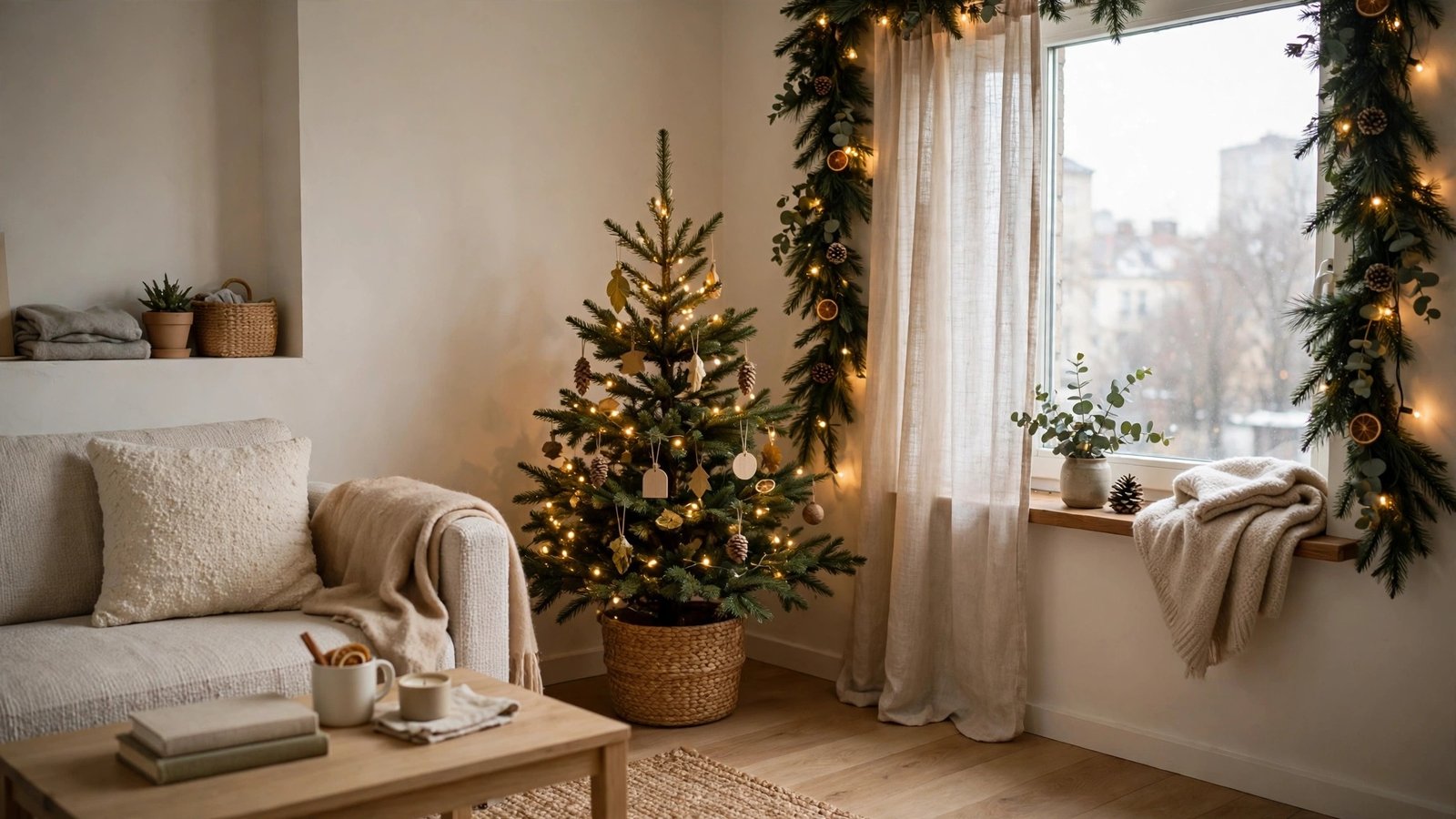
One well-designed corner works better in a studio than decorations scattered across the whole apartment, because a single focal point gives the eye somewhere to land. The sections below walk through the system in order: choosing the corner, building the anchor, layering height and texture, using light instead of more objects, editing before adding, keeping daily life workable, and taking it all down without damage.
You will also find practical guardrails throughout, including how to check your lease before hanging anything, how to keep lights and candles away from curtains and greenery, and how to pack a one-corner display into a single box. The goal is a studio that feels festive all through December and returns to normal in one short session in January.
1. Choose Your Corner Wisely
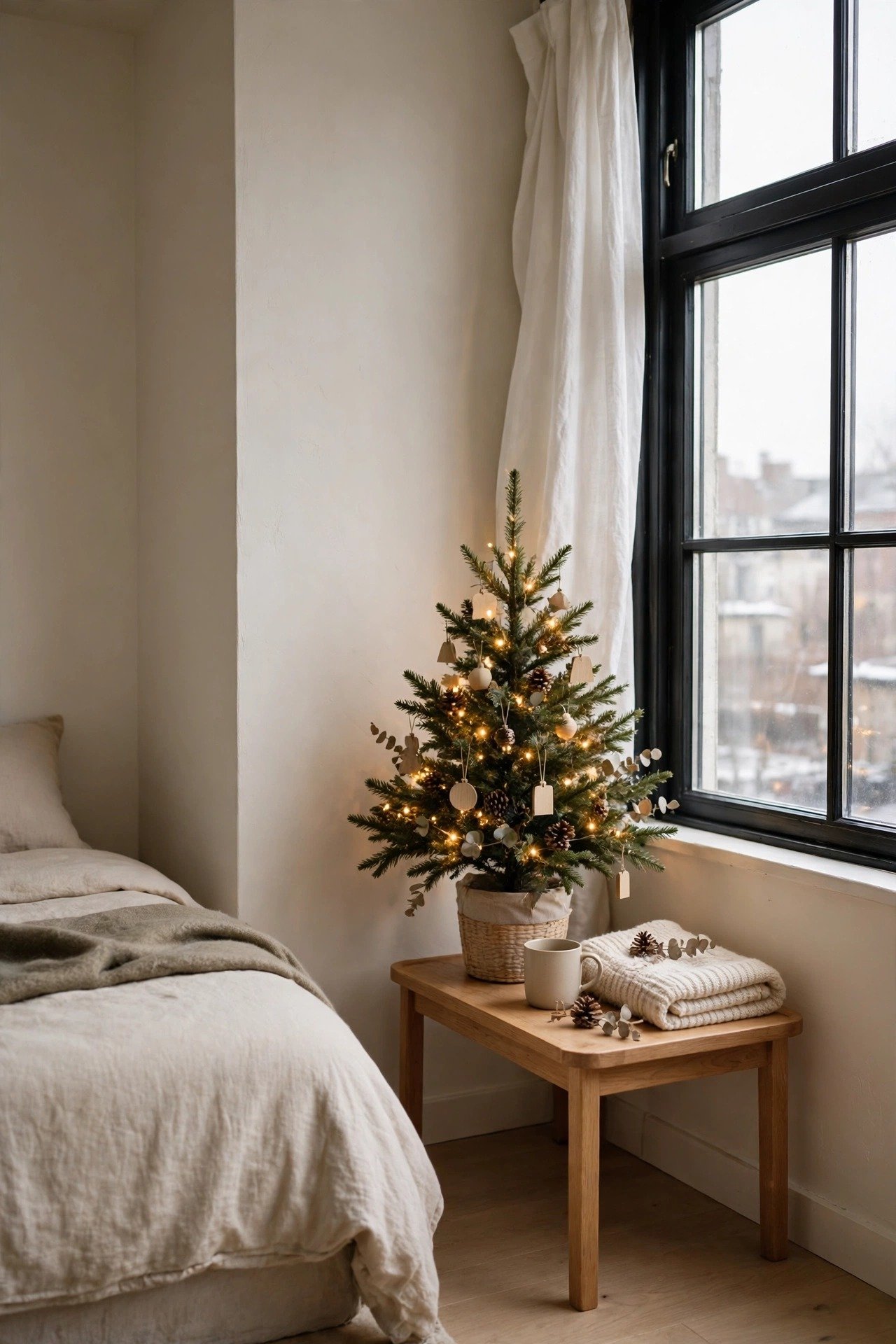
The right corner is visible from where you actually spend time, not just from the front door. In most studios, that means a corner you can see from the sofa or the bed — the spot your eyes rest on in the evening. A corner beside a window works well, because daylight and evening light both flatter it, but a plain wall corner beside a bookshelf or a side table works just as well.
Before committing, check the practical constraints. The corner should not block a door swing, a heater vent, a radiator, or an exit route, and it should leave a clear path to walk past without brushing against decorations. Stand where you sit most often and look at the corner: if it feels like a natural stopping point for the eye, it is the right one. If you have to crane your neck or move furniture to see it, keep looking.
Size matters more than symmetry here. A corner that fits a small tree, a side table, or a floor basket with branches is enough; a corner that demands a large tree and a full arrangement will crowd a studio fast. Measure the floor space, including the depth of any furniture already there, and let that measurement — not a photo of a larger room — decide how much the corner can hold.
2. Start With an Anchor

Every vignette needs one piece that holds it together, and in a Christmas corner that anchor is usually a small tree, a tall branch arrangement, or one large lantern-style display on a side table. The anchor sets the height and the mood of the whole corner; everything else is arranged in relation to it, which is what keeps the display from looking like a random collection of objects.
For a studio, a slim pencil tree or a tabletop tree is usually the most practical anchor, because it gives height without taking much floor space. A tall vase of bare or frosted branches is a lighter alternative that still reads as a tree shape from across the room and packs flat. Whichever anchor you choose, place it first and live with it for an evening before adding anything else — that pause makes it obvious whether the scale is right.
Keep the anchor’s footprint honest. If it needs a side table, that table should already fit the corner; buying a new piece of furniture just to hold a decoration is rarely worth it in a studio. A sturdy stool, a small bookshelf top, or a floor basket can all serve as a base, as long as the anchor sits stable and cannot be knocked over easily in a narrow walkway.
3. Layer Height and Texture

With the anchor in place, build outward in three layers: tall, middle, and low. The anchor itself is the tall layer. The middle layer sits at eye level when you are seated — a garland draped once along a shelf edge, a small arrangement on a side table, or a few ornaments hung from a tension rod in a nearby window. The low layer grounds the display: a tree skirt, a basket, a folded throw, or a tray of candles on the floor beside the tree.
Texture is what keeps a small display from looking flat. Mix two or three surfaces rather than repeating one: matte ornaments with one metallic finish, soft fabric beside natural greenery, or smooth glass next to woven basketwork. The contrast does the visual work, so you need fewer objects overall — a useful rule in a studio, where every extra item competes for attention.
Step back and check the layers from your usual seat, not from arm’s length. If one layer looks empty, move a piece from a fuller layer rather than buying something new. If the corner looks busy, remove the smallest layer first and see whether the display still reads as complete. In a one-corner system, editing is part of the design, not an afterthought.
4. Let Light Do More

Light is the most space-efficient decoration a small apartment has, because it adds warmth without adding objects. A single strand of warm-white fairy lights on the anchor, a small lamp with a warm bulb beside the corner, or battery-operated candles in sturdy holders can make a modest display feel generous in the evening, when a studio is lit mostly by lamps anyway.
Warm-white light generally flatters Christmas greenery and metallic ornaments better than cool-white light, which can make a small display look stark. Drape lights along the anchor itself or along a curtain rod or tension rod, rather than taping them to walls or window frames, where adhesive residue and paint damage are common. Keep lights away from curtains, bedding, and dried greenery, and switch them off when you leave the apartment or go to sleep.
If you use real candles, place them in sturdy holders on a tray, never near curtains, branches, or paper decorations, and never leave them unattended. In a studio, one or two candles on a tray beside the corner give the same glow as a row of them, with far less risk and far less to tidy. Battery-operated candles are a practical alternative where open flame feels too close to bedding or curtains.
5. Edit Before You Add

The hardest part of a one-corner system is stopping. A common pattern is to start with a clean vignette, then add one small item every few days until the corner looks cluttered and the rest of the room starts collecting overflow. A simple rule prevents that drift: for every new piece that enters the corner, one piece leaves it, either back into storage or into another room.
Before adding anything, ask whether it repeats the corner’s palette and whether it fills a genuine gap — a missing middle layer, a dark spot in the evening, a bare patch at the base. If it duplicates something already there, it probably adds bulk rather than beauty. A tight palette of two or three colours, plus white or cream as breathing room, also helps: pieces outside the palette are the ones that tend to make a small display look scattered.
Photograph the corner once it looks finished, and compare later additions against that photo. The photo is a useful check because it shows the display the way a guest sees it — as a whole — rather than the way you see it while arranging, piece by piece. If a new item does not improve the photograph, it does not belong in the corner.
6. Keep Daily Life Working

A festive corner should not make a studio harder to live in. Keep the surfaces you use every day — the kitchen counter, the desk, the dining spot — clear of decorations, and resist moving everyday items to make room for seasonal ones. If the corner display forces you to store your laptop, your keys, or your laundry basket somewhere awkward, the display is too big, not too small.
Renter-safe methods matter here as much as they do for wall decorating. Use adhesive hooks rated for the weight you plan to hang, tested first in a hidden spot, and freestanding pieces where adhesives are not suitable. Before hanging anything at all, re-read the decorating or alterations clause in your lease: some leases restrict adhesive products or anything attached to trim, even when the product is marketed as removable. When in doubt, ask your landlord in writing and keep the reply with your lease paperwork.
Think about cleaning, too. A corner display that collects dust for a month is easy to ignore in a large room but noticeable in a studio. Choose pieces that can be dusted quickly, keep ornaments off the floor where they can be kicked, and leave enough space around the anchor to vacuum. A display you can live around comfortably for a month is one you will actually enjoy, rather than tolerate until January.
7. Take It Down Simply

The advantage of a one-corner system shows up most clearly at takedown. Because everything lives in one spot, the whole display can usually come down in a single short session: ornaments first, then lights, then textiles, then adhesives last, following each product’s removal instructions. Remove adhesive hooks slowly, following the tab direction on the packaging, rather than yanking, which is how paint damage happens.
Photograph the walls, trim, and window frame after removal and compare them with any before photos you took in December. That comparison is the simplest way to confirm the corner is back to its original condition before move-out inspections or a landlord visit. Wipe away dust or light marks with a damp cloth, and avoid scrubbing painted surfaces aggressively.
Pack the whole display into one labelled box if space allows, with ornaments wrapped individually in tissue or soft cloth so colours do not transfer or chip. A single box is easier to find next December, easier to move, and far simpler to store on one closet shelf than several bags scattered across the apartment. When next year arrives, the corner system starts from a box, not a search.
FAQ
How big should a Christmas corner be in a studio apartment?
Big enough for one anchor and two supporting layers — usually a small tree or branch arrangement, one middle-level piece, and something low to ground it. If the display blocks a walkway, a heater vent, or a door swing, it is too big, whatever it looks like.
Do I need a Christmas tree for a Christmas corner?
No. A tall vase of branches, a large lantern arrangement, or a ladder-style shelf dressed with greenery and lights can anchor a corner just as well. The anchor’s job is height and focus, not necessarily a tree shape.
How do I decorate a corner without damaging rental walls?
Use adhesive hooks rated for the weight, tested in a hidden spot, plus freestanding pieces and tension rods inside window frames. Check your lease’s decorating clause first, remove adhesives exactly as the packaging directs, and photograph walls before decorating.
What colours work best for a small Christmas corner?
A tight palette of two or three colours plus white or cream usually works best, because a small display cannot absorb many competing colours. Classic green and gold, or a single accent colour with neutrals, both read as intentional in a studio.
Can one decorated corner really make a whole apartment feel festive?
Yes, if the corner is visible from where you spend your evenings and lit well after dark. A single focal point gives the eye a festive landing spot, while the rest of the room stays calm — which is exactly what makes the corner stand out.
How do I keep a Christmas corner from looking cluttered?
Build in three layers, limit the palette, and follow a one-in, one-out rule for new pieces. Step back and judge the corner from your usual seat, and remove the smallest layer first if it starts to feel busy.
How do I store a one-corner display for next year?
Pack everything into one labelled box, with ornaments wrapped individually in tissue or soft cloth. Keep the box on a single closet shelf, and note the corner’s layout — a quick photo helps — so next December’s setup takes minutes.
One Corner, All the Cheer
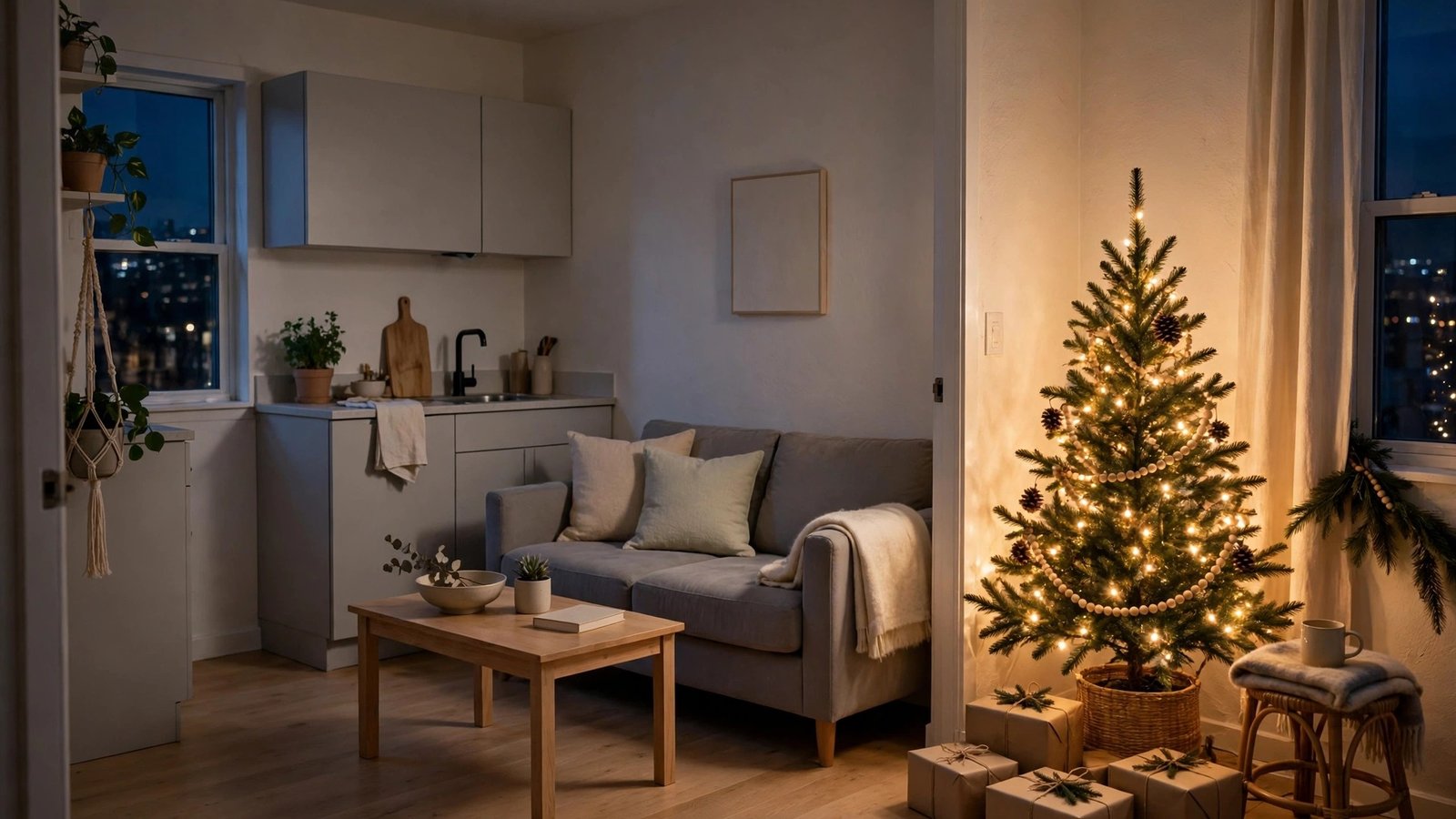
A festive studio does not need decorations on every wall — it needs one corner done well. Choose a spot you can see from where you relax, anchor it with a small tree or a tall arrangement, layer it in three heights, and let warm light carry the mood after dark. A Christmas corner apartment display built this way stays out of your daily life, protects your lease, and packs into a single box when the season ends. Start with the corner and the tape measure before you buy anything, and let one well-lit focal point do the work of a whole decorated room.

Maren started MyFirstLease after a rough first lease taught him everything the internet didn’t. He covers the logistical side of renting — move-in checklists, utilities, and the unglamorous first-week stuff nobody explains — and oversees everything published on the site.