

Deciding to share a home with your partner is a major milestone that requires shifting from dating habits to shared household logistics. This guide covers the essential conversations to have before signing a lease, ranging from financial splits and chore divisions to blending your distinct interior design tastes into a cohesive moving in together aesthetic. It is written for couples looking to preemptively solve common cohabitation challenges so they can focus on enjoying their new space.
Whether you are navigating the intricacies of a move in aesthetic couple compromise, figuring out how to split groceries, or trying to merge two completely different sets of furniture, having these discussions early prevents friction later. Real preparation goes far beyond finding a cute couple apartment; it involves aligning your daily routines, long-term expectations, and living standards.
Executive Summary

Cohabitation requires clear agreements on finances, routines, and space management. This article breaks down 19 specific topics couples should address before moving day, providing actionable advice on how to structure rent payments, manage daily chores, and handle guest policies. It also provides strategies for merging your belongings without arguments.
In addition to logistical planning, this guide emphasizes the visual and environmental transition of a couple living together. You will find practical steps for creating a shared interior style, utilizing a moving in with your boyfriend vision board, and establishing a home environment that respects both partners’ needs for socialization and alone time.
[EDITOR’S PICK: “If I have to highlight one absolute must-do before moving day, it’s creating a moving in together vision board. When my partner and I first moved in, we realized ‘minimalist’ meant two very different things to us. Sitting down with Pinterest to visually define our shared couple house aesthetic prevented so many arguments in the furniture store. Visual alignment saves you time, money, and stress.”]
1. Financial Expectations and Splits

Money is often the most significant source of stress for living together couples. Before looking at apartments, you must have a transparent conversation about your individual incomes, debts, credit scores, and savings. Knowing exactly what you can afford collectively dictates your housing options.
Discuss exactly how rent, utilities, streaming services, and internet bills will be divided. Couples generally use one of a few common models to split expenses. Agreeing on a method before the bills arrive removes the monthly stress of calculating who owes what.
Common Financial Split Methods
| Split Method | How It Works | Best Used When |
| 50/50 Split | All shared living expenses are divided equally down the middle. | Both partners earn a similar income and carry similar debt loads. |
| Proportional (Income-Based) | Expenses are divided based on the percentage of total household income each person earns. | There is a significant wage gap between partners. |
| Itemized Responsibility | One person pays rent; the other covers groceries, utilities, and dining out. | Couples prefer avoiding constant math and app transfers. |
2. Creating a Moving In Together Vision Board

Merging two independent lives means merging two distinct tastes in home decor. Building a moving in together vision board is a practical way to ensure you are both aiming for the same visual goal. This is especially helpful if you are aiming for a specific move in with boyfriend aesthetic but aren’t sure how to explain it in words.
Start by creating a shared digital folder or a collaborative Pinterest board. Both partners should spend a week pinning rooms, color palettes, furniture shapes, and art they like. Once populated, look for common denominators. You might find you both gravitate toward warm woods, industrial lighting, or mid-century silhouettes. Use these overlapping preferences as the foundation for your new apartment couple decor plan.
3. Merging Furniture and Belongings

When two people consolidate households, you inevitably end up with duplicate items: two sofas, two toasters, and far too many coffee mugs. A practical approach is necessary to avoid cluttering your new cute couple apartment with redundant items.
Take an inventory of what you both own before packing. Categorize items into “Keep,” “Sell,” “Donate,” and “Trash.” When deciding between duplicates, evaluate based on condition, functionality, and how well it fits the couple living together aesthetic you agreed upon in your vision board. If both partners are deeply attached to their respective items, compromise by keeping one for the main living area and utilizing the other in a guest room, office, or storage, if space permits.
4. Designing a Couple House Aesthetic

Achieving a cohesive couple house aesthetic requires intentional compromise, particularly if one partner prefers stark minimalism and the other is a collector of maximalist vintage decor. The goal is not to have one person’s style dominate the space, but to curate an environment that feels representative of both individuals.
Identify “anchor pieces” that you both agree on, such as a neutral-colored sectional or a solid wood dining table. Once the large foundational pieces are established, you can layer in individual personalities through textiles, art, and accessories. If your tastes clash heavily, lean into transitional design—a balanced blend of traditional and contemporary styles that naturally accommodates a wide variety of decor elements without looking disjointed.
5. Division of Household Chores

Unspoken expectations regarding housework can quickly breed resentment. A clean home is subjective; what one partner considers tidy, the other might view as chaotic. Couples living together must establish a baseline for cleanliness and explicitly divide household labor.
Sit down and list all necessary household tasks: daily (dishes, wiping counters), weekly (vacuuming, laundry, bathroom cleaning), and monthly (deep cleaning appliances, washing windows). Assign these tasks based on preference and schedule. If one partner works long hours, the other might take on more daily tasks, while the busier partner tackles heavy weekend chores. Some couples find success using shared calendar apps or physical whiteboards to track responsibilities without needing to nag one another.
6. Managing Alone Time and Space

Moving into a shared space does not mean you must spend every waking moment in the same room. Discussing how you will manage alone time is critical for maintaining individual identities and mental health.
Talk about what “decompressing” looks like for each of you. One person might need an hour of quiet video gaming after work, while the other might want to cook while listening to a podcast. If space allows, designate a specific physical area—a reading chair in the bedroom, a desk in the corner, or the patio—as a “quiet zone” where one partner can go to be left alone without needing to justify it.
7. Handling Pet Ownership Together
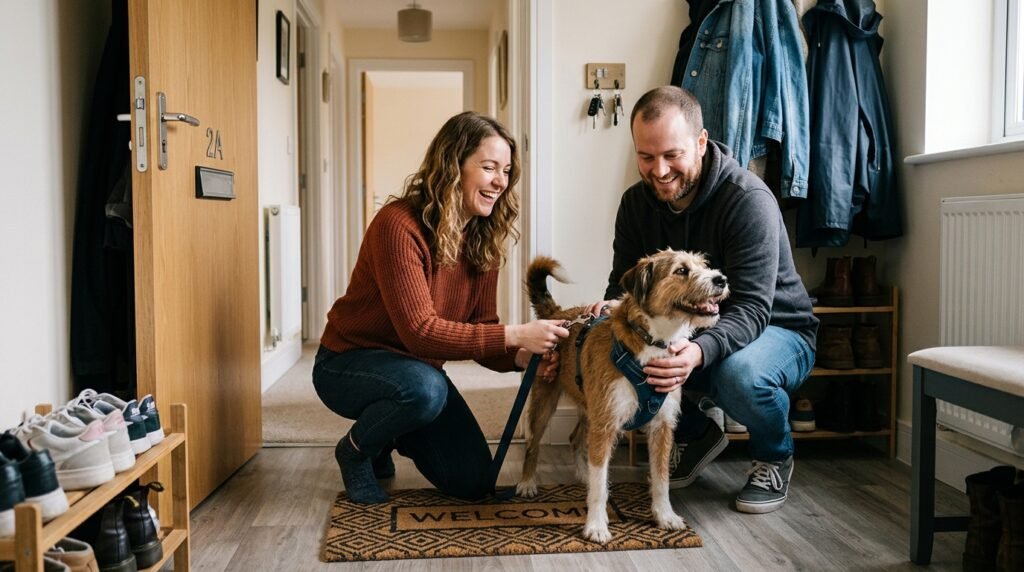
If one or both of you are bringing pets into the new home, the dynamics of pet care will shift. A pet that previously belonged to one person will now interact daily with the other.
Discuss the logistical responsibilities: who handles morning walks, who buys the pet food, and who cleans the litter box. Furthermore, establish shared rules for the pet in the new space. Will the dog be allowed on the new sofa? Does the cat get to sleep in the bed? Agreeing on a unified approach to pet training and boundaries prevents confusion for the animal and frustration between partners. Also, clarify how future vet bills and pet-related expenses will be funded.
8. Guest Policies and Entertaining

Your perfect couple aesthetic is meant to be enjoyed, but you need ground rules on when and how to share it with others. Differing views on hospitality can cause friction, especially if an introvert lives with an extrovert who loves hosting impromptu dinner parties.
Determine how much notice is required before inviting friends over. Discuss policies for overnight guests, especially out-of-town family members. How long is an acceptable stay? Who is responsible for preparing the guest area and cleaning up after they leave? Setting baseline expectations around hosting ensures that your home remains a safe, relaxing sanctuary for both of you.
9. Conflict Resolution Strategies

Arguments are inevitable when couples share a living space. You can no longer simply go home to your own apartment after a disagreement. Establishing a framework for how to handle conflict within shared walls is a vital step before moving day.
Discuss how you both process anger or frustration. Do you need a cooling-off period before talking it out? Is it acceptable to sleep in the guest room or on the couch during a fight, or is there a strict “never go to bed angry” rule? Agreeing on a respectful protocol for arguments prevents minor disagreements over dirty dishes or the moving in aesthetic from escalating into deeply hurtful fights.
10. Sleep Habits and Bedroom Routines
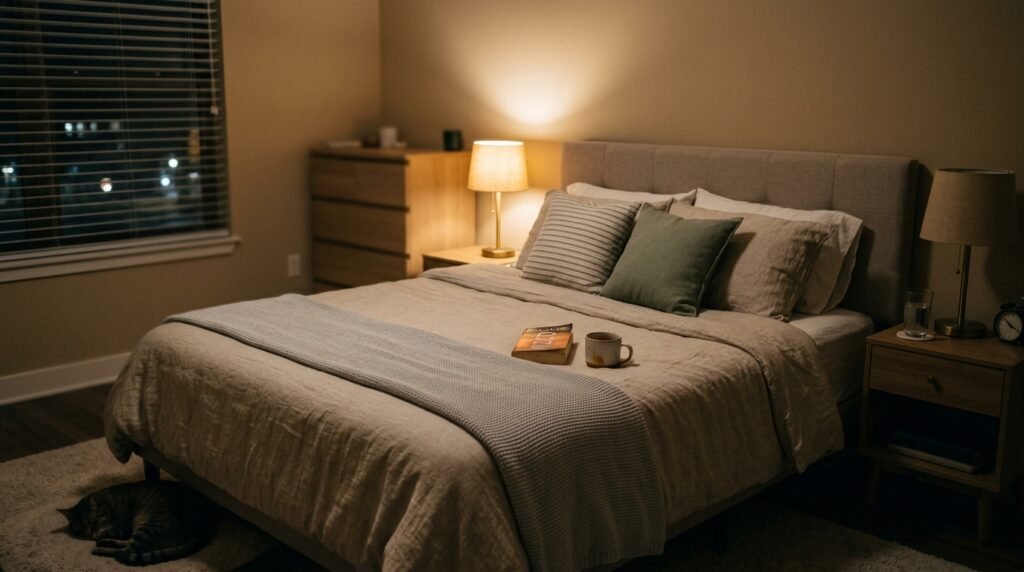
Sleep incompatibility is a highly common issue for a new apartment couple. From snoring and blanket-hogging to differing sleep schedules, nighttime routines must be synchronized or accommodated.
Compare your natural circadian rhythms. Are you a night owl pairing up with an early bird? Discuss how to handle alarms going off at different times without ruining the other person’s sleep. Address environmental preferences: optimal room temperature, the need for complete darkness versus a nightlight, and whether watching television or scrolling on phones in bed is acceptable. Investing in a larger mattress, individual duvets (the “Scandinavian sleep method”), or a white noise machine can solve many of these physical sleep differences.
11. Grocery Shopping and Meal Prep

Food logistics require daily attention. Before moving, decide how you will handle grocery shopping, meal planning, and cooking.
Dietary and Shopping Considerations
- Shared vs. Separate Groceries: Will you buy all food jointly, or keep separate shelves for specific snacks and individual dietary needs?
- Cooking Responsibilities: Will you take turns cooking, cook together, or does one person genuinely prefer handling all the meal prep while the other does the cleanup?
- Dietary Restrictions: If one partner is vegan and the other eats meat, discuss how cross-contamination will be handled and whether dual meals need to be prepared.
- Budgeting: Decide on a general weekly grocery budget and how often ordering takeout or dining at restaurants fits into your shared financial plan.
12. Commutes and Morning Routines

Mornings set the tone for the entire day. If you are both trying to get ready for work at the exact same time in an apartment with only one bathroom, tension will build quickly.
Map out your respective morning schedules. What time does each person need to wake up, shower, and leave the house? If your schedules heavily overlap, you must choreograph the bathroom usage. For example, one person might shower at night, or one might use the bedroom mirror for hair and makeup while the other occupies the bathroom. Discuss commute times as well; if moving in together significantly lengthens one partner’s commute, acknowledge the sacrifice and consider how to balance that burden in other areas of household management.
13. Decorating a Cute Couple Apartment

When physically decorating your new space, the goal is to merge function with the moving in with your boyfriend decorating ideas you discussed earlier.
Start by prioritizing the communal areas—the living room and kitchen—as these dictate the overall feel of the home. Avoid rushing out to buy everything brand new on day one. Live in the space for a few weeks to understand the natural light, traffic flow, and how you actually use the rooms. When you do purchase new items, shop together. Selecting art, rugs, and statement furniture as a team ensures both partners feel a sense of ownership over the cute couple apartment aesthetic.

Practical legalities must be addressed before signing a contract. A lease binds you both financially and legally to the property and to the landlord.
Discuss whose names will go on the lease. In most cases, it is safest and most equitable for both partners to be listed as co-tenants, meaning both are equally responsible for the rent and any damages. Furthermore, while it is uncomfortable, you must discuss what happens if the relationship ends or if someone loses a job. Will one person keep the apartment? How will the lease-break fees be handled? Having a clear contingency plan removes the anxiety of the “what ifs.”
15. Cleanliness Standards and Clutter
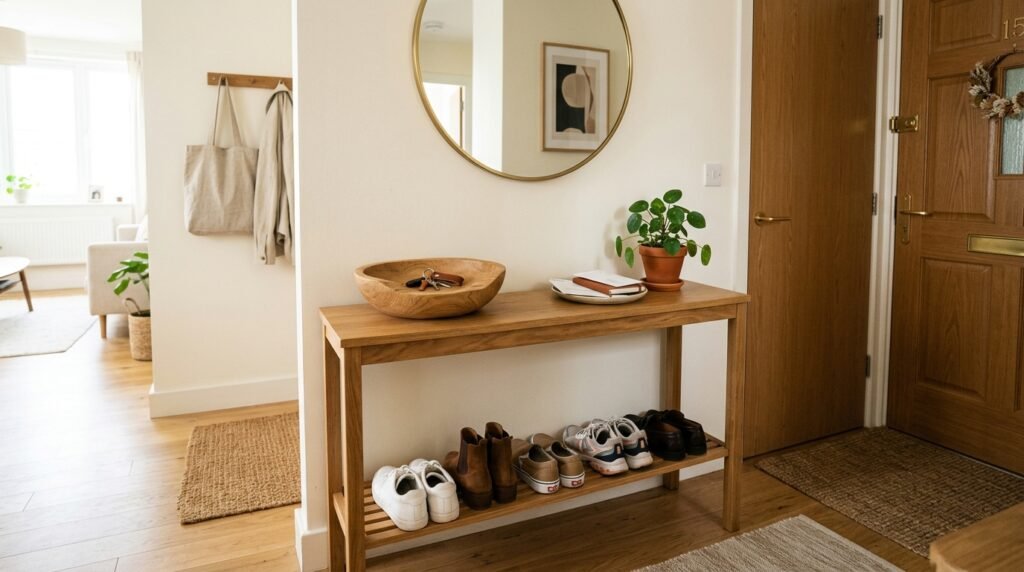
Beyond dividing specific chores, you must align on your overarching philosophy regarding clutter. One partner might be fine leaving mail, jackets, and bags on the kitchen island for days, while the other requires clear surfaces to feel relaxed.
Define what “clean” and “tidy” mean in your shared space. Agree on specific clutter drop-zones—like placing a decorative bowl by the door for keys and wallets, or a dedicated basket for mail—so items don’t migrate across the apartment. Compromise is key here; the neater partner may need to accept a slightly lower standard of perfection, while the messier partner must commit to picking up their daily trails.
16. Future Timelines and Intentions

Moving in together means different things to different people. For some, it is a practical step to save money on rent; for others, it is a definitive pre-engagement trial period.
Be entirely transparent about why you are moving in together and where you see the relationship going. If one partner views the move as a stepping stone to marriage within a year, and the other views it as simply a fun way to spend more time together with no timeline for the future, you have a fundamental misalignment. Ensure your long-term intentions match before signing a 12-month lease.
17. Compromising on Moving In Aesthetic

When one partner is moving into a space the other already inhabits, establishing a shared moving in couple aesthetic is particularly challenging. The incoming partner can easily feel like a guest rather than a co-owner of the home.
If you are moving into your partner’s existing apartment, they must make physical and visual space for you. This means clearing out closet space, emptying dresser drawers, and being willing to replace some existing decor with items the incoming partner brings. To achieve a true moving in with your boyfriend aesthetic (or girlfriend aesthetic), the existing resident must be willing to let go of their bachelor/bachelorette setup. Repaint a wall, rearrange the living room layout, or buy a new rug together to instantly make the space feel fresh and jointly owned.

In the era of digital living, couples accumulate dozens of micro-bills. From Netflix and Spotify to Amazon Prime and meal delivery kits, redundant subscriptions waste money.
Sit down and audit all your current subscriptions. Cancel duplicates and upgrade to “duo” or “family” plans where it makes sense. Decide whose credit card will be attached to the shared household accounts (like electricity, internet, and shared streaming) and how the other partner will reimburse them. Many couples open a joint checking account specifically for household expenses; each partner transfers their agreed-upon share into the account monthly, and all shared bills and rent are paid directly from that pool.
19. Evaluating Apartment Must-Haves

Before touring units, sit down and write out your individual “must-haves,” “nice-to-haves,” and “dealbreakers.” This prevents you from being swayed by a charming aesthetic if the apartment lacks the practical elements you require.
Common Apartment Negotiations
- Laundry: Is in-unit laundry a non-negotiable, or are you okay with a shared basement facility?
- Outdoor Space: Do you need a balcony or a small yard for a pet, or is proximity to a local park sufficient?
- Parking: Does the unit come with dedicated parking, or will one of you have to fight for street parking daily?
- Work from Home Space: If one or both of you work remotely, does the floor plan allow for separate, quiet workspaces, or will you be taking calls from the kitchen table?
Compare your lists. If your partner’s dealbreaker is street parking, and yours is a lack of natural light, you now have a highly specific filter for your apartment hunt.
FAQ

How long should you date before moving in together?
There is no universal timeline, but most experts and couples suggest dating for at least one year. This allows you to experience all four seasons together, navigate various stress triggers, and move past the initial honeymoon phase before legally binding your living situations.
How do we handle decorating if we have completely opposite styles?
Focus on a transitional style that blends elements of both. Use a moving in together vision board to find overlapping colors or textures you both tolerate. Usually, sticking to neutral, simple large furniture pieces allows both partners to add their distinct styles through smaller, easily changeable accessories like throw pillows, art, and rugs.
Should we open a joint bank account when we move in?
It is not mandatory, but a joint account dedicated solely to household expenses (rent, utilities, groceries) simplifies bill paying. You can maintain your separate, personal checking accounts for individual spending while pooling the necessary funds for your shared living costs.
What is the best way to handle chores without fighting?
Remove ambiguity. Detail exactly what chores need doing and assign them based on preference and available time, not necessarily a strict 50/50 split. Using a shared app or whiteboard to track completion removes the need for one partner to “nag” the other.
How do we decide whose furniture to keep?
Evaluate based on quality, scale, and fit for the new apartment. If one sofa is a high-quality sectional and the other is a worn-out futon, the choice is clear. If both are good, measure the new space to see which fits better. Items that don’t make the cut should be sold, with the proceeds put toward new items for the shared home.
What if one person makes significantly more money than the other?
In cases of income disparity, a proportional split is generally the most equitable approach. If one partner makes 70% of the total household income, they pay 70% of the shared living expenses. This ensures both partners maintain a comparable standard of living and discretionary income without the lower earner being financially drained.
Conclusion

Successfully navigating a couple living together for the first time requires much more than simply signing a lease and merging your record collections. By proactively discussing financial splits, chore divisions, and your shared moving in aesthetic, you eliminate the guesswork that leads to everyday friction. Building a beautiful, functional home is a collaborative project. If you found this checklist helpful in preparing for your big move, save this page as a reference for your upcoming apartment hunt, and share it with your partner to kickstart your moving conversations.

Maren started MyFirstLease after a rough first lease taught him everything the internet didn’t. He covers the logistical side of renting — move-in checklists, utilities, and the unglamorous first-week stuff nobody explains — and oversees everything published on the site.