
You found the perfect apartment. It has great natural light, the commute to work or campus is incredibly short, and it actually fits your budget. But then, the property manager hits you with reality: you don’t qualify on your own. Now what?
If you are a young adult asking, can your parents rent an apartment for you, you have come to the right place.
It is completely normal to feel frustrated or confused when navigating the leasing process for the first time. The great news is that yes, your parents can absolutely step in to help you secure that dream unit. In this guide, we are going to break down all the ways your family can help, what landlords actually look for, how to have “the talk” with your folks, and what to do if they are unable to sign. Let’s get you into your new place!
Quick Answer: Yes, But Here’s How It Works
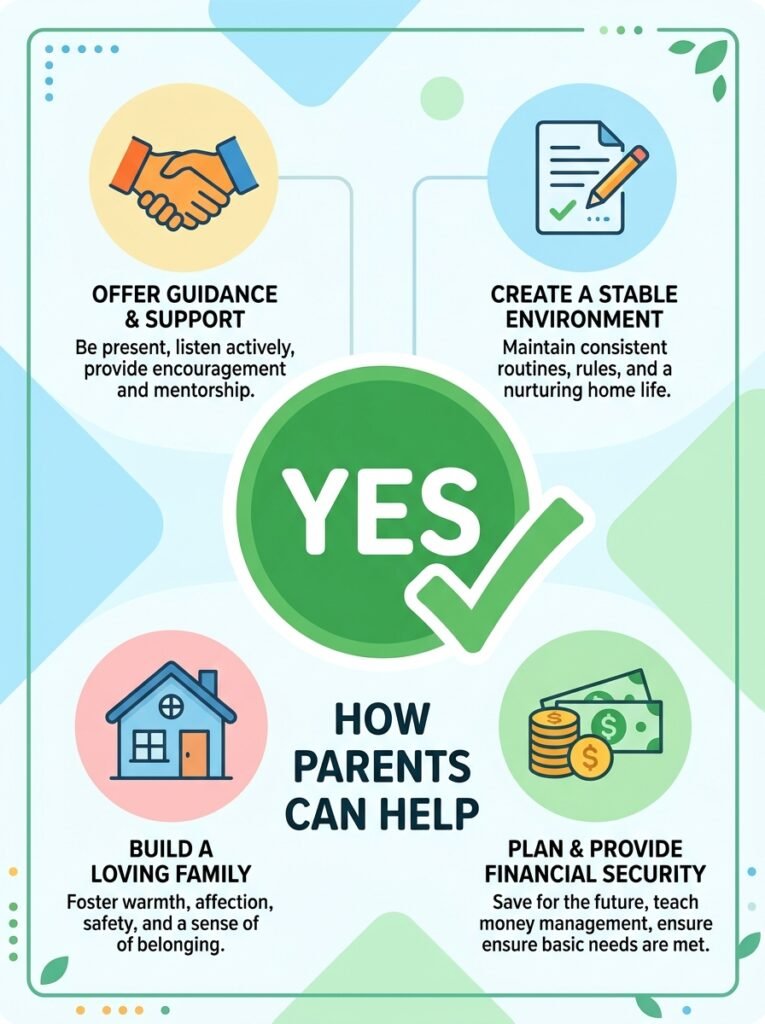
Yes, your parents can help you rent an apartment in several different ways. The most common method by far is for a parent to co-sign the lease, but they can also act as a guarantor, become the primary leaseholder, or even help you pay upfront to bypass strict requirements.
One of the biggest reliefs for young renters is learning that parents do not need to live in the apartment with you to help you secure the lease. Landlords all have slightly different requirements and rules, but almost all of them are perfectly happy to let parents vouch for their adult children as long as the paperwork and finances are in order.
4 Ways Parents Can Help You Rent an Apartment
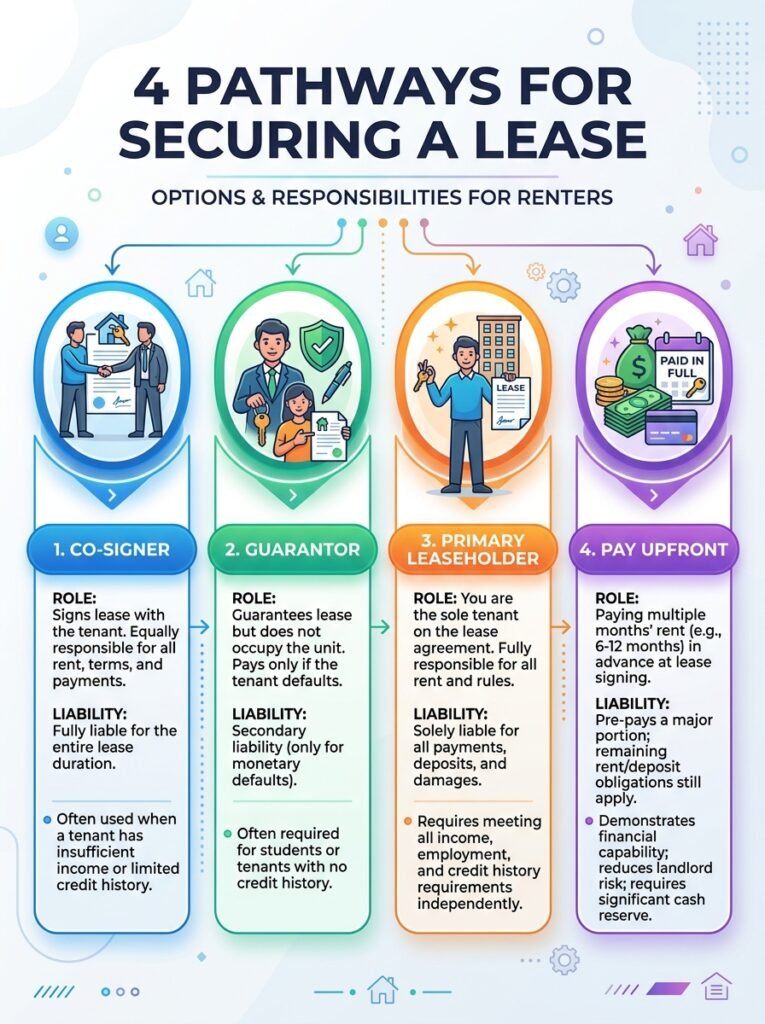
When you ask, “can my parents lease an apartment for me,” there isn’t just one single way to do it. Here are the four primary pathways your parents can take to help you get your keys:
- 1) Co-Signer / Guarantor: This is the most common and widely accepted method. Your parents sign the lease document alongside you. They act as a financial safety net; if you cannot pay the rent, the landlord will legally expect your parents to cover it. Both you and your parents are responsible.
- 2) Parent as Primary Leaseholder: In this scenario, your parents actually sign the lease entirely in their name. You are then listed on the document as an “occupant.” This is rarely used by major property management companies (who usually want all adults living there on the lease), but private landlords might allow it.
- 3) Parent as Occupant: This means your parents are actually living with you. They are on the lease as a resident alongside you. While this happens, it is generally not common for student renters or young professionals seeking independence.
- 4) Parent Pays Upfront: If your parents don’t want their credit tied up in a lease, they can offer to pay a large chunk of the lease upfront (for example, 6 months or the entire year). A landlord may gladly accept this cash upfront instead of requiring a co-signer. Note that this is a very high-cost option.
What is a Co-Signer vs. Guarantor? (Simple Explanation)
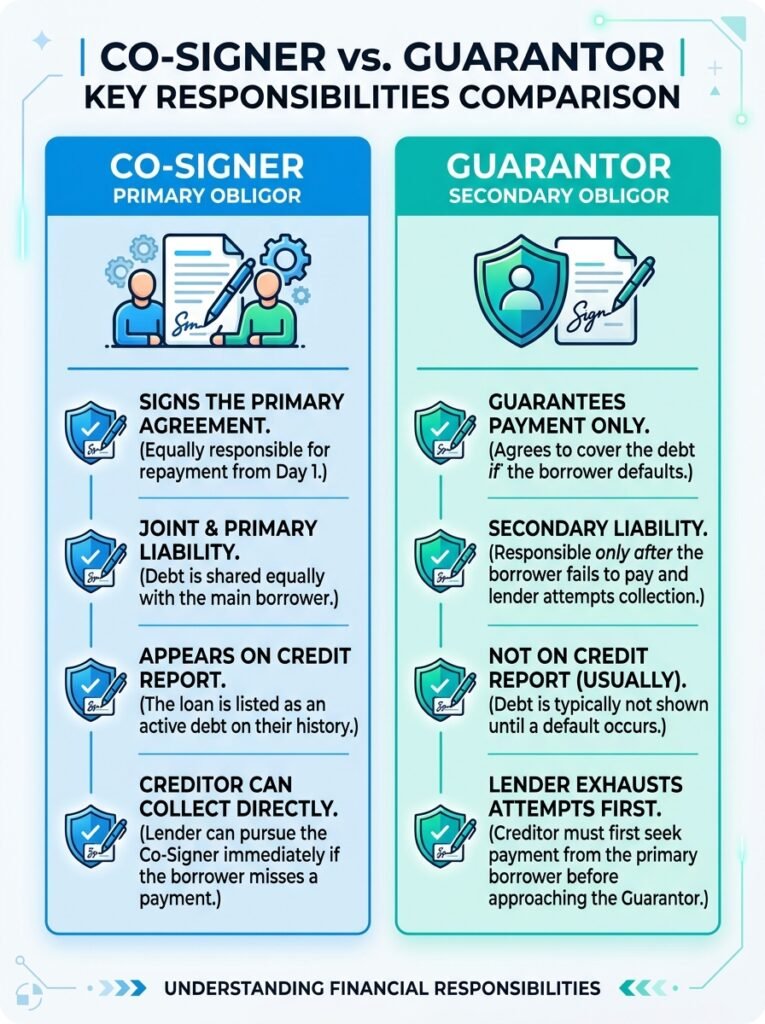
People use these terms interchangeably, but legally and financially, they can mean slightly different things depending on your state and landlord. Here is a simple breakdown:
| Feature | Co-Signer | Guarantor |
| Responsibility | Shares the lease with you as an equal. | Only steps in to pay if you fail to pay. |
| Credit Impact | Full impact on their credit report. | Less immediate impact, unless activated. |
| Required Income | Must qualify individually for the rent. | Must meet higher income requirements (often 4x-5x rent). |
| Common Use | Couples, roommates, or highly involved parents. | Parents backing up students or young professionals. |
| Living in the Unit | May or may not live there. | Does NOT live there. |
What Landlords Look for in a Parent Co-Signer

If your parent agrees to co-sign, they have to apply just like you do. Landlords are strict with co-signers because they are the ultimate backup plan. Here is what property managers expect to see:
| Requirement | Typical Threshold | Why It Matters |
| Credit Score | 700+ | Shows a strong, proven history of financial responsibility. |
| Income | 3x to 5x monthly rent | Proves they have the ability to pay your rent and their own living expenses. |
| Employment | Stable job (2+ years) | Assures the landlord that the income source is steady and won’t suddenly disappear. |
| Debt-to-Income Ratio | Under 40% | Indicates that they have manageable debt and aren’t overextended on other loans. |
| Rental/Mortgage History | Good, clean record | Shows reliability in paying for housing on time. |
Why Would You Need a Parent to Co-Sign?
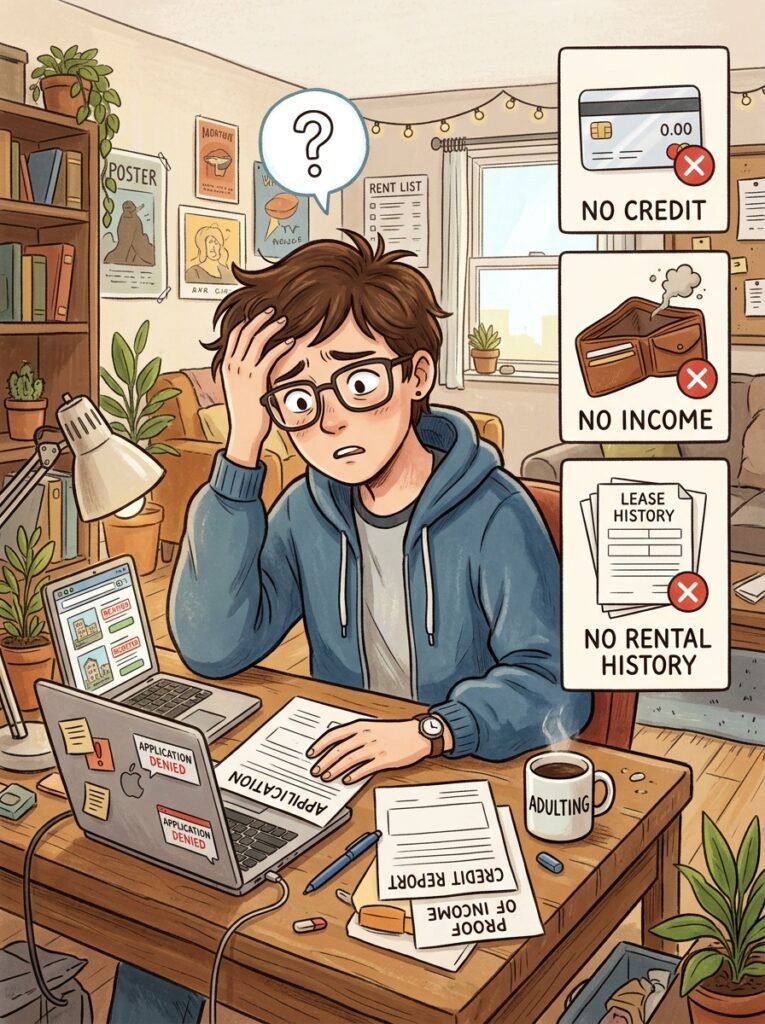
It is easy to feel defeated if you get denied, but don’t take it personally. The system is designed to protect landlords from risk. Young adults frequently trigger these three major red flags:
- Bad or No Rental History: Landlords want to see a record of on-time payments from previous landlords. First-time renters naturally have zero history, making you an unknown risk.
- Poor or No Credit History: Landlords typically require a credit score of at least 620 to 650. Young renters often have “ghost credit” (no credit) or low scores because they haven’t had time to build a solid profile.
- Low or No Income: The golden rule of renting is that you must make 2.5x to 3x the monthly rent in gross income. College students and part-time entry-level workers rarely meet this threshold on their own.
Pros and Cons of Having Your Parents on the Lease

Before you hand your parents an application link, it is crucial to weigh the good against the bad. Bringing family into financial matters is a big deal.
Pros of a Parent Co-Signing:
- Drastically increases your chances of getting approved for the apartment.
- May allow you to rent a place even with zero credit history.
- Gives your parents peace of mind knowing you are in a safe, secure living situation.
- Allows you to start building your own credit and rental history for the future.
Cons of a Parent Co-Signing:
- Your parents are 100% legally responsible for the rent if you lose your job or cannot pay.
- Your parents’ hard-earned credit score is at risk if you fail to pay on time.
- Financial tension can seriously strain family relationships.
- Your parents may apply and still not qualify if they have hidden credit or income issues.
- Even one single late payment can immediately damage both of your credit scores.
How to Ask Your Parents to Co-Sign (Sample Script)

Money is a sensitive topic. When asking your parents to take on this level of legal responsibility, you need to come prepared, act maturely, and be completely transparent about your finances. Here are two ways to approach the conversation.
Option 1: The Email Template
Use this if your parents prefer to digest financial information in writing before talking about it.
Subject: Question about my apartment application
Hi Mom and Dad,
I hope you’re both doing well! I found a great apartment that I’m really excited about. The only issue is that the landlord requires a co-signer since I don’t have much credit history yet.
The rent is $[amount], and they require a co-signer with a credit score of at least 700 and an income of 3x the rent. I know you’ve always been supportive of my independence, but I wanted to ask if you’d be willing to co-sign the lease for me.
I’ve budgeted carefully and I am confident I can afford the rent on my own. This is strictly a formality to help me get approved. I’ve attached a copy of my budget for you to look at. I’d be happy to jump on a call and answer any questions you have.
Love, [Your Name]
Option 2: The Conversation Script
Use this if you are sitting at the table with them or on a phone call.
“Mom, Dad, I need your help with something important. I found an apartment I really want, but the property manager requires a co-signer because I don’t have enough credit history yet. I’ve already done the math, and I can definitely afford the rent every month—this is really just a formality to help me get approved. Would you be willing to co-sign with me? I’m happy to show you my budget spreadsheet and answer any questions you have about the lease.”
Pro Tips for the Conversation:
- Be honest: Don’t hide how much utilities or groceries will cost. Show them you have thought of everything.
- Show your budget: According to the Consumer Financial Protection Bureau, having a clear budget is the best way to prove financial readiness.
- Set up auto-pay: Offer to set up automatic rent payments right in front of them for ultimate peace of mind.
Legal & Financial Consequences for Parents

Understanding the gravity of co-signing is vital. According to the Experian guide on co-signing, co-signers take on massive liability. Here is exactly what is at stake for your parents:
| Risk | What Happens |
| Rent Non-Payment | Parents are legally responsible for the full rent amount. If you don’t pay, they must pay it immediately. |
| Credit Score Damage | Late payments are reported to credit bureaus and will hurt both your credit and your parents’ credit profiles. |
| Eviction | Because both parties are on the lease, an eviction will show up on everyone’s permanent public record. |
| Legal Liability | Parents can be sued in court for unpaid rent, broken lease fees, or excessive property damages you cause. |
| Family Strain | Financial tension can severely damage family relationships, leading to long-lasting resentment. |
What If Your Parents Can’t Co-Sign? (5 Alternatives)

Sometimes, parents want to help but simply don’t meet the landlord’s strict criteria, or they are uncomfortable risking their retirement credit. That is okay! Here are 5 great alternatives:
- Find a Roommate: Add a roommate to your lease who has a better credit score or higher income. When you apply together, the landlord looks at your combined income, making it much easier to hit the 3x rent rule. Plus, you get to split the rent and bills!
- Use a Cosigner Service: If you don’t have family to rely on, you can hire a company to co-sign for you. Companies like Insurent or The Guarantors specialize in this. It usually requires paying them a non-refundable fee (often equal to about one month’s rent).
- Pay More Upfront: Offer the landlord 6 to 12 months of rent entirely upfront. If a landlord has the cash in hand, they will often gladly waive the co-signer and credit score requirements.
- Provide Bank Statements: If you don’t have high income but you have significant savings, show the landlord. Providing bank statements that prove you have enough cash to cover the entire lease term might convince them to accept you.
- Choose a Cheaper Apartment: Lower rent equals lower income requirements. If a luxury building requires $6,000/month income to qualify, a modest apartment down the street might only require $3,000/month. Adjust your expectations to fit your current financial reality.
Frequently Asked Questions (FAQ)

Can your parents rent an apartment for you?
Yes, they can. Your parents can help you secure an apartment by acting as a co-signer, a guarantor, or by paying for the lease upfront.
Can my parents lease an apartment for me?
Yes. While it is most common for them to co-sign alongside you, in some cases with private landlords, they can lease the apartment entirely in their name while listing you as the sole occupant.
Can my parents rent an apartment for me at 17?
Because a 17-year-old is legally a minor and cannot enter into a binding contract in most states, your parents would have to sign the lease as the primary leaseholders and list you as an authorized minor occupant.
Can a parent rent an apartment for their adult child?
Absolutely. Many parents co-sign for their adult children who are in college or just starting their careers and do not yet meet income or credit requirements.
Can I rent an apartment for a family member?
Yes, you can rent an apartment for a family member by co-signing their lease, acting as a guarantor, or being the primary leaseholder and listing them as an occupant (if the landlord permits it).
Can someone rent an apartment for someone else?
Yes, but the landlord must be made aware. You cannot sign a lease in your name and secretly let someone else live there. The person living there must be listed as an occupant or subletter.
Can you rent an apartment for someone else?
Yes, by acting as a co-signer or guarantor, you can use your good credit and income to help someone else get approved for an apartment. However, you assume full financial liability if they do not pay.
Can someone be on a lease and not live there?
Yes! This is the exact definition of a guarantor or a non-occupant co-signer. They are legally bound to the financial terms of the lease, but they do not physically reside in the unit.
What to put on rental application if living with parents?
If the application asks for your current address and landlord, list your parents’ address. For the “Landlord Name” section, you can write “Parents” or “Living at home.” Landlords see this all the time for first-time renters.
Can I rent an apartment and not live there?
Yes, you can be the financial backer (guarantor) of an apartment without living there. However, the property manager must know who the actual physical occupants are for safety and legal reasons.
Can I rent an apartment for my daughter?
Yes. If your daughter does not meet the credit or income requirements, you can apply as a co-signer or guarantor to help her secure the apartment.
How do I ask my parents to co-sign?
Approach them with maturity. Show them the apartment details, prove you have calculated a realistic budget, and explain that you can afford the monthly payments but just need their credit history to satisfy the landlord’s requirements.
Conclusion
Getting your first apartment is a massive milestone, and there is no shame in needing a little help to cross the finish line. Whether your parents co-sign, act as a guarantor, or you end up using a roommate or co-signing service, you have plenty of options to get approved. Just remember: communication with your family and your landlord is the key to a stress-free move.
Want to make sure you have everything ready for your application? Gather all the standard documents—proof of income, ID, references, and rental history—so you can apply the moment you find the right place. Then, get your finances in order and start planning your moving day logistics ahead of time to avoid any last-minute stress.
Disclaimer: This article is for informational purposes only and does not constitute legal advice. Always review your lease carefully and consult with a qualified legal professional if you have specific questions about contracts in your state.
Final tip: Always be honest with your parents and your landlord. Setting clear expectations from day one will save you from financial headaches and family drama down the road!

Maren started MyFirstLease after a rough first lease taught him everything the internet didn’t. He covers the logistical side of renting — move-in checklists, utilities, and the unglamorous first-week stuff nobody explains — and oversees everything published on the site.