Understanding the free things to look for in an accessible first apartment mobility needs helps you screen listings before committing to in-person tours. Renting your own place is a massive step toward independence, and finding a unit that effortlessly accommodates wheelchairs, walkers, or scooters is essential for a functional daily routine.
Whether you are transitioning from a family home, a dorm, or a managed assisted living facility, the civilian rental market requires a sharp eye for structural details. Property listings often use the term “accessible” loosely, meaning you must verify the actual dimensions and physical layouts yourself before signing a lease.
Executive Summary
Evaluating handicap accessible housing requires looking beyond aesthetic finishes to assess the unchangeable bones of the building. Your primary focus during any apartment tour should be on doorway widths, threshold heights, and the physical turning radius available in critical areas like the bathroom and kitchen.
You also have specific legal rights under the Fair Housing Act (FHA) regarding reasonable modifications. This guide breaks down exactly what to measure, which layout features reduce daily friction, and how to evaluate a rental unit’s true compatibility with your specific mobility aids.
1. Ground-Floor and Elevator Access
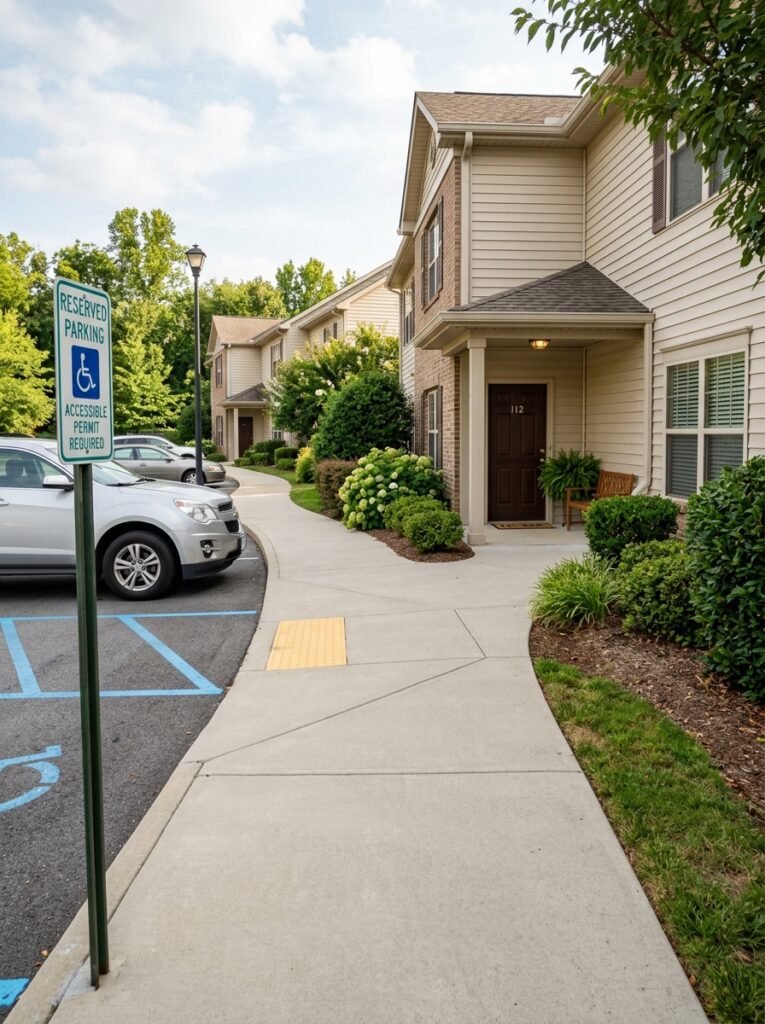
Properties advertised as handicapped accessible must offer a seamless route from the street to your front door. Prioritize ground-floor units whenever possible. If you must rent on a higher floor, verify that the building has a reliable, properly dimensioned commercial elevator with backup generator power. Relying on a single, older elevator in a mid-rise building introduces the risk of being stranded if mechanical issues occur.
2. Minimum Doorway Clearances
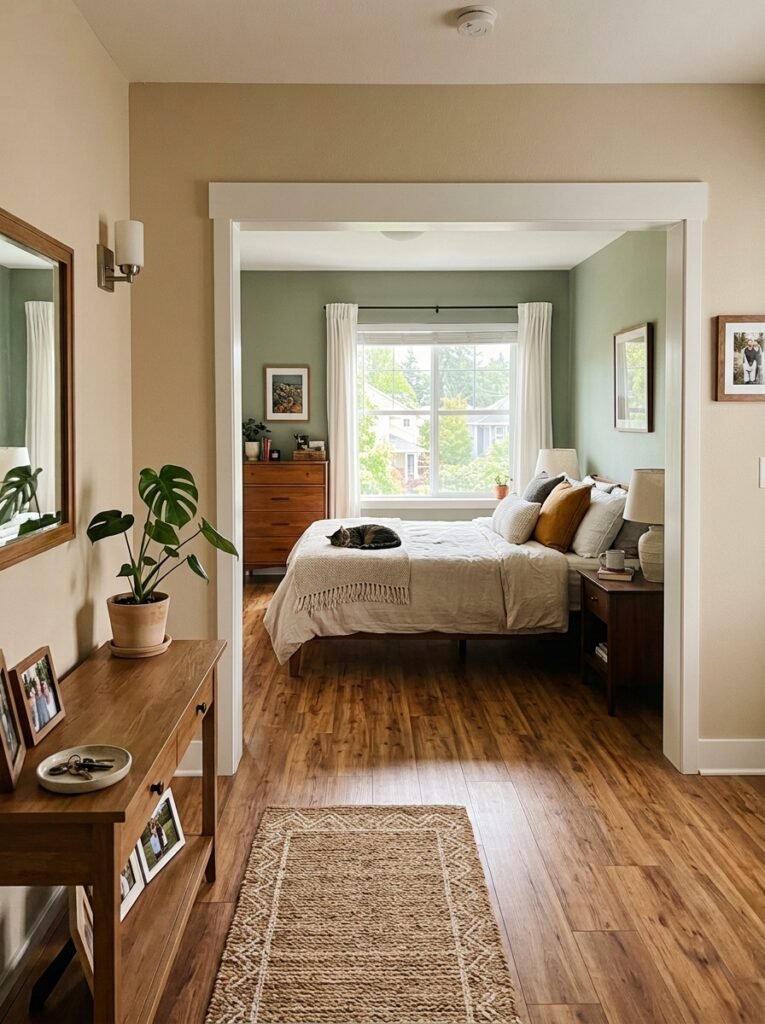
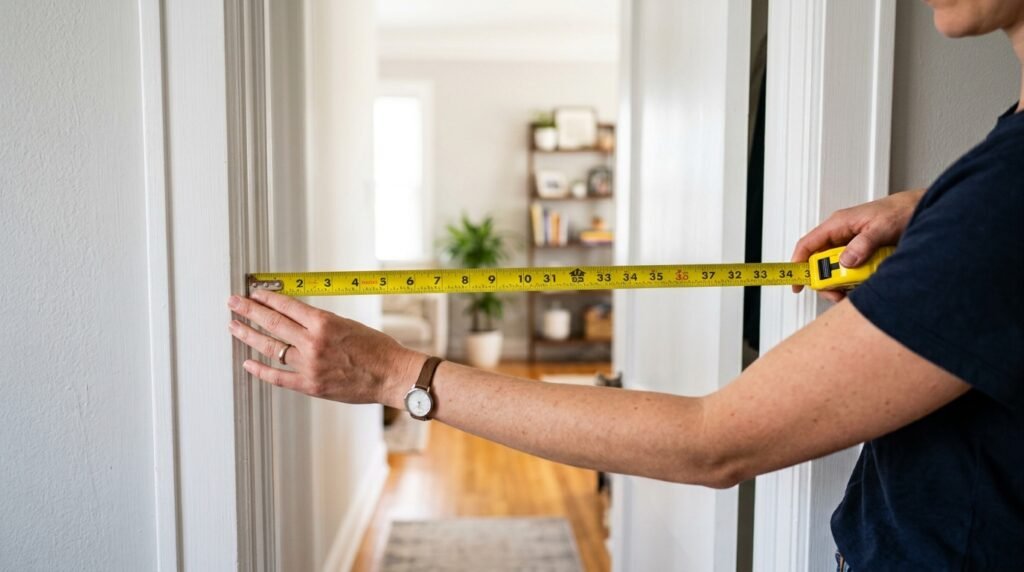
Standard interior residential doors are often 28 or 30 inches wide, which creates immediate bottlenecks. Principles of accessible house design require a minimum clear width of 32 inches for a wheelchair to pass through comfortably, though 36 inches is ideal. When building your first apartment checklist, make sure a heavy-duty measuring tape is the first tool you pack for apartment tours to check bedroom, bathroom, and closet entryways.
3. Low-Profile Thresholds
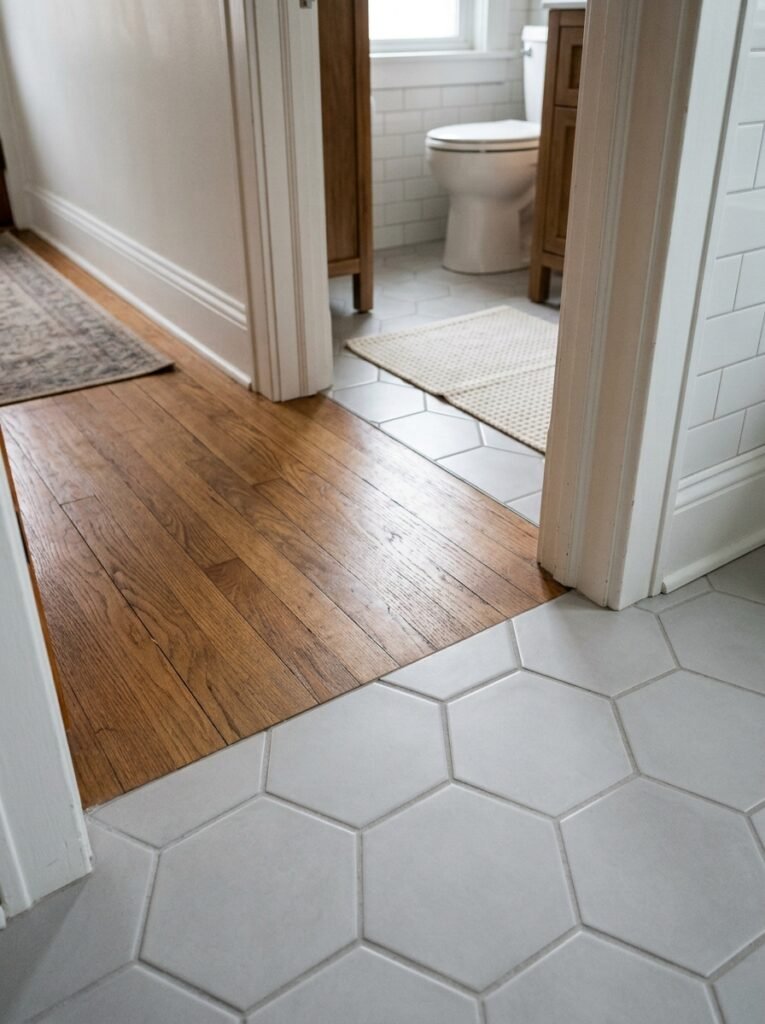
The transitions between different rooms or between the exterior hallway and your unit should be completely flush or feature a beveled threshold no higher than 1/2 inch. Abrupt, high thresholds can stop front casters on a manual wheelchair or create severe trip hazards for those using walkers. If a unit has slightly raised sliding glass door tracks, you can sometimes request temporary rubber ramp inserts to improve navigation.
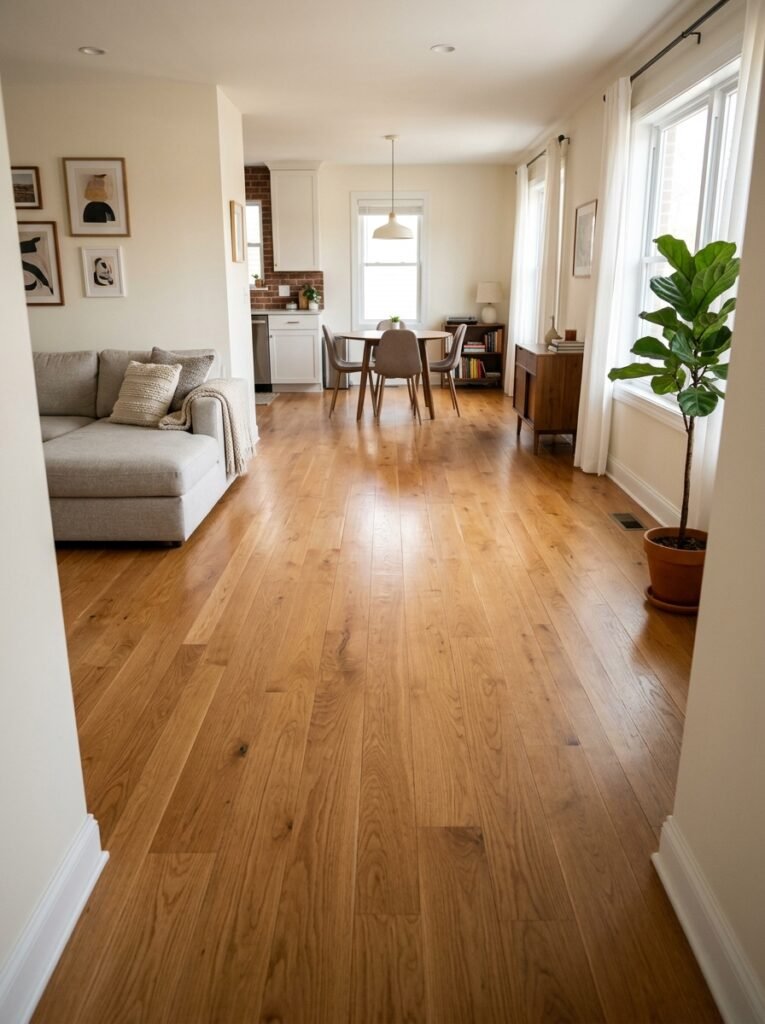
Thick, plush carpeting requires significantly more physical exertion to roll across and can cause walkers to drag or catch. Hardwood, luxury vinyl plank (LVP), and low-pile commercial carpet are the most functional options for mobility devices. If you plan to add affordable area rugs that look expensive to warm up the space, ensure they are secured with heavy-duty carpet tape to prevent edges from curling and obstructing your wheels.
5. Bathroom Maneuverability
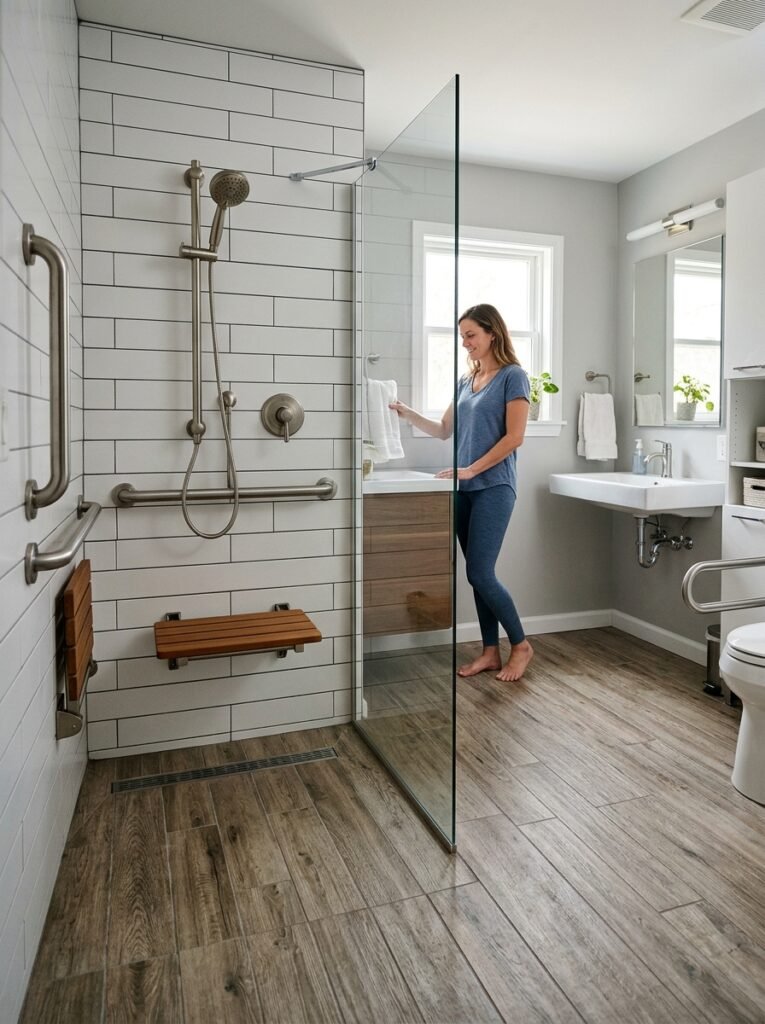
The bathroom is often the most restrictive room in older buildings. Look for roll-in showers without curbs, or at minimum, a tub that accommodates a secure transfer bench. Check if the walls have reinforced blocking to support the installation of grab bars near the toilet and shower. If the bathroom feels tight, verify that there is enough floor space to safely position your specific mobility aids next to the fixtures.
6. Kitchen Reach and Use
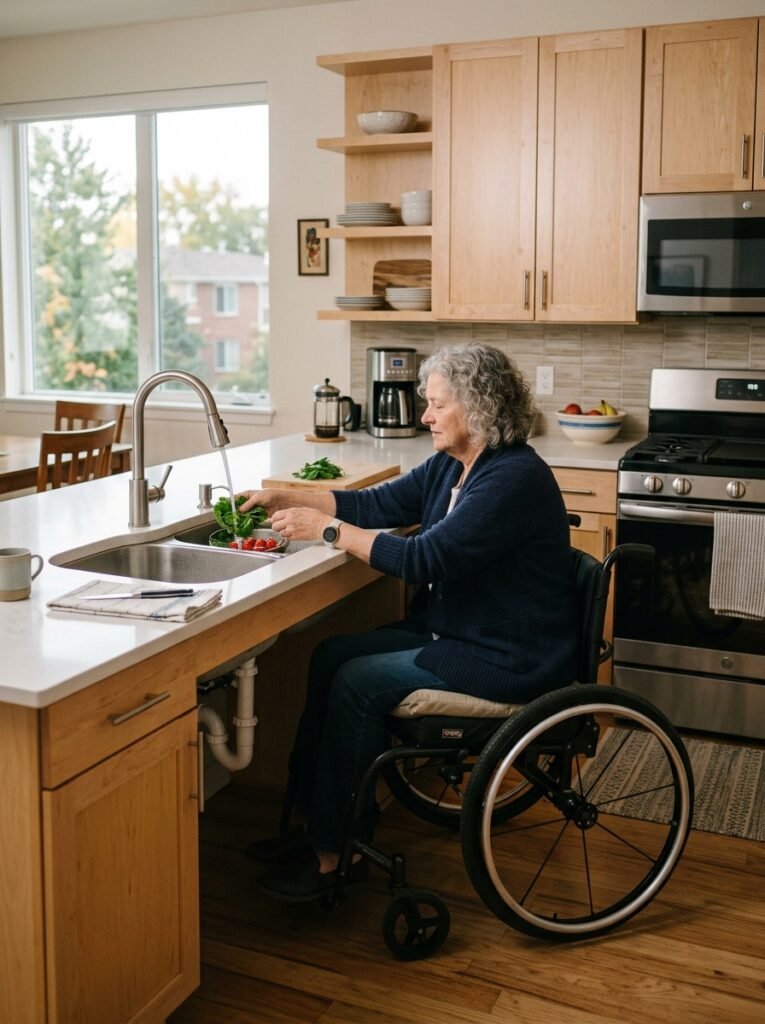
Standard kitchen counters sit at 36 inches high, with cabinets mounted directly above them, limiting access for seated users. An accessible home design plan often features lowered countertop sections (around 34 inches) and sinks with open space underneath so a wheelchair can roll directly up to the basin. Also, check the appliance layout; front-control ranges and side-by-side refrigerators are generally much easier to operate than standard top-freezer models.
7. Switch and Outlet Heights
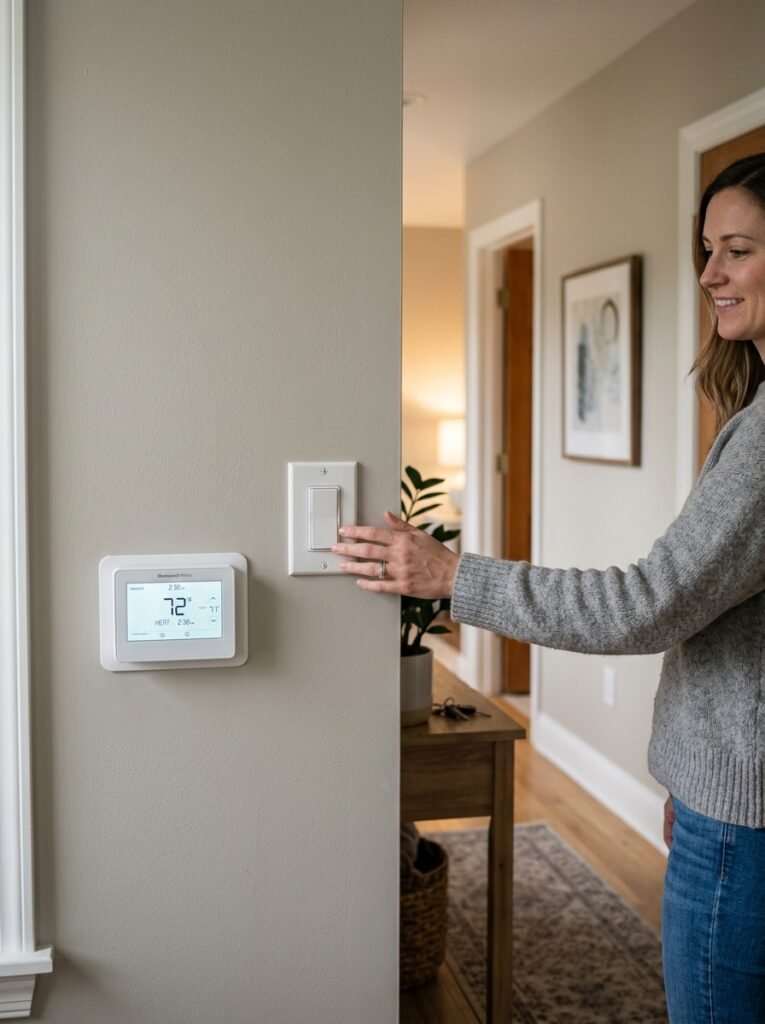
Standard light switches are often placed out of comfortable reach for seated tenants, while electrical outlets are frequently installed too close to the baseboards. Look for units where thermostats, breaker boxes, and environmental controls are mounted no higher than 48 inches from the floor, and electrical outlets are positioned at least 15 inches up from the ground to reduce uncomfortable bending.
8. Dedicated Parking Routes
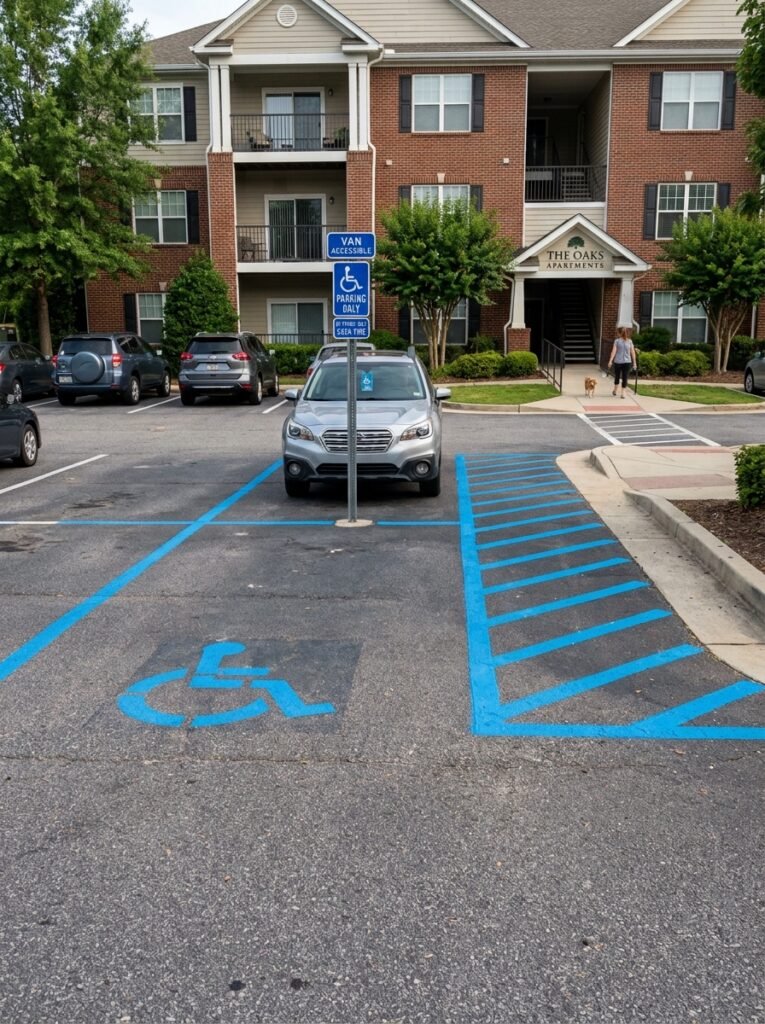
The journey from your vehicle to the building entrance is just as critical as the apartment interior. Verify that the complex has designated accessible parking spaces with striped access aisles wide enough for van ramp deployment. The path from the parking spot to your door should be paved, well-lit, and free of steep inclines, broken concrete, or heavy, unassisted fire doors.
9. Open Turning Radiuses
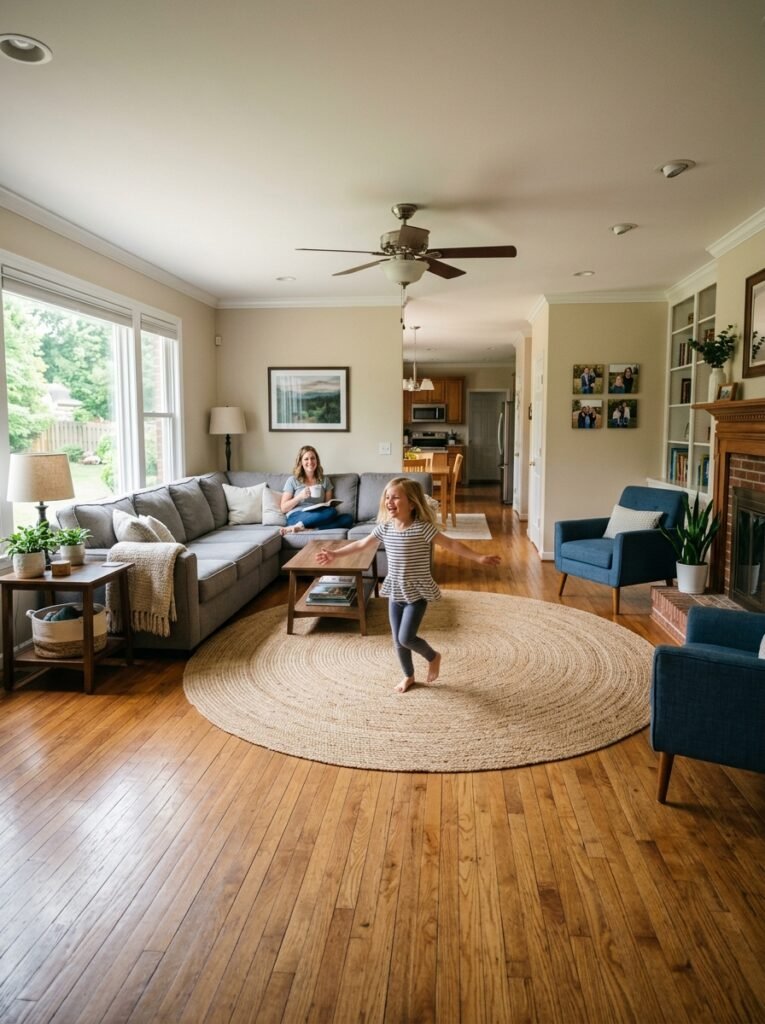
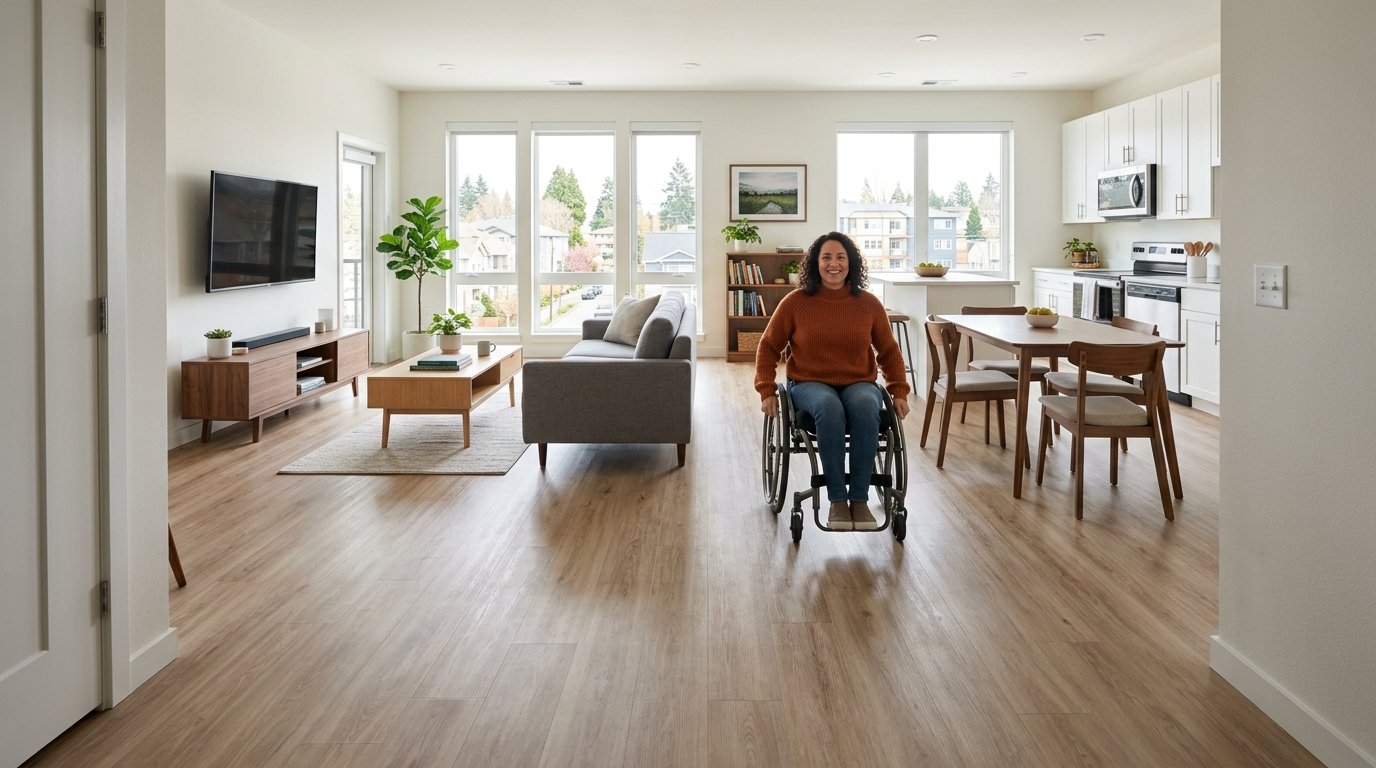
In small apartment living, a restrictive floor plan forces you into reversing rather than turning around comfortably. You generally need a clear, circular space of 60 inches in diameter to make a 360-degree turn in a manual wheelchair. When planning your small living room decor, focus on perimeter living room furniture layout ideas that keep the center of the room entirely open and unobstructed.
10. Modification Allowances
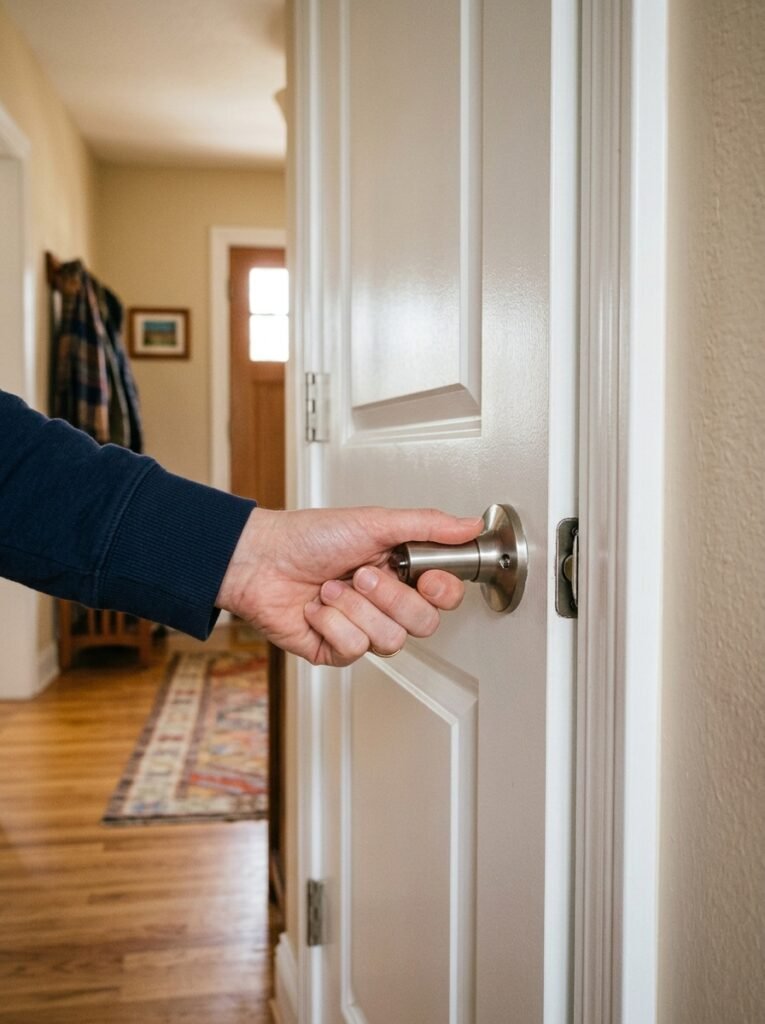
Under the federal Fair Housing Act, landlords must generally allow tenants with disabilities to make reasonable modifications to their living space, provided the tenant covers the cost. If you are researching how to make your house wheelchair accessible or looking into accessible home modifications for first time buyers, know that you can ask to install grab bars, lower closet rods, or adjust doorknobs. You may be required to return the unit to its original condition when your lease ends.
FAQ
Can a landlord refuse to rent to me because I use a wheelchair? No. Under the federal Fair Housing Act, it is illegal for a landlord to discriminate against prospective tenants based on a disability. They cannot refuse to rent to you, nor can they charge you higher rent or larger security deposits because you use mobility equipment.
Do landlords have to pay for wheelchair accessible home renovations? In most private housing, the landlord must allow reasonable modifications, but the tenant is usually responsible for paying for them. However, if the building receives federal financial assistance, the housing provider may be required to cover the costs of the modifications.
What is a reasonable modification in an apartment? Reasonable modifications are structural changes made to existing premises to allow a person with a disability full enjoyment of the housing. Common examples include installing grab bars in the bathroom, widening a doorway, installing a ramp, or changing round doorknobs to lever handles.
Can a landlord force me to remove grab bars when I move out? Yes. If the modifications will interfere with the next tenant’s use of the property, the landlord can require you to restore the interior of the apartment to its original condition (excluding normal wear and tear) at your own expense when your lease terminates.
How do I prove I need an accessible apartment feature? If your disability and the need for the requested accommodation are not obvious, a landlord may ask for reliable disability-related information. This is typically a brief letter from a doctor, physical therapist, or other medical professional stating that you have a disability and explaining how the specific request assists you.
Conclusion
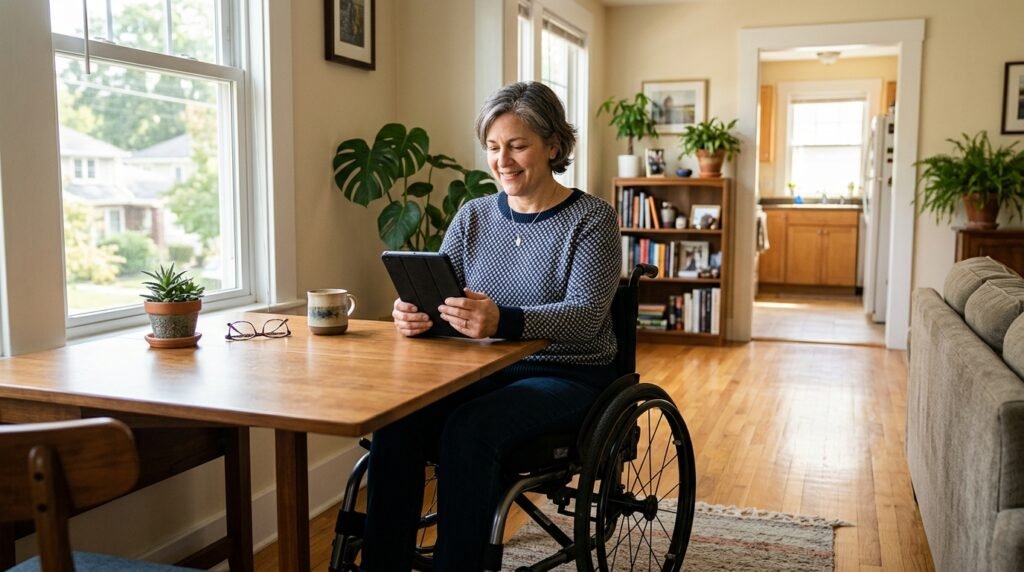
Securing a rental that supports your independence requires looking past the staging furniture and evaluating the hard structural lines of the space. By measuring doorway clearances, assessing bathroom layouts, and understanding your rights to request modifications, you can find a unit that genuinely functions for you. Do not compromise on your core first apartment essentials; a home that lacks basic maneuverability will quickly lead to daily frustration. Keep this guide handy as you search for accessible home ideas and tour potential apartments to ensure your new space empowers your daily routine.

Maren started MyFirstLease after a rough first lease taught him everything the internet didn’t. He covers the logistical side of renting — move-in checklists, utilities, and the unglamorous first-week stuff nobody explains — and oversees everything published on the site.