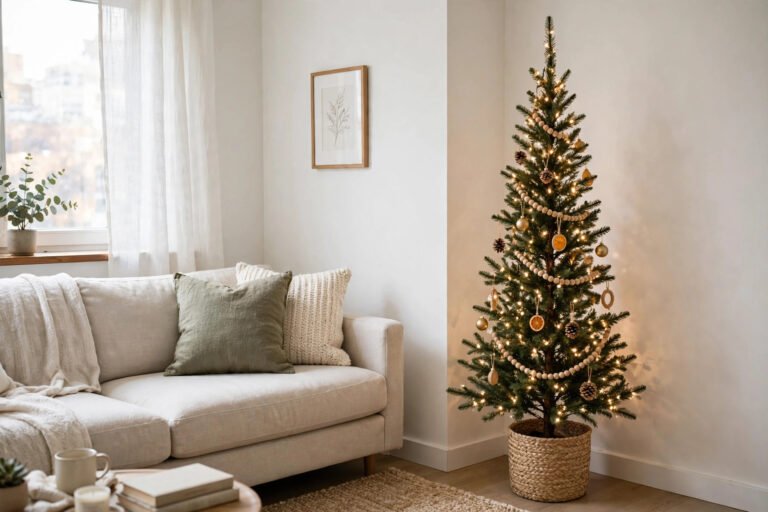

Most holiday decorating advice assumes a house with a dining room, a long table, and a spare closet for storage. If you are roommates in a first shared apartment hosting your first Friendsgiving, that picture probably does not match your place at all. This guide to friendsgiving decor ideas is built for the apartment you actually have: no dining room, a folding table or a tiny kitchen table, a living room that has to do double duty, and a lease that says no damage to the walls.
The approach here is simple. Decorate the table first, keep everything low and easy to move, use renter-friendly hanging methods, and choose pieces that pack flat or earn their keep after the party. Nothing in this list requires drilling, painting, or buying a matching set of anything.
Direct answer: For a small apartment, focus your decorating on one low table centerpiece, a washable runner and cloth napkins, warm string lights or battery candles, and one small photo spot. Keep decorations off the walls unless they use removable hooks, split the cost and the setup jobs with your roommates, and choose pieces you can reuse or store flat.
Executive Summary

This article walks through ten decorating moves that work in a shared apartment, in the order that makes setup easiest: measuring and planning the table, building a centerpiece that does not block conversation, layering a table that looks intentional without matching dishes, disguising a folding table, adding warmth without damage, and setting up the drink station, photo corner, and entryway. It also covers the two parts people usually leave until the last minute — splitting costs fairly with roommates and planning cleanup before the first guest arrives.
If you are new to decorating a rental, start with the related guide to decorating on a budget and browse the Decorating & Small Space Living pillar page for more small-space ideas. The pillar-page link uses the category slug supplied with this brief and should be re-verified by the editor before publishing.
1. Start With the Table

Count your guests before you buy a single decoration, then measure the table you actually plan to use. A folding table, a kitchen table, and a coffee table pushed against a wall all call for different setups, and guessing is how a centerpiece ends up eating half the space meant for plates. Write down the table’s length and width, the number of seats, and where serving dishes will go, because food and drinks take priority over decor on a small surface.
Once you know the measurements, decide how people will eat. A sit-down meal needs a clear place setting for each person, while a buffet-style setup frees the table for food and pushes seating to the couch and chairs around the room. Neither choice is better in general; the right one is the one your table can actually hold. If the table is too small for everyone to sit at once, plan two rounds or a standing buffet rather than squeezing in an extra chair that blocks the walkway.
Leave a clear path to the kitchen and the bathroom. In a small apartment, a beautiful table that traps guests in a corner is a problem, not a success. Test the layout the night before by setting the table exactly as you plan it, plates and all, and walking the route a guest would take.
2. Build a Low Centerpiece

A centerpiece for a small table should sit low enough that guests can see each other across it. As a practical rule, keep the tallest element at or below the height of a water glass, and keep the whole arrangement narrow enough that two place settings still fit comfortably on either side. Tall candlesticks, big branches, and wide floral arrangements belong on a sideboard or a windowsill in a small apartment, not in the middle of the table.
Start with a tray, a cutting board, or a folded runner as a base. A base keeps the arrangement contained, protects the table surface, and lets you lift the whole centerpiece off in one move when it is time to serve dessert or clear plates. On top of it, group three to five small items in odd numbers: mini pumpkins, a short candle in a glass holder, a few sprigs of eucalyptus or autumn leaves, and a pinecone or two if you have them.
Use real candles only where they will stay in sight and away from anything flammable, and never leave a lit candle unattended. Battery candles give a similar warm glow with less worry, especially if guests will be moving around a tight room or if pets are part of the household. Either way, keep the centerpiece away from the edges where sleeves and serving dishes pass.
3. Layer a Renter-Friendly Tablescape

A tablescape is just the full arrangement of the table: the covering, the plates, the napkins, and the small details that make it look finished. In a shared apartment, the easiest way to make it look intentional is to pick one color family and repeat it, rather than trying to match every dish. Warm neutrals with one autumn accent — rust, mustard, or deep green — work with most plates people already own.
Start with a washable tablecloth or runner. A runner is often the better choice for a small table because it leaves the table edges visible, which makes the table feel larger, and it is easier to wash and store than a full cloth. Over it, use cloth napkins if you have them; they look more finished than paper, they are reusable, and a stack of them in one accent color does more visual work than a whole set of themed plates.
Mixing dishes is fine, and in a roommate household it is usually unavoidable. Keep the mix calm by using the same napkin and the same style of glass for everyone, even if the plates differ. Add one small detail per place setting — a sprig of herbs, a handwritten name card on plain card stock, or a single autumn leaf — and stop there. One detail reads as thoughtful; five details on a small table read as clutter.
4. Dress the Folding Table
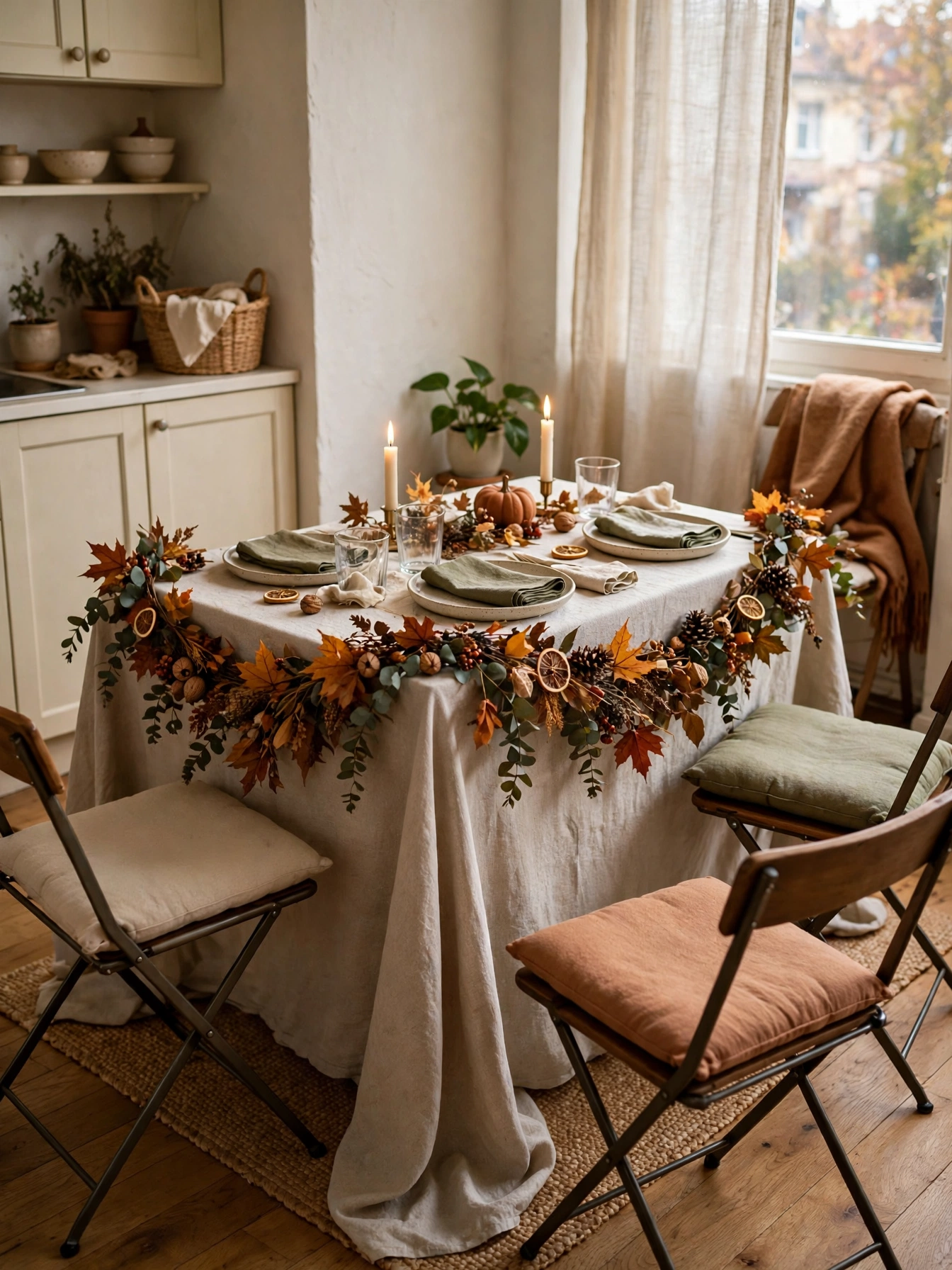
A folding table is the most common Friendsgiving table in a first apartment, and it is also the easiest to make look good. The trick is to hide the legs and the folding seam, not to pretend the table is something else. A floor-length tablecloth does both jobs at once, and it also gives you hidden storage underneath for extra napkins, a trash bag, or a box of supplies.
If a floor-length cloth feels too formal, a fitted table cover or a large flat sheet layered with a runner can work, as long as the fabric does not hang where chairs will catch it. Iron or steam the cloth the day before; wrinkles show more under warm light than most people expect. Check the table’s weight rating before loading it with a heavy centerpiece, a full turkey platter, and a stack of dishes — check the manufacturer’s rating rather than assuming a folding table holds the same load as a solid dining table.
Set the folding table where it is most stable, usually against a wall or with its legs fully locked on a flat floor, and test it with a few heavy dishes before guests arrive. A wobbly table will undo the nicest decorating, and it is much easier to fix with a folded coaster under one leg the night before than during dinner. Pair it with chairs you already own, and add a folded blanket or cushion to a hard folding chair if guests will sit for a long time.
5. Add Warmth Without Damage
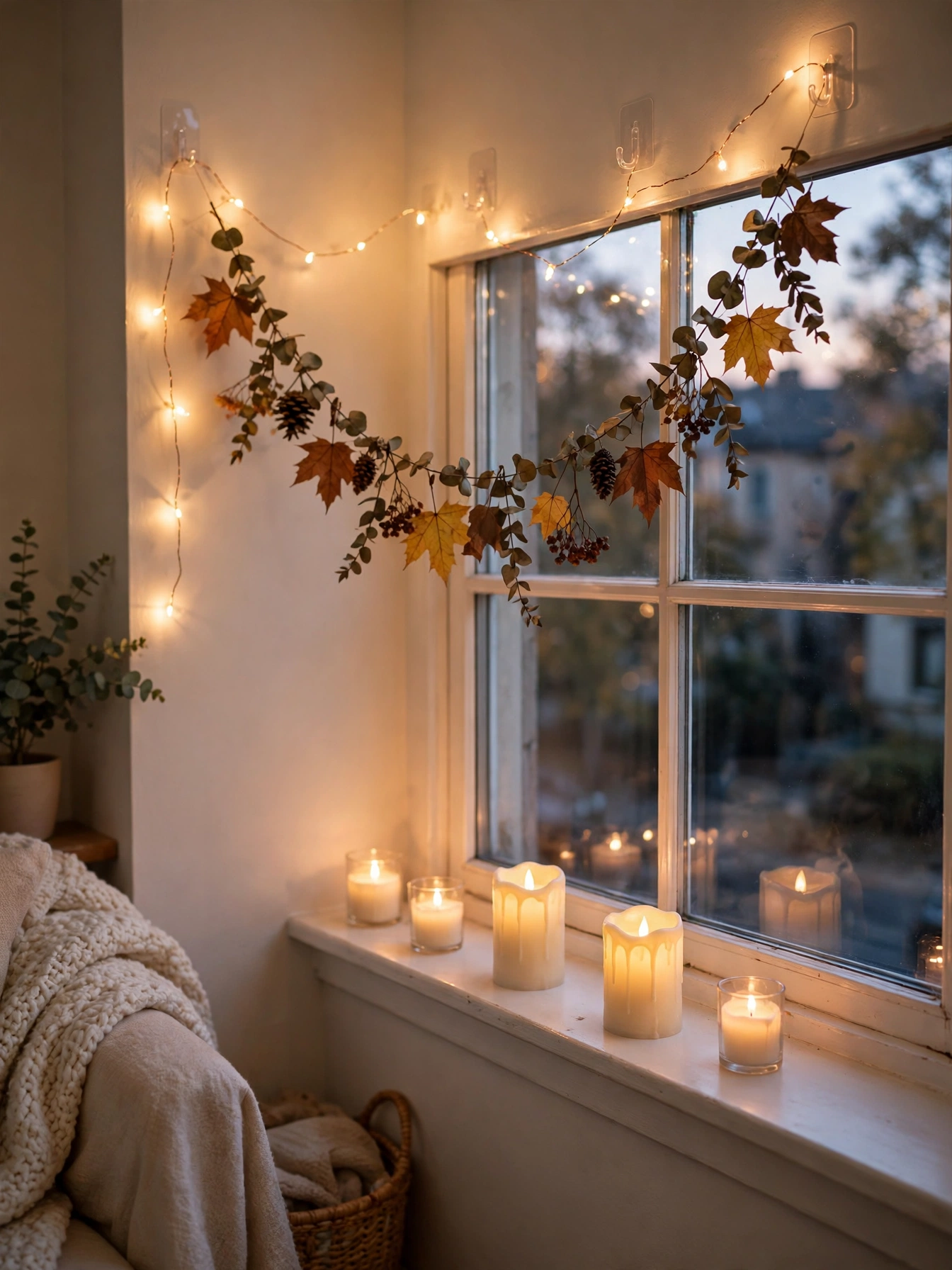
Warmth in a small apartment comes from light more than from large decorations. String lights along a windowsill, a bookshelf, or a curtain rod instantly make a room feel like a party, and they take up no floor or table space at all. Battery-operated lights are the simplest option in a rental because they need no outlet near the display and no cord trailing across a walkway.
For walls, use only removable methods, and follow the product instructions for the weight they are rated to hold. Adhesive hooks and clips work well for lightweight garlands, paper decorations, and a single lightweight wreath, but they are not a safe choice for heavy frames or anything that could fall on a guest. Check the manufacturer’s rating, clean the wall surface first as the package directs, and remove the hooks slowly and exactly as instructed when the party is over, since rushed removal is what usually damages paint.
Avoid anything that requires nails, screws, or tape that can peel paint. Painter’s tape is gentler than most tapes, but it is still worth testing in a hidden spot first, and it should never be used to hold something heavy overhead. If your lease has specific rules about wall hangings, follow the lease over any decorating guide, including this one. A good test for any wall decoration is simple: if it fell, would it hurt someone or damage something below it? If the answer is yes, move it to a table or shelf instead.
6. Set Up a Drink Station

A drink station keeps bottles, glasses, and ice off the dinner table, which is the single biggest space saver in a small apartment. Any stable surface works: a kitchen counter, a bar cart, a bookshelf cleared for the evening, or the top of a dresser near the living room. Put it near the kitchen if you can, so refills do not require crossing the whole party.
Keep the station itself decorated but simple. A small tray under the bottles catches drips, a single sprig of herbs or a few autumn leaves on the tray adds a seasonal touch, and a handwritten card listing what is available saves you from answering the same question all evening. If you are serving a batch drink, label it plainly, including anything guests commonly need to know, such as whether it contains alcohol.
Plan for water first. A pitcher of water with glasses beside it is the most-used part of any drink station, and it keeps guests from opening every cabinet looking for a glass. Add a small bin or a clearly marked bowl for bottle caps and used napkins nearby, so the station stays tidy without anyone having to hunt for a trash can.
7. Create a Photo Corner

A photo corner gives guests something fun to do and gives the party a visual focus beyond the table, without taking over the whole apartment. Pick one wall or corner with decent light — near a window in daylight, or near a lamp in the evening — and keep the decoration to that one spot. A single garland, a few paper leaves, or a plain curtain as a backdrop is enough; a whole wall of decorations will crowd a small room and photograph worse, not better.
Keep props small and simple: a couple of handheld signs made from card stock, a basket of autumn leaves, or a small chalkboard with the date. Skip anything large, fragile, or messy. Props should fit in one basket so they can be cleared in a minute when the corner is no longer needed.
Think about what is behind the photo, not just what is in front of it. Move a trash can, a pile of coats, or a stack of boxes out of the frame before guests arrive, and leave enough floor space for two or three people to stand comfortably. A photo corner that blocks a doorway or a hallway will be used once and then avoided, so keep walkways clear even when the corner is busy.
8. Decorate the Entry and Walls

The entryway sets the tone before guests see the table, and in a small apartment it is usually just a door, a mat, and a few feet of hallway. That is enough. A clean doormat, a small basket or bowl for keys, and one seasonal touch — a small wreath on the door with a removable over-door hook, or a few mini pumpkins on a console — welcome people without narrowing the path inside.
Inside, decorate at eye level and below rather than filling every wall. A garland along a mantel or a shelf, a few autumn leaves on a windowsill, and the string lights from the warmth section will do more than decorations hung high where no one looks at them. Leave at least one wall mostly bare; in a small room, empty wall space is what keeps the space from feeling crowded.
Make room for coats and bags before the doorbell rings. A designated spot — a bedroom bed, a row of hooks by the door, or a cleared chair — prevents coats from ending up on the decorated table or the photo corner. Tell guests where it is when they arrive, and the rest of the decorating will stay visible all evening instead of disappearing under a pile of jackets.
9. Split Costs With Roommates

Decorating for a first Friendsgiving is a shared project, and treating it like one keeps both the budget and the friendships in good shape. Sit down with your roommates before buying anything and agree on three things: a total spending limit, who is buying what, and who owns each item afterward. Items bought for the party — a tablecloth, string lights, a tray — are the ones most likely to cause a quiet disagreement later if ownership was never discussed.
A simple split works well for most roommate groups. List every planned purchase, assign each one to a person, and aim for roughly equal totals rather than splitting every single receipt down the middle. One person might buy the tablecloth and napkins, another the centerpiece supplies and candles, and a third the drink station extras. Keep the list visible, whether on paper on the fridge or in a shared note, so no one buys the same thing twice.
Also split the work, not just the money. One person can set the table, another can handle the drink station and the entryway, and a third can manage lighting and the photo corner. Write the jobs down with a setup time the day before the party, so decorating is not competing with cooking on the day itself. If a roommate would rather contribute food than decorations, that trade is fair — the goal is a shared effort, not an identical one.
10. Plan a Fast Cleanup
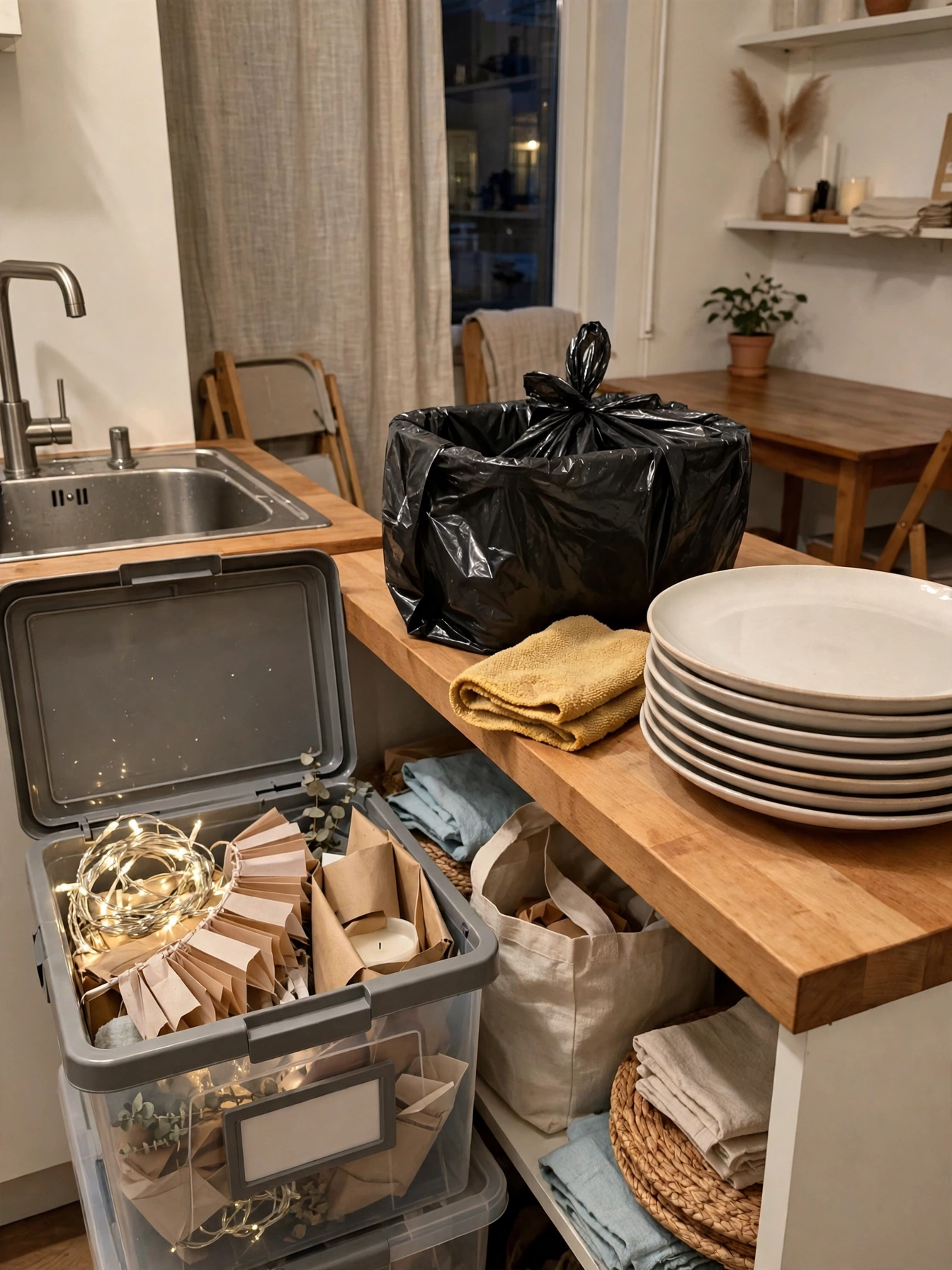
Cleanup is part of decorating, because decorations that cannot be cleared quickly will still be in the way long after the party ends. Before guests arrive, put a trash bag and a recycling bag in a discreet but reachable spot, and clear one shelf or one box for decorations that need to come off the table. That small bit of preparation turns a long cleanup into a short one.
Choose decorations with cleanup in mind. A tray-based centerpiece lifts off in one move, a washable runner goes straight into the laundry, and paper decorations go into recycling without sorting. Avoid glitter, confetti, and anything that sheds, since those take far longer to clean out of a small apartment than they take to put up, and they tend to show up in corners for weeks.
After the party, remove wall hooks and clips slowly, following the package instructions, and check the walls in daylight the next day. Pack reusable decorations flat in one labeled box — string lights coiled, not tangled, and fragile items wrapped in the table runner or napkins. Storing everything together means next year’s setup starts with opening one box, not hunting through the whole apartment.
Frequently Asked Questions
How do you decorate a tiny apartment for a holiday dinner without making it feel crowded?
Focus on the table and the lighting, and leave the walls mostly alone. A low centerpiece, a runner, and string lights make a room feel festive, while decorations on every surface make a small room feel smaller. Keep walkways clear and choose one photo spot instead of decorating every corner.
What should go in the middle of a small dinner table?
A low, narrow arrangement that guests can see over: a tray with mini pumpkins, a short candle in a glass holder, and a few sprigs of greenery or autumn leaves. Keep it narrow enough that place settings fit on both sides, and make sure it can be lifted off in one piece when serving dishes need the space.
How can renters hang holiday decorations without losing part of their deposit?
Use removable adhesive hooks and clips rated for the weight of the item, follow the package instructions for applying and removing them, and avoid nails, screws, and tapes that can peel paint. Always follow your lease first if it sets stricter rules, and check walls in daylight after removal.
What is a cheap way to make a folding table look nice for guests?
Cover it with a floor-length cloth to hide the legs and seam, add a runner for color, and set it with cloth napkins and one small detail per place setting, such as a sprig of herbs. A low centerpiece on a tray finishes the look without buying matching dishes.
How do you seat a group in an apartment with no dining room?
Use the table you have for as many guests as it seats comfortably, and plan the rest as a buffet with seating on the couch and chairs around the room. Two rounds of seating, or a standing buffet with a few seated spots for guests who need them, works better than squeezing extra chairs into a walkway.
How far ahead should roommates start decorating?
Set the table and test the layout the night before, and put up lights and wall decorations the day before if possible. That leaves party day for cooking and last-minute food setup, instead of decorating and cooking competing for the same few hours.
What decorations are worth keeping for next year?
A washable tablecloth or runner, cloth napkins, string lights, a tray, and glass candle holders are the pieces most likely to be reused. Store them together in one labeled box, with lights coiled and fragile items wrapped, so next year’s setup is quick.
Can a small apartment handle a Friendsgiving for a large group?
It depends on the guest count and the layout, not just the square footage. A group that fits with clear walkways, a drink station off the main table, and a buffet setup can work well; a group that blocks the kitchen, bathroom, or exit routes cannot, no matter how good the decorations look. Count seats and walkways before sending invitations.
Conclusion

A small apartment does not need a dining room, matching dishes, or a big budget to host a warm Friendsgiving. Start with the table, keep the centerpiece low, light the room well, hang nothing that risks your deposit, and split both the cost and the setup with your roommates. This kind of friendsgiving decor ideas planning — table first, damage-free, and easy to clear away — leaves you free to enjoy the evening instead of managing it. If this guide helped you plan your first shared-apartment Friendsgiving, save it for next year and share it with a roommate who is planning their own.

Maren started MyFirstLease after a rough first lease taught him everything the internet didn’t. He covers the logistical side of renting — move-in checklists, utilities, and the unglamorous first-week stuff nobody explains — and oversees everything published on the site.