

You just got your absolute dream job in another city, or maybe you need to move back home for family reasons. There is just one massive problem: you are only four months into a 12-month lease. As you nervously flip through your rental agreement to figure out your options, you stumble across a term that makes your stomach drop.
If you are wondering, what is a reletting charge, you are definitely not alone.
Lease jargon can be incredibly confusing, especially when you are renting your very first apartment. Understanding this fee is crucial to protecting your wallet. In this comprehensive guide, we are going to break down the reletting charge definition in plain English, explain how it differs from other lease-breaking penalties, and give you actionable tips on how to avoid it altogether. Let’s dive in!
What is a Reletting Charge? (Simple Definition)
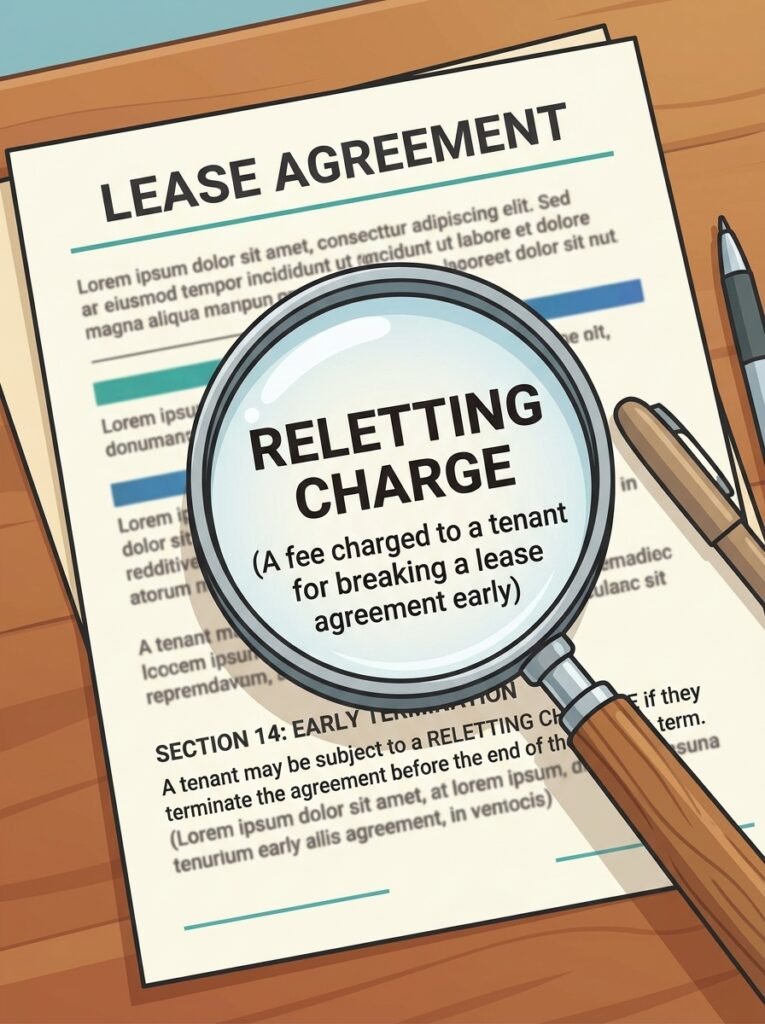
A reletting charge is a fee landlords charge to cover the out-of-pocket costs of finding a new tenant when you break your lease early.
To put it in plain English, think of it like a cancellation fee for a flight. However, instead of you just throwing your money away into the void, that fee specifically pays for the airline’s effort to rebook your empty seat. It is important to know that a reletting charge is not a penalty designed to punish you. Legally, it is a cost recovery fee.
When you suddenly leave, the property manager has to spend time and money to replace you. This fee covers their trouble. Typically, this charge is calculated as a flat rate or a percentage of your monthly rent, often ranging from 80% to 100% of one month’s rent.
How is a Reletting Charge Different from an Early Termination Fee?
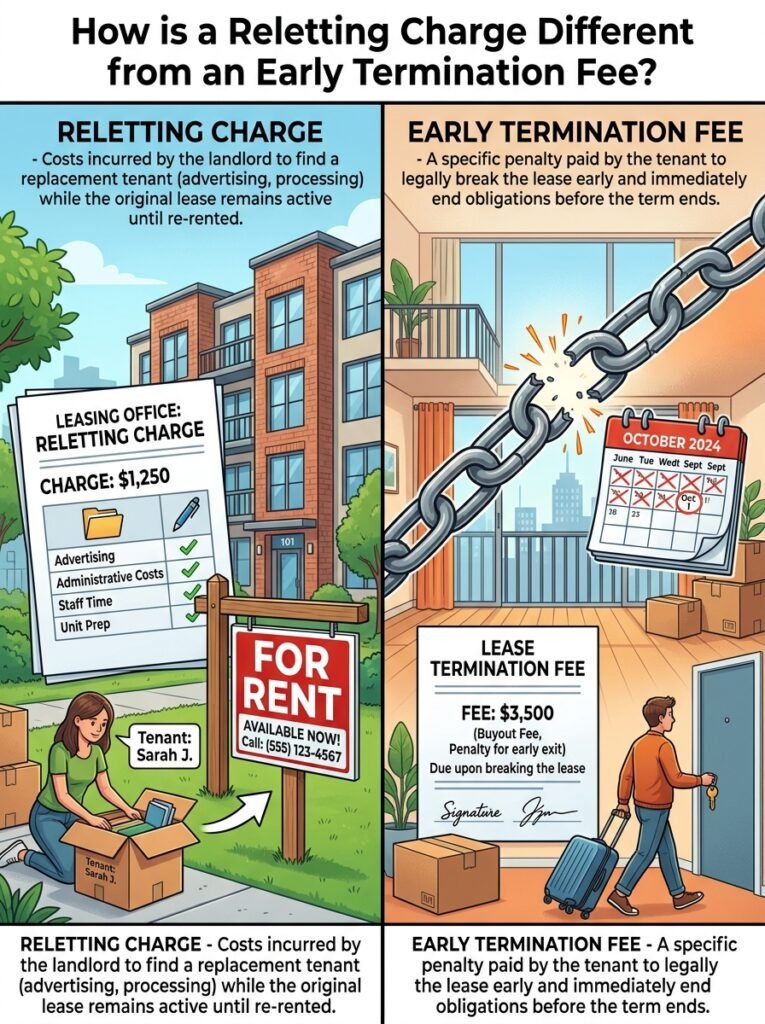
Many renters confuse these two terms, but understanding the reletting fee vs early termination fee is vital, especially if you are facing an early termination of lease. Here is the breakdown:
| Feature | Reletting Charge | Early Termination Fee |
| Purpose | Covers the landlord’s cost of finding a new tenant. | Acts as a strict penalty for breaking the lease contract. |
| Calculation | Usually a percentage of rent (e.g., 85%) or a flat fee. | Usually equal to 1 to 2 full months of rent. |
| When Charged | Triggered when the landlord has to find a new tenant. | Triggered immediately upon lease termination. |
| Can Both Be Charged? | Yes, in some states (if stated in the lease). | Yes, in some states (if stated in the lease). |
Important Note: Depending on where you live, some states allow landlords to charge BOTH fees. Always check your specific state laws and read your lease carefully!
When Do Landlords Charge a Reletting Fee?
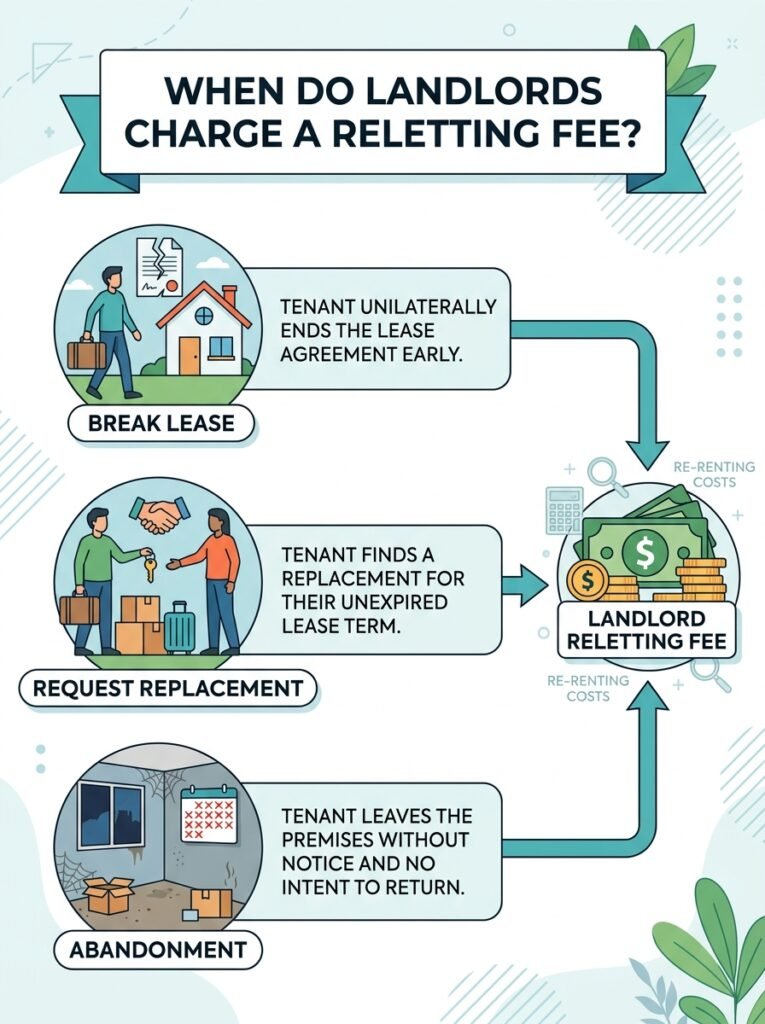
Landlords do not just charge this fee randomly. It is typically triggered in very specific situations where they are forced to find a new tenant unexpectedly.
- Breaking Your Lease Early: This is the most common scenario. If you move out before your contract ends, the fee kicks in.
- Requesting a Replacement Tenant: If you ask your landlord to take over the burden of finding someone to take your spot, they will likely charge this fee for their labor.
- Abandonment: If you pack up and leave the property without giving proper notice, the landlord will apply this charge as soon as they realize you are gone.
- Failing to Secure an Approved Replacement: If you try to find a replacement tenant yourself, but the landlord rejects them (due to bad credit or background checks), you may still be hit with the fee.
Exceptions (When the Fee is Waived)
You might be off the hook if you fall into one of these protected categories:
- Military Active Duty: Protected under the SCRA (Servicemembers Civil Relief Act).
- Safety Concerns: Protections exist for victims of family violence, sexual assault, or stalking.
- Not in the Lease: If the fee is not specifically mentioned in your written agreement, they cannot legally charge it.
- Failure to Mitigate: In states like Texas (under Texas Property Code 91.006), if the landlord fails to make a reasonable effort to find a replacement, you might not be liable.
How Much is a Reletting Charge Typically?
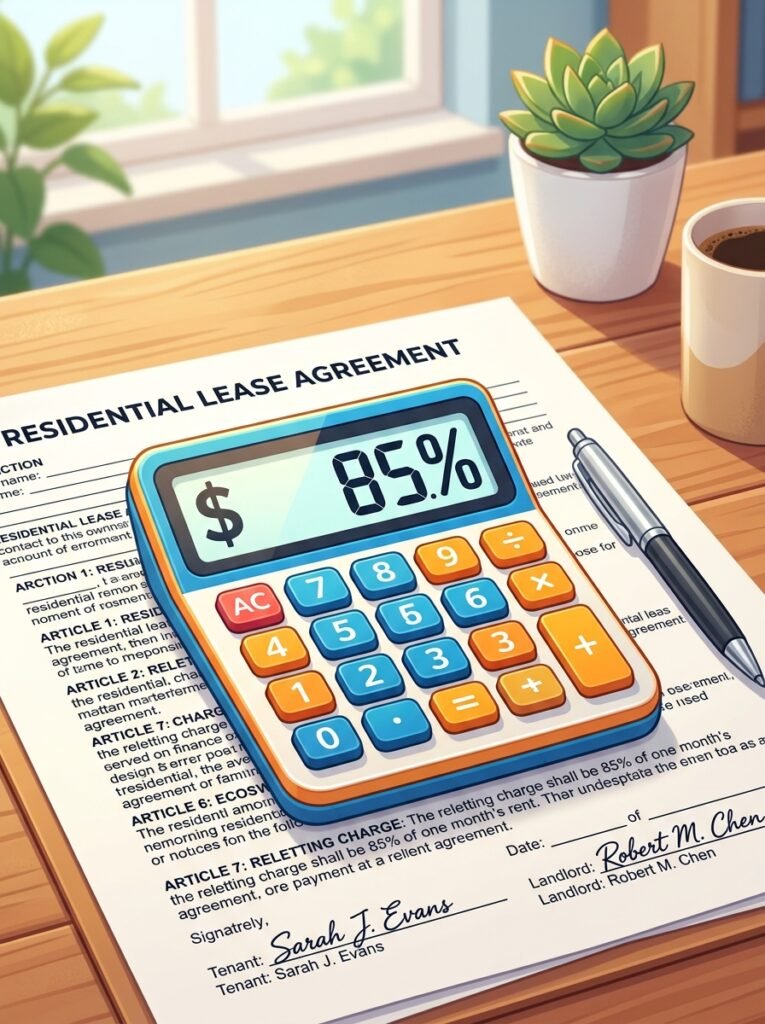
So, exactly what is a reletting fee going to cost you? While it varies by building and property management company, the national average usually falls between 80% to 100% of one month’s rent.
Some landlords prefer to charge a flat rate, which generally ranges from $500 to $1,500. Here is a quick table showing what you might expect to pay based on different monthly rent amounts:
| Monthly Rent | Reletting Charge (80%) | Reletting Charge (100%) |
| $1,000 | $800 | $1,000 |
| $1,500 | $1,200 | $1,500 |
| $2,000 | $1,600 | $2,000 |
Reletting Charge Laws by State
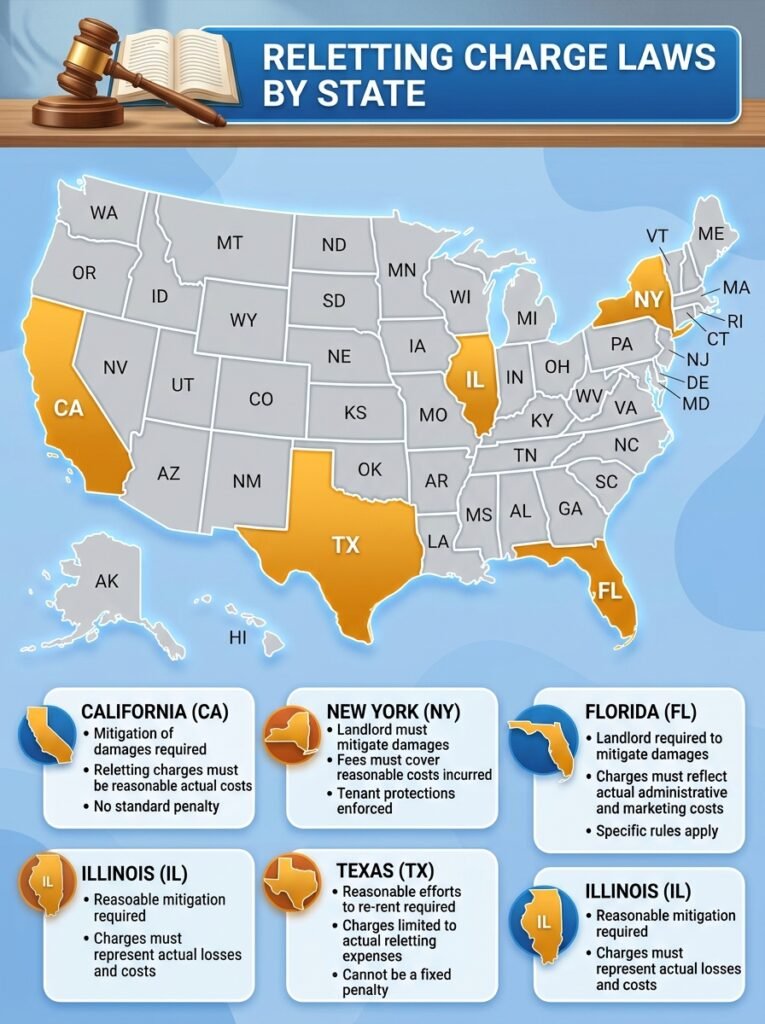
Landlord-tenant laws vary wildly depending on where you live. If you are wondering what is a reletting charge in a lease in your specific state, here is a quick overview of five major states.
| State | Is It Allowed? | Caps / Limits | Landlord Duty to Mitigate? |
| Texas | Yes (if in lease) | None specified | Yes (Texas Property Code 91.006) |
| California | Yes (if in lease) | Must be reasonable | Yes |
| New York | Yes (if in lease) | Must be reasonable | Yes |
| Florida | Yes (if in lease) | None specified | Yes |
| Illinois | Yes (if in lease) | None specified | Yes |
Disclaimer: Always check your specific lease and local state laws. If you are wondering what is a reletting charge in Texas versus New York, local statutes govern the exact rules. This table is general information, not legal advice.
What Does a Reletting Charge Cover?
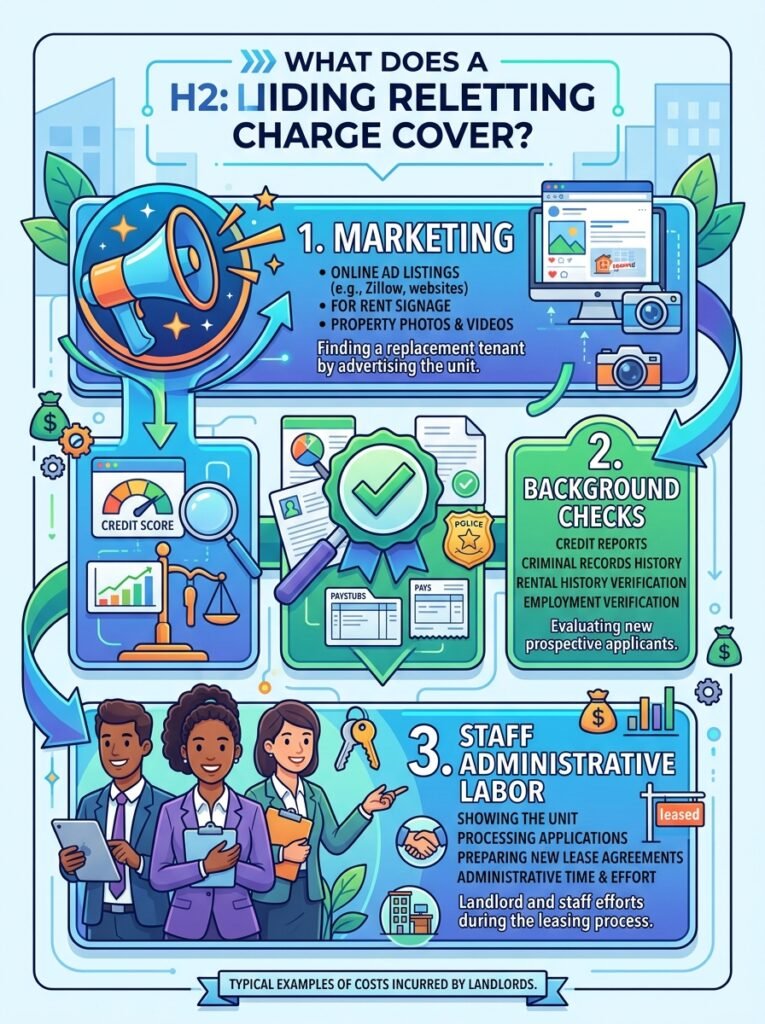
To understand what does relet mean in leasing, you have to look at what happens behind the scenes when an apartment goes vacant.
What It Covers:
- Marketing: Paying for online listings (Zillow, Apartments.com), professional photos, and hosting open houses or tours.
- Application Screening: Running credit checks, background checks, and verifying income for new applicants.
- Administrative Overhead: Paying property management staff for the hours spent processing paperwork and drafting new leases.
What It Does NOT Cover:
- Unpaid Rent: A reletting fee does not get you out of paying rent. Your landlord can still hold you responsible (or sue you) for the rent owed until a new tenant moves in.
- Property Damage: Any holes in the wall or stained carpets beyond normal wear and tear will be deducted from your security deposit, not covered by the reletting fee.
- Cleaning Fees: If you leave the apartment a mess, expect a separate cleaning bill.
Reletting vs Subletting vs Lease Assignment
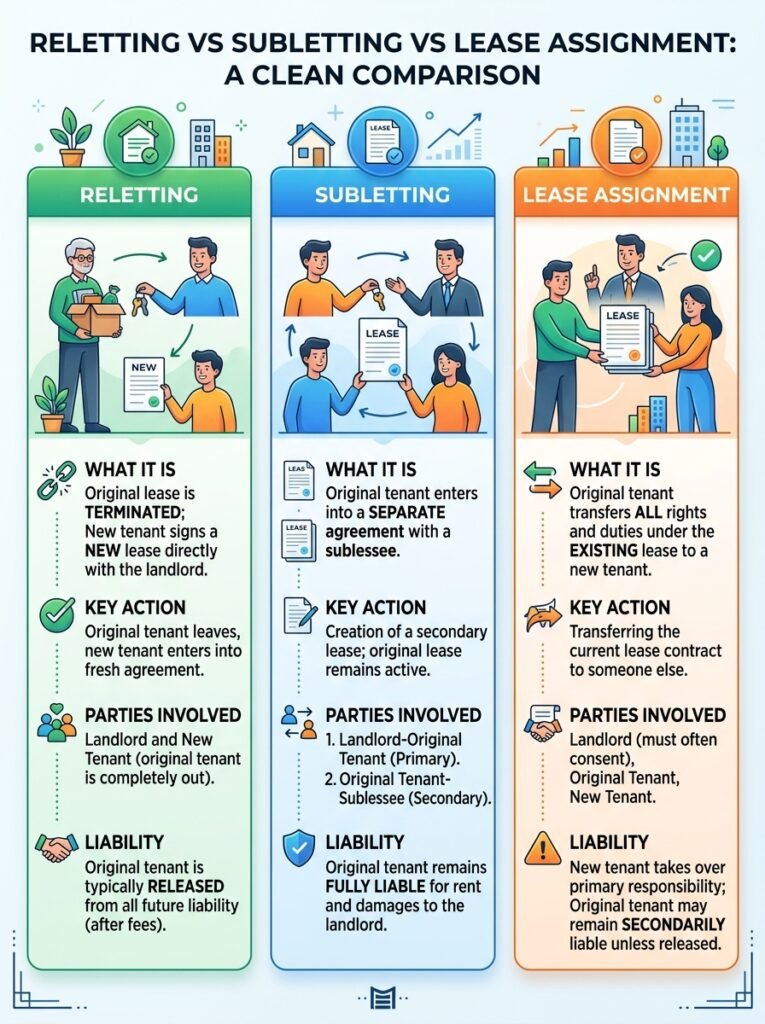
When you want to leave an apartment, you usually have three options. Understanding what is reletting compared to subletting or assigning is the key to saving money.
| Term | Definition | Do You Pay Reletting Fee? | Who Finds Tenant? |
| Reletting | You break the lease entirely, and the landlord finds a replacement. | Yes | Landlord |
| Subletting | You leave temporarily, and someone else lives there under your name/lease. | Maybe (if landlord approves) | You |
| Lease Assignment | You permanently transfer your existing lease to a brand-new tenant. | Maybe (if landlord approves) | You |
Note: If you successfully sublet or assign your lease, you might avoid paying the reletting fee entirely, but landlord approval is almost always required.
How to Avoid Paying a Reletting Charge

Nobody wants to hand over a full month’s rent just to move out. If you want to know how to avoid reletting fee charges, try these five actionable tips:
1. Find a Qualified Replacement Tenant Yourself
Take on the landlord’s marketing job! Advertise your apartment on Facebook Marketplace, Zillow, or college housing groups. Vet the applicants yourself to ensure they have good credit and income, then present them to your landlord.
Sample Email to Landlord:
“Hi [Name], I need to move out by [Date], but I have already found a highly qualified applicant with a 700+ credit score who wants to take over my unit. Since I have sourced the replacement, would you be willing to waive the reletting fee?”
2. Negotiate with Your Landlord
Property managers are human. If you communicate early and kindly, they might work with you. Ask to waive or reduce the fee, and offer to keep the apartment in pristine condition for showings.
3. Review Your Lease for Loopholes
Read the fine print. Does the lease specifically mention a reletting fee? Is the calculation method clear? Are there specific exceptions listed that apply to your situation? If it isn’t in writing, they can’t enforce it.
4. Use the Military Clause (SCRA)
If you are active duty military and receive PCS (Permanent Change of Station) orders or deployment orders, you are protected by the Servicemembers Civil Relief Act. You can break your lease without penalty provided you give proper written notice and a copy of your orders.
5. Sublet or Assign Your Lease
As mentioned above, if your lease allows it, find someone to sublet or take over your lease assignment. This keeps the lease active, meaning the landlord doesn’t have to “relet” the apartment.
What to Do If You’re Charged a Reletting Fee

If the charge has already hit your tenant portal, do not panic. Follow this step-by-step guide:
- Read Your Lease Carefully: Confirm that the fee is actually written into your contract.
- Ask for an Itemized Breakdown: Ask the landlord exactly what the fee is covering. Are they double-charging you for things already covered by your security deposit?
- Check State Laws: Ensure the fee is legal in your state and that the landlord is actively trying to mitigate damages (meaning they are actually trying to rent the place out).
- Negotiate: Get on the phone or go to the leasing office. Ask if they will reduce the fee if you move out earlier to give them more time to clean.
- Document Everything: Keep all emails, written communications, and photos of the apartment’s condition when you leave.
- Seek Legal Help: If you believe the fee is illegal, excessive, or violates your state’s tenant rights, consult a local legal aid clinic or tenant union.
Frequently Asked Questions (FAQ)

What is a reletting charge?
A reletting charge is a fee written into a lease agreement that allows a landlord to recoup the costs of marketing, showing, and preparing an apartment for a new tenant when you break your lease early.
What is a reletting fee vs early termination fee?
A reletting fee specifically covers the administrative and marketing costs of finding a new tenant. An early termination fee is a flat penalty (often 1-2 months’ rent) charged simply for breaking the contract, regardless of the landlord’s actual out-of-pocket costs.
Why am I being charged a reletting fee?
You are being charged this fee because you terminated your lease before the agreed-upon end date, forcing the landlord to spend unexpected time and money to find a replacement tenant for your unit.
Is a reletting charge a one-time fee?
Yes, a reletting charge is a one-time fee assessed when you break your lease. However, keep in mind that you may still be responsible for ongoing monthly rent until a new tenant actually moves in.
What is a reletting charge in a lease?
It is a specific clause in your rental contract outlining the exact financial cost you will incur for the landlord’s marketing and administrative efforts if you vacate the property early.
What happens if you don’t pay a reletting fee?
If you refuse to pay, the landlord can deduct the amount from your security deposit. If your deposit doesn’t cover it, they can send the debt to a collections agency (ruining your credit score) or sue you in small claims court.
What is a reletting charge for an apartment?
For an apartment, this charge covers the property manager’s time spent listing the unit online, paying for background checks for new applicants, and the labor required to draft a new lease agreement.
What is reletting in real estate?
In real estate, reletting refers to the process of a landlord signing a brand-new lease agreement with a new tenant for a property that was vacated early by the previous tenant.
What is a reletting charge in Texas?
In Texas, landlords can charge a reletting fee if it is in the lease, usually capped at 85% of one month’s rent. However, Texas Property Code 91.006 mandates that landlords must also make a reasonable effort to mitigate damages by actively trying to re-rent the unit.
Can you break your lease if you lose your job?
Unfortunately, losing your job does not legally exempt you from your lease obligations or a reletting fee. However, many landlords are willing to negotiate a payment plan or allow you to assign the lease if you communicate your financial hardship early.
What is the average termination fee?
The average early termination fee is usually equal to one to two months of rent. If you are paying a reletting charge instead, it typically averages 80% to 100% of one month’s rent.
What does relet mean in leasing?
To “relet” simply means to rent out a property again. It occurs when a landlord has to void the old lease of a tenant who left early and draft an entirely new lease for the next person moving in.
Conclusion
Navigating your first apartment comes with a massive learning curve, but understanding the fine print doesn’t have to be terrifying. A reletting charge is simply a cost-recovery fee to help your landlord find a new tenant if you need to break your lease early. By knowing your state laws, communicating clearly, and exploring options like lease assignment, you can often minimize or completely avoid this expense.
Want to make sure you are totally prepared for your renting journey? Check out our guide on the documents needed for renting an apartment to get your paperwork in order, and don’t forget to review everything else you’ll need before move-in day!
Disclaimer: This article is for informational purposes only and does not constitute legal advice. Consult a licensed attorney for guidance on your specific situation.

Maren started MyFirstLease after a rough first lease taught him everything the internet didn’t. He covers the logistical side of renting — move-in checklists, utilities, and the unglamorous first-week stuff nobody explains — and oversees everything published on the site.