
Use this first night in new apartment checklist if you are moving solo into your first apartment and arriving late in the afternoon with only the essentials in your car. It is not a full unpacking plan. It is the short, ordered list that gets you locked in safely, washed, fed, and asleep tonight — with the deposit-protecting photos and utility checks done before dark, while there is still time to call the landlord about a problem.
Unlike generic mover checklists written for a crew with a full truck, this one assumes no helper, no furniture, and only a few hours of light. Every step is ordered for one tired person working alone, and anything that can safely wait until tomorrow is deliberately left for tomorrow.
Direct answer: On your first night, secure the doors and windows first, test power, water, heat, and hot water before dark, photograph every room, then set up only three things: where you will sleep, a usable bathroom, and one simple meal. Leave every other box sealed until tomorrow.
Summary
Night one goes better when you fight the urge to unpack everything. This guide works in the order a tired solo renter actually needs: safety and locks first, utilities while it is still light, condition photos before boxes cover the floors, then sleep, bathroom, and food. Nothing here requires furniture, tools beyond a phone charger, or a second pair of hands.
You will also get a printable before-bed checklist built around a single first-night box, a quiet safety sweep to do once the hallway goes still, and a short tomorrow-morning list so tonight can end early. For the wider move-in process, browse our moving in and apartment basics guides.
1. Secure Doors and Windows

Start here, before a single box comes inside. Lock the front door behind you, then test every lock you were given keys for: the knob lock, the deadbolt, and any separate mail or storage key, so a wrong key is discovered while the leasing office may still be reachable.
Open and re-latch every window once. Check that each one actually locks, note any screen that is missing or torn, and close and lock ground-floor windows before you leave the room. If a lock does not work, a window will not latch, or a key does not turn, message the landlord or maintenance line tonight in writing — a timestamped message matters more than a phone call you cannot prove later. Do not prop the door open while carrying boxes in when you are alone; make the extra trips and keep the door closed between loads.
2. Test Utilities Before Dark

Problems with power and water are far easier to report — and to fix — before the office closes and the light goes. While it is still afternoon, flip on every light switch, run each faucet for a few seconds, flush the toilet once, and check for hot water at the bathroom tap. Turn the thermostat up or down briefly to confirm the heating or cooling actually responds, then set it back to a comfortable overnight level.
Look under the kitchen and bathroom sinks for active dripping, and note the fridge is cold and the stove burners and oven light respond if you plan to cook. If anything is dead, leaking, or silent, report it tonight by email or maintenance portal rather than waiting: “no hot water on night one” is an urgent move-in issue, not a complaint. Keep a phone flashlight handy in case a breaker trips — and locate the breaker panel now, in daylight, so you are not hunting for it later.
3. Document Condition Tonight

Floors and walls are about to disappear under boxes, which makes the next thirty minutes the easiest deposit protection you will ever get. Walk room by room with your phone and take wide photos of every wall, floor, corner, and ceiling, then close-ups of anything already damaged: scratches, stains, nail holes, chipped paint, worn carpet, or a cracked blind.
Photograph inside the oven and fridge, the tops of counters, and any existing marks in the tub. Email the set to yourself or upload it somewhere backed up so the timestamps survive even if the phone does not. Then send a short written list of the obvious pre-existing damage to your landlord tonight or first thing tomorrow, and keep their reply. If you want the fuller inspection method, pair this quick pass with a room-by-room walkthrough before you unpack properly — tonight’s job is simply to capture the empty-room evidence before it is gone.
4. Set Up Your Sleep Spot
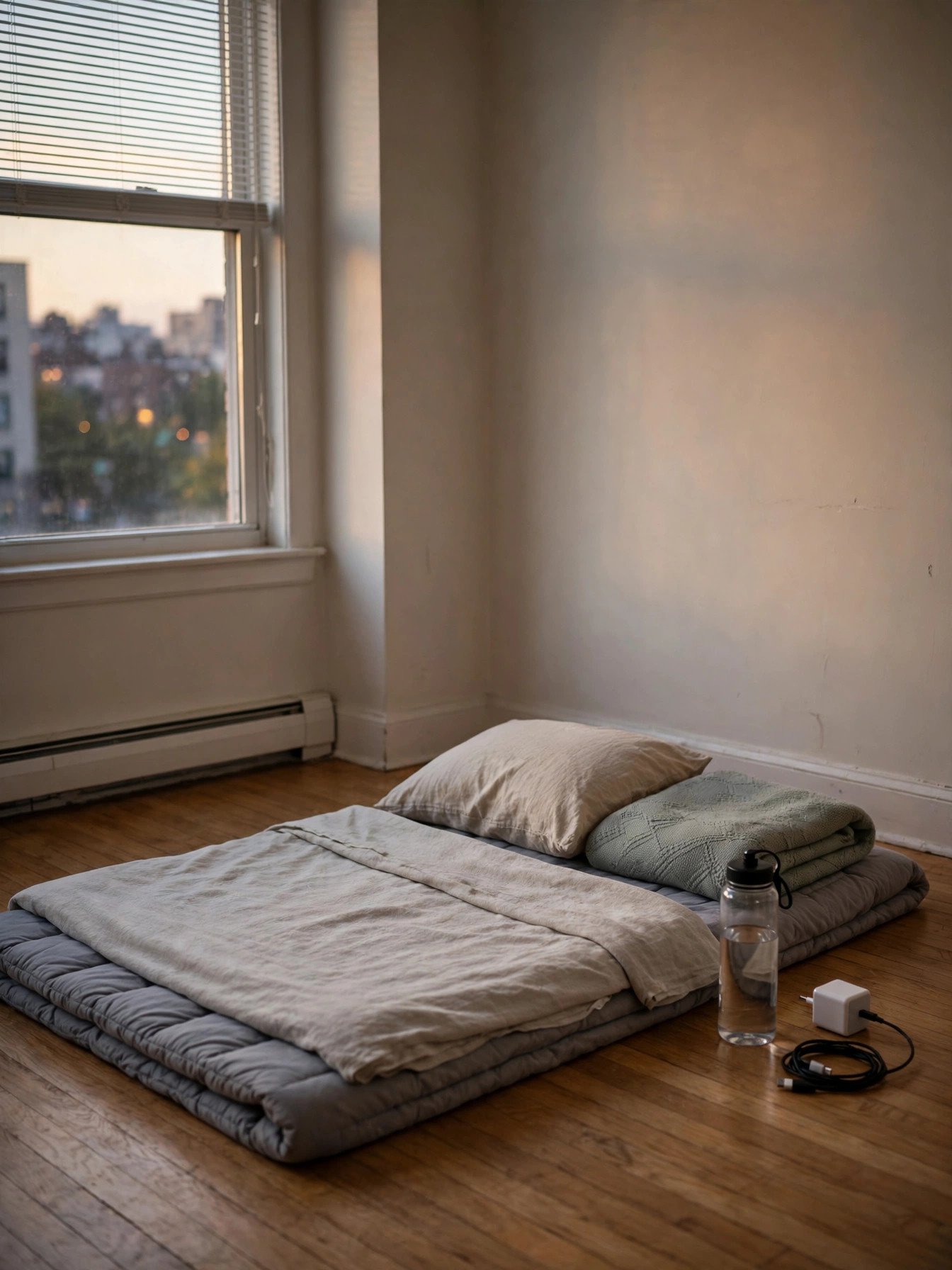
A made bed ends the day; an unmade one stretches it out. Choose the sleeping spot first — the bedroom if the mattress is already there, or the quietest corner away from the front door and street-facing windows if you are working with an air mattress, sleeping pad, or bedding on the floor.
Lay out, in this order: mattress or pad, sheet or sleeping bag, pillow, and one blanket within reach, because empty apartments often feel colder overnight than they did in the afternoon. Add earplugs or a phone-based white-noise option if hallway and street sounds are unfamiliar, hang a spare towel, sheet, or spare bedding over the bedroom window if there are no curtains yet, and keep water, your phone charger, and any nighttime medication on the floor beside you. Sleeping on bedding on the floor for one night is completely workable — a flat, dry, draft-free spot matters more than height.
5. Make the Bathroom Usable
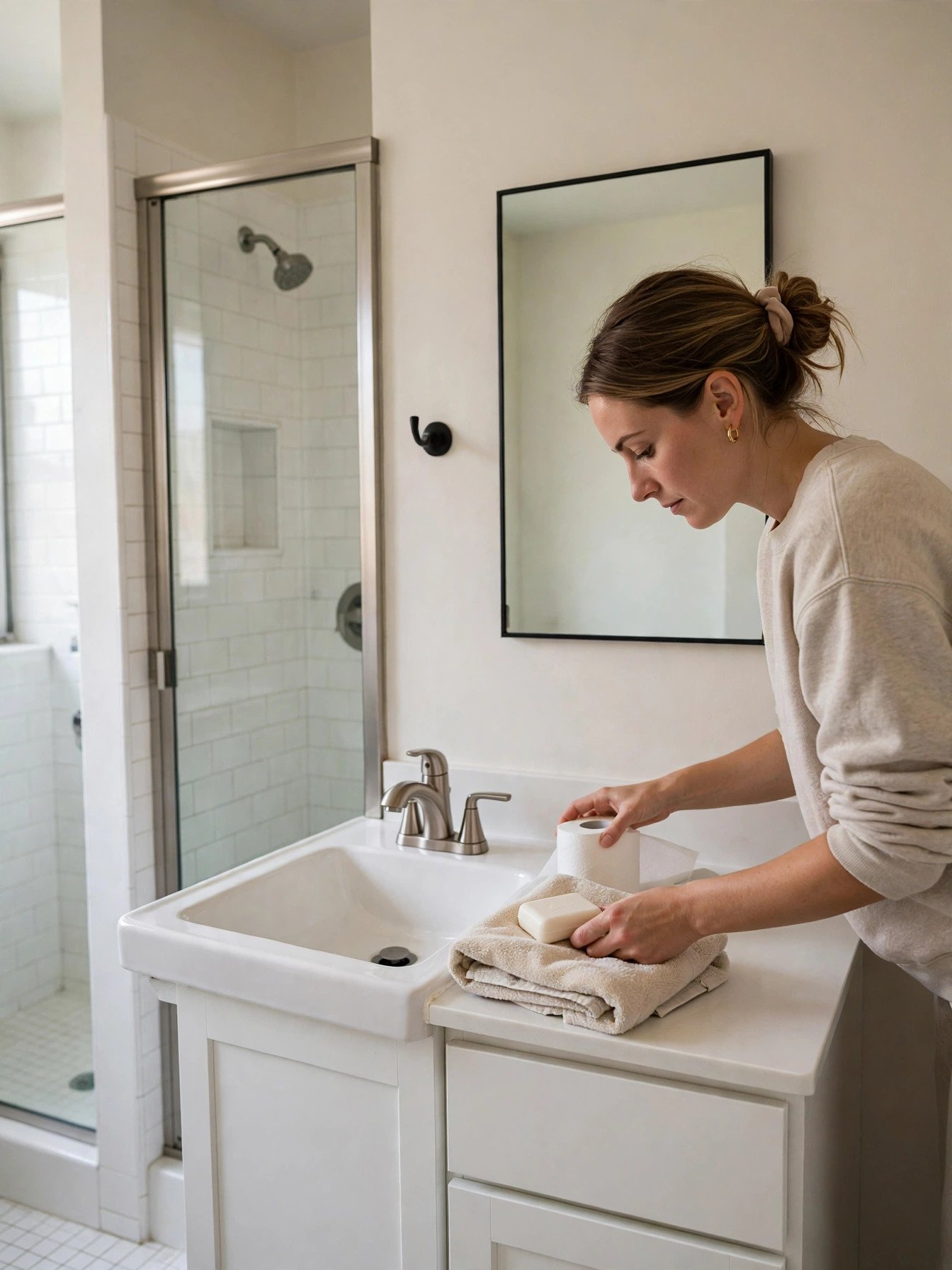
One working bathroom removes most of the stress from an otherwise unfinished apartment. Put out a towel and hand towel, soap, toothbrush and toothpaste, toilet paper within reach of the toilet plus a spare roll in sight, and a small trash bag or bin.
Run the shower briefly to confirm the drain clears and the water warms up, and lay a towel on the floor as a temporary bath mat so you are not stepping onto cold, dusty tile. Keep tonight’s change of clothes and tomorrow’s outfit in the bathroom or right outside it, so the morning does not start with opening five sealed boxes. If the shower curtain is missing, a short, careful shower kept low in the tub is a reasonable one-night workaround — and add a curtain and liner to tomorrow’s shopping list rather than improvising anything elaborate tonight.
6. Handle Food for Tonight

Dinner on night one should require the least cooking possible. Default to takeout, a grocery-store prepared meal, or one simple thing you can make with a single pan or the microwave: eggs, pasta, soup, or a sandwich. Eat at a cleared counter, a sturdy box, or the one chair you have — clearing a single flat surface for the meal makes the place feel markedly more settled.
Before bed, wash or soak the few dishes you used, take any food waste out to the building’s trash area if you can find it safely in daylight or early evening, or seal it tightly in a bag away from your sleeping spot. Put perishables in the fridge, leave out only tomorrow’s breakfast basics, a mug, and a water glass, and note anything essential the kitchen is missing — tonight is a list-making exercise, not a shopping trip.
7. Unpack Only What Matters

Restraint is the whole strategy here. Other than your first-night box, open boxes only if they contain something tonight genuinely requires. Everything else stays sealed, stacked neatly against one wall, and out of the path between your sleep spot, the bathroom, and the front door.
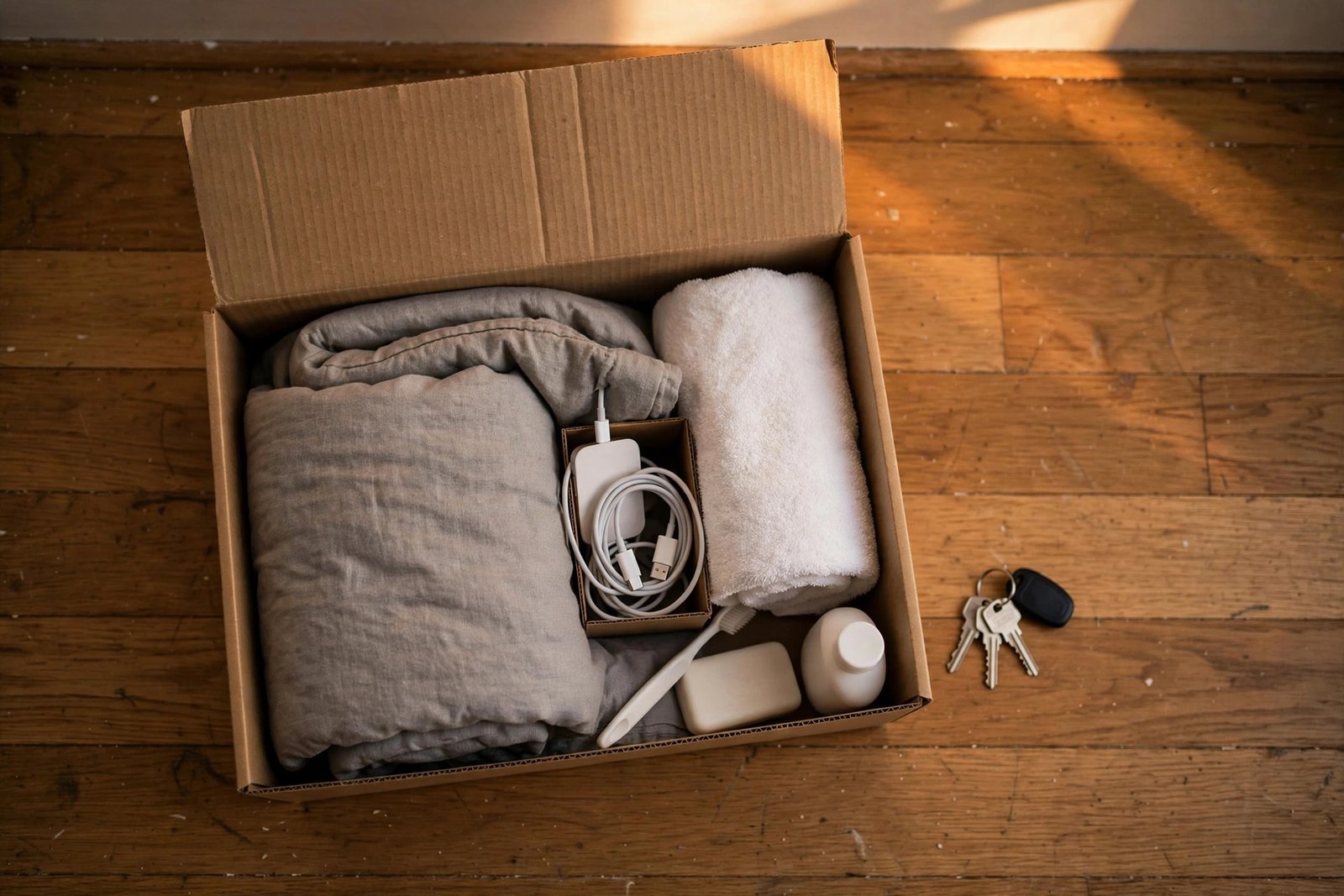
Practical asset — Printable First-Night Checklist (downloadable-candidate). Tick each line before bed:
First-night survival kit (one box or bag):
- Phone charger, power strip, and a lamp or flashlight
- Toilet paper, soap, towel, toothbrush, and basic toiletries
- Bedding, pillow, and a change of clothes plus tomorrow’s outfit
- Water bottle, mug, one plate/bowl, one pan, and basic utensils
- Snacks, tea or coffee for the morning, and any medication
- Keys, lease copy, ID, wallet, and landlord/maintenance contact details
- Trash bags, paper towels, and basic cleaning wipes
- Tape, scissors or box cutter, and a pen for labeling
Before-bed room check:
- Front door deadbolted; all windows latched
- Lights, faucets, toilet, hot water, and thermostat tested
- Condition photos taken and backed up
- Bed made; bathroom stocked; dinner cleared away
- Phone charging beside the bed; alarm set for tomorrow
If a box is not on either list, it can wait. A solo renter who stops unpacking by a set time — say 9 or 10 p.m. — will sleep better and make fewer tired mistakes than one who pushes on until midnight.
8. Create an Essentials Station

Pick one counter, table, or sturdy box near the front door and make it the single home for everything you will reach for repeatedly: keys, wallet, lease paperwork, phone charger, tape, scissors, pen, and a notepad. In an apartment full of identical sealed boxes, having exactly one place where small, important things live prevents the most frustrating night-one problem — knowing you packed something and having no idea where it is.
Charge your phone there or beside the bed, save the landlord, maintenance, and building emergency numbers into your contacts if you have not already, and text a friend or family member your new address and that you are in for the night. If Wi-Fi is not set up yet, that is fine for one evening on mobile data; note it for tomorrow rather than troubleshooting a router when you are already tired. For related move-in tasks and checklists, see our moving in and apartment basics category, and if any lock or safety issue surfaced tonight, our guide to verifying a landlord before signing explains the paperwork trail worth keeping.
9. Do a Quiet Safety Sweep

Once you have eaten and the building has settled, do one slow final circuit. Test the smoke and carbon monoxide detectors with their test buttons where fitted, and note — do not ignore — any unit that is missing, chirping, or has no cover. Check that the stove and oven are fully off, candles or anything similar are out (or skip them entirely tonight), and the space heater, if you are using one, is clear of bedding and boxes.
Re-check the front door deadbolt and window latches, look through the peephole or at the hallway to get a feel for normal evening noise, and locate the nearest stairwell or exit route from your door so you know it without thinking. Report any missing detector or broken lock in writing tonight; those are safety items a landlord should treat as urgent. This sweep is also part of settling your own nerves — unfamiliar pipes, fridges, and neighbors are normal night-one sounds, and hearing them on a deliberate walk feels different from being woken by them.
10. Plan Tomorrow Morning

End the night by making tomorrow smaller. Write a short list on paper or your phone: three unpacking priorities in order, any landlord messages still owed, one small shopping list (shower curtain, cleaning basics, food staples), and any address or account updates that can only happen in business hours. Following this first night in new apartment checklist through to a written tomorrow list is what stops day two from starting in a scramble.
Set an alarm that leaves you unhurried time, lay out tomorrow’s clothes, put breakfast and coffee where you can reach them without opening a box, and leave the sealed boxes alone. Day two is for furniture placement, full unpacking, and making the place look like a home. Tonight had a narrower job — safe, clean, fed, and asleep — and if those four are done, the first night was a success.
FAQ
What goes in a first-night survival kit?
One box or bag with bedding and a pillow, towel and toiletries including toilet paper, a phone charger and lamp, a change of clothes plus tomorrow’s outfit, basic dishes and a pan, snacks and morning coffee or tea, medication, trash bags, tape and scissors, and your keys, lease, and ID. If it is not needed before breakfast, it does not belong in the kit.
What are the true first-night essentials if I arrive with almost nothing?
At minimum: something flat and warm to sleep on and under, toilet paper and soap, water and simple food, a charged phone, and a way to lock the door. Everything else improves comfort but is not required for one safe night. Borrow or buy the short list above before spending on furniture.
How do I sleep well the first night with no furniture?
Make the floor or pad properly: sheet or sleeping bag below you, a real pillow, and a spare blanket, set up away from the door and drafts. Cover the window with a spare sheet or towel to block early light and hallway glare, use earplugs or white noise for unfamiliar building sounds, and stop unpacking at a set time so your body gets a wind-down period.
Should I unpack everything on the first night?
No. Unpack the sleep spot, bathroom basics, and one meal’s worth of kitchen items, then stop. Staying up late to empty every box usually means a worse night’s sleep, more mistakes, and mess in every room instead of order in the two rooms that matter tonight.
What should I check before I go to bed?
Deadbolt locked and windows latched, stove and oven off, detectors present and not chirping, no taps dripping, food waste sealed or taken out, phone charging beside the bed, and keys in their one station by the door. The printable checklist in section 7 covers the full list.
What if the hot water, heat, or a lock does not work on night one?
Message the landlord or maintenance line in writing tonight, describing exactly what you tested and what happened, and keep the reply. No lock, no hot water, and no heat are urgent move-in issues in most leases. For one night, a careful lukewarm shower, extra bedding, and a locked interior routine are workarounds — not fixes — so keep the written request open until it is resolved.
Is it normal to feel unsettled the first night?
Yes. An empty apartment amplifies every sound, the light is unfamiliar, and most of your routines are still in boxes. A deliberate safety sweep, a made sleep spot, and a written plan for tomorrow settle most of that. It usually feels like home much faster on night two or three, once one or two normal routines — morning coffee, a cooked meal — have happened there.
Conclusion

A good first night is not a finished apartment. It is a locked door you have tested, utilities you know work, photos that protect your deposit, a real place to sleep, a usable bathroom, and one calm meal — all done at a reasonable hour by a solo renter who arrived with only the essentials. Use this first night in new apartment checklist again tomorrow as your starting list, then unpack in daylight at a human pace. If it helped you end tonight early and settled, save it or share it with another first-time renter facing their first night.

Maren started MyFirstLease after a rough first lease taught him everything the internet didn’t. He covers the logistical side of renting — move-in checklists, utilities, and the unglamorous first-week stuff nobody explains — and oversees everything published on the site.