
You finally found your dream apartment, but then you realize—you have no idea how much the utilities will cost. You’ve budgeted perfectly for rent and groceries, but those invisible monthly bills can be a major source of anxiety for first-time renters.
If you are wondering exactly how much are utilities in an apartment, the quick answer is that the national average is generally between $200 and $300 per month. However, that number can fluctuate wildly depending on where you live, the size of your space, and how aggressively you run your air conditioning.
In this comprehensive guide, we are going to break down everything you need to know. We’ll look at average costs by apartment size, provide a massive 50-state breakdown of average utility bills, and give you actionable tips to keep your expenses as low as possible. Let’s dive in!
Quick Answer: How Much Are Utilities in an Apartment?
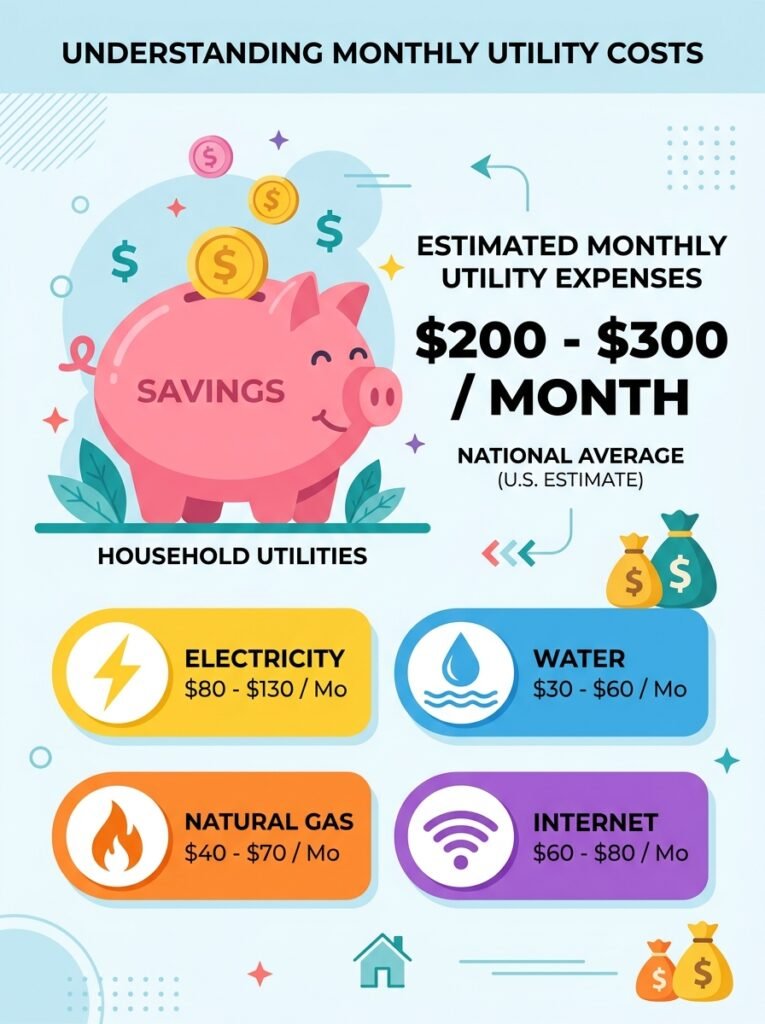
If you are just looking for a fast baseline number for your budget, expect to pay between $200 and $300 per month in total utilities for a standard 1-bedroom apartment. While this can change based on your location and lifestyle, here is a quick breakdown of what you can expect to pay for each individual service:
- Electricity: $100 – $150 per month
- Water & Sewer: $40 – $80 per month
- Gas: $30 – $60 per month
- Internet: $50 – $100 per month
- Cable/Streaming: $50 – $150 per month
- Trash: $15 – $30 per month
Remember, these are average estimates. Your actual bills for apartment living will vary based on your state’s energy rates, the square footage of your unit, and your personal usage habits.
Average Utility Costs by Apartment Size
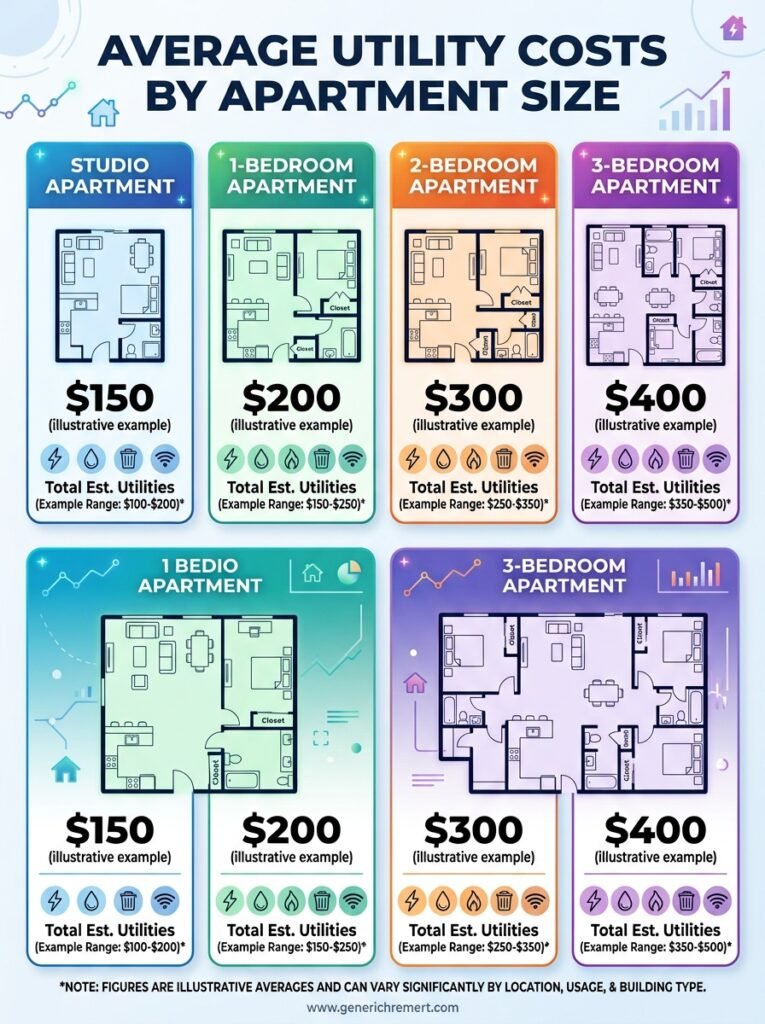
Space is the biggest dictator of energy usage. Heating and cooling a tiny studio takes a fraction of the energy required to temperature-control a sprawling 3-bedroom apartment.
Here is a look at what you can expect based on your floor plan:
| Apartment Size | Electricity | Water & Sewer | Gas | Internet | Total Average |
| Studio | $80 – $120 | $30 – $50 | $20 – $40 | $50 – $80 | $180 – $290 |
| 1-Bedroom | $100 – $150 | $40 – $80 | $30 – $60 | $50 – $100 | $220 – $390 |
| 2-Bedroom | $130 – $190 | $50 – $100 | $40 – $80 | $60 – $110 | $280 – $480 |
| 3-Bedroom | $170 – $240 | $70 – $130 | $50 – $100 | $70 – $120 | $360 – $590 |
Note: These are national averages. Actual costs vary significantly by state and your personal usage habits.
Average Utility Costs by State (2026)
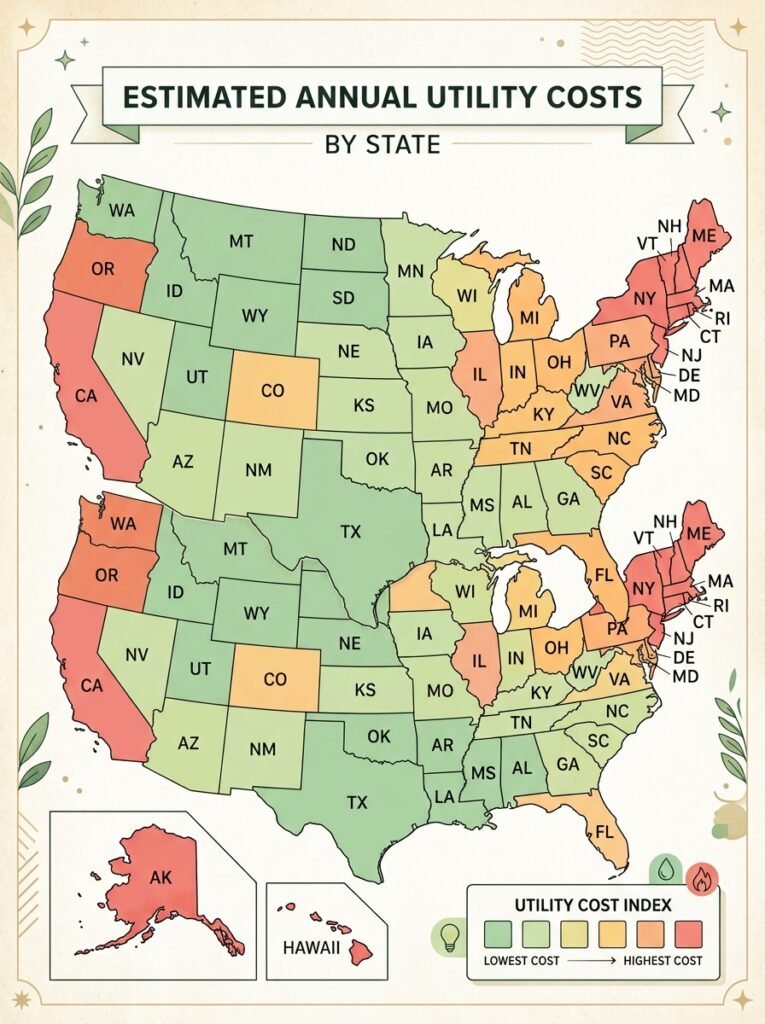
Location is everything. According to data from the U.S. Energy Information Administration (EIA), electricity and natural gas rates vary dramatically across state lines.
If you want to know how much utilities will run you in your specific area, we have compiled the average monthly costs for a typical apartment across all 50 states.
(Highlighted Trends: The cheapest states for utilities tend to be Utah, Colorado, and Idaho, thanks to lower natural gas and electricity rates. The most expensive states include Hawaii, California, and Connecticut due to high energy demands and geographic isolation.)
| State | Electricity | Water & Sewer | Gas | Internet | Total Average |
| Alabama | $120 | $50 | $35 | $70 | $275 |
| Alaska | $110 | $70 | $90 | $100 | $370 |
| Arizona | $130 | $40 | $35 | $75 | $280 |
| Arkansas | $105 | $45 | $40 | $70 | $260 |
| California | $150 | $60 | $85 | $90 | $385 |
| Colorado | $75 | $35 | $30 | $55 | $195 |
| Connecticut | $145 | $65 | $75 | $85 | $370 |
| Delaware | $100 | $50 | $50 | $75 | $275 |
| Florida | $125 | $45 | $20 | $75 | $265 |
| Georgia | $115 | $60 | $50 | $75 | $300 |
| Hawaii | $185 | $75 | $75 | $85 | $420 |
| Idaho | $75 | $35 | $30 | $50 | $190 |
| Illinois | $85 | $40 | $60 | $65 | $250 |
| Indiana | $95 | $45 | $55 | $65 | $260 |
| Iowa | $85 | $45 | $50 | $60 | $240 |
| Kansas | $95 | $45 | $50 | $65 | $255 |
| Kentucky | $105 | $45 | $45 | $65 | $260 |
| Louisiana | $115 | $50 | $35 | $70 | $270 |
| Maine | $105 | $45 | $70 | $75 | $295 |
| Maryland | $120 | $55 | $65 | $75 | $315 |
| Massachusetts | $135 | $60 | $75 | $80 | $350 |
| Michigan | $95 | $45 | $65 | $65 | $270 |
| Minnesota | $85 | $45 | $60 | $65 | $255 |
| Mississippi | $115 | $45 | $35 | $70 | $265 |
| Missouri | $105 | $50 | $50 | $65 | $270 |
| Montana | $85 | $40 | $45 | $60 | $230 |
| Nebraska | $90 | $40 | $45 | $65 | $240 |
| Nevada | $110 | $40 | $45 | $70 | $265 |
| New Hampshire | $125 | $50 | $65 | $75 | $315 |
| New Jersey | $110 | $60 | $65 | $75 | $310 |
| New Mexico | $80 | $35 | $30 | $55 | $200 |
| New York | $130 | $55 | $80 | $80 | $345 |
| North Carolina | $105 | $50 | $45 | $70 | $270 |
| North Dakota | $85 | $40 | $45 | $60 | $230 |
| Ohio | $95 | $45 | $60 | $65 | $265 |
| Oklahoma | $105 | $45 | $45 | $70 | $265 |
| Oregon | $95 | $55 | $50 | $65 | $265 |
| Pennsylvania | $105 | $55 | $65 | $70 | $295 |
| Rhode Island | $130 | $60 | $70 | $80 | $340 |
| South Carolina | $115 | $55 | $40 | $75 | $285 |
| South Dakota | $90 | $40 | $45 | $65 | $240 |
| Tennessee | $105 | $45 | $40 | $70 | $260 |
| Texas | $135 | $50 | $35 | $75 | $295 |
| Utah | $75 | $35 | $30 | $55 | $195 |
| Vermont | $115 | $45 | $65 | $70 | $295 |
| Virginia | $115 | $55 | $50 | $70 | $290 |
| Washington | $85 | $55 | $50 | $65 | $255 |
| West Virginia | $110 | $55 | $55 | $70 | $290 |
| Wisconsin | $85 | $40 | $55 | $60 | $240 |
| Wyoming | $85 | $40 | $45 | $60 | $230 |
Utility Cost Breakdown by Type
To really master your budget, you need to understand what you are paying for. Here is a closer look at the individual services that make up your monthly housing expenses.
Electricity (Average $100–$150/month)
Your apartment electric bill average is typically the largest utility expense you will have.
- Factors: Your usage of air conditioning, electric heating, and the number of large appliances (like in-unit washers and dryers) dictate this bill.
- Seasonal variations: Expect massive spikes during summer (due to AC) and winter (if you have electric heating).
Water & Sewer (Average $40–$80/month)
- Factors: The number of people living in the apartment, your shower habits, and local municipal rates.
- Often included in rent: Many landlords bundle water and sewer into your base rent, so you may not have to pay this separately! Always check your lease.
Gas (Average $30–$60/month)
- Factors: Gas is commonly used for heating the apartment in the winter, powering gas stoves for cooking, and heating your water.
- Not all apartments have gas: Many modern apartment complexes are fully electric, meaning you might not have a gas bill at all.
Internet (Average $50–$100/month)
- Factors: The speed of your connection, your chosen provider, and the type of plan (fiber optic vs. cable).
- Often separate from rent: You will almost always have to set this up and pay for it yourself.
Cable/Streaming (Average $50–$150/month)
- Optional but common: Traditional cable is expensive. Most young renters opt for 2-3 streaming services (like Netflix, Hulu, or Spotify) which drastically lowers this expense.
Trash/Recycling (Average $15–$30/month)
- Often included in rent: In multi-unit buildings, the landlord usually covers the cost of the large dumpsters out back.
- Valet Trash: Some luxury apartments charge a mandatory “valet trash” fee where someone picks up garbage directly from your door.
What Counts as a Utility Bill?
If you are asked to provide a utility bill as proof of residence, what qualifies? What counts as a utility bill generally includes your essential home services: electricity, water, gas, internet, cable, and trash collection. Sometimes, services like sewage, recycling, or even a designated parking fee are included on the same municipal bill.
Factors That Affect Your Utility Bills
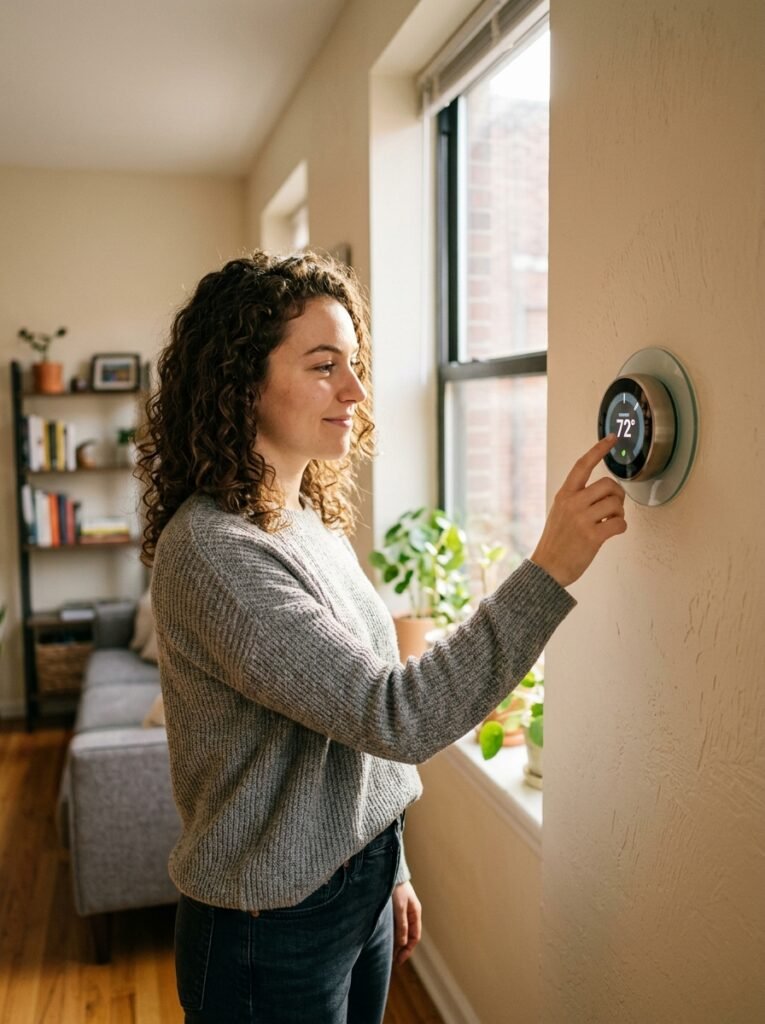
Why does your friend two towns over pay $100 less than you for utilities? Several invisible factors influence your monthly statements:
- Apartment Size: A larger apartment has more square footage, meaning it takes significantly more energy to heat and cool.
- Location/State: Utility rates vary by state and city. Electricity costs twice as much in California as it does in Utah.
- Season/Weather: Blazing hot summers require constant air conditioning, while freezing winters require heavy heating. Spring and fall are usually your cheapest months.
- Number of Roommates: More people means more electronics charging, more daily showers, and more laundry loads.
- Energy Efficiency: Older buildings with drafty windows and outdated appliances bleed energy. Newer, Energy Star-rated appliances save money.
- Usage Habits: Do you leave the TV on when you leave the room? Do you take 30-minute boiling hot showers? Your daily habits directly impact the final bill.
- Included vs. Separate: If your landlord pays for water and gas, your out-of-pocket utility costs will naturally be much lower.
How to Estimate Your Utility Costs Before Signing a Lease

Don’t let your first bill be a jump scare! Before you ever sign your name on a lease agreement, take these actionable steps to estimate your upcoming costs:
- Ask the Landlord or Previous Tenant: Be direct. Ask the property manager, “What is the average utility cost for this specific unit?” If you see the current tenant, ask them!
- Call the Local Utility Companies: You can literally call the local electric provider, give them the apartment address, and ask for the historical average monthly cost for that unit.
- Use Online Calculators: Search for a local utilities cost per month calculator. Many regional energy providers offer these on their websites.
- Look at Energy Star Ratings: When touring the apartment, look at the fridge and dishwasher. If they have the blue “Energy Star” label, they will be cheaper to run.
- Check the Lease for Included Utilities: Ask exactly what is covered in the rent and what you have to set up yourself.
- Ask Neighbors: If you run into someone in the hallway during your tour, politely ask them what they usually pay for electricity. They will give you the most honest answer.
10 Ways to Reduce Your Utility Bills

If you are on a tight budget, you have immense power to lower your monthly costs. According to the Energy.gov guide on appliance energy use, making small daily changes can save you hundreds of dollars a year.
- Unplug Electronics: Did you know appliances still draw power when they are turned off? Unplugging your toaster, blender, and gaming consoles can eliminate “phantom energy” costs.
- Use LED Bulbs: If your apartment has old incandescent light bulbs, swap them for LEDs. They use roughly 75% less energy and last years longer.
- Adjust the Thermostat: The golden rule of saving money: set your thermostat to 68°F in the winter (wear a sweater!) and 78°F in the summer (use a fan!).
- Wash Clothes in Cold Water: Heating water accounts for about 90% of the energy your washing machine uses. Switching to cold water gets your clothes just as clean for a fraction of the cost.
- Take Shorter Showers: Cutting a 15-minute shower down to 7 minutes saves both water and the gas/electricity used to heat that water.
- Use Energy-Efficient Appliances: If your apartment allows you to bring your own appliances, always look for the Energy Star label.
- Seal Drafts: If you feel cold air coming in through your windows, buy some cheap weather stripping from a hardware store. It keeps your expensive heating/cooling inside where it belongs.
- Use Power Strips: Plug your TV, soundbar, and gaming console into one smart power strip. When you are done using them, flip one switch to kill the phantom power to all of them at once.
- Install a Programmable Thermostat: If your landlord allows it, install a smart thermostat. You can program it to turn off the AC while you are at work and turn it back on right before you get home.
- Compare Internet/Cable Providers: Don’t just accept the first internet provider you find. Shop around! Call providers and ask if they have “new customer promotions” or student discounts.
Which Utilities Are Usually Included in Rent?
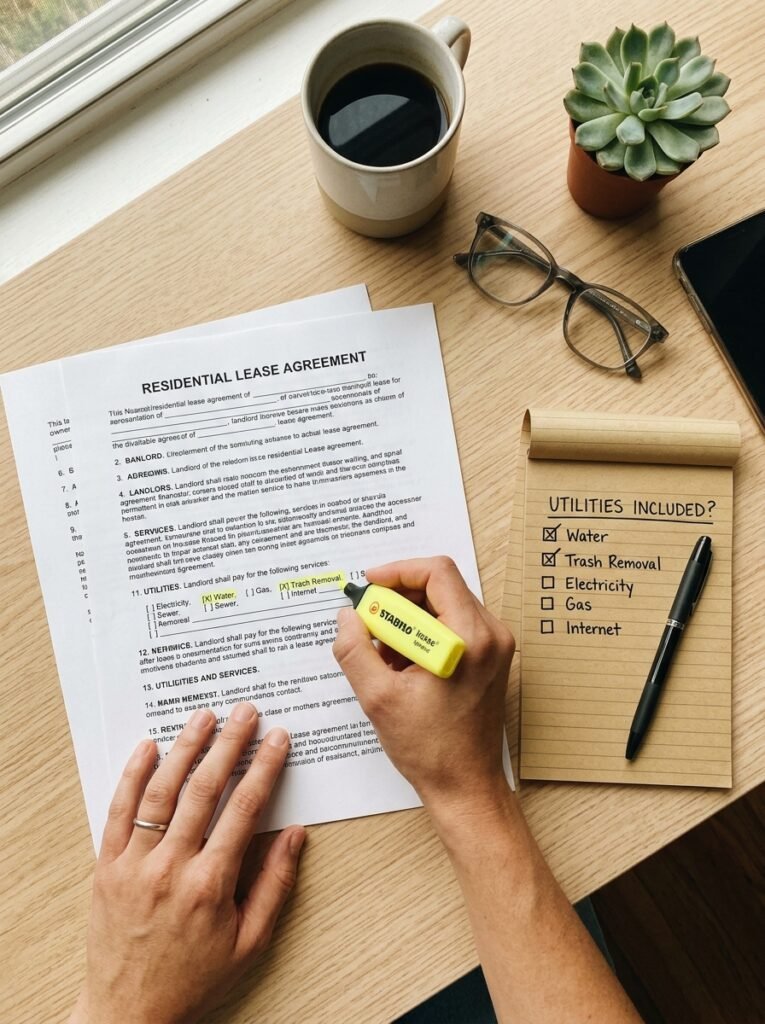
One of the best ways to keep costs down is to find an apartment that includes utilities in the base rent. While every building is different, here is what you can generally expect:
| Utility | Often Included? | Notes |
| Water & Sewer | ✅ Often | Usually included, especially in older apartment buildings with shared plumbing. |
| Trash | ✅ Often | Typically included; the landlord pays for the main building dumpsters. |
| Gas | ⚠️ Sometimes | Sometimes included in older buildings with central radiators; otherwise, it’s separate. |
| Electricity | ❌ Rarely | Almost always separate. You are responsible for your own energy usage. |
| Internet | ❌ Rarely | Almost always separate, though some student housing complexes may provide it. |
| Cable/Streaming | ❌ Rarely | Almost always separate. |
Pro Tip: Never assume! Always confirm with your landlord in writing exactly which utilities you are responsible for before signing the lease.
Frequently Asked Questions (FAQ)

How much are utilities in an apartment?
On average, expect to pay between $200 and $300 per month for all utilities in a standard 1-bedroom apartment. This includes electricity, water, gas, internet, and trash.
What is the average water bill for a 1-bedroom apartment?
The average water and sewer bill for a 1-bedroom apartment ranges from $40 to $80 per month. Fortunately, many landlords cover this cost in your monthly rent.
How much do utilities cost per month for a 2-bedroom apartment?
For a 2-bedroom apartment, total utilities usually range from $280 to $480 per month. The larger space requires more energy to heat and cool, and a second bedroom usually implies a second tenant using water and power.
How much are utilities per month for 2 people in an apartment?
If you are wondering how much are utilities per month for 2 people in an apartment, expect to add about 20% to 30% to the standard 1-bedroom cost. This usually brings the total to around $250 to $350 per month, since two people take more showers, do more laundry, and use more electricity.
What is the average electric bill for a 1-bedroom apartment?
The average utility bill for 1 bedroom apartment specifically for electricity typically hovers between $100 and $150 per month. This peaks during summer and winter and drops during mild spring and fall months.
What is the average gas bill for a 1-bedroom apartment?
The average gas bill for 1 bedroom apartment usually runs between $30 and $60 per month. However, if your apartment relies entirely on electric heating and appliances, your gas bill could be zero.
What counts as a utility bill?
A utility bill is an invoice for essential home services. This typically includes electricity, natural gas, water, sewer, trash collection, and internet/cable services.
How much is electricity and gas per month in an apartment?
Combined, how much is electricity and gas per month in an apartment usually totals between $130 and $210. Electricity takes up the bulk of this cost, while gas is generally cheaper (unless you live in a very cold climate with a gas furnace).
How can I estimate my utility costs before signing a lease?
The best way is to ask the landlord for the unit’s historical averages, or call the local utility companies directly. You can give them the specific address of the apartment, and they can often give you the average cost from the previous year.
Which utilities are usually included in rent?
Water, sewer, and trash collection are the most commonly included utilities. Electricity and internet are almost always the responsibility of the tenant.
How can I reduce my utility bills?
You can drastically reduce your bills by unplugging electronics when not in use, using LED light bulbs, setting your thermostat to 68°F in winter and 78°F in summer, and washing your laundry in cold water.
What is a utilities cost per month calculator?
It is an online tool, often provided by local energy companies or budgeting apps, that helps you estimate your future utility costs by inputting your zip code, apartment size, and heating/cooling preferences.
Conclusion
Figuring out utility costs doesn’t have to be a guessing game. While the national average sits between $200 and $300 a month, factors like your state, apartment size, and daily habits play a massive role in your final bill. The best rule of thumb is to budget cautiously, be mindful of your energy usage, and always ask your landlord for historical averages before you sign the lease.
Ready to master the rest of your move? Be sure to check out our guide on the documents needed for renting an apartment so you have everything ready to go—and start planning your budget carefully to stay on track financially.

Maren started MyFirstLease after a rough first lease taught him everything the internet didn’t. He covers the logistical side of renting — move-in checklists, utilities, and the unglamorous first-week stuff nobody explains — and oversees everything published on the site.