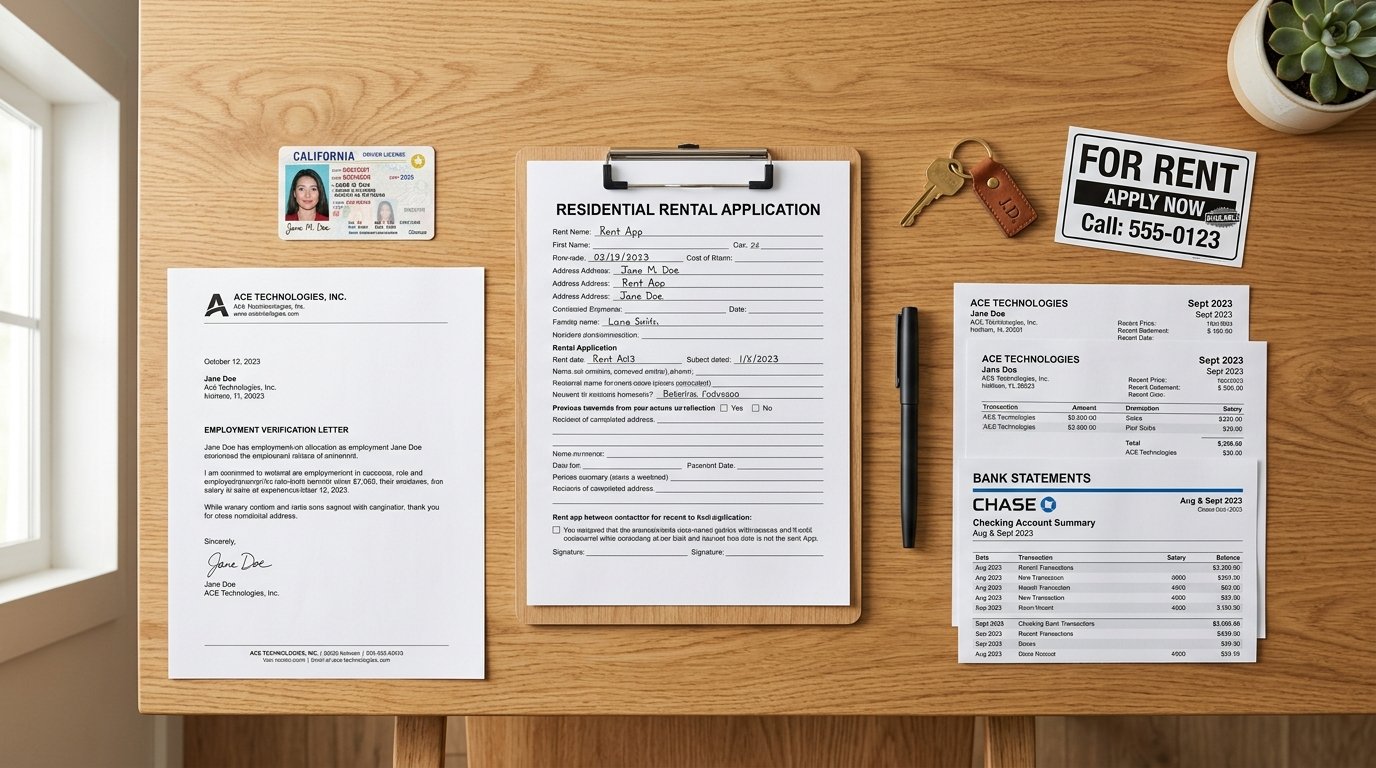
You found the perfect apartment. The photos were great, the location is perfect, and the rent fits your budget. Then the landlord hands you an application and says, “Just bring your documents.” Suddenly you’re panicking—what do they actually need?
If you’re a first-time renter, this moment can feel overwhelming. You don’t have years of rental history. You might not even have a full-time job yet. But here’s the good news: knowing exactly what documents are needed for a rental application is half the battle, and once you have them ready, you’ll walk into every showing feeling confident instead of caught off guard.
This guide breaks down every document a landlord might ask for, why they need it, and what to do if you don’t have something on the list. By the end, you’ll have a complete checklist you can print, save, or screenshot before your next apartment tour.
Quick Answer: What Documents Do You Need for a Rental Application?
If you only have five minutes before your appointment, here’s the short version.
| Document | Why It’s Needed |
|---|---|
| Government-Issued Photo ID | To verify your identity |
| Proof of Income | To show you can afford rent |
| Employment Verification | To confirm your job and income |
| Rental History | To show you’re a reliable tenant |
| References | To vouch for your character |
| Credit Report (optional) | To show financial responsibility |
| Pet Information (if applicable) | To verify pet ownership |
Now let’s go through each one in detail, including exactly what counts as rental application requirements and what to do if you’re missing something.
1. Government-Issued Photo ID
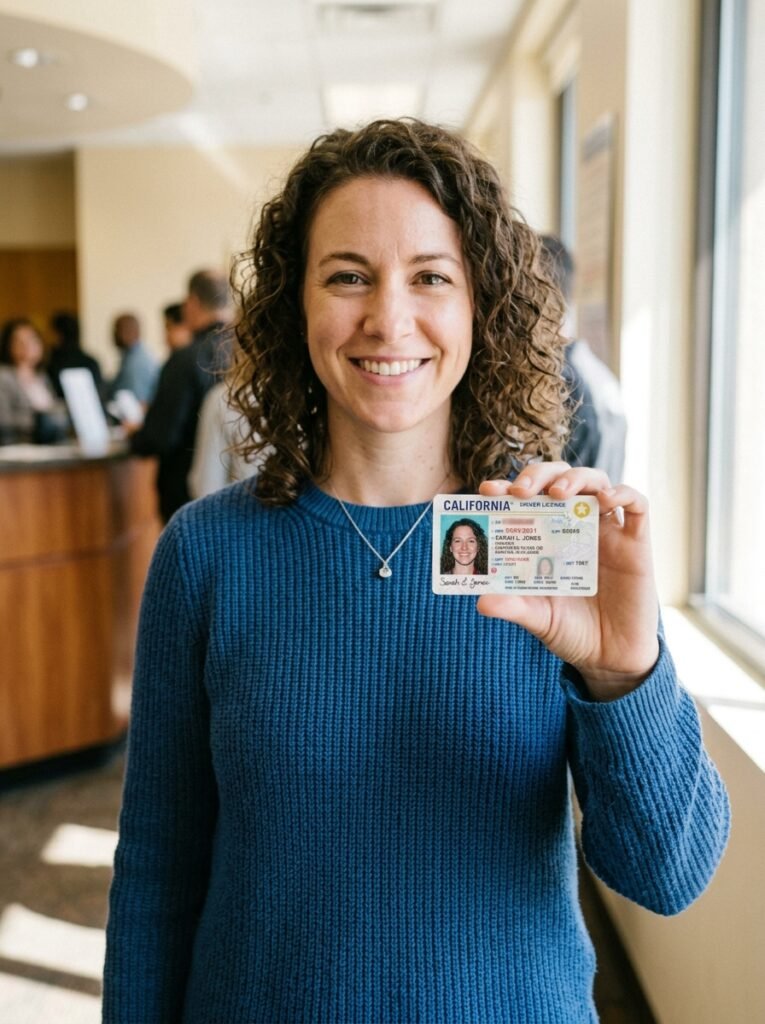
Every landlord will ask for a valid photo ID before they even consider your application. This is one of the most basic documents for apartment application processing, and it’s non-negotiable.
| Type | Accepted Documents |
|---|---|
| Driver’s License | ✅ Most common |
| State ID | ✅ If you don’t drive |
| Passport | ✅ Good alternative |
| Military ID | ✅ If applicable |
Why It’s Required:
- Landlords need to confirm your identity
- It’s required for background checks
- It’s required for credit checks
- It’s required for lease agreements
Pro Tip: Bring a physical copy AND a digital copy (a clear photo on your phone works great as a backup).
2. Proof of Income (Pay Stubs, Tax Returns, or Bank Statements)
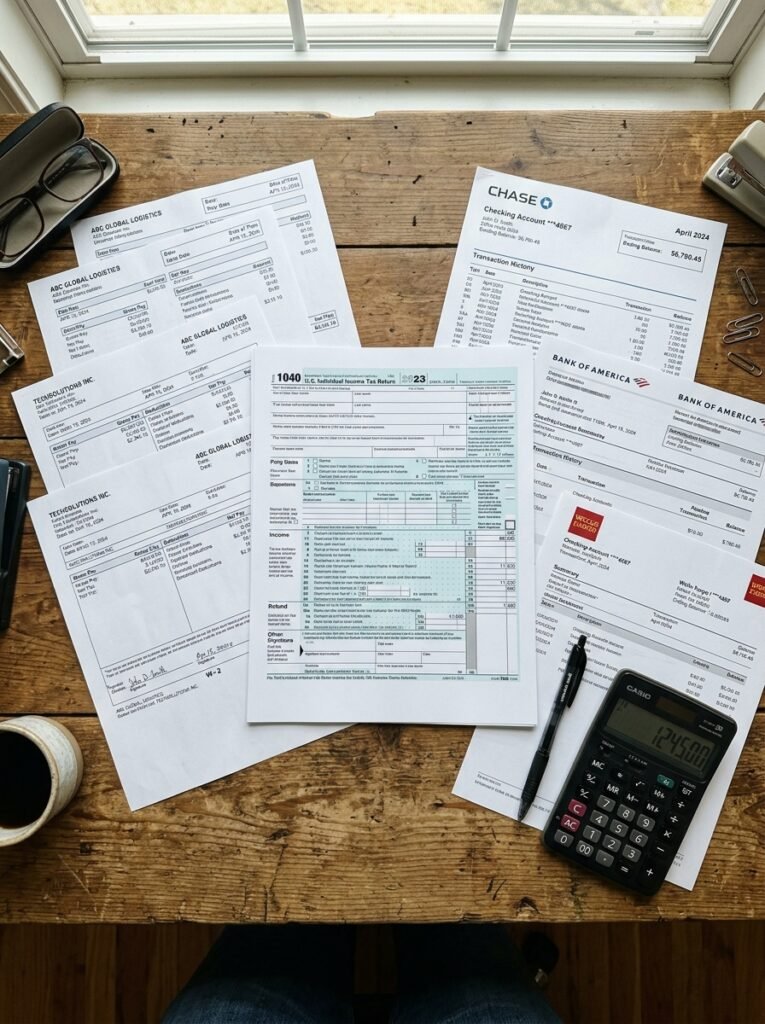
This is usually the biggest question mark for first-time renters: what counts as proof of income if you’re new to the workforce? Here’s the breakdown.
| Document | What It Shows |
|---|---|
| Pay Stubs (2-3 months) | Shows regular income and employment |
| Tax Returns (1-2 years) | Shows annual income history |
| Bank Statements (2-3 months) | Shows savings and financial stability |
| Offer Letter | Shows future income if you’re starting a new job |
| 1099 Forms | Shows freelance or gig income |
What Landlords Look For:
- Monthly income is at least 2.5–3x the rent
- Consistent deposits
- No overdrafts or bounced checks
- A healthy savings cushion
Pro Tip: If you’re a freelancer or work gig jobs, bring 12 months of bank statements to show consistent income, since a single pay stub won’t tell the full story.
3. Proof of Employment (Employment Verification Letter)
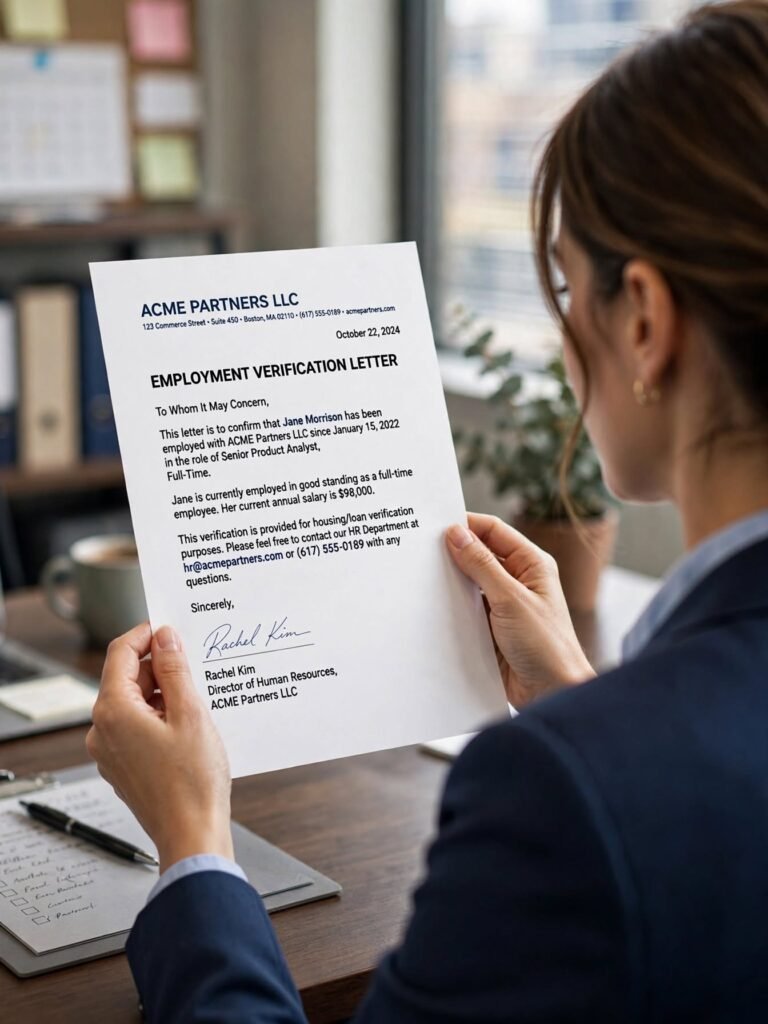
Beyond pay stubs, most landlords want a formal letter confirming your job is real and stable. This letter is one of the most important documents for first-time renters because it reassures a landlord who has no history with you yet.
| What to Include | Example |
|---|---|
| Company Letterhead | Shows it’s official |
| Start Date | Shows how long you’ve been employed |
| Position | Shows your job title |
| Annual Salary | Shows your income |
| Supervisor Contact | For verification |
Sample Letter:
[Company Letterhead]
To Whom It May Concern,
This letter is to confirm that [Your Name] has been employed at [Company] since [Start Date] as a [Position]. Their current annual salary is $[Amount].
Please contact me at [Phone] or [Email] for verification.
Sincerely, [Supervisor Name] [Supervisor Title]
Pro Tip: Ask your HR department or supervisor for this letter before you start apartment hunting, so it’s ready the moment you need it.
4. Rental History (Or Proof You Lived With Parents)
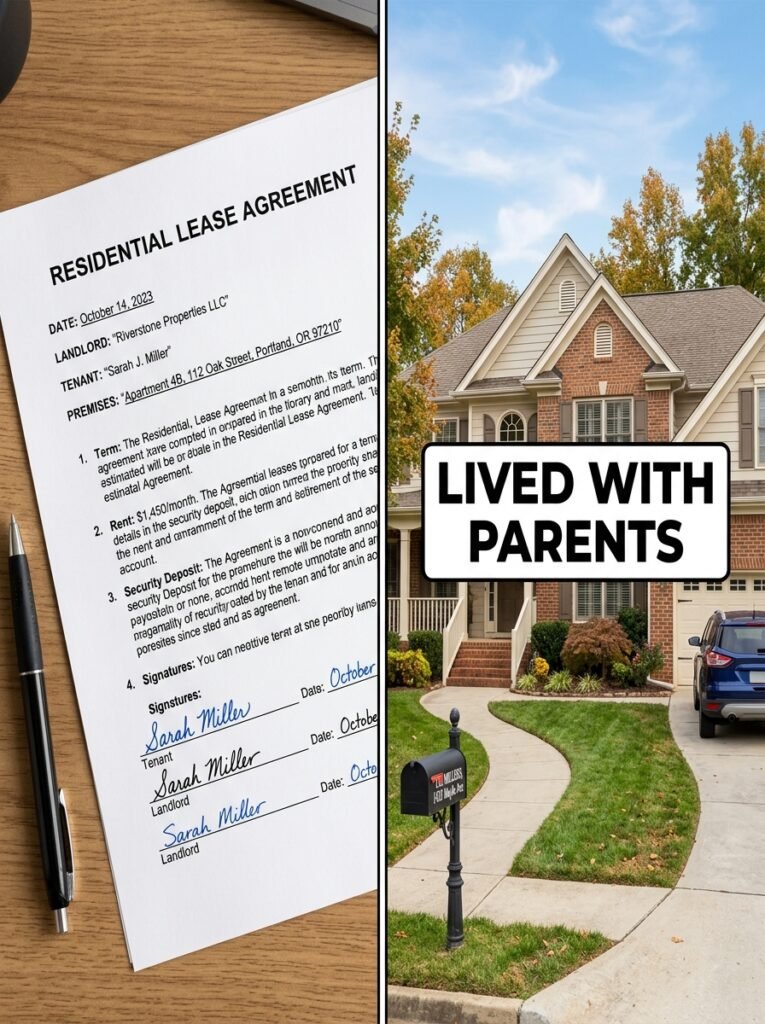
This section answers one of the most common searches from young renters: no rental history lived with parents—what do I put on the application? You’re not the only one in this situation, and landlords see it all the time.
If You Have Rental History:
| What to Provide | Example |
|---|---|
| Landlord Name and Contact | Landlord’s phone and email |
| Address | Full rental address |
| Dates of Tenancy | Move-in and move-out dates |
| Rent Amount | Monthly rent paid |
If You Lived With Parents (No Rental History):
| What to Provide | Example |
|---|---|
| Parents’ Address | Full street address |
| Parent’s Name and Contact | “John Smith (parent)” |
| Dates of Residence | Move-in date to “present” |
| Rent Paid | “$0, family housing” |
Pro Tip: Add a short note like: “I lived with my parents while saving for my first lease. I’m ready to start my own lease now.” It shows initiative, not a red flag.
5. References (Personal and Professional)

References help a landlord understand who you are as a person and a tenant, especially when you don’t have a rental track record yet.
| Type | Who to Ask |
|---|---|
| Professional | Manager, supervisor, HR representative |
| Academic | Professor, teacher, advisor |
| Personal | Mentor, coach, family friend (not a relative) |
How Many References to Provide:
- 2–3 references total
- At least 1 professional reference
What to Include for Each Reference:
- Full name
- Relationship to you
- Phone number
- Email address
- How long they’ve known you
Pro Tip: Always ask permission before listing someone as a reference, and give them a heads-up that a landlord might call.
6. Credit Report (Optional but Recommended)

A credit report isn’t always required, but bringing one voluntarily can make your application stand out—especially useful if you’re wondering how to get approved for an apartment with a thin credit file.
| What to Include | Why It Helps |
|---|---|
| Full Credit Report | Shows your credit history |
| Credit Score | Shows your financial responsibility |
| No Credit History | Explain you’re building credit |
How to Get a Free Credit Report:
- AnnualCreditReport.com (free once a year)
- Credit Karma
- Experian
- Your bank or credit card provider
Pro Tip: Bring your credit report even if you think your credit is bad. It’s better to be upfront than to have the landlord pull it and find surprises.
7. Pet Information (If You Have a Pet)

If you’re bringing a furry roommate along, most landlords will want documentation about your pet as part of the application.
| What to Provide | Why It Helps |
|---|---|
| Pet Photo | So the landlord can see your pet |
| Vaccination Records | Shows pet is healthy and up-to-date |
| Pet Deposit | Be ready to pay extra |
Pro Tip: Be upfront about your pet from the start. The worst outcome is getting approved and then having the landlord find out later that you have a pet.
8. Additional Documents That Can Strengthen Your Application
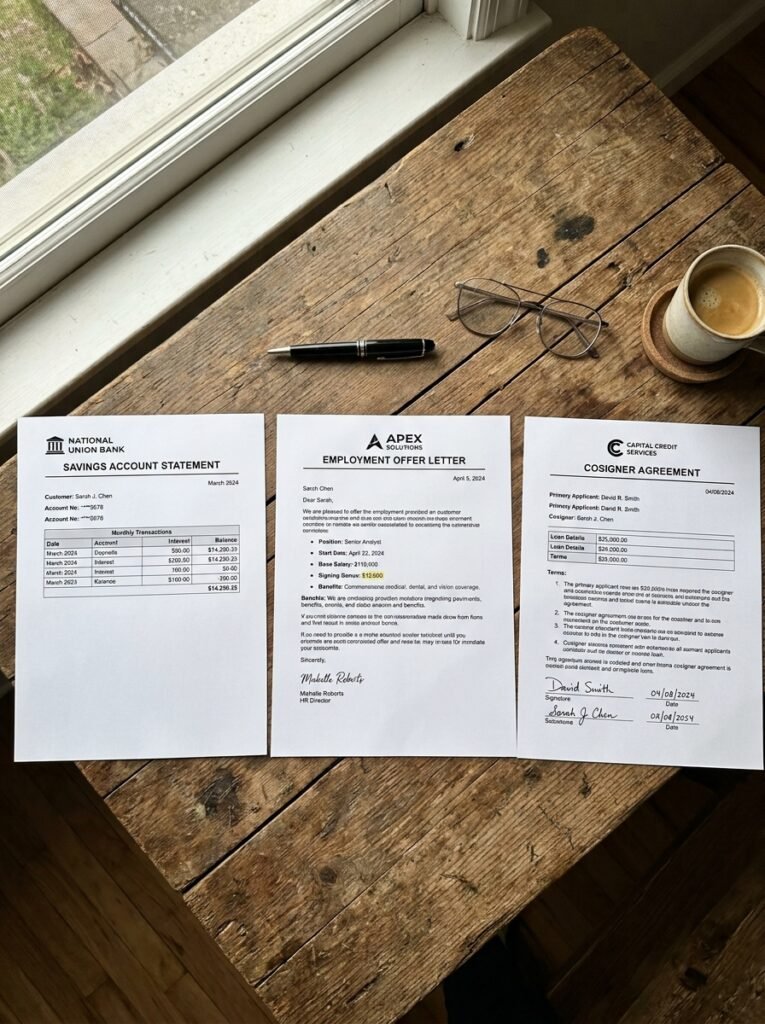
These aren’t always required, but they can tip the scales in your favor, especially if your application is otherwise thin.
| Document | Why It Helps |
|---|---|
| Letter of Introduction | Explains who you are and why you’ll be a great tenant |
| Savings Account Statement | Shows you have a financial cushion |
| Student Loan Award Letter | Shows financial support for students |
| Cosigner Agreement | If a parent is cosigning |
What to Do If You Don’t Have These Documents
It’s normal to be missing a piece or two of this checklist as a first-time renter. Here’s how to handle common gaps.
| Situation | What to Do |
|---|---|
| No rental history | Explain you lived with parents, provide their contact information |
| No credit history | Explain you’re building credit, offer a larger security deposit |
| No job | Use a cosigner or show savings |
| No pay stubs | Use bank statements or tax returns |
| No references | Ask a teacher, professor, or mentor to vouch for you |
What to Avoid When Submitting Documents
Even with all the right documents, small mistakes can slow down your approval or hurt your first impression.
| Mistake | Why It’s a Problem |
|---|---|
| Submitting expired documents | This looks unprofessional and raises red flags |
| Submitting blurry photos | Makes it hard for the landlord to verify information |
| Missing information (e.g., no signature) | Slows down the approval process |
| Providing incomplete documents | Relying on the landlord to fill in the gaps is a bad look |
| Not bringing multiple copies | Always bring at least two copies of everything |
For a broader overview of your rights and responsibilities as a renter, the Consumer Financial Protection Bureau’s renting guide is a solid resource to bookmark.
Frequently Asked Questions (FAQ)
1. What documents do you need for a rental application? Photo ID, proof of income, employment verification, rental history or parental contact info, and references.
2. What is needed to get approved for an apartment? Proof of income (2.5–3x rent), good credit, and a clean rental history.
3. Can I get an apartment without a rental history? Yes—provide proof of income, a cosigner, or a larger security deposit.
4. No rental history, lived with parents—what do I put? List your parents’ address and contact, and mark it as “family housing.”
5. What documents do landlords ask for? Typically: ID, pay stubs, tax returns, bank statements, and landlord references.
6. How much deposit do I need to rent an apartment? Usually 1 month’s rent, but if you have no rental history, you may need a larger deposit.
7. Can I use my parents as a reference? Yes, but they should be labeled as “family housing” and not as a professional reference.
8. What if I don’t have a job? You’ll need a cosigner (parent) or show 12+ months of rent in savings.
9. What is a rental application fee? The application fee typically covers background and credit checks; it can cost $25–$150, and its purpose is to cover the landlord’s screening costs.
10. How long does it take to get approved for an apartment? Usually 24–72 hours, depending on the landlord and the completeness of your application.
Conclusion
Getting your documents together before you start applying for apartments is the key to getting approved quickly and confidently. Make sure you have your ID, proof of income, employment verification, rental history or parental contact information, and references ready before your first showing. Always bring at least two copies of everything—landlords appreciate prepared tenants, and it shows you’re serious about renting. With this checklist in hand, you’re ready to walk into your first apartment application like a pro.

Maren started MyFirstLease after a rough first lease taught him everything the internet didn’t. He covers the logistical side of renting — move-in checklists, utilities, and the unglamorous first-week stuff nobody explains — and oversees everything published on the site.