
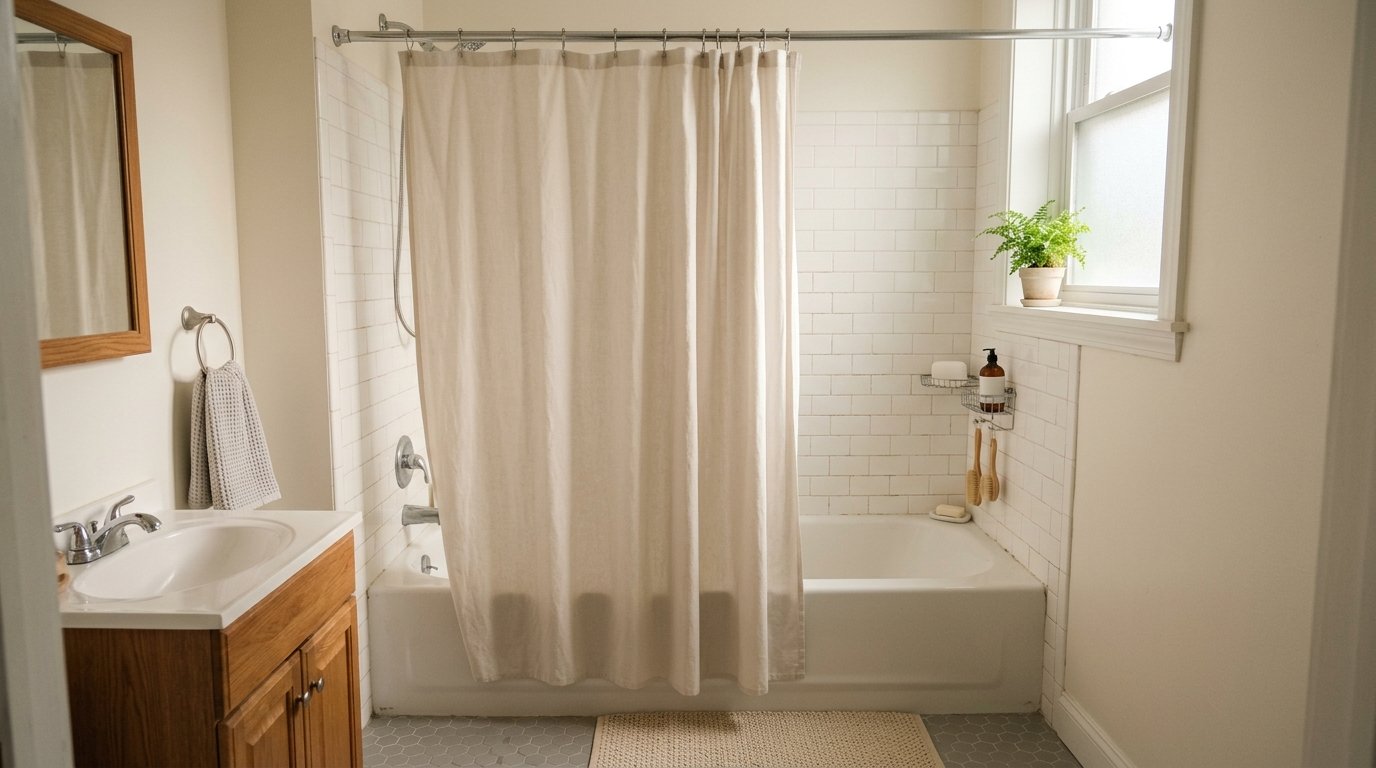
Quick Answer: The standard shower curtain size is 70″ x 72″ or 72″ x 72″ (about 178 x 183 cm) for a standard bathtub. Walk-in shower stalls typically use 54″ x 72″ or 54″ x 78″ (137 x 183-198 cm). If you’re renting and already have a curtain rod installed, measure your existing rod-to-floor distance first — that number matters more than any “standard” size, since it’s fixed and you can’t move it.
Most shower curtain size guides are written by retailers trying to sell you their exact three sizes, or padded out with repeated filler that never actually answers the question. This one gives you the real numbers, the actual differences between tub and stall sizing, and — since this is a renter-focused site — the one thing almost every other guide skips: what to do when you can’t install or move the rod yourself.
Standard Shower Curtain Sizes at a Glance
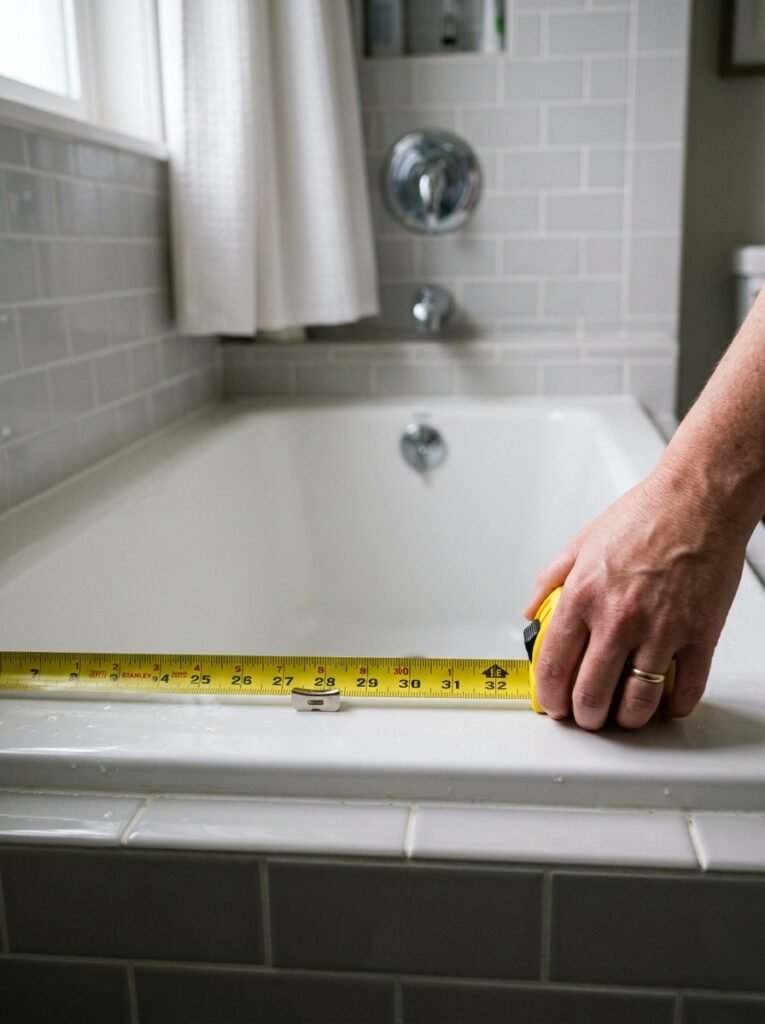
| Type | Size (Inches) | Size (CM) | Best For |
|---|---|---|---|
| Standard Tub | 70″ x 72″ | 178 x 183 cm | Most home and apartment bathtubs |
| Standard Tub (square) | 72″ x 72″ | 183 x 183 cm | Slightly wider coverage, popular default |
| Walk-In Shower Stall | 54″ x 72″ | 137 x 183 cm | Compact stalls without a tub |
| Tall Walk-In Stall | 54″ x 78″ | 137 x 198 cm | Stalls with a taller rod placement |
| Extra-Long/Tall | 72″ x 84″ | 183 x 213 cm | High ceilings or a rod mounted higher than standard |
| Clawfoot Tub (wraparound) | Up to 180″ x 72″ | Up to 457 x 183 cm | Freestanding tubs needing full wraparound coverage |
A quick note on units, since it trips people up: standard sizing is always given in inches first in the US market — if you see a “70 x 72 centimeters” curtain listed anywhere, that’s very likely a units error on that site, not an actual product, since 70-72 cm (about 28 inches) is far too small to cover any standard tub or shower.
How to Measure — the Renter Version
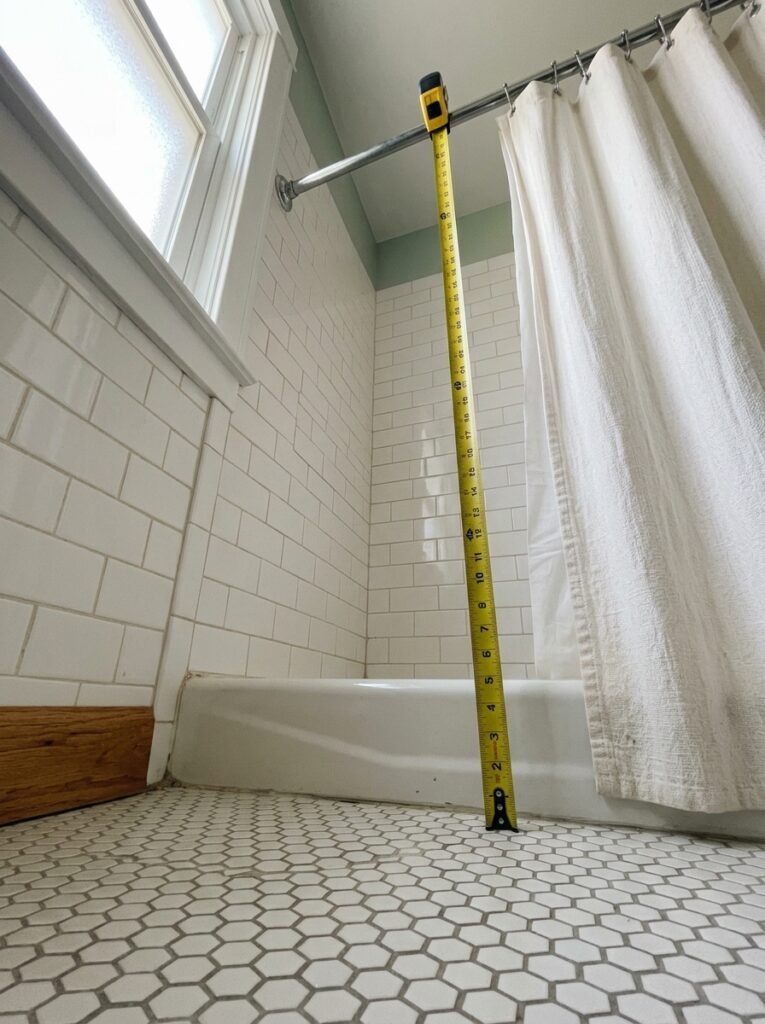
Most sizing guides assume you’re picking a rod height and curtain length from scratch. If you’re renting, you usually aren’t — there’s already a rod installed, and moving it means drilling new holes, which risks your deposit. So measure in this order:
- Measure your existing rod-to-floor distance first. This is your real ceiling on curtain length — you’re not choosing a length, you’re matching one.
- Subtract 8-10 inches from that number. This keeps the curtain from dragging or pooling on the floor while still preventing splashes.
- Measure wall-to-wall width (or rod length, if it’s a straight rod rather than curved). Add roughly 12 inches to the actual opening width — shower curtains are meant to hang with some extra fabric for a relaxed drape, not stretched flat.
- Compare both numbers to the chart above and round to the closest standard size rather than the exact number — custom sizing is rarely necessary and costs significantly more.
If your existing rod-to-floor measurement doesn’t match any standard size closely (common in older buildings with non-standard tub heights), size down rather than up — a slightly short curtain is a minor issue, while excess fabric pooling on a bathroom floor is a slip hazard and a mildew risk.
What If There’s No Rod at All?
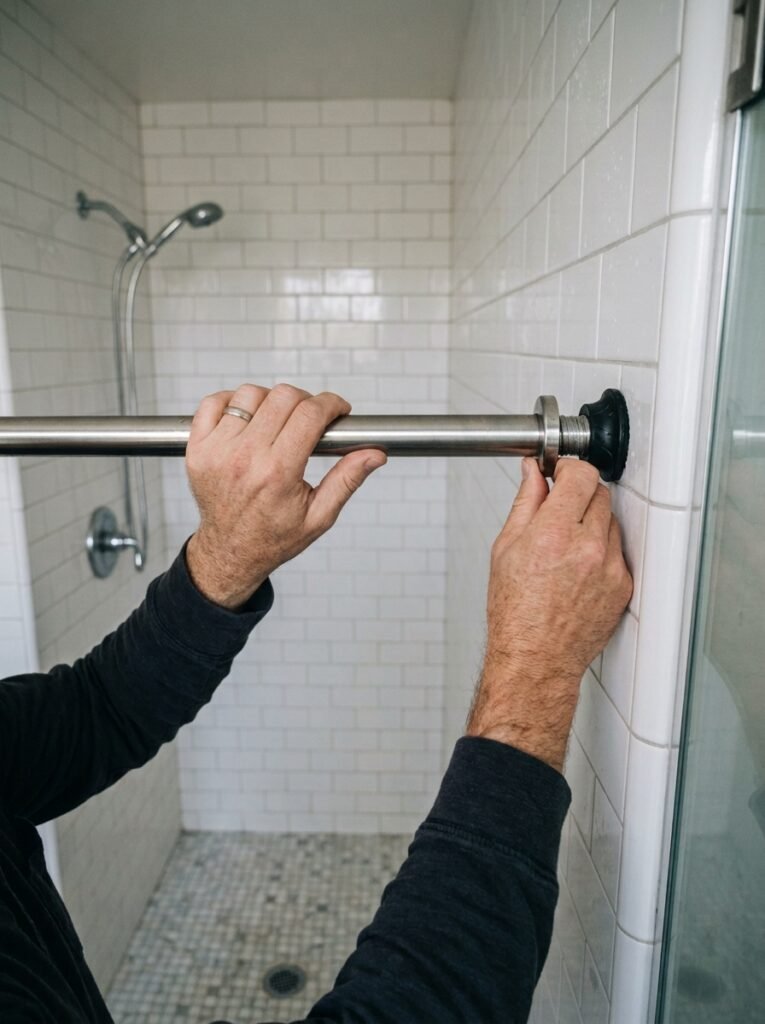
This is genuinely common in older rental units with walk-in stalls that were built with a glass door originally, then had the door removed or damaged before you moved in — and it’s something none of the retail size guides address, since they assume you’re installing new. Your options, in order of how renter-safe they are:
- A tension (spring-loaded) rod — no drilling, fully removable, and available in adjustable lengths that fit almost any stall width. This is the safest option for a security deposit.
- A curved tension rod — same no-drill installation, but adds a few extra inches of elbow room inside the shower, which is worth it in a tight stall.
- A permanent rod — only worth considering if your lease explicitly allows minor wall modifications, and even then, always confirm with your landlord first and keep the original fixture (if one existed) to reinstall at move-out.
Liners: Don’t Skip This Part

A fabric or vinyl curtain alone won’t reliably keep water in — you need a liner underneath it, and liner sizing has one specific rule worth knowing: your liner should be the same size as your curtain, or up to 1-2 inches smaller. A liner that’s larger than the curtain will hang outside it and defeat the purpose. Standard liners are typically sold in 70″ x 72″ to match the most common curtain size directly.
Standard Installation Height
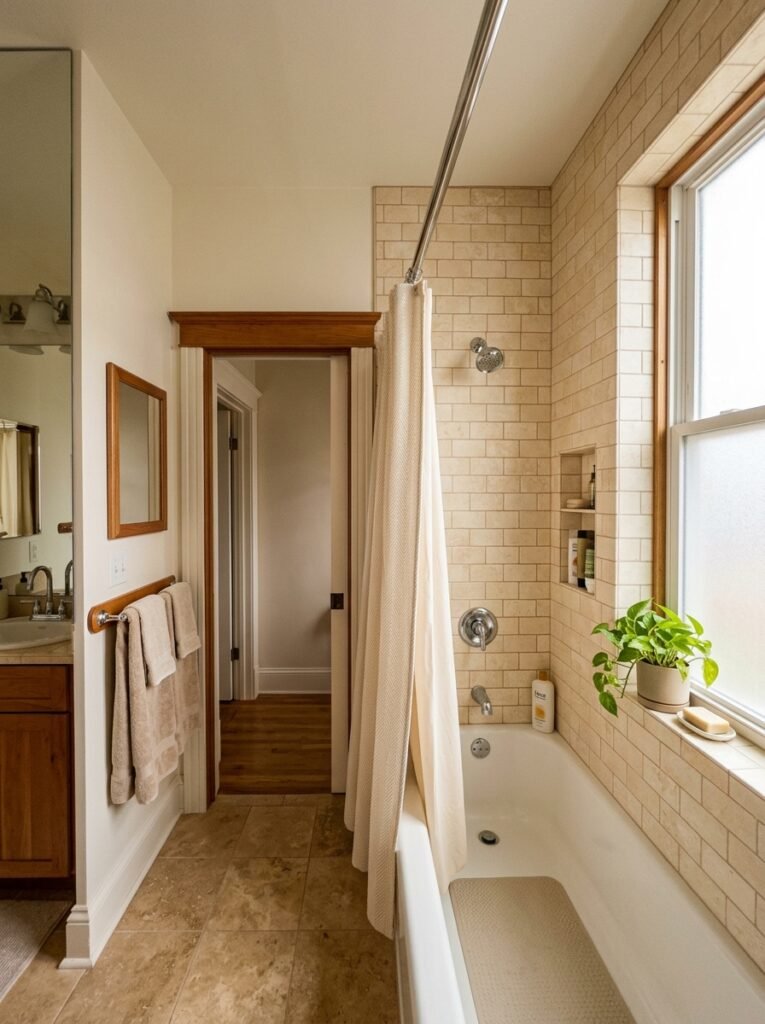
If you do have any say over rod placement (a new unit, or a stall with no rod at all), the standard installation height is 75-77 inches from the floor — high enough to clear most people’s heads comfortably while still allowing enough curtain length to reach a proper drop. Mounting too low is one of the most common reasons a bathroom feels visually cramped even when the actual stall size is fine.
Frequently Asked Questions
What is the most common shower curtain size? 70″ x 72″ is the single most common standard size, fitting the vast majority of tub/shower combos in US homes and apartments.
Are all shower curtains 72 inches? No — 72 inches is standard length for tub curtains, but width varies (70″ or 72″ are both common), and stall-specific curtains are typically narrower at 54″ wide.
How far should a shower curtain be off the floor? Roughly 1-2 inches above the floor is ideal — this prevents dragging and mildew buildup while still fully blocking splashes.
What is the typical size of a small shower curtain? For compact walk-in stalls, 54″ x 72″ is the standard smaller size — check your stall’s actual width first, since some older buildings use narrower stalls than this.
Conclusion
The “standard” size is really just a starting point — your actual rod height and stall width are what matter, especially if you’re renting and can’t relocate the rod. Measure first, match to the closest standard size, and lean on a tension rod if you’re dealing with a stall that has no rod installed at all. If you’re just getting your bathroom fully set up in a new place, this pairs well with our new apartment grocery and essentials checklist and our budget-friendly apartment decorating guide for the rest of the room.

Maren started MyFirstLease after a rough first lease taught him everything the internet didn’t. He covers the logistical side of renting — move-in checklists, utilities, and the unglamorous first-week stuff nobody explains — and oversees everything published on the site.